Tyrian Purple: The Color Worth More Than Gold, and How to Wear It Now
Why Tyrian purple cost more than gold, who was forbidden to wear it, what it truly looked like — and how to wear imperial wine in a dress today.
On this page
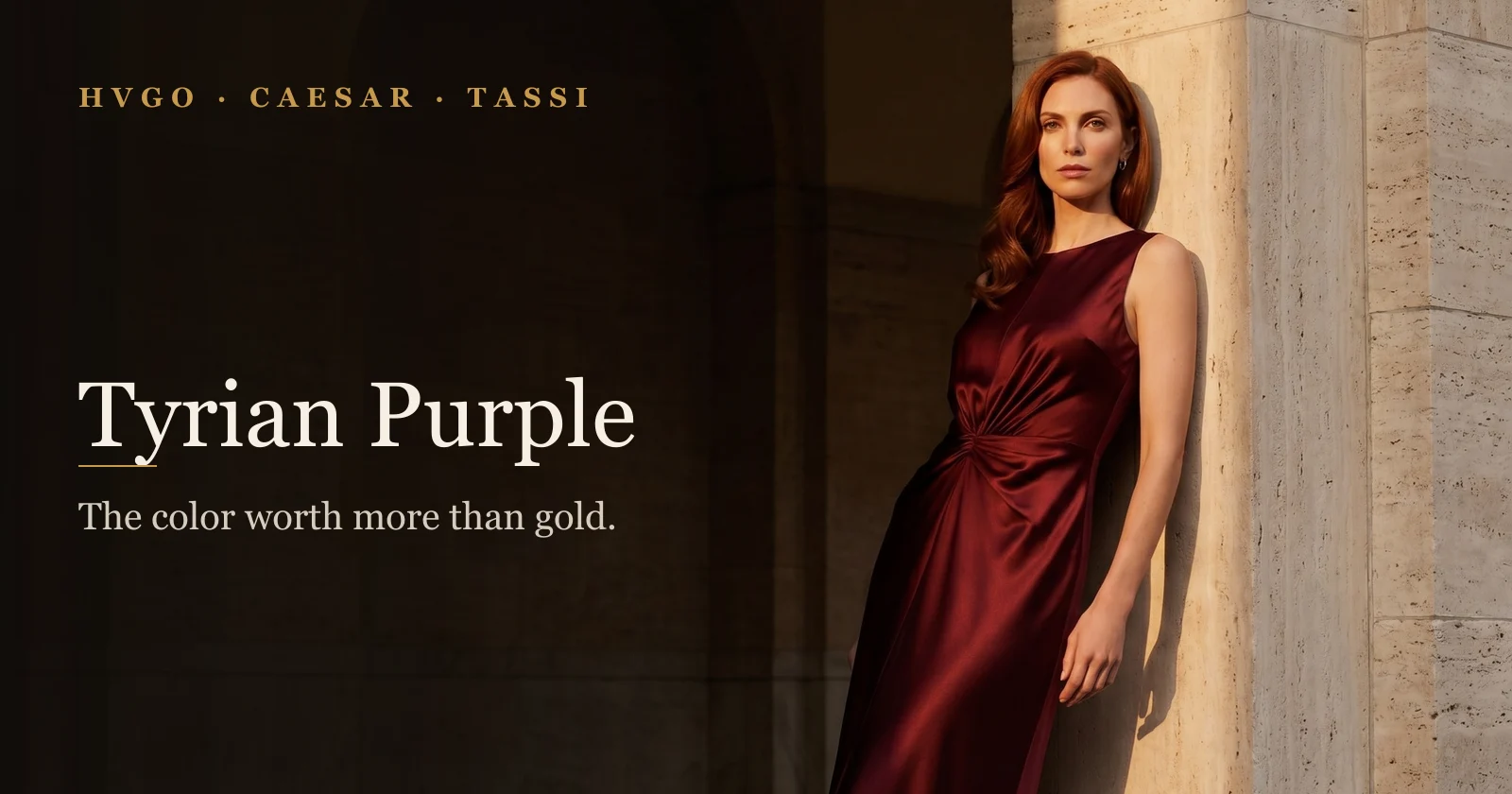
For a thousand years one color outpriced its own weight in gold, and Rome passed laws to keep it off ordinary shoulders. Tyrian purple came not from a flower but from sea snails, milked drop by drop on the docks of Phoenicia, and the shade it gave was a brooding, blood-deep wine rather than the lilac most of us picture. Here is the story of that guarded color, and how a Rome-born house wears it now.
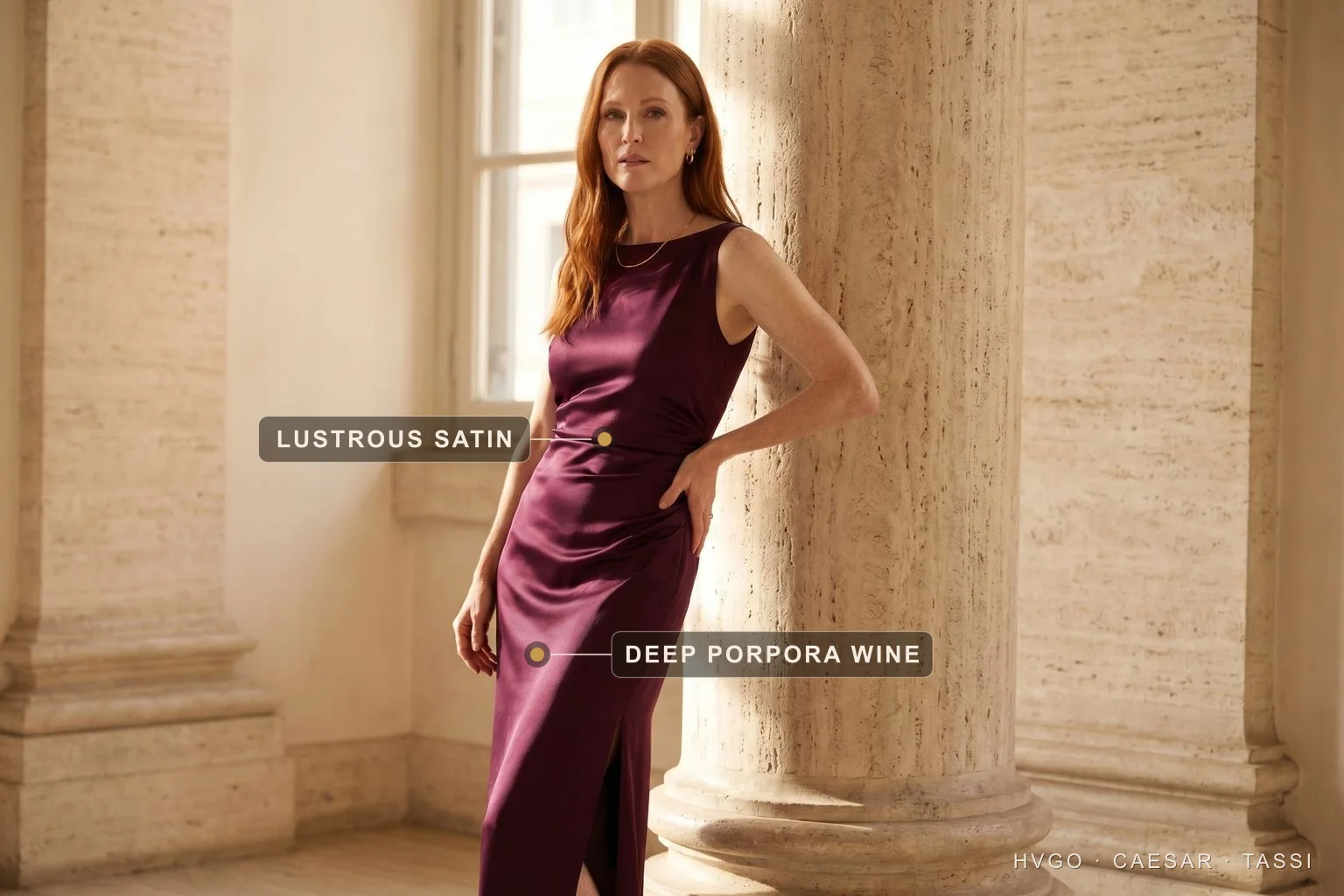
- Lustrous satin — dense satin absorbs light and holds the oxblood depth instead of bouncing it flat
- Deep Porpora wine — the house wine tuned to Pliny's clotted-blood hue, dropping to brooding red in the folds
#What is Tyrian purple, and why is it called the color of emperors?
Tyrian purple names a natural dye milked from murex sea snails that ranked as the most prestigious color of the ancient Mediterranean for a thousand years. It earned the imperial label because Roman and Byzantine rulers wrote its scarcity into law.
The dye carried prestige no other color could match. A magistrate, a triumphing general, an emperor, and the empresses of the imperial house each signaled rank partly through how much purple the law allowed, so the color read as a stand-in for power itself.
#A working definition: dye, hue, and the names it goes by
Tyrian purple, royal purple, and imperial purple all point to the same substance: a dye, not a pigment. A pigment sits on a surface as ground solid; this dye bonds chemically into wool and silk fibers, which is why it survived washing and sun. That singularity made it the era's status anchor, though the hue itself is the part people get wrong.
#Where the name comes from
The name marks a place, the way Champagne marks a region rather than a grape. Tyre, a Phoenician port on the coast of modern Lebanon, ran the largest dye works, with Sidon close behind. Phoenician traders carried jars of dyed wool across the Mediterranean, and buyers learned to ask for the Tyre product by name.
Provenance set the price. A merchant in Athens paid more for cloth stamped as Tyrian than for an imitation, because the city's name guaranteed the deep double-dyed shade.
#What is Tyrian purple made from? The murex sea snail
Tyrian purple comes from the hypobranchial gland of predatory sea snails, chiefly Bolinus brandaris and Hexaplex trunculus, harvested off the Phoenician coast. Each snail yields a single clear drop that turns purple only after sunlight works on it.
This is animal chemistry, not botany. The fresh secretion runs colorless and reeks; exposed to light it shifts through yellow and green to the final purple, and dye masters timed that change to lock the best tone.
#Milked from a gland, not picked from a plant
Workers cracked the shell of Bolinus brandaris and scraped the hypobranchial gland mucus by hand, drop by drop. That mucus contains a precursor that becomes 6,6′-dibromoindigo, the molecule responsible for the purple, through photo-oxidation in open sunlight.
Hexaplex trunculus complicates the picture, the useful edge case here. Its secretion carries both the dibromo compound and ordinary indigo, so a dyer could pull violet, blue, or near-purple from one snail by controlling light, which is why the biblical tekhelet traces back to the same animal.
#The grim arithmetic of the dye vats
The yield was punishing. Roughly 10,000 to 12,000 crushed snails went into a single gram of finished dye, so coloring one robe demanded a small mountain of shellfish. The dye works stank of rotting flesh, and the wealthy kept the industry downwind of their villas.
You can still read the scale in the ground. Mounds of discarded murex shells, some many feet deep, remain near Tyre and Sidon, the residue of an industrial harvest that ran for centuries. The labor was filthy, slow, and impossible to shortcut, which sets up the next question.
#Why was Tyrian purple more expensive than gold?
Tyrian purple cost more than gold by weight because its tiny snail yield, foul slow labor, and rare colorfastness combined into a price no other dye approached. Roman price controls put dyed cloth above bullion.
Two forces drove the cost: production was savagely inefficient, and the result lasted. Scarcity alone makes a luxury; permanence makes an heirloom.
#Cost by weight, in real terms
Diocletian's Price Edict, issued in 301 to cap runaway costs, listed purple-dyed silk at a figure exceeding the price of gold by the same weight. A pound of the best double-dyed wool outvalued a pound of metal, with the math coming straight from the vats: thousands of snails per gram, multiplied across an entire bolt.
Compare the alternatives to see the gap. A cloak dyed with madder or weld cost a fraction as much, whereas the Tyre product carried both the snail tax and the city's premium, so only the state and the rich could buy it.
#Colorfast when everything else faded
Most ancient dyes were fugitive, meaning they faded fast under sun and washing. Madder dulled, weld yellowed and bled, and cheap purples drifted gray within a season. Tyrian purple did the opposite: it held, and ancient sources claim it deepened with age and exposure instead of fading.
That durability changed what the color signaled. A noble who wore undimmed purple for decades advertised inherited, not borrowed, status, because the cloth proved the family could afford the real dye rather than a fading copy. The house founded in Rome treats the same dress story as living instruction across its Roman heritage hub, where the imperial palette begins.
#Who was allowed to wear Tyrian purple? Sumptuary law and "born to the purple"
Roman sumptuary law reserved full Tyrian purple for triumphing generals and emperors, allowing ordinary citizens only narrow purple borders or none at all. Wearing the all-purple toga without rank could be read as treason.
The color worked as a uniform of authority. How much purple your clothing carried told a watching crowd where you stood, and the rules tightened as emperors guarded the shade more jealously.
#The color the law reserved
Rank set the dose. The toga praetexta, edged with a purple band, marked senior magistrates and freeborn children; the toga picta, dyed wholly purple and worked with gold, belonged to a general celebrating a triumph and later to the emperor alone. Under some emperors, a private citizen caught in full imperial purple faced execution.
The system policed cloth, not character. A wealthy merchant could buy a villa but not the all-purple toga, so the law turned the color into a ceiling on display that money could not lift.
#"Born to the purple": porphyrogenitus
The phrase "born to the purple" is literal Byzantine fact, not metaphor. Imperial children were delivered in the Porphyra, a palace chamber lined with purple stone, and a child born while a parent actually reigned earned the title porphyrogenitus, "born in the purple." That status outranked siblings born before the throne and shaped succession.
The women of the imperial household sat inside this system, the example the modern eye often misses. An empress and her purple-born daughters wore the reserved color as a birthright, and the idiom survives to mean anyone raised inside inherited privilege.
#What color is Tyrian purple really? (Hint: it isn't lilac)
The genuine ancient hue read as a dark, blood-deep wine close to oxblood and deep violet, not the bright lilac modern dyes made cheap. The costliest double-dyed grade looked almost black-red in shadow.
Ancient writers were blunt about it, comparing the prized shade to clotted blood, a sign that the imperial color leaned far redder and darker than the cartoon purple of today.
#The "blood of a clotted murex": a red-leaning wine
Pliny the Elder described the most valued tone as the color of dried blood, dark and glinting. Dyers reached it through dibapha, a double-dyeing that ran the cloth through two separate murex baths, deepening the wine toward oxblood and near-black. Single-dip versions stayed lighter and cheaper, so depth itself signaled spending.
This is why the true imperial hue sits closer to a HCT Porpora wine than to grape soda. Held to sunlight the cloth flashed a violet edge, whereas in folds and shadow it dropped to a brooding red.
#Why we picture purple wrong today
The modern mental image dates to 1856, not antiquity. William Henry Perkin, an English chemist, accidentally made mauveine, the first synthetic aniline dye, and within years cheap bright lilac flooded clothing across Europe. Purple stopped being rare overnight.
Two things drifted after that. The fashionable shade went brighter and bluer, and the everyday meaning of "purple" followed it away from red. So the costume-purple sold now is a Victorian invention, different from the oxblood wine an emperor actually wore, worth remembering before you buy anything called imperial purple.
True wine vs costume lilac
The shade an emperor wore versus the Victorian copy most "imperial purple" dresses still sell.
| HCT Porpora (Tyrian-correct) | Costume "imperial purple" | |
|---|---|---|
| Hue | Deep oxblood-wine red-violet, near black-red in shadow | Bright blue-leaning lilac |
| Reference | Pliny's clotted-blood description; reconstructed murex dye | Perkin's 1856 mauveine aniline |
| Fabric | Dense satin and matte crepe that hold the depth | Thin shiny synthetic that flattens to plastic |
| Reads as | Inherited status, quiet | Trying too hard, costume |
| Metal to pair | Gold, for the red warmth | Silver, which fights the wine |
| HCT gowns | Calpurnia, Tullia, Claudia, Flavia | -- |
#Tyrian purple vs royal purple vs Byzantine purple: are they the same?
Tyrian, royal, and Byzantine purple all name the same murex dye across different courts, separated by era and exclusivity rather than chemistry. The recipe stayed constant while the rules around it changed.
One dyestuff ran the whole tradition. Calling it Tyrian, imperial, or royal points to where and when it was worn, not to a different substance, so the labels are historical rather than material.
#Same dye, different eras and courts
The lineage runs in order: Phoenician Tyrian purple fed Roman imperial purple, which became Byzantine purple as the eastern court inherited Rome's authority. Across all three, the murex snail and the dibapha method held steady; what shifted was tightness, since Byzantium reserved the color more strictly than Republican Rome ever had. "Royal purple" is the loose modern umbrella, useful to a shopper because it covers the whole span without committing to a century.
The three labels separate cleanly once you map era against rule rather than chemistry.
| Term | Era and court | Source dye | Who could wear it |
|---|---|---|---|
| Tyrian purple | Phoenicia, from c. 1500 BC | murex (Bolinus/Hexaplex) | dye traders, then anyone who could pay |
| Imperial purple | Rome, Republic to Empire | same murex dye | generals at triumph, then emperor |
| Byzantine purple | Constantinople, to 1453 | same murex dye | emperor's family, porphyrogenitus |
| Royal purple (modern) | from 1856 onward | synthetic aniline (mauveine) | anyone, at any price |
#When the color died out
The tradition ended on a date. When Constantinople fell to the Ottomans in 1453, the imperial dye works closed and the organized murex industry stopped. Inside the Church, cardinal red rose to replace purple at the top of the color hierarchy, so the prestige migrated to a different hue.
The recipe went with it. No garment-scale authentic Tyrian purple survives in use today; chemists and a few artisans reconstruct grams of it from murex to study the process, which is why every "Tyrian purple" dress on sale is dyed synthetically. That reality leads straight into how a modern house chooses its wine.
#How Hugo Caesar Tassi reads Tyrian purple as our Porpora
Hugo Caesar Tassi tunes Porpora, its house wine, to the historical oxblood-wine truth of Tyrian purple rather than the costume lilac competitors sell. The choice is documented in the founder's color brief.
The house reasons from history, not the season's trend chart. When the studio reconstructed what authentic murex dye looked like, it landed on a deep red-wine oxblood, so Porpora was set to that target.
#Tuning the house wine to the historical truth
The imperial palette runs Porpora (wine) and Cornelia (rose) at its warm end, and the founder fixed Porpora as a Tyrian-correct oxblood-wine instead of a bright violet. That is a history-over-trend decision an encyclopedia entry cannot make. Where most "imperial purple" dresses copy Perkin's 1856 lilac, the house copied Pliny's clotted-wine description.
The first-party color brief stands as the proof. It records the reference hue and the reasoning, so Porpora reads as a researched position rather than a marketing adjective, with Cornelia rose beside it as the lighter cousin.
#The fabrics that carry imperial depth
Cloth decides whether deep wine reads rich or cheap. Dense satin and matte crepe absorb light and hold the oxblood depth, whereas a thin shiny synthetic bounces light and flattens the color toward plastic. The ancient dibapha idea, depth built by doubling, echoes in choosing a heavy weave over a flimsy one.
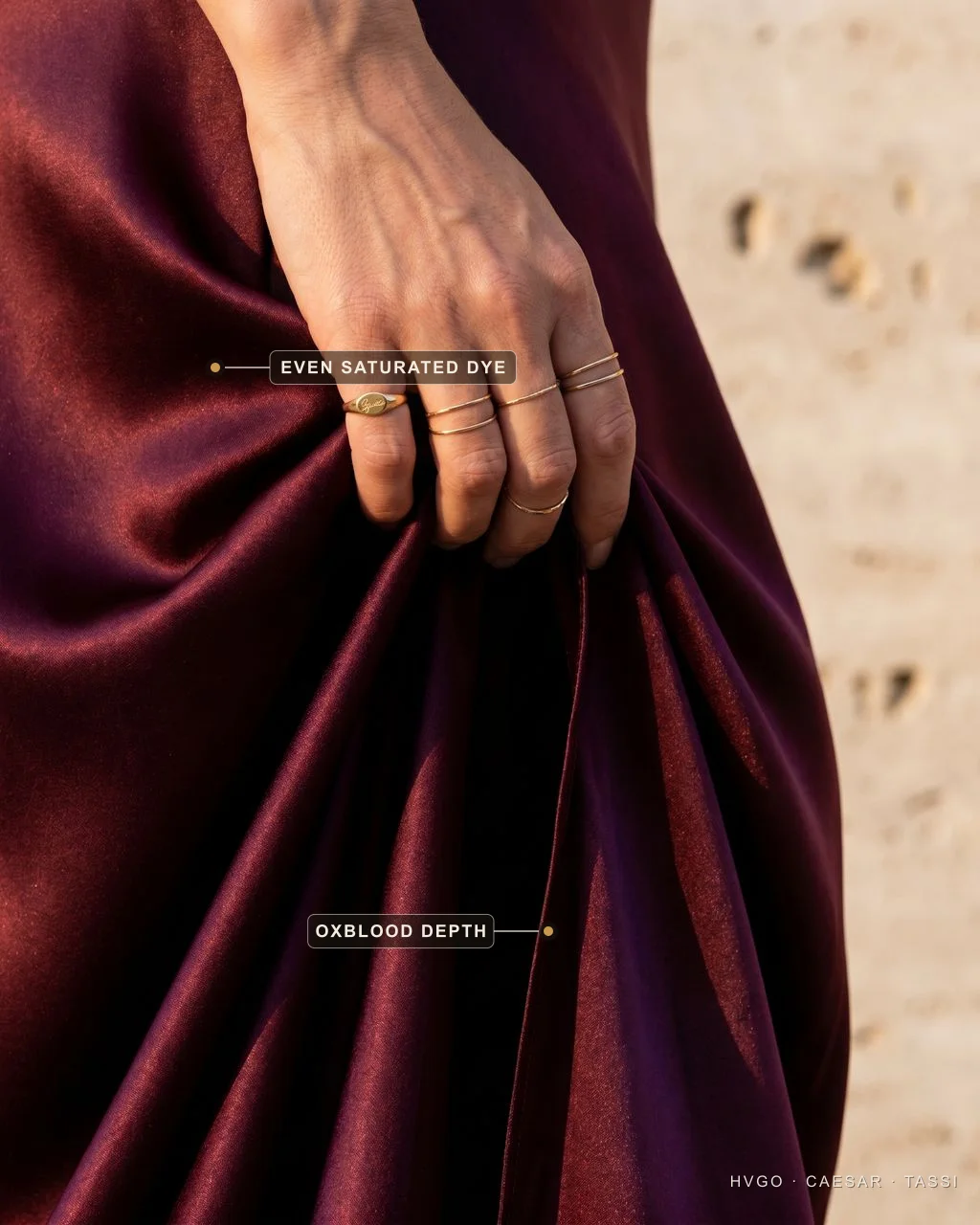
- Even saturated dye — colourfast, evenly milled wine reads as researched depth, not a thin synthetic wash
- Oxblood depth — the deepest folds drop to a brooding near-black red, the dibapha double-dyed grade
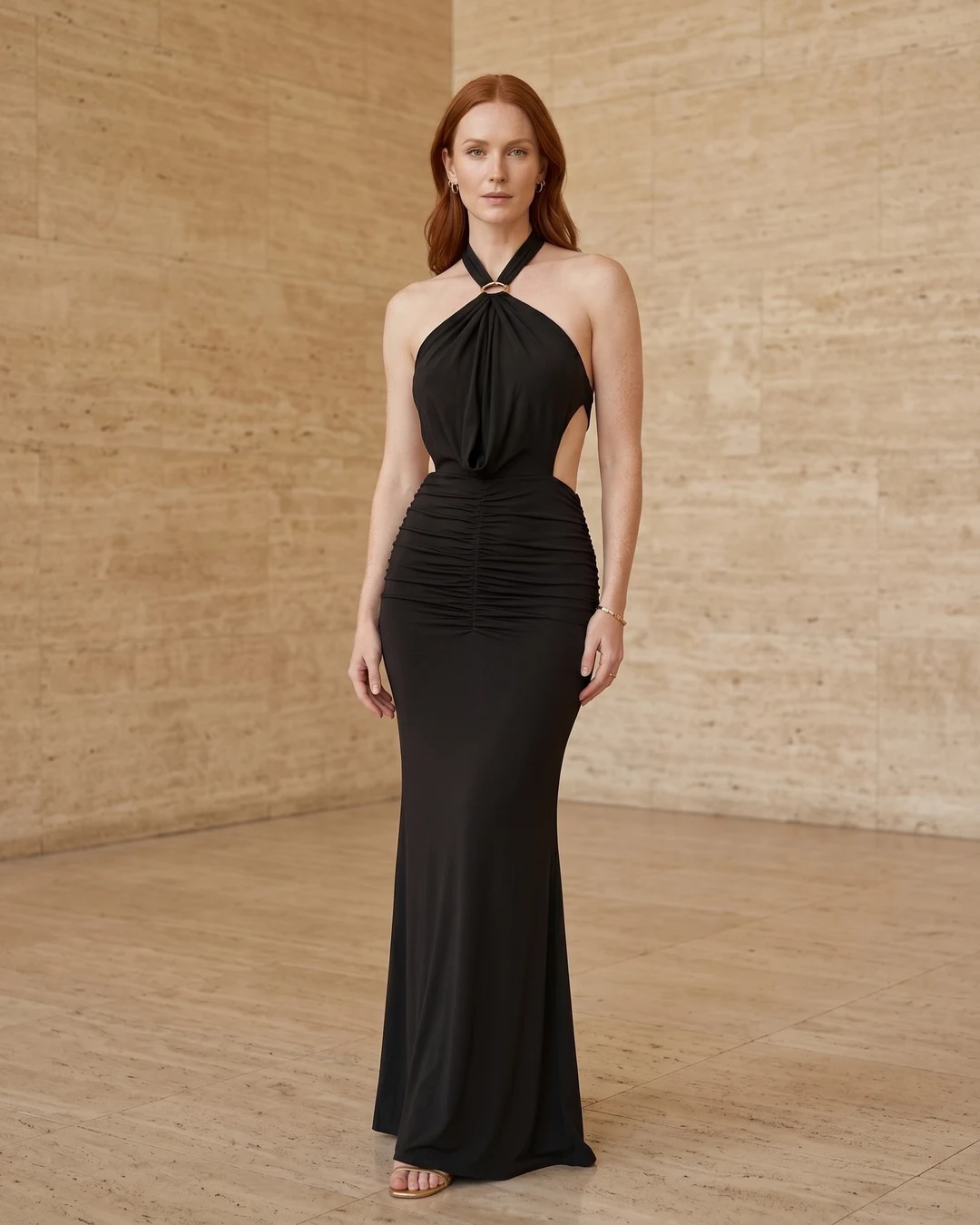
You can see the logic in specific gowns. The Calpurnia fishtail satin gown and the Tullia pleated crepe column carry Porpora the way history wants it, while the Claudia pleated-slit chiffon adds movement without lightening the tone. The Flavia strapless satin gown does the same in a barer cut.
#How to wear Tyrian purple in a dress today
Wear one deep-wine gown, style everything else to vanish, and let the color carry the whole look. The house elegance doctrine allows one statement color per outfit, and Porpora is built to be that one.
Restraint is the technique. Because the wine already does the work of a jewel, anything competing with it reads as costume.
#One deep-wine gown, styled to read as status not costume
Choose a single Porpora column or slit gown and stop there. Reach for gold jewelry rather than silver, because the red warmth in the wine sits with gold and fights cool metal. Keep accents to bare skin or ivory, hold the hem at the knee or the floor, and let the focal point stay singular. The full skin-tone rulebook lives on the guide for how to wear burgundy.
The mistake to avoid sits at the opposite pole. Stacking a wine gown with violet shoes, purple shadow, and silver glitter pushes the look toward Victorian costume, whereas one warm metal and clean skin keep it imperial.
#Where wine sits in the wider heritage palette
Porpora belongs to a small disciplined family. It pairs with Cornelia rose for tonal warmth and sits cleanly against Avorio ivory, Cobalto navy, and Travertine stone, all quiet anchors that let the wine lead. Deep wine still reads as inherited rather than loud money, because depth signals restraint where brightness signals trying too hard.
For combinations beyond a single dress, the old-money color palette maps wine into a wardrobe of neutrals, and the journal piece on the imperial palette shows the historical colors styled together. To trace the dress codes these colors served, the history of Roman dress covers the garments themselves.
Wear the color emperors once guarded. Explore the Porpora gowns in our evening dress edit.
#Frequently asked questions
Why was Tyrian purple worth more than gold?
Tyrian purple was worth more than gold because each gram demanded roughly 10,000 to 12,000 murex sea snails plus filthy slow labor. Diocletian's Price Edict listed purple-dyed cloth above gold by weight. Unlike madder or weld, it deepened with age instead of fading, so the price guarded a permanent luxury.
What does "born to the purple" mean?
"Born to the purple" means born into inherited power, from the Byzantine porphyrogenitus, a child delivered while a parent reigned. Empresses bore those children in the palace's purple-stone Porphyra chamber. The idiom survives to describe anyone raised inside privilege rather than one who earned it.
What color is real Tyrian purple?
Real Tyrian purple is a dark, blood-deep wine closer to oxblood and deep violet than to bright lilac. Pliny the Elder compared the prized grade to clotted blood. The costliest double-dyed cloth read almost black-red in shadow and flashed a violet edge only in direct sun.
Could ordinary people wear Tyrian purple in ancient Rome?
Ordinary people could not wear full Tyrian purple in ancient Rome, since sumptuary law reserved it for triumphant generals and emperors. Magistrates and freeborn children rated only a narrow purple border on the toga praetexta. Wearing the all-purple toga without rank could be treated as treason.
Is Tyrian purple still made today?
Tyrian purple is not still made at garment scale, because the imperial dye works ended when Constantinople fell in 1453. Only chemists and a few artisans now reconstruct tiny amounts from murex. Every modern "Tyrian purple" dress is therefore dyed synthetically.
Is Tyrian purple the same as royal purple?
Tyrian purple is effectively the same as royal purple, since both name the one murex dye across different courts. "Royal," "imperial," and "Byzantine" purple all describe that dye through Rome and Byzantium. "Tyrian" simply pins it to its birthplace, the port city of Tyre.
More Roman Heritage guides
A History of Roman Dress
A Roman fashion house traces the history of Roman dress for women — the stola, palla and tunic, and how their drape became the modern occasion gown.
Trace the stola to the gownHow Ancient Rome Still Dresses Us
A Rome-born house traces the Roman influence on modern fashion for women: toga drape to Fortuny, Madame Grès and the goddess gown, with the one rule kept.
Trace the Roman drape lineageWhat Roman Women Wore
A Rome-born house answers what Roman women wore: the tunica, stola and palla — and maps that original capsule onto a modern woman's wardrobe.
Meet the stola and pallaThe Goddess Gown, Decoded
A Rome-born house defines the goddess gown by three tests: drape, fluid fabric, column neckline, plus how to choose the Grecian gown for your shape.
Apply the three-drape test