Italian Style for Women: Dressing the Italian Way, from Rome
Italian style for women, defined from Rome: la bella figura, the nine-color imperial palette, fit and fabric, plus a map of every Italian-style guide.
On this page
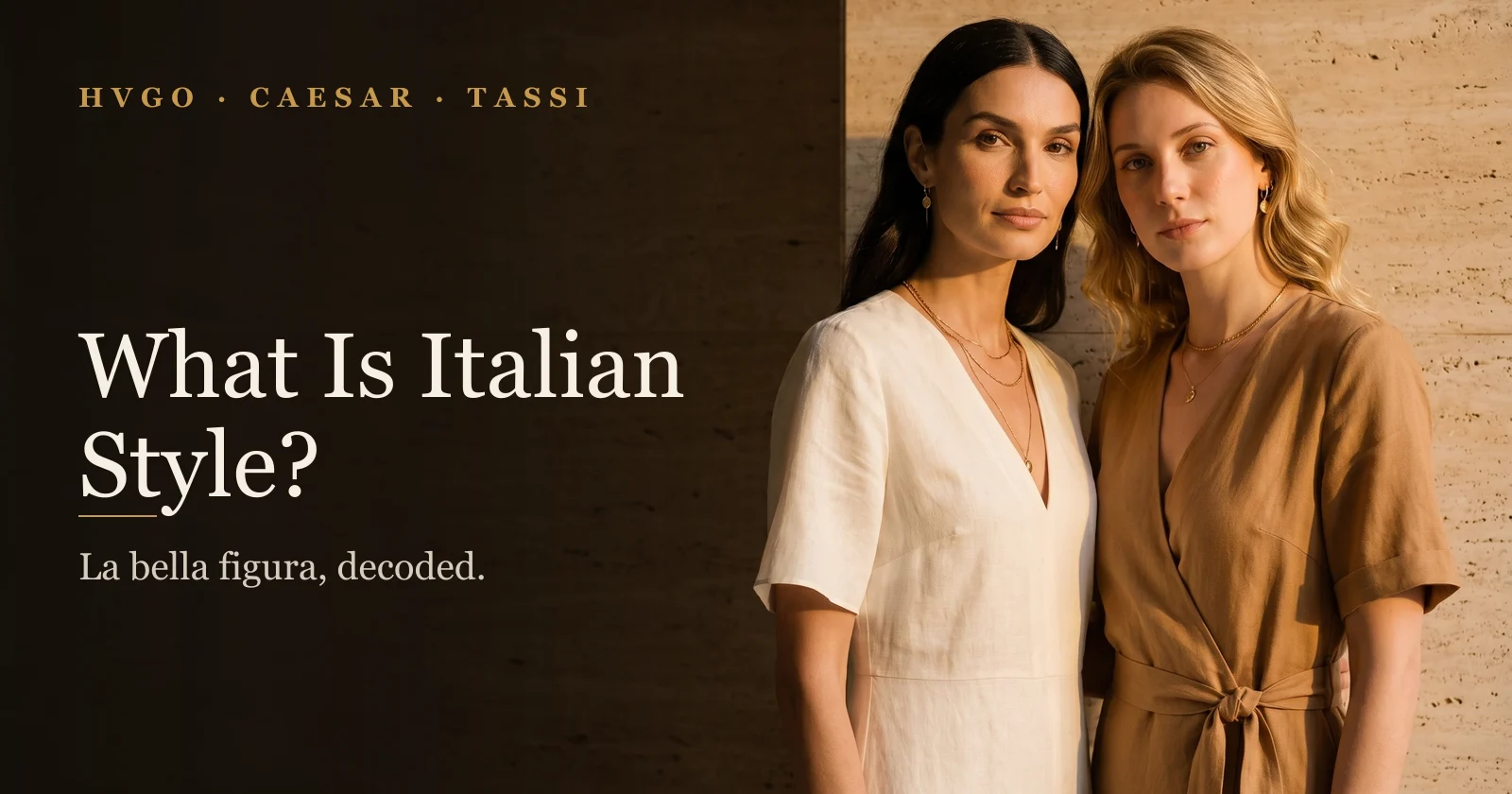
Italian style for women is the appearance of ease built on four deliberate choices: fit cut at the shoulder, fluid natural fabric, one named color, and the quiet confidence Italians call la bella figura. It is not a striped top and a Vespa. Hugo Caesar Tassi, a women's house founded in Roma in 2004 under the motto Nata Imperare, orders the whole subject around one thing most guides skip: a real, named color spine.
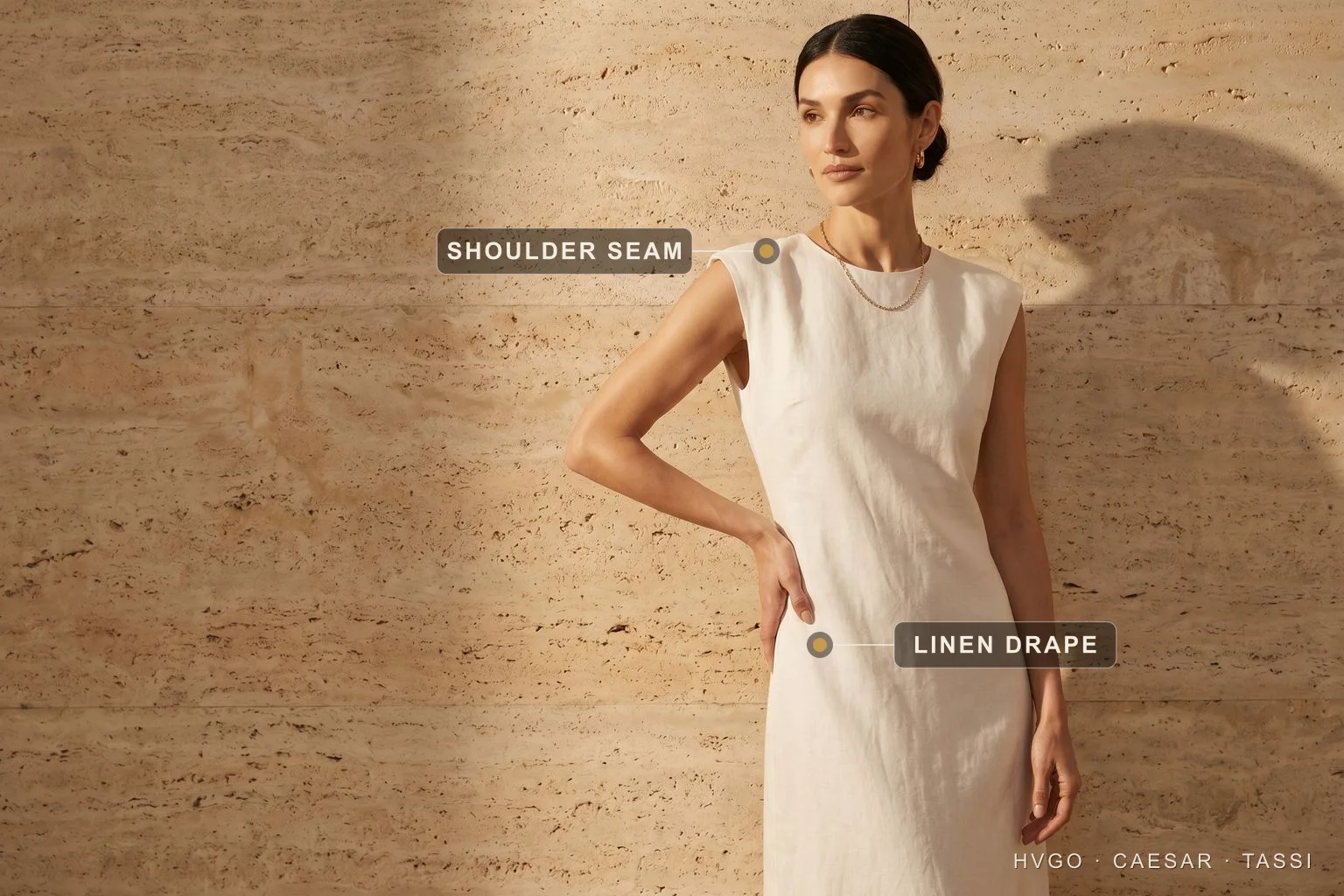
- Shoulder seam — the seam lands exactly on the shoulder bone, the fit cue that makes everything below skim rather than cling
- Linen drape — fluid natural linen falls in a soft column, the moving fabric that reads effortless and expensive
#What is Italian style for women, really?
The look is effortless on the surface and engineered underneath, from fit and fabric to color and restraint. An Italian woman buys a dress that skims the shoulder, picks one fabric that moves, commits to a single color, then stops.
Most search results reduce this to "linen and gelato," a tourist's snapshot, not a method. The engine of the look has a name: sprezzatura (studied carelessness, a Renaissance term for hiding effort). The Italian woman never looks like she tried, because looking like you tried is the one mistake she will not make.
#Effortless on the surface, deliberate underneath
The ease the eye reads is the product of decisions; every casual choice was a calculated one. A blazer fits because a tailor moved the shoulder seam 12 millimeters inward, not because it came that way. A dress drapes because the fabric is bias-cut silk.
Consider the white shirt left half-tucked. It looks careless; it is calibrated to the right shirt weight, tuck depth, and one sleeve pushed up. The counter-case copies that half-tuck on a stiff polyester shirt that holds the crease like cardboard: same gesture, opposite result.
#The five things every Italian-styled woman gets right
Five signals separate Italian dressing from its imitations, and each one is checkable on a single outfit.
- Fit starts at the shoulder. The shoulder seam lands on the shoulder bone; everything below it skims rather than clings or swamps.
- Fabric is natural and moves. Silk chiffon, satin, crepe, modal, or cowhide leather, never plastic stiffness.
- Color is named, not improvised. One considered shade with a history behind it, not a trend bright pulled from a seasonal palette.
- One focal point, no clutter. A single statement carries the outfit; the rest recedes.
- Confidence wears it. Posture and ease finish what fit and fabric started.
The deeper playbook lives in how to dress like an Italian woman; this hub keeps the five at a glance.
#Why Italian style reads as the most stylish in the world
Italian women look best-dressed because presentation is a cultural duty, not a special occasion. Two forces drive it: a daily social code and generations of craft.
#A culture that dresses to be seen
La bella figura treats how you present yourself as a courtesy to others, which turns even errands into dressed events. The phrase means "the beautiful figure," the impression you make, owed to the room you walk into. It is consideration made visible, not vanity.
The woman buying bread at 8 a.m. wears a pressed dress and a scarf because being unobserved is no excuse to be unconsidered, the daily passeggiata (the ritual evening stroll) made literal. The full cultural meaning sits in la bella figura.
The edge case Anglo readers miss: this is not formality. An Italian woman in jeans still passes if the jeans fit and the whole thing is intentional, because effort, not occasion, is the standard.
#The Made-in-Italy inheritance behind Italian style
Made in Italy means roughly four centuries of tailoring shops, fabric mills, and fashion houses that trained the national eye. Quality over quantity is the default setting, not a wellness trend imported last year, and a grandmother who could read a fabric by touch passed that literacy down.
Hugo Caesar Tassi cuts from inside that lineage. Founded in Roma in 2004, the house dyes its palette in the city, provenance the listicles describe from the outside and cannot claim.
#The colors that carry Italian style: the imperial palette
Italian color works as a grounded field plus one statement shade, and our house names all nine roles. That is the angle no anonymous roundup offers: real colors with histories, not "neutrals and a pop."
#Why a named color spine, not "neutrals and a pop"
A named palette gives a woman a logic to build from instead of a guess to make each morning. "Neutrals plus a bright" decides nothing: which neutral, which bright, how much? That vagueness is why most attempts read as costume.
The house answer assigns every shade a name and a job, so you choose Cuoio for the leather thread and Porpora for the statement. Combination rules sit in the journal piece on the imperial palette.
Build the imperial palette
Pick one ground, one statement, one anchor — the named-color kit behind every Italian outfit.
#The imperial shades and what each one says
Each shade carries one role, so the field-plus-statement logic becomes a vocabulary rather than a hunch. Read the table as a kit, not a rainbow.
| Shade (American name) | Role in the outfit | Wear it as |
|---|---|---|
| Porpora (wine) | Imperial authority | The statement |
| Vermiglio (red) | Confidence | The statement |
| Cornelia (rose) | Warmth | Soft statement or tonal base |
| Cipria (pink) | Softness | Tonal base or accent |
| Verde Antico (green) | Depth | The statement |
| Travertine (stone) | Roman neutral | The ground |
| Avorio (ivory) | Roman neutral | The ground |
| Basalt (black) | The column | Ground or sharp statement |
| Cobalto (navy) | Day to evening | Ground or statement |
| Cuoio (tan) | The leather thread | The accessory anchor |
The spine runs to ten names for nine working roles, since Cornelia and Cipria split the rose-to-pink register so you choose warmth or softness on purpose.
#How to wear color the Italian way
Color the Italian way means tonal or monochrome dressing with one statement shade against a stone or ivory ground. Build on Travertine or Avorio, then let a single Porpora or Verde Antico piece do the talking, since head-to-toe brightness is the tourist mistake.
The concrete move: carry the statement in a scarf or a bag rather than the whole dress. A Cuoio tote and an Avorio dress, lifted by a Vermiglio silk scarf, reads more Italian than a full red ensemble. The warm-season version runs through Italian summer style.
#Fit, fabric and silhouette: the rules behind Italian style
Three mechanics produce the look: fit at the shoulder, fabric that moves, and a silhouette drawn from the Roman column. Get these and the color reads expensive; miss them and it cannot.
#Fit is the whole secret of Italian style
Fit, not price, is what reads as expensive, and it always starts at the shoulder seam. A dress that lands correctly on the shoulder skims the body below it; one that fails there cannot be rescued downstream, which is why Italian women take alterations for granted.
Our house publishes each model's height, near 175 centimeters, so a reader can judge where a hem will break on her own frame. The edge case: an untailored dress in luxurious fabric still reads cheap, because the eye reads fit before fiber.
#Natural, noble fabric that moves
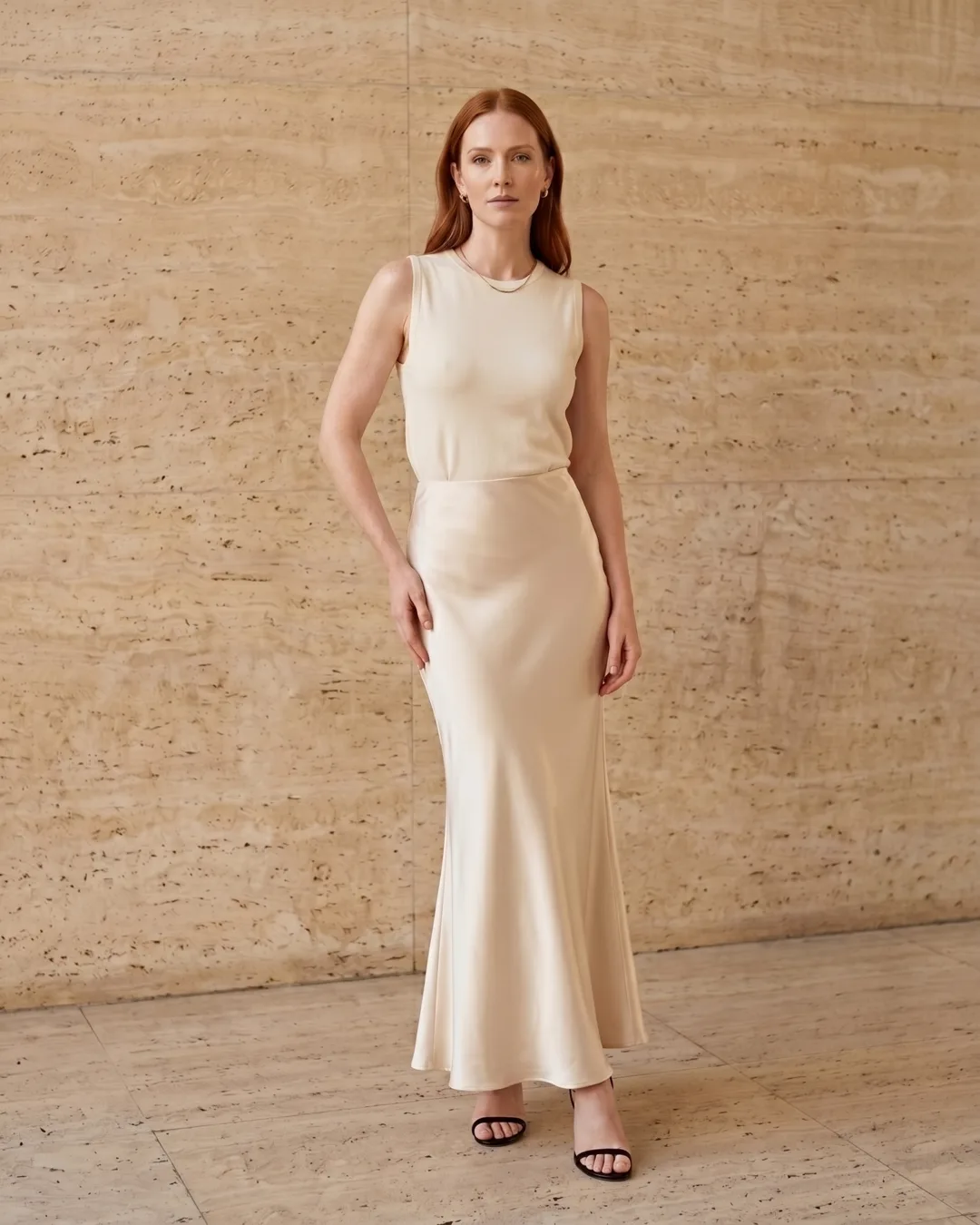
Noble fabric drapes and breathes, which is why fluid silk beats stiff synthetic regardless of the price tag. The Italian wardrobe runs on silk chiffon, substantial satin, matte crepe, modal jersey, and full-grain cowhide leather, each moving with the body instead of fighting it.
The mechanism is drape: a bias-cut satin falls in a continuous line because the weave is cut at 45 degrees to the grain, while a stiff synthetic holds a flat plane and breaks into hard creases. Our house knife-pleats a recycled chiffon and bias-cuts its satin for exactly this fall, and the primer in chiffon, satin and crepe explains how each behaves.
#Silhouettes that read Roman
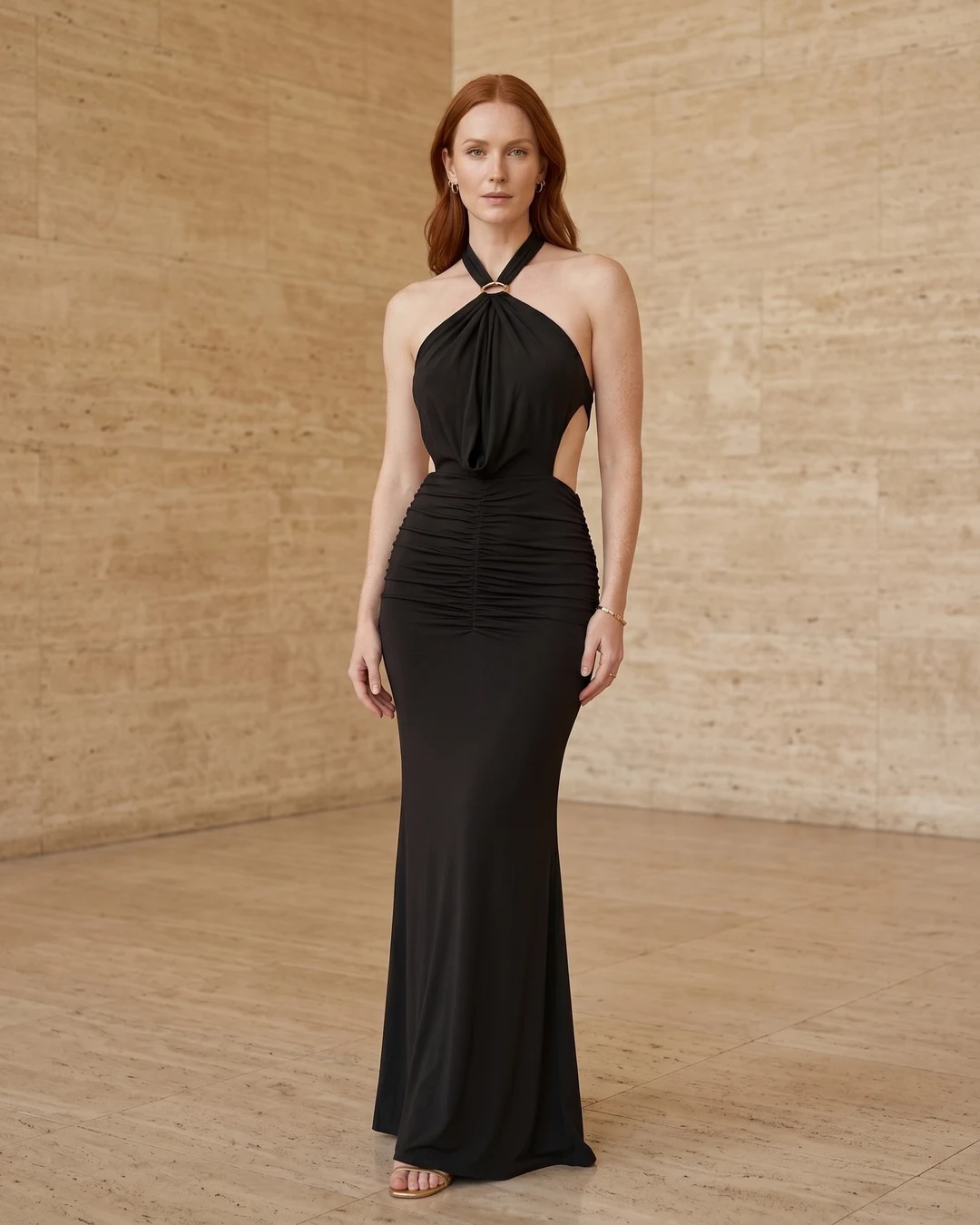
Three silhouettes carry the look: the fluid column, the A-line, and the draped gown, all descended from the classical drape. Each presents one clean line, and the column gown is the Roman column made wearable: a single vertical fall, undisturbed.
The Calpurnia fishtail satin gown and the Tullia pleated crepe column show the lineage directly. The counter-case is the over-detailed dress, with ruffles, cutouts, hardware, and a slogan competing on one body: expensive, perhaps, but not Italian, because Italian style spends its budget on line. The classical roots sit in the house's Roman heritage guide.
#The Italian-style signatures every woman keeps: the scarf and the leather bag
Two accessories anchor Italian dressing for decades: the silk square scarf and the unbranded leather bag. Both inject the palette and the focal point without clutter, and neither dates.
#The silk square scarf, worn a hundred ways
The silk square scarf is the single most Italian accessory because one square solves the neck, the bag handle, and the hair. Folded into a neck knot it adds the statement color; tied to a strap it dresses the bag; wrapped over the head it turns a flat hair day into intention.
The Carina glossy silk scarf and the Vesta versatile silk scarf show the range: a glossy weave for evening sheen versus a matte square for daily wear. The scarf is also how budget dressing borrows the palette cheaply, since one Porpora square refreshes three plain dresses. Browse the range in silk scarves.
#The leather bag you keep for years
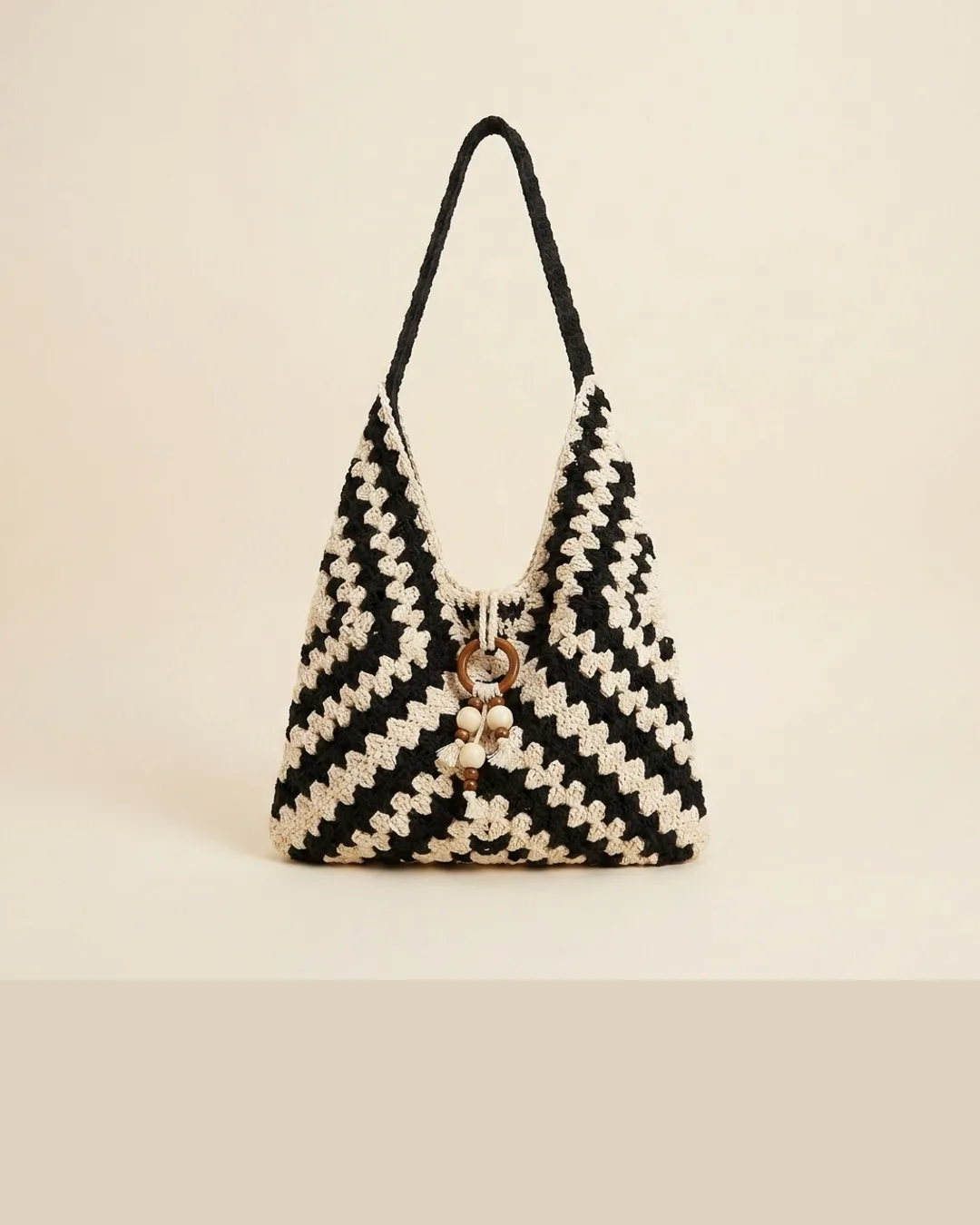
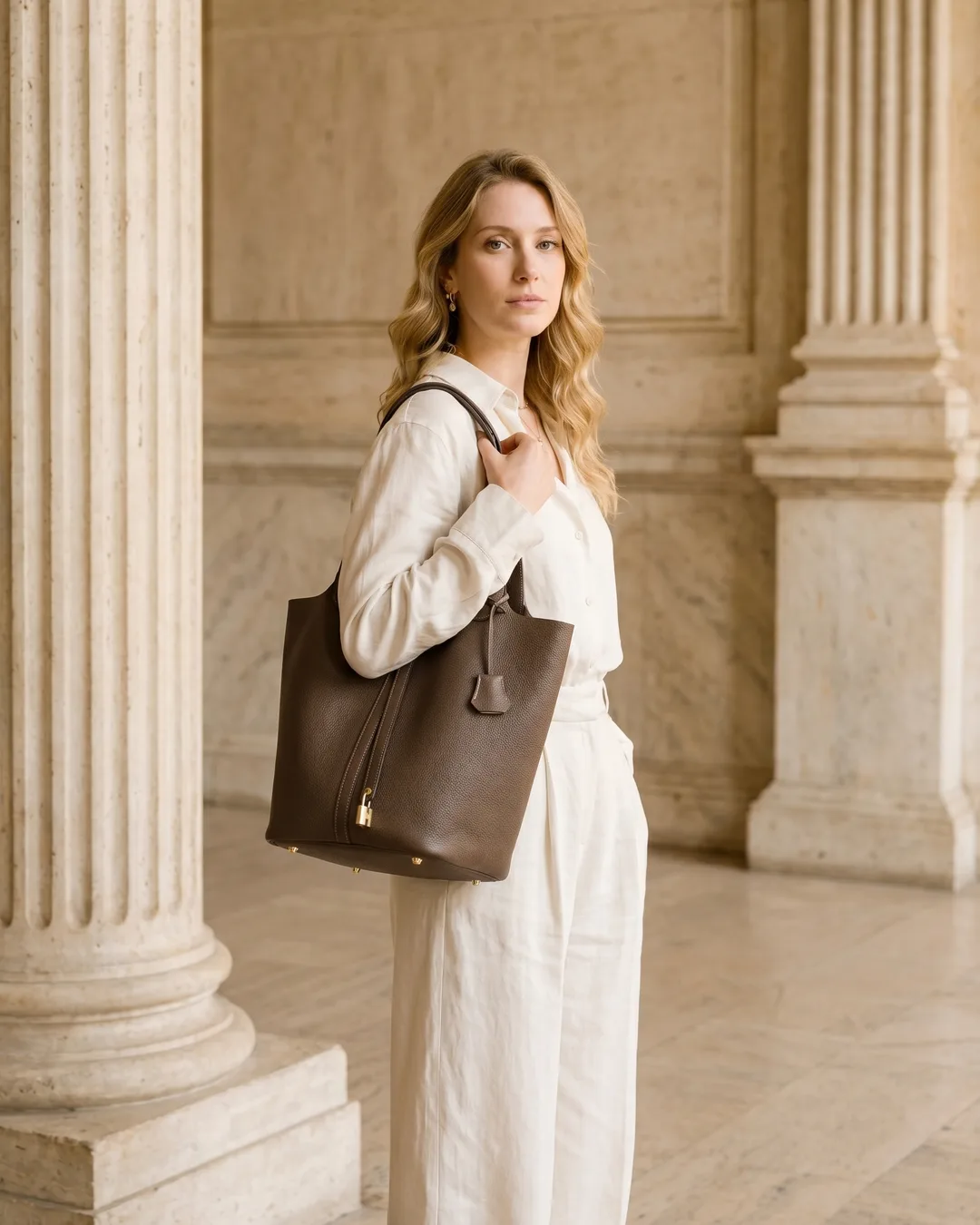
A beautifully made, logo-free leather bag in Cuoio or Basalt is the anchor that never goes out of date. Quality over quantity becomes literal here, because full-grain cowhide develops a patina rather than wearing out.
The Palatina minimalist leather shoulder bag and the Aventina soft cowhide tote are built for that long hold, with clean lines and no hardware shouting a brand. The edge case is the heavily logoed "investment" bag, which signals spend but not style and dates the moment the logo cycles out. Choose the quiet shape from the leather bags edit.
#Italian style vs. French style, and where Roman style fits
Italian style leans warm with color, drape, and sensuality, while French style leans cool, pared back, and deliberately undone. Both prize fit and quality; they part on temperature and intent.
#Confident warmth vs. cool minimalism
The Italian woman dresses to be seen with confidence, whereas the French woman dresses to look unbothered. Italian style commits to la bella figura and a real statement color; French chic commits to looking effortless in a narrower, cooler palette.
Picture the same brief, a weekday lunch. The Italian answer is a Cornelia dress, a silk scarf, and posture; the French answer is a navy knit, straight trousers, and one undone detail. The full head-to-head sits in Italian vs. French style.
#Roman vs. Milanese: two dialects of Italian style
Italian style is not one accent: Milan runs sharper and fashion-forward while Rome runs softer, classical, and heritage-rooted. Milanese dressing chases the runway's edge; Roman dressing leans on drape and lived-in elegance, and our house speaks the Roman dialect.
This frees you: a woman in Rome and a woman in Milan both pass, by different rules, and Capri and the Riviera add coastal dialects again. You are choosing an accent, not failing a test.
#Italian style by season and occasion
The look shifts by season and occasion without changing its rules, since fit, fabric, color, and one focal point hold year-round. Summer goes breathable; the evening goes cinematic.
#Italian summer style: Riviera, Capri and the coast
Summer trades structure for breathable chiffon dresses, flat sandals, the scarf, and a warm-weather slice of the palette. Think an Avorio chiffon A-line, a Cuoio sandal, and a Vermiglio scarf for the coast: natural fabric breathes, and the clean silhouette survives the sun. This hub only teases the coast, so the evening-led version lives in the Lake Como edit.
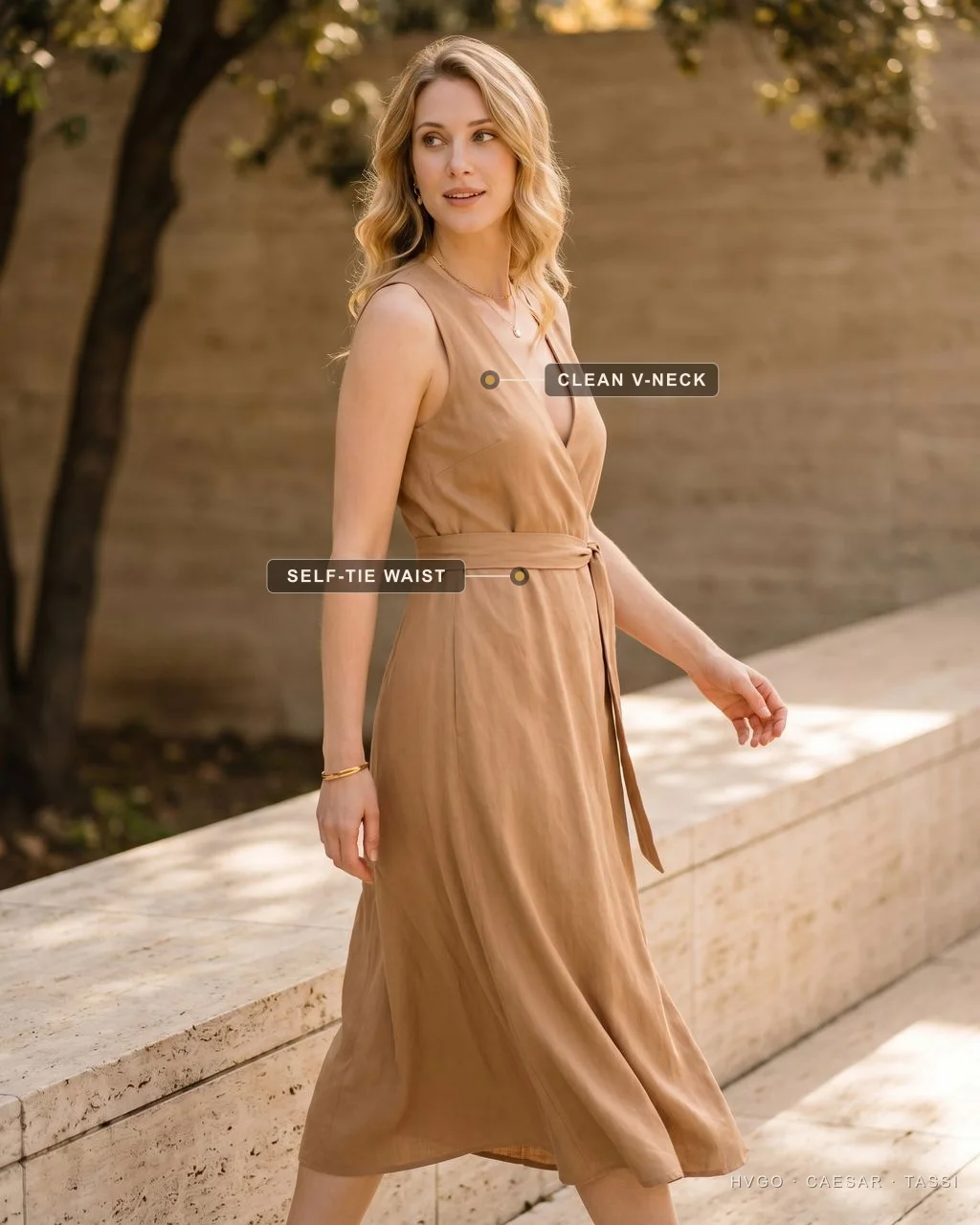
- Clean V-neck — an uncluttered deep V frames the décolletage and keeps a single clean line, no fuss
- Self-tie waist — a self-fabric sash defines the natural waist, the one focal detail that finishes the wrap
#La dolce vita and the dressed-up Italian evening
La dolce vita is the evening face of Italian style: the satin column, the statement color, the swept hair of mid-century Roman cinema. The daytime ease hardens into glamour, with one focal color and one clean silhouette, the register of the Flavia strapless satin gown.
The full cinematic playbook sits in la dolce vita style, where the satin column and the statement-color rule are worked out for the dressed-up evening.
#How Hugo Caesar Tassi designs Italian style into a dress
Hugo Caesar Tassi builds the doctrine into the garment: fluid imperial fabric, one named Roman color, full lining, logo-free, in classically drawn silhouettes.
#The house doctrine: Rome, the palette and the drape
Every dress is fully lined with a concealed zip, cut in sizes S through 3XL (EU 34 to 44), and made without a visible logo. Chiffon arrives knife-pleated or bias-cut, satin is bias-cut, and the modal column drapes in one line. Nata Imperare, born to rule, and la bella figura are the lens no Anglo style hub can claim as its own.
#The pieces that prove it
Five pieces demonstrate the doctrine across day, print, and the signatures.
- Claudia (pleated-slit chiffon maxi gown): the Roman column made wearable.
- Aemilia (A-line chiffon maxi): fluid daytime ease.
- Livilla (floral-print chiffon midi): the tonal print done quietly.
- Palatina (leather shoulder bag): the anchor signature.
- Carina (glossy silk square scarf): the color signature.
The full range sits across women's dresses and the accessories that finish them.
#Your Italian-style starting map and where to go next
The whole subject compresses to five lines, then opens into six guides you read in order.
#Italian style for women in five lines
Five rules hold the entire look, and you can carry them on one card.
- Fit before everything, starting at the shoulder.
- Natural fabric that moves.
- A real, named color.
- The scarf and the leather bag as keep-forever signatures.
- Confidence as the final garment.
#Read these Italian-style guides in order
Read the silo as a path: the playbook first, then the philosophy, the comparison, then season and cinema. The parent hub for everything sits in the broader style guides library.
Start with the insider playbook in how to dress like an Italian woman, then learn the philosophy in la bella figura. When you are ready to wear it, build from a real color in women's dresses, anchor it with a leather bag, and finish with the most Italian accessory of all, a silk square scarf, beginning with the Carina glossy silk scarf.
#Frequently asked questions
What is Italian style for women?
Italian style for women is a way of dressing that looks effortless but rests on deliberate choices. Those choices are impeccable fit that starts at the shoulder, fluid natural fabrics, one considered color, a single focal point, and the confidence Italians call la bella figura. It is about looking and feeling right, not following a trend checklist.
Why are Italian women so stylish?
Italian women read as so stylish because la bella figura makes presentation a cultural courtesy rather than an occasion. Even daily errands are dressed with care, and generations of Italian tailoring and fabric craft trained the eye toward quality over quantity, so style became a habit, not an event.
What colors do Italian women wear?
Italian women wear a grounded field of stone, ivory, navy, and tan, lifted by one considered statement shade. That statement is a wine, deep green, red, or rose, never a wall of trend brights. Our house orders it around a named nine-color imperial palette dyed in Rome, so you build from real colors with a logic.
What's the difference between Italian and French style?
The difference between Italian and French style is temperature, since Italian leans into warmth and French leans into cool restraint. Italian style embraces color, drape, and the warmth of la bella figura, while French style stays cooler and deliberately undone. Both prize fit, but the Italian woman dresses to be seen with confidence where the French woman dresses to look unbothered.
How can a woman dress Italian style on a budget?
A woman dresses Italian style on a budget by buying fewer, better pieces and letting fit and color do the work. A well-tailored dress in one real color, a silk scarf, and a good leather bag will out-style a closet of trend buys. Tailor the shoulder seam, choose natural fabrics that drape, and keep one focal point.
Is Italian style the same as old money or quiet luxury?
Italian style overlaps with old money and quiet luxury but is not the same as either. Old money is about inherited taste and quiet luxury is a fabric-and-finishing standard, while Italian style is the sprezzatura and la bella figura attitude of color, drape, and confidence that the others borrow from. It is the warmer, more expressive cousin of both.
Italian Style guides
How to Dress Like an Italian Woman
A Roman house's real rules for dressing like an Italian woman: fit, fabric, color and the scarf-and-leather signatures that read elegant, never touristy.
Dress like an Italian womanItalian Summer Style
A Roman house's Italian summer style rulebook: fibers that breathe, the Riviera palette, and how to stay elegant, never touristy, in the heat.
Dress an Italian summerItalian vs French Style
A Roman house compares Italian vs French style for women on fit, color and attitude, then names which elegance is yours from the Italian side.
Compare Italian vs French eleganceLa Bella Figura
What la bella figura really means, and how a Roman house turns it into a three-part dressing code for women: sprezzatura and brutta figura explained.
Master la bella figuraLa Dolce Vita Style
La dolce vita style: Fellini's 1960 Rome in oxblood-and-ivory satin, and how to dress it now: the slip, the scarf, the dark shades. From a Roman house.
Decode 1960 Roman glamourWhat to Wear in Lake Como and the Riviera
A Roman house edits what to wear in Lake Como and the Riviera: four real moments mapped to the dress, color and sandal that fit each.
Dress the lakeside evening