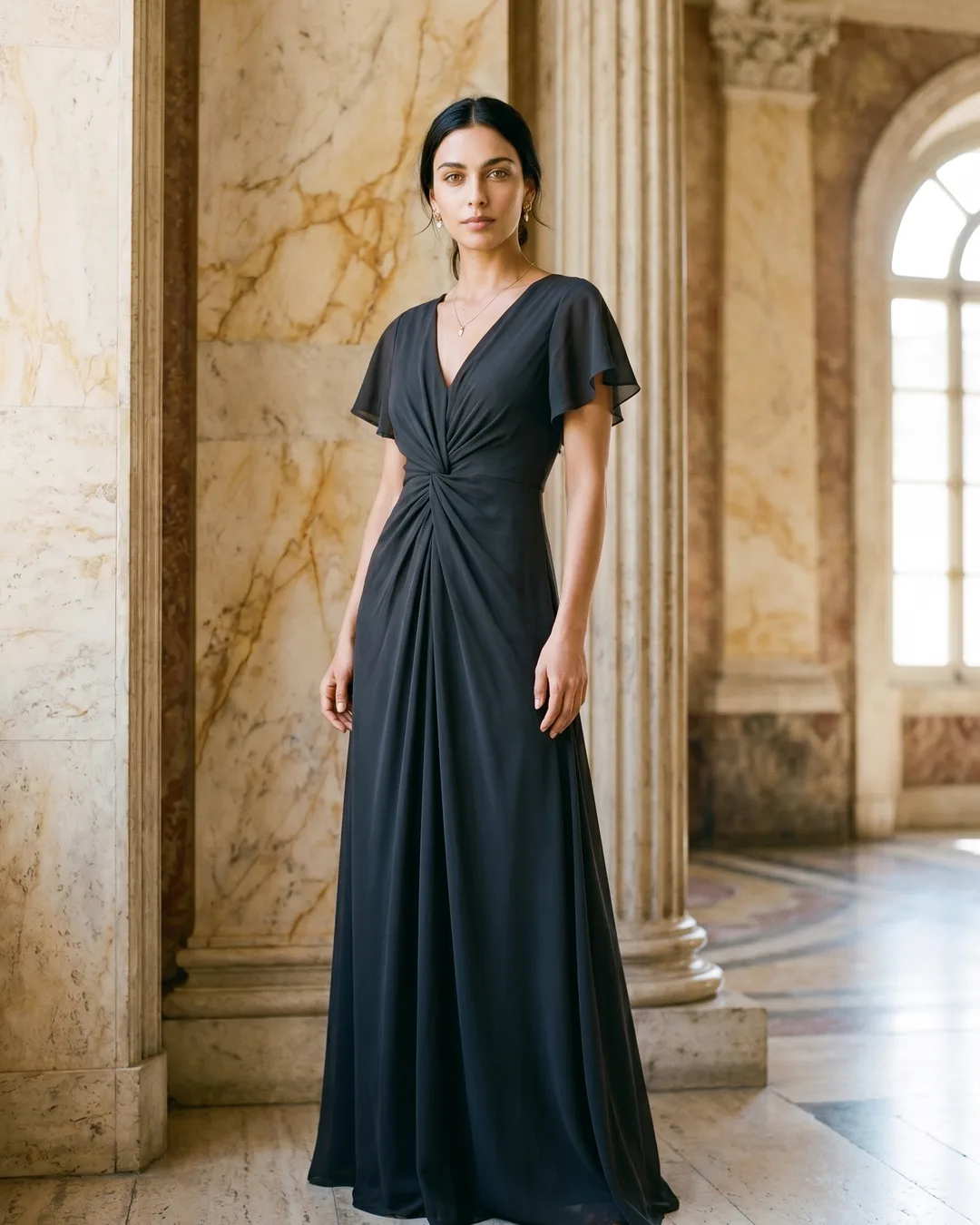
Wedding Guest Dress Code, Explained: Every Code From White Tie to Garden Party
Every wedding guest dress code explained, white tie to garden party, mapped to an exact fabric, hem length and color by a Roman house.
On this page
The line at the bottom of the invitation tells you exactly what to wear, once you can decode it. This guide defines all eleven wedding guest dress codes, traces where each phrase began, and pins every one to a named fabric, an exact hem length, and a single safe color. Read it once and you stop guessing.
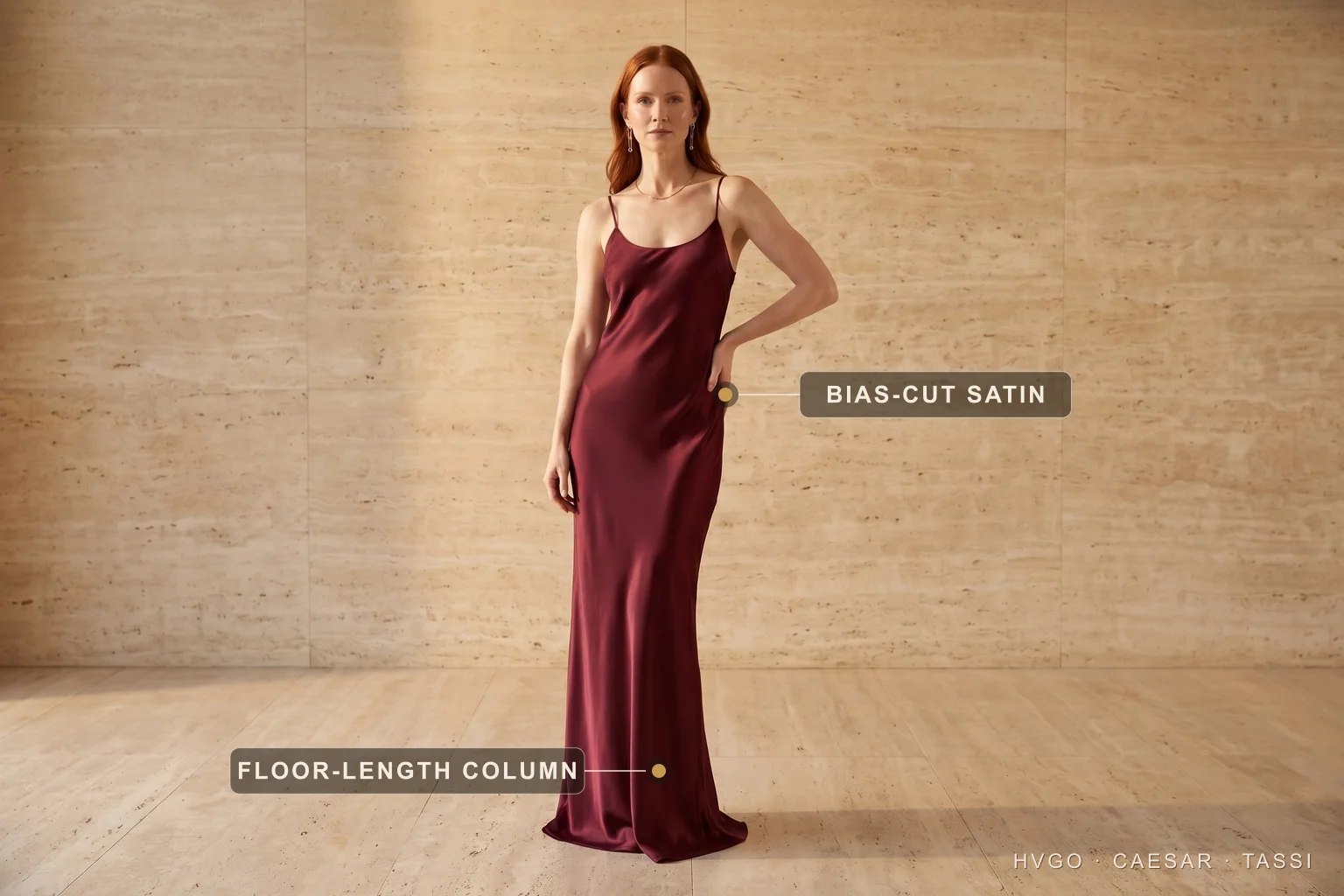
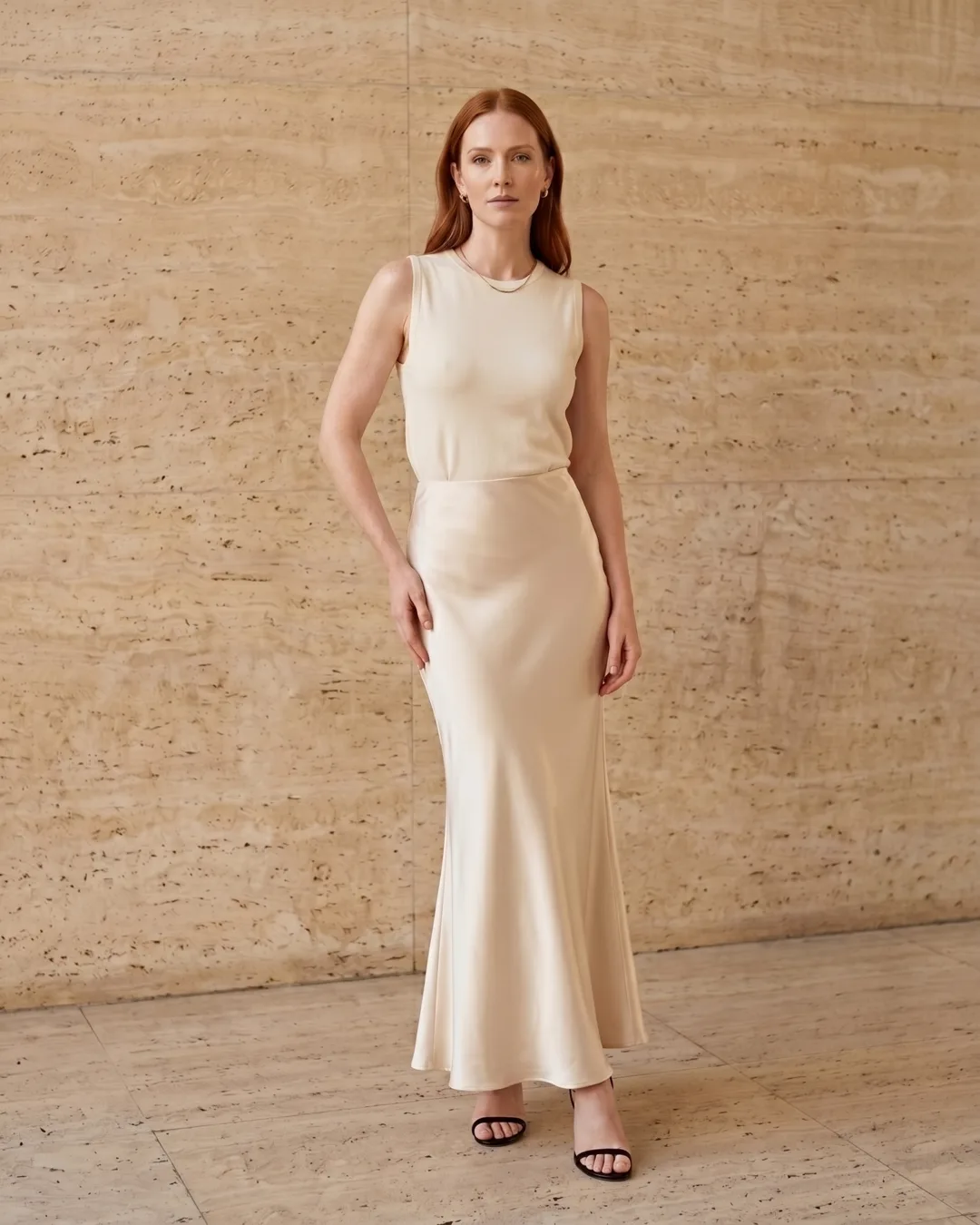
- Bias-cut satin — reads as evening
- Floor-length column — black-tie hem
Wedding-guest dress codes, decoded
Read the code, the venue and the time; when two disagree, dress to the more formal.
Shop occasion dresses#The complete wedding guest dress code chart, from white tie to garden party
Every code resolves to four decisions: the fabric, the hem, the silhouette, and the color. Hold those four fixed and any code line becomes a single outfit instruction rather than a riddle. The table below maps each tier to a Hugo Caesar Tassi fabric and one color from the house's imperial palette, so you read across your row and stop.
#How to read this wedding guest dress code chart at a glance
Find the wording printed on your card, then read straight across to the hem and color. Hugo Caesar Tassi (a women's occasionwear house, designed in Roma, founded 2004) builds dresses in four core cloths, and each cloth telegraphs its formality the moment you see it.
| Dress code | HCT fabric | Hem | Silhouette | Safe color |
|---|---|---|---|---|
| White tie | Heavy satin | Floor | Ballgown or column | Cobalto (navy) |
| Black tie | Bias-cut satin | Floor | Column or fishtail | Porpora (wine) |
| Black tie optional | Satin or heavy crepe | Floor or tea-length | Column or A-line | Verde Antico (green) |
| Formal | Knife-pleated chiffon | Floor or midi | A-line | Cobalto (navy) |
| Semi-formal | Matte crepe | Knee to tea-length | A-line or sheath | Travertine (stone) |
| Cocktail | Chiffon or crepe | Knee to midi | A-line | Cornelia (rose) |
| Festive | Bias-cut satin | Knee to midi | Column or A-line | Vermiglio (red) |
| Dressy casual | Recycled chiffon | Knee to midi | A-line | Cipria (pink) |
| Beach formal | Recycled chiffon | Midi to floor | A-line column | Verde Antico (green) |
| Garden party | Recycled chiffon | Midi | A-line | Cornelia (rose) |
| Casual | Modal | Knee to midi | Sheath | Travertine (stone) |
Crepe is matte and structured, so it photographs as evening even at a knee-length hem. Satin catches light and presents dressier than its cut alone, which is why a tea-length satin can answer a code that a tea-length cotton never could.
#The eleven codes you may actually see on an invitation
Wedding stationery draws from eleven recognized codes, and most invitations use one of the middle five. Naming each once keeps the ladder complete:
- White tie: the formal ceiling: floor-length gown, gloves optional.
- Black tie: evening, floor-length, satin or heavy crepe.
- Black tie optional: a gown is welcome, a polished tea-length is equally correct.
- Formal (black-tie creative): floor or midi with room for color and texture.
- Semi-formal: knee to tea-length, daytime-leaning fabrics.
- Cocktail: knee to midi, the most common code printed.
- Dressy casual: elevated but relaxed, flowing cloth, no gown.
- Festive: color and shine, usually holiday-season weddings.
- Beach formal: gown-level polish in breathable cloth, flat or block heels.
- Garden party: daytime, floral, breathable, midi.
- Casual: a sundress or a simple sheath, still pressed.
#What the white tie and black tie wedding guest dress code really require
White tie demands a floor-length gown; black tie demands floor-length and evening timing. These two sit at the top, and almost every guest who panics is staring at one of the optional or creative variants below them, not these.
#White tie: the rarest and most formal wedding guest dress code
White tie calls for a full-length ballgown or column gown in the house's heaviest cloth, and weddings rarely use it. A floor-sweeping silhouette in heavy satin meets the code; a Vipsania draped modal column in Cobalto clears it because the modal falls to a clean vertical line. For the full gala and eveningwear calibration that white tie shares with formal galas, the dedicated guide to black-tie attire carries that depth. The edge case: a strapless cocktail-length dress, however expensive, fails white tie outright, because the hem is the rule the code cannot bend.
#Black tie: floor-length, evening, and non-negotiable
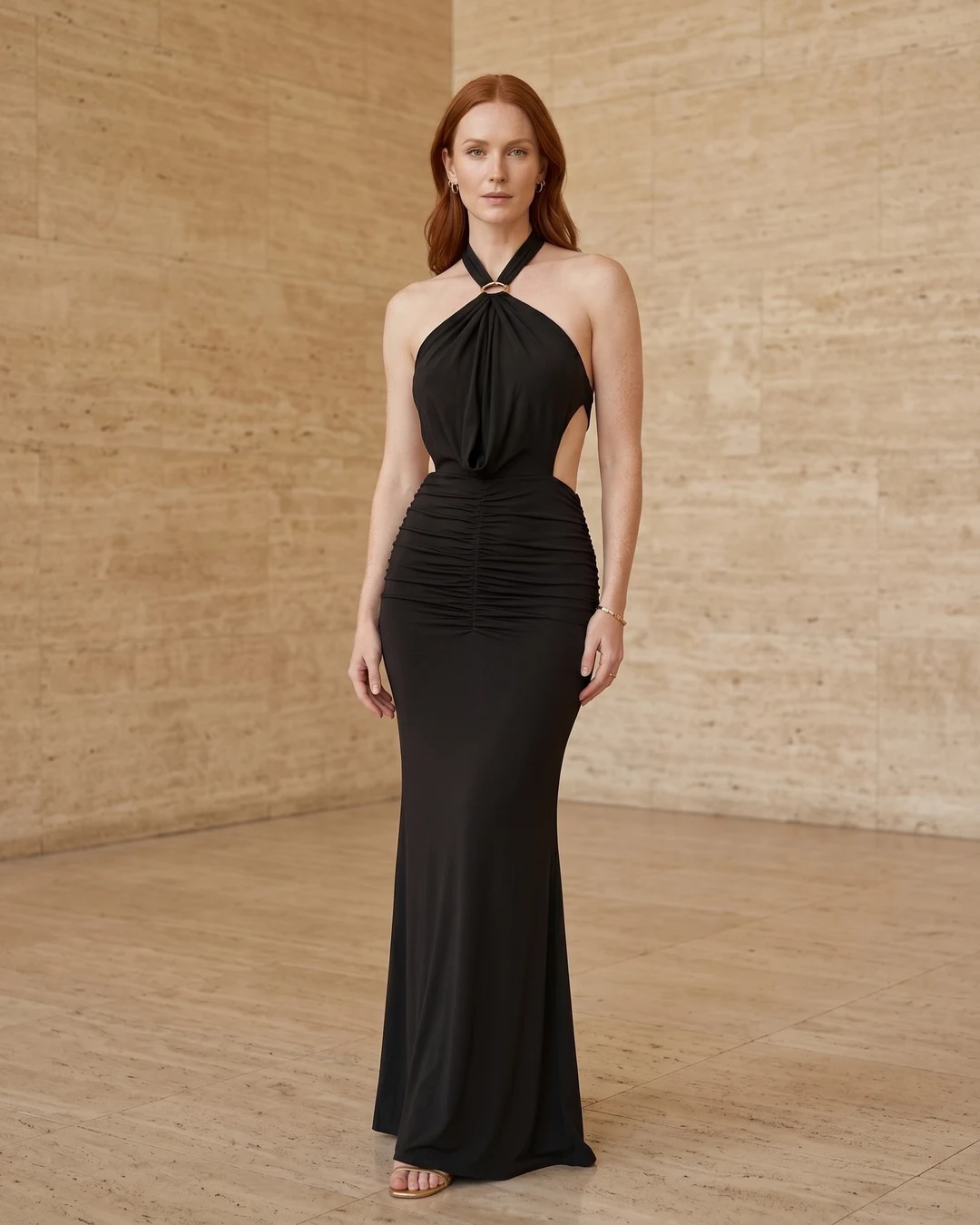
Black tie means a floor-length gown worn after the late afternoon, in satin or heavy crepe. The Calpurnia fishtail satin gown in Porpora answers it: the bias-cut satin pours over the hip and the fishtail breaks at the floor. Timing matters as much as length, since black tie signals an evening reception with low light. One counter-case worth flagging: a daytime black-tie wedding, which does occur, lets you choose a matte crepe over high-shine satin so you hold the formality without looking lit for a ballroom you are not in.
#The black tie optional, formal and semi-formal wedding guest dress code, decoded
Black tie optional permits a gown but does not require one; formal and semi-formal step down by hem, not by fabric. This trio holds the most-searched ambiguity, because the wording invites a range instead of naming a single hem.
#What a "black tie optional" wedding guest dress code actually permits
Black tie optional allows a floor-length gown or a polished tea-length, both in dressy cloth, and it leans evening. Choose the gown if the venue is a hotel ballroom; choose a tea-length satin or heavy crepe if the reception is earlier or smaller. The Claudia pleated-slit chiffon maxi in Verde Antico satisfies the gown reading while the knife-pleating keeps it from feeling heavy. Where this falls short: a sundress or a knee-length cotton shift, which the word "optional" never stretches to cover, since the floor of the code is still dressy.
#Formal vs semi-formal wedding attire for women
Formal allows floor-length and asks for evening polish; semi-formal stops at knee-to-tea-length and leans daytime. The Julia French-pleated chiffon maxi in Cobalto answers formal, whereas a matte crepe sheath at the knee answers semi-formal without overreaching. Unlike black tie, formal tolerates color and visible texture, which is why a pleated chiffon works where a plain column would feel austere. The trap: treating semi-formal as casual. It is not. A pressed crepe in Travertine clears the bar; denim or a printed jersey does not.
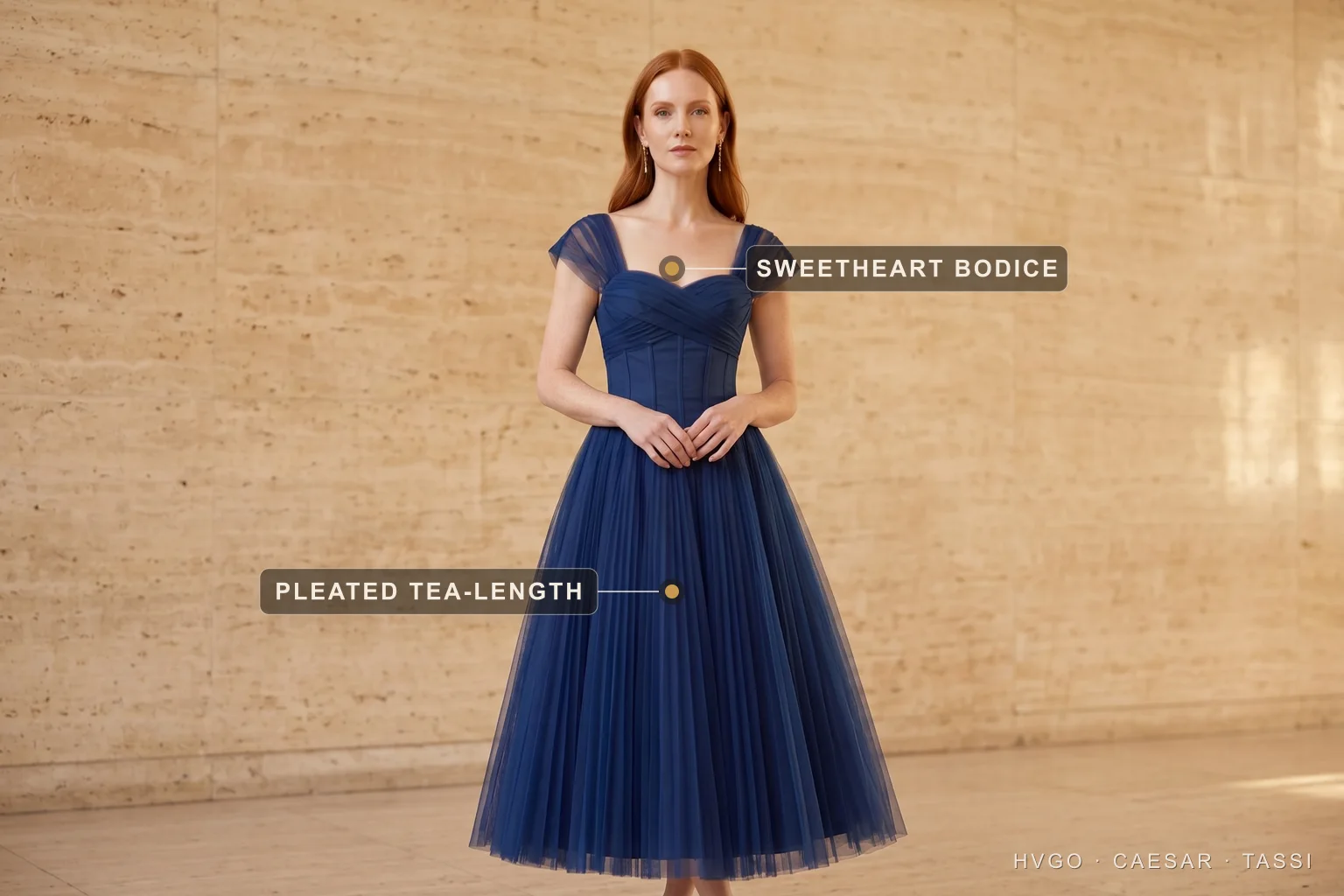
- Sweetheart bodice — colour and texture
- Pleated tea-length — formal hem
#Cocktail vs formal: the most-confused wedding guest dress code tiers
Cocktail tops out at midi and centers on the knee; formal starts at the knee and runs to the floor. They overlap at one hem, and that single inch of shared territory is where most guests misjudge the room.
#What cocktail attire means in the wedding guest dress code ladder
Cocktail attire means a knee-to-midi dress in chiffon or crepe, finished with a heel and a small clutch. The term traces to the mid-century cocktail hour, when a shorter, dressy frock replaced the full evening gown for early-evening receptions. The Livilla floral-print chiffon midi in Cornelia lands squarely on cocktail, and a Quirina leather envelope clutch closes the look. One edge case: an outdoor cocktail reception on grass, where a block heel beats a stiletto that sinks, so the code bends for the ground, not for the formality.
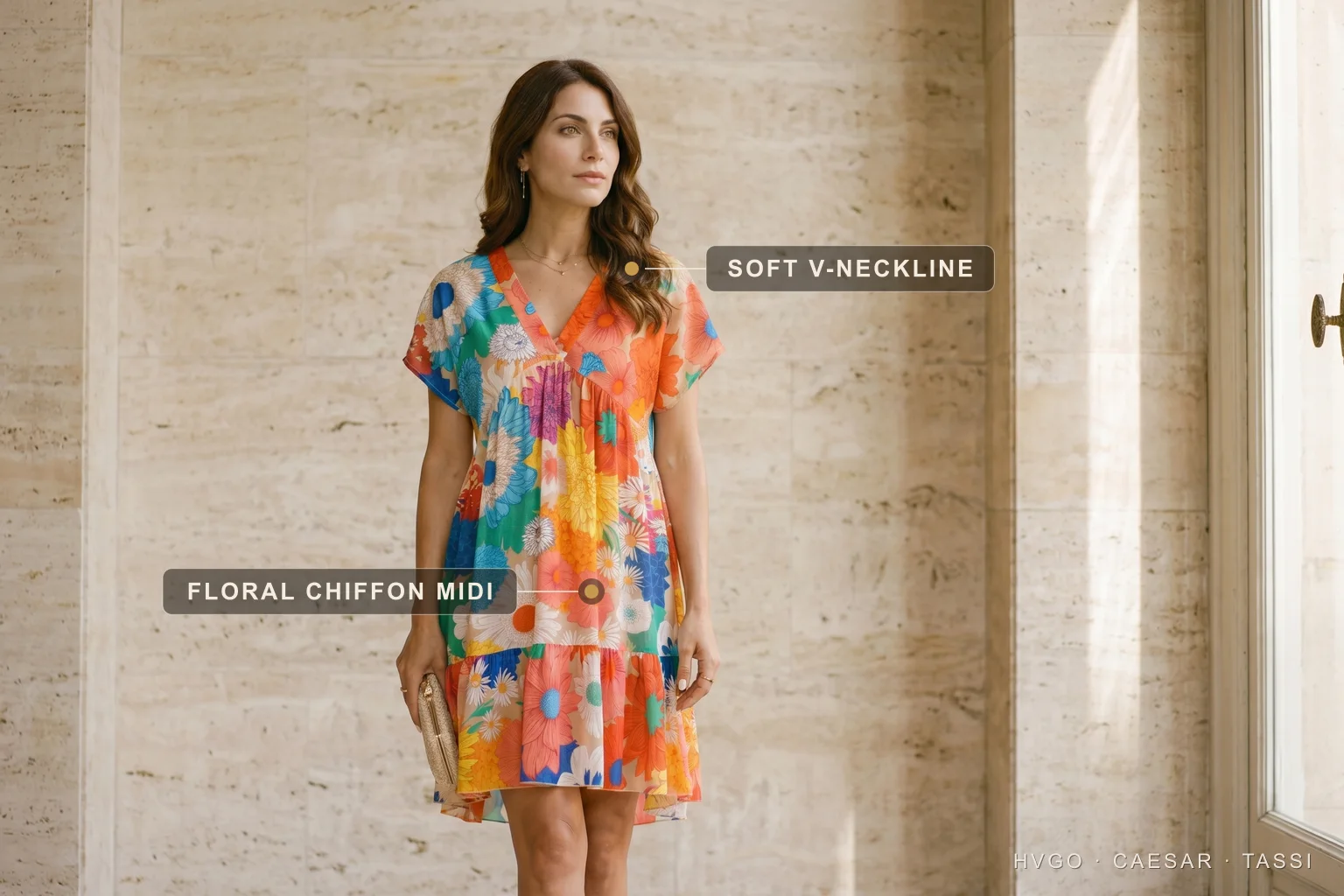
- Soft V-neckline — cocktail ease
- Floral chiffon midi — knee-to-midi hem
#A side-by-side: cocktail, formal and the gray zone between
The gray zone lives at the knee-to-midi midi length, where fabric weight decides which way an outfit tips. Read the comparison below to place a borderline invitation.
| Cue | Cocktail | The gray zone | Formal |
|---|---|---|---|
| Hem | Knee to midi | Midi | Midi to floor |
| Fabric weight | Light chiffon | Crepe | Heavy crepe, satin |
| Finish | Matte or soft sheen | Matte crepe | Satin sheen |
| Time of day | Afternoon to early evening | Early evening | Evening |
| Resolves toward | Shorter and lighter | Crepe at midi | Longer and heavier |
A midi in light chiffon tips cocktail; the same midi cut in heavy crepe tips formal. That is the whole decision, and the cloth in your hand answers it faster than the hem does.
#Festive, dressy casual and beach formal: the modern wedding guest dress code, decoded
Festive asks for color and shine, dressy casual asks for elevated ease, and beach formal asks for gown-level polish in light cloth. These three are newer codes, written for couples who want energy or a setting that a stiff gown would fight.
#Festive wedding attire, explained
Festive wedding attire signals color, a touch of shine, and the holiday season it usually accompanies. Where cocktail stays restrained, festive invites a saturated hue and a satin that catches light, so a Flavia strapless satin gown in Vermiglio fits a December reception. Unlike black tie, festive does not fix your hem at the floor, which is the freedom the word is granting you. The misread to avoid: a sequined novelty look that out-sparkles the couple, since festive rewards one statement color, not a costume.
#Dressy casual and beach formal for a wedding guest
Dressy casual means relaxed-but-elevated, while beach formal means a gown-level outfit in fabric built for sand and breeze. Flowing recycled chiffon in Cipria covers dressy casual; a chiffon A-line column in Verde Antico with a block heel or a refined flat answers beach formal. The Portia short-sleeve chiffon A-line covers both with a modest sleeve. For the full outdoor styling a shoreline ceremony needs, the summer wedding guide carries it. The counter-case: stiletto heels on sand, which beach formal quietly forbids no matter how formal the word "formal" sounds.
#Garden party attire: the daytime wedding guest dress code, defined
Garden party attire means a daytime, floral, breathable dress at a midi hem in a soft palette. The code names an outdoor afternoon reception, and the fabric call follows the sun: recycled chiffon over satin, midi over floor, Cornelia or Cipria over anything dark and heavy.
#What garden party attire means and where it sits on the ladder
Garden party sits one step above dressy casual: dressier than a sundress, lighter than cocktail, always daytime. A knife-pleated chiffon midi in a rose tone moves in a breeze and never stiffens the silhouette, which is the point of the code. The Aemilia A-line chiffon maxi works when the lawn is formal and the hem can clear the grass. For deep outdoor styling across a full summer day, that sibling guide carries the heat-and-humidity detail; this hub owns the definition. The edge case: a walled garden in early spring, cool enough that a long sleeve in light crepe beats bare chiffon, so the venue's temperature overrides the season's default.
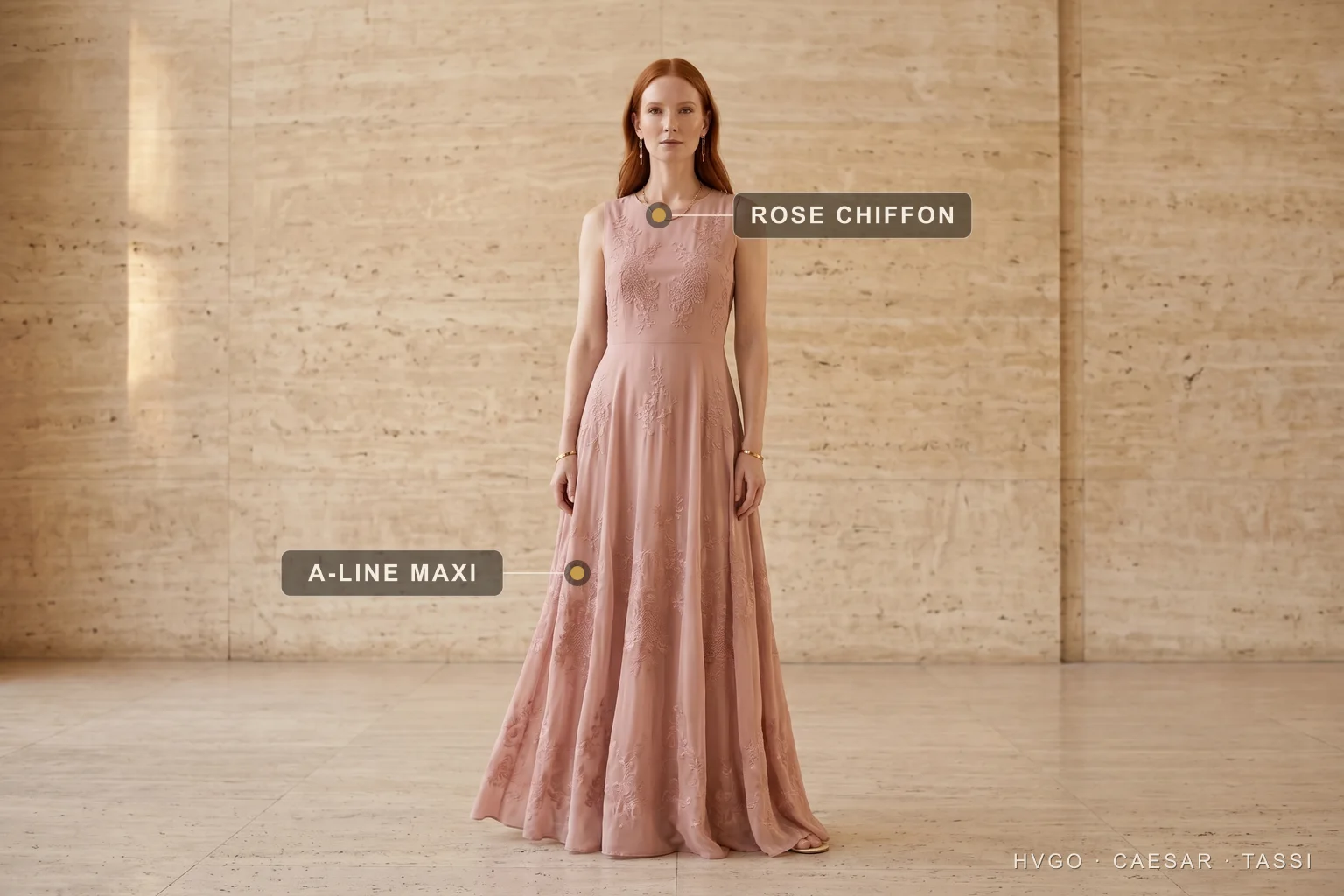
- Rose chiffon — daytime, soft palette
- A-line maxi — floats over the lawn
#Where the wedding guest dress code wording comes from, and why it still matters
Each code name records a real object or hour: a white necktie, a black one, a cocktail, an afternoon in a garden. Knowing the origin tells you the timing and formality the phrase was built to carry, which is more than a definition alone gives you.
#The etymology behind each wedding guest dress code term
White tie and black tie name the literal neckwear men once wore, and the women's tier follows the men's. White tie meant a white bow tie with tails, the evening ceiling; black tie meant a black bow tie with a dinner jacket, one rung down. Cocktail names the mid-century cocktail hour that introduced the shorter dressy dress, and garden party names the outdoor afternoon reception of the same era. The pattern holds: a code anchored to evening neckwear demands evening dress, whereas a code anchored to an afternoon event releases you to lighter cloth.
#How to read the dress code when the invitation doesn't print one
When no code is printed, read the venue and the hour, then default to cocktail or semi-formal. A ballroom or an evening start asks for more; a vineyard at noon or a beach asks for less. Scan the invitation suite, the wedding website, and the RSVP card, where couples now park the code line more often than on the main card. As a guest, you owe the couple a call that errs slightly dressy, since overshooting signals respect while undershooting signals indifference.
#What a wedding guest should never wear under any dress code
One rule overrides every tier: never wear white or any shade that photographs as white. The codes set the floor and ceiling of formality, but this prohibition holds across all of them, daytime and evening alike.
#The no-white rule and its near misses
The no-white rule bans white plus its near misses: ivory, blush, champagne, and cream. All four photograph as bridal under flash, so they fall under the same ban as pure white. Hugo Caesar Tassi designs occasion dressing to route around this entirely, keeping the bridal-white spectrum off its occasion palette by default. Off-white is genuinely safe in only one case: a bold pattern where white is a minor ground, not the dress's main color. A solid champagne sheath fails; a Verde Antico floral with white accents passes.
#Overdressing, underdressing and other quiet mistakes
The quiet mistakes are dressing below the stated tier, matching the bridal party, and wearing a print that pulls focus. Each one lands louder than a guest expects:
- Underdressing the code: a sundress at a black-tie-optional evening signals a misread invitation.
- Matching the wedding party: a guest in the bridesmaids' exact shade competes with the lineup.
- Too revealing for a church ceremony: a deep slit or bare shoulders can clash with a religious venue.
- Novelty or loud prints: a busy graphic print pulls the camera off the couple.
The overdressing case is gentler: a slightly-too-formal gown signals effort, not error, which is why the etiquette tilt always runs upward.
#How Hugo Caesar Tassi dresses each wedding guest dress code
Hugo Caesar Tassi maps one silhouette to each tier, each in a single imperial-palette color. The house dresses by a plain doctrine: one statement color per outfit, a hem at the knee or the floor and never the unflattering middle, matte before shine, one focal point only.
#A Roman house's pick for every tier
The house assigns a named dress to each code, from black tie down to garden party. Read the picks as worked examples of the chart above:
- Black tie: Calpurnia fishtail satin gown, Porpora.
- Black tie optional: Claudia pleated-slit chiffon maxi, Verde Antico.
- Formal: Julia French-pleated chiffon maxi, Cobalto.
- Evening: Flavia strapless satin gown, Porpora.
- Cocktail or garden party: Livilla floral chiffon midi, Cornelia.
- Festive or daytime: Aemilia A-line chiffon maxi, Cipria.
Step up to the evening gowns line when the code calls for floor-length, where the satin and heavy-crepe pieces carry the weight an evening hour wants.
#The fabric-and-color logic behind the picks
Matte crepe and heavy satin code as evening; chiffon stays daytime and garden; the imperial palette sits off the bridal spectrum. Crepe's structure and satin's weight mark a formal hour, whereas chiffon's float points to sun and air. Color does the safety work: Porpora, Cobalto, and Verde Antico sit far from white, ivory, and blush, so they clear the one rule that overrides every tier. The logic is consistent, which means you can pick a code's fabric and color yourself once you see the pattern, instead of memorizing eleven separate outfits.
#Your one-line wedding guest dress code answer, by invitation
Read your card, find your row, wear the fabric and color it names. If it says black tie, wear a floor-length satin gown in a deep color; if it says cocktail, wear a knee-to-midi chiffon; if it says garden party, wear a breathable midi in a soft tone. The chart is your shortcut and the doctrine is your check: one color, a clean hem, matte before shine. From here, route to the sibling guide that matches your setting: a winter wedding reception, an Italian wedding abroad, or the 2026 edit for this season's looks. You can also browse the whole library at what to wear.
#Frequently asked questions
What is the most common wedding guest dress code?
The most common wedding guest dress codes are cocktail and semi-formal by a wide margin. Both call for a knee-to-midi or tea-length dress in a dressy fabric. Lean dressier in the evening than at a daytime ceremony, and a chiffon or crepe in a jewel tone answers either one.
Can a wedding guest wear a floor-length dress to a cocktail wedding?
A floor-length dress runs slightly formal for a true cocktail wedding, though a sleek column maxi can still work. A matte-fabric column presents as elevated rather than overdressed, while a polished midi remains the safer cocktail choice. The deciding factor is fabric weight, not the hem alone.
What does "black tie optional" mean for a woman?
Black tie optional means a floor-length gown is welcome but not required. A refined tea-length or midi in satin or heavy crepe is equally correct, and the timing skews evening. Choose the gown for a ballroom and the tea-length for an earlier or smaller reception.
Is it ever okay for a woman to wear black to a wedding?
Wearing black to a wedding is acceptable at most modern Western weddings, especially evening and black-tie events. Some cultures and traditional families still read black as too somber, so check the couple's wishes first. The Italian-wedding guide covers that convention in detail.
What colors should a wedding guest avoid besides white?
The colors a wedding guest should avoid besides white are ivory, blush, champagne, and cream. All four photograph as near-white under flash, the bridal range a guest never enters. Deep jewel and earth tones such as wine, navy, and antique green stay safe across every tier and every hour.
How do I know the dress code if the invitation doesn't state one?
You can read an unstated wedding dress code from the venue and the time of day. A formal hall or evening start signals dressier than a midday garden ceremony. Default to cocktail or semi-formal, which suit nearly every unstated wedding.
Found your tier? Shop the dress that answers it in the occasion dresses edit, or read the seasonal sibling guide that matches your wedding's setting.
More What to Wear guides
What to Wear to a Christening
What to wear to a christening, by a Roman house — modest, daytime-elegant outfits in church-safe colors that honor the day, never reading bridal.
Dress for a christeningBlack-Tie Attire for Women
A Roman house decodes black-tie attire for women: floor-length or not, the right fabric and jewelry, and how optional, creative and gala differ.
Decode the four black-tie rungsCocktail Attire for Women
A Roman house decodes cocktail attire for women: the exact length (knee to mid-calf, never floor), the right fabric, and how it differs from black tie.
Decode cocktail attireWhat to Wear to an Italian Wedding
A Roman house decodes what to wear to an Italian wedding: the real no-black and no-white rules, church cover-up, and North-vs-South dress code.
Decode the invitata dress codeWhat to Wear to Royal Ascot and the Races
The enforced Royal Ascot enclosure rules for strap width, hem and hat size, plus a Roman house rule for balancing a hat against your dress.
Pass the Ascot enclosure rulesWhat to Wear to a Summer Wedding
A Roman fashion house on what to wear to a summer wedding: the breathable fabrics, flattering bright-light colors and hems that survive grass and sun.
Dress a summer wedding