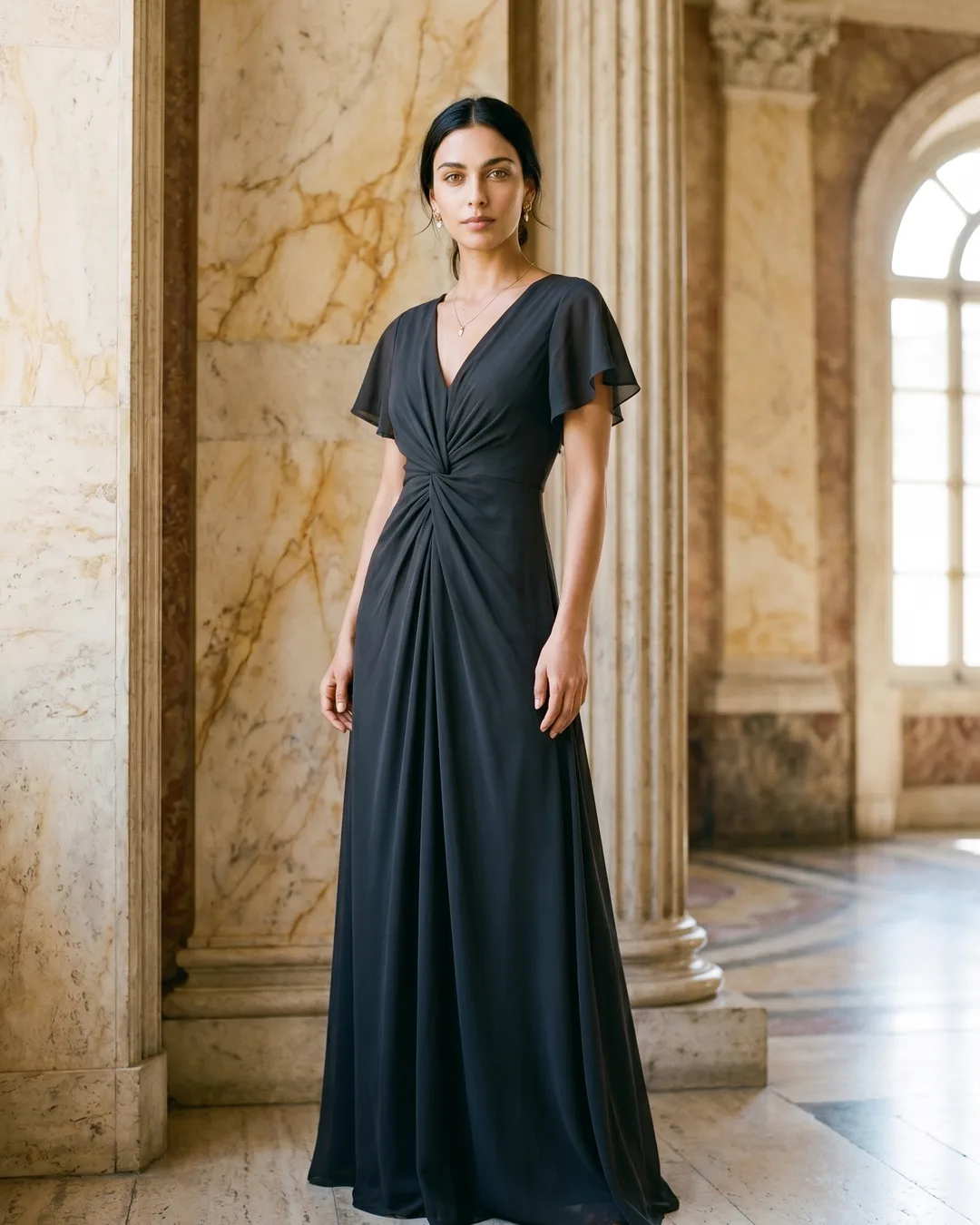
Style Guides for Women: Dressing to Command a Room, the Roman Way
Our women's style guides teach elegance, old money and quiet luxury the Roman way — each mapped to one house discipline: restraint, proportion, fabric.
On this page
These style guides for women teach one method: command a room by lowering the volume, not raising it. Every dressing question here reduces to three disciplines (restraint, proportion, and fabric) drawn from a Roman house founded in 2004 on the motto Nata Imperare, born to rule. Read the page through for the full curriculum, or jump to the one guide that settles your question.
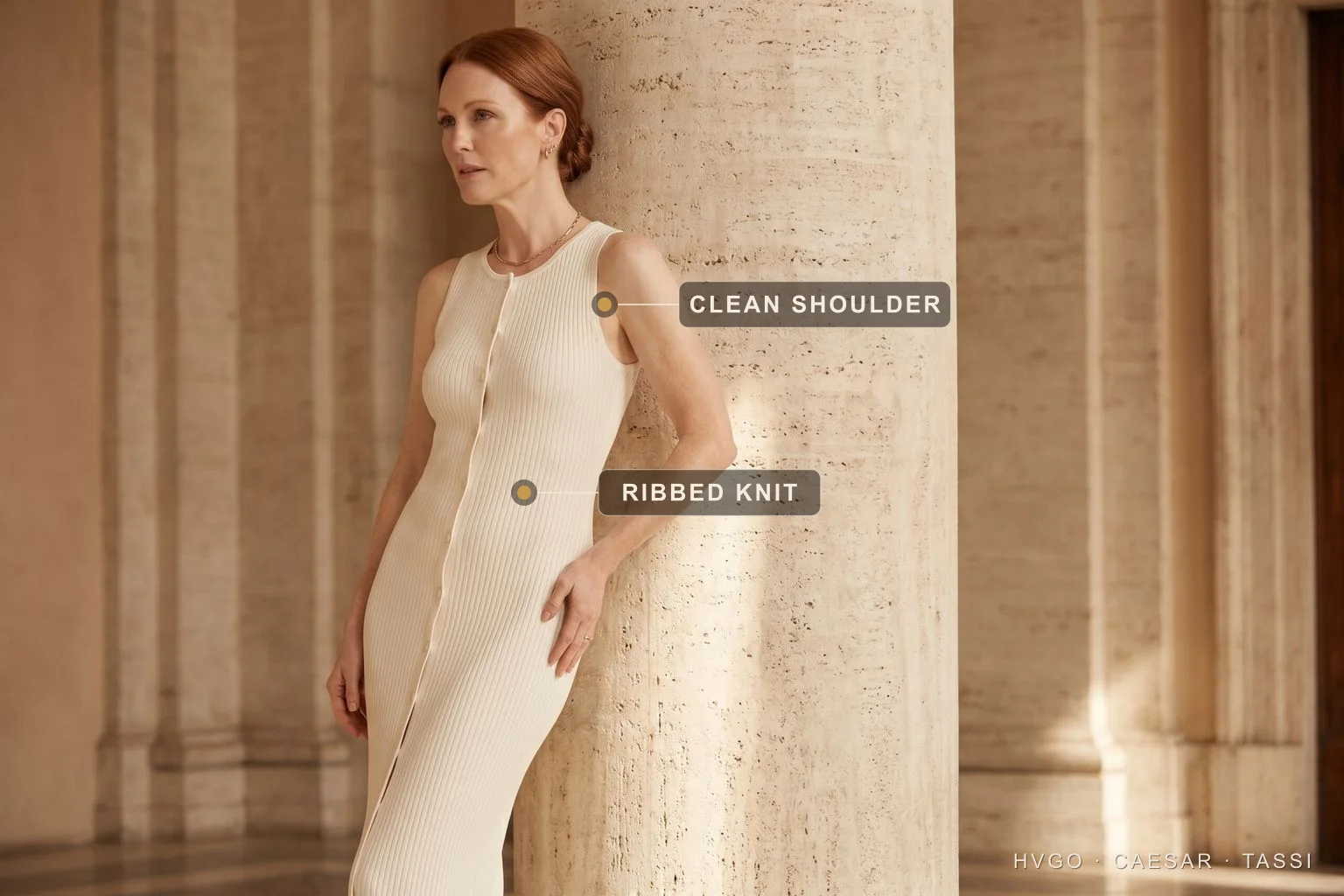
- Clean shoulder — the seam sits exactly on the shoulder, the fit cue that makes a dress read tailored
- Ribbed knit — matte low-sheen viscose rib that signals fabric quality over flash
The three disciplines, mapped
Find the question that brought you here, then read the one guide that trains it.
#What do these style guides for women teach that a trend roundup never will?
Durable discipline, not a seasonal look, is the deliverable here, so the method still works three years after you learn it. A trend roundup names what is selling this quarter; a discipline names why a clean shoulder seam and a matte crepe read as authority in any season. Hugo Caesar Tassi (a women's luxury occasionwear house, designed in Roma, founded 2004) writes every guide as a rule you keep, not a purchase you regret.
The contrast is sharp. A beige-capsule checklist tells you to buy a camel coat and a white shirt; it never explains that the coat reads expensive because the shoulder sits at your actual shoulder, not two inches past it. We start from the mechanism, then name the piece.
The math favors the discipline. A woman who buys ten on-trend items in a year wears each about twice, then stands under-dressed at the one event that counts. Fewer pieces, each chosen against a rule she understands, beat a closet of guesses.
#A discipline, not a trend cycle
A discipline is a repeatable rule; a trend is a dated guess, and these guides bet entirely on the rule. Restraint, proportion, and fabric do not expire when the season turns. That is the whole wager.
Every guide on this hub is written for a woman building a wardrobe of quiet authority. There is no men's framing and no unisex hedging: the color advice, the fit advice, and the fabric advice all assume a woman's body and a woman's occasion. The dress-knowledge guides hold the garment-level detail behind these rules once you want it.
#Who these style guides are for
These guides serve three women: the first-time stylist, the rebuilder, and the woman with an event in two weeks. Each enters the curriculum at a different door, and none needs prior fashion vocabulary.
- The first-timer has never named her own taste and wants a starting rule, not a mood board.
- The rebuilder is dismantling a closet of impulse buys and choosing one aesthetic to keep.
- The event-driven reader has a wedding or gala on the calendar and wants to look effortlessly expensive by Saturday.
- The careful spender wants every euro to read as authority, so cost-per-wear, not the price tag, drives her.
No term goes undefined. Where a guide uses a word like bias-cut or stealth wealth, it explains it in plain English on first use.
#The one rule behind every guide: Nata Imperare, command a room without raising your voice
Authority comes from restraint, fit, and fabric, not from logos, volume, or the loudest trend in the room. Nata Imperare translates as "born to rule," and it sets the standard every guide enforces: one statement color, one focal point, a fit that begins at the shoulder, and matte before shine. A woman who follows it reads as the most composed person present without a single visible brand mark.
The Roman-Italian lens is the part competitors lack. The house draws on la bella figura, the Italian idea that how you present yourself is a form of self-respect, and on the column gown as the Roman column made wearable. Those references are not decoration; they are the source of the rules.
#What "born to rule" means for how a woman dresses
"Born to rule" means dressing so the woman is the focus and the clothing is the frame, never the reverse. A logo competes with the wearer; a perfect drape recedes behind her. That is the whole inversion.
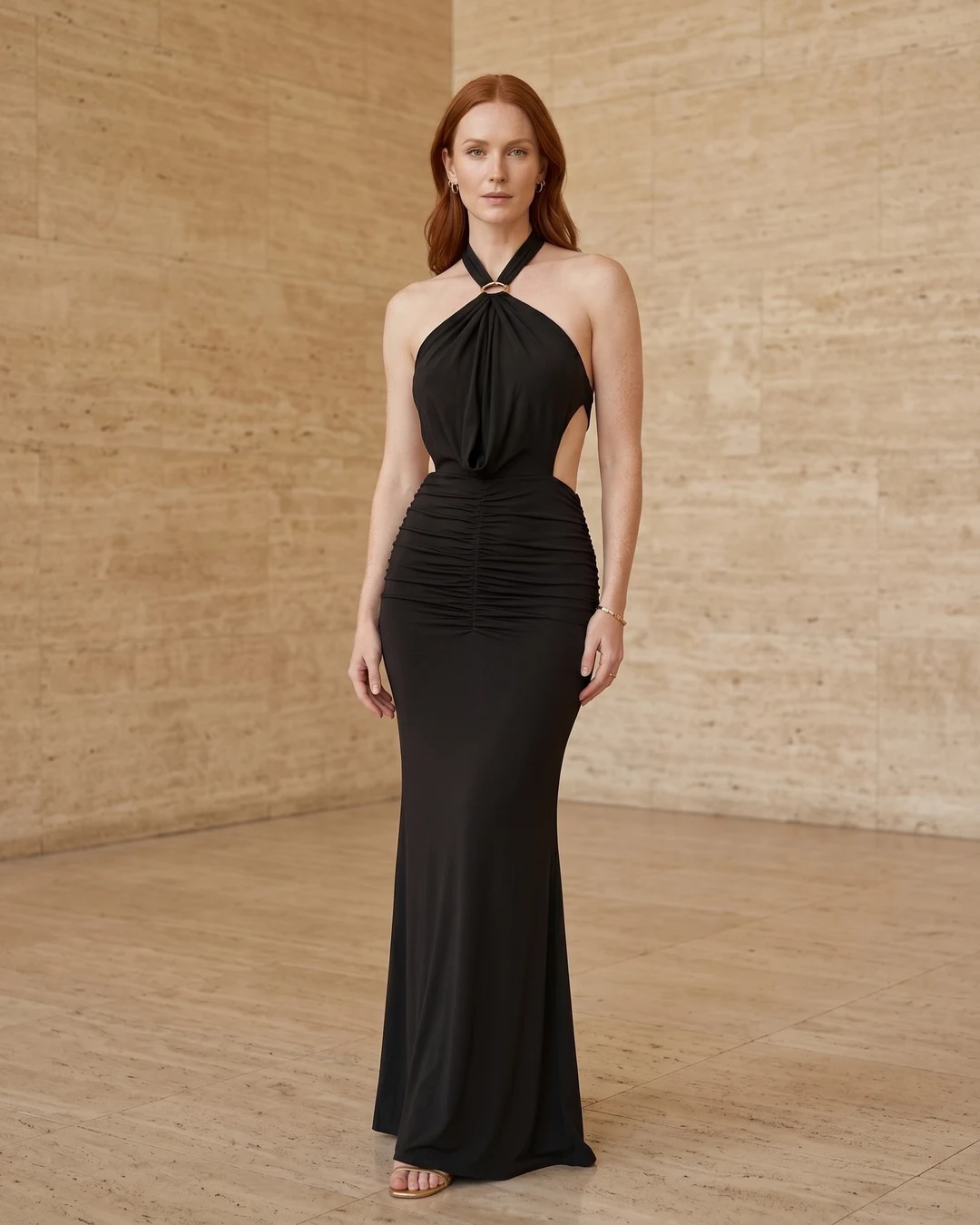
Two women at one gala make the contrast measurable. A sequined dress reflects light from every panel and pulls attention onto the garment; a matte Porpora (wine) column gown skims from the hip and holds attention on the woman wearing it. Lowering the visual noise raised her standing.
Beware the opposite mistake. A uniform of beige and silence reads as camouflage, not authority, because restraint without one deliberate statement color looks timid rather than commanding. The rule asks for one focal point, not zero.
#The three disciplines every style guide maps to
Every guide trains exactly one of three disciplines, restraint, proportion, or fabric, so you can master one at a time. This is the structural spine no other style hub offers.
| Discipline | What it governs | The single rule it enforces | The tell when it is skipped |
|---|---|---|---|
| Restraint | editing, color, focal point | one statement color and one focal point per outfit | three competing colors, no piece earns the eye |
| Proportion | fit, length, body shape | fit the shoulder seam first; hem at the knee or the floor | shoulder seam two inches past the shoulder; hem at mid-calf |
| Fabric | drape, lining, finishing | matte before shine; a full lining over a raw seam | stiff cloth, puckered seam, visible raw hem |
| Synthesis | restraint + fabric at an event | one matte, fully lined gown that skims from the hip | sequins and crystals doing the work the cut should do |
Each guide below sharpens one row of that table. Read in any order, but know which discipline you are training when you do.
#Where should a woman start, and which style guide answers her question?
Start with the elegance rules to learn the method, then read how to look expensive to learn the physical tells. Those two guides cover restraint and proportion at the level a beginner needs before choosing an aesthetic. Settle the rules first; the aesthetic is a second decision.
The sequencing matters because aesthetic without method produces a costume. A woman who picks "old money" before she understands fit ends up in a tweed blazer that gapes at the shoulder; the reference is right, but the execution betrays it.
#Begin with the elegance rules, then look expensive
The fastest entry is to read the elegance rules, then decode the expensive look, in that order. The first builds the rule set; the second translates it into tells a stranger reads in three seconds.
Begin with the house elegance rules for the method: one statement color, one focal point, the knee-or-floor hemline. Follow with how to look expensive for the five physical tells construction creates, namely shoulder fit, fabric that falls from the hip, a full lining, finished seams, and color discipline. A reader who does only these two has the foundation.
#Build your aesthetic: old money and quiet luxury
Choose your aesthetic next: old money is inherited provenance, while quiet luxury is a fabric-and-finishing standard you can buy into today. They overlap heavily, and stealth wealth is essentially a synonym for quiet luxury, so the choice is about emphasis, not opposition.
Old money leans on pieces kept for a decade and taste that looks inherited; read the old money aesthetic for that provenance lens. Quiet luxury asks a simpler question, whether the fabric drapes and the seam is finished, covered in quiet luxury explained. A woman on a budget reaches quiet luxury faster, because finishing is purchasable where provenance is not.
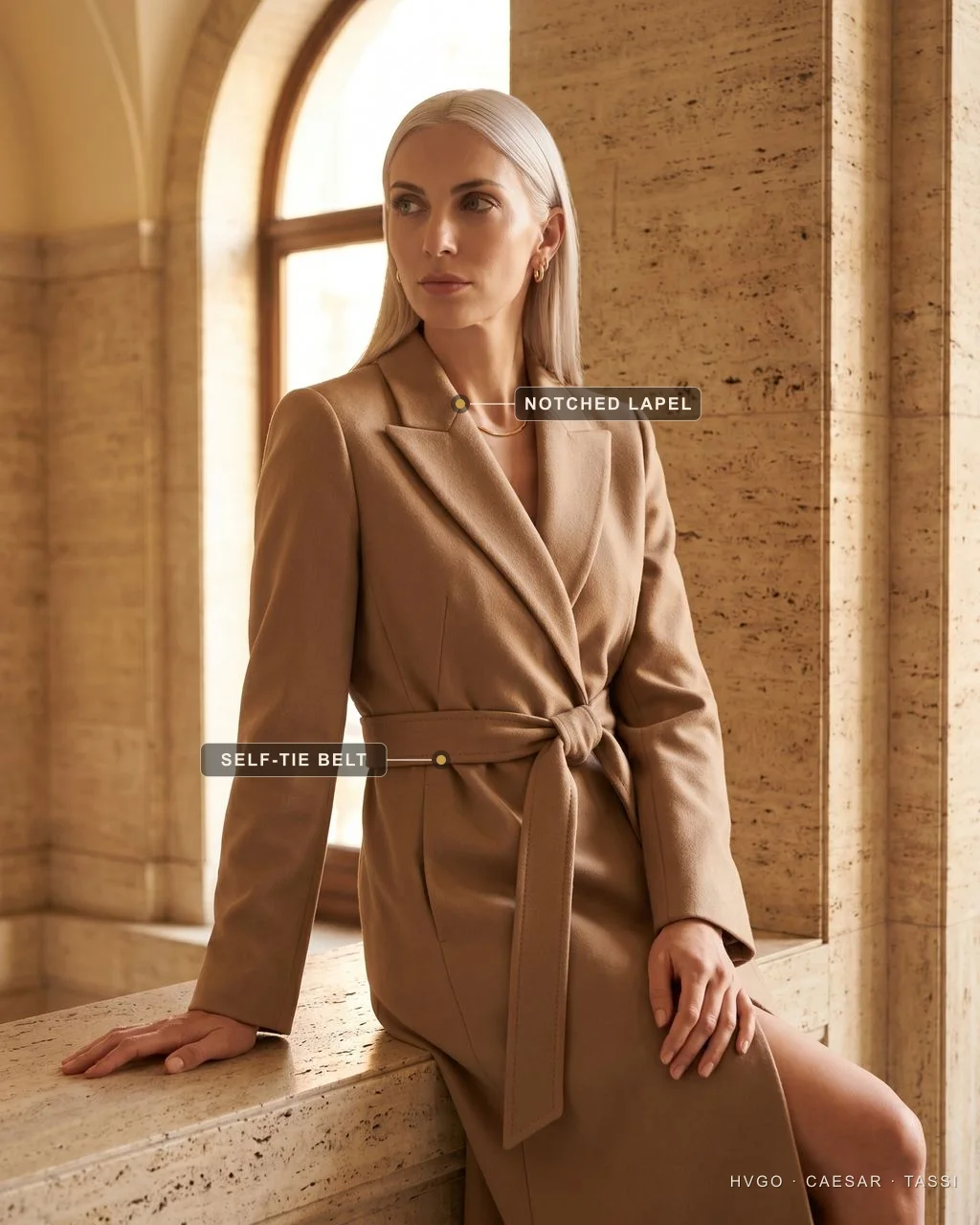
- Notched lapel — a precise tailored notch that reads considered, not flashy
- Self-tie belt — a self-fabric sash defines the waist with restraint, no logo buckle
#Which style guides cover restraint: editing, color and one focal point?
Restraint is the discipline of subtraction: one statement color, a tight palette, and a single focal point per outfit. Two guides train it directly, one on color and one on accessorizing, and both enforce the same rule from different angles. Add nothing that competes with the one thing you want seen.
The edit is where most wardrobes fail. A woman owns thirty colors and wears them three at a time; restraint asks her to own four anchors and build outward by deliberate exception.
#Color: the old-money palette and how to wear burgundy
The old-money palette rests on four anchors, ivory, navy, camel, and burgundy, then admits the imperial palette as deliberate statement color. Anchors carry the everyday; one imperial shade carries the occasion. Never both at full volume.
The imperial palette gives the statement: Porpora (wine), Vermiglio (red), Cornelia (rose), Cipria (pink), Verde Antico (green), Cobalto (navy), Avorio (ivory), and Cuoio (tan). You can study the full edit in the old money color palette. Burgundy is the gateway shade, reading richer than black and softer than red, which is why it anchors so many first quiet-luxury wardrobes.
#One focal point: accessorizing and the gold-or-silver question
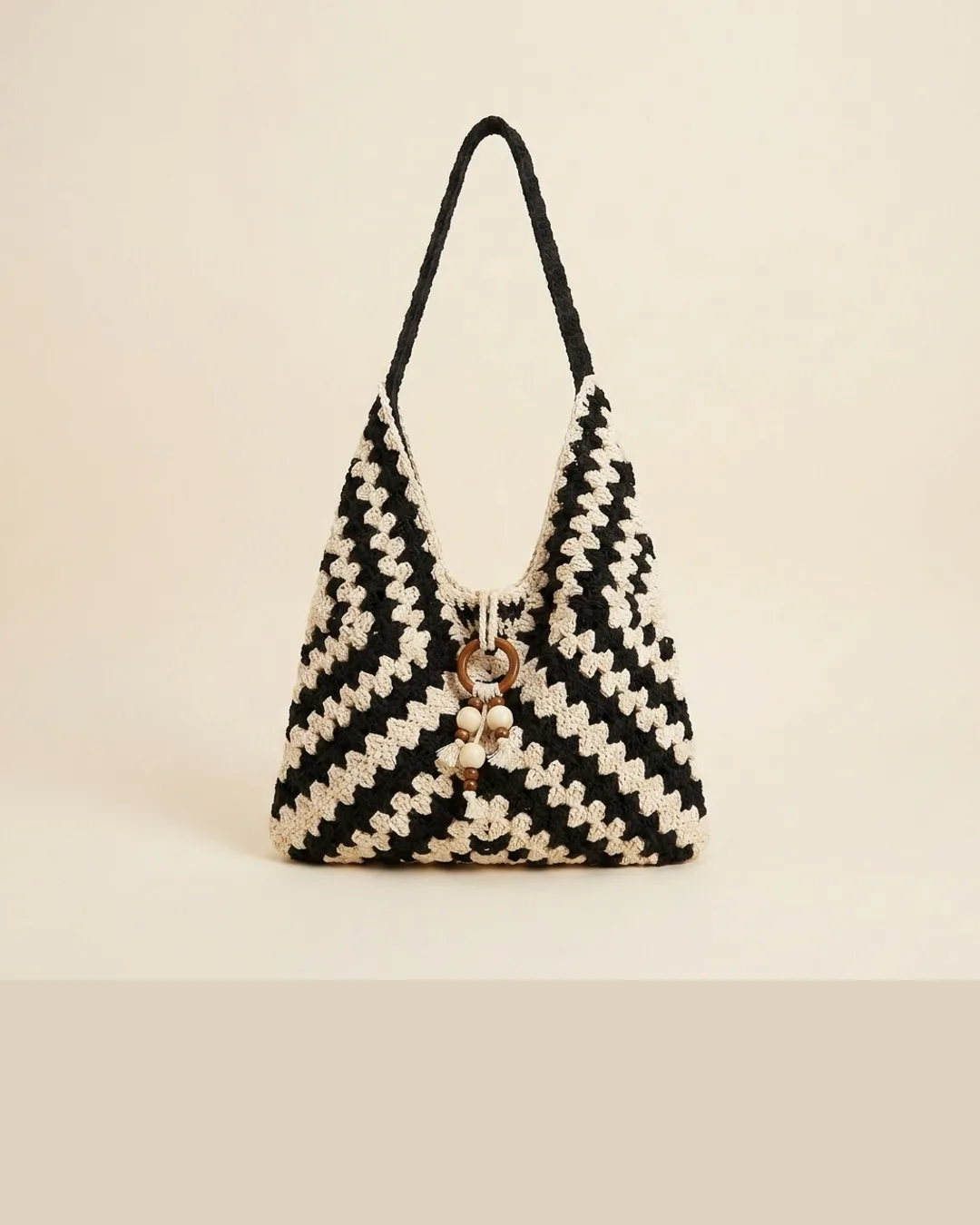
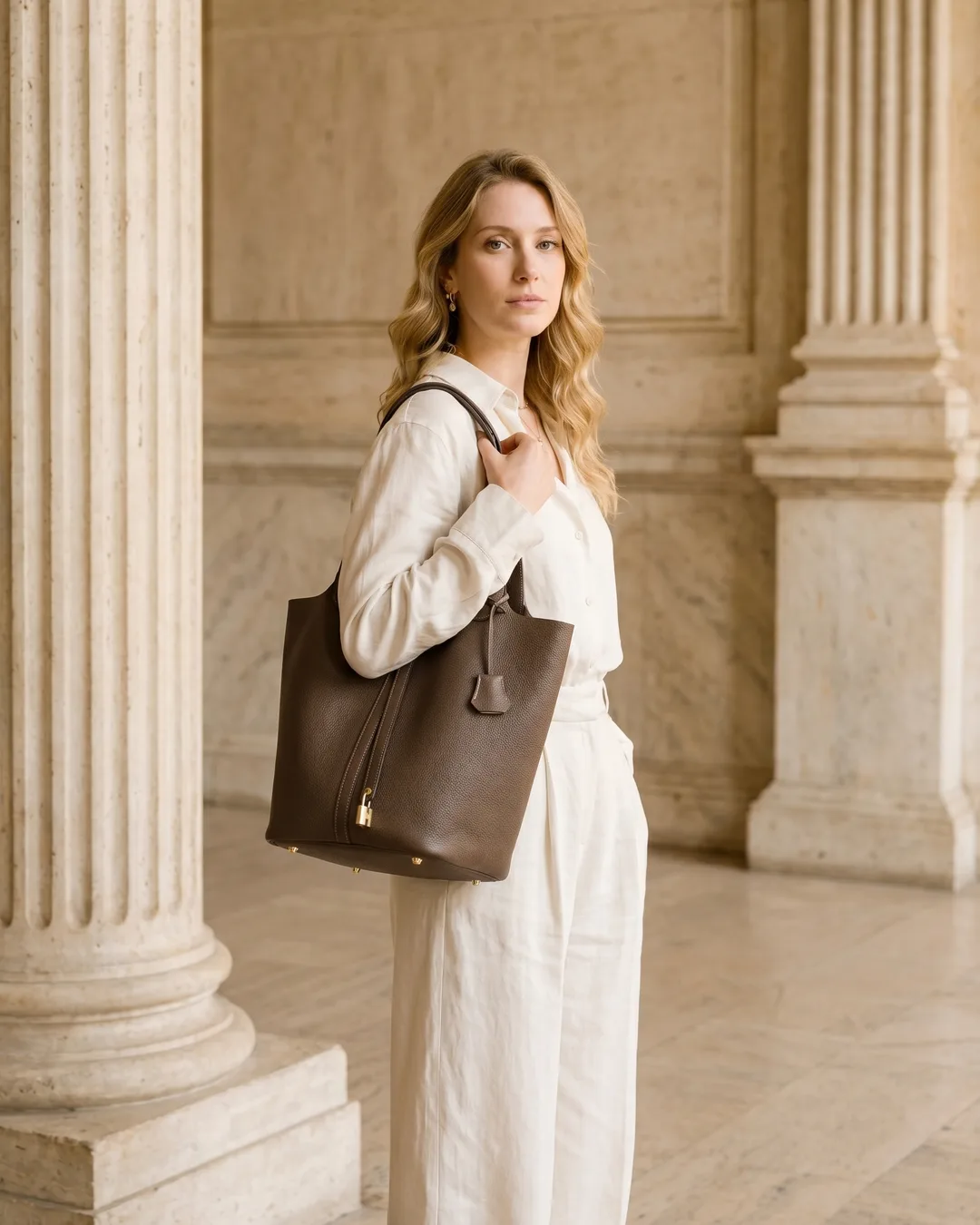
One focal point means a single piece earns the eye: the dress, or the bag, or the scarf, never all three at once. Accessories support the focal point; they do not multiply it. That is the rule that separates styled from cluttered.
The Vesta silk square scarf, for instance, becomes the focal point against a plain Basalt (black) column, but disappears as support beside a printed dress. Choose how to accessorize a dress for the full method, including the gold-versus-silver decision: gold flatters warm undertones, silver flatters cool, and a woman picks the one her wrist confirms in daylight.
#Which style guides cover proportion: fit, length and your figure?
Proportion is governed by two anchors, the shoulder seam and the hemline, and both are personal to your frame. Fit the shoulder first; everything downstream follows from it. A hem then lands at the knee or the floor, never the unflattering middle that shortens every leg.
The house publishes each model's height, roughly 175 cm, precisely so a reader can judge where a hem breaks on her own body rather than the model's. That single data point does more for proportion than any styling tip.
#Fit the shoulder seam first
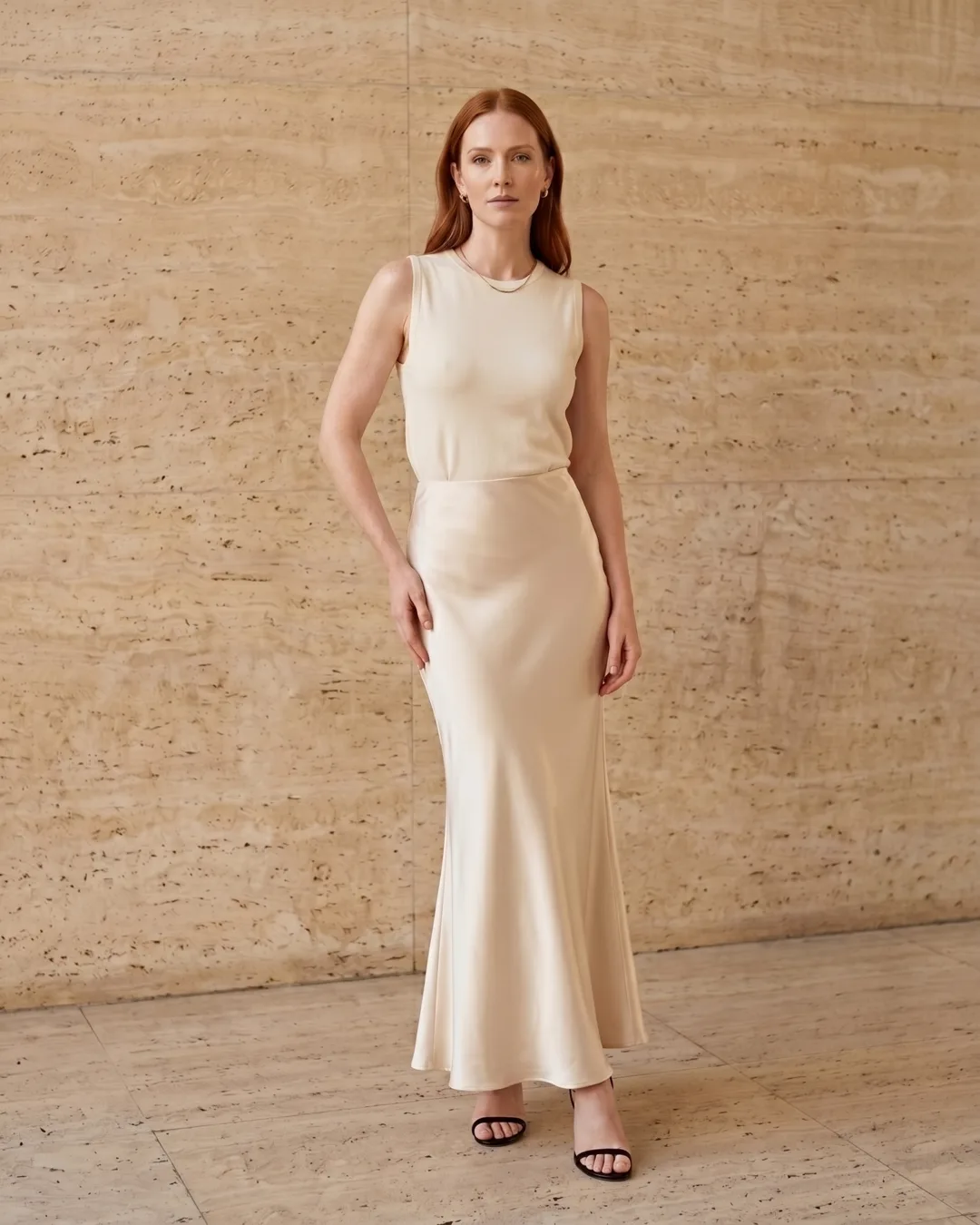
The shoulder seam sets the whole garment, so a dress that fits the shoulder reads tailored even when nothing else is altered. A seam sitting past the shoulder collapses the line; a seam at the shoulder builds it. Start every fit judgment there.
The hemline rule is the partner discipline. A skirt that stops mid-calf cuts the leg at its widest point, whereas the same dress at the knee or grazing the floor lengthens it. For the garment-level reasoning behind length, the dress guides go deeper than this hub does.
#Dress your figure and your height
Proportion is personal, so read your body shape before you read any length rule. The shape decides which hemline and neckline flatter; the rule only applies once the shape is named.
Start with how to find your body shape to name your frame, then apply length to it. A petite woman gains height from a floor-length Vipsania column; a tall woman can carry a midi that would overwhelm a shorter frame. The rule is constant, but the answer is yours.
#Which style guides cover fabric: drape, lining and finishing?
Fabric is the tell that cannot be faked, because drape and a hidden lining show in motion no matter the price tag. Matte crepe holds structure, recycled chiffon floats, bias-cut satin skims the hip, and modal jersey drapes a column. A full bagged lining is the line between expensive and cheap.
The reason is mechanical. A cheap dress hangs from the fabric's stiffness; an expensive one hangs from the body because the cut and the lining let it. A stranger reads that difference before she reads the label.
#Why fabric is the tell that can't be faked
Fabric reveals quality in motion: a stiff cloth holds rigid lines that mark cost-cutting, while a fluid one falls from the body and shows real construction. Recycled chiffon, knife-pleated or bias-cut, floats away from the body; matte crepe stands structured. You learn to read both in the chiffon, satin and crepe guide.
One caveat keeps you honest: drape alone is not luxury if the seams pucker. A floaty chiffon with a raw, visible hem reads cheaper than a structured crepe finished cleanly inside. Drape and finishing must arrive together.
#Quiet luxury for the occasion
Quiet luxury at an event means an understated, expensively cut gown that reads rich without sparkle. Fabric weight, drape, and a full lining carry the room, not crystals. That is restraint and fabric working as one.
A satin Calpurnia fishtail gown at a black-tie wedding, or a pleated crepe Tullia column at a gala, both prove the point: matte, lined, and cut to skim. Designed correctly, occasion dressing also designs out bridal white and funereal black, so a guest neither competes with the bride nor reads as mourning.
#A suggested reading order for these women's style guides
Read in the order your deadline allows: a three-step fast track before an event, or the full nine-guide course to build a signature style. Both routes group by discipline so you always know which muscle you are training. Pick the route, not the panic.
The buy-fewer-better thesis sits under both. A woman who finishes the full course owns a smaller closet that works harder, which is the entire point of cost-per-wear over the price tag.
#The fast track before one event
The fast track is three steps: decode the expensive look, settle color and accessories, then shop the occasion edit. It skips aesthetic theory and goes straight to a room-ready outfit.
- Read how to look expensive for the five physical tells.
- Settle color and the single focal point from the accessorizing guide.
- Shop the occasion edit and choose one matte, lined gown.
#The full course to build a signature style
The full course runs nine guides grouped restraint, then proportion, then fabric, the order a signature style is actually built. It is slower and permanent.
- How to dress elegantly (restraint)
- The old money color palette (restraint)
- How to accessorize a dress (restraint)
- How to find your body shape (proportion)
- How to look expensive (proportion)
- The chiffon, satin and crepe guide (fabric)
- The old money aesthetic (aesthetic)
- Quiet luxury explained (aesthetic)
- The quiet-luxury capsule wardrobe to lock it in
#How Hugo Caesar Tassi turns these style rules into dresses
The house builds every dress against the same three disciplines it teaches, so the rules and the rail match exactly. Restraint sets the color and the focal point, proportion sets the cut, and fabric sets the drape, each tied back to Nata Imperare. No style index can offer that, because none owns a Roman atelier that makes the garment.
The provenance is the difference. A listicle borrows authority; the house earns it through la bella figura, the bella figura heritage that treats self-presentation as self-respect.
#The house doctrine, stated plainly
The doctrine is three disciplines and one motto: restraint, proportion, fabric, all in service of authority through composure. Each discipline answers to Nata Imperare, not to a season. That is the first-party view in one place.
Dresses run fully lined with a concealed zip; sizes span EU 34 to 44 (S to 3XL); chiffon is recycled; satin is bias-cut; crepe is matte and structured; column gowns drape in modal. Those are construction facts, not adjectives, and they are why the drape behaves.
#Worked examples from the collection
Five pieces show the disciplines made wearable: two columns for fabric and restraint, one daywear maxi, one print for color, and one scarf for the focal point. Each names a real garment, not a hypothetical.
The Vipsania draped modal column and the Tullia pleated crepe column are fabric-and-restraint in one matte line. The Julia French-pleated chiffon maxi reads as old-money daywear; the Livilla floral-print chiffon midi shows color and proportion working together; the Vesta silk square scarf is the single focal point against plain Avorio. See them on the rail in all dresses and the accessories edit.
#Your style-guide starting point (a quick recap)
Three disciplines run the whole hub: restraint edits, proportion fits, and fabric drapes, and one guide settles whatever question brought you here. If you want rules, open the elegance guide; if you want the expensive look, open the look-expensive guide; if you want an aesthetic, read old money or quiet luxury. Then dress the rule into a real piece.
#The recap and where to go next
The next step depends on your open question, so route to the single guide that names it, then to the occasion rail. Restraint, proportion, fabric: pick the one your question lives in and start there.
Found the question you came to answer? Open the occasion edit and dress the rule into a piece you'll keep, or start with how to dress elegantly if you still want the method first.
#Frequently asked questions
What is the best way for a woman to develop her personal style?
The best way to develop a personal style is to start from durable principles rather than trends and train one discipline at a time. Learn the elegance rules, then build an aesthetic around colors and fabrics you will keep for years. We organize it as restraint, proportion, and fabric so you master one before adding the next.
What is the difference between old money style and quiet luxury for women?
Old money style is about provenance, inherited taste and pieces kept for a decade, while quiet luxury is a fabric-and-finishing standard. Quiet luxury means matte drape, a full lining, and no visible logo, which a woman can buy into today. They overlap, stealth wealth is essentially a synonym for quiet luxury, and our dedicated guides draw the line in detail.
How can a woman look expensive on a budget?
A woman looks expensive on a budget by buying fewer, better pieces and letting construction do the work. Clean shoulder fit, fabric that falls from the hip, a full lining, finished seams, and color restraint read as expensive at any price. Our how-to-look-expensive guide lists the five physical tells money cannot fake.
Which style guide should I read first?
The first guide to read depends on your goal: rules, the expensive look, or an aesthetic. Start with how to dress elegantly for rules, how to look expensive for the decoded look, or the old-money and quiet-luxury guides if you are choosing an aesthetic. Each maps to one of our three disciplines.
What does "dressing to command a room" actually mean?
Dressing to command a room means projecting authority through restraint, fit, and fabric rather than volume, logos, or trend. It comes from our founding motto, Nata Imperare, born to rule: one statement color, one focal point, the right drape, and a fit that starts at the shoulder. The woman, not the clothing, holds the room.
Are these style guides only about dresses?
These style guides are not only about dresses, though dresses sit at the center of the house. The same restraint, proportion, and fabric rules govern how you accessorize with a bag, a silk scarf, and jewelry. The accessorizing and gold-or-silver guides apply each discipline to the pieces around the dress.
Style & Old Money guides
The Quiet-Luxury Capsule Wardrobe
Build a quiet-luxury capsule wardrobe the Roman way: the cost-per-wear math, the keep-for-a-decade rule, and a small imperial-palette set that recombines.
Build a buy-fewer-better capsuleGold or Silver Jewelry With a Dress? The Two-Step Rule That Settles It
A Roman atelier's two-step rule for gold or silver jewelry: read your skin undertone, then let the dress color break the tie. Color-by-color chart.
Choose gold or silverHow to Accessorize a Dress
A Roman atelier's method to accessorize a dress: choose one focal point, then let the rest recede. Neckline focal-point map, bag, scarf and shoe rules.
Master the one-focal-point ruleHow to Dress Elegantly
Five repeatable house rules from a Roman atelier to dress elegantly on any budget: one statement color, the right hem, shoulder-first fit, matte by day.
Learn the five elegance rulesHow to Look Expensive on a Budget
Look expensive on a budget: a Roman fabric house names five physical tells (drape, lining, seams, shoulder, color) no designer price can fake.
Learn the five expensive tellsHow to Wear Burgundy for Women
How to wear burgundy for women by skin tone, season and occasion: wine vs. oxblood vs. Tyrian red, what colors pair, and the gold rule.
Match your wine-red shadeOld Money Style for Women
The old money aesthetic for women, decoded by a Roman house: inherited taste over flash, the real building blocks, and how to wear it on any budget.
Shop the old money dress editThe Old-Money Color Palette for Women
The old-money color palette for women: four anchor neutrals, one wine accent, and the low-contrast combinations that look inherited, in our Imperial edit.
Build the old-money paletteQuiet Luxury, Explained
A Roman house defines quiet luxury by the garment, not the price — then settles how it differs from old money, new money and stealth wealth for women.
Decode quiet luxury vs old moneyQuiet Luxury Occasion Dressing
How to look expensively restrained at a wedding, gala or black tie: a Roman house's quiet luxury occasion matrix mapping each event to one matte gown.
Map your occasion to a gown