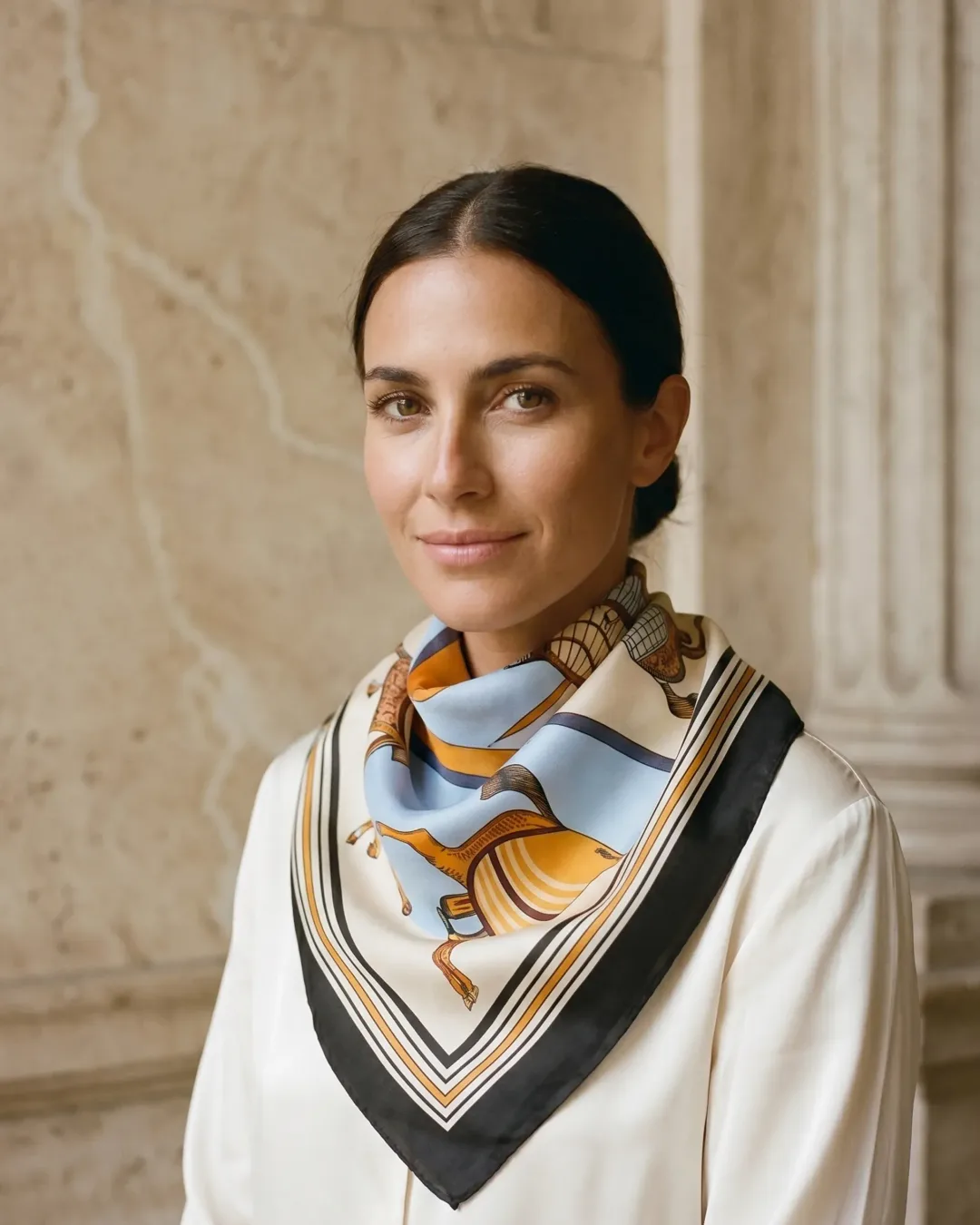
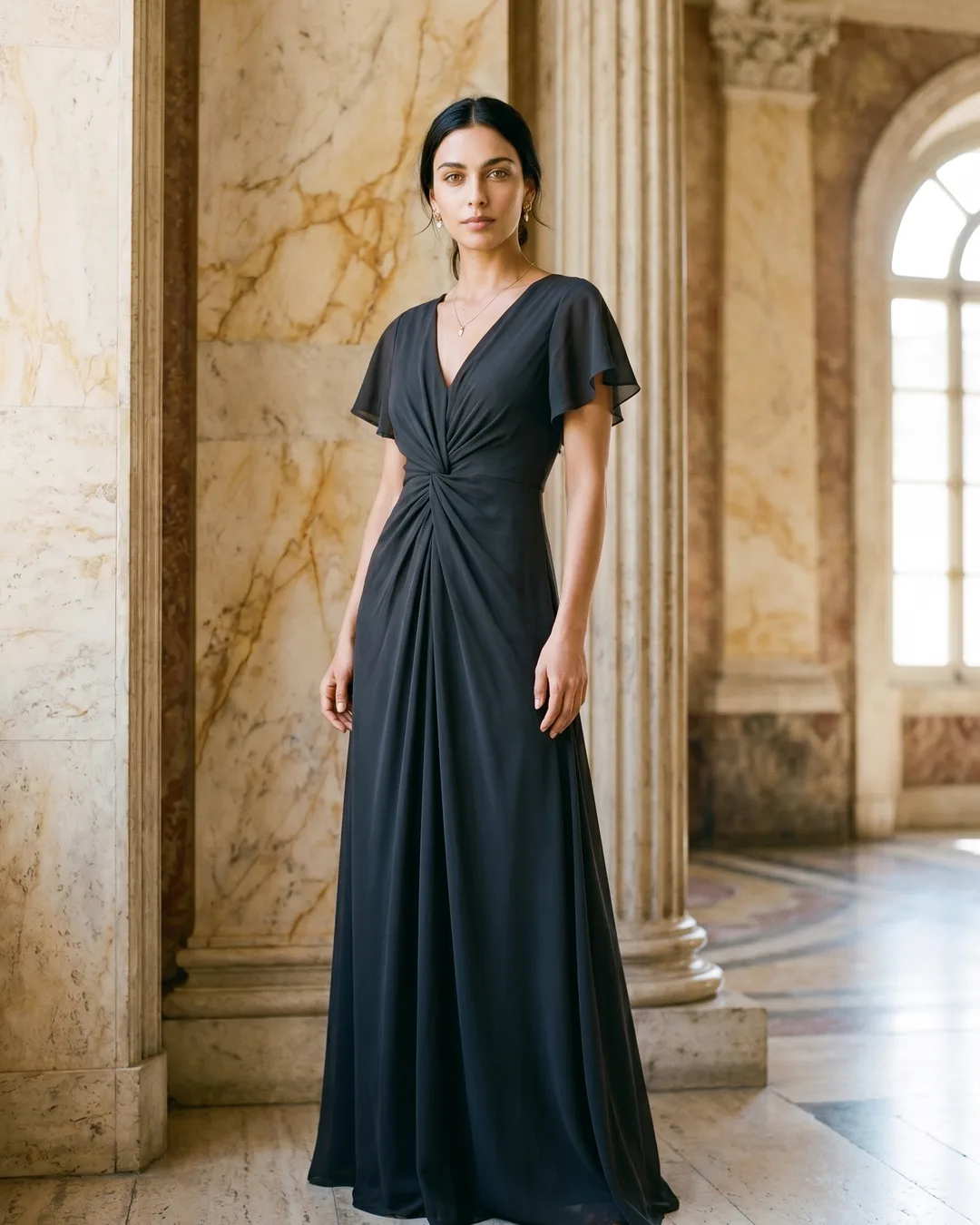
What to Wear to Any Event: The Hugo Caesar Tassi Occasion Dressing Guide
Decode any invitation with our founder's five-tier formality ladder: the exact length, fabric and color to wear, plus the guide for your occasion.
On this page
What to wear to an event comes down to three dials you set from the invitation: hem length, fabric sheen, and color. Read the dress code, the venue, and the time of day, then match all three. This guide turns any card into one answer.
The Hugo Caesar Tassi founder's formality ladder sorts every occasion into five rungs, from white tie down to a garden party. Each rung fixes how long, how lustrous, and how bold your dress should be. Once you name the rung, the choice in your closet narrows to one or two pieces.
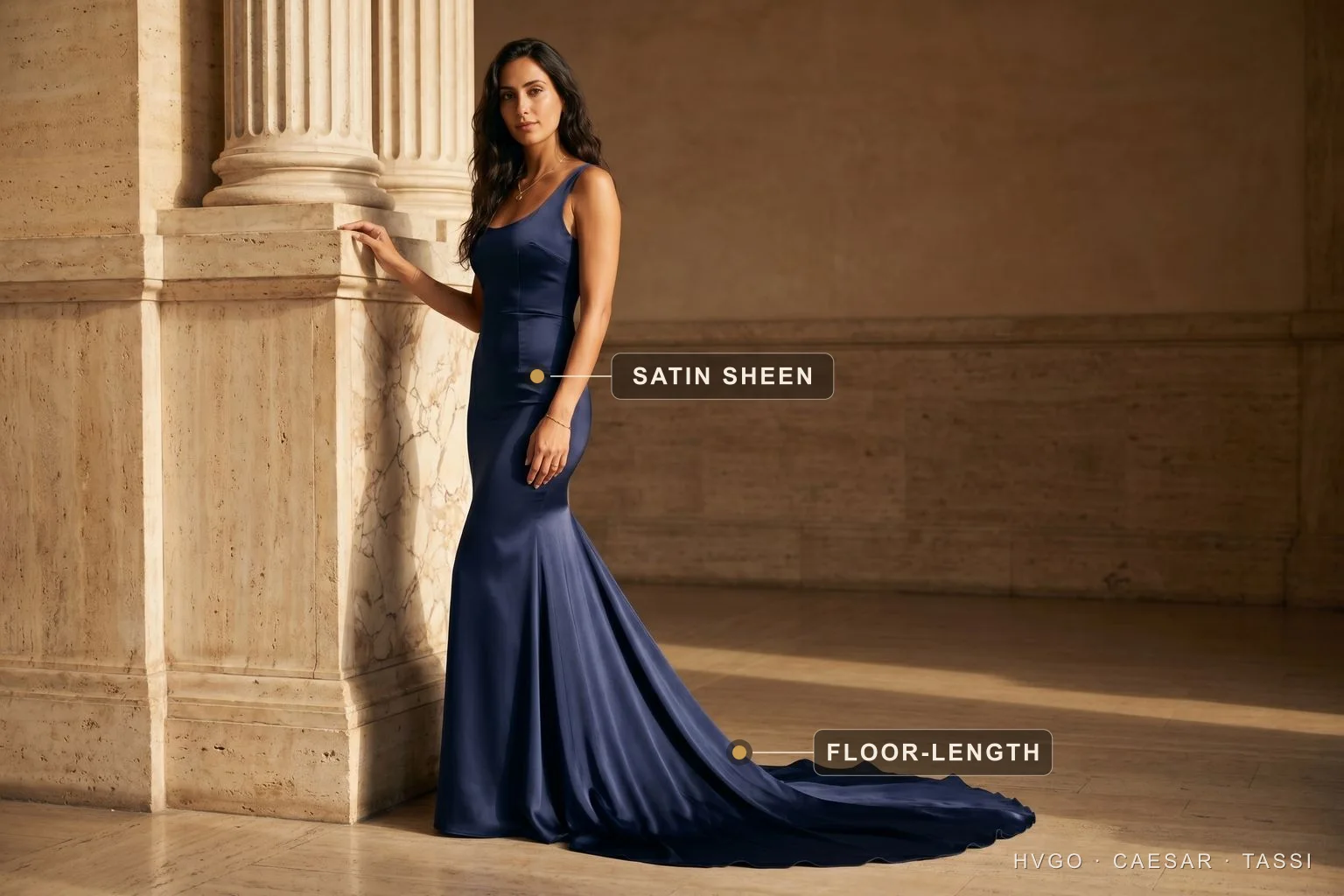
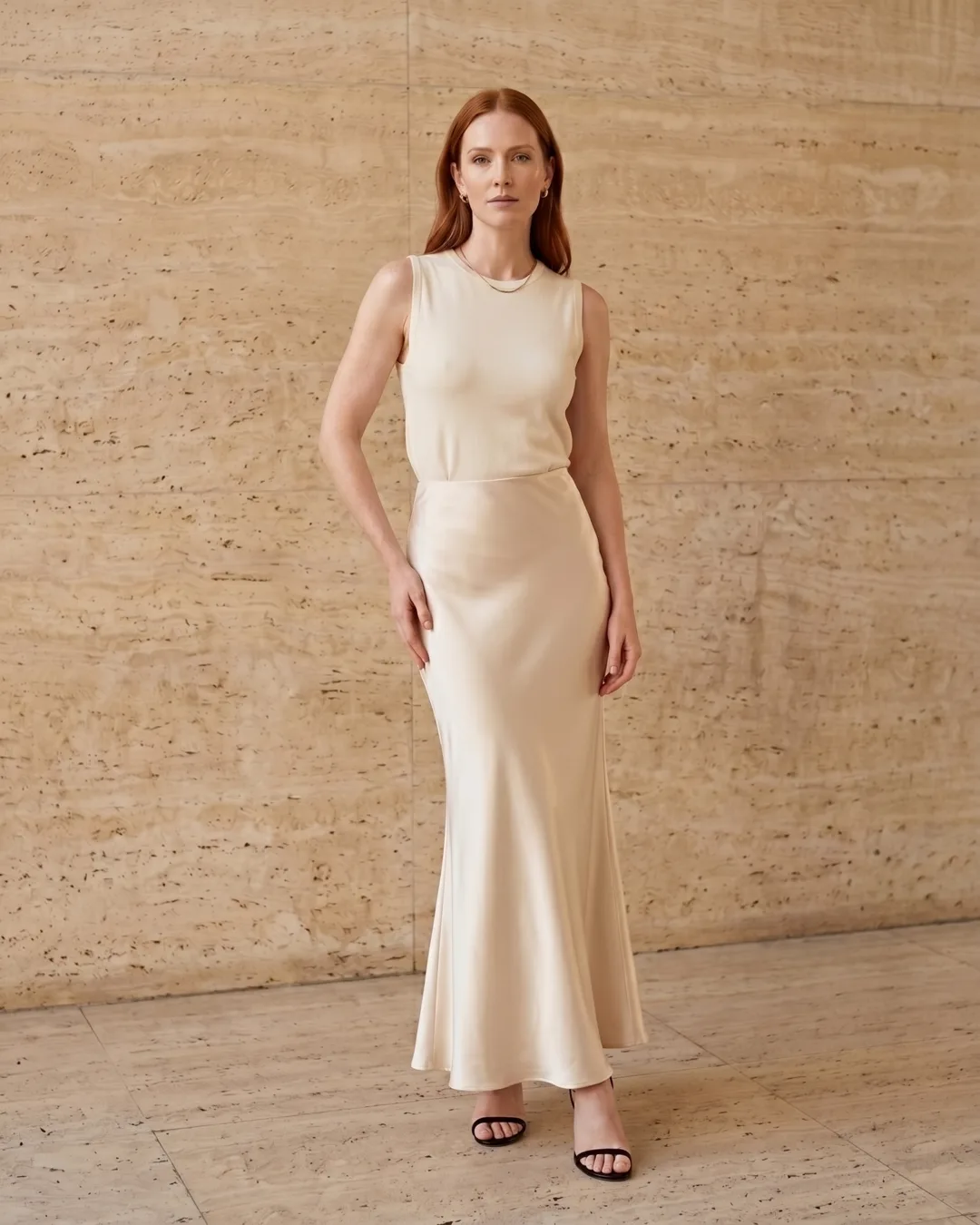
- Satin sheen — the liquid lustre of evening satin that lifts a gown to the top rungs after 6 p.m.
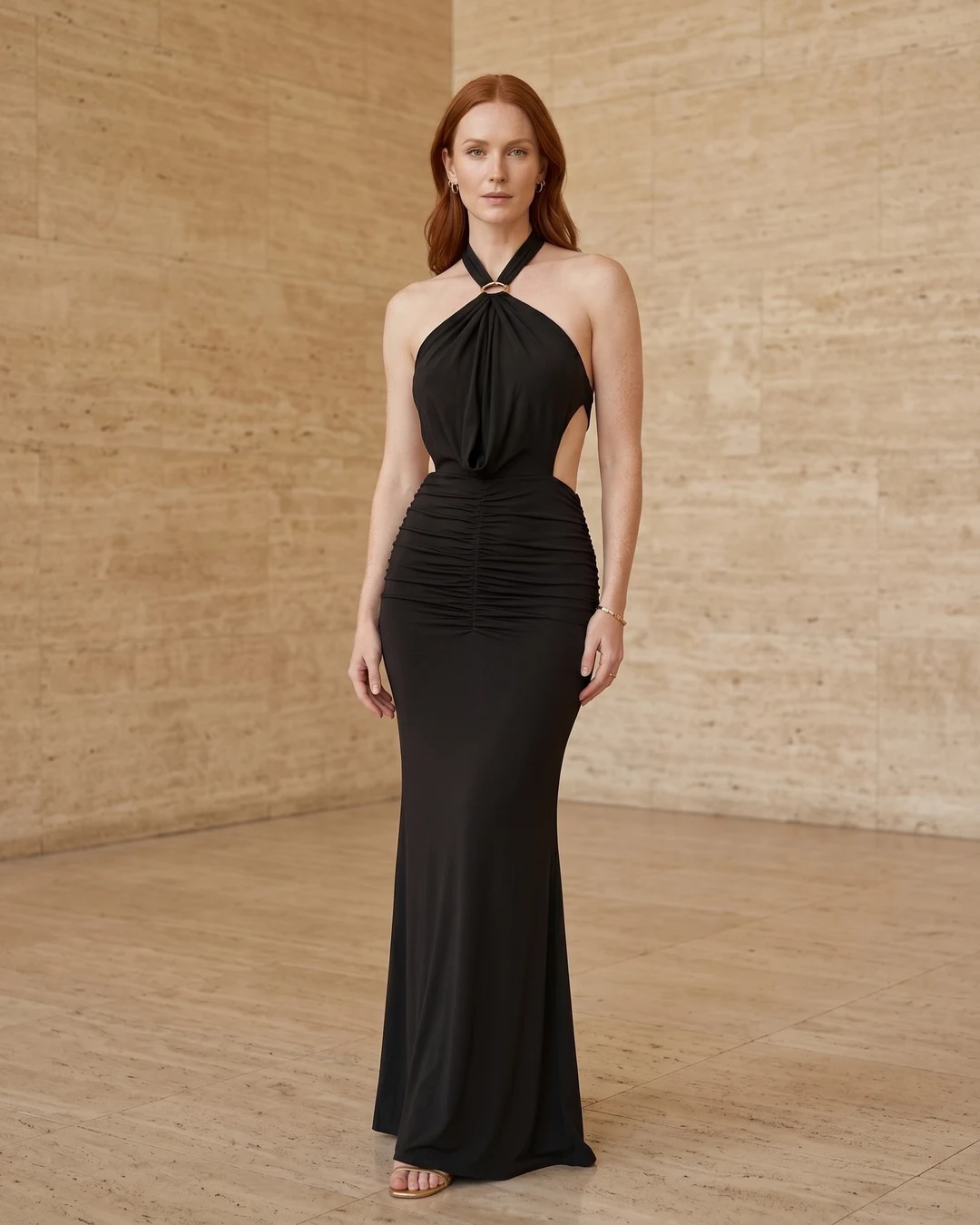
- Floor-length — the sweeping fishtail train that fixes this dress at white-tie and black-tie formality
The five-tier formality ladder
Name the rung from the invitation, and the length, fabric and colour fall into place.
- White tie
- Black tie
- Cocktail / semi-formal
- Smart casual
- Garden party
#Start here: how to read an invitation when you're deciding what to wear
An invitation hands you three signals: the dress code, the venue, and the time of day; weigh whichever is most specific first. Most cards name only one of the three clearly. Your job is to read the other two as backup when the wording stays vague.
A printed card reading "black tie, 7 p.m., the Savoy ballroom" gives all three signals in agreement, so you dress to the top of that rung without hesitation. The harder case is a card that names a vineyard at 4 p.m. with no code at all. There, the venue and hour carry the decision the wording skipped.
#The three signals every invitation gives you
The stated dress code outranks the other two signals, but the venue and hour settle every gap it leaves. A code like "cocktail" sets the rung; the venue tells you how far up or down within it to lean. A racecourse cocktail invite skews lighter and shorter than a hotel cocktail reception at night.
When two signals disagree, follow the more formal one. A daytime church ceremony followed by an evening reception splits the difference: dress for the reception, then add a chiffon shawl that covers your shoulders inside the church. One outfit answers both rooms.
#When the invitation gives no dress code at all
A code-free card asks you to read the venue and the host, then dress to match the most formal element named. A ballroom, a country club, or an evening reception all signal cocktail or floor length even when no words say so. A backyard or a casual lunch pulls the answer down to smart casual.
Picture an invitation that lists a 3 p.m. garden ceremony and a 7 p.m. dinner under one heading. The dinner is the most formal element, so a midi or floor-length dress wins; the daytime start only tells you to keep the shoulders covered for the ceremony. When two halves of a day disagree, the later, dressier half decides.
#The time-of-day rule
Daytime favors lighter color, shorter hems, and matte fabric; after 6 p.m. the rung lifts toward floor length, satin sheen, and deeper color. Sunlight flatters chiffon and stone tones; evening light rewards luster and saturation. The clock is the single most reliable signal when wording fails you.
A noon christening calls for a knee-length or midi chiffon piece in Cipria (pink) or Avorio (ivory). The same guest list at an 8 p.m. gala wants a Porpora (wine) column in satin. Move the start time, and you move every dial at once.
#The five-tier formality ladder: what to wear for each level of dress code
The formality ladder ranks five rungs (white tie, black tie, cocktail, smart casual, garden party), each fixing a length, a fabric, and a color depth. Naming the rung is the whole decision. Everything below follows from it.
The ladder works because formality is not a feeling; it is three measurable dials. Choose the rung, and the dials lock into place. The rest of this guide just fills in the numbers for each one.
#White tie (the most formal)
White tie demands a full-length ball gown in a luxe fabric, with formal gloves optional, and it is the rarest tier you will ever face. State dinners, royal events, and a handful of charity balls use it. The hem reaches the floor; nothing shorter qualifies.
Reach for a sweeping satin or chiffon column such as the Tullia pleated crepe column gown in a deep imperial tone. The counter-case: a cocktail-length sheath, however expensive, reads underdressed here and cannot be rescued by jewelry. White tie has no flexible lower edge.
#Black tie & black-tie optional
Black tie calls for a floor-length or sophisticated tea-length gown in satin or chiffon, in jewel tones; "optional" only loosens the hem, never the fabric. This is the dressiest tier most women meet regularly, at weddings and galas. Sheen and length carry it.
The Calpurnia fishtail satin evening gown in Cobalto (navy) hits the rung squarely. "Black-tie optional" lets you drop to an elegant tea-length style or a refined midi, but the satin or chiffon stays; a matte daytime cotton would fall short even at the optional end. Read more in our black-tie attire guide.
#Cocktail & semi-formal
Cocktail and semi-formal sit at knee-to-midi length in a polished fabric, and this is the most common modern occasion tier you will dress for. Office parties, birthday dinners, and most receptions live here. The hem rises; the polish stays.
A Livilla floral-print chiffon midi handles a daytime cocktail event; a Flavia strapless satin off-shoulder gown shortened to midi suits an evening one. "Festive" and "creative black tie" are cocktail with permission to add a statement color or sharper silhouette, not a license to go casual. Our full cocktail attire guide breaks the tier down by venue.
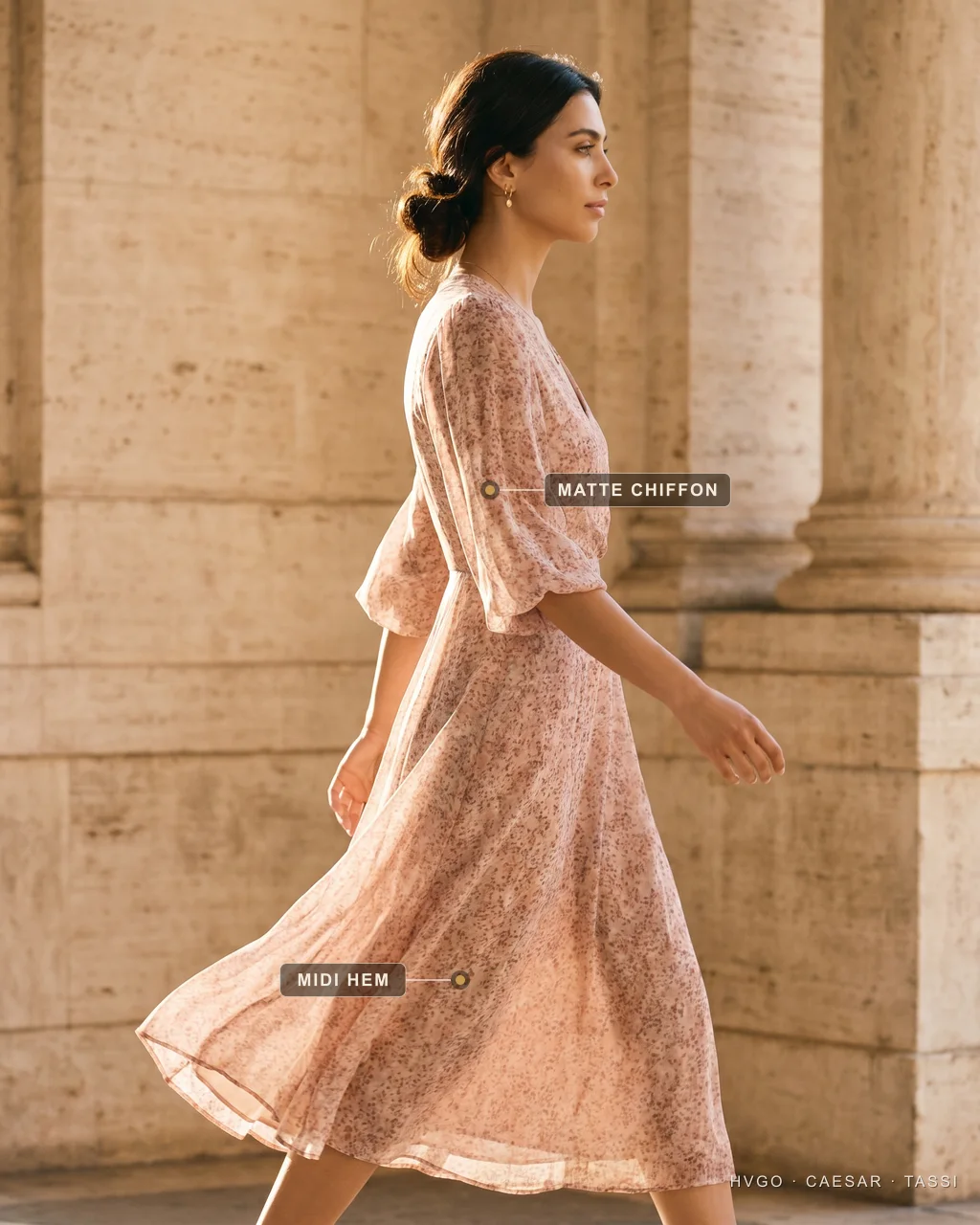
- Matte chiffon — the non-shiny daytime fabric that keeps a look one rung below evening satin
- Midi hem — the mid-calf length that signals cocktail and garden-party dressing, not floor-length formality
#Smart casual & dressy casual
Smart casual means elevated daytime dressing: a refined midi or A-line dress in lighter color and texture, never jeans. Lunches, gallery openings, and relaxed work events ask for it. The dial drops one notch below cocktail.
The Portia short-sleeve chiffon A-line in Travertine (stone) answers it cleanly. The edge case: "dressy casual" at a smart venue still rules out denim and sneakers, so when the wording tempts you toward comfort, hold the line at a structured dress.
#Garden party & daytime celebration
A garden party wants floral chiffon at midi length, soft color, and footwear that survives grass. Vineyards, lawns, and racecourses define this tier. Movement and weather, not luster, drive the choices.
Pair a Livilla floral chiffon midi with a block heel or wedge so you do not sink into turf. Stilettos are the counter-case here: they punish the wearer on grass and undercut an otherwise correct outfit.
#What to wear for each dress-code phrase: decoding the wording
Invitation wording maps onto the ladder once you treat each phrase as a rung in disguise. "Festive" is cocktail with color; "lounge suit" is cocktail to semi-formal; "beach formal" is garden party with floor in mind. Translate first, then dress.
Hosts invent phrases, but the rungs stay fixed. The trick is refusing to take a vague phrase at face value and instead asking which of the five tiers it belongs to.
#Translating ambiguous wording
Ambiguous phrases each resolve to a single rung, so decode the words before you open your closet. "Come as you are" still means smart casual at a dinner party, not loungewear. "Creative black tie" stays black tie in length and fabric while inviting a bolder color or a Cornelia (rose) statement.
Consider "dressy casual" printed for a rooftop dinner: read it as smart casual leaning up, so a midi A-line beats both a gown and a sundress. The phrase flexes, but the venue keeps it honest.
#A women's dress code chart at a glance
This chart maps each dress code to a hem length, a fabric, a color depth, and a Hugo Caesar Tassi silhouette. Use it as the page's quick reference; the prose around it explains the why, while the table holds the what.
| Dress code | Hem length | Fabric & sheen | Color | HCT silhouette |
|---|---|---|---|---|
| White tie | Floor only | Satin or chiffon, high luster | Deep imperial (Porpora, Cobalto) | Pleated crepe column |
| Black tie | Floor or tea-length | Satin or chiffon | Jewel tones (Vermiglio, Cobalto) | Fishtail satin gown |
| Cocktail / semi-formal | Knee to midi | Polished chiffon or satin | Statement or neutral | Floral chiffon midi |
| Smart casual | Midi | Matte chiffon, light texture | Light neutral (Travertine, Cipria) | Chiffon A-line |
| Garden party | Midi | Floral chiffon | Soft daylight tones | Print chiffon midi |
#Fabric, length and color: the three dials that answer what to wear to almost any occasion
Three dials, length, fabric sheen, and color, convert any rung into a specific dress. Set each one to match the tier, and the outfit is decided. Get one dial wrong, and the whole look slips a rung.
These dials are independent, which is the freedom in the system: a midi can read cocktail or garden party depending only on the fabric and color you pair with it. Our length guide compares the three hems in detail.
#Length
Length signals formality more loudly than any other dial: floor-length for evening, midi for almost everything, knee-length for daytime and dancing. The house rule sets every hem at the knee or the floor, never the unflattering middle of the calf. The midi is the modern do-anything hem.
A floor-length Vipsania draped modal column reads instantly formal even in a quiet color. A knee-length sheath, by contrast, stays daytime no matter how rich the fabric, which is exactly why it suits a christening lunch over a gala.
#Fabric weight and sheen
Fabric sheen ranks the rungs: chiffon for daytime movement, satin for evening luster, crepe for structured polish, modal for fluid drape. Each HCT dress is fully lined with a concealed zip, so the fabric reads clean from any angle. Matte before shine is the house order.
Recycled chiffon, knife-pleated or bias-cut, floats through a garden party; bias-cut satin returns a soft luster under evening light at a gala. The counter-case is wearing satin to a noon ceremony, where its shine fights the daylight and tips you a rung too high.
#Color and the imperial palette
Neutral colors are the always-safe answer; a statement tone makes you memorable; white at a wedding is the one hard no. The imperial palette splits cleanly into safe and bold. Wear one statement color per outfit, never two.
Avorio (ivory), Travertine (stone), and Basalt (black) carry any rung without risk. Porpora (wine), Vermiglio (red), and Cobalto (navy) announce you. The edge case is a solemn ceremony, where bright shades and funereal black both read wrong; a soft Cipria or Verde Antico (green) threads the needle.
#What to wear for coverage and comfort: the practical details women forget
Coverage and comfort decide whether a correct dress actually works in the room you will sit, kneel, and walk in. Modesty for religious venues and footwear for the terrain are the two details that sink otherwise-perfect outfits. Plan both before the day.
The dress can be right on every dial and still fail if you cannot kneel in a pew or stand on a lawn. These are not afterthoughts; they are part of naming the occasion.
#Venue-driven modesty
Religious venues ask for covered shoulders and a hem that sits comfortably while you sit and kneel. A church, cathedral, or temple expects modesty regardless of the reception that follows. A chiffon shawl or a dress with chiffon sleeves solves it without changing your rung.
Layer a Carina silk square scarf or a matching shawl over a sleeveless gown for the ceremony, then remove it for the dinner. The counter-case: a strapless gown alone, however formal, can read disrespectful inside a cathedral and leaves you exposed during the kneeling.
#Shoes, weather and movement
Match heel height to the terrain, block heels for grass and stilettos for ballroom floors, and pack a fabric that travels without creasing. Chiffon and modal recover from a suitcase; heavy satin holds a fold. Plan the shoe to the ground, not the photo.
A vineyard wedding rewards a wedge that stays on top of the turf; a marble ballroom welcomes a fine heel. The edge case is a winter venue, where a sleeveless gown alone leaves you cold, so a tailored coat and a silk scarf add warmth without bulk.
#What to wear to a seasonal event: warm-weather and cold-weather occasions
Season shifts the dials toward lighter fabric and color in summer, deeper weight and tone in winter, without changing the rung. A black-tie wedding stays black tie in July and December; only the fabric weight and palette move. Dress the rung, then adjust for the weather.
The mistake is letting a heat wave or a cold snap drop you a rung. A summer gala is still a gala; you simply reach for breathable chiffon instead of crepe.
#Spring and summer occasions
Warm-weather occasions call for breathable chiffon, lighter imperial-palette colors, midi hems, and covered shoulders for sun and ceremony. Heat rewards movement and matte finishes over heavy luster. A Julia French-pleated chiffon maxi reads cool and formal at once.
A summer garden wedding suits a Cipria or Verde Antico chiffon midi with a light shawl for the ceremony. The counter-case is a heavy crepe column in August, which holds heat and reads out of season even if its color is correct.
#Fall and winter occasions
Cold-weather occasions lean into satin and crepe weight, deeper tones, and elegant layering that adds warmth without bulk. A tailored coat and a silk scarf carry you from car to venue. The dress stays the focal point; the layers support it.
A winter black-tie event suits a Porpora bias-cut satin gown under a structured coat. The edge case is over-layering: stacking a heavy wrap, a scarf, and a coat buries the dress and breaks the house rule of one focal point only. Our quiet-luxury dressing guide explores how drape and weight, not sparkle, carry a winter look.
#How Hugo Caesar Tassi answers what to wear for every rung: a dress for each tier
Hugo Caesar Tassi maps a specific dress to each rung, so naming your tier points you straight to a silhouette. The house designs occasionwear in the imperial palette across all five rungs. Each piece below is built for a single tier.
The point of the ladder is that it ends in a real dress, not a mood. Below, the evening rungs and the daytime rungs each get their picks.
#Evening and black-tie picks
The evening rungs resolve into three floor-length gowns built for satin sheen and column drape. Each is fully lined with a concealed zip and cut for the floor. The fabric does the formal work.
For black tie, reach for the Calpurnia fishtail satin evening gown or the Claudia pleated-slit chiffon maxi; the Tullia pleated crepe column gown carries white tie. The counter-case is wearing any of these to a daytime smart-casual lunch, where their floor length and luster overshoot the rung by two notches. Browse more in the evening gowns collection.
#Cocktail, daytime and garden picks
The daytime rungs resolve into chiffon and modal pieces at midi and A-line length, finished with a silk scarf or leather clutch. Lighter fabric and shorter hems hold these tiers. The accessory completes the focal point.
The Livilla floral-print chiffon midi answers a garden party, the Portia short-sleeve chiffon A-line answers smart casual, and the Vipsania draped modal column bridges cocktail to semi-formal. Finish with a Vesta silk square scarf or a Quirina leather envelope clutch; a heavy evening clutch, by contrast, would weigh down a daytime look.
#Which Hugo Caesar Tassi guide tells you exactly what to wear to your event?
Each occasion has its own dedicated guide, so once you know the event, you can open the page built for it. The hub you are reading routes you to eight event-specific guides. Pick the one that names your invitation.
These guides go deeper than the ladder allows here, with venue cues, color rules, and silhouettes specific to each occasion. The ladder gets you the rung; the event guide gets you the details.
#Pick your occasion
Choose the guide that matches your invitation from the menu below; each goes one level deeper than this hub. Use this as a signpost, not a summary.
- Wedding guest: color rules, the no-white law, and what to wear by ceremony time, in our wedding guest dress codes guide.
- Black tie: floor length, satin, and jewel tones for galas and formal weddings.
- The opera: evening formality with a wrap for the auditorium chill, covered in our opera dressing guide.
- Italian wedding: the dressier European code and church coverage, in our Italian wedding guide.
- The races, the christening, summer and winter weddings: each with its own length, fabric, and color call.
#What to wear, decided: your three-step shortcut
Name the tier, set the three dials, then open the matching event guide: that is the whole method in three steps. You can run it in thirty seconds with the invitation in hand. Tier first, dials second, guide third.
#The 30-second method
Read the code, venue, and time to name your rung, set length, fabric, and color to that rung, then open the guide for your occasion. This is the recap of everything above, compressed into a single pass.
Start with the dress code; let the venue and clock break any tie. White tie and black tie take the floor and satin; cocktail and smart casual take the midi and chiffon; a garden party takes floral chiffon and a block heel. Then choose neutral to play safe or a statement imperial color to be remembered.
| Step | Question | What it sets |
|---|---|---|
| 1 | What rung is this event? | The formality tier |
| 2 | What length, fabric, color? | The three dials |
| 3 | Which event guide fits? | The deeper detail |
| 4 | Neutral or statement color? | The final look |
#Frequently asked questions
What should I wear to an event if there's no dress code on the invitation?
A no-dress-code event is decided by the venue and the time, dressing you to match the most formal element named. A ballroom or an evening reception calls for cocktail length or floor length; a daytime lunch pulls you down to smart casual. When in doubt, slightly overdressed and understated always reads better than underdressed.
What's the difference between cocktail and formal attire for women?
Cocktail attire is knee-to-midi length in a polished fabric, while formal attire means a floor-length or tea-length gown in satin or chiffon. Formal sits one full rung above cocktail on the ladder. The fabric stays luxe at both rungs; only the hem and the depth of color change.
Can a woman wear a midi dress to a formal event?
A midi dress works for cocktail and semi-formal events but falls one rung short of true black tie. For cocktail and semi-formal occasions a sophisticated midi is ideal. For black tie, choose a floor-length gown or a refined tea-length style in satin or chiffon instead.
What color should I wear to an event?
The safest event color is a neutral like ivory, stone, or black, while a jewel tone makes a memorable statement. Wine, red, and navy announce you without risk at most occasions. Avoid white at weddings and overly bright shades at solemn ceremonies, where a soft pink or green reads better.
How do I know how dressed up to be?
How dressed up to be is set by the formality ladder, which names your rung from the dress code, venue, and time of day. Higher rungs mean longer hems, more luster, and deeper color. Match your length, fabric sheen, and color to that rung, and you are dressed exactly right.
What should I wear to a daytime versus an evening event?
A daytime event favors lighter colors, midi or knee length, and matte fabrics like chiffon, while an evening event leans into floor length and satin sheen. The 6 p.m. line is the cleanest divider. Before it, keep color light and fabric matte; after it, lean into richer tones and luster.
Found your tier? Browse the pieces built for it in the Hugo Caesar Tassi occasion dresses collection, or open the event guide that matches your invitation and arrive knowing you're dressed exactly right.
What to Wear guides
What to Wear to a Christening
What to wear to a christening, by a Roman house — modest, daytime-elegant outfits in church-safe colors that honor the day, never reading bridal.
Dress for a christeningBlack-Tie Attire for Women
A Roman house decodes black-tie attire for women: floor-length or not, the right fabric and jewelry, and how optional, creative and gala differ.
Decode the four black-tie rungsCocktail Attire for Women
A Roman house decodes cocktail attire for women: the exact length (knee to mid-calf, never floor), the right fabric, and how it differs from black tie.
Decode cocktail attireWhat to Wear to an Italian Wedding
A Roman house decodes what to wear to an Italian wedding: the real no-black and no-white rules, church cover-up, and North-vs-South dress code.
Decode the invitata dress codeWhat to Wear to Royal Ascot and the Races
The enforced Royal Ascot enclosure rules for strap width, hem and hat size, plus a Roman house rule for balancing a hat against your dress.
Pass the Ascot enclosure rulesWhat to Wear to a Summer Wedding
A Roman fashion house on what to wear to a summer wedding: the breathable fabrics, flattering bright-light colors and hems that survive grass and sun.
Dress a summer weddingWhat to Wear to the Opera
How dressed-up the opera really is, house by house: from La Scala's opening night to a relaxed Met evening, plus matinee, box and intermission etiquette.
Calibrate opera dress codesWedding Guest Dress Code, Explained
Every wedding guest dress code explained, white tie to garden party, mapped to an exact fabric, hem length and color by a Roman house.
Decode every wedding dress codeWhat to Wear to a Winter Wedding
A warm, elegant winter wedding guest guide: the fabric weights, jewel tones, sleeves and wraps that keep you photogenic and genuinely warm.
Dress a winter wedding