Dress Guides: How to Choose, Wear and Keep an Occasion Dress
Our dress style guides show how to choose, wear and keep an occasion dress, occasion first then fabric: the quiet-luxury way to buy fewer, better.
On this page
These dress style guides hand you a method: choose an occasion dress by event first and fabric second, then wear and keep it so one purchase outlasts a season of trend buys. Hugo Caesar Tassi, a women's occasionwear house founded in Roma in 2004, settles six decisions here, from occasion to fit.
Match the dress to the occasion
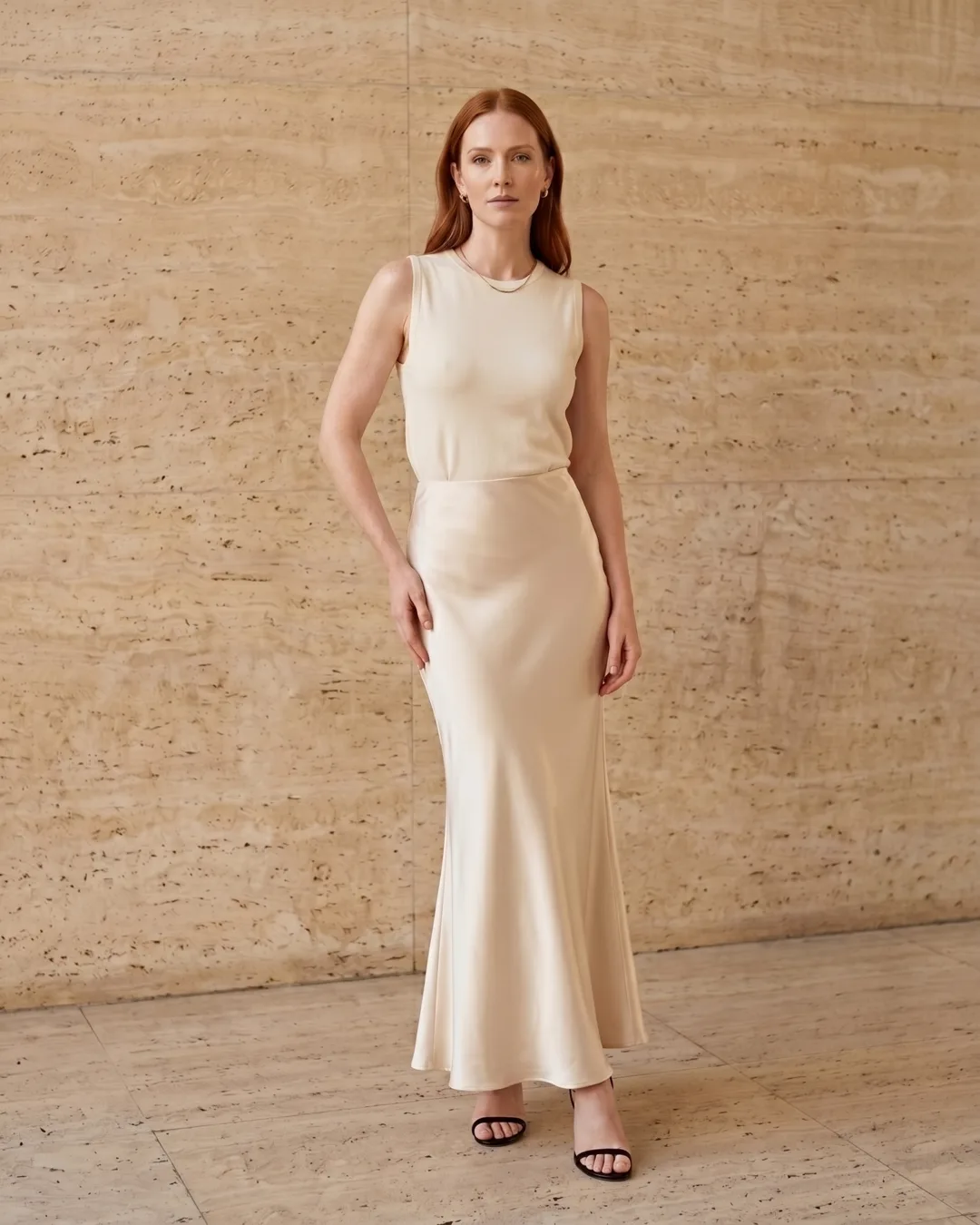
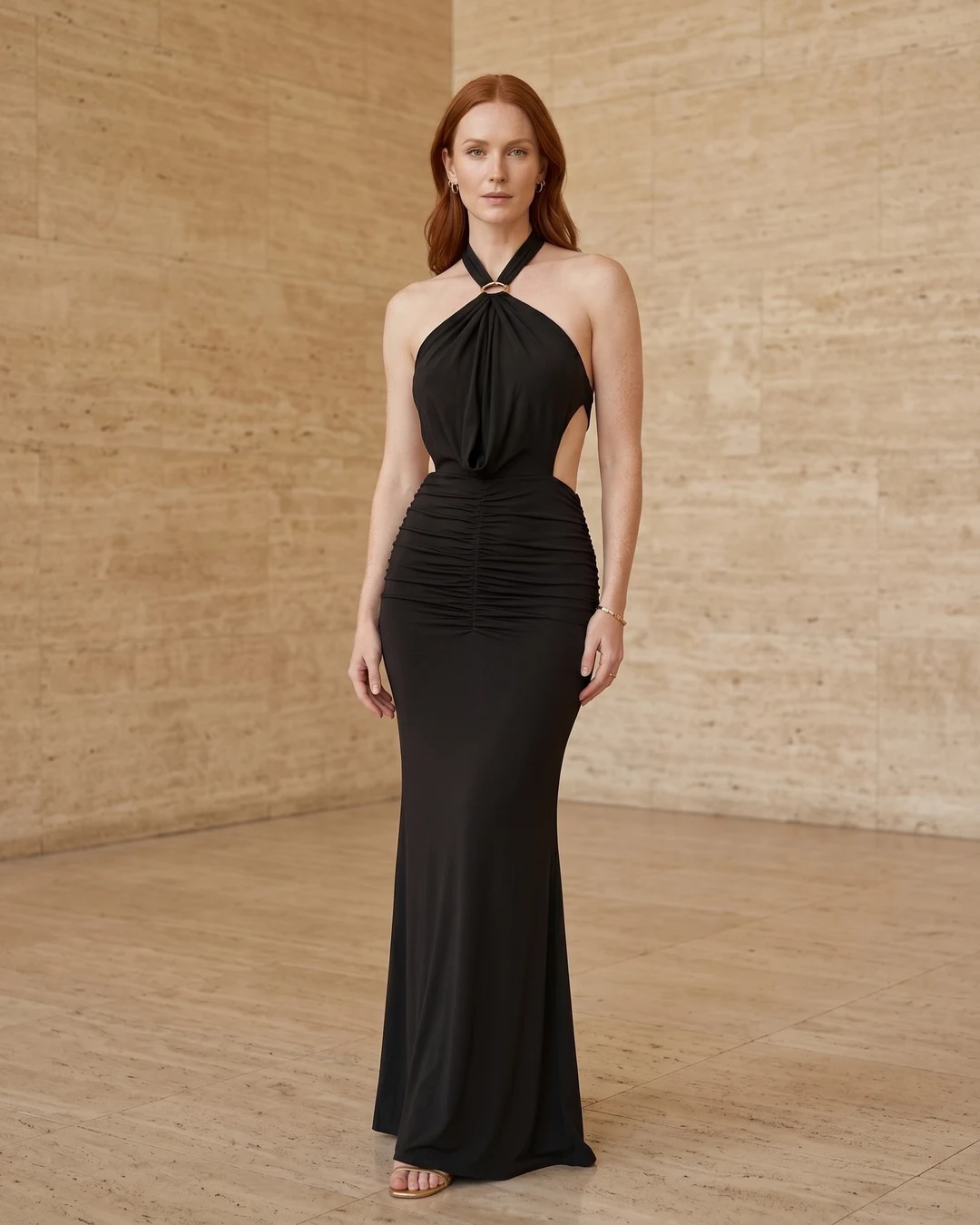
Four house dresses, each answering one decision these guides teach.
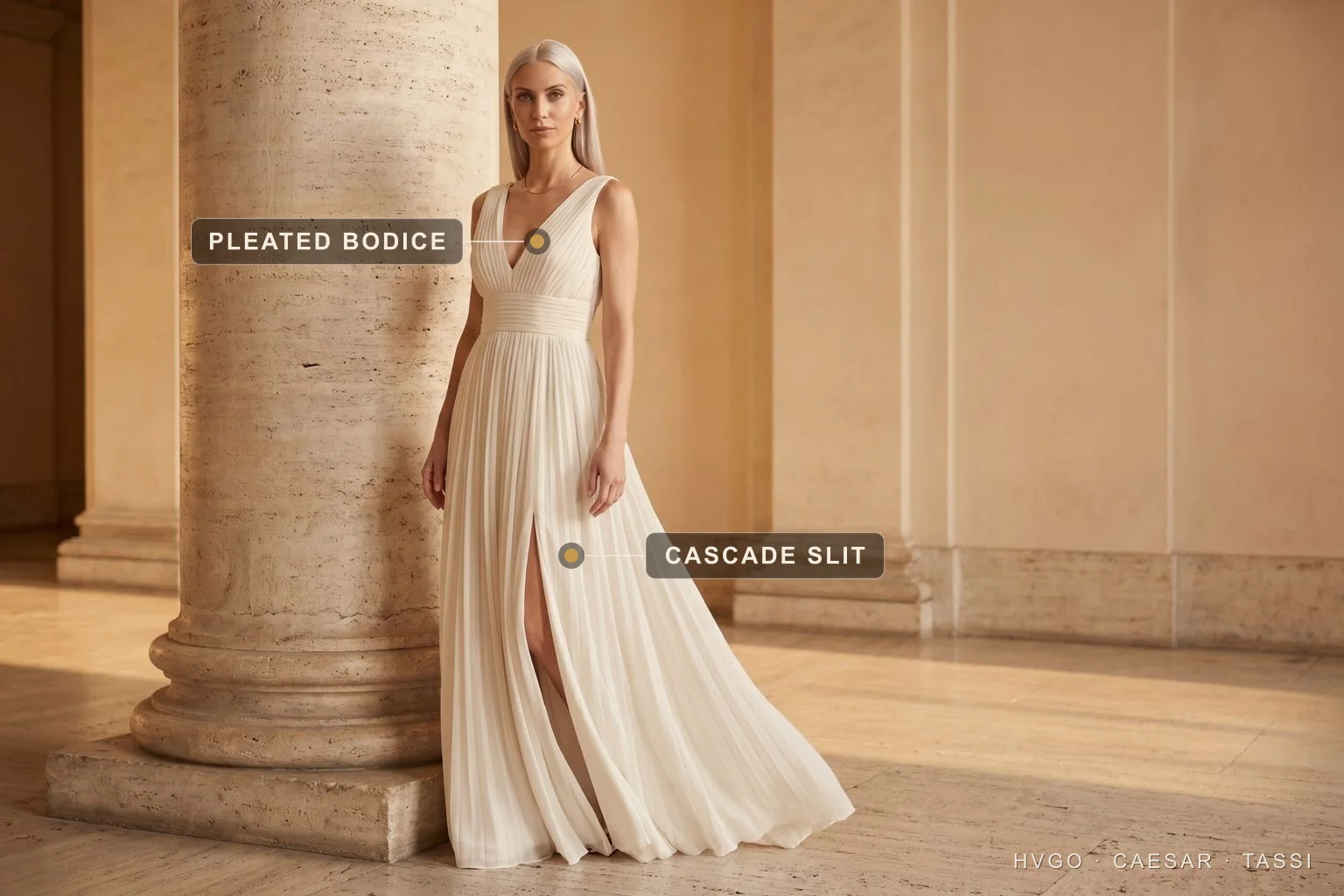
- Pleated bodice — fine knife-pleating across the deep-V bodice gives the gown its structured, expensive line.
- Cascade slit — the floor-length A-line skirt opens to a soft cascade slit that signals evening, black-tie length.
#What do these dress guides actually help you decide?
Six locked decisions turn a vague want into one right dress: occasion, silhouette, neckline, sleeve, length, and fit. Each guide in this hub resolves one, in order, so you never circle back. Unlike a glossary that lists eighty terms, a decision tool tells you which comes first and where the chain ends.
#The one question each guide answers
Every guide answers exactly one of the six decisions, so the set behaves like a curriculum rather than an encyclopedia. The how-to-choose guide settles the buying order; the silhouettes guide settles shape; length, neckline, sleeve, and measurement each get a dedicated page.
Take a wedding guest reading three in sequence. She fixes the code, picks an A-line that flatters a pear frame, then checks where a maxi hem breaks at her height: three resolved decisions, no backtracking. Skip the order, though, and you get the woman who reads only the neckline guide, falls for a strapless cut, then learns her ceremony expects covered shoulders.
#Who these guides are for
These guides serve women dressing for a dated event or rebuilding a formalwear wardrobe, never a unisex or menswear reader. Five situations recur.
- The wedding guest dressing to a code without upstaging the bride.
- The gala or black-tie attendee needing a floor-length answer.
- The Ascot or race-day goer balancing a hat, a hem, and a forecast.
- The christening or opera dresser who wants quiet coverage.
- The woman rebuilding her formalwear from a near-empty closet.
A bride planning her own gown sits outside this scope; bridal is a separate craft.
#The dress guides method: occasion first, then fabric
Hugo Caesar Tassi fixes one decision order for every occasion dress: occasion, then silhouette, then fabric, then length, then neckline, then fit. Color and trend never lead, because they cannot tell you what the room requires.
The occasion sets a dress code, the code sets length and formality, and only then can silhouette and fabric compete. Start at color and you commit to a Porpora gown before the event has told you it wants florals.
#Why occasion comes before color or trend
The occasion dictates the dress code, and the code constrains every later choice, so it must be settled first. A 7 p.m. gala wants a satin column in Basalt black; a noon christening wants a chiffon midi in Cipria pink. The full walkthrough lives in our how to choose a dress guide. One exception flips the rule: a themed party makes the theme itself the occasion.
#Why fabric decides whether a dress works
Fabric controls how a dress hangs and reads, which is the real line between looking expensive and looking cheap. Matte crepe holds a clean sheath without clinging; recycled chiffon, knife-pleated or bias-cut, floats an A-line over the hips; bias-cut satin skims a fishtail; modal drapes a true column. The Tullia pleated crepe column gown reads structured because crepe resists drape, where a chiffon cut to the same pattern would collapse. Our dress silhouettes guide pairs each shape with the fiber that earns it.
#Choosing an occasion dress: the dress guides that narrow it down
Two guides do the narrowing: one fixes your buying order, the next fixes your shape, and together they cut a catalog to a shortlist.
#Start with how to choose a dress
The how-to-choose guide runs the full ordered method end to end, from locking the occasion to confirming the fit. A woman rebuilding her formalwear works the six decisions once and emerges with a brief: floor-length, satin, one-shoulder, size EU 38. Compare her with the shopper who buys on color alone and returns a dress that fought her christening's daytime code.
#Then learn the types and silhouettes
The types and silhouettes guides catalog the shapes (slip, column, A-line, sheath, one-shoulder, cutout, tiered, fishtail) and match each to an event. Shape is where most regret hides, so it earns two guides.
- Slip and column gowns suit black-tie galas and floor-length codes.
- A-line and tiered shapes flatter weddings and the races.
- Sheath and one-shoulder cuts read cocktail and semi-formal.
- Fishtail gowns command red-carpet and gala settings.
- Cutout styles fit younger evening codes, rarely a christening.
Browse the types of dresses guide to see each shape on the house's published-height models and judge proportion against your own frame.
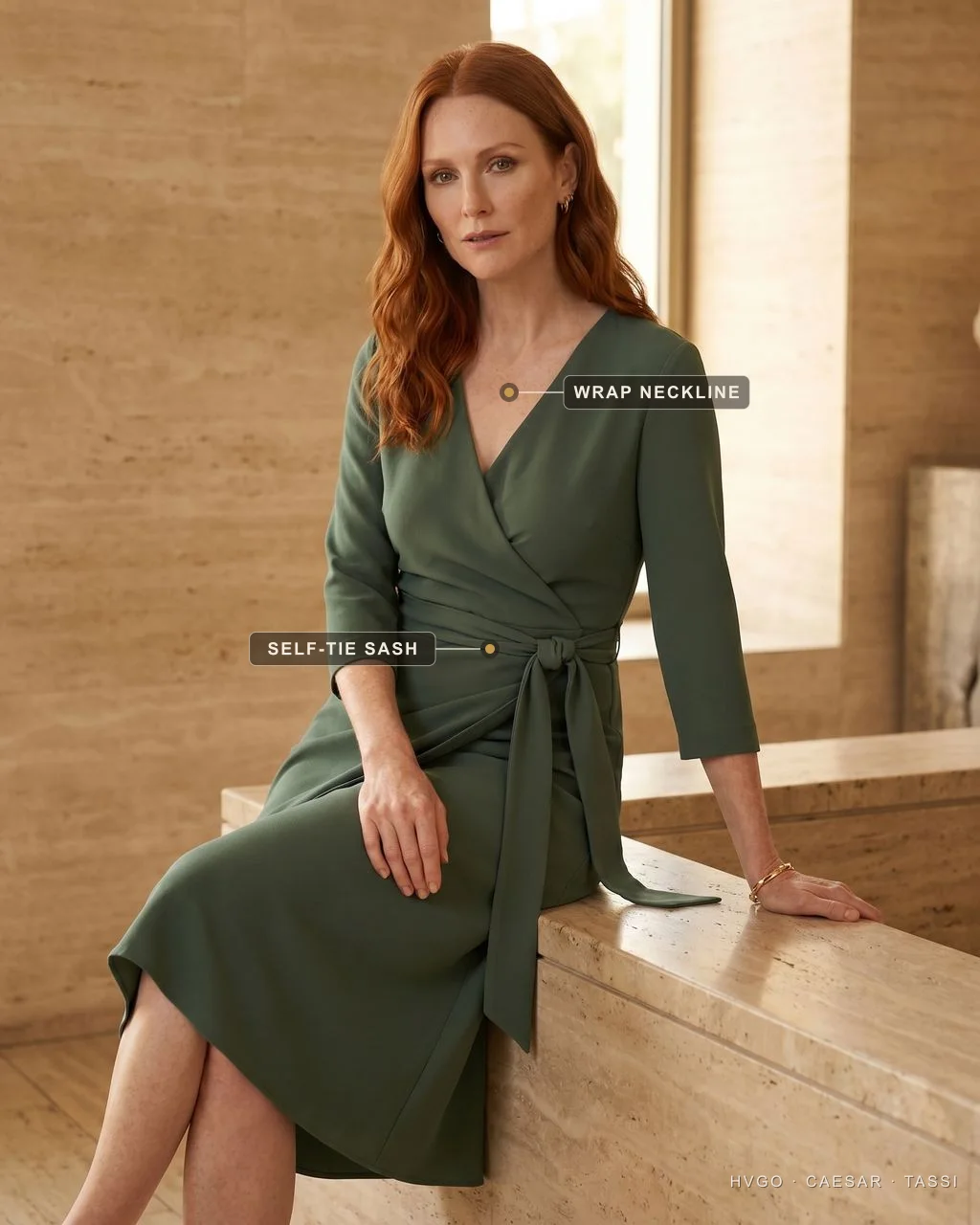
- Wrap neckline — the surplice V wrap front frames the décolletage and sets the dress's daytime, semi-formal register.
- Self-tie sash — a knotted self-tie sash cinches the natural waist, the defining feature of the matte-crepe wrap midi.
#The dress guides to wearing it well: necklines, sleeves and length
Three decisions style the dress once it fits: neckline sets the jewelry and frame, sleeve sets coverage and climate, length sets the formality.
#Necklines and the jewelry they call for
The neckline decides which jewelry works and how it frames the bust and shoulders against the formality. A strapless satin Flavia gown frames the collarbone and calls for a statement necklace; a high boat neck, by contrast, refuses one and hands the focal point to earrings, holding the house rule of one focal point only. Watch for the beaded neckline: it is already the jewelry, so it wants bare ears.
#Sleeves for coverage, climate and code
Sleeve length sets modesty, comfort, and code at once, from full coverage for a christening to a breathable flutter for August. A long-sleeve modal column suits a cool winter opera box; a flutter or cap sleeve in recycled chiffon suits a July garden wedding where heat outranks coverage. Trouble comes with a strapless gown under a cathedral dome, where covered shoulders are expected and a wrap answers it.
#Getting the length right
Length is the fastest formality signal: mini reads casual, midi reads daytime, tea reads vintage-formal, maxi reads evening and black tie. Height decides where each hem flatters, which is why the house publishes every model's height near 175 cm.
A midi breaking mid-calf on a 175 cm model lands lower on a 162 cm frame, so she sizes the hem against her own leg. Compare your options in the midi vs maxi length guide, or read our dress length journal post. The doctrine: a hem at the knee or the floor, never the unflattering middle.
#Dress codes the guides decode: black tie, cocktail and daytime formal
The guides translate three codes into concrete specs, so a phrase on an invitation becomes a length, a fabric, and a silhouette.
| Dress code | Length | Fabric | Silhouette | Typical occasion |
|---|---|---|---|---|
| Black tie | Floor | Satin, crepe | Column, fishtail | Evening gala, opera |
| Cocktail | Midi to knee | Crepe, chiffon | Sheath, A-line | Reception, dinner |
| Semi-formal | Midi | Chiffon, modal | A-line, sheath | Afternoon wedding |
| Daytime formal | Midi to tea | Chiffon, crepe | A-line, tiered | Christening, races |
#Reading a dress code before you shop
Read the code first because it fixes length and formality before you compare a single dress. The phrase on the invitation acts as a filter: it eliminates every silhouette and hem that breaks the rule, so the table above shortlists itself for you. One label bends the system: "creative black tie" keeps the floor rule but loosens color and texture, the rare time you may read the code loosely.
#Matching the code to the occasion
Each occasion carries a default code, so mapping event to code does most of the shopping before you reach a product page. A gala defaults to black tie, the races to daytime formal with a hat, the opera to semi-formal or black tie by hour. Weddings vary most, which is why our wedding-guest dress codes guide breaks them out invitation by invitation. Some readers distrust rigid mapping, and rightly so: a beach wedding downgrades black tie to elevated resort.
#The dress guides to fit: getting it right before you order
Fit is the last decision and the one returns hinge on, so measure once against the house chart and order once. Bust, waist, and hip, converted correctly, beat guessing.
#Measure once, order once
Three measurements (bust, waist, hip) plus honest US-to-EU conversion settle your size. Sizes run S to 3XL, or EU 34 to 44, and a bias-cut satin needs less ease than a structured crepe because it gives on the body. A woman with a 86 cm bust and 68 cm waist reads straight to EU 38 on the house chart. Walk the method in our guide to measure your dress size. Caught between two sizes, choose the largest measurement, since seams take in faster than they let out.
#Fit by body shape
Silhouette and length should answer to your frame, so identify your shape before you commit to a cut. A pear-shaped reader skims the hip with an A-line in floating chiffon. Confirm your frame using the cross-silo guide to find your body shape. An apple shape works the other way, often preferring a column line that skims the waist rather than defining it.
#Reading these dress guides in order (a suggested path)
Two reading paths exist: a three-step fast track for one event, and a full course for building a formalwear capsule. Pick by how much time the invitation leaves you.
#The fast track for one event
For a single dated event, three steps reach checkout: fix the occasion, read the choosing guide, read the length guide, then shop the matching edit. Picture an invitation ten days out for an evening gala: you confirm black tie, confirm floor length, and shop the occasion edit filtered to evening. One dress, no panic buy.
#The full course for building a formalwear capsule
To build a capsule rather than solve one event, read the guides in a fixed numbered order so each decision compounds.
- How to choose a dress, for the buying order.
- Types and silhouettes, for shape.
- Necklines, for framing and jewelry.
- Sleeves, for coverage and climate.
- Length, for formality.
- How to measure, for fit.
- Care, so the investment lasts.
Worked through once, this order yields a capsule covering most invitations.
#How these dress guides reflect a quiet-luxury, buy-fewer-better philosophy
The guides exist to argue one case: a single well-cut occasion dress, cared for, outlasts a closet of trend buys. Quiet luxury here means fabric weight, drape, and fit.
#Cost-per-wear over fast fashion
One investment dress worn across many events beats many cheap dresses worn twice, by the simple arithmetic of wear. The house motto Nata Imperare ("born to rule") and the Italian ideal of la bella figura both reward restraint over volume. A capsule of three dresses dresses a full social calendar; a drawer of twelve impulse buys dresses none of it well. A once-only event is the honest exception, where renting can beat owning.
#Care is part of choosing
A dress earns the investment label only if it survives storage, so care is a buying decision, not an afterthought. A bias-cut satin on a padded hanger holds its line for years; folded in a drawer it creases at the bias and never recovers. Every house dress ships fully lined with a concealed zip, which protects the outer fabric on the hanger. Learn the routine in our guide to care for an occasion dress, because the cheapest dress is the one you never replace.
#Where these dress guides lead in the collection
The method resolves into the Hugo Caesar Tassi range, where each guide maps to real dresses you can shop.
#Match a guide to a Hugo Caesar Tassi dress
Four house dresses show the guides working, each answering a decision the pages teach.
- Aemilia, an A-line chiffon maxi, answers the floating-shape, semi-formal decision.
- Calpurnia, a fishtail satin evening gown, answers black tie in Basalt.
- Tullia, a pleated crepe column gown, answers structure and the Roman column line.
- Livilla, a floral-print chiffon midi, answers daytime formal for a christening or the races.
Browse all our dresses to see these on published-height models in the imperial palette.
#Your next step
Your next move is to read the one guide answering your open question, then shop the edit that matches. The map is built.
Found your starting point? Read the guide that answers your open question, then browse the occasion-ready edit at occasion dresses, chosen by occasion first and fabric second, the quiet-luxury way to buy fewer, better.
#Frequently asked questions
What should I decide first when buying an occasion dress?
The occasion and its dress code come first, before color, fabric, or any trend. Lock the event, let the code set length and formality, then let silhouette, fabric, length, neckline, and fit follow in order.
Which dress guide should I read for a wedding?
The wedding dress guide path starts with how to choose a dress, then the length and neckline pages for the formality level. For the code itself, the what-to-wear silo breaks down wedding-guest expectations invitation by invitation.
How is an occasion dress different from an everyday dress?
An occasion dress is cut and fabricated for a specific event and dress code, unlike an everyday dress. It uses structured or fluid fabrics (crepe, satin, chiffon, modal) and is bought to last several seasons rather than one trend cycle.
Why does fabric matter so much in choosing a dress?
Fabric matters because it decides how a dress hangs and reads on the body. Matte crepe holds a clean sheath, recycled chiffon floats an A-line, bias-cut satin skims a fishtail, and modal drapes a true column.
How many occasion dresses do I really need?
The number of occasion dresses you need is smaller than the high street suggests. A capsule of one column or sheath, one A-line or maxi, and one daytime midi covers most events when each is chosen well and cared for.
Do these guides include sizing and fit help?
These guides include full sizing and fit help through a dedicated measuring page. It walks through bust, waist, and hip with US-to-EU conversion and per-fabric ease, using the actual Hugo Caesar Tassi house size chart, which runs S to 3XL.
Dress Knowledge guides
Dress Necklines Explained
Every dress neckline named, with the jewelry each one takes, the bust and shoulders it flatters, and the formality it signals. A house guide.
Decode every dress necklineDress Silhouettes Explained
Every dress silhouette explained: A-line, column, sheath, fishtail, empire, plus the fabric that holds each shape and the body it flatters.
Explore every dress silhouetteDress Sleeve Types
Every dress sleeve named and shown — how much arm each covers, the climate it suits and the occasion it signals, from cap and flutter to dolman.
Match a sleeve to the occasionHow to Choose a Dress
A quiet-luxury method for choosing a dress — occasion first, then silhouette, fabric, length, fit, and only then color. Buy one you'll wear for years.
Learn the five-step methodHow to Measure for an Occasion Dress
Take your bust, waist and hip dress measurements at home and match them to the HCT size chart, with US/EU conversion and per-fabric ease, to order once.
Find your size in the occasion dresses editMidi vs Maxi vs Mini
Every dress length in real inches: mini, midi, tea, maxi, measured on a 5'7\" fit model, plus a height rule for where each hits on you.
Find your hem length in real inchesTypes of Dresses
Every formal dress type named and shown — slip, column, A-line, sheath, fishtail, one-shoulder and more — each with its fabric and best occasion.
Name every dress type