Garment Care: How to Care for Your Clothes So Occasion Dresses Last for Years
A luxury garment care guide for women: refresh, wash, steam and store delicate occasion dresses, silk and leather so they stay beautiful for years.
On this page
Care for your clothes by washing them as little as the fabric allows, steaming instead of ironing, and storing them in breathable cotton. That single discipline keeps a chiffon gown luminous on its tenth wear, not tired after three. Most of it is gentler than women fear.
A beautiful occasion dress should outlast the occasion and the next dozen. This guide gathers the house's whole philosophy in one place: when to refresh a dress, when to wash it, how to steam rather than scorch it, and how to store it so it stays ready, with fabric-by-fabric instruction a click away.

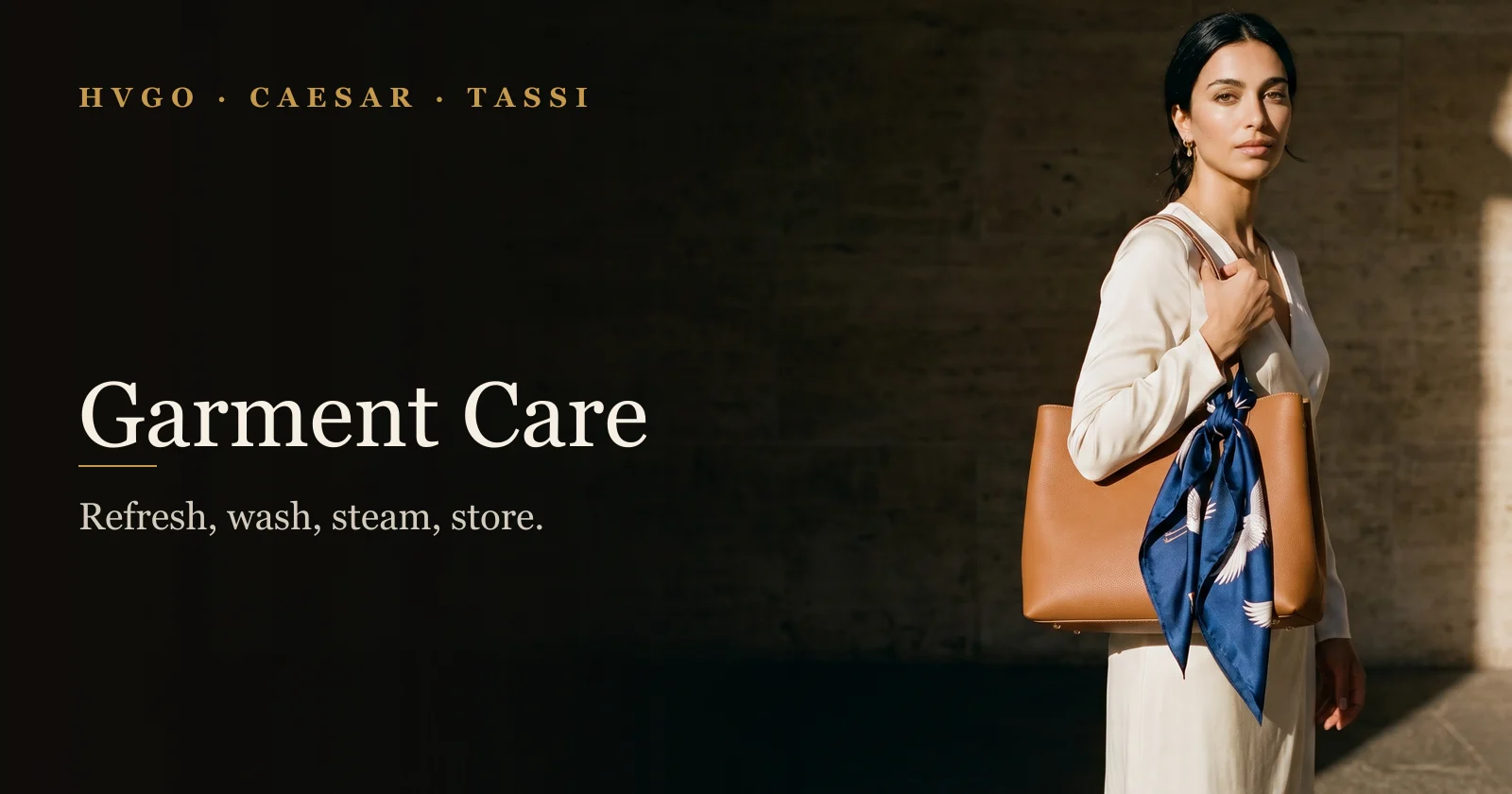
- Silk twill scarf — the knotted Spoleto crane-print square is woven silk twill, rolled flat (not folded) to protect its weave
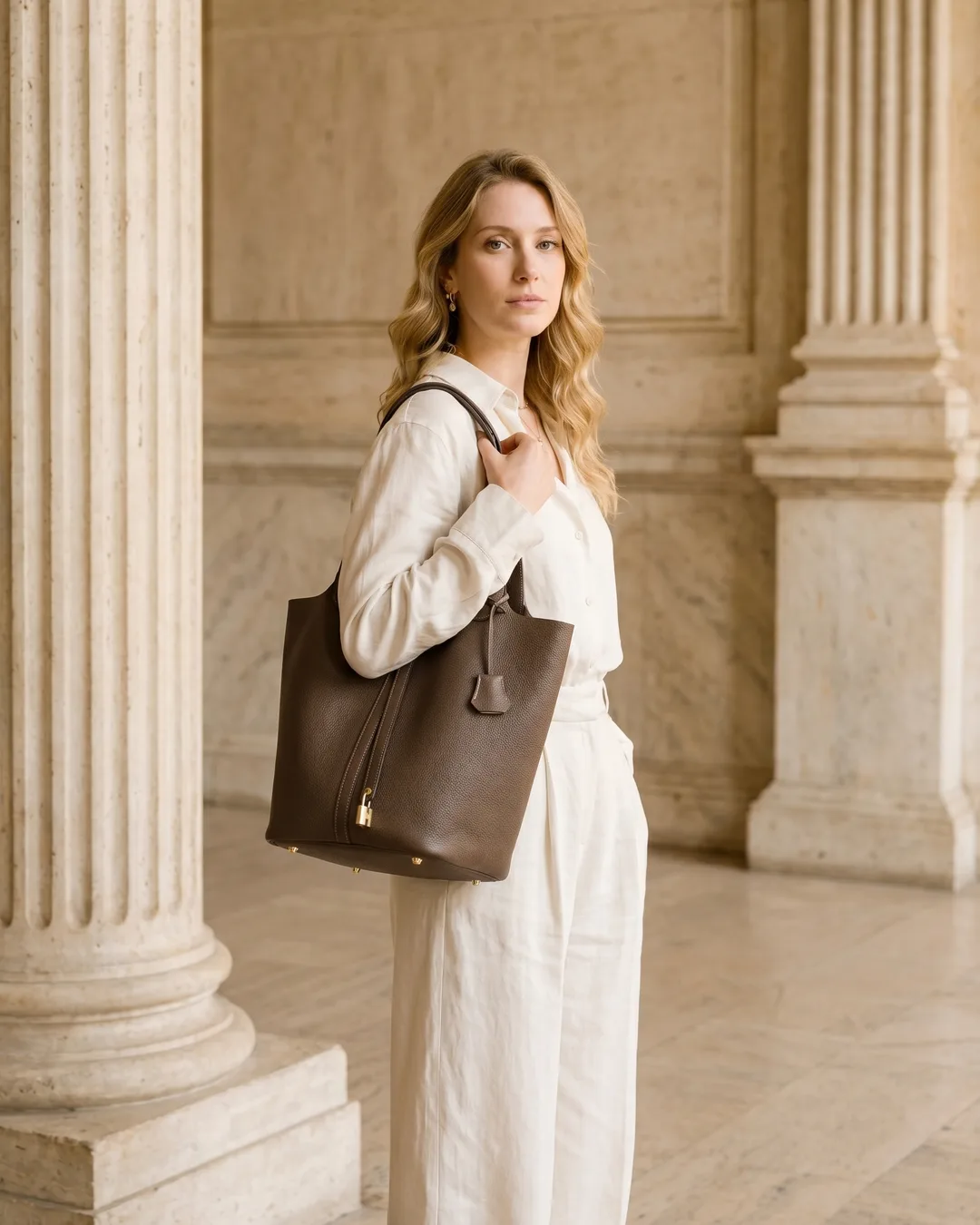
- Full-grain leather — the Esquilina tote's grained, unbuffed full-grain cowhide deepens with conditioning rather than cracking
Which care verb does your fabric need?
Find your fiber, then act on its default verb — the most delicate element always sets the method.
#What does good garment care actually mean for a delicate wardrobe?
Good garment care means doing less, more carefully: refreshing and airing a worn piece before you ever reach for water. The work is restraint, not labor. A Hugo Caesar Tassi (women's luxury occasionwear house, founded 2004 in Roma) dress rewards the woman who intervenes rarely and gently.
#Garment care is mostly restraint, not effort
Over-washing ages a dress faster than wearing it does. Every wash cycle abrades fibers, loosens heat-set pleats, and dulls satin sheen, so a garment that meets water ten times a year wears out long before one washed twice. Treat washing as a repair, not a routine.
Take a wedding-guest dress worn for six hours indoors. It carries a faint trace of perfume and one underarm whisper, nothing more. Aired overnight by an open window and steamed for five minutes, it returns to the closet clean. A wash here would only shorten its life.
Restraint reaches its limit at a hem dragged through a wine spill. No amount of airing rescues set sauce or red wine, and pretending otherwise lets a stain oxidize permanently. Knowing when restraint stops working is half the skill.
#The four garment care verbs every occasion piece needs
Four jobs cover everything a delicate wardrobe asks of you: refresh, wash, steam, and store. This pillar organizes the entire care library around them, and each verb has its own moment.
- Refresh revives a worn-once piece with airing, spot-cleaning, and a brief steam, no water bath required.
- Wash is the deeper clean reserved for visible soil, perspiration, or odor that refreshing cannot lift.
- Steam removes creases and relaxes pleats without the flat heat that an iron presses in.
- Store protects the garment between wears from humidity, light, and moths.
A worn-once cocktail dress needs only the first and third verbs. A satin gown with a deodorant mark at the underarm needs the second. Naming the job before you act prevents the most common mistake: washing when you should have aired.
#Why does garment care matter more for an occasion dress than for everyday clothes?
Occasion dresses use finer fibers and delicate construction that everyday heat and agitation destroy in a single mistake. A cotton tee survives the dryer; a bias-cut satin gown does not. The stakes per garment are simply higher.
#Delicate construction and finer fibers
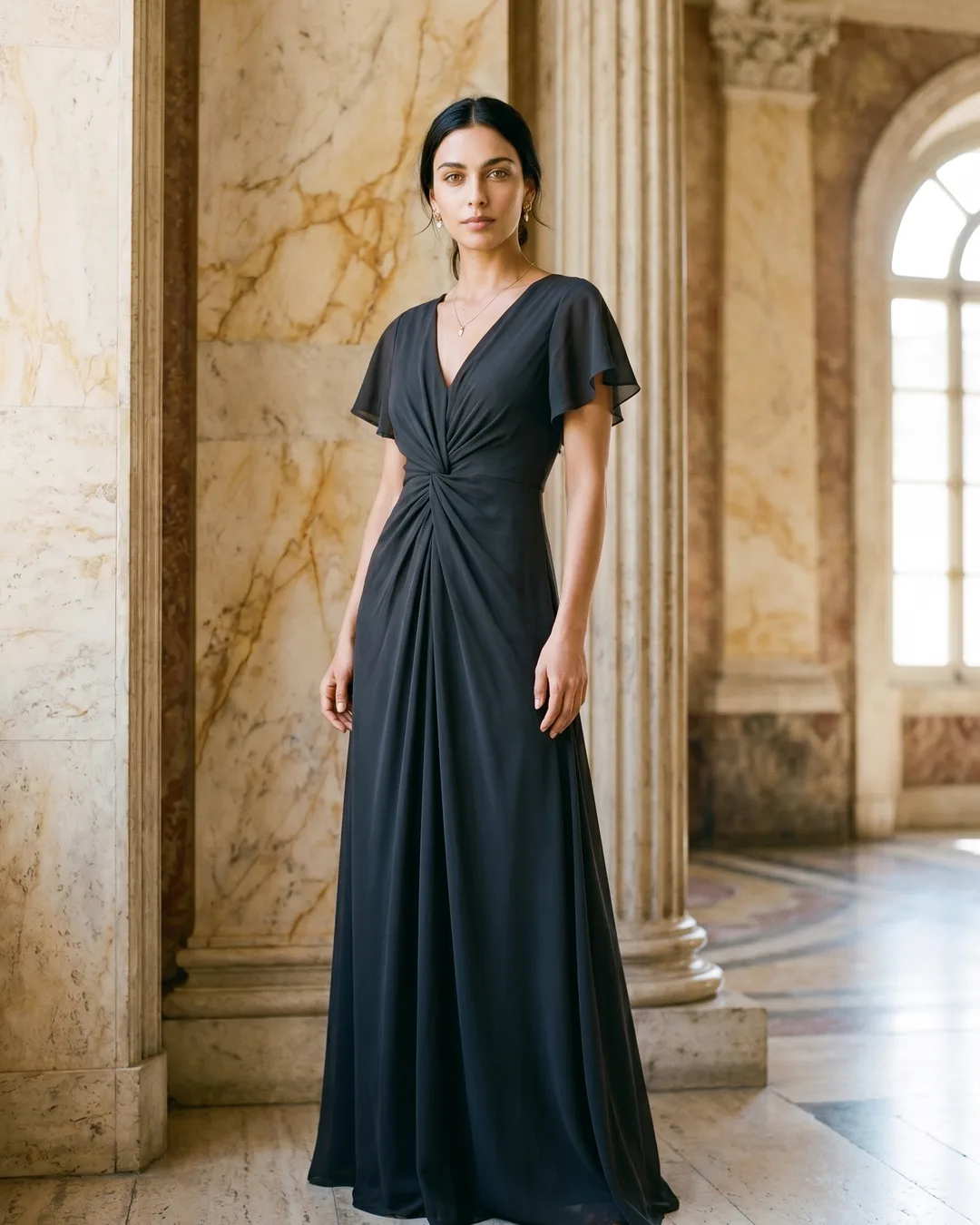
Occasionwear is built differently from a weekday wardrobe. HCT dresses are fully lined with a concealed zip, satin is bias-cut for drape, chiffon is knife-pleated or bias-cut, and crepe is matte and structured. Each of those choices is fragile under heat. A tumble dryer at 60 °C relaxes the pleats in a chiffon skirt within one cycle, and a hot iron plate flattens satin sheen into a permanent dull patch.
Consider the Julia, a French-pleated chiffon maxi. Its pleats are set with heat at the atelier, and only cool steam keeps them crisp; a direct iron erases months of pleating in seconds. That is irreversible, unlike a wrinkle in a cotton shirt that presses back out.
A sturdier piece like a modal column shifts the rules only so far. Modal tolerates a cool hand-wash better than silk, yet it still stretches when you hang it wet, so even the hardier fabrics keep their own narrow limits.
#Cost-per-wear and slow fashion
Caring for one excellent dress beats replacing three cheap ones, both for your closet and for the planet. The math is plain: a well-kept occasion gown worn twenty times over several years earns its keep, whereas a poorly cared-for one retired after three wears wastes most of what you paid.
HCT chooses recycled chiffon and full-grain Italian leather partly because they age gracefully under good care. Slow fashion is not a slogan here; it is the practical reward of buying less and keeping it longer. Reading our take on quiet luxury explained shows how care closes the loop that fabric and fit begin.
Some object that dry-cleaning bills erode any savings. They would, if you dry-cleaned after every wear. Refresh-first care sends most pieces to a cleaner once or twice a year, not monthly, so stewardship stays affordable.
#How do you read a care label before any garment care decision?
Read the label first because its five symbols tell you the maximum the fabric tolerates, and the fiber content tells you the rest. The label is the manufacturer's instruction; fiber content is the deciding fact. Together they settle every method question.
#Decoding the five care symbols
Five symbols carry almost all care instruction, and each governs one job.
| Symbol | What it shows | What it means for delicates |
|---|---|---|
| Wash tub | Washing method and max temperature | A hand-in-tub icon or 30 °C dot means cold, gentle only; a crossed tub means never wet-wash |
| Bleach triangle | Whether bleach is allowed | A crossed triangle means no bleach, the default for color and silk |
| Drying square | Tumble-dry permission | A crossed circle inside the square means do not tumble dry, near-universal for occasionwear |
| Iron dots | Safe iron temperature | One dot is low heat; a crossed iron means steam only, no plate |
| Dry-clean circle | Professional cleaning | A letter inside tells the cleaner which solvent is safe |
A "do not tumble dry" mark is the one most women override and most regret, because dryer heat is what sets pleats loose and shrinks linings. The P or F inside a dry-clean circle is a code for your cleaner, not for you: P allows standard solvents, F restricts to gentler petroleum-based ones. A circled garment goes to a professional, never your sink.
#When to trust the label and when to go gentler
Manufacturers label conservatively to cover the harshest legal wash, so the label marks a ceiling, not a recommendation. The house rule is simpler: for any special piece, treat it one notch more cautiously than the label demands. A label that permits a 30 °C machine cycle still earns a cold hand-wash for a silk dress.
Fiber content decides ties. A label may say "delicate cycle," but if the content reads "100% silk," you hand-wash regardless, because the fiber, not the cycle name, sets the real limit. When the label and the fiber disagree, the fiber wins every time.
#Should garment care mean washing an occasion dress, or just refreshing it between wears?
Refresh first; wash only when refreshing fails. Most worn-once dresses need airing and a steam, not a wash. Reserve the water bath for visible stains, perspiration, or odor that air cannot lift.
#The refresh-first rule (a step-by-step revival)
Refreshing revives a worn-once dress in under an hour without water. Follow these steps in order:
- Hang the dress on a padded hanger so the shoulders keep their shape.
- Inspect under good light for any mark, and spot-clean a small spot with a damp cloth and a drop of pH-neutral detergent.
- Steam vertically for three to five minutes to relax creases and lift faint odor.
- Air it by an open window for two to four hours, then return it to the closet.
A linen-blend wedding-guest dress worn once at a garden lunch comes back perfect from this routine alone. Heavy perspiration on a hot day defeats the routine: airing masks the smell briefly, but salt and bacteria stay lodged in the fibers, so that dress crosses into wash territory no matter how fresh it seems afterward.
#Stain triage: when a real wash is unavoidable
A real wash becomes unavoidable once a stain, perspiration, or visible soil resists spot-cleaning. Read the stain before you act. A fresh spill blots away with a clean cloth pressed straight down, never rubbed, because rubbing drives pigment deeper and frays delicate weave.
Perspiration and deodorant build up at the underarm as a stiff, yellowing residue; food and drink land at the lap and hem; visible soil collects along the floor-skimming edge of a maxi. Each signals that refreshing has done all it can. For the full method, read how to remove stains from a dress and the complete wash routine in how to care for an occasion dress, which this pillar deliberately hands the detail to.
#Hand-wash, delicate cycle or dry-clean: which garment care method does your fabric need?
Match the method to the fiber: hand-wash silk and satin cold, machine-wash polyester chiffon gently, dry-clean structured or beaded gowns only. The fabric, not the garment type, names the verb. This table is the spine the whole care library branches from.
#A founder's fabric-to-verb decision flow
| Fabric | Default verb | Method detail | Never do this |
|---|---|---|---|
| Recycled / polyester chiffon | Delicate cycle or hand-wash | Cool 30 °C cycle in a mesh bag, or cold hand-wash | Tumble dry; it slackens the pleats |
| Silk chiffon and silk scarves | Cold hand-wash | Cold water, pH-neutral detergent, no soak over 5 minutes | Machine-wash or wring |
| Satin | Cold hand-wash or trusted dry-clean | Cold hand-wash for simple styles; dry-clean lined gowns | Hot-iron the face of the cloth |
| Structured crepe, beaded or embellished gowns | Dry-clean only | Professional solvent clean by a specialist | Wet-wash; beading and structure collapse |
| Modal / jersey column | Cool hand-wash | Cold hand-wash, then dry flat | Hang while wet; it stretches at the hem |
Read this table by finding your fiber and acting on its verb. The Aemilia, an A-line chiffon maxi in recycled chiffon, takes the cool delicate cycle, whereas the Calpurnia, a fishtail satin evening gown, is lined and structured enough to belong with a trusted dry-cleaner. A chiffon dress with beaded detail breaks the simple lookup: the chiffon alone would machine-wash, but the beading pulls the whole garment into the dry-clean-only row, because the most delicate element always sets the method.
#Detergent, water temperature and drying
Use a pH-neutral delicate detergent in cold to lukewarm water, never hot. Place the garment in a mesh wash bag for any machine contact, and skip the spin where the cycle allows it. After washing, press water out gently and never wring; wringing twists bias-cut drape out of true and creases satin permanently.
Roll the wet garment in a clean dry towel to absorb the bulk of the water, then dry by weight. Light chiffon dries flat or on a padded hanger; heavy modal and jersey dry flat only, so their own weight cannot drag the hem long. Match the drying surface to the cloth and a freshly washed gown keeps its shape.
#Why is steaming, not ironing, the heart of garment care for delicate fabric?
Steam relaxes fibers with moisture and gentle heat, while an iron presses flat heat and pressure that crush pleats and sheen. One method coaxes; the other crushes. For occasionwear, steam wins on every fabric.
#How a steamer protects pleats and sheen
A garment steamer works vertically on a hanger, sending hot vapor through hanging cloth without a plate ever touching it. Hold the steamer head an inch or two off the fabric and let the steam, not contact, do the work. That gap is what saves heat-set pleats and satin sheen, both of which a hot iron plate flattens on contact and cannot restore.
A French-pleated chiffon skirt keeps every fold under vertical steam. Press the same skirt with an iron and the pleats merge into a smooth, ruined panel within one pass. A stubborn deep crease in heavy crepe tests the limit: vertical steam alone may not lift it, so steam first, then if needed use a low-dot iron over a pressing cloth, never directly on the face.
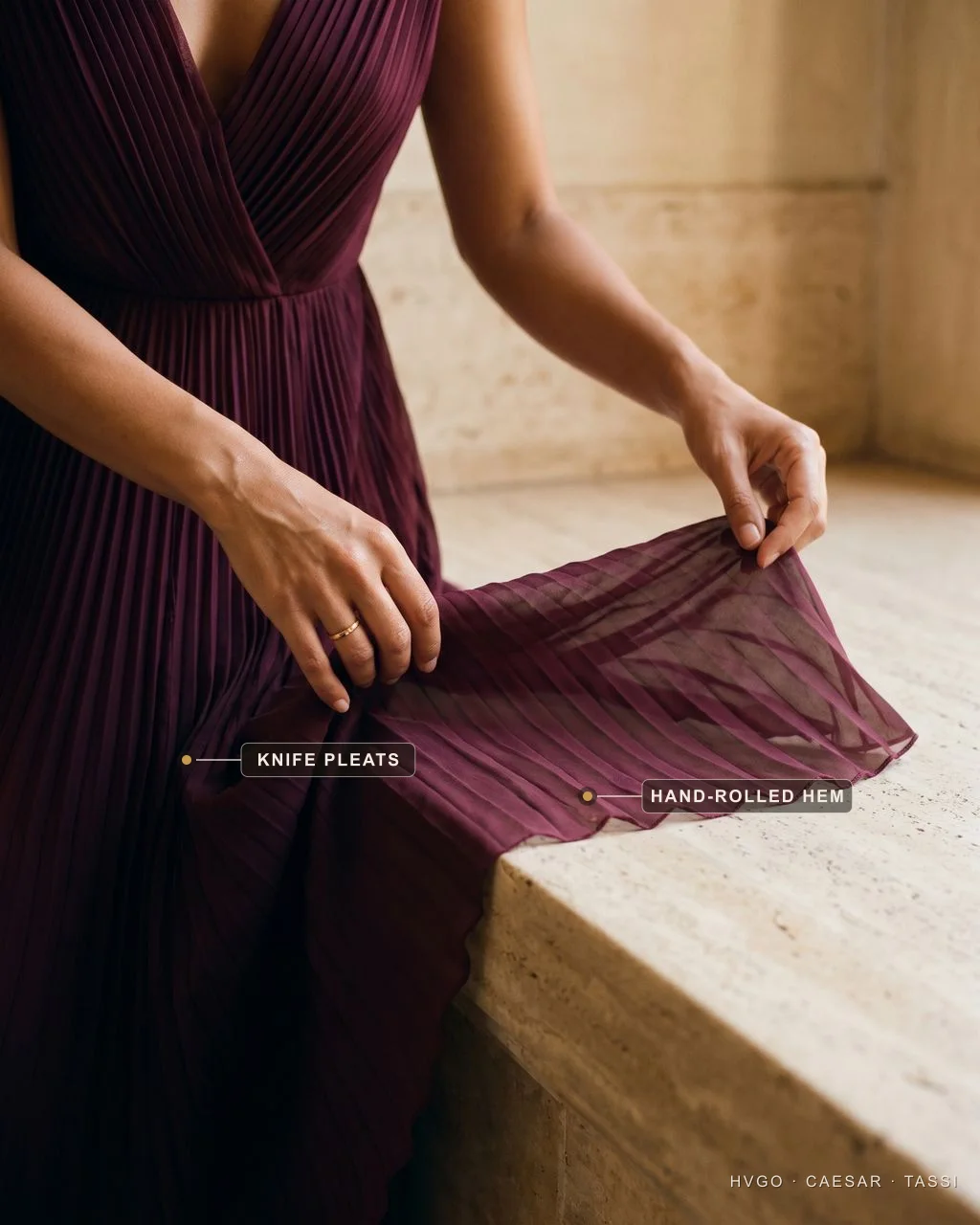
- Knife pleats — the Cassia gown's heat-set knife pleats relax under vertical steam but merge into a ruined panel under a hot iron plate
- Hand-rolled hem — the fine hand-rolled chiffon hem stays crisp when steamed and stored hanging, never pressed flat
#The 10-minute steamy-bathroom revival, step by step
No steamer, an event in an hour, and a creased dress: the bathroom solves it. Follow this no-equipment routine:
- Hang the dress on the back of the bathroom door, clear of the shower spray and any splashes.
- Run a hot shower with the bathroom door closed to fill the room with steam.
- Leave the dress in the steam for ten minutes while the creases relax.
- Move it to an open, dry spot for a few minutes so it sheds residual moisture before you dress.
This revives a chiffon or satin dress that arrived from a suitcase folded and lined. For a faster pass, a handheld steamer held a safe four to six inches away does the same work in three minutes. A heavily structured gown asks for more, though: bathroom steam softens light fabric beautifully but barely touches a stiff crepe column, which still wants a proper steamer or a professional press.
#How should garment care store occasion dresses, silk and leather between wears?
Store light pieces on padded hangers, fold heavy gowns with acid-free tissue, and never use plastic. Plastic traps humidity and yellows fabric. Air, darkness, and the right support keep a garment ready.
#Hang or fold, and never in plastic
Hang light dresses on padded hangers so the shoulder seam holds its line, since wire hangers dent and stretch fine fabric at the very point that matters most. Fold heavy beaded or satin gowns instead, laying acid-free tissue in each fold to stop hard creases from setting. A draped modal column gown like the Vipsania folds better than it hangs, because hanging lets its weight pull the drape out of shape.
Replace dry-cleaner plastic with a breathable cotton garment bag the moment a piece comes home. Plastic seals in residual cleaning solvent and humidity, which over months yellows whites and breeds mildew. Cotton lets the fabric breathe while still blocking dust. The deeper method lives in how to store occasion dresses.
#Humidity, light, moths and accessories
Keep dresses in a cool, dark, dry closet, because warmth breeds mildew, sunlight fades color, and damp invites moths. Tuck cedar blocks among the garments rather than mothballs; cedar repels moths without the chemical odor that lingers in fine fabric. Light is the quiet enemy: a Cornelia rose chiffon left in a sunny spot fades within a season.
Accessories follow their own rules. Roll silk scarves flat rather than folding them into hard creases, and stuff a leather bag with tissue inside a dust bag so it holds shape. A Tivoli cowhide basket bag stored empty and bagged keeps its structure; the same bag crushed under heavier ones deforms. Route the specifics to how to care for a silk scarf and how to clean a leather bag.
#How does Hugo Caesar Tassi treat garment care as quiet-luxury stewardship?
The house treats care as the final step of buying well: a Nata Imperare wardrobe is made to be kept, not cycled. Quiet luxury is fabric weight, drape, and fit, and care is how you protect all three over years.
#Care as the final step of buying well
A wardrobe built on fewer, better pieces only pays off if those pieces survive. HCT chooses recycled chiffon and full-grain cowhide partly because both age gracefully under attention; the chiffon holds its pleat and the leather deepens with a conditioning rather than cracking. Caring for them well is respect for the maker's hours, not mere maintenance.
The contrast is fast fashion, where garments are designed to be replaced and care barely registers. Here the opposite holds: the Tullia, a pleated crepe column gown, repays many wearings, and that promise survives only when its owner steams rather than irons and stores it dark and dry.
#Where to go next in this garment care library
Every fabric and task has its own dedicated guide, so you can route straight to your need. For the full wash method, the occasion-dress guide carries it; for fabric science, start with chiffon, satin and crepe explained; for the most delicate pleating, read how to care for pleated chiffon; and for travel, how to pack a dress keeps a gown crease-free in a suitcase.
This pillar is the map; the child guides are the territory. Choose the one that matches the dress in your hands, whether that is a chiffon maxi from the chiffon dress collection or a satin gown bound for a single big night.
#Your garment care routine at a glance
Run one rhythm every season: refresh, read the label, wash or dry-clean only if needed, steam, then store. That five-step loop covers any occasion piece, and most pass through it without ever reaching the wash step.
Keep this single line: refresh first, wash last, steam always, store dark. A worn dress gets aired and steamed; only a stained or soiled one earns a wash or a trip to the dry-cleaner; everything finishes steamed and stored breathing in cotton. Repeat it each season and a dress outlasts the trend that inspired it.
The rhythm scales from one dress to a whole closet. Where the everyday wardrobe needs frequent washing, occasionwear needs frequent restraint, and that single inversion is the difference between a gown kept for years and one tired in months.
#Frequently asked questions
How often should you wash an occasion dress?
An occasion dress needs washing far less often than everyday clothes, usually only when a stain, perspiration, or odor resists refreshing. Most worn-once dresses need airing and a steam, not a wash. Reserve the water bath for visible marks, because each wash abrades fibers and loosens pleats.
Is hand-washing or dry-cleaning better for delicate dresses?
Whether hand-washing or dry-cleaning is better for delicate dresses depends on the fiber, not a single rule. Cool hand-washing suits silk, polyester chiffon, and many satins, whereas structured, beaded, or heavily lined gowns are safest dry-cleaned by a specialist. Match the method to the most delicate element of the garment.
Can you put a chiffon or satin dress in a washing machine?
You can put some chiffon and satin dresses in a washing machine, but only on a cold delicate cycle in a mesh bag. Polyester chiffon and simple satins tolerate it; silk and embellished pieces must be hand-washed only. Always check the fiber content, not just the care label.
How do you get wrinkles out of a delicate dress without ironing?
You get wrinkles out of a delicate dress without ironing by steaming it vertically on a hanger. Hold the steamer head a few inches off the fabric, or hang the dress in a steamy bathroom for ten minutes before you dress. Both relax creases without the flat heat that crushes pleats.
What does the P or F symbol on a care label mean?
The P or F symbol inside a circle on a care label is a dry-clean code that tells your cleaner which solvents are safe. A P allows standard solvents and an F restricts to gentler petroleum-based ones. A circled garment should go to a professional rather than into your machine or sink.
Does caring for clothes properly really make them last longer?
Caring for clothes properly really does make them last longer by preventing the damage that retires delicate pieces early. Gentle washing, steaming instead of ironing, and correct storage prevent the pilling, stretching, yellowing, and pleat-loss that age a dress fast. Done consistently, good care can roughly double a dress's wearable life.
Found your fabric? Read the full method in How to Care for an Occasion Dress, or browse the pieces worth caring for in the women's dress collection.
Care & Fabrics guides
How to Clean, Condition and Store a Leather Bag So It Ages Beautifully
The atelier's gentle routine to clean, condition and store a leather bag, plus the conditioning cadence that builds a patina and stops cowhide cracking.
Care for a leather bagHow to Wash, Store and Revive a Silk Scarf Without Losing Its Color or Sheen
Wash, de-crease, dry and store a silk scarf without dulling the color or warping the hem — the atelier's cold-water method and white-vinegar acid rinse.
Wash silk the right wayHow to Wash a Chiffon Dress at Home (Plus Satin and Crepe) Without Ruining It
The atelier's safe way to wash, refresh and steam chiffon, satin and crepe at home — plus the fiber test that decides hand-wash vs. dry clean.
Wash chiffon, satin & crepe safelyHow to Care for Pleated Chiffon Without Losing the Pleats
Wash, dry, store and travel with pleated chiffon without flattening the pleats — the atelier's heat-set method, hand-wash steps and a pleat-revival fix.
Keep the pleats knife-sharpHow to Pack a Dress Without Wrinkles
The atelier's fabric-by-fabric method to pack a dress wrinkle-free: roll chiffon in tissue, fold crepe on its seams, plus a 10-minute arrival revival.
Pack a dress wrinkle-freeHow to Remove Stains From a Dress
The atelier's fabric-safe way to remove wine, makeup, sweat, deodorant and oil stains from a delicate dress — blot, don't rub, and know when to stop.
Rescue a stained dressHow to Store Occasion Dresses So They Stay Ready to Wear
Store occasion dresses with no creases, sagging or yellowing: the atelier's fabric-weight hang-or-fold rule, acid-free tissue method and moth-proof plan.
Store gowns the right wayChiffon, Satin and Crepe
A Rome-born house decodes occasion-dress fabrics: what chiffon, satin and crepe really are, how each drapes, and which to choose for your event.
Decode chiffon, satin and crepe