La Bella Figura: The Italian Art of Looking Right
What la bella figura really means, and how a Roman house turns it into a three-part dressing code for women: sprezzatura and brutta figura explained.
On this page
La bella figura translates literally as "the beautiful figure," yet it has almost nothing to do with your measurements and everything to do with the impression you leave when you walk into a room. It names the quiet Italian art of presenting yourself well in public: put-together, right for the moment, never straining. This guide gives you the true cultural meaning and the wardrobe doctrine that follows from it.
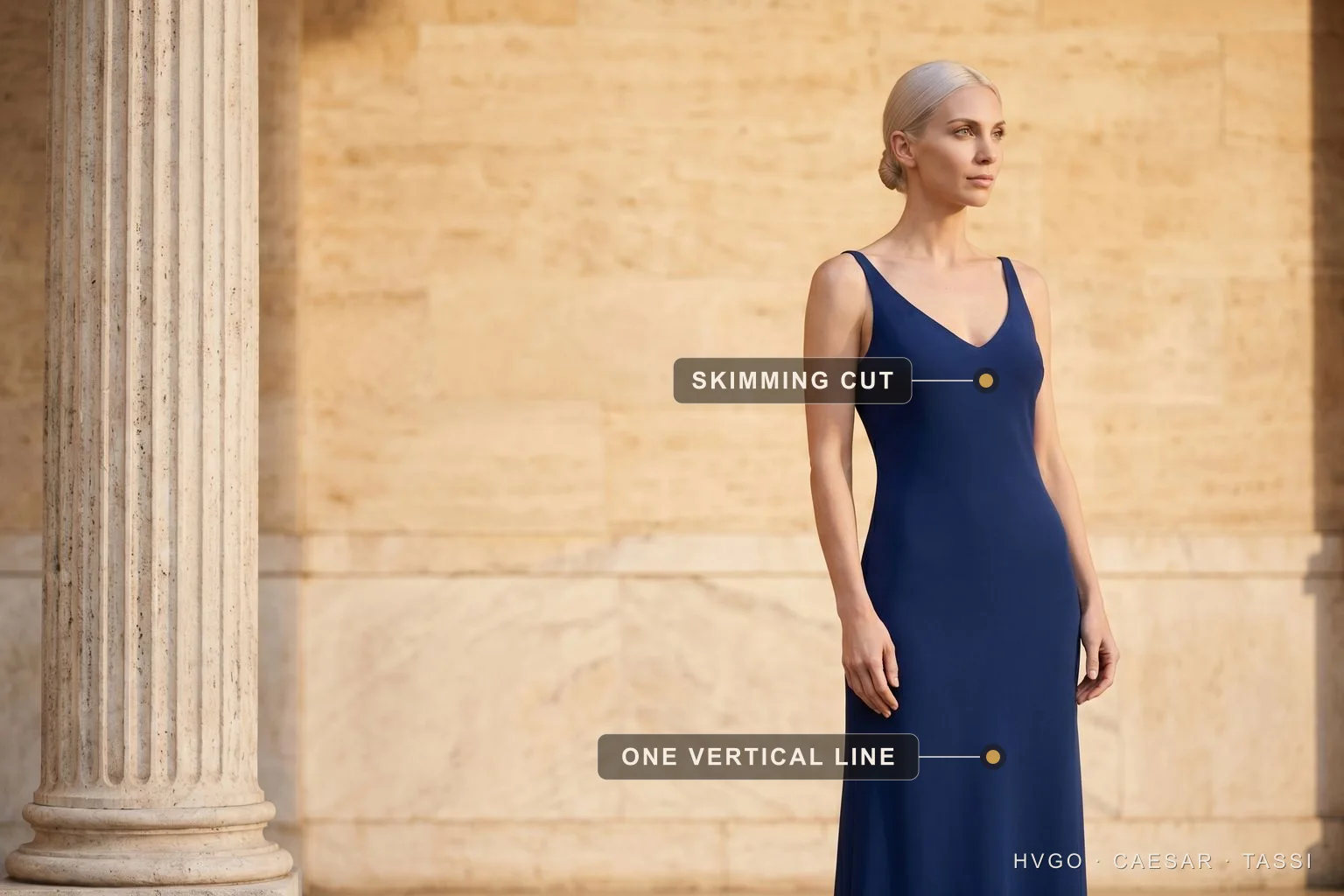
- Skimming cut
- One vertical line
#What does la bella figura actually mean, beyond "looking good"?
Presenting yourself with care, dignity, and appropriateness in public so you leave a good impression is the heart of it, and that makes la bella figura a social code rather than an outfit. The phrase rewards a woman who reads the moment, not one who simply owns expensive clothes. Most style pages translate it as "looking chic" and stop there, which loses the point entirely.
#The literal translation of la bella figura and the real one
The Italian word figura carries two meanings at once: the figure or form you cut, and the impression or showing you make. So la bella figura holds a deliberate double meaning, the beautiful line of the body alongside the beautiful impression on the people watching. An Italian woman hears both halves every time she says it.
That double sense is why the concept resists a one-word English swap. "Looking good" captures the surface; "making a good showing" captures the social weight. Together they define the term: a woman who fits her clothes and fits the room makes a bella figura.
This guide treats the concept strictly as a woman's dressing code. Every example, color call, and occasion below describes a woman presenting herself at an aperitivo, a wedding, a piazza, an office, a dinner.
#Why la bella figura is a whole code of conduct, not just an outfit
La bella figura governs manners, hospitality, the table you set, your generosity, your punctuality, and how you carry yourself; clothing is only its most visible channel. A woman can wear a flawless dress and still make a brutta figura by arriving late or treating a host carelessly. The code judges the whole presentation.
Italians turn the idea into verbs. Fare bella figura means to make a good impression; fare brutta figura means to embarrass yourself. A hostess who plates a generous table makes a bella figura before a single guest comments on her dress.
Because dress is the channel a stranger reads first, this guide concentrates there. You cannot fix tardiness with tailoring, yet the clothes are the part a wardrobe can actually control.
#La brutta figura: the thing la bella figura exists to avoid
The social misstep the whole code is built to prevent goes by its own name: la brutta figura, the "ugly figure." Italian girls are raised to dread it the way they're taught to greet an elder. The positive rules exist only because the negative one stays so vivid.
In dressing terms, brutta figura takes three shapes: looking sloppy, looking wrong for the occasion, or looking like you tried far too hard. A woman in gym leggings at a christening commits one kind; a woman in a sequined floor gown at a Tuesday lunch commits the opposite kind. Both fail.
Consider the edge case that surprises foreigners: overdressing is a brutta figura too. Arriving at a casual trattoria dinner in a cocktail gown signals that you misjudged the room rather than honored it. The failure is mismatch, not under-effort.
#Where did la bella figura come from, and why is it so Italian?
A culture lived in public produced it, where being seen is constant and dressing well counts as a courtesy rather than vanity. Italian daily life happens outdoors and in company, so the standard for appearance never relaxes the way it does behind a closed front door.
#A public culture where women dress for the street
Italian life unfolds in the piazza, at the bar over an espresso, and during the evening passeggiata, the slow social stroll. A woman crosses paths with neighbors, shopkeepers, and strangers dozens of times a day, so her appearance becomes a continuous, shared fact, not a private decision.
Compare that with cultures where a woman dresses mainly for herself and changes into "real clothes" only to leave the house for something formal. In those places, the errand outfit can be anything. The motive differs: private comfort versus public courtesy.
This is why an Italian woman often won't be seen buying bread looking undone. The bakery is a stage like any other. Dressing for it isn't fuss; it's respect for the people she'll meet there.
#The Roman inheritance behind la bella figura's dignified presentation
Hugo Caesar Tassi reads la bella figura through a Roman lens: how a woman presents herself is a form of self-respect and quiet authority, the meaning our motto Nata Imperare, born to rule, points toward. Dignified presentation is not display. It is the bearing of a woman who expects to be taken seriously.
The draped, upright silhouette has a long lineage worth knowing without re-teaching it here. For the full thread from antiquity to the column gown, the deeper history sits in our italian style guide. What matters for dressing is the instinct it left behind: composure shows.
#How does la bella figura translate into a dressing philosophy for women?
Three testable rules carry it into a wardrobe: effortless polish, occasion-readiness, and restraint. Each rule checks against a real outfit, which is what most cultural essays never deliver. Master the three and you cover the visible part of the code.
The bella figura checklist
Run these before you leave the house: every do prevents a brutta figura.
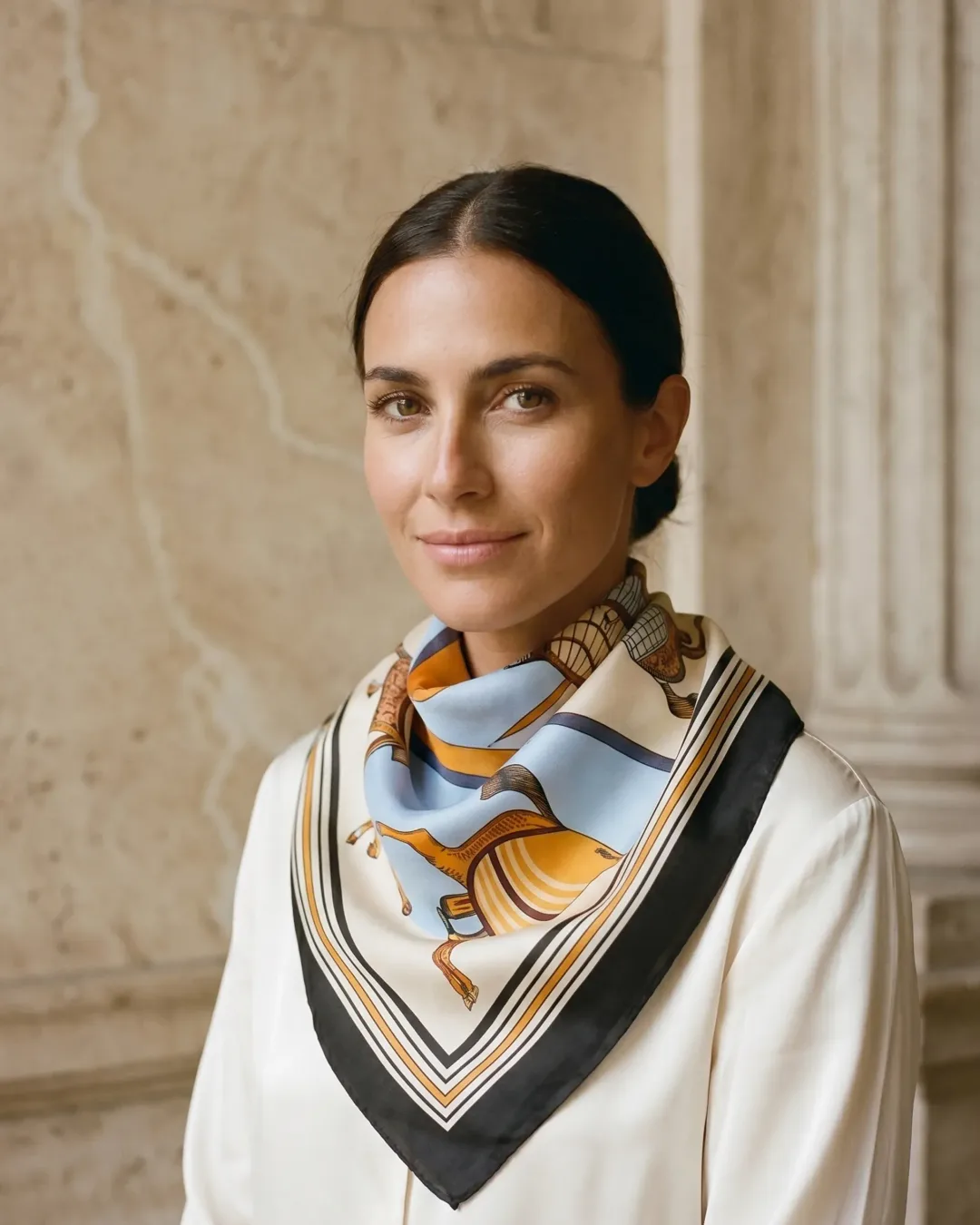
- Be curato: pressed, clean, the cut skimming your figure, bag and silk scarf maintained, not scuffed.
- Read the occasion and match its register, from an aperitivo to a wedding to the office.
- Practise restraint, fewer better pieces in natural fibres and real leather, no conspicuous logos.
- Build one focal point, like a single Vermiglio scarf against a Travertine dress, and keep the rest quiet.
- Add one undone touch for sprezzatura, an open button or a scarf knotted as if without a mirror.
- Don't look sloppy or undone, even for a quick errand like buying bread.
- Don't overdress, a cocktail gown at a trattoria misjudges the room as badly as underdressing.
- Don't pile on three trend buys when one maintained piece carries the look.
- Don't default to head-to-toe beige, which reads as fear of choosing rather than restraint.
- Don't add two or three undone touches, more than one reads as genuine disorder, not ease.
#Rule one: effortless polish (always curato, never sloppy)
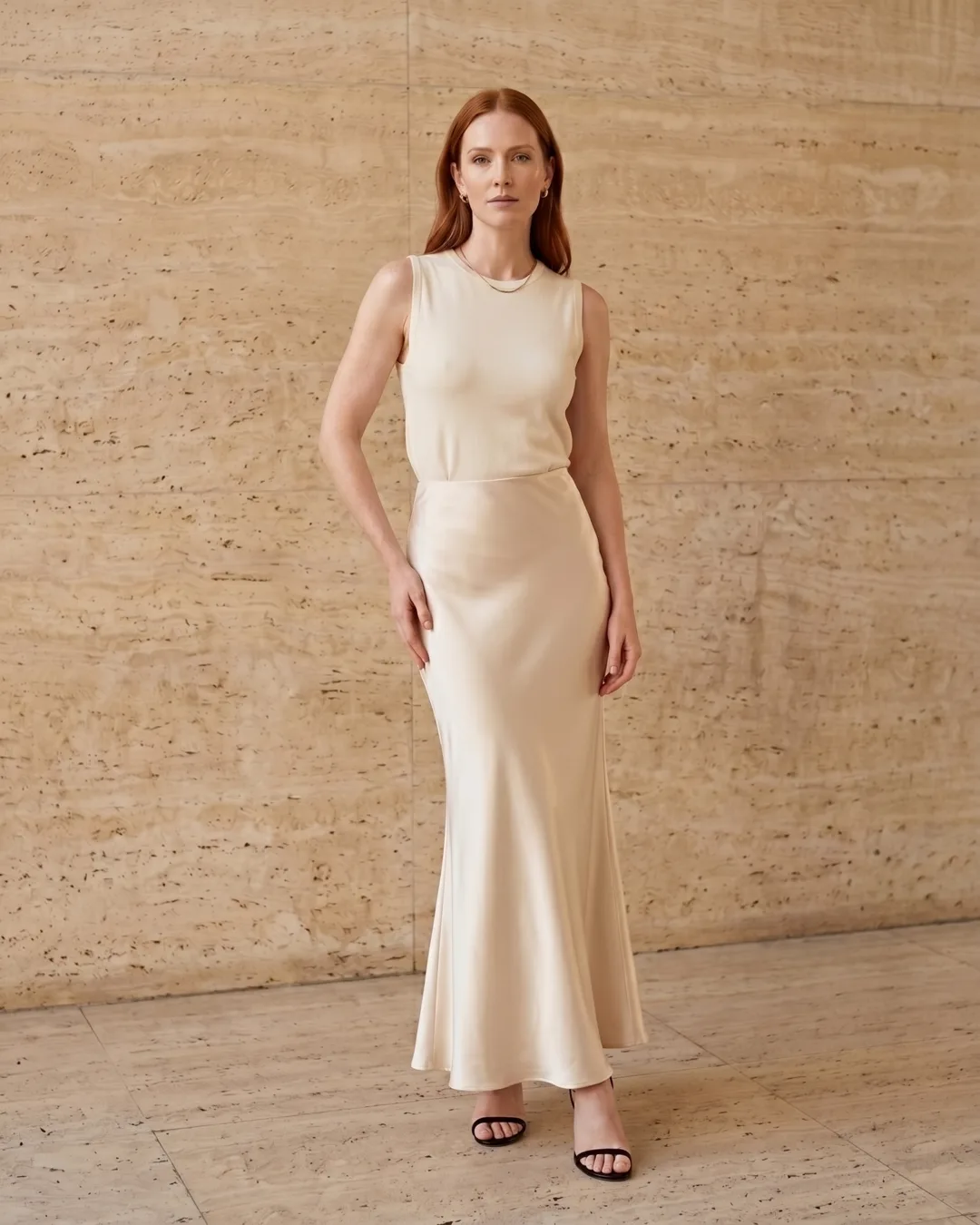
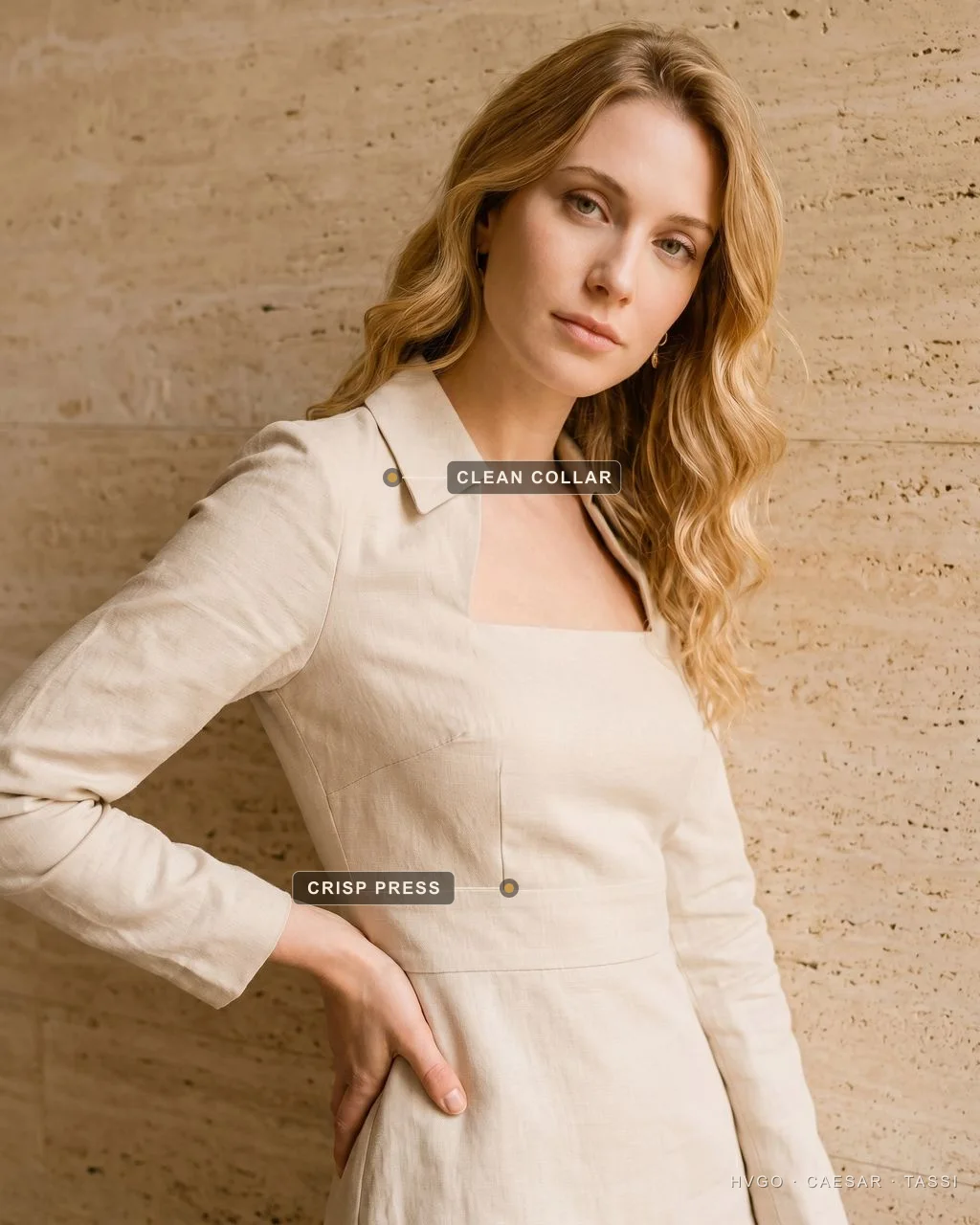
The first pillar is being curato, cared-for. Clothes are pressed and clean, the cut skims the body without pulling, hair and grooming are considered, and the bag and scarf are maintained rather than scuffed. The working standard is simple: you could be seen by anyone, anywhere, with no warning.
- Clean collar
- Crisp press
Curato is a daily baseline, not an event setting. An Italian woman applies it to a market run, whereas a trend-led wardrobe saves effort for photographed moments. A linen dress with one crisp press looks more curato than a designer piece worn creased.
The edge case: polish is not perfection. A blanket of grooming with zero ease tips into stiffness, which the next concept exists to soften.
#Rule two: occasion-readiness (dress for the moment and for others)
The second pillar is reading the occasion and dressing correctly for it, because la bella figura is partly a courtesy to the women and the company around you. An aperitivo, a wedding, an office, and a dinner each ask for a different register, and matching the register is the elegance.
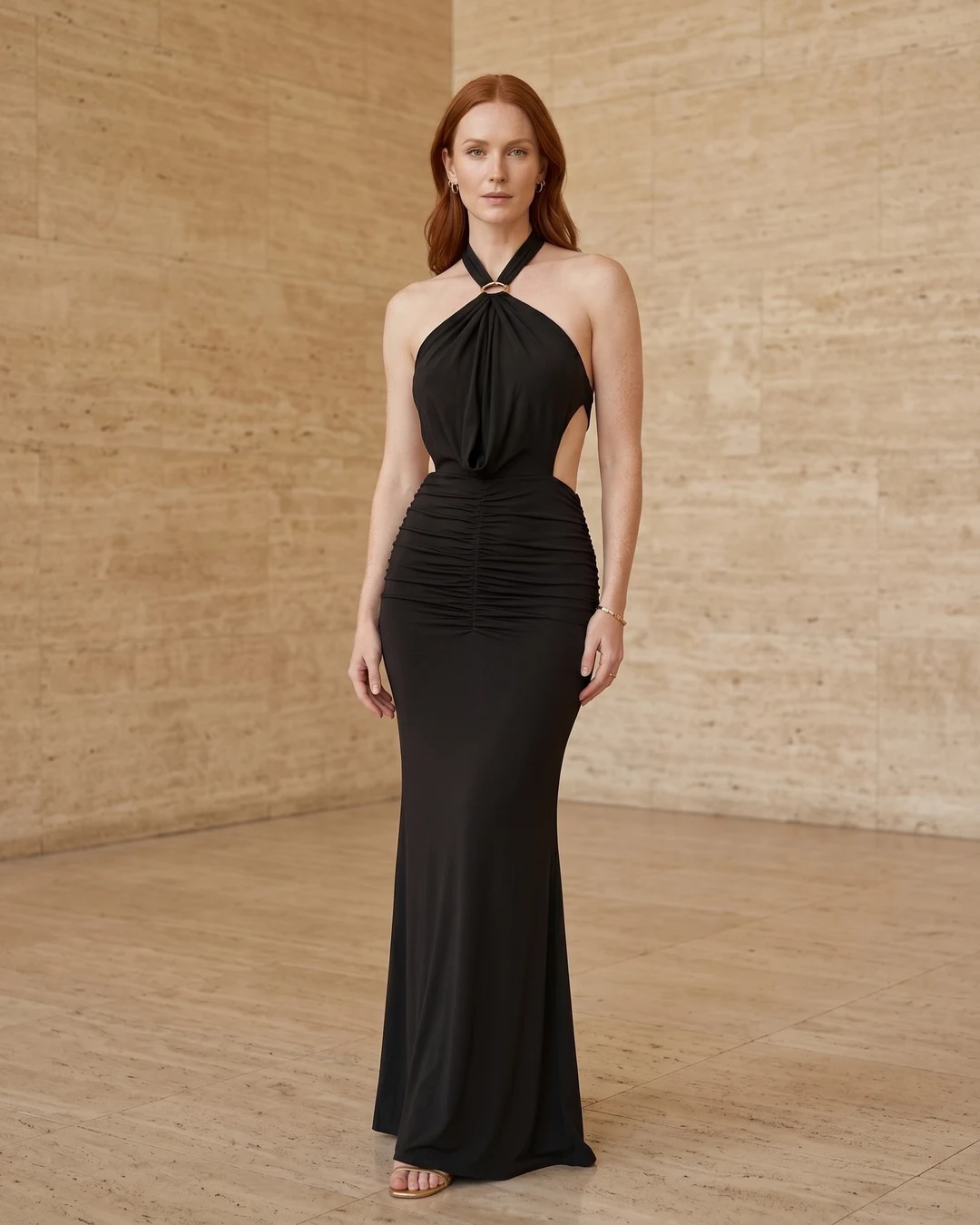
Here is the rule competitors skip: both overdressing and underdressing are a brutta figura. Correctness, not maximum effort, wins the moment. A daytime garden wedding calls for a fluid midi, whereas the same event at night moves toward a floor-length column.
When you genuinely can't read the dress code, choose the version that honors the host's effort without competing with it. That single decision resolves most occasion anxiety.
#Rule three: restraint (quality over quantity, no logos)
The third pillar is understatement: fewer, better pieces, natural fibers and real leather over fast fashion, and no conspicuous logos or trend-chasing. You build one considered focal point rather than wearing everything at once. Restraint is what separates la bella figura from merely "dressed up."
Color is part of the discipline. An intentional, flattering palette beats loud seasonal color, and an old-money color logic gives the wardrobe coherence year to year. For the palette mechanics, see our old money color palette guide and choose one statement color per outfit.
The counter-case: restraint is not drabness. A single Vermiglio (red) scarf against a Travertine (stone) dress stays restrained and alive, whereas head-to-toe beige can read as fear of choosing.
#Where does sprezzatura fit inside la bella figura for women?
One technique inside la bella figura, not a rival to it, is sprezzatura: the studied carelessness that keeps polish from stiffening. The goal is the beautiful impression; sprezzatura is how you reach it without looking like you labored.
#What sprezzatura means (Castiglione's studied carelessness)
Baldassare Castiglione coined sprezzatura in The Book of the Courtier (1528), defining it as making the difficult look effortless, a studied carelessness, a calculated nonchalance. The courtier hides the work so the result seems natural. The effort stays real; only its visibility is removed.
In a woman's dressing, that translates to a deliberate touch of undone-ness laid over an otherwise considered look. The skill is concealment, not neglect. A woman who has thought about every detail then loosens exactly one of them performs sprezzatura.
#Bella figura vs sprezzatura: presentation vs. nonchalance
La bella figura is the destination; sprezzatura is one road to it. The first asks did you make a good impression; the second asks did you make it look easy. They are not competitors, since sprezzatura works as the calculated-imperfection sibling tucked inside the larger code.
This is the distinction the SERP usually gets wrong by framing the two as opposites. Presentation versus nonchalance is a false fight. Without la bella figura's polish underneath, sprezzatura is just mess; without sprezzatura, that polish can stiffen.
#The small undone details that read as sprezzatura on a woman
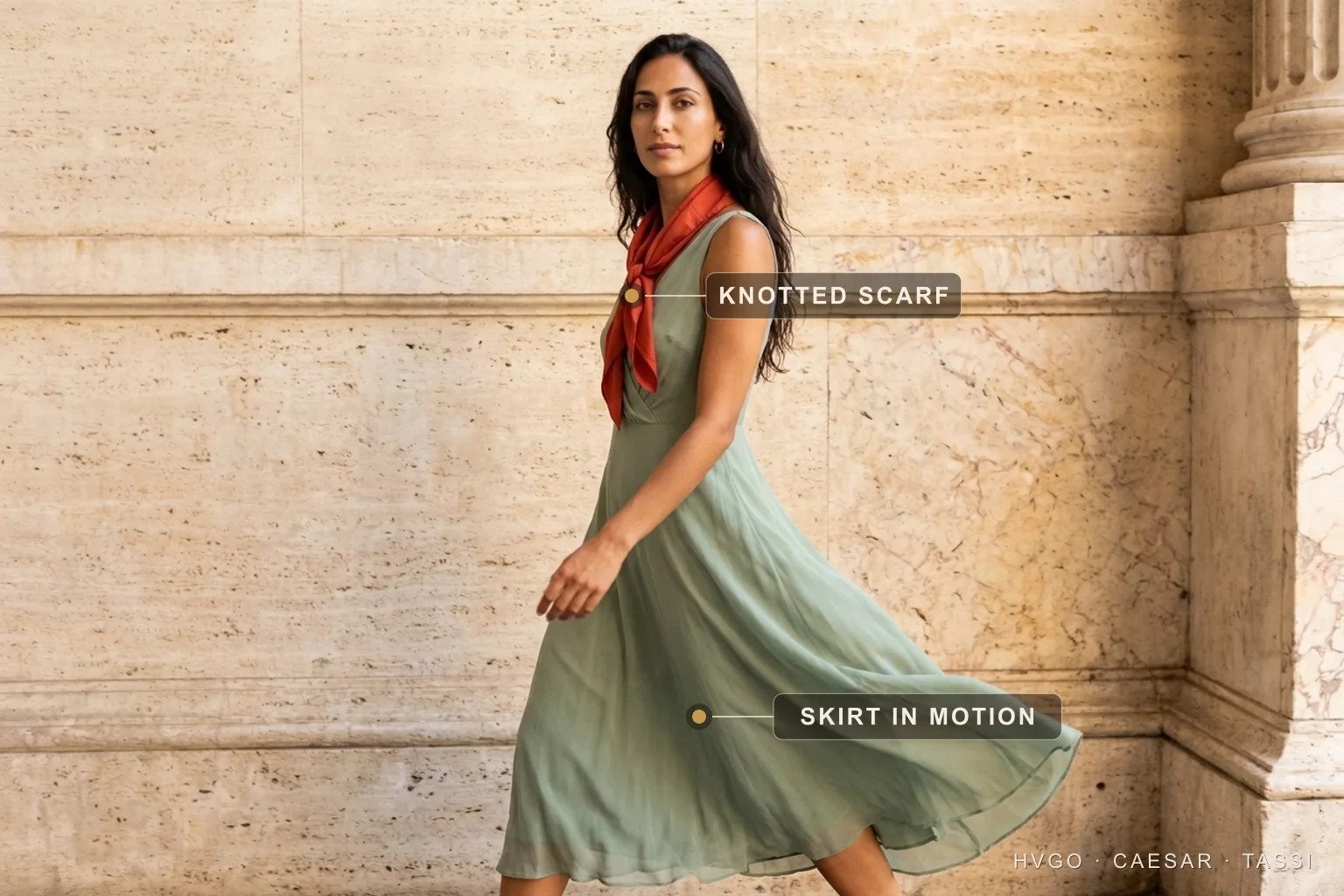
Sprezzatura shows up in specifics: one button left open, sleeves pushed up, a silk scarf knotted as if without a mirror, a blazer slipping off one shoulder, hair done-but-not-perfect, an unfussy flat worn with a beautiful dress. Each is a single chosen loosening.
- Knotted scarf
- Skirt in motion
The governing rule keeps it from collapsing into sloppiness: sprezzatura is one deliberate imperfection against an otherwise complete look, never genuine disorder. Two or three "undone" touches stop reading as ease and start reading as a brutta figura.
#How is la bella figura different from quiet luxury and French chic?
A social-courtesy code at its core, la bella figura stands apart from quiet luxury's wealth-signaling and French chic's prized effortlessness. All three value restraint, yet their motives diverge sharply, and motive is what separates them.
#Bella figura vs quiet luxury: a social code, not a wealth signal
Quiet luxury is an Anglo idea about signaling wealth quietly, dropping logos because the truly rich don't need them. La bella figura is a courtesy code about not embarrassing yourself or your company in public, and a woman of any budget observes it. They overlap in the no-logo result and diverge entirely on the reason.
The motive difference carries a practical consequence. Quiet luxury implies a price tier you must reach; la bella figura implies a standard of care you can meet with pressed cotton. For the wealth-signal framework on its own terms, read our quiet luxury guide.
#Bella figura vs French je ne sais quoi
Italian la bella figura is intentional and "on purpose," whereas French je ne sais quoi prizes looking as if you didn't try at all. The Italian woman wants the care to register; the French ideal wants it to vanish. Same restraint, opposite relationship to visible effort.
That contrast wants more room than a concept page should give it, so this page stays the definition. The full head-to-head sits in our italian vs french style comparison, and the warm-weather version waits in our italian summer style guide.
#How does a woman actually make a bella figura, head to toe?
Working in order does it: fit first, then fabric, then color, finishing with accessories and one undone touch. The sequence ties the literal figure to the figurative impression, so you dress the body's line and the room's read together.
#Start with fit, then fabric, then color
Fit comes first because a dress that skims your actual figure is the literal bella figura; nothing rescues a piece that pulls or sags. Fabric comes second: natural fibers, cared-for, at the right weight for the season. Color comes third: one intentional shade from a flattering palette, not a loud trend hue.
The order matters because each step depends on the last. A perfect Cobalto (navy) means little on a dress that gaps at the bust. Get the line right, then let fabric and color do the finishing.
#The accessories that signal la bella figura: scarf, bag, one good piece
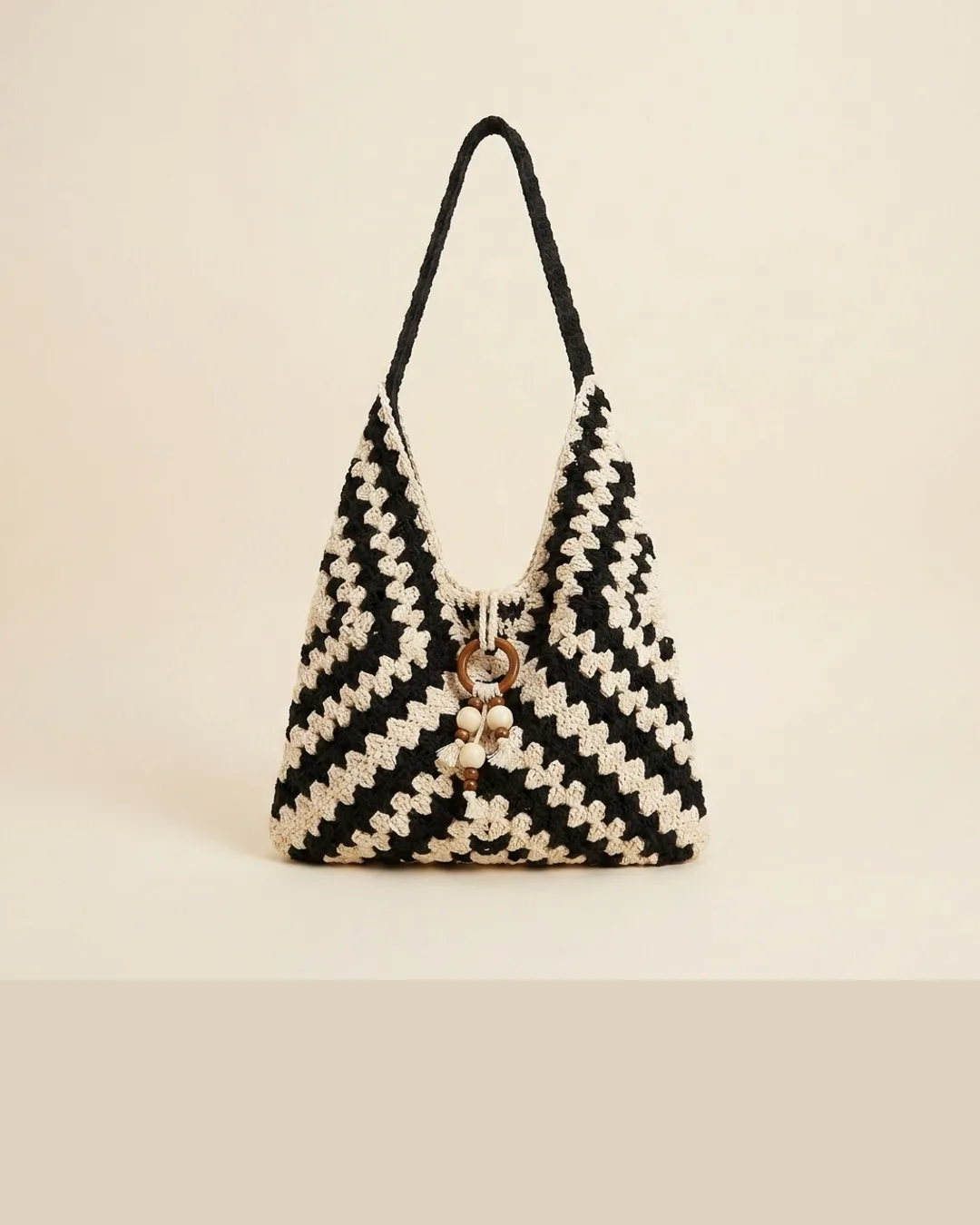
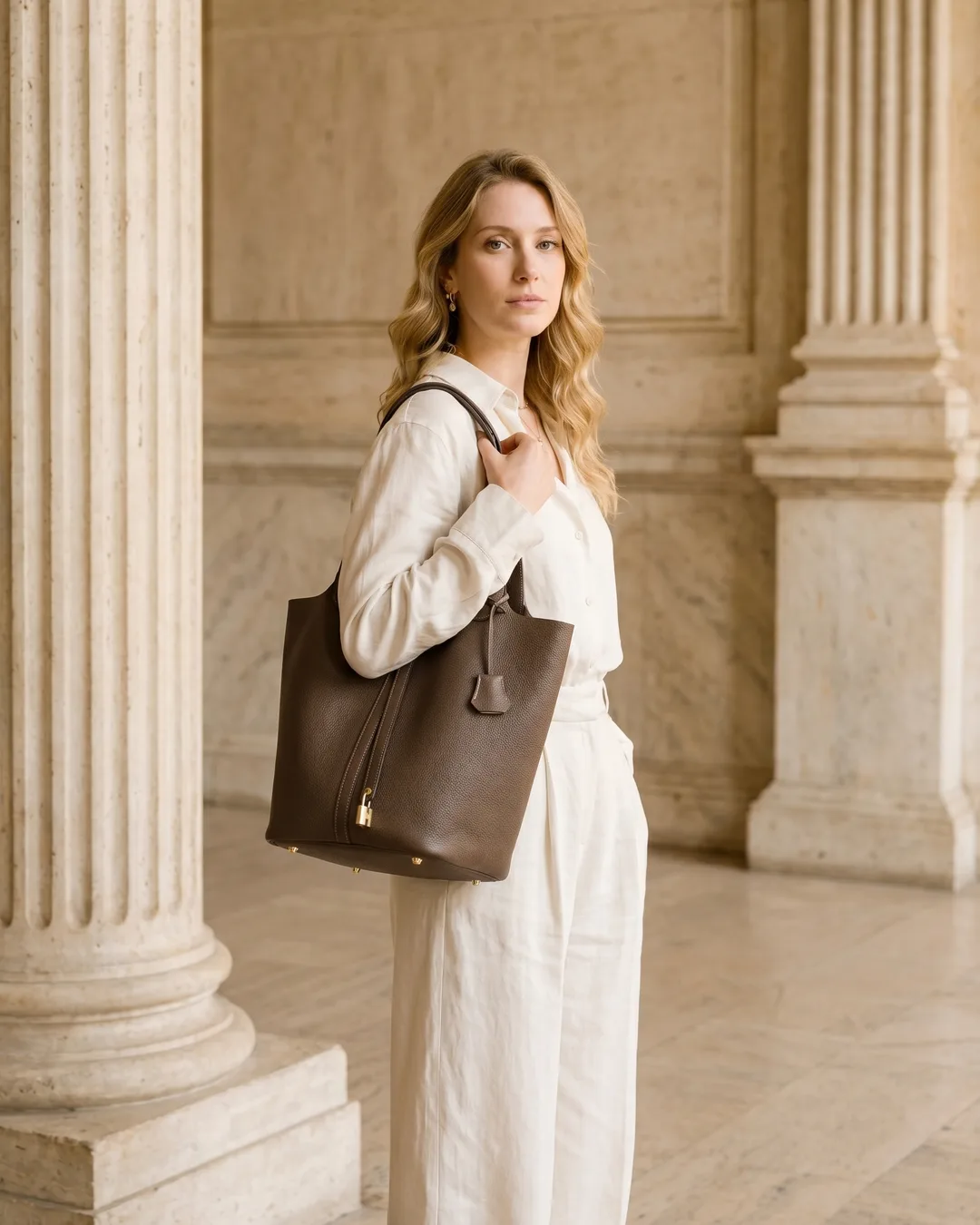
The Italian signature set stays small: a silk scarf, a real-leather bag, and a single piece of jewelry, rotated and maintained for years rather than piled on. Accessories carry the code at low daily effort because they need no tailoring and forgive a plain dress underneath.
A maintained Carina silk square or an Aventina cowhide tote does more for a bella figura than three new trend buys. The practical thresholds, how many scarves, which bag shapes, how often to rotate, sit in the wardrobe-building guide rather than here.
#A bella-figura check before you leave the house
Run a five-point check at the door, in this order:
| Check | What you're confirming | Brutta-figura failure it catches |
|---|---|---|
| Clean and pressed | Nothing creased, scuffed, or stained | Looking sloppy or uncared-for |
| Fits and flatters | The cut skims your figure, no pulling | A poor line that signals carelessness |
| Right for the moment | Register matches the occasion | Over- or under-dressing the event |
| One focal point | A single statement, the rest quiet | Too much at once, trying too hard |
| One undone touch | A deliberate ease (sprezzatura) | A stiff, over-styled look |
Each row maps a positive rule to the exact failure it prevents, so a "no" on any line gives you a fixable warning before you step out.
#How Hugo Caesar Tassi builds women's dresses around la bella figura
Each rule of la bella figura is designed into a named silhouette, so the code becomes a dress you can wear, not a theory. The Italian body-skimming cut delivers the literal bella figura, and the construction carries the figurative one.
#Each rule of la bella figura, in a named house silhouette
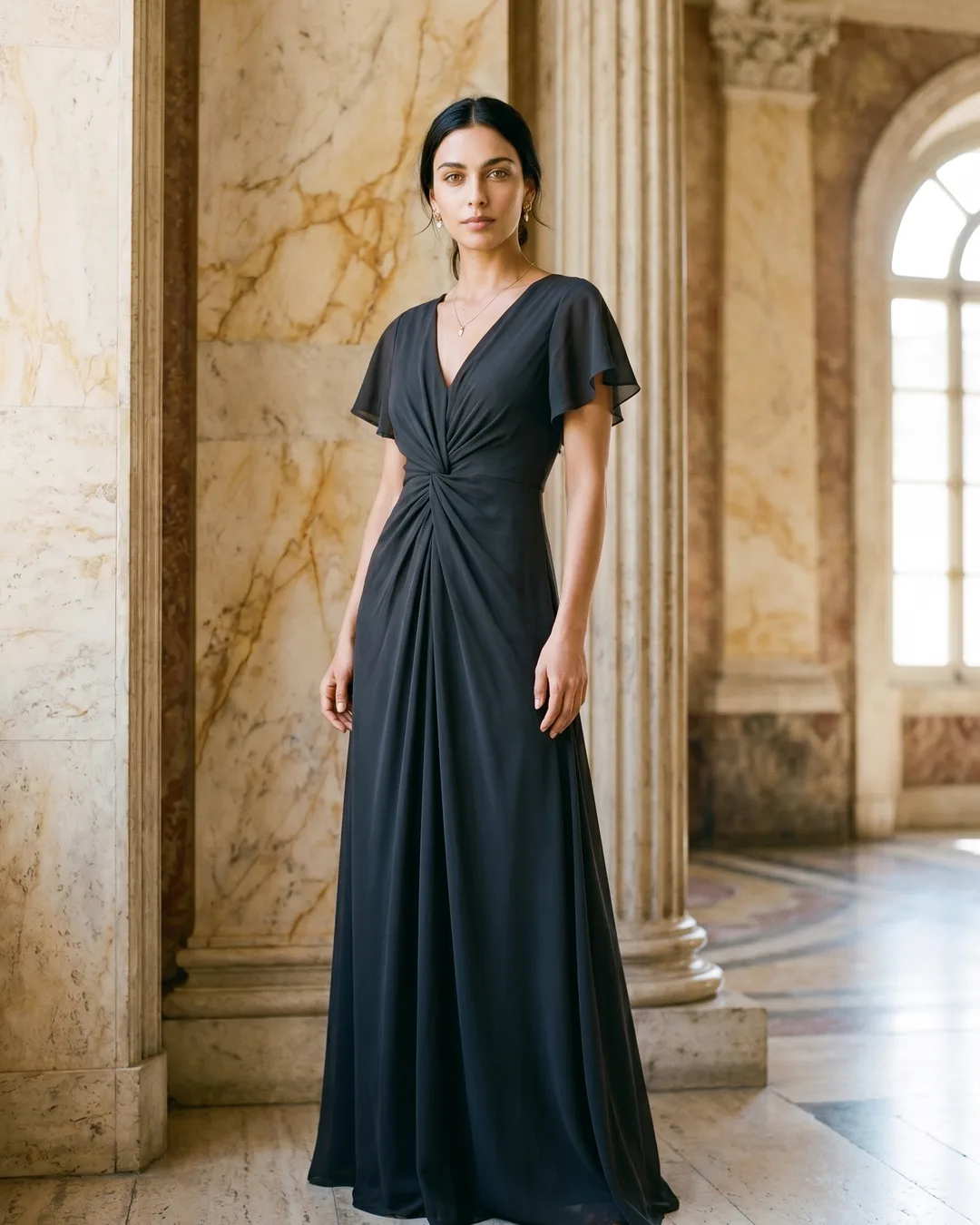
Effortless polish belongs to a softly draped column: the Vipsania draped modal column gown looks considered with zero fuss, fully lined with a concealed zip. Occasion-readiness belongs to versatile chiffon, the Aemilia A-line chiffon maxi for evening and the Portia short-sleeve chiffon A-line for daytime, one fabric family spanning aperitivo to wedding.
Restraint belongs to an intentional print rather than loud trend color: the Livilla floral-print chiffon midi keeps its color story inside the imperial palette. Each dress is cut to skim the figure, because the literal beautiful figure is the foundation the impression stands on.
#Dresses built to be kept, not chased
The house position is that la bella figura means buying fewer, better dresses you keep for years: real fabric, finished construction, a scarf and bag maintained alongside them. Restraint and longevity are the same discipline seen from two angles, and both answer to Nata Imperare.
A chased wardrobe contradicts the code by design, since trend pieces are built to expire and push you back toward excess every season. A kept wardrobe of recycled chiffon and full-grain leather does the opposite. Browse the pieces that finish the look in our shop accessories edit.
#La bella figura, in one rule you can carry
Presenting yourself well in public sums it up; the dressing code is effortless polish plus occasion-readiness plus restraint, softened by one undone touch. Carry that single line and you carry the whole concept. Brutta figura is what you avoid: sloppy, wrong for the moment, or trying too hard.
#The whole concept in three lines
First, the goal: make a good impression by being put-together, right for the room, and dignified. Second, the code: curato polish, the correct register for the occasion, and restrained quality over quantity. Third, the finish: sprezzatura, the one deliberate imperfection that keeps polish from stiffening.
Hold the failure case beside the rules so you never lose the thread. If a look is clean, fits, suits the moment, stays simple, and carries one easy touch, you have made a bella figura.
#Where to go next with your bella figura
Decide to make a bella figura at your next occasion. Read how to dress like an italian woman to build the wardrobe, then dress the part: shop the occasion dresses edit and the wider shop dresses collection, and finish with the scarf, bag, or single piece that carries the look.
#Frequently asked questions
What does la bella figura mean?
La bella figura means presenting yourself well in public, put-together, appropriate to the moment, and dignified, so you leave a good impression. Literally "the beautiful figure," it is a whole social code covering manners and hospitality as much as clothes. Its opposite is la brutta figura, the social embarrassment Italians are raised to avoid.
What is the difference between la bella figura and sprezzatura?
The difference between la bella figura and sprezzatura is goal versus technique: la bella figura is looking right and making a good impression, while sprezzatura is one method for getting there. Castiglione coined sprezzatura in 1528 as a studied carelessness that makes a polished look seem effortless. It sits inside la bella figura as the calculated-imperfection sibling, the one undone detail that keeps polish from stiffening.
What is brutta figura?
Brutta figura is the "ugly figure," the bad impression or social embarrassment that la bella figura exists to avoid. In dressing terms it means being sloppy, dressed wrong for the occasion, or conspicuously trying too hard. Both underdressing and overdressing count as a brutta figura.
How do you make a bella figura when getting dressed?
You make a bella figura by working in order: fit first, then cared-for natural fabrics, then an intentional, flattering color. Keep it simple with one focal point and dress correctly for the occasion. Add a single undone touch for sprezzatura, and check that everything is clean and pressed before you leave.
Is la bella figura the same as quiet luxury?
La bella figura is not the same as quiet luxury: they overlap in restraint but differ in motive. Quiet luxury is an Anglo idea about signaling wealth without logos, while la bella figura is an Italian social-courtesy code about not embarrassing yourself or your company in public. Women of any budget observe it, not just the wealthy.
Why is la bella figura so important in Italy?
La bella figura is so important in Italy because life is lived in public, the piazza, the bar, the evening passeggiata, so being seen is constant. Dressing well counts as a courtesy to others and a form of self-respect rather than vanity. That is why an Italian woman is rarely seen out looking undone, even for an errand.
More Italian Style guides
How to Dress Like an Italian Woman
A Roman house's real rules for dressing like an Italian woman: fit, fabric, color and the scarf-and-leather signatures that read elegant, never touristy.
Dress like an Italian womanItalian Summer Style
A Roman house's Italian summer style rulebook: fibers that breathe, the Riviera palette, and how to stay elegant, never touristy, in the heat.
Dress an Italian summerItalian vs French Style
A Roman house compares Italian vs French style for women on fit, color and attitude, then names which elegance is yours from the Italian side.
Compare Italian vs French eleganceLa Dolce Vita Style
La dolce vita style: Fellini's 1960 Rome in oxblood-and-ivory satin, and how to dress it now: the slip, the scarf, the dark shades. From a Roman house.
Decode 1960 Roman glamourWhat to Wear in Lake Como and the Riviera
A Roman house edits what to wear in Lake Como and the Riviera: four real moments mapped to the dress, color and sandal that fit each.
Dress the lakeside evening