La Dolce Vita Style: Recreating 1960 Roman Cinema Glamour
La dolce vita style: Fellini's 1960 Rome in oxblood-and-ivory satin, and how to dress it now: the slip, the scarf, the dark shades. From a Roman house.
On this page
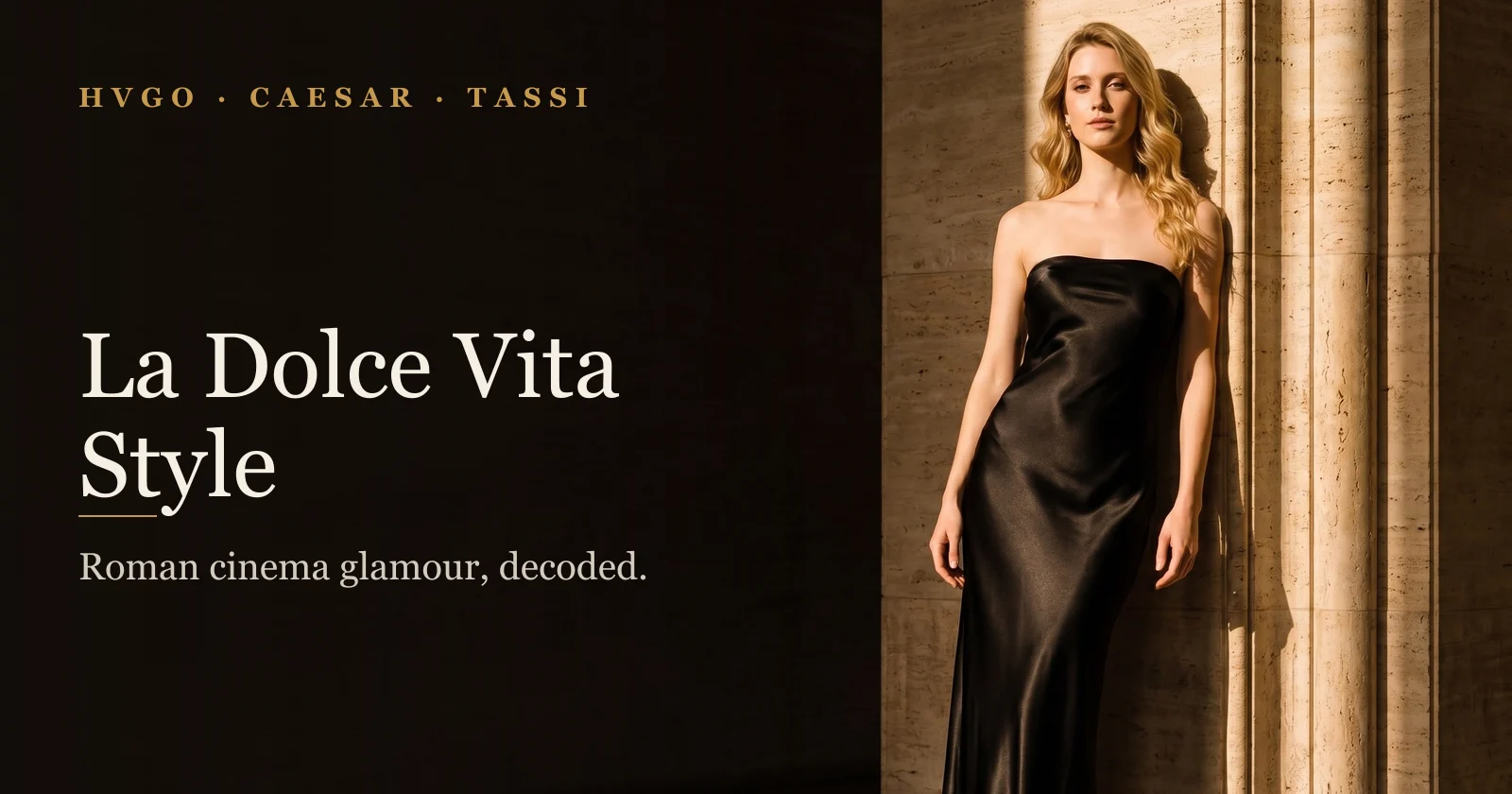
La dolce vita style is the sultry Roman glamour Federico Fellini fixed in his 1960 film La Dolce Vita: bias satin slips and columns in oxblood, ivory and black, finished with dark sunglasses and a silk scarf. The phrase means "the sweet life." Below is its real source, palette and silhouette, cut from Rome.
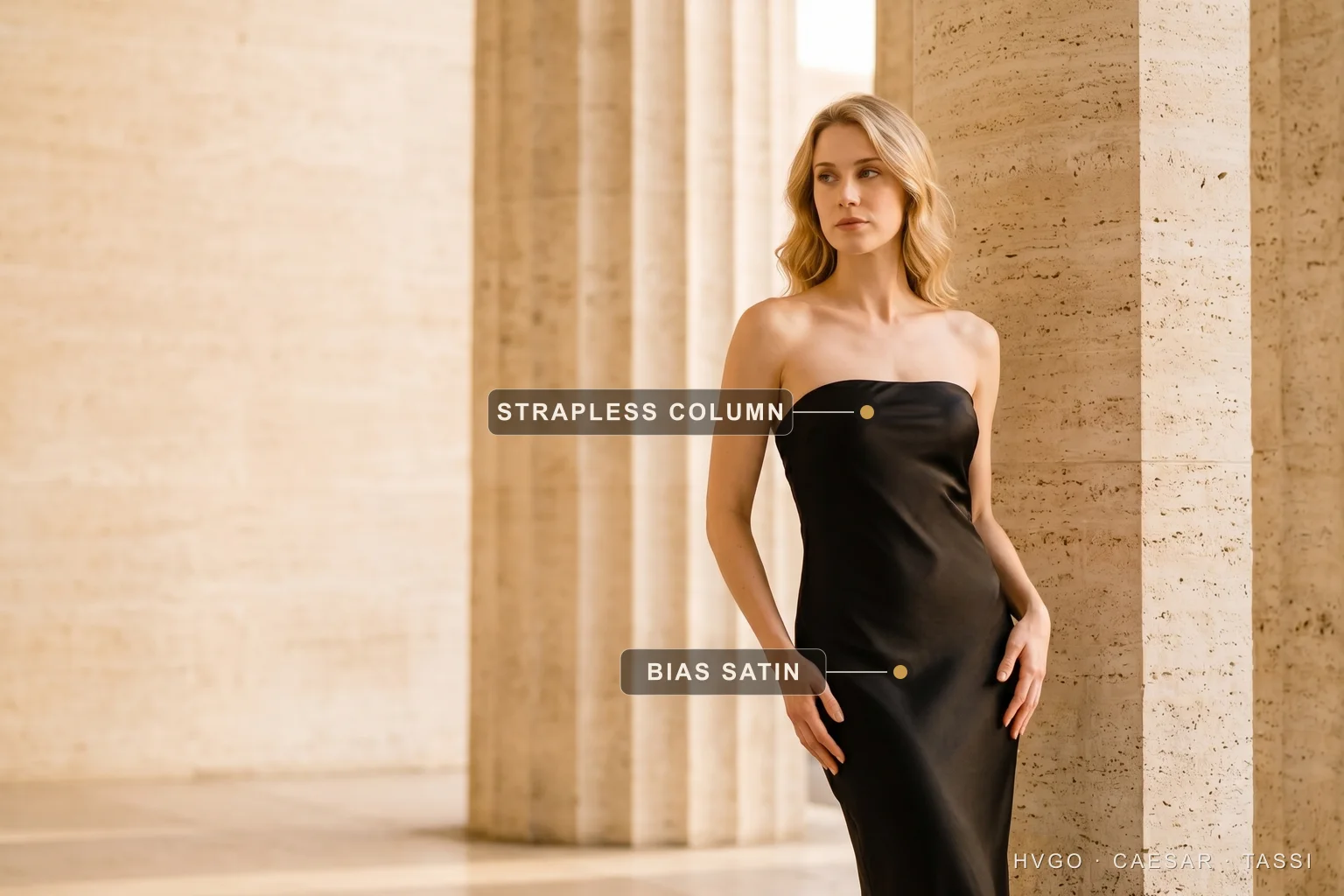
- Strapless column
- Bias satin
Dolce vita, not costume
Hit every line and the look reads 1960 Rome, not fancy dress.
- Run it on light-catching bias satin or charmeuse, the way Flavia, Calpurnia and Vipsania are cut.
- Hold one luminous shade per look: Porpora oxblood, Avorio ivory or Basalt black.
- Commit to one cinematic shape only, a bias slip, a strapless column or a Calpurnia fishtail.
- Finish with the two props that do the narrative work, oversized dark sunglasses and a Vesta silk square.
- Set a sleek low chignon and a confident rose or red lip so the neckline leads.
- Don't reach for matte cotton, linen or jersey, it reads Italian summer, not after-dark glamour.
- Don't add pastels, loud prints or a clashing second statement colour.
- Don't stack two focal points, a strapless neckline plus a heavy necklace and loose hair collapses the frame.
- Don't break the vertical line with a chunky platform, a backpack or a slouchy bag.
- Don't do a full period reconstruction, gloves, brooch and set hair turn a flavour into fancy dress.
#What is la dolce vita style, and where does it actually come from?
The look traces to one dated source: Fellini's La Dolce Vita, which premiered in February 1960 and turned Rome's after-dark elegance into a template. Most listicles call it a vague vintage mood. The truth is sharper, and the date matters.
#The film that named the look (Rome, 1960)
Federico Fellini directed La Dolce Vita (Italian for "the sweet life"), which premiered in 1960 and ran nearly three hours across restless Roman nights. The film follows a journalist drifting through parties, fountains and dawn streets, and it handed the world its lasting picture of the city after dark. That single film is the fixed source this page builds on, where competitors only gesture at "mid-century Italy" with no date at all. Hold the year and the style becomes a documented look you can reconstruct piece by piece.
#The Trevi Fountain, Anita Ekberg and Via Veneto
Three images define the style. Anita Ekberg's character wades into the Trevi Fountain in a strapless black column gown, the single most-referenced frame of the aesthetic. Via Veneto, the boulevard of cafés and flashbulbs, supplies the second. The third is a word: the film named its photographer Paparazzo, and "paparazzo" entered the language from him. Each image reads nocturnal, watched and luminous, which is why satin belongs to the look and a flat daytime cotton never does.
#"The sweet life": the attitude underneath the clothes
The attitude is the heart of it.
It rose with Italy's boom economico, the postwar surge that rebuilt Rome's prosperity, and with Cinecittà, the studio nicknamed "Hollywood on the Tiber." Against that backdrop the style signals confident, sultry, dressed-to-be-seen glamour rather than modesty: polish, not restraint, the opposite of the quiet look that signals wealth by hiding it. That sets up the contrast later in this guide, because dressing for overt allure is the inverse of dressing to stay discreet.
#Which fabrics and colors define authentic la dolce vita style?
Authentic la dolce vita style runs on lustrous, fluid cloth in a tight palette of oxblood, ivory and black. The film was lit by streetlight and studio light, so the cloth had to catch it. Get the satin and the oxblood right and the silhouette almost follows.
#Bias satin and fabrics that catch light
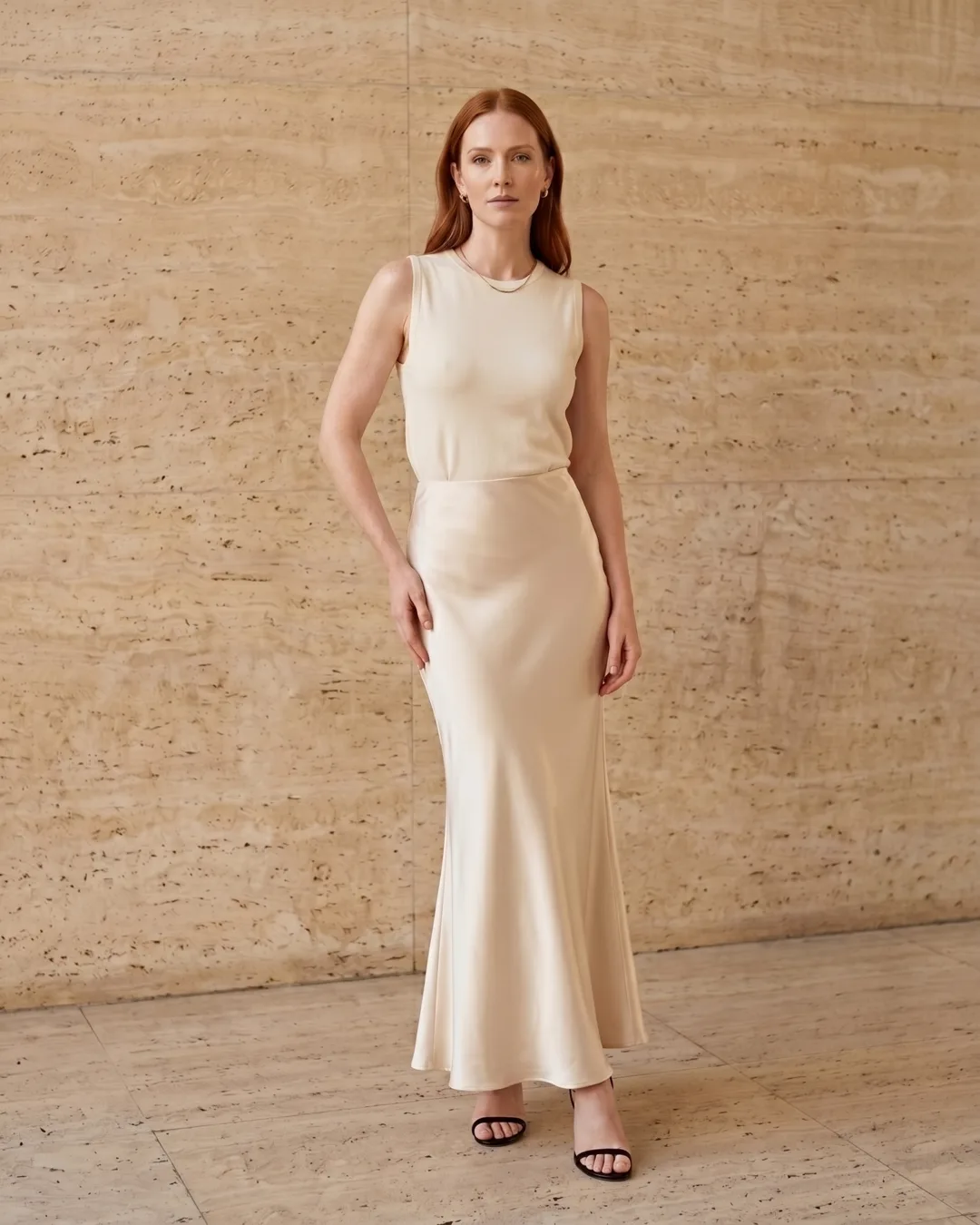
Bias-cut satin defines the era because it skims the figure and reflects light as the wearer moves, and silk charmeuse does the same work. The bias cut, fabric cut diagonally to the grain so it falls in a clean column, is the structural signature of the period: it hangs without a horizontal pull line and ripples rather than creases when you walk. A bias satin slip belongs here; a linen sundress does not, because the rule is mechanical, not a matter of mood. Matte cotton or jersey reads "Italian summer," all daytime ease, however well it is sewn. Even a tailored crepe shift misses the look, because it absorbs light instead of throwing it back.
#The oxblood-and-ivory palette (the house color rule)
The color story is deep oxblood and wine, creamy ivory, and black as the third pillar, the register of 1960 Rome rather than the pastels the roundups default to. At Hugo Caesar Tassi these map to Porpora (wine), Cornelia (rose), Avorio (ivory) and Basalt (black); the Trevi gown is the black pillar made literal. The house elegance doctrine holds to one statement color per outfit: oxblood satin under light is the statement, ivory the foil. A peach or pistachio scheme is the counter-case, pretty but reading "Italian summer," which the italian summer guide owns. The dated cinematic palette is the fastest way to make a modern dress read as 1960 Rome.
#What to leave out
The negative space keeps the look accurate.
No loud prints, no neon, no athleisure ease, and no clashing second color earn a place here; choose one luminous shade or a clean ivory and stop. That discipline separates real dolce vita glamour from a thrift-store costume. Add a bold floral and a bright sandal and you have a 1960s pastiche, not the sweet life. One color, one shine, one silhouette is the entire editing rule.
#Which pieces create the la dolce vita silhouette for women?
Three silhouettes carry the look: the bias satin slip, the strapless or off-shoulder column, and the floor-skimming fishtail. You pick by how much glamour the night demands.
#The slip and the satin sheath
A bias satin slip or column-cut sheath skims the figure and delivers everyday glamour, which makes it the look's most wearable entry point. It works for a party or a late Roman dinner with nothing more than dark shades and a scarf to finish it. The house cuts this line in modal and bias satin, fully lined with a concealed zip. The edge case is fit: a slip exposes every seam, so the elegance doctrine fits the shoulder seam first, then the bust, then the hip. Rush that order and the same dress reads slept-in rather than sultry.
#The strapless and off-shoulder gown
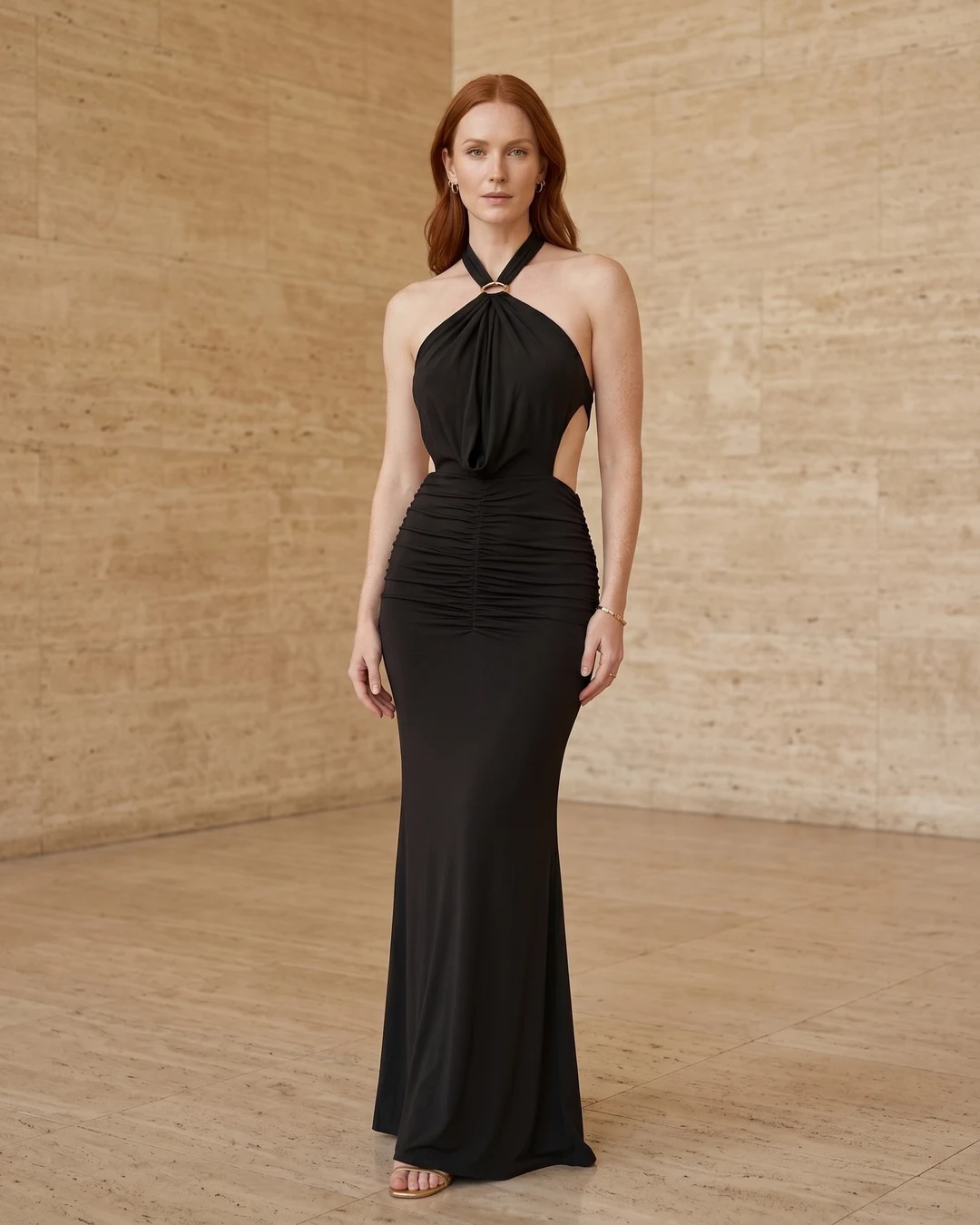
The strapless column is the full-glamour version and the direct Trevi reference, while the off-shoulder neckline frames the collarbone instead. Reach for the gown when the occasion earns it: black-tie, a Roman wedding, the opera. HCT cuts this moment in Flavia, a strapless satin off-shoulder gown built to sit clean across the bust. A portrait neckline asks for bare shoulders and a sleek updo; pile a heavy necklace and loose hair over it and the framing collapses, because the look keeps one focal point only and the neckline already holds it.
#The fishtail and the floor-skimming column
The fishtail or mermaid hem is the most cinematic silhouette, narrow through the hip and flaring at the knee, while the floor-pooling column is its calmer sibling. This is the "walking into the room" shape, and Calpurnia, a fishtail satin evening gown, is the house version. Match the hem to height: a fishtail rewards a heeled sandal and a longer frame, whereas the column reads dramatic on any height. The house publishes each model's height (about 175 cm) so you can judge where a hem will break on your own frame. An unhemmed fishtail that drags is the failure mode, so build the heel height into the order.
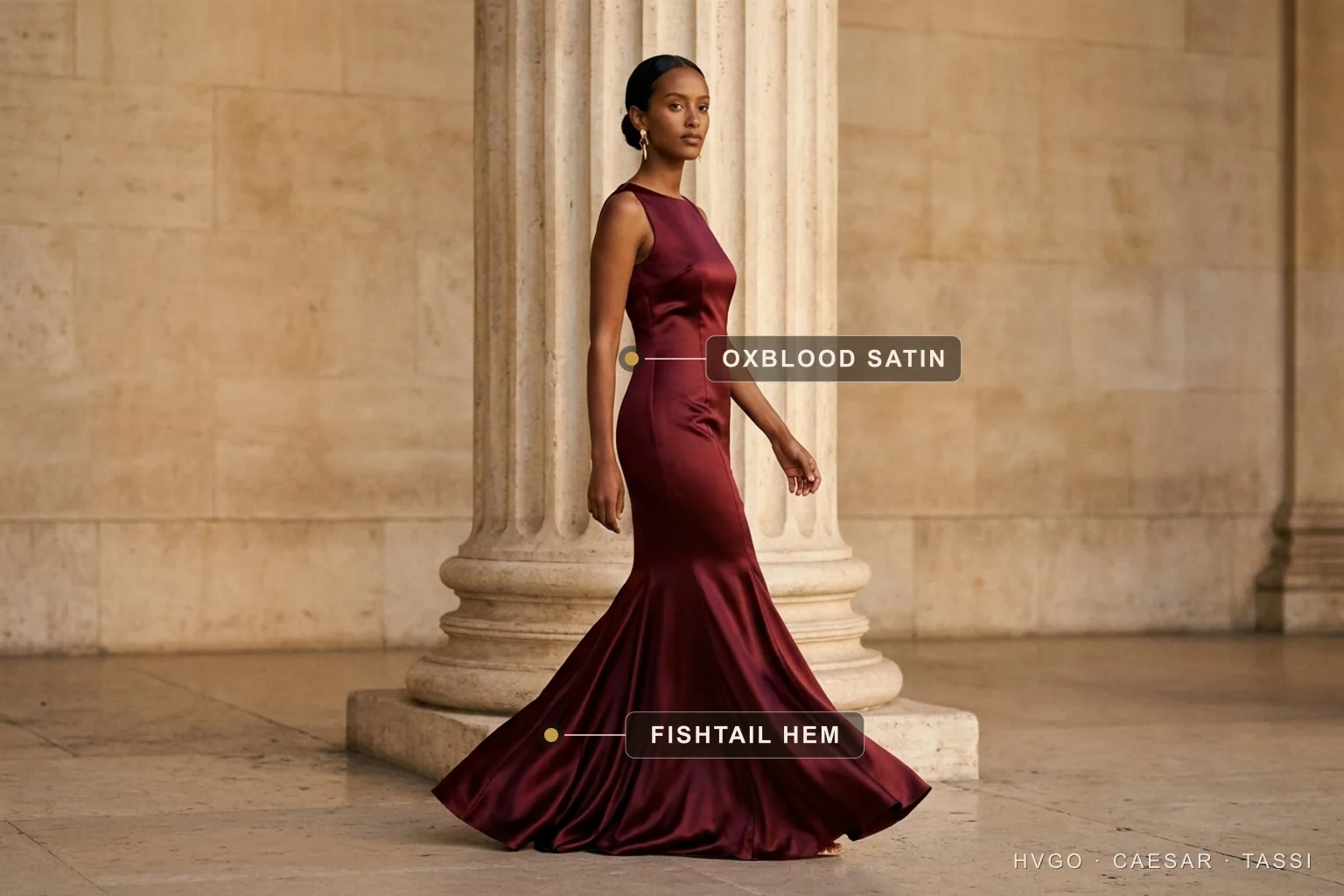
- Oxblood satin
- Fishtail hem
#How do you accessorize la dolce vita style with the scarf, the shades, the gloves?
Two props carry the look: oversized dark sunglasses and a silk square scarf. The accessories do as much narrative work as the dress.
#Dark sunglasses and the silk headscarf
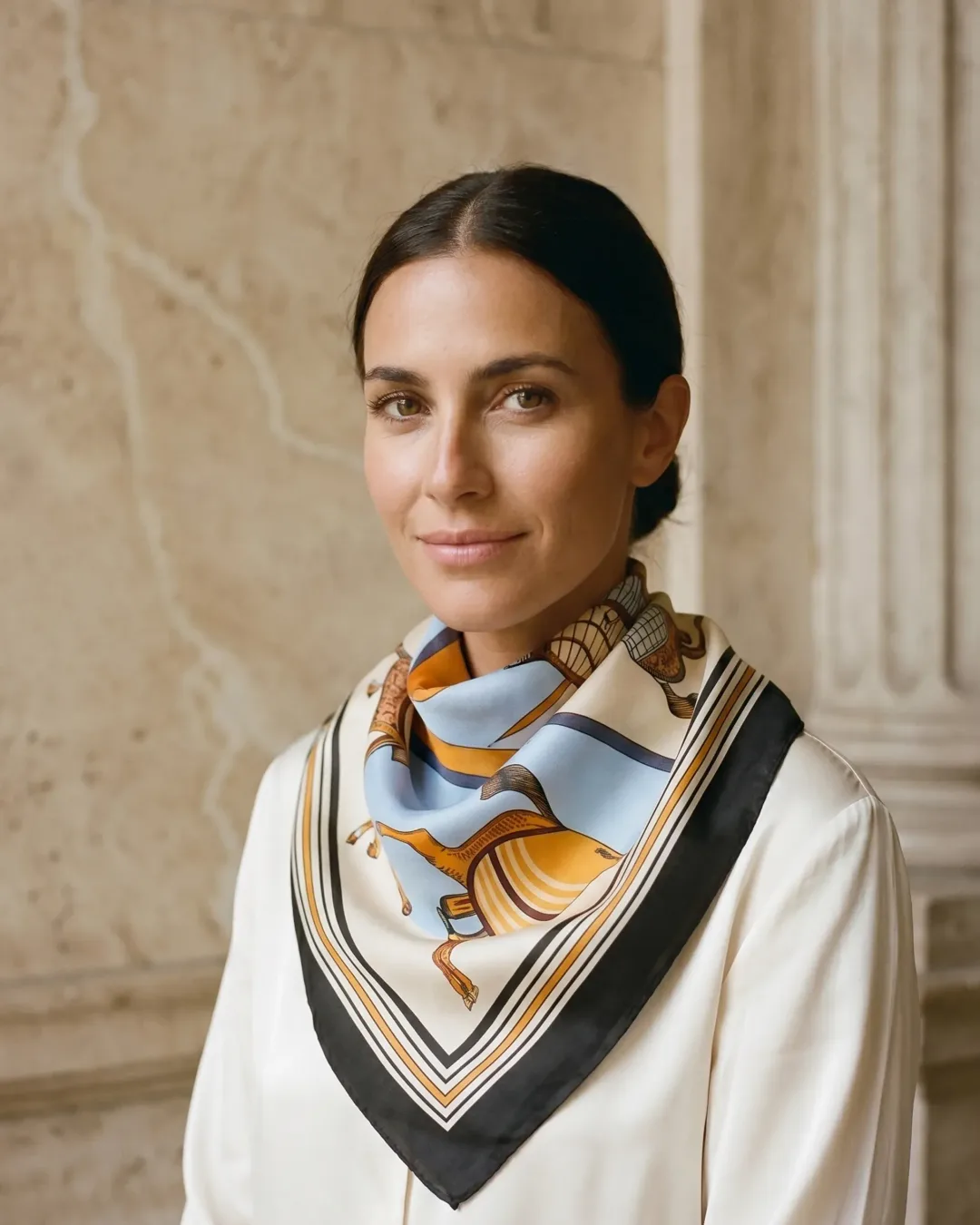
Oversized dark sunglasses, worn day or night, deliver the watched-celebrity effect the paparazzi scenes made famous. The frame should be wide and dark, closer to 1960s acetate than a thin modern wire, because the shape is half the signal. The silk square scarf then works two ways: knotted at the neck, or folded into a triangle and tied over the hair as the headscarf-and-shades combination. On a terrace or in an open car the same square holds a chignon against the wind, so one accessory does the work of three. A tiny neckerchief reads preppy; the look wants a generous square in oxblood, ivory or a wine print. The house cuts this in Vesta, a versatile silk square scarf.
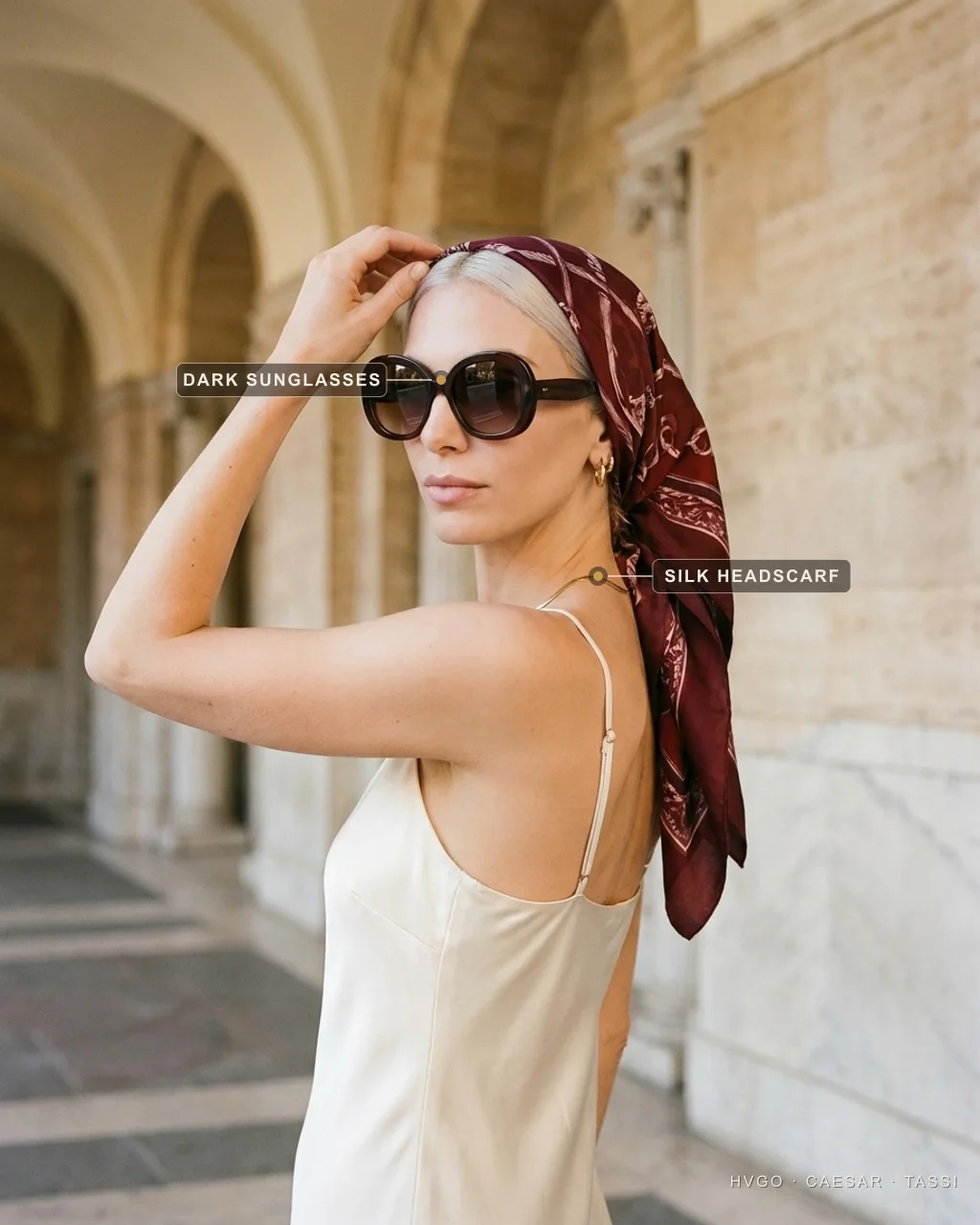
- Dark sunglasses
- Silk headscarf
#Gloves, earrings, heels and the chignon
The finishing runs head to toe.
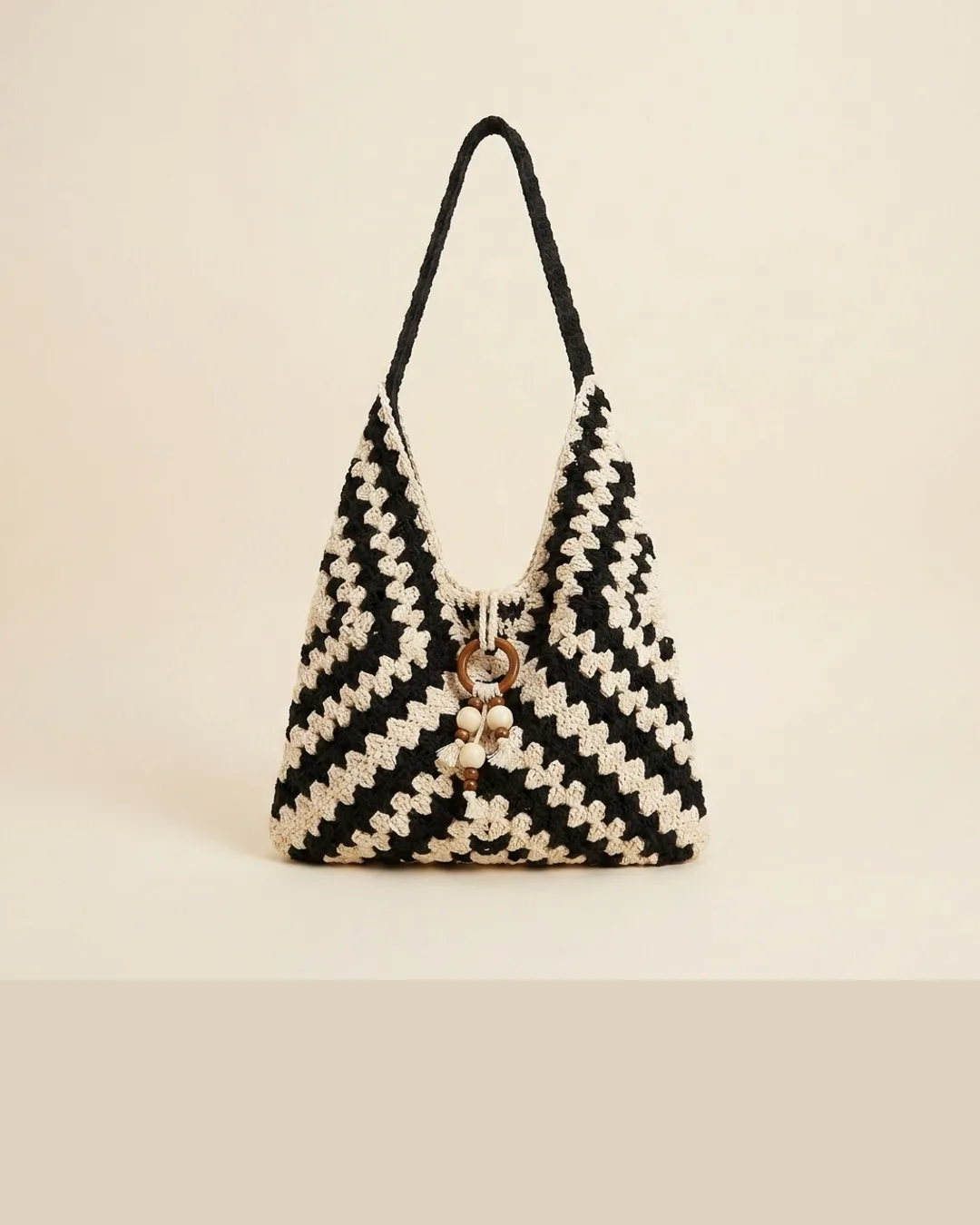
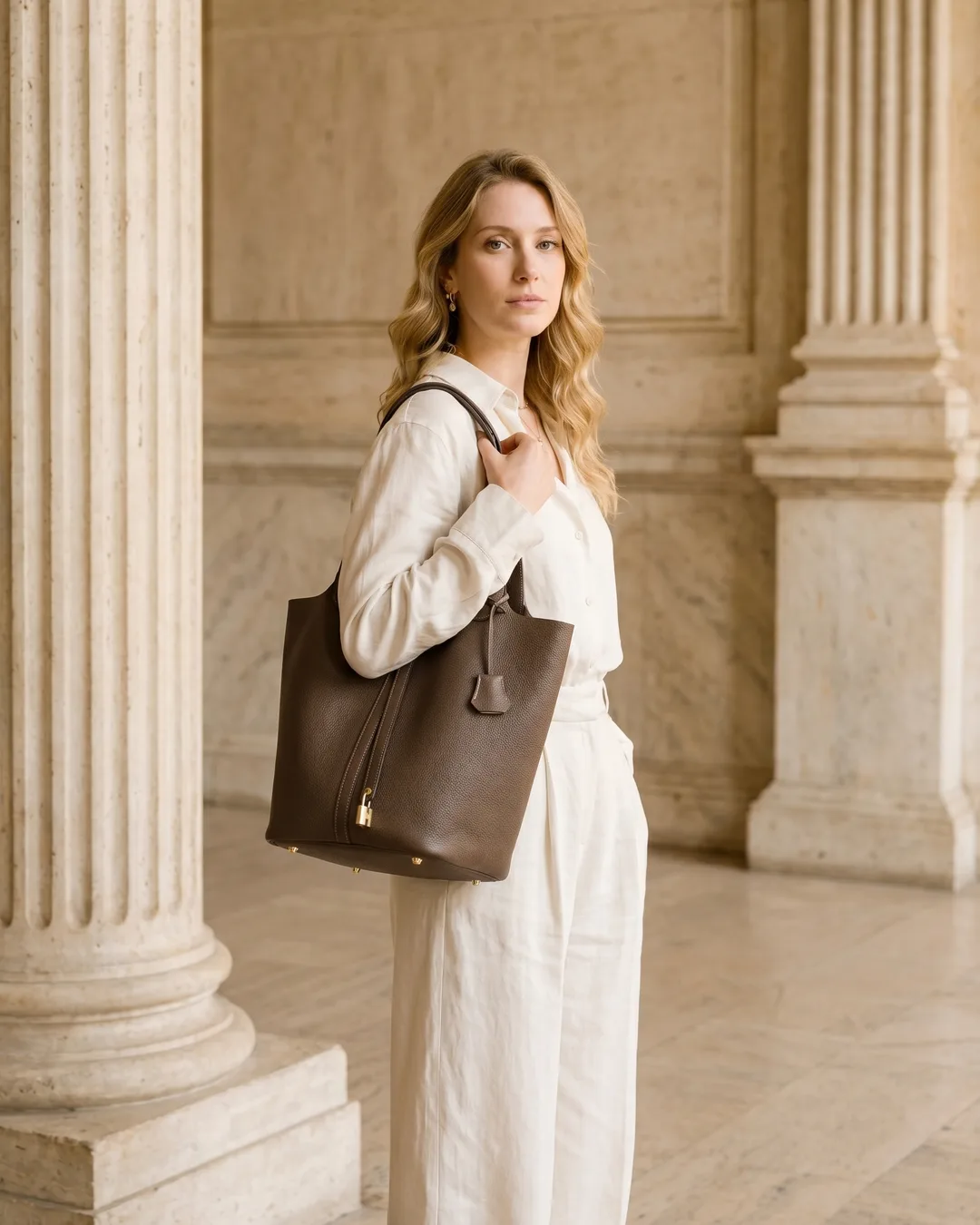
Long or wrist gloves carry true evening, luminous statement earrings catch the light against bare shoulders, a sleek heeled sandal lengthens the column line, and a low chignon keeps focus on the neckline; a structured clutch beats a slouchy bag here. The daytime version swaps the stiletto for a kitten heel and the gown for a slip. A chunky platform or a backpack is the counter-case, because either one snaps the vertical line the whole look depends on. Read the pieces as one continuous line from earring to hem, and the outfit composes itself.
#Hair, makeup and the overall polish
The grooming is engineered, not undone: a defined brow, a soft cat-eye, and a confident lip in rose or red. La dolce vita is built glamour, the deliberate opposite of French nonchalance, which is why this page stays distinct from the italian and french comparison. A messy bun and a bare lip belong to the French side of that split. Here a half-finished face undercuts the satin below it, so the polish above the neckline has to match the shine below.
#How is la dolce vita style different from quiet luxury, old money and Italian summer?
La dolce vita is loud Italian glamour, whereas quiet luxury, old money and Italian summer are quieter or more casual. The lanes only blur if you ignore intensity and time of day.
#Dolce vita vs. quiet luxury and old money
Quiet luxury and old money signal wealth through restraint, neutrals and unbranded quality, while this look does the reverse and dresses for overt allure under the lights. The quality is Italian on both sides, but the volume is inverted. A camel coat over ivory knit signals old money discretion, whereas an oxblood satin column under camera flash signals dolce vita display. The two are not a hierarchy, only a choice of register; a woman can own both and reach for satin when she wants to be seen. Read the old money aesthetic for the restrained end of that same Italian quality.
#Dolce vita vs. la bella figura and Italian summer style
These three split by register, not by quality.
La bella figura is the everyday Italian code of looking right; Italian summer style is daytime linen-and-sandal ease; the cinematic look is the dressed-up, after-dark, satin-and-sunglasses subset of Italian glamour. The table below sorts the five lanes on volume, time of day, fabric and signature piece. There is no best style among them, only the right one for the hour; the everyday code lives in the bella figura primer.
| Style | Volume | When it lives | Core fabric | Signature piece |
|---|---|---|---|---|
| La dolce vita | Loud, cinematic | Evening, after dark | Bias satin, charmeuse | Strapless satin column |
| Quiet luxury | Whisper | Anytime, understated | Fine wool, cashmere | Unbranded neutral coat |
| Old money | Whisper, inherited | Daytime, social | Tweed, poplin, knit | Camel coat, pearls |
| La bella figura | Measured, correct | Everyday, all hours | Tailored cloth | A well-cut outfit |
| Italian summer | Relaxed, sunlit | Daytime, warm months | Linen, cotton | Linen dress, flat sandal |
#How do you wear la dolce vita style today without it looking like a costume?
Anchor the outfit on one true dolce vita element and keep everything else current and clean. That single rule turns a theme into a look.
#Modern occasions for the look
The look lives at a black-tie evening, a wedding in Italy, a milestone party, a glamorous resort dinner, and the opera. Match the intensity to the room: a slip for dinner, a gown for black-tie. A resort dinner proves the range, because a bias slip in ivory with flat sandals carries the look without the full gown, whereas a floor-pooling fishtail would overshoot the moment. The lake como edit holds the resort-evening end of that spectrum.
#One cinematic piece, modern everything else
The anti-costume rule is simple: build on one true element, the satin column or the scarf-and-shades, and keep the rest present-day. Pair a strapless oxblood gown with bare modern sandals and clean current hair, and the reference stays a flavor rather than a uniform. The counter-case is the full vintage reconstruction, where period gloves, a period brooch and period-set hair announce a costume from across the room. One strong piece amid current basics still reads unmistakably dolce vita, which is the whole trick.
#A do-it-properly checklist
This is the short list a reader can shop and pack from, each row a non-negotiable.
- Fabric: choose lustrous bias satin, silk or charmeuse that catches light, never matte cotton or jersey.
- Silhouette: pick one cinematic shape, a slip or a strapless column or a fishtail, and only one.
- Color: keep to oxblood, ivory or black; skip pastels, prints and a second statement color.
- Eyes: add oversized dark sunglasses for the incognito effect, day or night.
- Scarf: carry a silk square, tied at the neck or over the hair.
- Hair: set a sleek low chignon or updo so the neckline leads.
- Lip: finish with a confident rose or red, with the rest of the face polished.
#How Hugo Caesar Tassi recreates la dolce vita style in a dress today
Hugo Caesar Tassi recreates the look on real satin gowns cut in Rome, in the film's own oxblood-and-ivory palette. Each element maps to a specific house silhouette.
#The gowns that channel the look
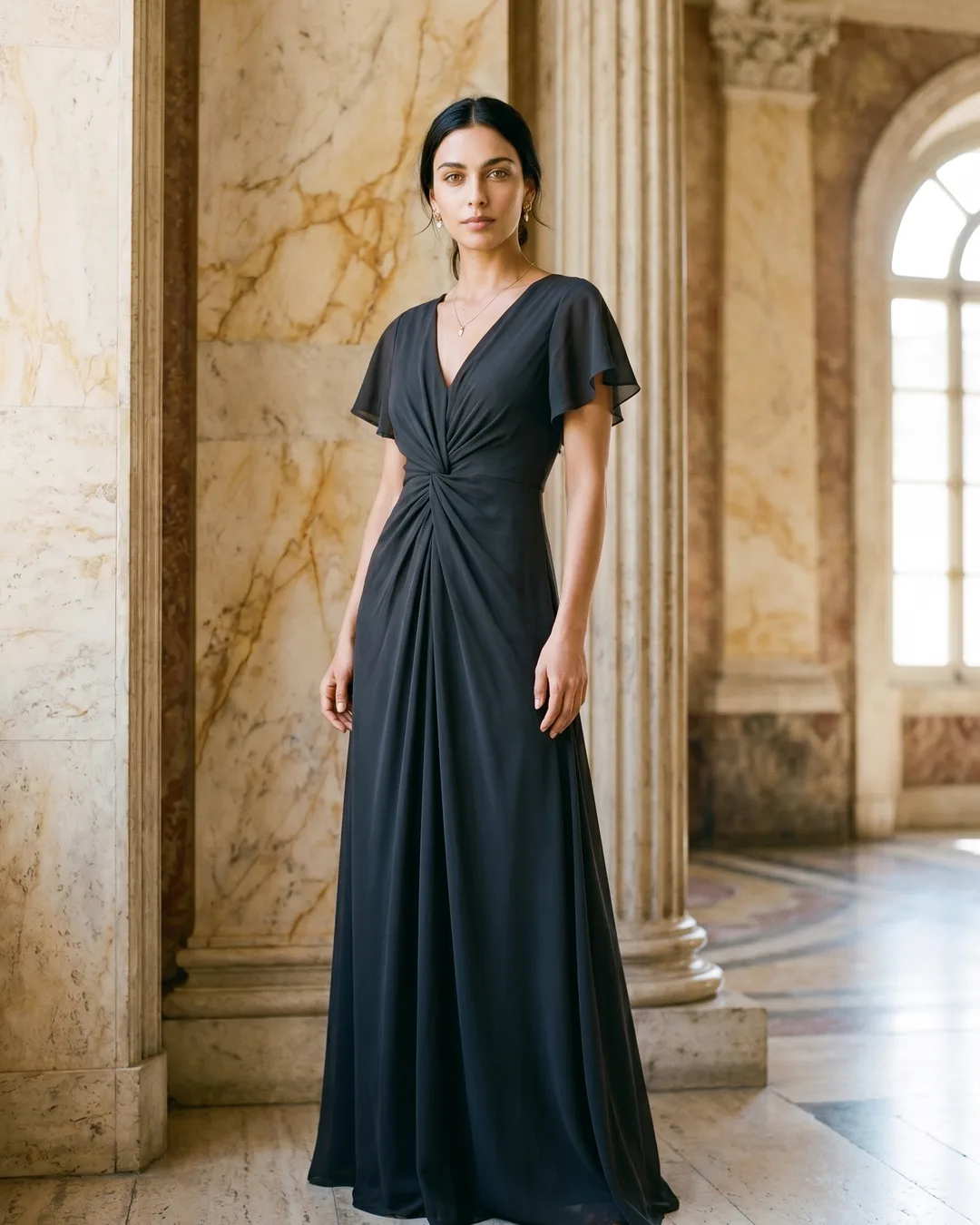
The Trevi moment lives in Flavia, the strapless satin off-shoulder gown, and the most cinematic hem belongs to Calpurnia, the fishtail satin evening gown. The fluid bias column comes through in Vipsania, a draped modal column gown, with Tullia, a pleated column gown, as the structured alternative. The scarf-and-shades finish arrives with Vesta, the silk square scarf. Pick by intensity: Flavia or Calpurnia for full black-tie glamour, Vipsania or Tullia when the column should read calmer. The crossover edge case is daytime, where a draped modal column with a kitten heel and Vesta over the hair carries the look to a resort lunch.
#Cut in Rome, in the right palette
These gowns are cut in the city the film immortalized, in the wine-and-ivory register of Porpora, Cornelia and Avorio, under the house motto Nata Imperare ("born to rule"). The satin is bias-cut and the dresses are fully lined with a concealed zip, made to be kept rather than worn once. That construction is the counter-case to the disposable "dolce vita dupe" of affiliate roundups: a bonded-seam polyester knockoff pills within a season and loses its sheen after one cleaning, whereas a lined bias-cut gown holds its drape across many wears. That gap is the difference between owning the look and renting it for a single photograph.
#La dolce vita style, in one formula
In one line: bias satin in oxblood, ivory or black; one cinematic silhouette; dark shades, a silk scarf, a sleek updo and a confident lip. Roman, sultry, dressed to be seen.
#The whole look in a sentence
That formula is the whole guide compressed into a packing list, ready to build from your own closet or from a single gown. Lustrous cloth in the film's three colors, one body-skimming shape, and the two props sit over a sleek head and a defined lip. Everything else stays clean, because the difference between glamour and costume is how much you leave off. It names one of each thing on purpose, never two.
#Where to go next
Ready to live the sweet life for an evening? Shop the satin gowns that channel the look, browse the full evening edit, and finish with the scarf-and-shades signature from the silk scarf collection, then read the rest of the silo from the italian style hub.
#Frequently asked questions
What is la dolce vita style?
La dolce vita style is the sultry, cinematic Roman glamour immortalized by Federico Fellini's 1960 film La Dolce Vita: bias satin slips and columns, strapless and off-shoulder gowns in oxblood, ivory and black, finished with dark sunglasses and a silk scarf. The phrase means "the sweet life," and the style is about dressing to be seen after dark, not understated restraint.
How do you dress in la dolce vita style?
To dress la dolce vita style, start with one lustrous, light-catching piece: a bias satin slip, a strapless column, or a fishtail gown in oxblood, ivory or black. Add oversized dark sunglasses, a silk square scarf, a sleek low chignon and a confident lip, and keep everything else clean so it reads cinematic rather than costume.
What did Anita Ekberg wear in La Dolce Vita?
Anita Ekberg's most iconic look in La Dolce Vita is the strapless black column gown she wears wading into the Trevi Fountain, the single most-referenced image of the whole aesthetic. It set the template for the silhouette: fluid, body-skimming, dramatic and luminous under the lights. Every later dolce vita column, including the house gowns cut today, descends from that one nighttime frame.
What colors are la dolce vita style?
The la dolce vita colors are deep oxblood and wine, creamy ivory, and black: the register of the film and the satin gowns of 1960 Rome. At Hugo Caesar Tassi these map to Porpora (wine), Cornelia (rose), Avorio (ivory) and Basalt (black). Skip pastels and loud prints, which read "Italian summer," not dolce vita.
Is la dolce vita style the same as quiet luxury?
La dolce vita style is not the same as quiet luxury; they sit at opposite volumes. Quiet luxury signals wealth through restraint and neutrals, while la dolce vita dresses for overt, cinematic allure under the lights. Both prize Italian quality, but dolce vita is glamour turned up, not down.
What accessories complete a la dolce vita outfit?
The accessories that complete a la dolce vita outfit are oversized dark sunglasses and a silk square scarf, knotted at the neck or tied over the hair. Long or wrist gloves, luminous statement earrings, a sleek chignon and a structured clutch finish it, turning a simple satin dress into the full 1960 Roman look.
More Italian Style guides
How to Dress Like an Italian Woman
A Roman house's real rules for dressing like an Italian woman: fit, fabric, color and the scarf-and-leather signatures that read elegant, never touristy.
Dress like an Italian womanItalian Summer Style
A Roman house's Italian summer style rulebook: fibers that breathe, the Riviera palette, and how to stay elegant, never touristy, in the heat.
Dress an Italian summerItalian vs French Style
A Roman house compares Italian vs French style for women on fit, color and attitude, then names which elegance is yours from the Italian side.
Compare Italian vs French eleganceLa Bella Figura
What la bella figura really means, and how a Roman house turns it into a three-part dressing code for women: sprezzatura and brutta figura explained.
Master la bella figuraWhat to Wear in Lake Como and the Riviera
A Roman house edits what to wear in Lake Como and the Riviera: four real moments mapped to the dress, color and sandal that fit each.
Dress the lakeside evening