Italian vs French Style: Two Ways to Be Elegant, Compared from Rome
A Roman house compares Italian vs French style for women on fit, color and attitude, then names which elegance is yours from the Italian side.
On this page
Italian style and French style split on three things: cut, color, and the attitude underneath. Italian dressing skims the body, wears one saturated color, and reads occasion-ready; French dressing eases the line, runs on muted neutrals, and reads deliberately undone. Written from Rome, this guide settles the comparison and names which elegance is yours.
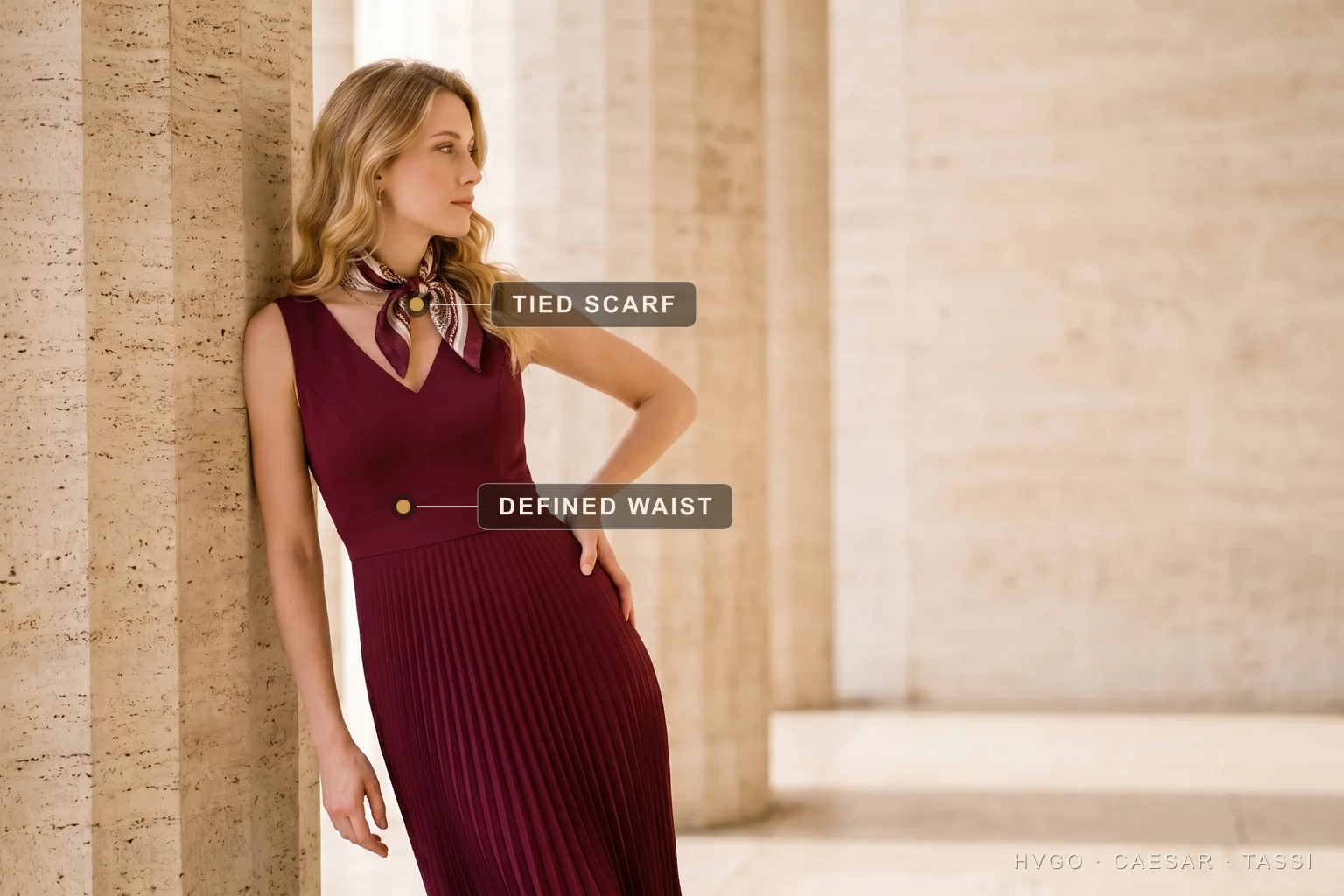
- Tied scarf — the silk square knotted neatly at the throat for polish, the Italian handling of the shared hero accessory
- Defined waist — the bodice draws in at the natural waist, marking the figure before the skirt releases
Italian vs French style, side by side
Two Mediterranean schools of elegance — where they meet and where they part.
| Italian (sprezzatura) | French (effortless) | |
|---|---|---|
| Feeling | Confident, warm, considered | Understated, cool, undone |
| Silhouette | Defined waist, la bella figura | Loose, relaxed, androgynous touches |
| Colour | Warm neutrals + one rich accent | Navy, black, ivory, breton |
| Signature | Tailoring, gold, sunglasses | The trench, ballet flat, red lip |
| Fabric | Silk, fine knit, structured crepe | Cotton, denim, soft wool |
#Italian vs French style: the one-line difference, then the nuance
Italian elegance is fitted, color-confident, and built to be seen; French chic is eased, neutral, and built to look unplanned. Both refuse logos and both spend on fabric, which is why shoppers blur them. The split is sharper than the lazy verdict admits.
Hugo Caesar Tassi has cut women's occasionwear in Roma since 2004, and the house reads these two elegances as opposites that share a budget rather than twins. The rest of this page measures them on three axes you can act on: how the clothes are cut, how color and pattern get used, and the attitude that drives both.
#The fastest way to tell them apart
Look at the waist and the color first. An Italian outfit defines the waist and commits to one rich color against a neutral; a French outfit lets the line fall straight and stays inside a muted palette with one red accent. That single read sorts most photographs in under five seconds.
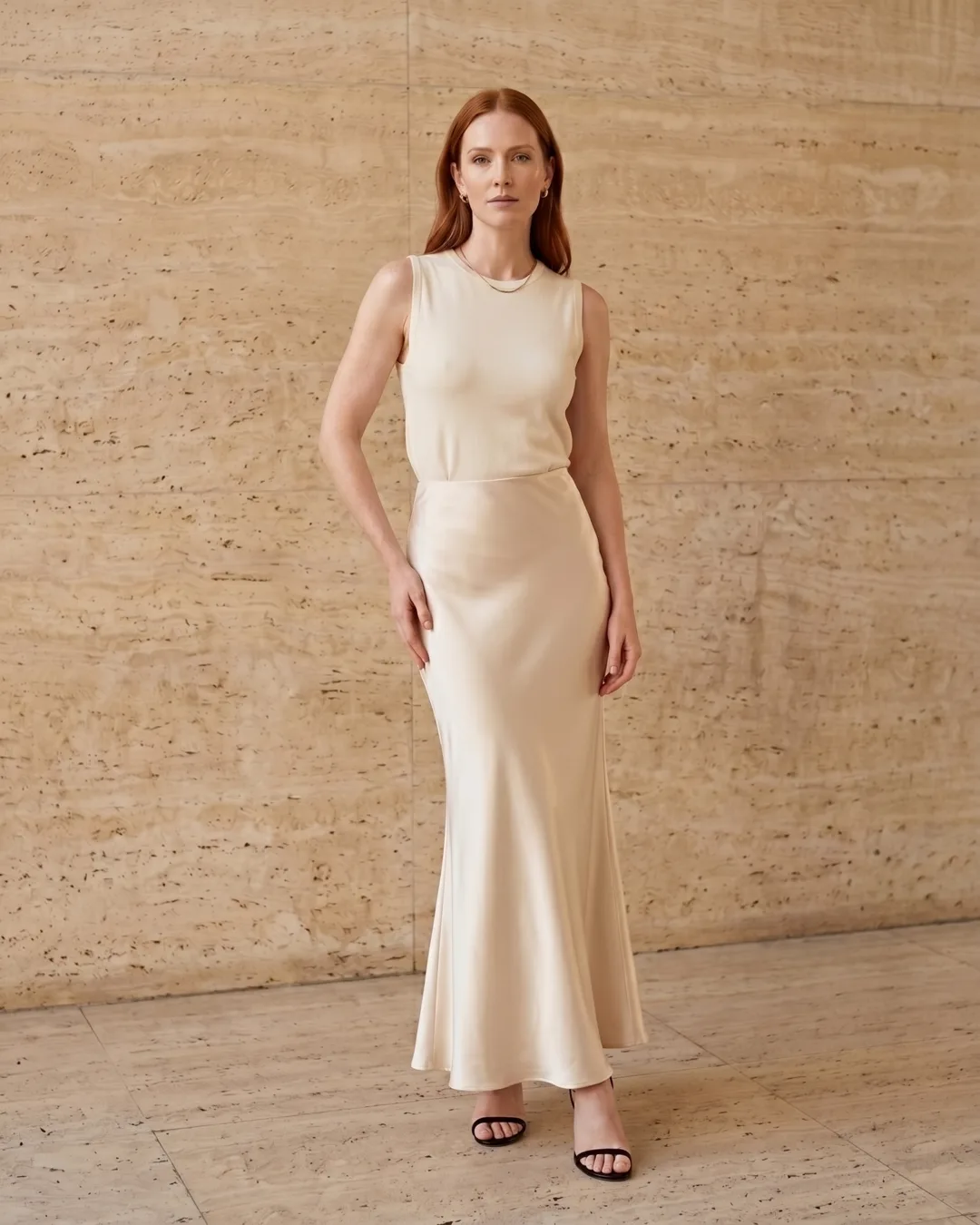
Picture two women on the same Rome street. One wears a wine column dress that follows her shape with a knife-pleated chiffon skirt and gold studs; she registers as Italian. The other wears a navy boyfriend blazer over a Breton top and straight cropped denim with a red lip; she registers as French. The edge case is the woman in a beige bias-cut slip with bare arms and no jewelry, where the cut whispers Italian but the color whispers French, and you need the second axis to break the tie.
#Why people confuse the two
The two elegances overlap on four habits, which is exactly where the confusion lives. Both prize quality over quantity, both ban visible logos, both lean on the silk square scarf and one excellent leather bag, and both practice the restraint that gets sold today as quiet luxury. Strip those shared habits away and the differences stand clear.
Here is the overlap stated plainly, so you can set it aside before the comparison starts.
- Quality over quantity: fewer pieces, better cloth, no fast-fashion churn.
- No visible logos: the label stays inside the garment, never on the chest.
- Two shared heroes: the silk square scarf and a single well-made leather bag.
- Restraint as a value: neither piles on trends, sparkle, or contrast.
The counter-case is the tourist version of both, which adds logos and stacks colors and proves only that the shared rules are easy to break and easy to fake.
#How tailoring splits Italian vs French style for women
Italian tailoring follows the figure with a defined waist; French tailoring eases the line and borrows a slightly androgynous, undone shape. Cut is the first axis because it survives the photo, the fabric, and the decade. Color and attitude come second.
#The Italian cut: body-skimming and intentional
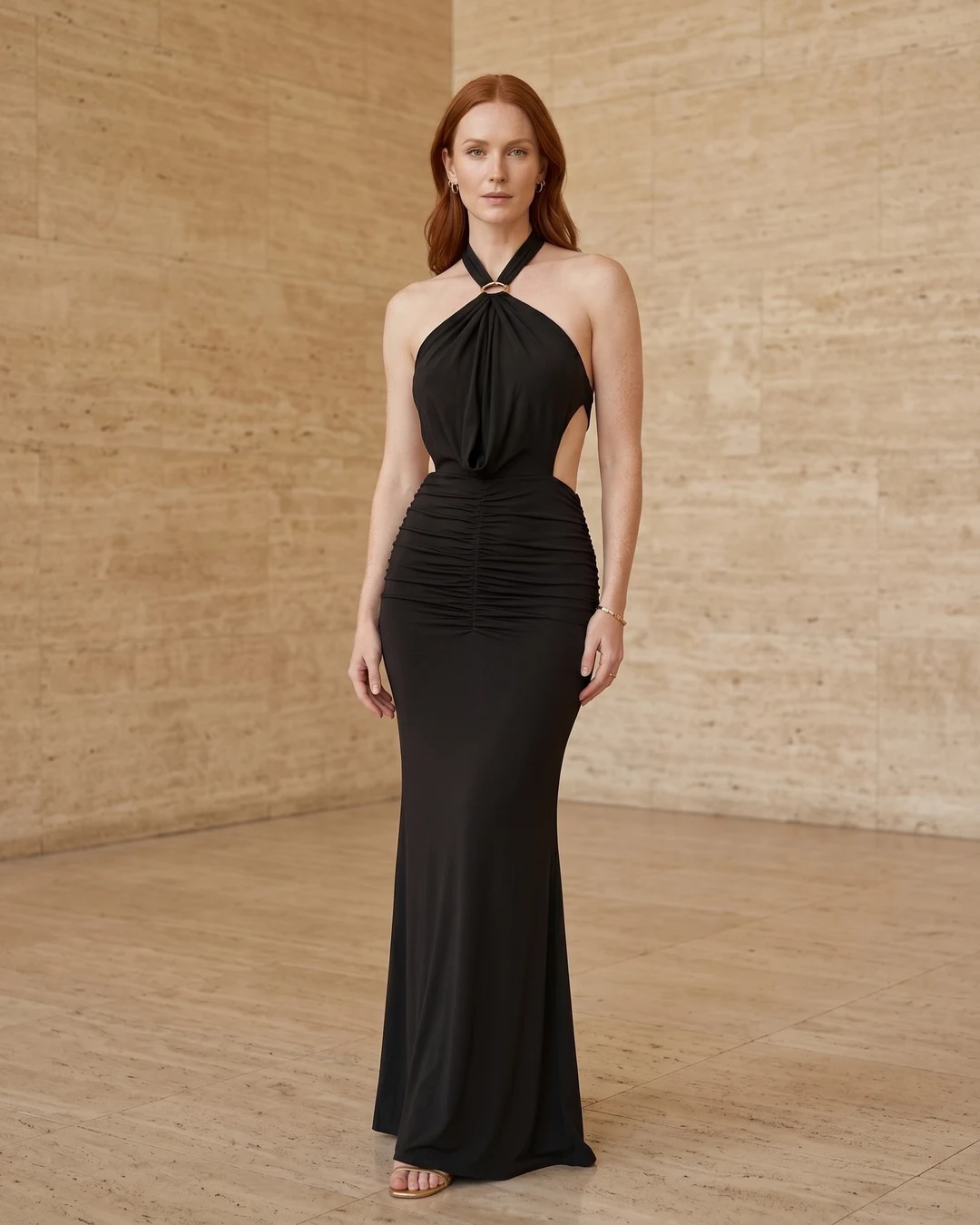
The Italian line skims the body without clinging and keeps the waist defined. A column dress traces the torso and releases at the hip; an A-line nips the waist and flares to the knee or floor; a bias-cut slip follows the curve on the diagonal grain. The house reads this as the Roman column made wearable, and it ties straight to la bella figura, where the Italian woman stays a little dressed even when she is technically casual.
The Calpurnia fishtail satin gown is the clean example: bias-cut satin holds the line down the leg and breaks into the fishtail below the knee, so the shape is engineered, not accidental. The edge case is the Italian woman in flat sandals and a linen shirt-dress on a beach day, who still belts the waist; the polish drops a notch but never disappears.
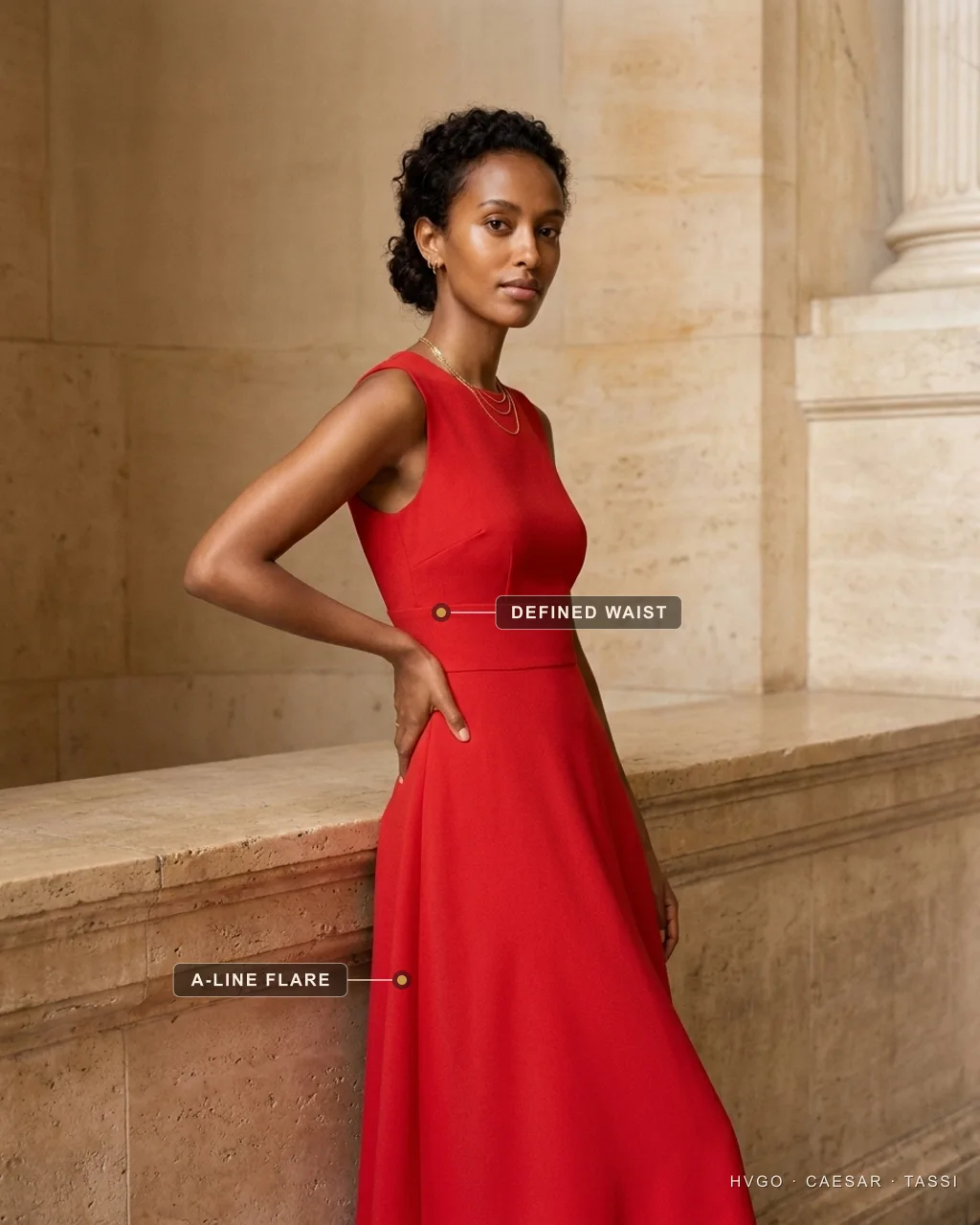
- Defined waist — a nipped natural-waist seam that follows the figure, the spine of the Italian line
- A-line flare — the skirt releases cleanly from the waist into a widening line
#The French cut: eased, borrowed and undone
The French line runs looser, straighter, and slightly borrowed from menswear. The boyfriend blazer sits a size up, the trousers run straight or wide, the shirt stays untucked, and one button gets left unfussed on purpose. The Breton top and a pair of straight jeans carry the whole logic: the silhouette reads effortless because it is slightly imperfect.
A Parisian uniform of navy blazer, white tee, and cropped straight denim is the concrete case: nothing fitted, nothing fussy, everything a half-size easy. The counter-case is the French evening slip dress, which proves even the eased wardrobe owns one fitted piece for the rare night it dresses up.
#The fabrics each side reaches for
Fabric sits under the cut and explains why one reads dressed and the other reads daily. The Italian side reaches for fluid, dressed cloth that drapes and holds a line; the French side reaches for easy daywear cloth that creases and softens with wear. Italian chiffon arrives recycled and knife-pleated or bias-cut, satin is bias-cut, crepe is matte and structured, all fabrics that fall into an occasion. French poplin, denim, and fine wool stay flat, casual, and ready for a Tuesday.
That material divide is why a chiffon maxi reads occasion-ready in any light while a cotton Breton reads everyday in the same light. The fabric, not the styling, carries most of the difference.
#Which silhouette flatters which woman
The fitted Italian line rewards anyone who wants the waist defined; the eased French line rewards anyone who prizes movement and ease. An hourglass or a curvier figure gains most from the body-skimming Italian cut because the seam follows the shape it already has. A straighter or longer frame can carry the loose French line without it reading shapeless.
You can self-select fast. Want the waist visible? Choose the Italian column or A-line; want the look to move with you instead? Choose the French eased trouser and untucked shirt. Use our body shape guide to confirm which seam works on your frame before you commit a wardrobe to either side.
#How color and pattern divide Italian vs French style
Italian color commits to one saturated statement against neutrals; French color disciplines itself to muted neutrals with a single red accent. This is the axis that breaks ties when the cut is ambiguous. It is also the one most affiliate listicles get wrong.
#Italian color: an expressive, saturated palette
The Italian woman will wear one rich, confident color and let it lead. Wine, red, deep green, and rose carry the outfit while the rest stays neutral, and pattern stays rare but bold: one floral dress, one paisley scarf, never both at once. The discipline is the single focal point, not the absence of color.
The Livilla floral-print chiffon midi is the worked example: the print does the talking, so the shoes, bag, and jewelry retreat to neutral. The edge case is an all-ivory Italian look, which proves the saturated color is a choice, not a requirement, as long as the cut and fabric carry the polish.
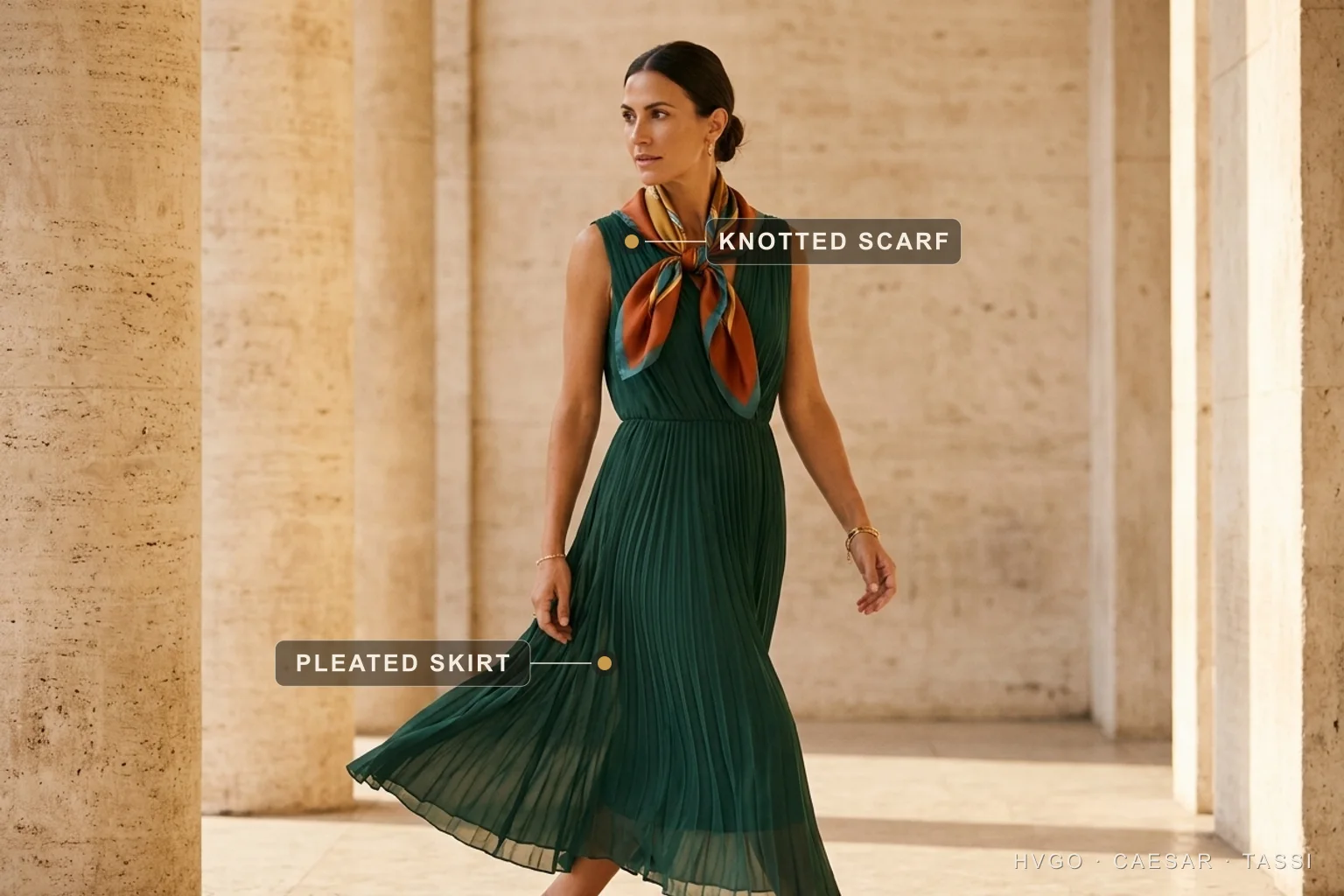
- Knotted scarf — the silk square knotted at the neck, the one statement accent against the green
- Pleated skirt — knife-pleated chiffon swinging mid-stride, the fluid dressed cloth that reads occasion-ready
#French color: disciplined neutrals and the single red
The French palette is famously narrow on purpose. Navy, black, beige, gray, white, and the Breton stripe form the base, and red enters only as an accent: the red lip, the red ballet flat, the red scarf knot. French chic reads muted on purpose because the restraint is the point.
A Parisian wearing head-to-toe navy with a single red lip is the clean case. The counter-case is the rare French woman in a saturated emerald coat, who borrows the Italian move and proves the neutral rule is a habit rather than a law.
#The imperial palette as the Italian answer
The house dyes nine colors in Rome, and they show that Italian color is expressive yet still disciplined. Porpora (wine), Vermiglio (red), Cornelia (rose), and Verde Antico (green) carry the statement; Travertine (stone), Avorio (ivory), and Cuoio (tan) hold the neutral ground; Basalt (black) and Cobalto (navy) anchor it. One statement color per outfit, drawn from this set against the neutrals, is the maker's proof of the rule.
Tyrian purple cost a fortune in antiquity because the dye came from sea snails, and the wine-deep Porpora descends from that lineage, which is exactly the kind of saturated color the French palette declines. Each color earns its place against one statement-color rule the house has held since 2004.
#Is Italian vs French style about la bella figura or je ne sais quoi?
Italian style serves la bella figura, looking right on purpose; French style serves je ne sais quoi, the studied art of looking like you did not try. Attitude is the third axis, and it is the one that decides which clothes you will actually reach for. Treat it only as a comparison lens here.
#La bella figura: looking right, on purpose
La bella figura is effortless polish that is quietly engineered. The Italian woman dresses for the impression she makes in public, so she is always a little dressed: the fit is right, the color is chosen, the shoe is considered, even for the supermarket. The polish looks easy because the work happens before she leaves the house.
A woman who changes out of loungewear to run a ten-minute errand is the concrete case. The edge case is the Roman in jeans and a plain tee who still presses the tee and adds gold hoops, proving the doctrine is about intention, not formality. The full doctrine lives in our la bella figura guide.
#Je ne sais quoi: the studied art of not trying
Je ne sais quoi is calculated imperfection that reads as charm. The French woman wants the look to say "I threw this on," so she keeps the messy bun, the bare face, and the one red lip, and she lets charm beat polish. The trick is that the carelessness is rehearsed.
The undone bun with a fresh white shirt and no makeup but the red lip is the clean case. The counter-case is a French woman over-styled for a wedding, where the effort suddenly shows and the je ne sais quoi evaporates, because visible effort breaks the spell.
#Sprezzatura sits between them
Sprezzatura is the Italian studied carelessness that overlaps the French undone-ness without surrendering the fit. The Italian leaves one detail relaxed, a cuff turned or a scarf loose, while the cut and the polish stay intact; the French version lets the fit and the polish go entirely. That is the dividing line: sprezzatura keeps the structure, nonchalance abandons it.
A blazer worn with the sleeves pushed up over a sharp dress is sprezzatura. The same relaxation over an oversized tee and bare face tips into French nonchalance, which shows how close the two attitudes sit and how cleanly the fit still separates them.
#How Italian vs French style accessorizes the same two heroes differently
Both elegances live on the silk square scarf and one leather bag, but the Italian woman ties for polish while the French woman knots for nonchalance. The objects match; the handling does not. That handling is the tell.
#The same two heroes, worn two ways
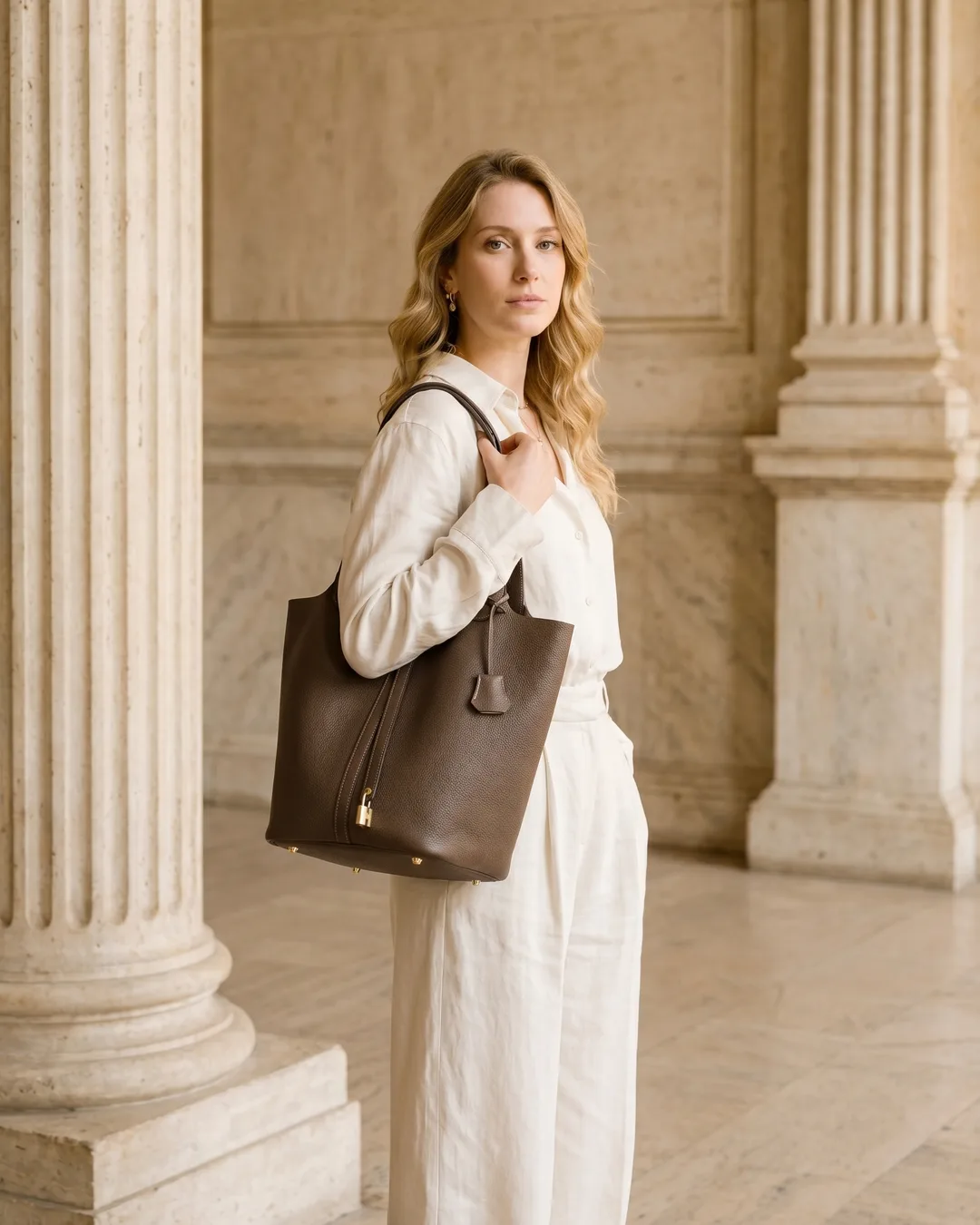
The scarf and the bag are shared property, used to opposite ends. The Italian woman ties the silk square neatly, at the neck, on the bag handle, or folded as a headscarf, and carries a structured bag that holds its shape. The French woman knots the same scarf carelessly and slings a soft, broken-in bag that slouches with use.
A neatly knotted scarf at the throat over a column dress is the Italian case; the same scarf tied fast to a tote strap is the French case. Browse the silk scarves to see the squares that read either way depending only on how you knot them.
#Shoes, jewelry and the finishing
The finishing details divide along the same polish-versus-undone line. Use the table below; the prose does not repeat its cells.
| Detail | Italian (la bella figura) | French (je ne sais quoi) |
|---|---|---|
| Cut | Body-skimming, defined waist | Eased, slightly androgynous |
| Color | One saturated statement on neutrals | Muted neutrals, single red accent |
| Fabric | Silk, chiffon, crepe, satin | Cotton, denim, fine wool |
| Scarf | Tied neatly for polish | Knotted carelessly |
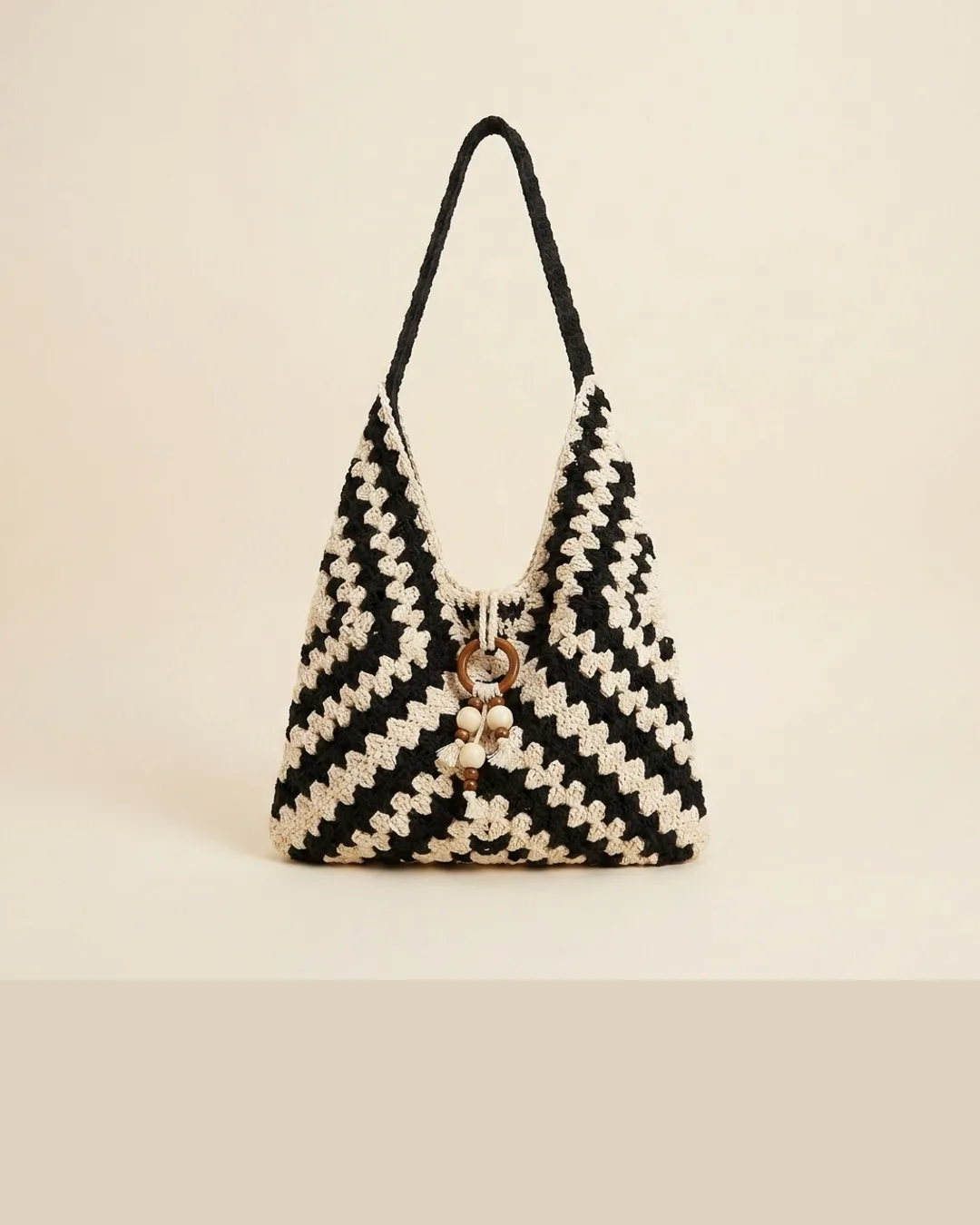
| Bag | Structured, holds its shape | Soft, broken-in, slouchy |
| Shoes | Elegant sandals or loafers | Ballet flats or loafers |
| Jewelry | A little fine gold | Minimal, often none |
| Makeup | Groomed, even | Bare face, red lip |
| One-line ethos | Looking right, on purpose | Looking like you did not try |
The shared rule across both columns is no logos, ever. The edge case is the French loafer, which also appears on the Italian foot, proving the shoe overlaps even when everything around it diverges.
#Italian vs French style, side by side
The two elegances diverge on nine details, from cut to ethos, while sharing only the no-logo rule and the two hero accessories. The table in the previous section is the screenshot-ready summary; keep it as your quick reference. What follows is how to read it.
#The comparison at a glance
Read the table top to bottom and the pattern is consistent: every Italian row points toward intention and polish, every French row points toward ease and the undone. The cut row and the color row do most of the sorting; the rest confirm the verdict. If a look reads fitted-plus-one-saturated-color, it is Italian, whatever the shoes say.
The honest counter-case is the woman who mixes the columns on purpose, an Italian dress with French undone hair, and looks deliberate rather than confused. That mix only works when one column clearly dominates, which is the next decision.
#Which side of Italian vs French style is yours?
Choose Italian if you want defined, confident, occasion-ready elegance; choose French if you want easy, undone, everyday cool. The decision turns on how you want to feel when you walk in, not on which country you admire. Pick the dominant side first.
#Choose by how you want to feel
Decide by feeling, then let the wardrobe follow. If you want the waist defined and one rich color leading, you want the Italian answer; if you want to move freely and read effortless, you want the French. You can borrow one element from the other, a Breton top into an Italian base or a saturated dress into a French neutral wardrobe, as long as one side keeps the spine.
A woman who feels most herself a little dressed should commit Italian and treat French ease as a single accent. The counter-case is the woman who borrows equally from both and ends up reading neither, which is the one outcome to avoid. Commit, then season lightly.
#How Hugo Caesar Tassi dresses the Italian answer
The house cuts the Italian side directly: body-skimming columns, considered A-lines, and the saturated imperial palette dyed in Rome. Every silhouette below follows the figure, defines the waist, and commits to one color. This is the Italian reply made into garments.
#The house pieces that prove the Italian side
Four house silhouettes map the Italian half to real cloth. The Vipsania draped modal column gown and the Claudia pleated-slit chiffon maxi deliver the fitted column line. The Aemilia A-line chiffon maxi delivers considered ease without losing the waist. The Livilla floral-print chiffon midi delivers expressive Italian color, the print leading while the rest stays neutral.
Each dress is fully lined with a concealed zip, runs S–3XL (EU 34–44), and the house publishes each model's height near 175 cm so you can judge where the hem breaks on your own frame. The edge case is the woman who wants Italian polish in a neutral; the same Aemilia cut in Avorio gives her the fitted line without the saturated color, proving the cut, not the color, is the Italian core.
#Where the page sends you next
Decided you want the Italian answer, the fitted, color-confident, occasion-ready one? Browse the body-skimming house dresses, add the one signature scarf from the silk-scarf collection, and read the rest of the silo from the Italian Style hub.
#Frequently asked questions
Are Italian or French women more stylish?
Neither is more stylish; Italian and French women are stylish differently. Italian women lean fitted, color-confident, and occasion-ready, while French women lean eased, neutral, and deliberately undone. Choose the one that matches how you want to look and feel rather than ranking them.
What is the main difference between Italian and French fashion for women?
The main difference between Italian and French fashion is cut and color. Italian dressing is body-skimming and willing to wear one rich, saturated color; French dressing is looser, more androgynous, and built on muted neutrals with red as the single accent. The fabric follows: fluid dressed cloth versus easy daywear cotton.
Do Italian and French women dress more formally?
Italian women dress a notch more put-together even casually, in the spirit of la bella figura. French chic instead prizes looking like you did not try: the same quality, less visible effort. The polish gap shows most on an ordinary errand, where the Italian woman stays a little dressed.
Is French girl style the same as quiet luxury?
French girl style is not the same as quiet luxury, though they overlap on neutrals and restraint. French chic adds a deliberate undone-ness and the signature red accent, where quiet luxury stays uniformly muted and polished. Italian style allows more expressive color than either.
Can you combine Italian and French style?
You can combine Italian and French style by keeping one dominant side and borrowing a single element. Many women hold an Italian fitted base and add French ease, like a Breton top or a carelessly knotted scarf, or run a French neutral wardrobe with one Italian saturated dress. Pick a dominant side so the look reads intentional, not confused.
Which suits an hourglass or curvier figure better?
The Italian body-skimming, waist-defined cut suits an hourglass or curvier figure better. The seam follows the shape you already have, while the eased French line suits a woman who prefers movement and room. Read our body-shape guidance and how to dress like an italian woman to self-select with confidence.
More Italian Style guides
How to Dress Like an Italian Woman
A Roman house's real rules for dressing like an Italian woman: fit, fabric, color and the scarf-and-leather signatures that read elegant, never touristy.
Dress like an Italian womanItalian Summer Style
A Roman house's Italian summer style rulebook: fibers that breathe, the Riviera palette, and how to stay elegant, never touristy, in the heat.
Dress an Italian summerLa Bella Figura
What la bella figura really means, and how a Roman house turns it into a three-part dressing code for women: sprezzatura and brutta figura explained.
Master la bella figuraLa Dolce Vita Style
La dolce vita style: Fellini's 1960 Rome in oxblood-and-ivory satin, and how to dress it now: the slip, the scarf, the dark shades. From a Roman house.
Decode 1960 Roman glamourWhat to Wear in Lake Como and the Riviera
A Roman house edits what to wear in Lake Como and the Riviera: four real moments mapped to the dress, color and sandal that fit each.
Dress the lakeside evening