Old Money Style for Women: The Aesthetic, Decoded by a Roman House
The old money aesthetic for women, decoded by a Roman house: inherited taste over flash, the real building blocks, and how to wear it on any budget.
On this page
The old money aesthetic for women is the look of inherited taste, not a beige uniform: muted real colors, no visible logos, and pieces a woman buys as if she will keep them for a decade. It signals continuity and restraint rather than acquisition. This guide decodes what old money style genuinely is, where it comes from, and how to wear it on any budget.
Hugo Caesar Tassi (a women's occasionwear house, founded in Roma in 2004) interprets this aesthetic the way Europe always has. Our motto, Nata Imperare (born to rule), names the posture: a woman who has nothing to prove. We make the clothes, so we can draw a distinction a listicle cannot.
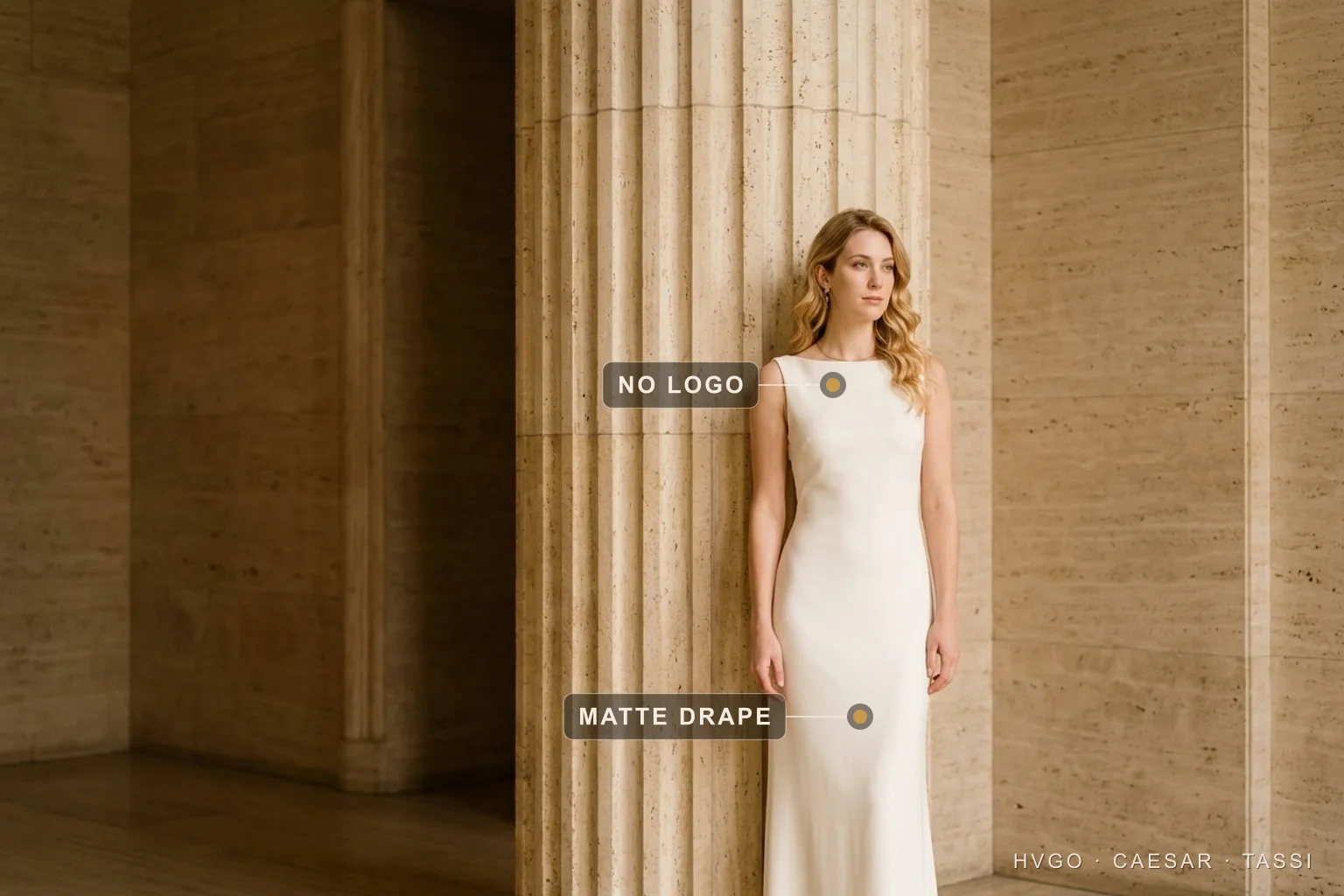
- No logo
- Matte drape
#What is old money style for a woman, really?
Old money style is inherited taste made visible: restraint, provenance, and pieces that look kept rather than bought. A woman signals "old money" when nothing she wears announces a purchase date or a price.
The SERP flattens this into "wear beige and a headband," which mistakes a costume for a worldview. Heritage taste is not a color story. It is the absence of effort to impress. A woman chooses garments for fit and fabric, wears them until they soften, and replaces them only when worn out. Every example here is a woman's dress, bag, or scarf, framed for women alone.
#Inherited taste made visible, not a beige uniform
The aesthetic shows a woman who buys few things, keeps them long, and lets none of them shout. A beige-capsule checklist sells the surface; the mindset is the substance.
Consider two women in the same Travertine (stone) wool coat. One bought hers last week with the tag still in the pocket; the other has worn hers for six winters, and the collar has softened to her neck. The second telegraphs old money because the coat carries time. That continuity is provenance: lived-in evidence, not a shade.
A counter-case proves the point. A woman in head-to-toe new neutrals, every piece this season's, looks like a styled set, not a lifetime of taste. Beige alone buys nothing when everything appears bought yesterday.
#The five tells that read as old money style on a woman
Five signals carry the look: no logos, a muted real color, matte fabric that drapes, a shoulder-first fit, and one quiet focal point. Each is unpacked in the sections below, with the deeper why linked out.
- No visible logos: the bag, the buckle, and the buttons name no brand.
- A real, often muted color: ivory, stone, navy, or camel, not a trend bright.
- Matte fabric that drapes: crepe, chiffon, or matte satin, never high day shine.
- Fit that starts at the shoulder: the seam sits on the bone, then the line falls clean.
- One quiet focal point: a single scarf or a wine-colored dress, never a pile.
The deeper mechanics live elsewhere on purpose. Color belongs to the old money color palette; the make-and-finish standard sits in the quiet luxury guide; the construction tells go to how to look expensive. This page owns the definition.
#Old money vs. new money: what separates old money style
Old money signals continuity through provenance and patina; new money signals acquisition through logos and box-fresh It-bags. The split is what a woman appears to value: keeping versus getting.
Here sits the contrast that actually defines the aesthetic. It is not the three-way of quiet luxury, old, and new money, which the quiet-luxury guide settles. Old versus new is the axis, and the tell is time.
#Provenance and patina vs. the freshly-bought look
A woman conveys old money when her things show honest wear and one stable color; she conveys new money when everything looks acquired this season. Wear is the proof, and confidence is the result.
Provenance means a piece carries its history: a full-grain cowhide bag that has darkened at the handles, a coat re-lined twice, a Cobalto (navy) dress worn to three family weddings. New money runs the opposite way, toward the latest logo bag and a wardrobe that resets each season. One says she has had this for years; the other says she got this last week.
A caveat keeps it honest. Patina is not the same as shabby. A frayed hem or a stained lapel suggests neglect, not heritage, so the lived-in look only works on quality that ages gracefully rather than degrades.
#No logos, no "old money brands," nothing to prove
Logo-free quality, not a label list, defines old money style, so the instinct to name brands is itself a new-money tell. A woman born to rule does not wear her receipts.
Logomania, the monogram repeated across a bag, is acquisition made loud. So is the "quiet flex," the discreet hardware that insiders are meant to clock. Both ask to be noticed. The old-money answer is unbranded leather, plain gold, and pearls: ornament that names no maker. Here Nata Imperare earns its place. Status that must be announced is status in doubt; restraint is the confidence of a woman with nothing to prove.
That reframe matters because "old money brands" is among the most-searched phrases in this space, and it points the wrong way. You cannot buy the look by buying a label, because the look is the deliberate absence of one.
#How old money style differs from quiet luxury and looking expensive
Old money is who you appear to be; quiet luxury is how the cloth is made; looking expensive is the construction any garment can carry. They overlap, yet a woman gets each wrong by treating them as synonyms.
These three terms collide constantly in the feeds, and conflating them sends a woman shopping for the wrong thing. The table below separates them by what each one actually governs, so prose can stay on the decision rather than the definitions.
| Term | What it governs | The proof you can see | Where it's decided |
|---|---|---|---|
| Old money style | Provenance and mindset | Kept pieces, honest patina, no logos | The wardrobe over years |
| Quiet luxury | Make and finish | Matte drape, full lining, clean seams | The garment's construction |
| Looking expensive | Surface construction signals | Correct hem, fitted shoulder, one accent | A single outfit, today |
| New money flash | Acquisition | This season's It-bag, conspicuous logos | The checkout, repeatedly |
#Old money is provenance; quiet luxury is a make-and-finish standard
Old money describes a woman's relationship to her clothes; quiet luxury describes how those clothes are built. A piece can satisfy one standard and miss the other.
A logo-free, fully lined crepe dress meets the quiet-luxury bar on the day it leaves the shop, because the standard lives in the cloth and the construction. Old money needs more: the same dress, chosen for a color a woman will still wear in ten years and worn until it becomes hers. The make is necessary; the mindset completes it.
These two genuinely overlap, which is why they blur. We settle the full three-way comparison, and the "stealth wealth" question, in the quiet-luxury guide so this page can stay the definition of the aesthetic itself.
#"Looking expensive" is the physical tells; old money style is the mindset
Looking expensive is a set of construction signals any single outfit can carry; old money style is the buy-fewer-better attitude behind the whole wardrobe. One is achievable tonight; the other accrues.
A modest dress can look expensive today with a corrected hem, a fitted shoulder seam, and one accent removed. That is a styling outcome. Old money is slower and larger: it is the decision to own fewer dresses and keep each for a decade, so the wardrobe comes across as inherited rather than assembled. For the budget how-to that makes a single outfit look costly, the practical method lives in our looking-expensive guide; this page keeps the worldview.
#Why European and Italian heritage sit at the heart of old money style
The aesthetic descends from generations of European tailoring worn with ease, which is why Italy and the European reading sit at its center. America borrowed the look; Europe wore it first.
The phrase traveled from old European families, where good clothes were a given rather than an event. That history is why provenance carries authority: the clothes predate the trend. Our Roman roots place us inside that lineage, not commenting on it from outside.
#The American reading (preppy, Ivy, WASP) vs. the European reading
The American version codifies old money into a costume; the European version treats it as ordinary dress worn without effort. Preppy is the uniform; old money is the lack of one.
The US reading hardens into a kit: loafers, pearls, a navy blazer, the Ivy and WASP signifiers a woman can assemble in an afternoon. It is recognizable precisely because it is a costume. So no, old money is not the same as preppy. The European reading refuses the kit. A beautifully cut dress is simply put on and forgotten, which is harder to copy because there is no checklist to buy. Hugo Caesar Tassi designs through that European lens, where the clothes carry the status and the woman carries nothing.
#Italian sprezzatura: studied carelessness, the original old money
Italian sprezzatura (studied carelessness, a Renaissance courtly ideal) is the original expression of inherited taste: beauty worn as if it were nothing. La bella figura is its public face.
Sprezzatura means a woman in an exquisitely cut Avorio (ivory) column gown looks as though she dressed without thinking, when the ease is the whole achievement. La bella figura (making a good impression through carriage and dress) extends it into daily life: you present well because it is simply how one moves through the world. Our guide to la bella figura unpacks the Italian carriage behind this. As a Roman house, that lineage is our first-party authority, not a borrowed reference.
#The building blocks of an old money style wardrobe
The wardrobe rests on a kept-for-a-decade dress, an unbranded leather bag, fine knitwear, a silk scarf, classic flats, and discreet metal. Each block earns its place by lasting, not by trending.
A woman builds the look from few, durable pieces rather than a seasonal refresh. The blocks below cover the dress, the accessories, and the color-and-fabric field that ties them together.
The old money wardrobe, block by block
Six kept-for-a-decade pieces and why each one reads as inherited taste.
#The dresses: a real-color column you keep for a decade
A fluid column or A-line dress in a muted real color is the heart of the look, chosen to survive ten years of trends. Drape and color outlast cut novelty.
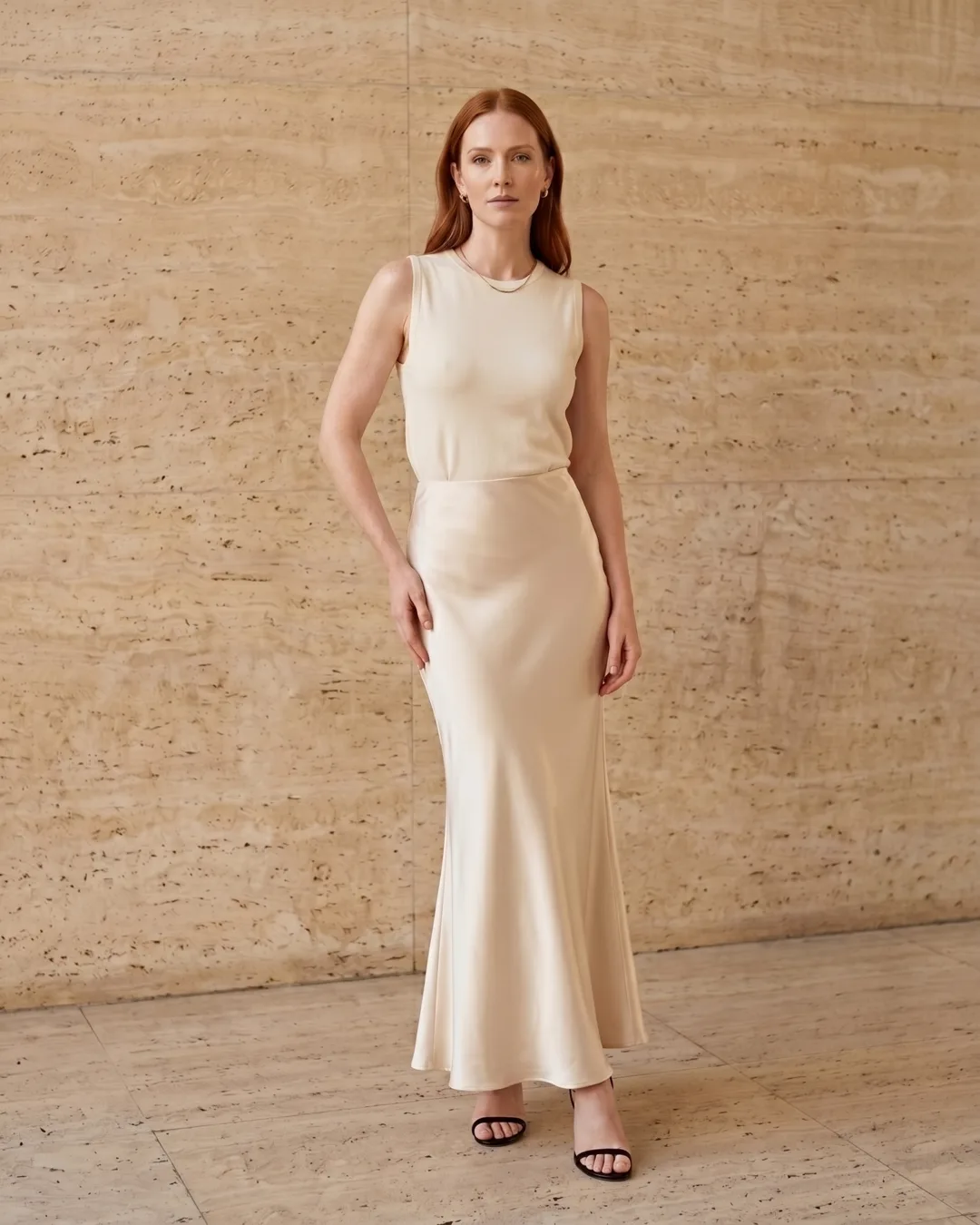
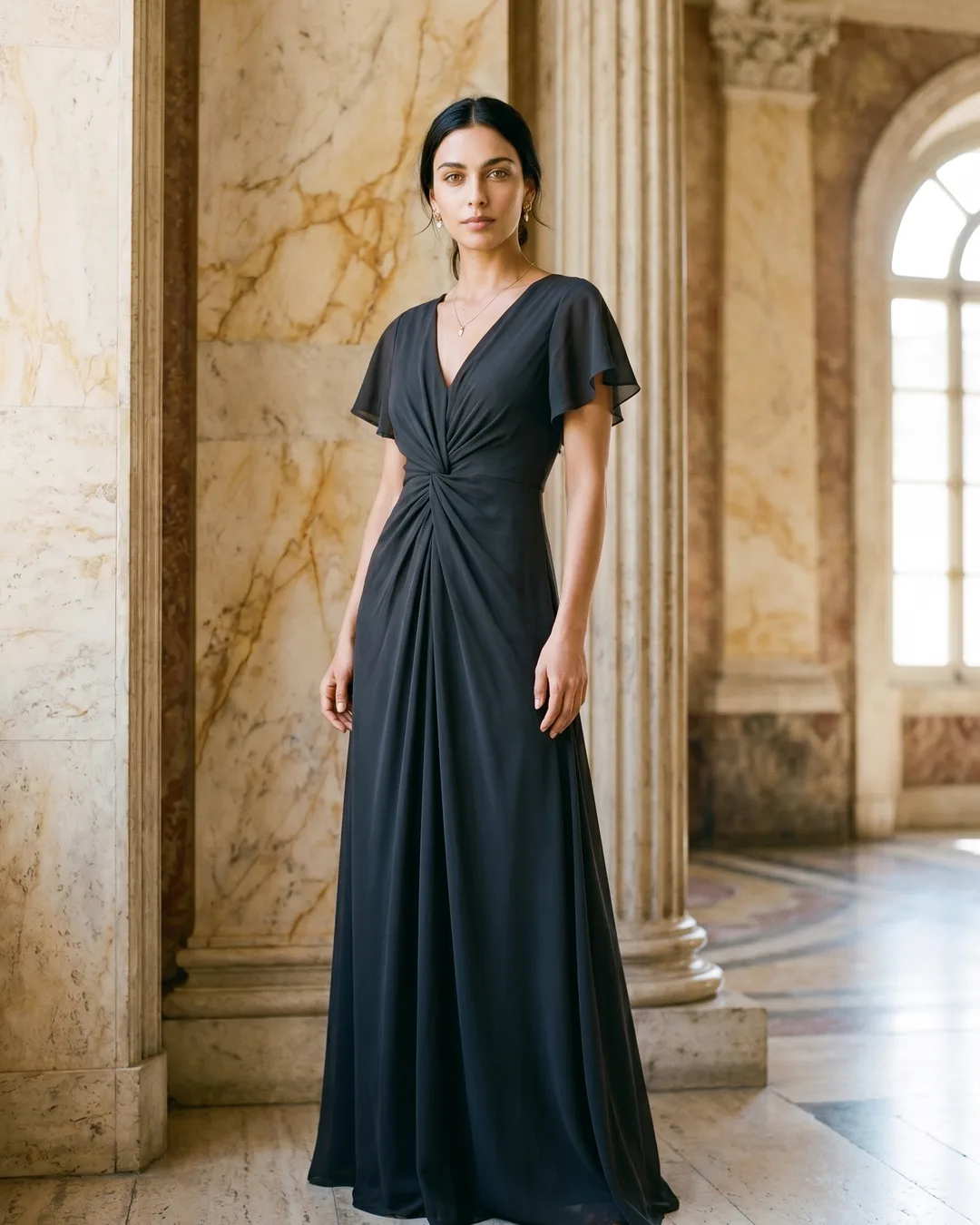
The test is simple: will she still wear this in a decade? A column gown that drapes in modal, or an A-line chiffon maxi in a tonal print, passes because neither dates. The Julia French-pleated chiffon maxi, floor-length and tonal, is restraint at full length; the Aemilia A-line chiffon maxi offers fluid quiet. Both are fully lined with a concealed zip, so nothing interrupts the silhouette. The daytime edit holds the everyday version of this dress.
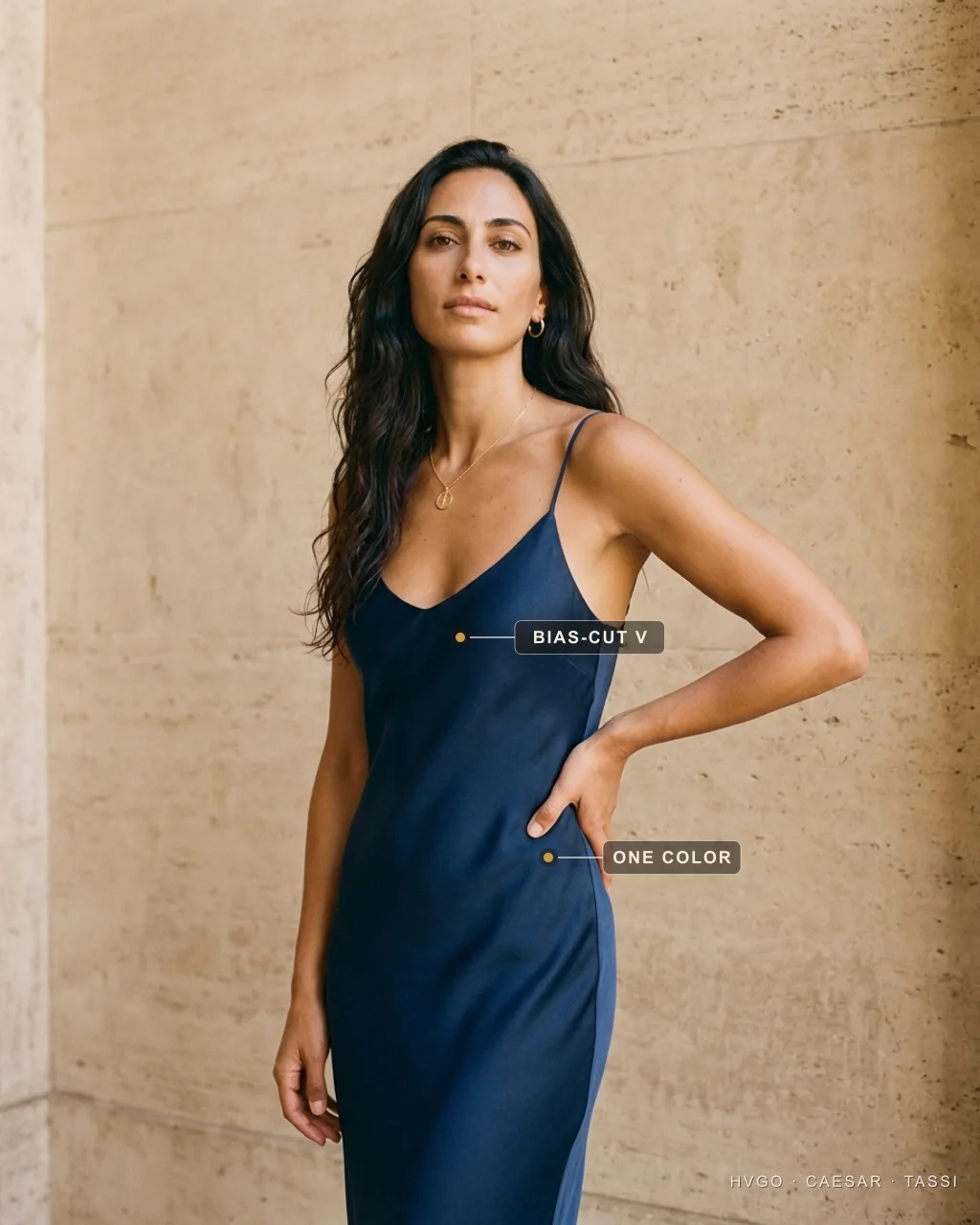
- Bias-cut V
- One color
The failure mode is the slip into costume. A "Great Gatsby" period dress announces an era instead of a woman, which is the opposite of the kept, lived-in piece.
#The accessories: leather, silk and discreet metal
The accessories are an unbranded leather bag, a silk square scarf, plain gold or pearls, and classic flats, with one statement piece and never a pile. Restraint governs the count.
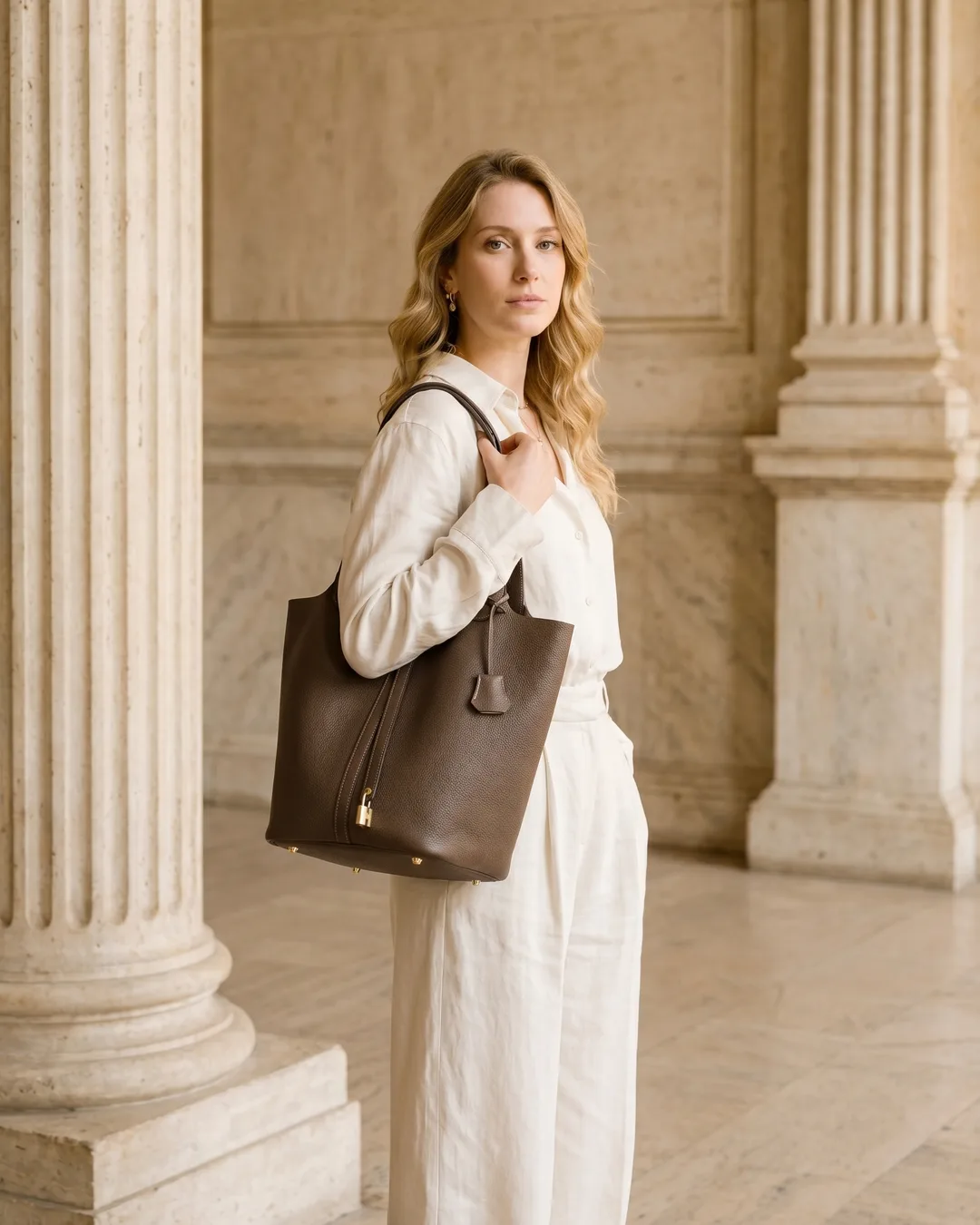
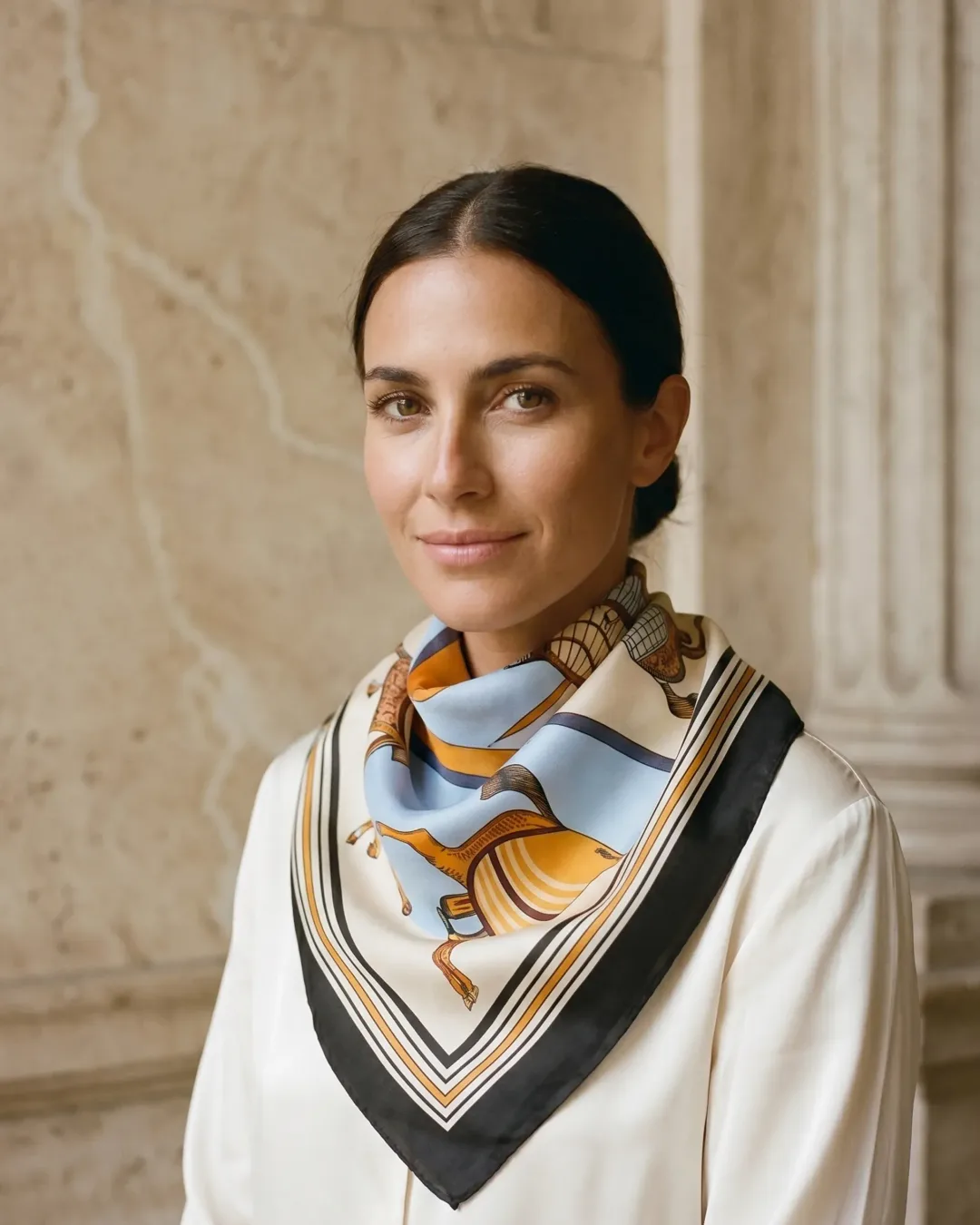
A full-grain leather bag softened by honest wear anchors the look; the Palatina minimalist leather shoulder bag carries no visible logo, so it names nothing. A silk square scarf, such as the Vesta, becomes the single quiet accent, knotted at the neck or the handle. Pearls or plain gold finish it without competing. The rule is one focal point: a scarf or the bag or the pearls, not all three at once. The unbranded kind sits in the house leather edit, linked at the close.
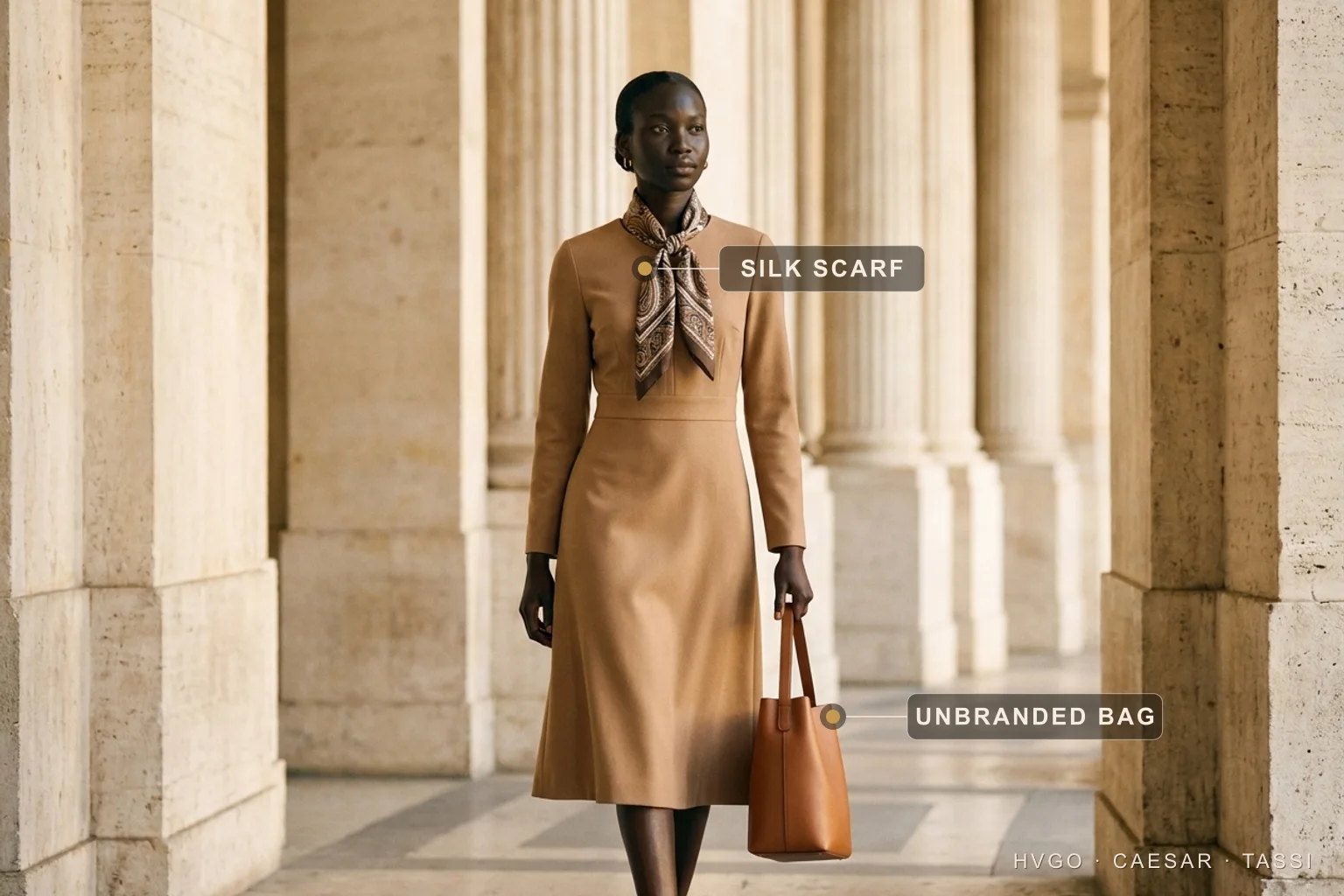
- Silk scarf
- Unbranded bag
#The color field and the fabric
The palette is a muted field of ivory, stone, navy, camel, and black, with one quiet statement, worn in matte fabric over day shine. Color carries the calm; fabric carries the weight.
Old money color stays in real, low-saturation tones: Avorio (ivory), Travertine (stone), Cobalto (navy), Cuoio (tan/camel), and Basalt (black) form the field, with one quiet statement in Porpora (wine), Verde Antico (green), or Cornelia (rose). The full color logic, including how to wear tonal head to toe, lives in the color palette guide. Fabric runs matte by day: structured crepe, fluid chiffon, satin worn matte rather than glossy. The make-and-finish reasoning belongs to the quiet-luxury guide; here it is enough that day shine signals new money while matte signals inheritance.
#How to dress in old money style on a budget
Restraint and fit, not price, carry old money style, so a modest well-tailored dress in a muted color beats a trendy expensive one. The aesthetic is budget-agnostic by design.
That is the answer the listicles bury beneath the shopping links. The look has never depended on spending, because the signals it sends, continuity and ease, cost nothing to send.
#Buy fewer, better, and let fit do the work
Spend on fit and fabric over labels, and let alterations finish the job. A tailored shoulder seam does more for the look than any logo.
Cost-per-wear is the honest math: one well-cut dress worn fifty times outperforms five trend pieces worn twice. Choose the muted color and the matte fabric, then tailor the two things that matter most, the shoulder seam and the hem. A woman can take an inexpensive crepe dress and, for the price of one alteration, make it sit like a kept piece. The full fit method, seam by seam, is covered in our elegance guide; the budget principle is simply that fit is cheaper than price.
#What to avoid (the tells that cheapen it)
Skip visible logos, fast-trend pieces, high day shine, a dropped shoulder fit, and the costume-y starter pack. Each one reverses a signal the look depends on.
| Do | Don't |
|---|---|
| Choose unbranded leather and plain metal | Wear monograms or "quiet flex" hardware |
| Pick one muted real color per outfit | Chase trend brights and high-contrast prints |
| Wear matte crepe, chiffon, or matte satin by day | Wear high-shine satin or sequins in daylight |
| Fit the shoulder seam first, then the hem | Leave a dropped, ill-fitting shoulder line |
| Buy pieces you would genuinely keep | Assemble a costume-y "old money starter pack" |
The mindset behind the table is the choosing test: would you keep this for a decade, or is it a prop for one photo? Trend pieces fail because they expire; the starter pack fails because it looks like a kit, not a wardrobe.
#Old money style outfits for real occasions
The aesthetic dresses both day and evening through restraint: tonal pieces by day, an understated gown by night, never sparkle as the headline. Occasion changes the dress, not the doctrine.
A woman wears the same principles from the school run to the gala; only the formality shifts. The two sub-cases below show the day version and the evening version.
#Daytime and everyday
By day, wear a tonal midi or chiffon day dress with an unbranded leather bag, flats, and a silk scarf as the single accent. Quiet color plus one accessory suits daylight.
The Livilla floral-print chiffon midi works because the print is tonal, not loud, so it stays day-correct rather than party-bright. Pair it with the leather shoulder bag, flat shoes, and the silk scarf, and stop there. The everyday edit of this look is the daytime dress collection, linked in the closing line. The counter-case is the daytime sequin: shine before evening breaks the inherited impression instantly.
#Weddings, evening and the quiet gala
For a wedding or black tie, choose an understated gown in a real color that looks expensive through restraint rather than sparkle. Matte by day, a touch of shine by night, never the brightest thing in the room.
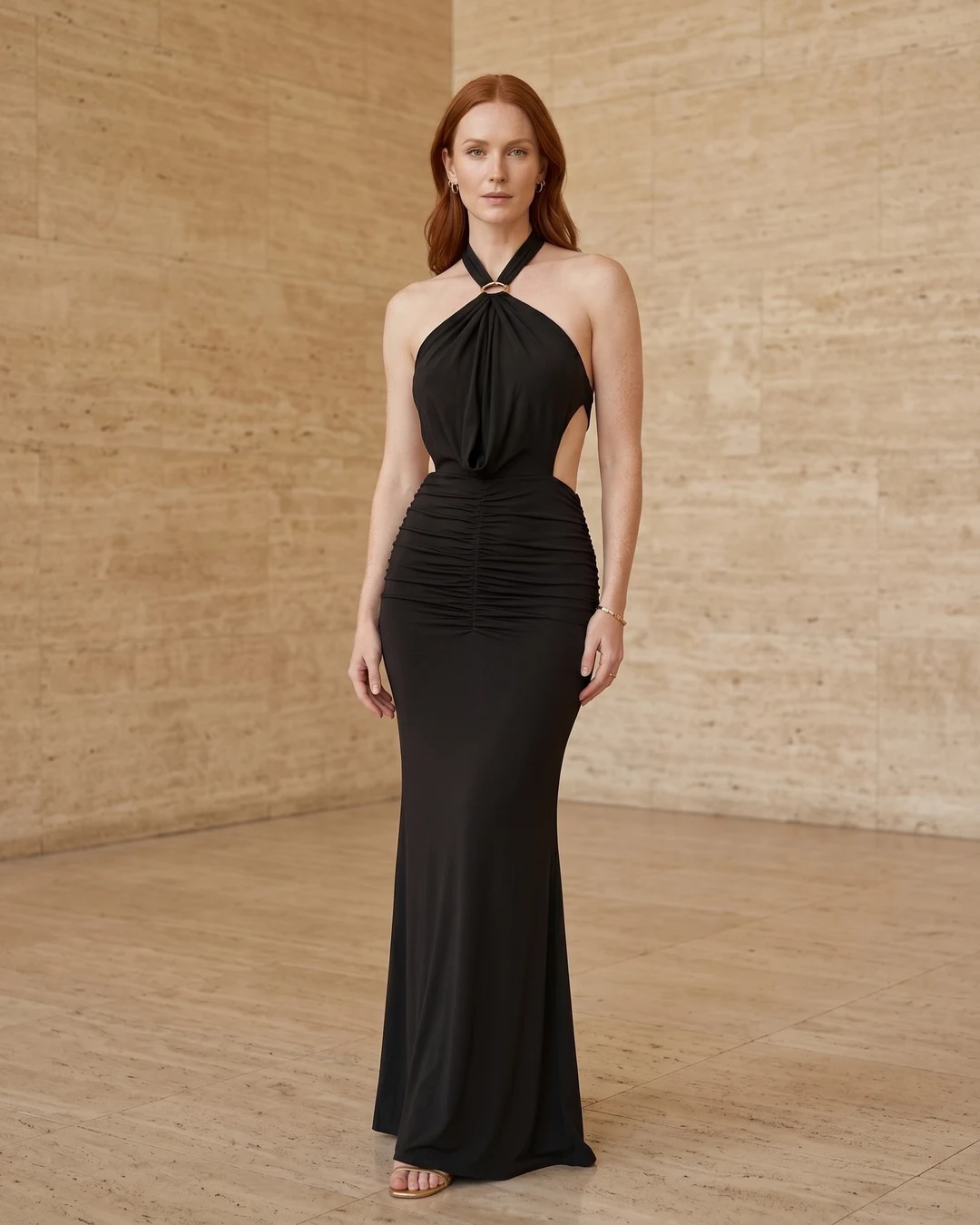
A Calpurnia fishtail satin gown or a Tullia pleated crepe column dresses an evening without competing with it; in a muted Porpora (wine) or Verde Antico (green), it looks quietly costly. The logic of dressing a formal night this way is set out in our quiet-luxury occasion-dressing guide. The gowns themselves live in the occasion edit, linked at the close.
#How Hugo Caesar Tassi designs old money style into a dress
We cut fluid imperial fabrics in muted real colors, fully lined and logo-free, in silhouettes built to outlast a decade of trends. The design brief is the aesthetic, stated as construction.
This is the first-party position no tailoring roundup can claim. We read old money as the European inheritance it is, then build it into the cloth.
#The house doctrine: inherited taste, made to keep
Our doctrine is inherited taste made to keep: real colors, full lining, no logos, and lines meant to survive ten years. Nata Imperare and la bella figura are the lens.
Each dress drapes in a fabric chosen for movement, recycled chiffon knife-pleated or bias-cut, satin cut on the bias, crepe matte and structured, modal for the column line. Each is fully lined with a concealed zip, so the line stays clean and nothing inside is visible. None carries a logo. The silhouette descends from the Roman column made wearable, which is provenance built into the pattern rather than printed on the label.
#The pieces that prove it
The edit names the pieces that carry the aesthetic, one role each. Five garments, five reasons they qualify.
- Julia (French-pleated chiffon maxi): tonal and floor-length, the kept-for-a-decade dress.
- Aemilia (A-line chiffon maxi): fluid restraint in a quiet line.
- Livilla (floral-print chiffon midi): a tonal day print, daytime-correct.
- Palatina (minimalist leather shoulder bag): unbranded full-grain leather.
- Vesta (silk square scarf): the single quiet accent.
Browse the full range across the women's dresses and accessories edits to assemble the wardrobe rather than a one-off outfit, not a single piece bought in isolation.
#Your old money style recap and where to go next
Old money style decodes to five lines: inherited taste over flash, provenance with no logos, muted color with one statement, matte drape, and buy fewer to keep longer. Read them as a wardrobe rule, not a shopping list.
- Inherited taste over flash.
- Provenance and patina, no logos.
- Muted real color with one quiet statement.
- Matte fabric that drapes.
- Buy fewer, better, keep for a decade.
#Read next, then build it
Read the deeper layers next, then build the wardrobe from the day edit up. The siblings carry the detail this page deliberately defers.
For color, go to the palette guide; for the make-and-finish standard, the quiet-luxury guide; for the Italian carriage, la bella figura. The broader style guides hub holds the rest of the silo.
Build the look you will keep, not the one you will replace next season. Start with the tonal, logo-free day dresses in the daytime dresses, layer in an unbranded leather bag from the leather bags, and dress it up for an event in the occasion dresses, beginning with the Julia French-pleated maxi dress.
#Frequently asked questions
What is old money style for a woman?
Old money style for a woman is the look of inherited taste: restraint, provenance, and pieces that appear kept rather than freshly bought. It shows through muted real colors, no visible logos, matte fabrics that drape, a fit that starts at the shoulder, and a single quiet focal point. The core is a mindset of buying fewer, better things to keep for a decade, not a beige uniform.
What is the difference between old money and new money style?
The difference between old money and new money style is that old money values continuity while new money values acquisition. Old money signals provenance and patina, a coat worn for years, an unbranded leather bag, a dress in the family color, whereas new money signals this season's It-bag and conspicuous logos. The old-money tell is having nothing to prove.
Is the old money aesthetic the same as quiet luxury?
The old money aesthetic is not the same as quiet luxury, though they overlap. Old money is about who you appear to be, inherited taste and kept pieces, while quiet luxury is a fabric-and-finishing standard of matte drape, full lining, and no logo. We settle the full three-way of quiet luxury, old money, and new money in our quiet-luxury guide.
Which brands are old money style?
Old money style is not a brand list, and the instinct to name labels is itself a new-money tell. It shows through unbranded leather, plain gold or pearls, muted real colors, and a dress kept for a decade. The goal is logo-free quality and restraint rather than any particular logo.
How can a woman dress old money on a budget?
A woman dresses old money on a budget by buying fewer, better pieces and letting fit and restraint do the work. A modest, well-tailored dress in a muted real color beats a trendy expensive one. Avoid logos and fast-trend buys, tailor the shoulder seam and hem, and choose pieces you would genuinely keep rather than props for a photo.
What colors are old money style for women?
Old money colors for women are a muted field of ivory, stone, navy, camel, and black, with one quiet statement such as wine, deep green, or rose. Trend brights break the effect. Tonal or monochrome dressing in a single muted color looks most old money of all.
Why is old money style associated with Europe and Italy?
Old money style is associated with Europe and Italy because there the look descends from generations of tailoring worn with ease rather than assembled as a costume. Italian sprezzatura, studied carelessness, and la bella figura are the original expressions of inherited taste. That European lineage is the lens our Roman house designs through.
More Style & Old Money guides
The Quiet-Luxury Capsule Wardrobe
Build a quiet-luxury capsule wardrobe the Roman way: the cost-per-wear math, the keep-for-a-decade rule, and a small imperial-palette set that recombines.
Build a buy-fewer-better capsuleGold or Silver Jewelry With a Dress? The Two-Step Rule That Settles It
A Roman atelier's two-step rule for gold or silver jewelry: read your skin undertone, then let the dress color break the tie. Color-by-color chart.
Choose gold or silverHow to Accessorize a Dress
A Roman atelier's method to accessorize a dress: choose one focal point, then let the rest recede. Neckline focal-point map, bag, scarf and shoe rules.
Master the one-focal-point ruleHow to Dress Elegantly
Five repeatable house rules from a Roman atelier to dress elegantly on any budget: one statement color, the right hem, shoulder-first fit, matte by day.
Learn the five elegance rulesHow to Look Expensive on a Budget
Look expensive on a budget: a Roman fabric house names five physical tells (drape, lining, seams, shoulder, color) no designer price can fake.
Learn the five expensive tellsHow to Wear Burgundy for Women
How to wear burgundy for women by skin tone, season and occasion: wine vs. oxblood vs. Tyrian red, what colors pair, and the gold rule.
Match your wine-red shade