Gold or Silver Jewelry With a Dress? The Two-Step Rule That Settles It
A Roman atelier's two-step rule for gold or silver jewelry: read your skin undertone, then let the dress color break the tie. Color-by-color chart.

On this page
Gold or silver jewelry with a dress comes down to two reads: your skin undertone sets the default metal, and the dress color breaks any tie. Warm undertone reaches for gold, cool for silver, neutral for either. Hugo Caesar Tassi, a Roma house founded in 2004 on the motto Nata Imperare, walks both steps below with a color-by-color chart of the imperial palette.
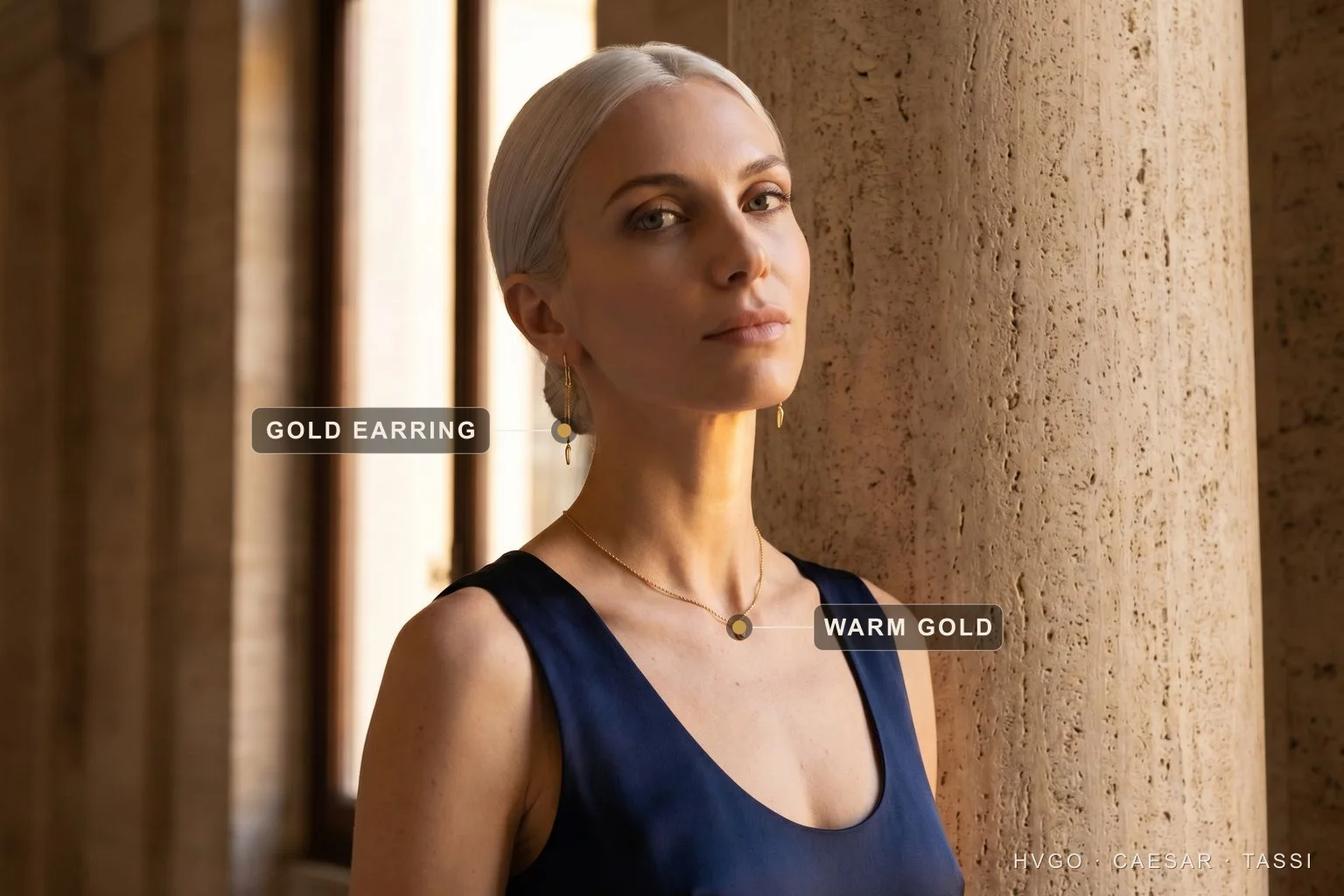
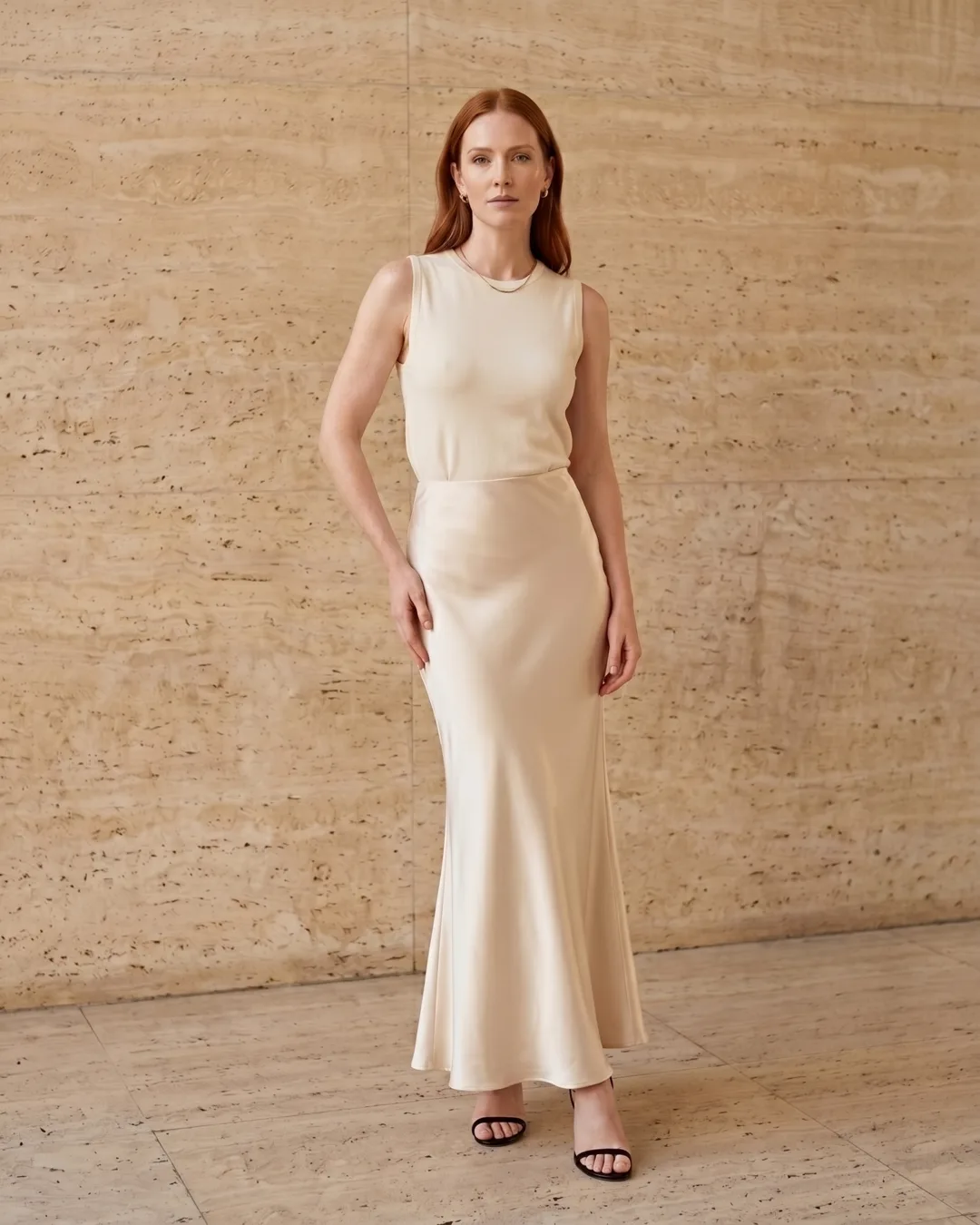
- Gold earring — a fine gold drop beside the jaw shows the warm reflected light gold throws onto the face
- Warm gold — the slim gold chain at the throat hollow is the warm metal the rule defaults a warm undertone toward
#Gold or silver jewelry with a dress: the two-step rule in one place
Run two reads in order: your undertone picks the default metal, then the dress color decides any tie. A warm undertone defaults to yellow gold, a cool one to silver or white gold, neutral or olive to either. This page settles that single decision, for a woman in a dress, in roughly thirty seconds.
#Step one is your skin, step two is the dress
Step 1 reads your skin to set a default metal; Step 2 reads the dress color to break a tie or override it. A cool-undertone woman in a true-navy gown lands on silver twice over and stops at Step 1, whereas a neutral-undertone woman needs Step 2. When the two fight, Step 2 wins, because the dress is what gets photographed.
#Why a rule beats "wear what you like"
Metal and skin form a physical color relationship, so there is a right answer rather than a vibe. The search results answer this with personality quizzes and confidence pep-talks, which leave an anxious woman exactly where she started. Gold throws warm reflected light onto the jaw while silver throws cool light, and matching that temperature to the skin makes the color sit right. A warm metal on warm skin agrees; a cool metal can correct an over-warm look. Some argue any metal works on anyone, but that claim fails under candlelight, where cool metal on warm skin visibly grays the complexion. A rule gets you to the answer in thirty seconds; a quiz does not.
#Step 1: How does a woman read her skin undertone to pick gold or silver jewelry?
Read the warm-or-cool cast beneath your skin, not how light or deep the skin looks. A deep complexion can run cool and a fair one warm, so depth tells you nothing about the right metal.
#Undertone, not how fair or deep your skin is
Undertone is the constant warm or cool cast under the surface, separate from surface depth. Warm undertones read golden or peachy; cool undertones read pink or blue; neutral and olive sit between. The common mistake assumes fair skin needs silver and deep skin needs gold. In truth a fair woman can run warm, and a light and a deep complexion can share one undertone.
#Five home tests that take two minutes
Five quick tests confirm your undertone with no special light or expert. Run two or three and look for agreement; disagreement is itself the signal for a neutral undertone.
- Wrist-vein test: blue or purple veins read cool, green reads warm, a blue-green mix reads neutral.
- White-vs-cream test: hold white then cream to your face; the one that makes your skin glow points to your temperature, cream for warm and white for cool.
- Gold-vs-silver hold test: lay a gold piece then a silver one against your jaw; the metal that lifts the face wins.
- Sun reaction: skin that burns and rarely browns often runs cool; skin that tans easily often runs warm.
- The reach-for tell: the metal already crowding your jewelry box is the one your eye has corrected toward for years.
A split result is not a failed test. Green-blue veins plus a face that likes both white and cream means you wear either metal, and Step 2 decides.
#What your undertone says about the default metal
Warm undertones default to yellow gold, cool to silver or white gold, neutral to either. Warm reaches for yellow or rose gold; cool reaches for sterling silver, white gold or platinum; neutral and olive hold both. The peachy-neutral woman who finds yellow gold loud and silver cold has a third answer in rose gold.
#Step 2: Which dress colors call for gold or silver jewelry?
A dress color carries its own temperature, and the agreeing metal wins the tie. It breaks a neutral undertone's tie, and overrides a default only when the color runs strong.
#Warm colors want gold, cool colors want silver
Warm colors agree with gold and cool colors agree with silver, by the same reflected-light physics as skin. A Vermiglio-red gown beside gold earrings reads coherent because both throw warm light; cold silver clashes at the neckline. The tiebreaker does not veto Step 1. It decides for the neutral woman, while a confirmed undertone keeps its default.
Gold vs. silver vs. rose gold
How the three metals read against your undertone, the gown and evening light.
| Yellow gold | Silver / white gold | Rose gold | |
|---|---|---|---|
| Best undertone | Warm — golden, peachy | Cool — pink, blue | Peachy-neutral, olive |
| Gown colours it loves | Porpora wine, Vermiglio red, Avorio ivory, Cuoio tan | Cobalto navy, blue-white, Vipsania cool drape | Cipria pink, soft neutrals |
| Evening / candlelight | Warmest, most flattering — the safe evening default | Crisp and modern; platinum reads precious for black-tie | Soft glow, photographs warm |
| Old-money read | Richest, most heritage | Cool and contemporary | Modern, romantic |
| Finish the look (HCT) | Gold-tone Palatina bag / Quirina Cuoio clutch | White-gold tone for cool gowns | Tonal warm-neutral hardware |
#The imperial-palette metal chart
This chart maps each imperial-palette dress color to its metal call. Read your gown's color on the left and your verdict on the right.
| Dress color (palette) | Default metal | Note |
|---|---|---|
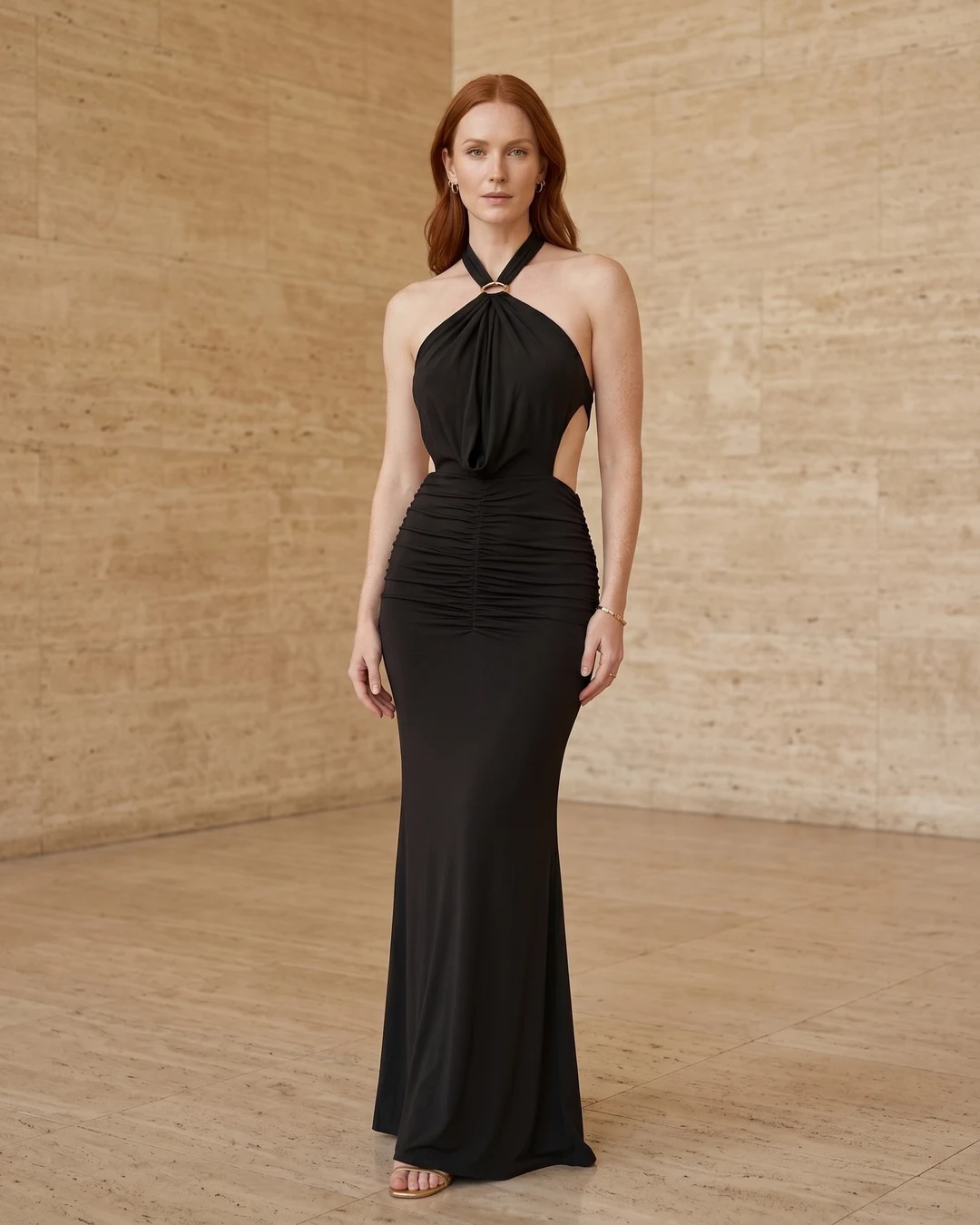
| Basalt black | Either, by undertone | Gold reads richer and old-money; silver or white gold reads cooler and modern |
| Cobalto navy | Either, by undertone | Silver or white gold sharpens it; gold adds depth |
| Porpora wine / Vermiglio red / Cornelia rose | Gold | Warm reds want warmth; the full burgundy-jewelry reasoning lives on the burgundy guide |
| Avorio ivory / Cipria pink | Gold | Warm neutrals glow against yellow gold |
| Cuoio tan / Travertine stone | Gold | Earthy warm neutrals settle into gold |
| Verde Antico green | Gold or silver | Gold for jewel warmth; silver for a cooler emerald read |
When in doubt at an evening event, choose gold, since warm candlelight flatters warm metal. The colors down the left come from the old money color palette. For the wine and burgundy end, the dedicated answer sits in our guide on jewelry with burgundy, which owns that query in full.
#When the dress color overrides your undertone
A strong cool or warm dress color can override your undertone when the contrast is the point. A warm-undertone woman in a true-navy gown can wear silver, and a cool-undertone woman in deep wine can wear gold. The override earns its place only when the color's temperature is decisive and you want the clash to read as a choice, not an accident. Commit fully. The timid version, one silver ring against a gold hand, reads as indecision rather than intention.
#Gold or silver jewelry with a black, white or navy dress — the three women ask about most
Black, white and navy are the three most-asked colors, and each resolves cleanly with the two steps. Black defers to your undertone, navy leans silver, white is secretly two colors, and pearls cover all three.
#Does gold or silver look better with a black dress?
Black is neutral against jewelry, so let your undertone make the call. Diamonds or pearls split the difference for any undertone. A stark, ultra-matte black under cool daylight may still push a warm woman toward white gold to keep the look crisp.
#Gold or silver with a navy or a white dress
Navy is a cool color that silver sharpens, while white is really two decisions hiding as one. Read the white first: blue-white takes silver, and warm cream-white like Avorio takes gold. A guest who assumes any pale gown takes silver will fight an Avorio chiffon that wanted gold. Pearls suit both.
#Which gold or silver jewelry metal: yellow gold, rose gold, white gold, platinum or sterling silver?
Rank the five metals by temperature and the rule gains teeth. Pick the one whose temperature matches both your skin and your gown.
#The metals, ranked by temperature
Each metal sits at a fixed point on the warm-to-cool scale, so the list below reads top-down from warmest to coolest.
- Yellow gold: warmest and most old-money, best on warm undertones and the reds, ivory and tan.
- Rose gold: warm with a pink cast, flattering on peachy and neutral skin and on Cipria pink.
- White gold and platinum: cool but precious, the dressier silver that reads expensive for evening.
- Sterling silver: cool and crisp, the everyday metal that scales up to occasion wear.
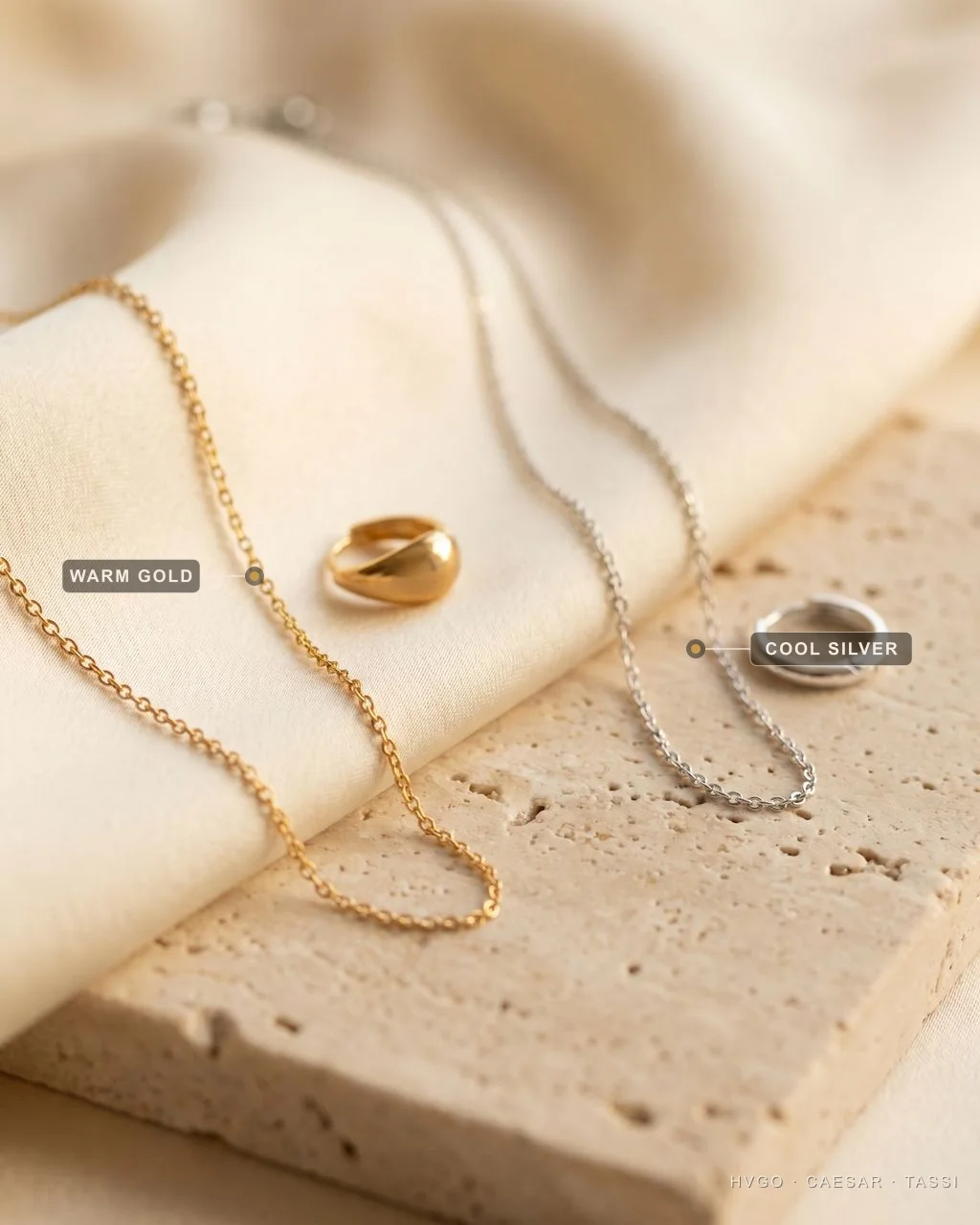
- Warm gold — the honey-toned chain sits at the warm end of the metal scale, for warm undertones and warm dress colours
- Cool silver — the crisp grey-white silver sits at the cool end, for cool undertones and cool dress colours
White gold and platinum are the upgrade when a cool-toned woman wants her silver to read like fine jewelry. They are the silver that reads precious; a black-tie gown asks for platinum, and sterling holds its own by day.
#Pearls, diamonds and stones: the metal-agnostic shortcut
Pearls and diamonds suit every undertone and nearly every dress color, so they answer a genuine toss-up. When Step 1 and Step 2 both come back neutral, this is the relief valve. Gemstone temperature is the secondary lever underneath it: set warm citrine, garnet, amber or topaz in gold, and cool sapphire, aquamarine or amethyst in silver or white gold. The stone then reinforces the metal rather than fighting it, and the whole look reads as one decision instead of three. Pick the stone last.
#Can a woman mix gold and silver jewelry without it looking like a mistake?
Mixing gold and silver is correct and current when it is deliberate, and a mistake only when it is accidental. A two-tone piece or a clear dominant metal reads as design, whereas a stray silver ring against a gold set reads as an error.
#Mixing on purpose vs. mixing by accident
Deliberate mixing has a visible logic; accidental mixing has a stray. A bicolor cuff gives the eye permission for both metals. A single silver band you forgot to swap off quietly cheapens the evening. The founder's guideline: wear two metals only when one is clearly leading.
#How to mix metals so the look stays expensive
Let one two-tone hero piece license the mix, or run a 70-percent dominant metal with a deliberate accent. A clean 70-30 split looks chosen; a wobbling 50-50 looks unfinished. The effect collapses if a silver belt buckle undercuts a gold-led look.
#How does a woman match her gold or silver jewelry across the whole outfit, not just one piece?
Match the metal across every piece you wear, from earrings to bag hardware, so nothing contradicts the lead. Mismatched metals are the most common quiet mistake.
#Earrings, necklace, bracelet and ring as a set in spirit
The four jewelry pieces should agree in metal, whether matched outright or deliberately two-tone. A single off-metal piece is the quiet error most women miss. Whether a necklace belongs depends on the dress necklines explained; this page owns which metal, and accessorizing a dress owns how much.
#Don't forget the hardware: bag, belt and shoe
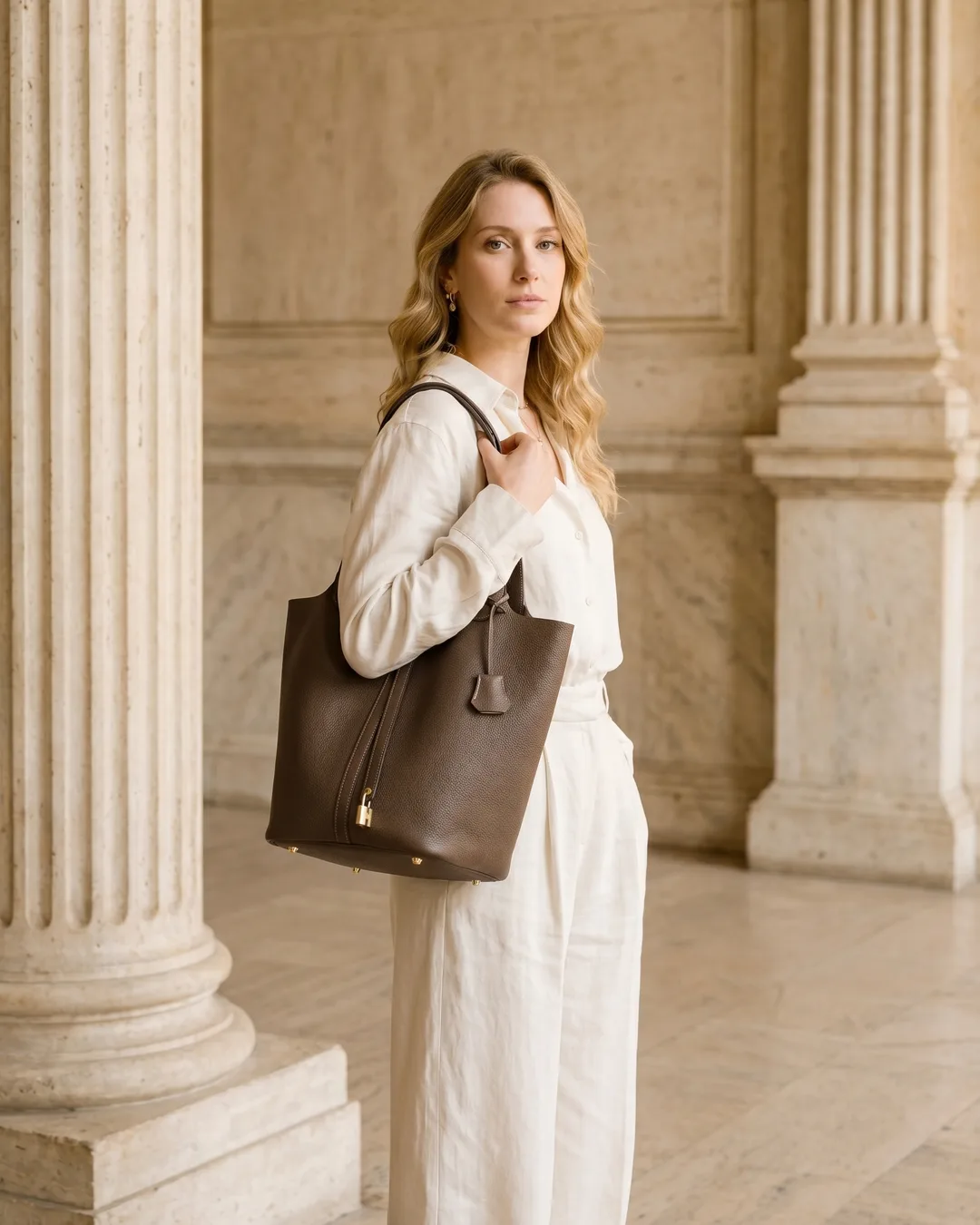
Extend the chosen metal into the bag hardware, clutch clasp, belt buckle and shoe trim. These finishers follow the jewelry, so a gold-jewelry look is never undercut by a silver buckle. A gold-led look asks for a gold-tone clutch like the Quirina envelope in warm Cuoio leather; the right pieces sit in our evening and occasion accessories.
#How Hugo Caesar Tassi chooses gold or silver jewelry for a dress
The atelier runs the same two steps at a fitting, then lands the look on one focal piece. Undertone sets the metal, the gown's color confirms or overrides it, and matched hardware finishes it.
#The atelier's two-step rule, on a real gown
Run both steps on a signature gown and the calls become obvious. A Porpora-wine fishtail like Calpurnia is a warm red, so gold. A Basalt-black Tullia column defers to undertone. The cool draped-modal Vipsania sharpens under white gold, and an Avorio-ivory Aemilia chiffon wants warm gold. The founder's rule: read the woman, then the gown, and let one metal rule, in the spirit of Nata Imperare.
#One metal, one focal piece, finished
Carry the chosen metal through a single focal piece, not a full matching parure. One fine earring or pendant plus matched hardware finishes the look; a head-to-toe matched set reads costume rather than couture. A warm gown resolves with a gold-tone Palatina shoulder bag, a cool one with the Quirina clutch.
#Your gold or silver jewelry decision, in two steps
Recap the whole rule in thirty seconds: undertone first, dress color second, neutrals when stuck.
#The thirty-second recap
Undertone sets the metal first; the dress color settles any tie second. Pearls answer a toss-up, you mix metals only with one in charge, and the hardware follows the jewelry, the quiet-luxury logic behind looking expensive.
#Where to go next
Run the rule on the dress, confirm the metal, then dress the occasion properly. The full style pillar sits at style guides for the decision after this one.
Run the two-step rule on the dress in front of you, then dress it properly. Shop the gowns at evening dresses and the occasion edit, and finish with the clutch or bag whose hardware carries your metal.
#Frequently asked questions
Should I wear gold or silver jewelry with a dress?
Gold or silver jewelry with a dress follows a two-step rule rather than taste. Read your undertone first, since warm wears gold, cool wears silver or white gold, and neutral wears either; then let the dress color break the tie, with warm colors calling for gold and cool colors taking silver.
How do I know if I'm warm-toned or cool-toned?
You tell warm from cool by reading the cast beneath your skin, most quickly at the wrist. Blue or purple veins usually mean cool, green usually means warm, a mix means neutral; confirm it by holding gold then silver to your face, since the metal that brightens your skin is your default.
Does gold or silver look better with a black dress?
Gold or silver with a black dress is decided by your undertone, because black flatters both. Gold reads warmer and more old-money against black while silver or white gold reads cooler and modern; pearls or diamonds are the safe choice when you cannot decide.
What color jewelry should I wear with an olive or neutral skin tone?
Olive and neutral skin tones wear both metals, so the dress color makes the call. Gold suits warm colors like ivory, tan and the reds, while silver or white gold suits cool colors like true navy and crisp white; rose gold is the natural bridge for peachy-neutral skin when you want one safe default.
Can you mix gold and silver jewelry?
Mixing gold and silver jewelry works when it is deliberate, not accidental. Let a single two-tone piece license the mix, or choose one dominant metal with a clear intentional accent rather than an even split; the mistake is never the mixing itself but a stray second metal that looks unplanned.
Is white gold the same as silver?
White gold is not the same as silver, though the two read alike at a glance. White gold and platinum are precious metals that wear dressier and behave like fine jewelry, the cool-toned woman's upgrade for a formal occasion, whereas sterling silver is more everyday. For an evening gown, white gold is the silver that looks expensive.
More Style & Old Money guides
The Quiet-Luxury Capsule Wardrobe
Build a quiet-luxury capsule wardrobe the Roman way: the cost-per-wear math, the keep-for-a-decade rule, and a small imperial-palette set that recombines.
Build a buy-fewer-better capsuleHow to Accessorize a Dress
A Roman atelier's method to accessorize a dress: choose one focal point, then let the rest recede. Neckline focal-point map, bag, scarf and shoe rules.
Master the one-focal-point ruleHow to Dress Elegantly
Five repeatable house rules from a Roman atelier to dress elegantly on any budget: one statement color, the right hem, shoulder-first fit, matte by day.
Learn the five elegance rulesHow to Look Expensive on a Budget
Look expensive on a budget: a Roman fabric house names five physical tells (drape, lining, seams, shoulder, color) no designer price can fake.
Learn the five expensive tellsHow to Wear Burgundy for Women
How to wear burgundy for women by skin tone, season and occasion: wine vs. oxblood vs. Tyrian red, what colors pair, and the gold rule.
Match your wine-red shadeOld Money Style for Women
The old money aesthetic for women, decoded by a Roman house: inherited taste over flash, the real building blocks, and how to wear it on any budget.
Shop the old money dress edit