How to Dress Elegantly: Five House Rules from a Roman Atelier
Five repeatable house rules from a Roman atelier to dress elegantly on any budget: one statement color, the right hem, shoulder-first fit, matte by day.
On this page
A woman dresses elegantly by making five decisions the same way every time, not by spending more or chasing the season's trend. One statement color, a hem at the knee or the floor, the shoulder seam fitted first, matte fabric by day, one focal point. This guide explains why each rule works on a woman's frame and how to apply all five to dresses she already owns.
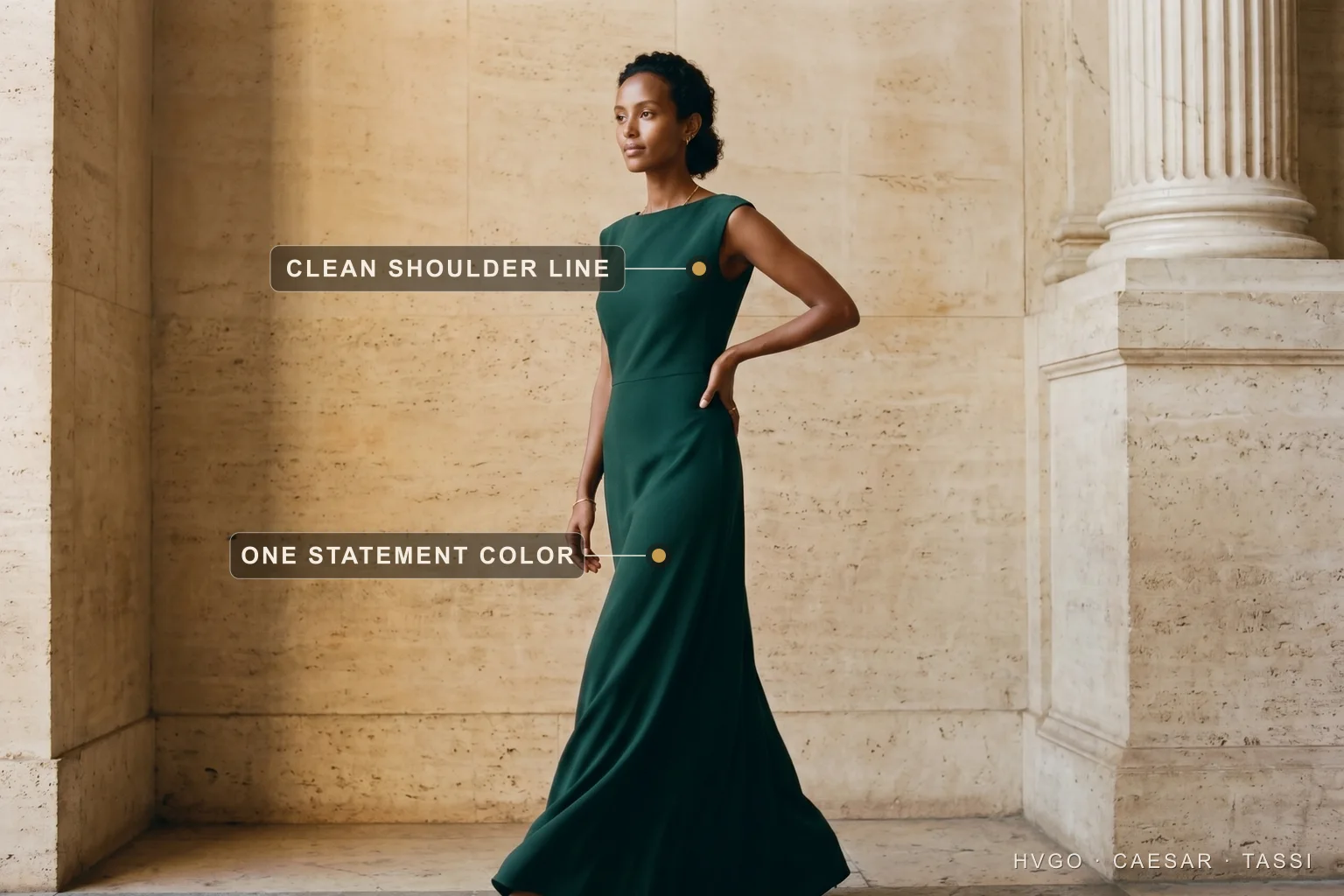
- Clean shoulder line
- One statement color
The five-rule elegance audit
Run these five passes on any dress before you leave the house — four of them cost nothing.
- Build on one neutral field — Avorio, Travertine, Basalt, or Cuoio — and add exactly one note like Porpora, Vermiglio, or Verde Antico.
- Hem to a narrow point: the knee, the slim calf, the ankle bone, or fully to the floor.
- Fit the shoulder seam first so it sits exactly at the edge of your shoulder, then tailor the waist and hem.
- Wear matte, substantial cloth by day — crepe, modal, dry chiffon — and save liquid satin and shine for after dark.
- Choose one hero (the colour, a neckline, one scarf, or one bag) and let everything else recede.
- Don't run two or three competing statement colours that fragment the eye.
- Don't let the hem land at mid-shin or the widest swell of the calf — it cuts the leg at its broadest.
- Don't trust a waist nip or hem to rescue a dress that hangs from the wrong shoulder seam.
- Don't wear high-shine fabric in daylight, where it advertises every pucker and cheap seam.
- Don't pile on loud earrings, a bold bag, a busy print, and a slit at once — and don't go flat with zero focal point either.
#What does it actually mean for a woman to dress elegantly?
Elegance is a discipline of taking away, not adding more. A woman reads elegant when she removes the second color, the third accessory, and the competing accent, leaving one clean line the eye can settle on.
Hugo Caesar Tassi (a women's occasionwear house, founded in Roma in 2004) treats elegance as subtraction: fewer colors, fewer focal points, a garment that hangs from the shoulder without fighting itself. A woman can spend four figures on the season's loudest silhouette and still read fussy, because every element shouts at once, while a single Basalt (black) column with one Vermiglio (red) accent reads elegant at a fraction of the price.
#Elegance is restraint, not expense or trend
Restraint outranks the price tag because the eye reads composition, not cost. A clean line and one accent register as deliberate; a crowded outfit registers as accidental, whatever the labels inside it.
This page gives you the repeatable rules of dressing well, a different job from its siblings. The inherited taste behind the old-money aesthetic is a worldview; here you get five actions you can take tomorrow morning.
A trend can still be done elegantly. Set this season's bold sleeve on a tonal dress, keep the hem correct, and add nothing else, so the trend becomes the one accent instead of one loud voice among five.
#Why a fixed set of rules beats "elegance is an attitude"
Vague advice cannot be applied; five concrete rules can. Telling a woman to "have confidence" or "embrace less is more" gives her nothing to do in front of an open closet.
The house position is that elegance is learnable, not inherited. A rule like "fit the shoulder seam first" is a checkpoint you pass or fail in ten seconds, whereas "poise" is a feeling you cannot audit. Run the five in order, and any dress either passes or tells you what to change.
#Rule one to dress elegantly: choose a single statement color and let the rest stay quiet
Build the outfit on neutrals and add exactly one statement color. A quiet field of ivory, stone, black, or tan carries one accent, and the eye knows instantly where to look.
The imperial palette sorts into field and note. Neutrals form the field: Avorio (ivory), Travertine (stone), Basalt (black), Cuoio (tan). One color becomes the note: Porpora (wine), Vermiglio (red), Cornelia (rose), Cobalto (navy), or Verde Antico (green). Two or three competing colors fragment the eye, because each demands the same attention.
#One accent, a quiet field
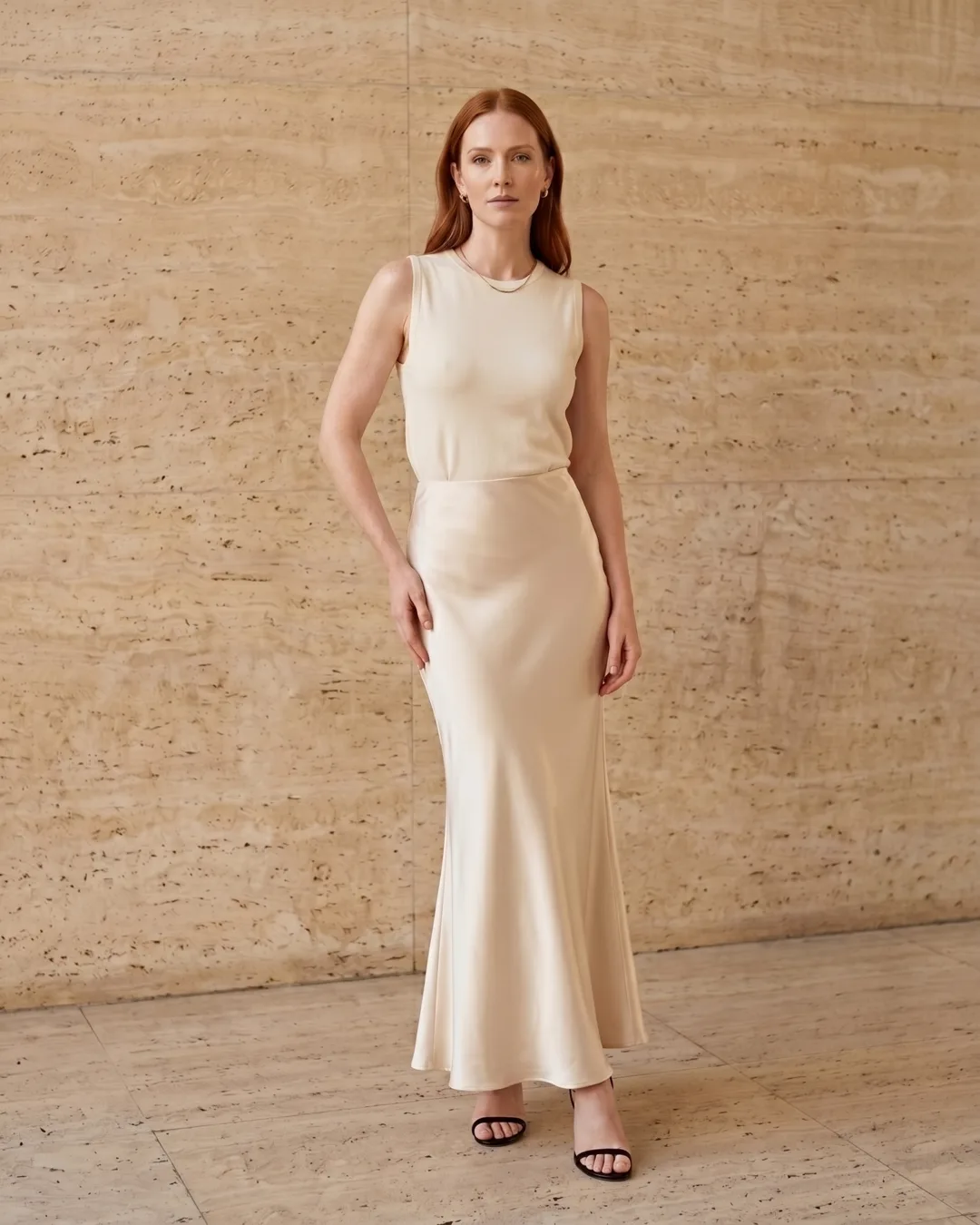
Tonal dressing is the most elegant option of all. A single color from shoulder to hem, varied only in texture, draws one long line and elongates the frame.
Color discipline is the spine of restraint, and the full logic lives in the old-money color palette. Pick your one color first, then choose everything else to disappear behind it.
#Applying it to a dress
A single-color column is the cleanest expression of the rule. A print works too when its ground stays tonal, so the pattern behaves like texture rather than a second color competing for the note.
The Vipsania draped modal column gown shows the one-color statement at full strength: a single Porpora (wine) line, nothing to fragment the eye. The counter-case is the floral on a bright contrasting ground, which gives you two statement colors fighting and reads busy.
#Rule two to dress elegantly: let the hem land at the knee or the floor, never the unflattering between
An elegant hem lands at the knee, the slim calf, the ankle bone, or fully to the floor. It never stops at mid-shin, where a horizontal line cuts the leg at its widest and looks accidental.
The mechanism is optical. A hem draws a horizontal line across the leg, and the eye reads width at that line. The knee, the slimmest part of the calf, and the ankle bone are narrow points, so the line flatters; mid-shin and the widest swell of the calf broaden and shorten the leg. That single error makes a perfectly good dress look slightly off, the color right and the fit right while the hem lands in the between.
#The house hem rule, with real reference points
Find your flattering landings by locating four narrow points on your own leg. Mark the knee, the slimmest part of the calf, the ankle bone, and the floor, then hem to one of those.
| Hem landing | Where it sits | Reads | Use it for |
|---|---|---|---|
| Knee / just below | Top or base of the kneecap | Clean, day-correct | Work, daytime, lunch |
| Slim calf (midi) | Narrowest point below the calf swell | Elongating | Daytime events |
| Ankle bone | Just above the ankle bone | Modern, lengthening | Cocktail, dinner |
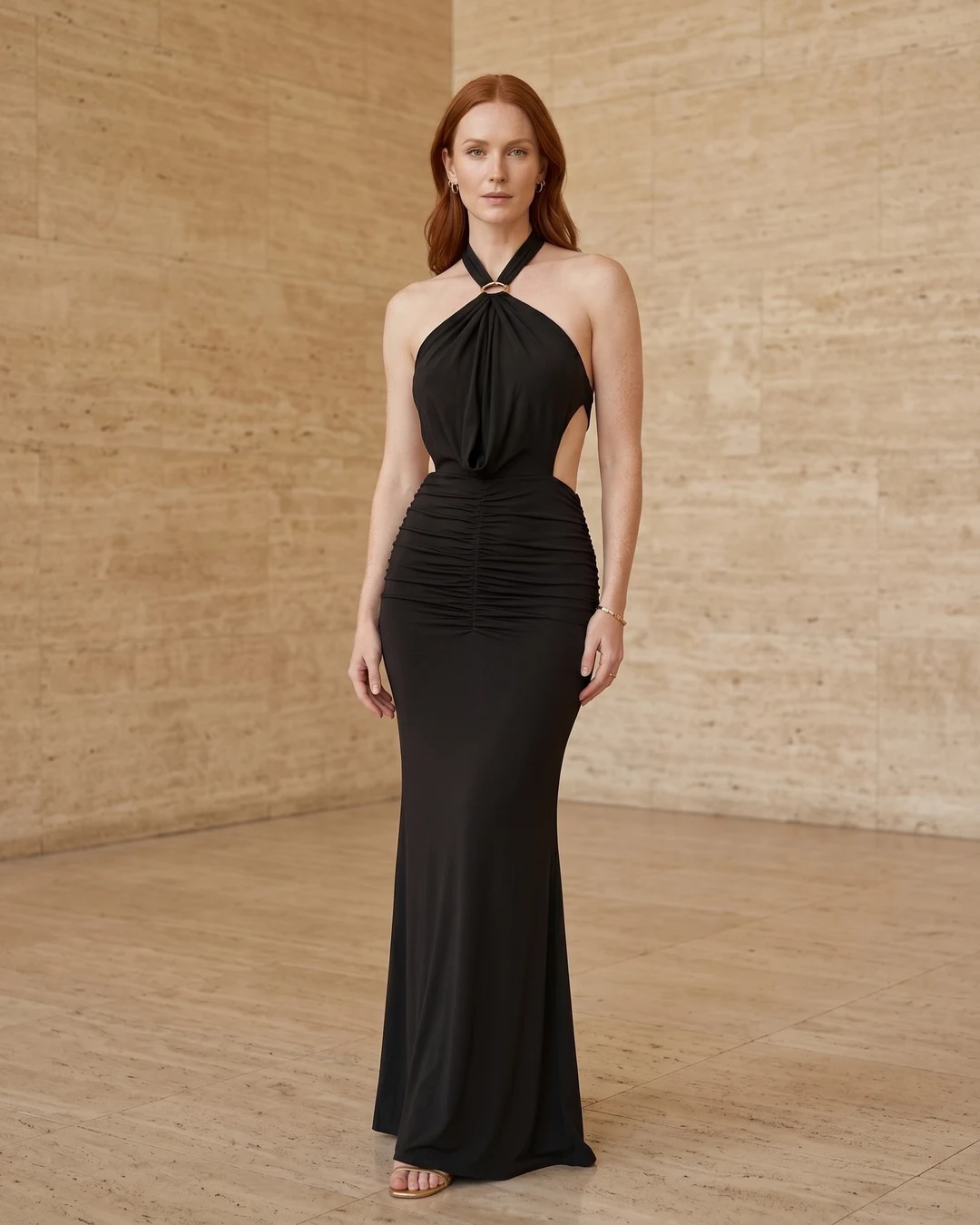
| Full length to floor | Skimming the heel | Formal, commanding | Evening, black tie |
| Mid-shin / widest calf | Across the calf's widest swell | Accidental, shortening | Never |
#Choosing a length by occasion
Match the hem to the event, then pick the narrow landing nearest it. The rule of thumb: the more formal the room, the lower the hem may sit, until black tie pulls it to the floor.
The Livilla floral-print chiffon midi proves the slim-calf landing for daytime, its print kept tonal; the Claudia pleated-slit maxi gown takes the floor-length end, hemmed to skim the heel so the line runs unbroken. For a deeper read on length, the midi and maxi rules in how to choose a dress sit alongside this occasion logic.
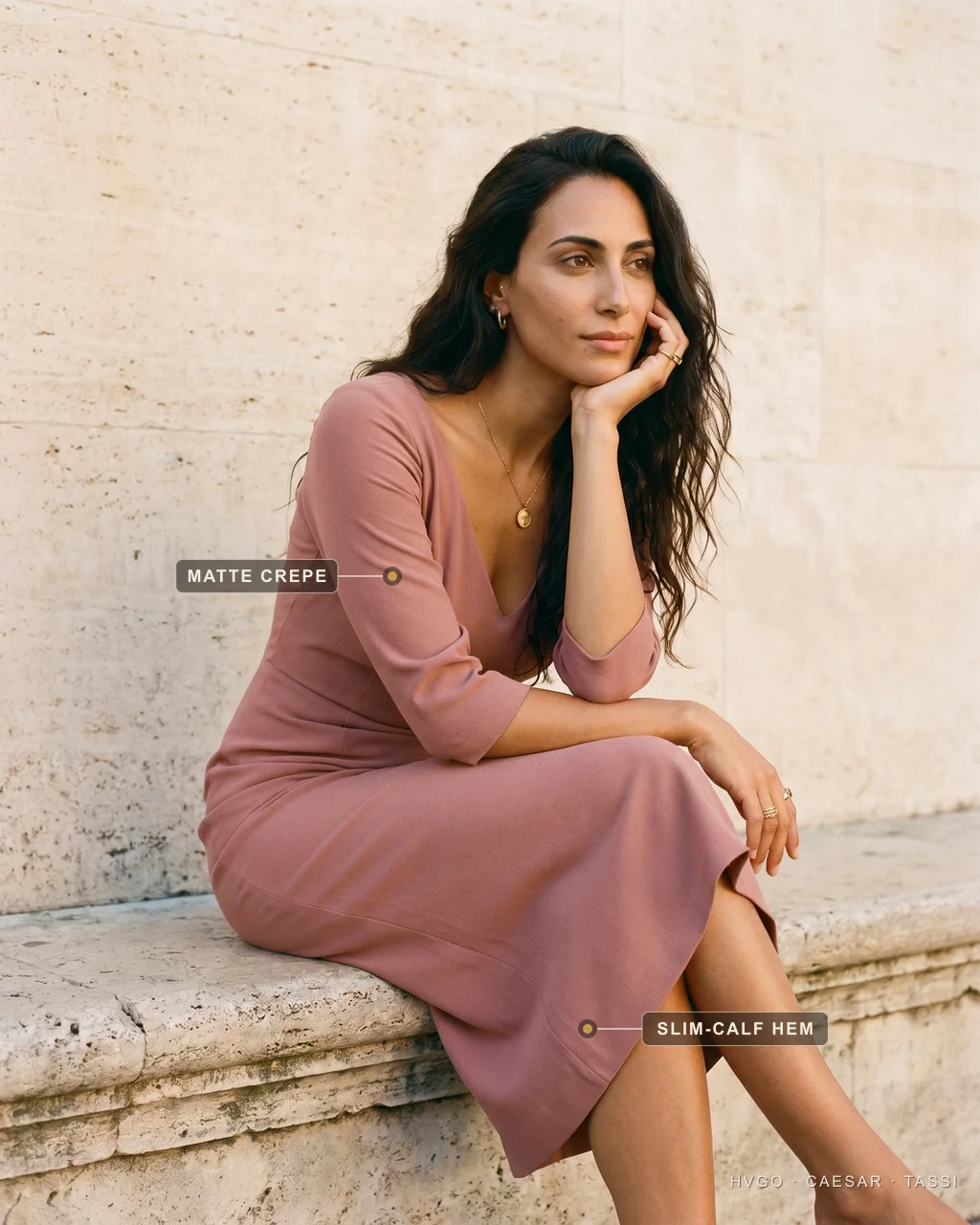
- Matte crepe
- Slim-calf hem
#Rule three to dress elegantly: fit the shoulder seam before you judge anything else
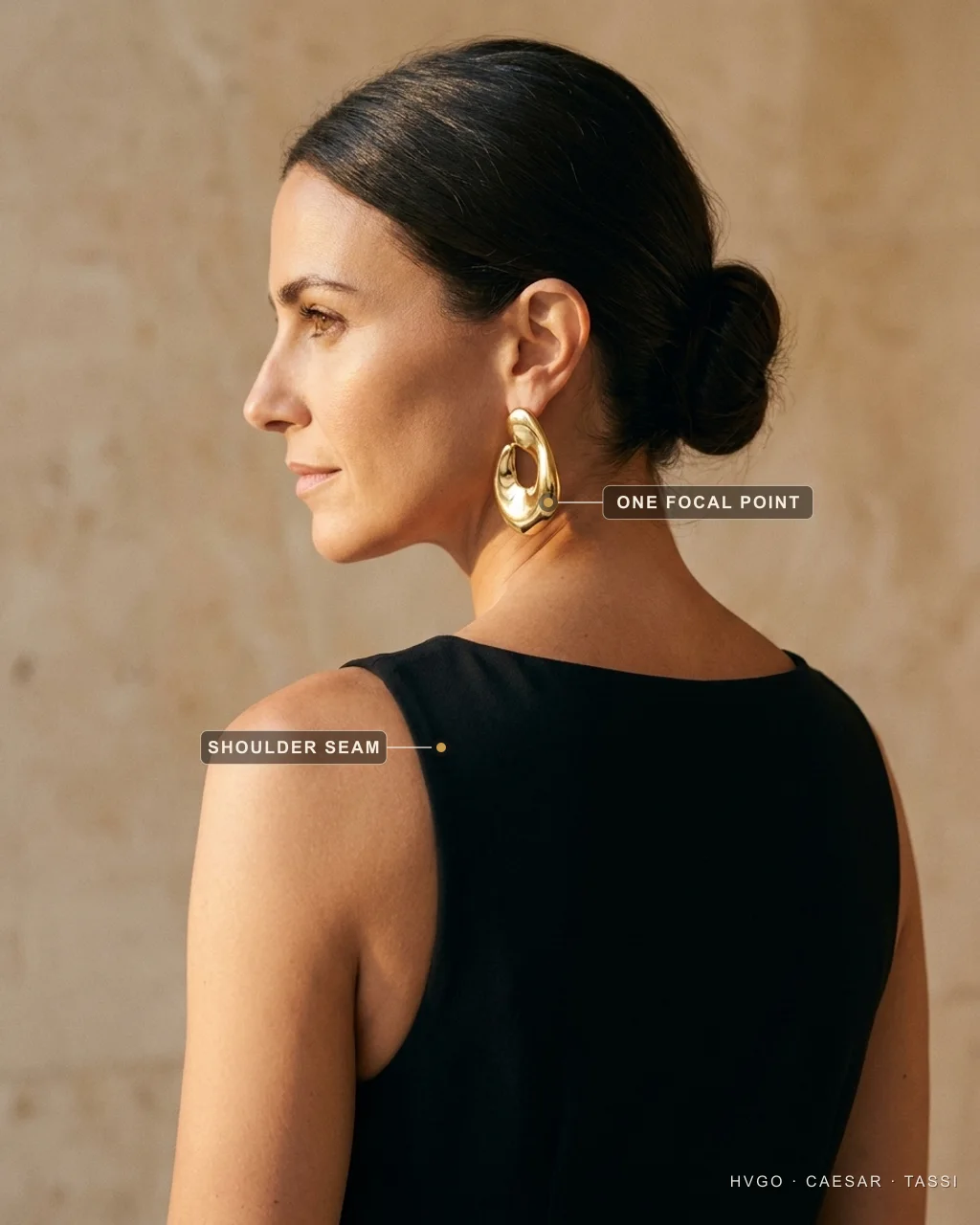
The shoulder seam should sit exactly at the edge of your shoulder. When it does, the whole garment hangs clean; when it does not, no waist nip or hem can rescue the line.
The shoulder is the anchor because the entire dress hangs from it, the way a curtain hangs from its rail. A seam set too wide drops the armhole into folds; a seam set too narrow strains across the back. A woman in a correctly hung high-street dress reads more elegant than one whose four-figure gown gaps at the armhole.
- One focal point
- Shoulder seam
#Why the shoulder is the anchor of an elegant fit
Three checkpoints follow the shoulder seam, in order. Check the back of the neck sits flat, the armhole closes without gaping, and the waist seam meets your natural waist.
If the shoulder fails, fix it first, because a tailor cannot correct a hem or a waist while the garment hangs from the wrong point.
#Tailoring as the cheapest elegance there is
A tailor's adjustment costs little and transforms how a dress reads. Taking in a waist or resetting a shoulder turns a passable dress into one that hangs as though cut for you.
Tell the alterations tailor three things in order of impact: set the shoulders, take in the waist, hem to the heel. Fit over label is the most democratic rule here. The edge case is the unalterable dress: a garment cut far too small in the shoulder cannot be let out, so check the shoulder in the fitting room and walk away if it fails.
#Rule four to dress elegantly: choose matte over shine until the room goes dark
A matte, substantial fabric reads more elegant in daylight than a high-shine surface. Crepe, modal, a dry chiffon, or brushed satin worn matte-side looks more expensive under the sun, where shine can read cheap.
#Why matte fabric reads more elegant by day
Matte wins by day because it hides what shine advertises. A matte surface scatters daylight evenly, so the eye reads drape and color, while a glossy one reflects it in hot spots that amplify a pucker or a cheap seam a matte fabric would have hidden.
The Tullia pleated crepe column gown is the matte rule made visible: a substantial pleated column that reads expensive at noon, with no reflection to betray the cut.
#When shine earns its place
Shine is correct once the event earns it, after dark. Liquid satin and a subtle luster read as occasion rather than flash at a gala, in candlelight, or under the low light of black tie.
The Calpurnia fishtail satin evening gown uses shine the right way, reserved for evening where candlelight catches the satin as luxury. The rule is matte by day, shine earned by the event, and the dividing line is the light in the room. The cloth behaviors behind it sit in how to look expensive.
#Rule five to dress elegantly: give the outfit a single focal point and quiet everything else
Let one element carry the look and keep everything else deliberately plain. A strong neckline, the statement color, one jewel, or one bag becomes the hero, and the rest recedes to support it.
Competing focal points cancel each other. Loud earrings, a bold bag, a busy print, and a thigh-high slit at once give the eye four arguments and no conclusion. The house teaches the same discipline as a final pass: at the mirror, remove the last accessory you added before you leave.
#Pick one hero, then subtract
Choose your hero before you accessorize, then strip away anything that competes. If the dress is the hero, the jewelry stays small; if the necklace leads, the dress stays plain.
The counter-case is the outfit with no hero at all. A woman in safe neutrals head to toe, with nothing to carry the eye, reads forgettable, so the rule is one focal point, not zero.
#Accessorizing elegantly: one statement piece
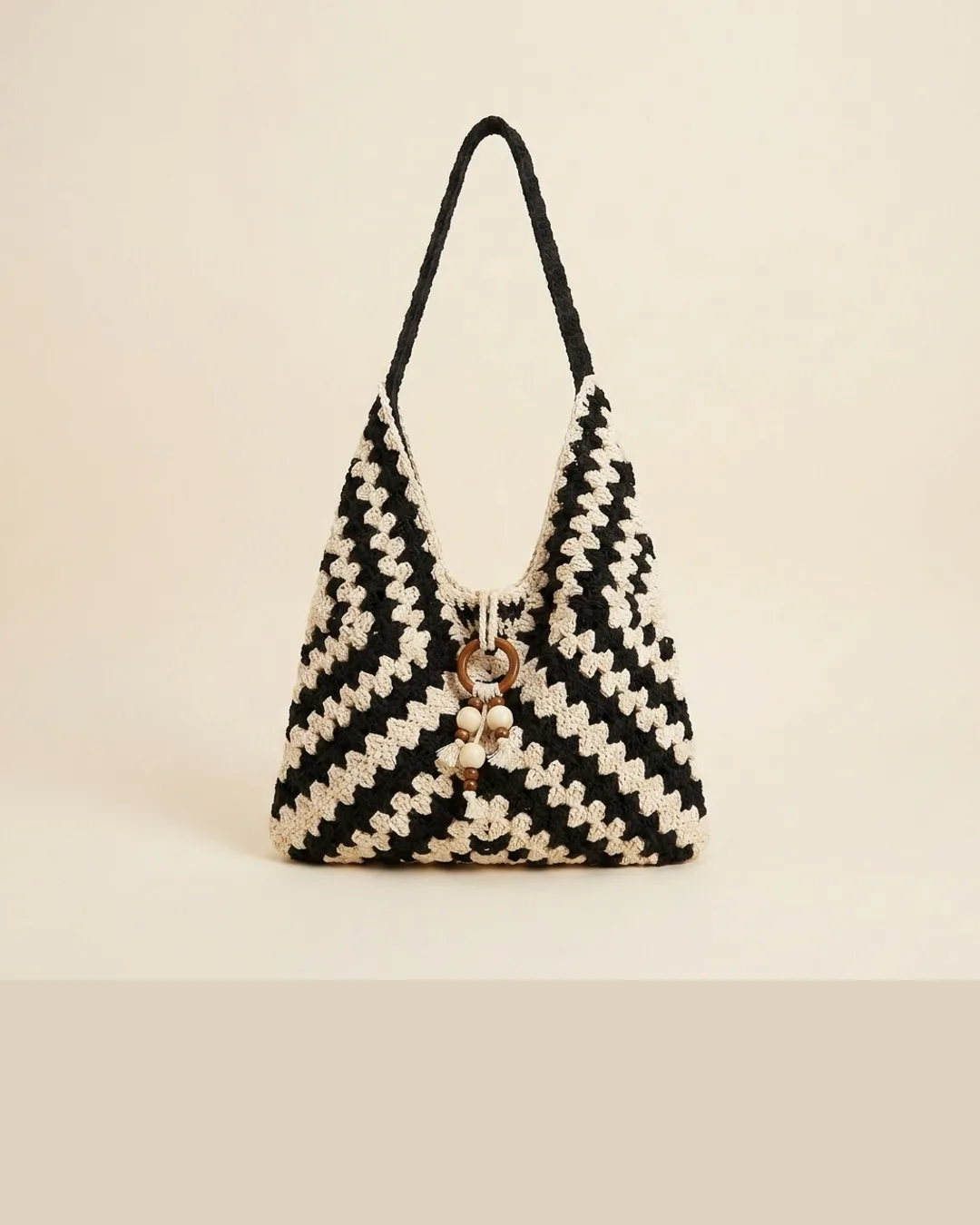
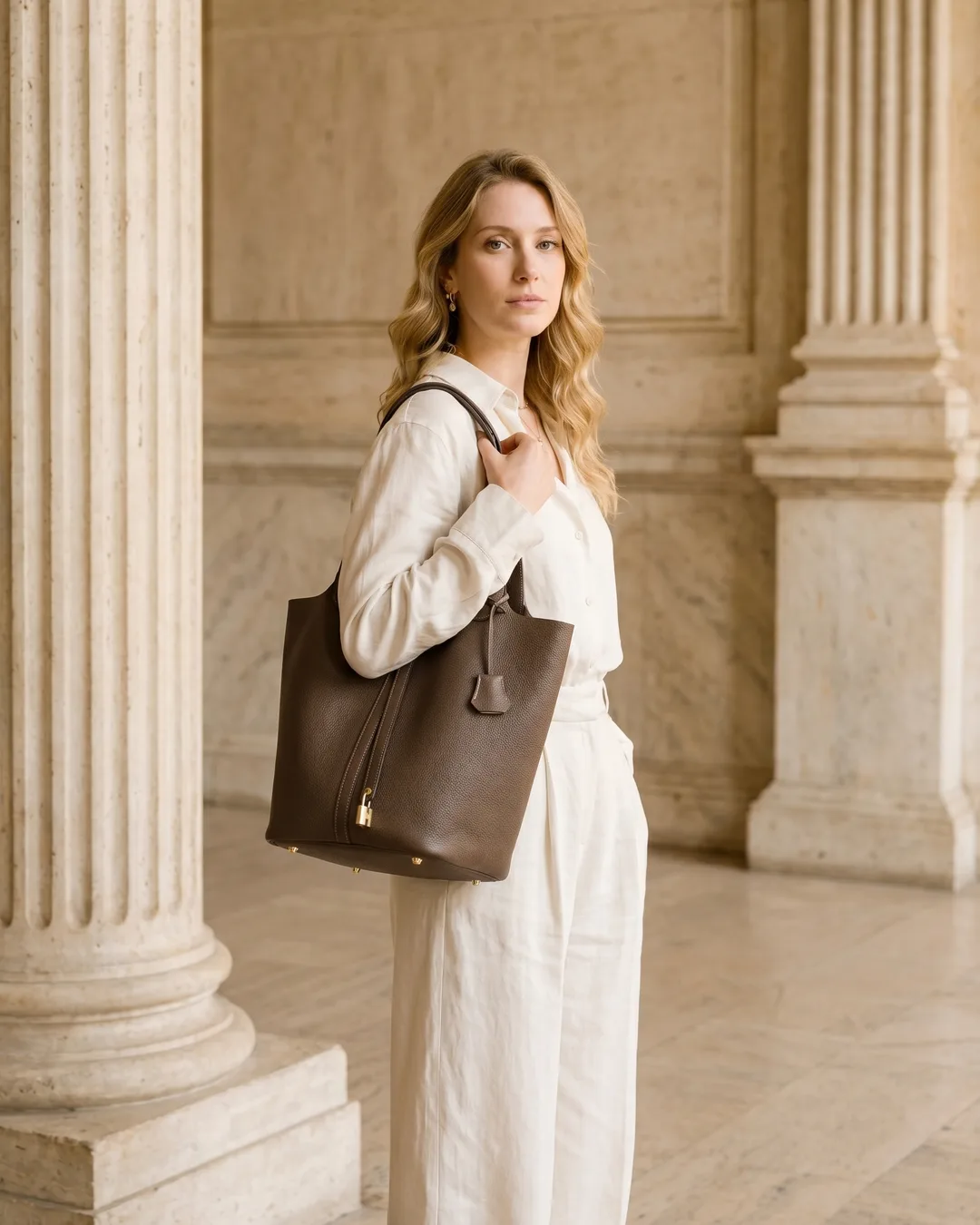
One silk scarf, or one bag, or one pair of earrings is the accent, not all three. Metallic restraint and a single statement piece keep the look composed, with the leather bag or silk square as the house's preferred note.
The Carina glossy silk square scarf works as the lone accent against a plain dress, its color becoming the focal point the outfit was missing; the Palatina minimalist leather shoulder bag does the same job in leather. Choosing that single piece, and pairing the right metal to it, is the work of how to accessorize a dress.
#How does a woman dress elegantly on a budget?
Four of the five rules cost nothing and depend only on choices. Color discipline, the right hem, a shoulder-first fit, and a single focal point are decisions, not purchases, so a modest dress that obeys all five outperforms an expensive one that breaks them.
The SERP buries this answer because budget advice usually means "buy these cheaper items," yet elegance is mostly free. The only rule with a cost is matte fabric, and even that turns on selection.
#The four rules that cost nothing
The free rules are color, hem, fit, and focal point. A modest single-color dress, hemmed to the knee, hanging clean from the shoulder, with one scarf as the hero, reads more elegant than a designer outfit in three colors with a mid-shin hem and four accessories.
#Where to spend, where to save
Put money where it compounds and withhold it where it evaporates. A budget spent once on permanence beats the same budget spent again every season on novelty.
| Decision | Spend on | Save on |
|---|---|---|
| Fit | Tailoring the shoulder and waist | The dress's original price |
| Fabric | One matte piece kept for years | Trend pieces worn twice |
| Color | Nothing; repeat your neutrals | A new palette each season |
| Focal point | One good scarf or bag in rotation | A drawer of accessories |
These rules hold at any age and any size; the doctrine does not change at fifty or in a EU 44, only the dress that carries it.
#How Hugo Caesar Tassi designs dresses that dress elegantly by the five rules
The house codifies the five rules and cuts every gown to obey them. The doctrine the atelier follows at the cutting table is the same five rules this guide teaches, named and ranked rather than left as the vague "ten tips to look classy" the rest of the web recycles.
#The founder's doctrine: Nata Imperare on the body
Nata Imperare means a woman commands a room without raising her voice. The five rules are the doctrine that puts that phrase on the body, so restraint signals authority rather than absence.
The motto, "born to rule," is the design brief. A gown cut to one color, one clean line, and one focal point lets a woman own the room through composition rather than noise.
#The dresses cut to obey them
Each dress in the edit proves a specific rule. The collection puts the doctrine into wearable form, with one rule foregrounded in every cut:
- Vipsania draped modal column gown: one color, matte modal, a single clean line.
- Julia French-pleated maxi: floor-length hem, tonal restraint, one focal pleat.
- Livilla floral-print chiffon midi: slim-calf hem, tonal print, day-correct matte.
- Tullia pleated crepe column gown: matte column, single statement color.
- Portia short-sleeve chiffon A-line: clean shoulder, knee-correct length, one quiet line.
#Your five-rule checklist to dress elegantly, every time
Run the five rules in order before you leave the house. Each is a checkpoint you pass or fail in seconds.
#The quick recap
The checklist compresses the whole guide into five passes:
- One statement color, the rest kept quiet.
- Hem at the knee, slim calf, ankle, or floor, never mid-shin.
- Fit the shoulder seam first, then tailor the waist and hem.
- Matte by day, shine only when the event earns it.
- One focal point, then remove the last thing.
#Where to go next
Read the deeper guides for the why, then dress by the rules. The reasoning behind looking expensive and the old-money worldview explain the mechanism, while la bella figura adds the carriage that completes the impression.
#Frequently asked questions
How can a woman dress more elegantly?
A woman dresses more elegantly by following five repeatable rules rather than spending more. One statement color with the rest kept quiet, a hem at the knee, slim calf, ankle, or floor (never mid-shin), the shoulder seam fitted first, matte fabric by day, and one focal point only.
What are the rules of elegant dressing?
The rules of elegant dressing are the house's five: color, hem, fit, finish, and focus. Each is chosen so any dress reads composed rather than busy, and four of the five cost nothing to apply.
How do you look classy and elegant on a budget?
You look classy and elegant on a budget because four of the five rules cost nothing. Color discipline, the right hem, a shoulder-first fit, and one focal point are choices, not purchases, so a modest, well-fitted dress in a single color beats an expensive one that breaks them. Spend only on tailoring and one fabric piece you keep for years.
Why does fit matter more than the brand for looking elegant?
Fit matters more than the brand because the shoulder seam sets how the whole garment hangs. If the seam sits exactly at the edge of your shoulder the dress reads clean; if it does not, no label can rescue it, which is why a tailored inexpensive dress outshines an ill-fitting designer one.
What colors look most elegant on a woman?
The most elegant colors are a quiet field of neutrals with exactly one statement color. Ivory, stone, black, tan, and navy form the field, and one accent such as wine, deep red, or green becomes the note. Tonal dressing in a single color reads most elegant of all.
What makes a dress look cheap or inelegant?
A dress looks cheap or inelegant when it breaks the house rules at once. Too many competing colors, high-shine fabric worn in daylight, a shoulder seam that sits off the shoulder, a hem cutting across the widest part of the calf, and several focal points fighting together each pull a look from composed toward busy.
Put the five rules to work: choose your one statement color in the dress edit at shop dresses, start with the occasion dresses built to obey them, and add a single focal point from the silk scarves edit.
More Style & Old Money guides
The Quiet-Luxury Capsule Wardrobe
Build a quiet-luxury capsule wardrobe the Roman way: the cost-per-wear math, the keep-for-a-decade rule, and a small imperial-palette set that recombines.
Build a buy-fewer-better capsuleGold or Silver Jewelry With a Dress? The Two-Step Rule That Settles It
A Roman atelier's two-step rule for gold or silver jewelry: read your skin undertone, then let the dress color break the tie. Color-by-color chart.
Choose gold or silverHow to Accessorize a Dress
A Roman atelier's method to accessorize a dress: choose one focal point, then let the rest recede. Neckline focal-point map, bag, scarf and shoe rules.
Master the one-focal-point ruleHow to Look Expensive on a Budget
Look expensive on a budget: a Roman fabric house names five physical tells (drape, lining, seams, shoulder, color) no designer price can fake.
Learn the five expensive tellsHow to Wear Burgundy for Women
How to wear burgundy for women by skin tone, season and occasion: wine vs. oxblood vs. Tyrian red, what colors pair, and the gold rule.
Match your wine-red shadeOld Money Style for Women
The old money aesthetic for women, decoded by a Roman house: inherited taste over flash, the real building blocks, and how to wear it on any budget.
Shop the old money dress edit