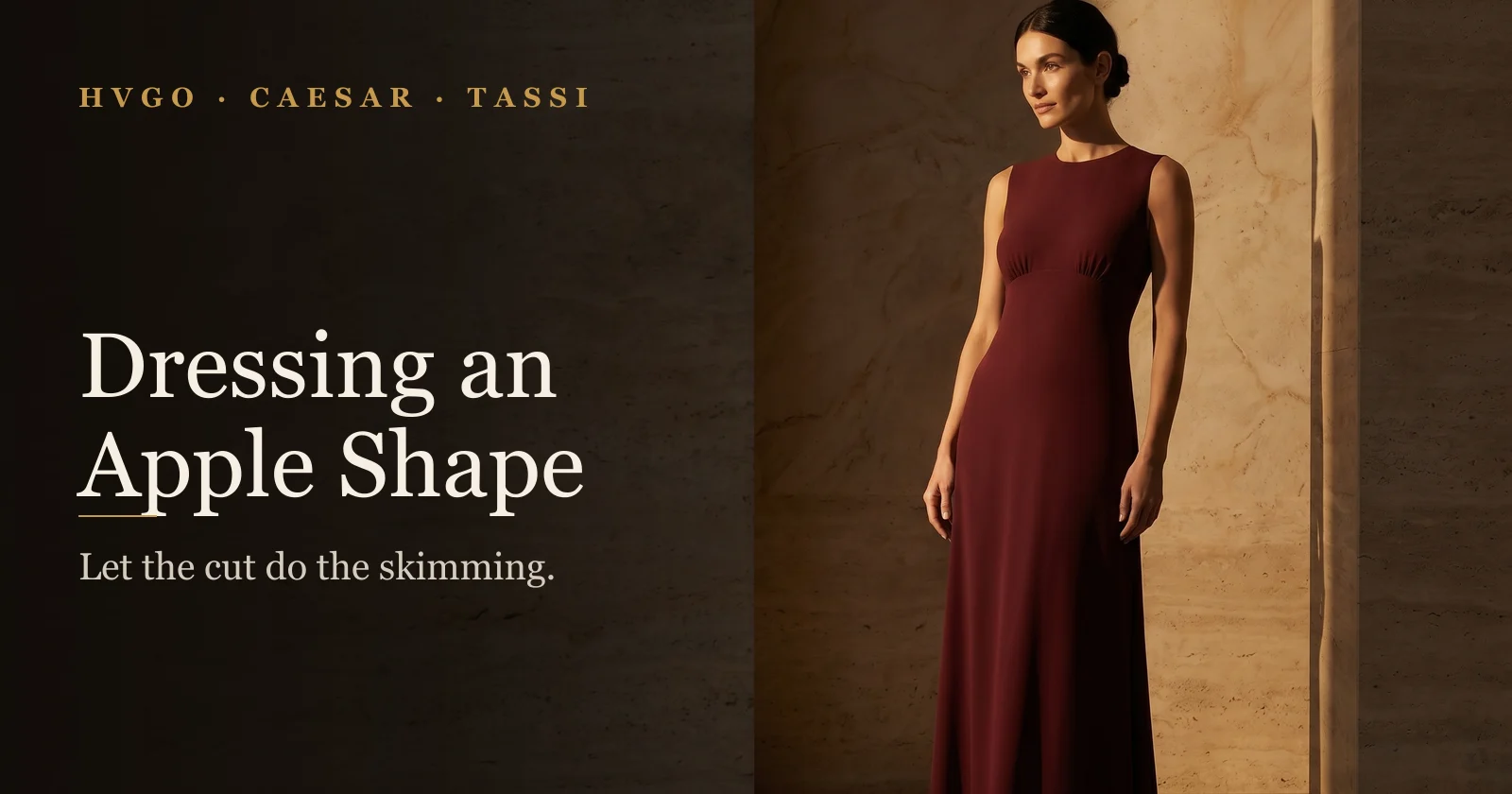
Best Dresses for an Apple Shape: Let the Cut Do the Skimming
The apple-shape dresses that skim a fuller middle with cut, not shapewear: empire seams, bias drape and fluid crepe from the Roman atelier of HCT.
On this page
The best dresses for an apple shape release the cloth just above the midsection rather than cinch the waist. Set the seam under the bust, then let a fluid weight drop free from the diaphragm down. This guide names the silhouettes, fabrics and necklines that do that work.
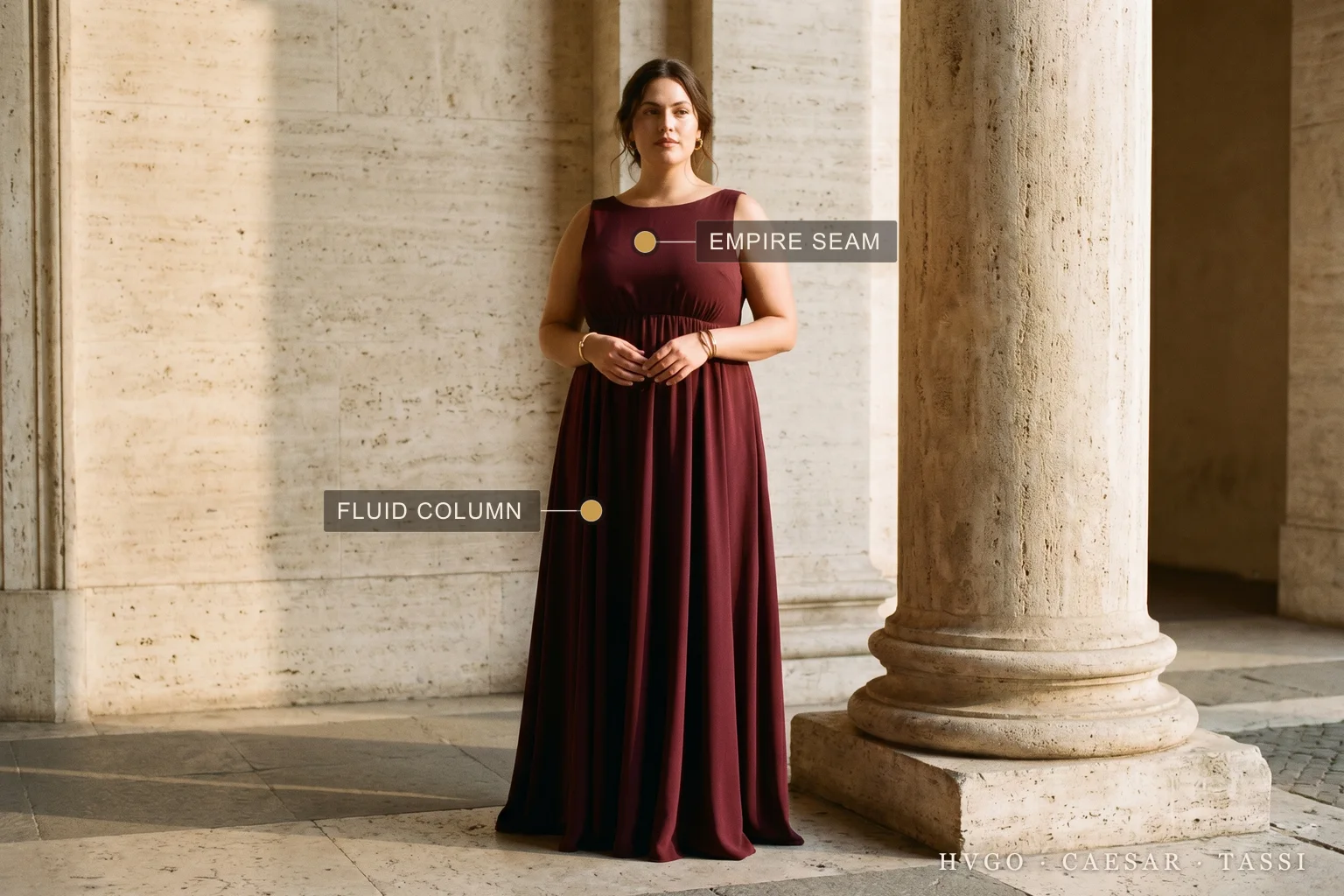
- Empire seam, under the bust
- Fluid column — skims the middle
Your apple-shape dress, in three steps
Confirm your shape, choose the moment, and tell us what to flatter first.
Enter your measurements (optional) to confirm the shape.
#What an apple shape really means (and why the middle is the focal point)
An apple shape carries fullness through the bust and midsection while the hips, legs and shoulders stay slim.
The waistline reads undefined rather than narrow, so styling moves the eye off a fuller middle and onto the parts that taper. Most figure guides treat a round midsection as a flaw to camouflage. The Hugo Caesar Tassi atelier asks a sharper question: where does cloth touch, and where does it release? That single decision shapes every silhouette, fabric and neckline choice below. The answer never changes: anchor a slim point high, then let the rest fall. Each section applies that one rule to a different styling problem.
#How to recognize an apple (round / oval) figure
You likely have a round figure when your waist measures close to your bust and hips rather than markedly smaller.
Fullness gathers high while the legs stay lean. Measure your chest, waist and widest hip, then compare the numbers. A waist within a few centimeters of the rest signals an oval frame, whereas a gap of 20-plus centimeters points to an hourglass. The body-shape measuring method covers tape placement so the numbers stay reliable. A tall woman wins an edge case, since a long torso carries round fullness with ease.
#Apple shape vs. pear shape: where the weight sits
A round figure carries weight up top and through the middle; a pear carries it low, through the hip and thigh.
A pear wants volume up top to balance a fuller bottom, whereas an oval frame wants the reverse. A belt at the natural waist flatters a pear yet fights this build, proof that one rulebook cannot serve both. If your weight settles below the hipbone, the pear-shape dress guide inverts almost everything here. Cinching to "create shape" only tightens fabric across the zone you want to free. Style for where your weight actually sits, not the silhouette you wish you had.
#The styling goal: lengthen the torso and show the slim parts
Aim for one long vertical line plus a single focal point high on the torso, not head-to-toe camouflage. Send the eye to legs, décolletage and shoulders, and a fuller middle stops competing. A deep V-neck opens the chest, a front slit features lean legs, and a monochrome column carries the gaze from collar to hem. An inverted-triangle figure shares the upper-fullness puzzle yet needs hip volume an oval does not, so the inverted-triangle styling diverges lower down.
#Which dress silhouettes carry an apple shape gracefully at an occasion
Four silhouettes flatter a round figure at a wedding or gala: empire, soft column, A-line or fit-and-flare, and a soft-V wrap.
The table below sets the decision rule; the sections beneath explain each mechanism.
| Silhouette | Where it marks | Best occasion fit | The skim mechanism |
|---|---|---|---|
| Empire / raised waist | Just below the bust | Black-tie, gala | Seam sits above the fullest point; skirt releases over the diaphragm |
| Soft column / bias drape | Shoulder to hem, no waist seam | Formal evening | Diagonal grain falls in an unbroken vertical line |
| A-line / fit-and-flare | Defined upper, flared skirt | Wedding guest, daytime | Holds the bodice, then flares clear of the hip |
| Soft-V wrap / faux-wrap | Diagonal closure, self-tie | Cocktail, work event | Wrap draws inward and down with adjustable ease |
- V or scoop neckline — opens the chest, lifts the eye.
- Empire seam under the bust — releases the skirt above the fullest point.
- Soft A-line or column — skims the midsection, never grips.
- Cinched waistband — prints a hard line across the middle.
- Clingy bodycon — maps every contour underneath.
- Dropped waist — widens the torso at its fullest.
#Empire and raised-waist gowns
An empire gown sets its seam just below the bust and frees the skirt across the diaphragm, so cloth skims rather than grips.
This is the round figure's hero cut for galas, and the mechanism is geometry. The seam rests above the fullest part, then a fluid skirt drops to the floor without tracing the waist. The Tullia pleated crepe column holds a raised, clean line with no pinch. An empire set too low near the navel defeats the idea entirely. Two to three finger-widths under the bust is the spot, high enough to flag the slim point yet low enough to clear the rib.
#Bias-drape and soft column gowns
A bias-cut or draped column glides over a fuller middle through diagonal-grain fluidity and one unbroken line. Cut on the diagonal, woven cloth gains a stretch and fall straight grain lacks, so it slides past the body. The Vipsania draped-modal column gown holds that line with no horizontal seam to break the run. A counter-case proves it: a thin, shiny single-layer bias gown reveals the contour it should glide past.
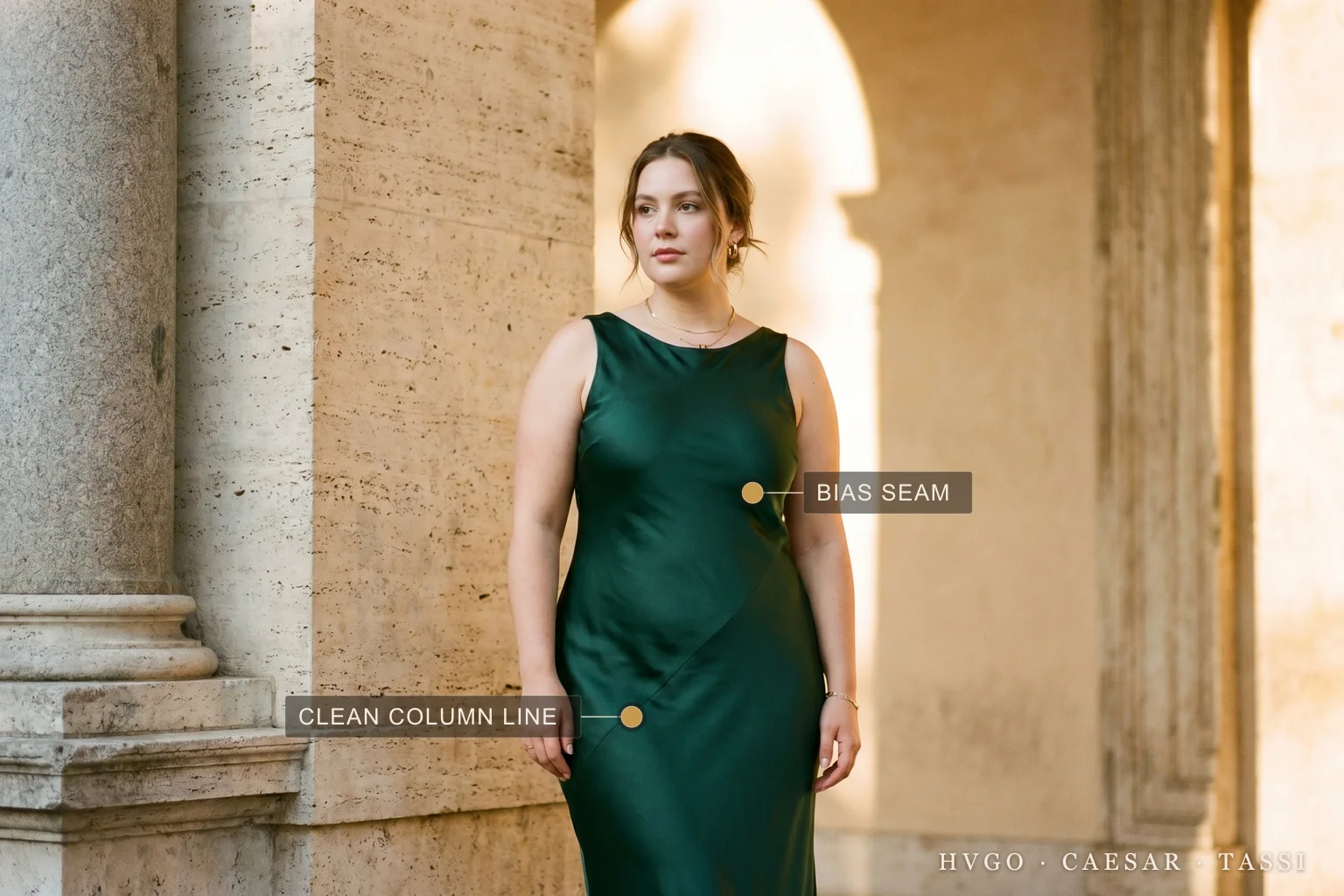
- Bias seam, cut on the diagonal
- One clean column line — skims
#A-line and fit-and-flare
An A-line defines the upper body, then opens into a skirt that widens away from the waistline.
Fit-and-flare and fishtail variants hold at the hip, then flare to balance a fuller top. The Calpurnia fishtail satin gown keeps clean to the hip, then flares to feature lean legs and pull the gaze downward. That downward motion is the point of the cut. Choose a flare that begins at or just under the hipbone, because one starting higher can read as bulk. Princess seams on the bodice skim cleaner than a gathered front.
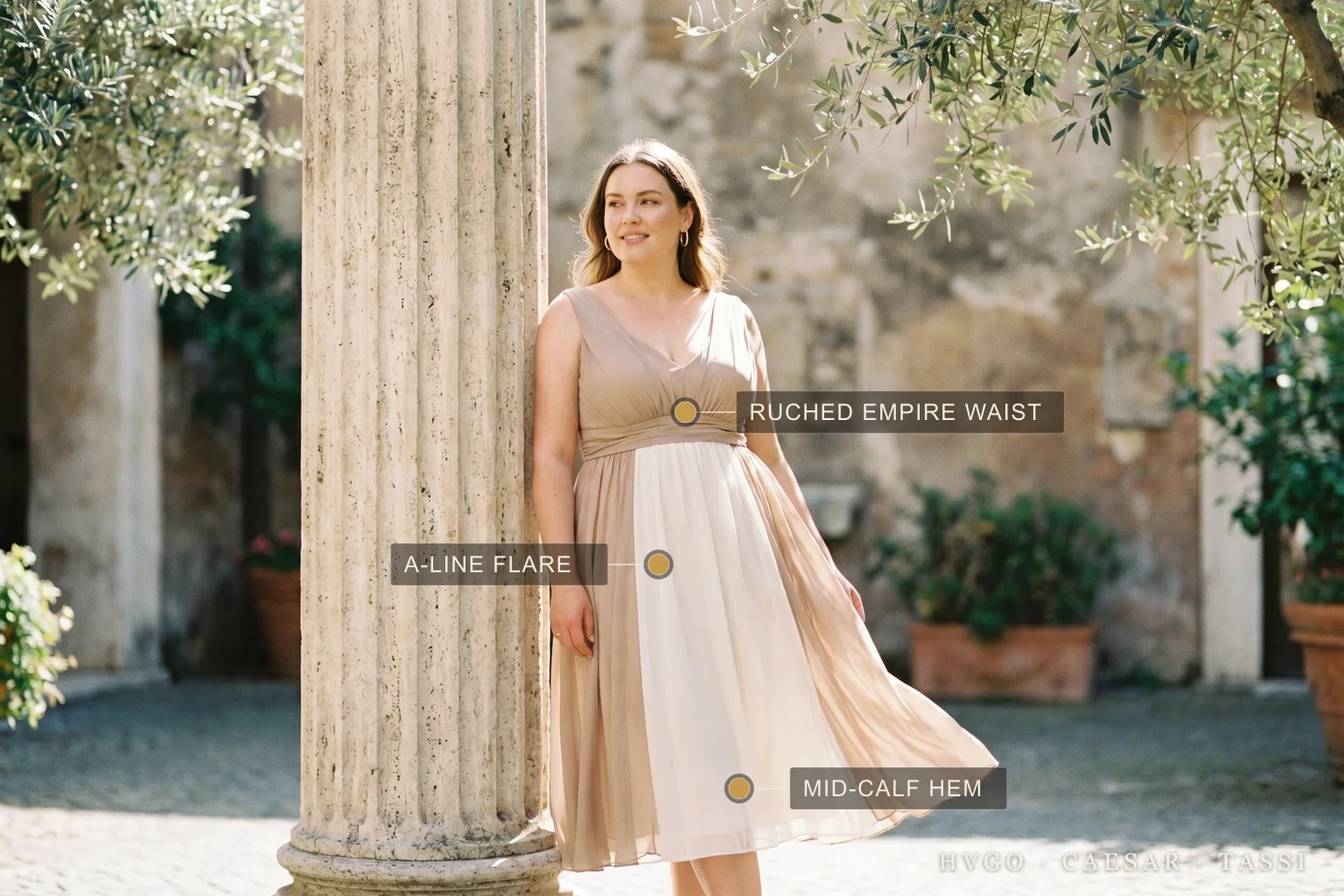
- Ruched empire waist — defined under the bust
- A-line flares past the hip
- Hem at mid-calf
#Wrap and faux-wrap with a soft V
A soft wrap closes on the diagonal and draws the gaze inward and down with adjustable ease. A self-tie beats a rigid waistband because you set the tension, leaving the middle relaxed. The diagonal closure builds an instant V and a long line toward the hem, and a faux-wrap keeps that look without a true tie. The failure mode is a wrap tied tight at the waist, which recreates the hard horizontal to avoid.
#Which dress cuts an apple shape is usually better off skipping
Skip anything that maps a fuller middle or stacks bulk on it: tight natural-waistbands, clingy knits, drop-waists and navel gathers.
The two sections below name the worst offenders and the single exception worth keeping in mind.
#Tight natural-waistbands, body-con and bandage knits
Tight waistbands and bandage knits draw a horizontal across the middle and map every contour underneath.
A stiff bodice pulls and gapes, and body-con stretch traces the diaphragm exactly. Bandage knits compound it, ringing the torso in visible horizontals. Some argue a bodycon "holds you in," yet that look reads as strain, not skim. The eye catches that tension first, before it reaches your face. One exception survives: a soft bias slip in lined crepe traces without gripping, since the lining floats the cloth off the skin.
#Drop-waist, heavy gathers at the navel and boxy shifts
A drop-waist sinks the seam to the hip and stacks visual width across the middle; navel gathers pile bulk at the core.
A boxy shift hangs straight off a full bust and squares the frame. Drape versus bulk settles everything: drape falls flat and free, whereas bulk gathers and projects outward. Stiff cloth stands off the figure and broadens it, while the same fluid weight cut as a soft column pours clean. Read the hand of the fabric before you judge the cut. A rigid weave defeats even a flattering shape.
#Which fabrics fall cleanly over the midsection for an apple shape
Fluid, matte weights glide over the waistline; stiff or clingy fabrics fight it. Crepe, modal jersey, georgette and chiffon drop free under the bustline, and a matte finish never spotlights what shine would catch. Fabric does as much work as cut, so the sections below sort the weights that pass from the ones that fail.
#Fluid weights that skim: crepe, modal jersey, georgette, chiffon
Crepe, modal jersey, georgette and chiffon hold enough weight to fall straight while staying soft enough to glide.
The house crepe is matte and structured, modal drapes the columns, and the chiffon is recycled, knife-pleated or bias-cut. Each drops past a fuller middle without clinging, the trait that separates a flattering fabric from a punishing one. Georgette behaves the same way, with a dry, weighty hand that resists cling. The chiffon, satin and crepe explainer covers weight and fall in detail. Avoid stiff taffeta or scuba, which stand a shape off the body and exaggerate width.
#When satin works (and when it clings)
Lined, bias-cut satin reads sleek over a round figure; thin single-layer satin clings and reveals.
The house satin is bias-cut, so it pours on the diagonal with a clean fall. A structured satin column looks polished and glides, whereas a thin, unlined version in a straight cut maps the core under direct light. The real test is the lining: a fully lined gown slides over the body, while a one-layer slip telegraphs everything beneath. When a label omits "fully lined," assume the slip behaves like the thin version. Lining, not fiber, decides whether satin flatters you.
#Which necklines, sleeves and details flatter an apple shape
Open necklines, three-quarter sleeves, a lifted bust and a vertical line work together to lengthen the torso. Each detail sends the gaze up to the face or down to lean legs, and they compound when you stack them.
#Necklines that open the chest
A V-neck, scoop, surplice or square neckline opens the chest and lifts attention to the face and collarbone.
These shapes balance a fuller bust by carving vertical space. A deep V lengthens most, its line pointing down. A scoop opens the chest gently, and a square reads modern with little skin. A high crew or boatneck does the reverse, cropping the upper body and broadening it across a full bust. Match the neckline depth to the occasion, and keep the V honest rather than plunging.
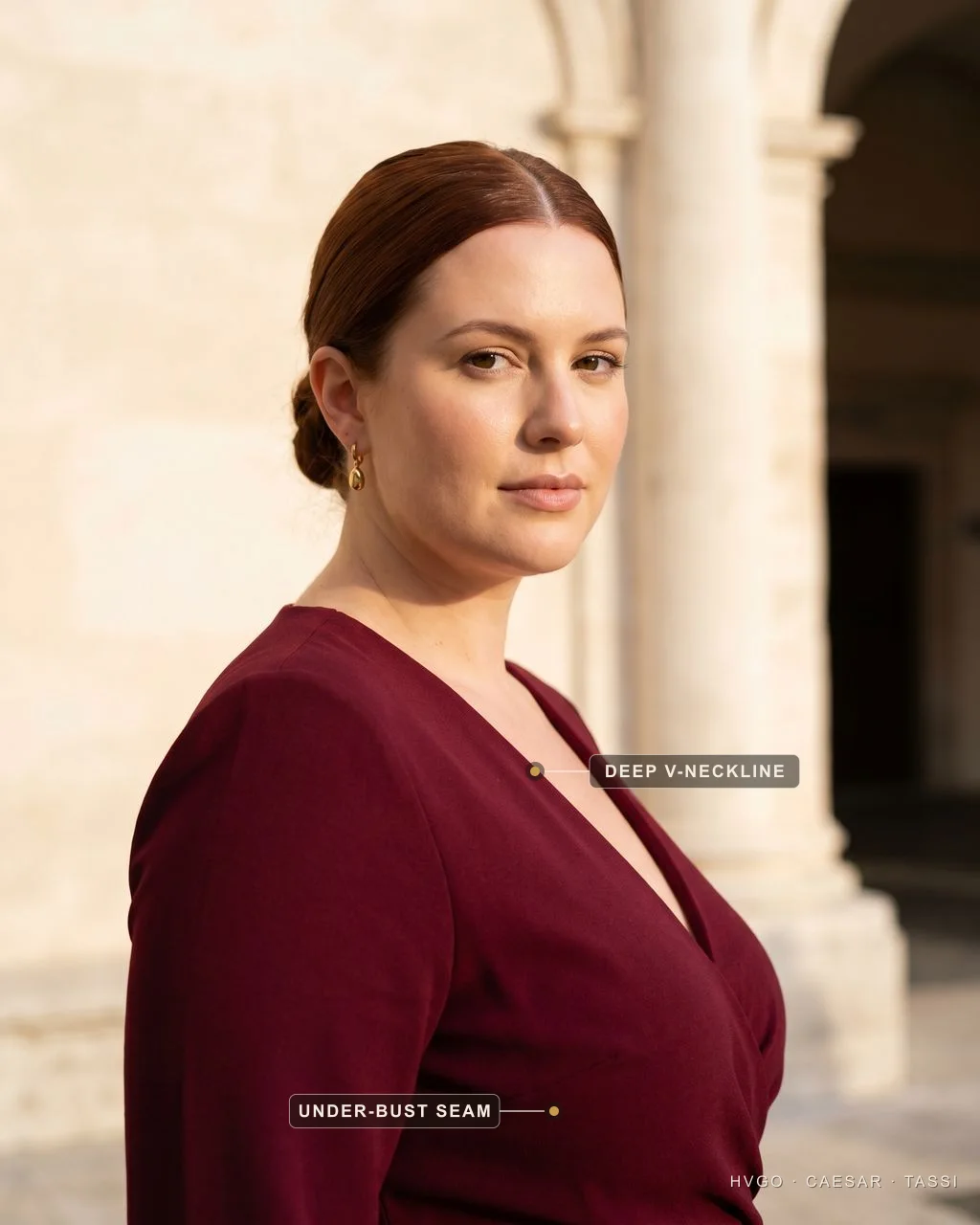
- Deep V-neckline — opens the chest
- Seam sits under the bust
#Sleeves, support and a long vertical line
Three-quarter and flutter sleeves feature lean arms, a supportive bra lifts a fuller bust, and a raised bustline lengthens the torso.
A well-fitted bra or built-in cups lift the bust, opening space above the waist. Three-quarter sleeves end at the slim part of the arm, a tidy stop rather than a wide one. Monochrome dressing then erases the horizontal break a contrasting waist would draw. A strategic front slit features lean legs and runs a clean vertical down the skirt. These details compound, reading taller together than any single change manages alone.
#How to accessorize an apple shape to keep the focal point high
Place every accent high on the torso: statement earrings, an open neckline, a scarf at the throat, a clutch carried high. Anything that lands at the hip or waistline drags the gaze back to the core, so placement matters more than the piece itself.
#Where to place the eye
Statement earrings and an open neckline lift attention to the face, while a clutch carried high keeps the focal point above the core.
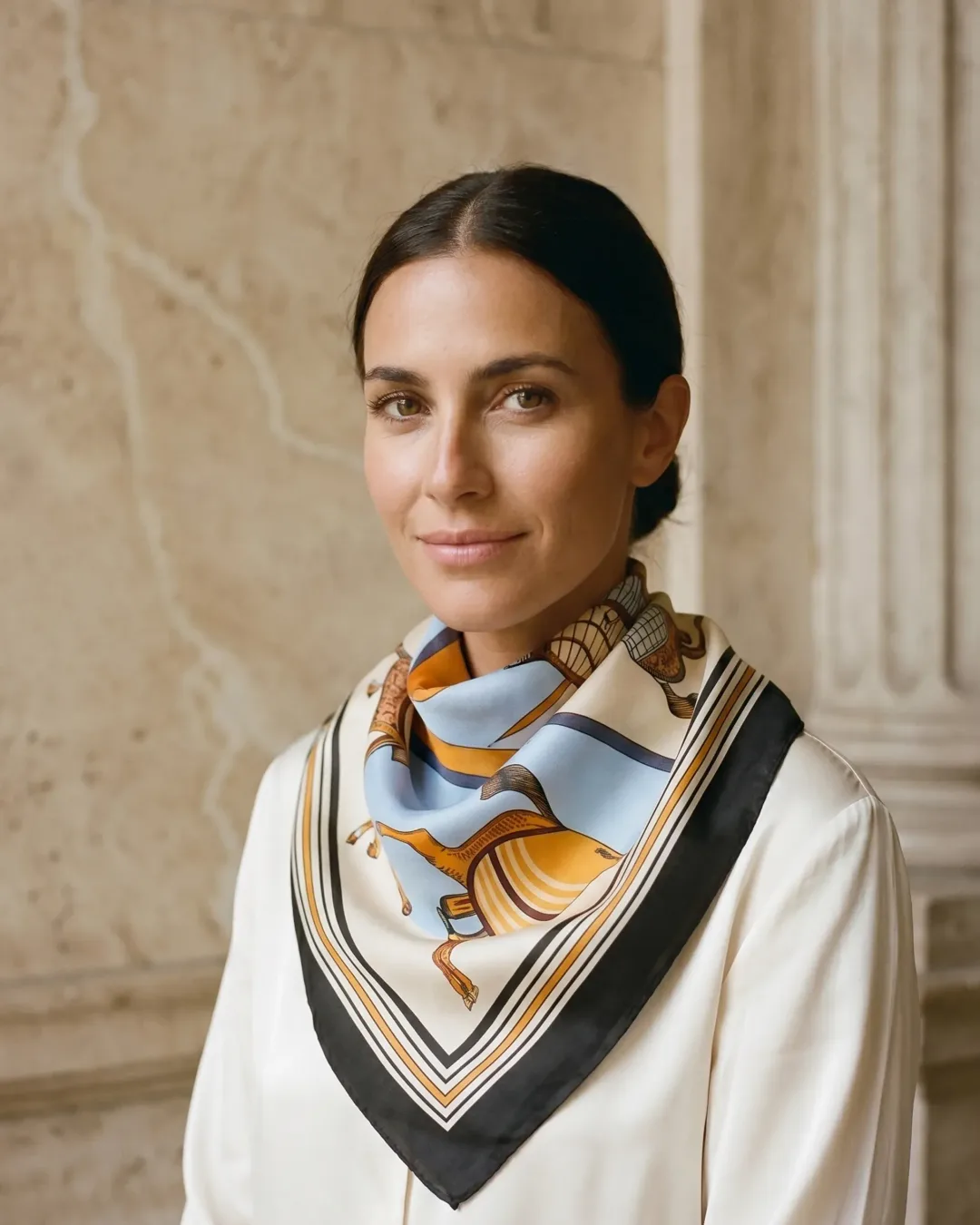
The Carina or Tessera silk square, knotted at the throat, adds color at the collarbone and pins the eye upward. A long pendant works against you, drawing a line that ends at the middle you want to skip. Statement earrings do the opposite, holding the gaze at your face. Skip any wide hip-slung belt, which paints a hard horizontal across the fullest zone. Keep metals and color near the face, never at the navel.
#Belts done right (high, soft, optional)
A slim, soft self-tie under the bust can echo the empire line; a stiff belt at the natural waist works against a round figure. Height and softness are the rule, never tension. A narrow tie just beneath the chest reinforces the raised seam, whereas a rigid belt at the navel only marks the widest point. When in doubt, leave the belt off entirely.
#How to flatter an apple shape without shapewear: the Hugo Caesar Tassi cut-not-control rule
The cut, not control underwear, does the skimming: an under-bust seam plus a draped weight falls free from roughly the diaphragm down.
This is the house's first-party rule, and it takes shapewear out of the equation. The two sections below give the principle and then the styling that carries it.
#The atelier principle
An empire seam combined with draped modal or bias crepe frees the cloth from the diaphragm downward, so the fabric glides instead of compresses.
Read this as la bella figura through cut, not constriction. Anchor the dress at the slim point under the bust, pick a weight that falls straight, and the middle bears no tension. Hugo Caesar Tassi marks that seam high and lets fluid cloth do the rest. Shapewear works the other way, compressing the line the cut just created. The pattern designs the skim in, so the house treats control underwear as unnecessary.
#How to wear it with confidence
Choose a midi or maxi length for a long line, a heel to extend the leg, and one waist-defining detail high on the torso. Length and verticality carry more than any single trick. A floor-skimming column reads longest, while a midi suits daytime once it clears mid-calf. A heel continues the vertical your slit or column began, and keeping the defining detail above the navel keeps the look tall.
#Which Hugo Caesar Tassi dresses we recommend for an apple shape
For evening, choose Tullia, Vipsania or Calpurnia; for daytime, reach for Livilla or Claudia. Each gown is built to the cut-not-control rule, marking a high point and freeing the cloth lower down. Browse the full occasion dresses edit to see them styled in context.
#Evening and black-tie
Three evening gowns suit a round figure at black-tie: Tullia, Vipsania and Calpurnia.
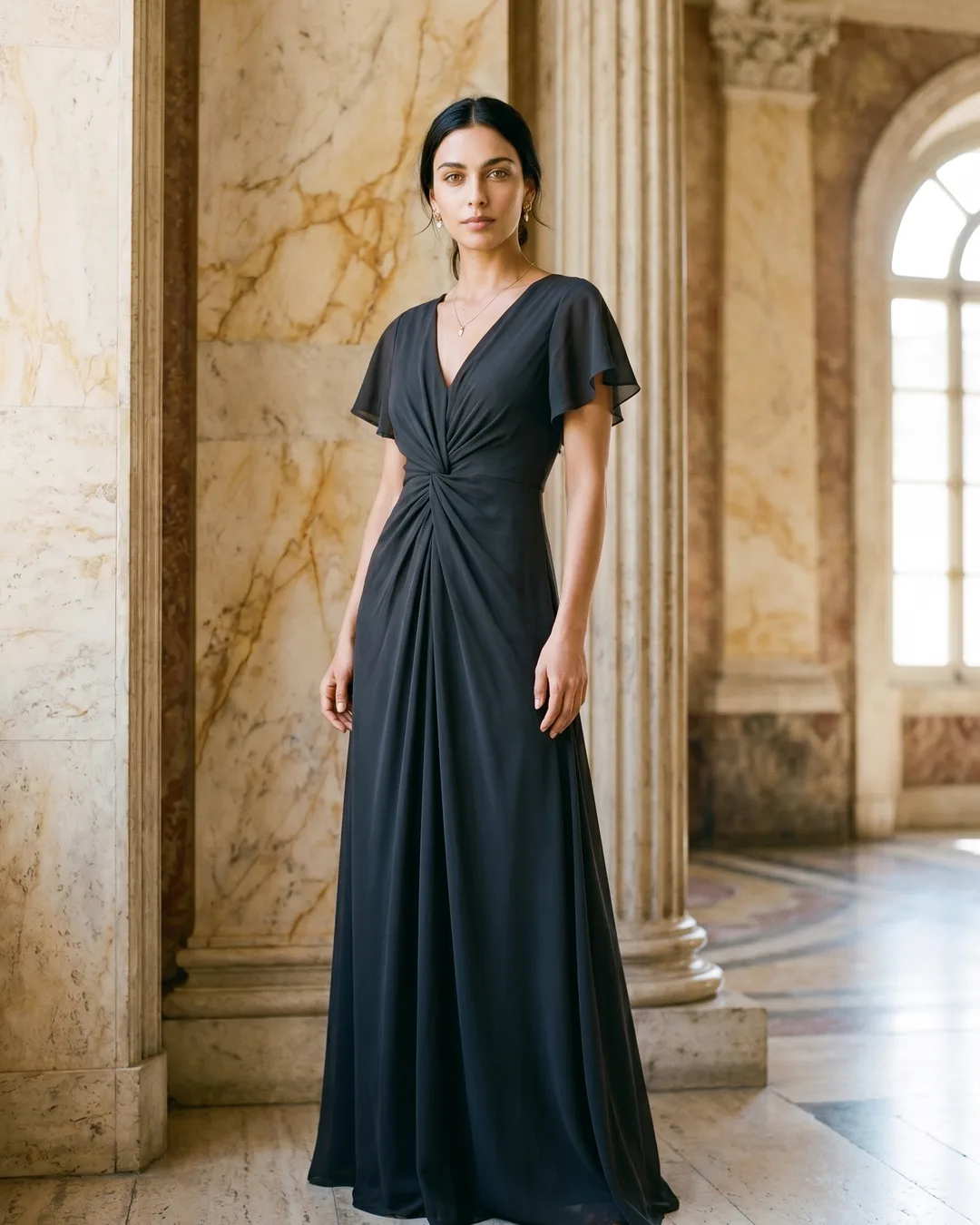
Each handles a fuller middle through line rather than compression. Tullia is a pleated crepe column with clean vertical pleats and no pinch. Vipsania is a draped modal column whose fluid weight glides over the midsection. Calpurnia is a fishtail satin gown that holds clean, then flares to feature lean legs. Pick Tullia for the cleanest vertical, Vipsania for the softest fall, and Calpurnia when you want movement low on the skirt.
#Wedding-guest and daytime occasions
For a wedding guest or daytime event, choose between Livilla and Claudia. Both keep a fluid line yet break the diaphragm differently. Livilla is a floral-print chiffon midi, where the weight drops free and the print scatters the eye, while Claudia is a pleated-slit chiffon maxi pairing a column line with a leg slit. Pick Livilla when a print suits the dress code, and Claudia when you want a longer, slit-led line.
What the atelier learned fitting the apple shape
Across the house’s fitting studio, one pattern held on every apple-shape fit model: the position of the seam and the fluidity of the fabric flattered far more than the size on the label. A dress that releases above the bust and falls in one fluid line consistently read longer and calmer than the same body in a cinched-waist cut. The findings below are how the studio now cuts for the apple silhouette.
| Cut | What the studio observed | Verdict |
|---|---|---|
| Empire / under-bust seam | Releases fabric above the fullest point; draws the longest, calmest line. | Best |
| Soft A-line | Skims the hip and midsection; the most forgiving daytime cut. | Best |
| Faux-wrap with a V | A diagonal line plus an open neck pull the eye up and across the body. | Best |
| Bias-cut column | Falls past the midsection in a soft diagonal; elegant for evening. | Best for evening |
| Cinched-waist sheath | Grips the fullest point and prints a hard horizontal break across it. | Skip |
| Dropped waist | Lands the seam at the widest part of the torso, widening the line. | Skip |
The rule the study produced: dress from the bust, not the waist — choose where the eye starts, and let the fabric fall from there.
#Your apple-shape occasion-dress checklist
Run five checks before you buy: seam high, fabric fluid, neckline open, line long, one focal point.
The list below is the filter; the recap shows how to apply it on the shop floor.
- Seam high: an empire or under-bust seam, never a tight natural waistband.
- Fabric fluid: crepe, modal or recycled chiffon, matte and falling free under the bust.
- Neckline open: a V, scoop, surplice or square to lift the eye to the face.
- Line long: monochrome dressing, a vertical seam or a front slit, midi or maxi length.
- One focal point: statement earrings or a scarf high on the torso, nothing at the navel.
#The five-point recap
These five points become a shopping filter for occasionwear. Match each one against the dress on the rail before it reaches the fitting room. A gown that fails even a single check will fight a fuller middle rather than free it.
#Frequently asked questions
What is the most flattering dress for an apple shape?
The most flattering dress for an apple shape is an empire-waist or soft bias-draped column in a fluid fabric like crepe or modal. The raised seam frees the cloth just below the bustline, and a V-neck opens the chest.
Should an apple shape wear an empire waist or a defined waist?
An apple shape should wear an empire waist almost every time over a defined waist. The under-bust seam marks a slimmer point above the fullest part and lets the fabric fall free, whereas a tight natural-waistband cuts a horizontal across the middle.
What dress styles should an apple shape avoid?
The dress styles an apple shape should avoid are body-con and bandage knits, stiff fitted bodices, drop-waist cuts and heavy navel gathers. Anything that maps a fuller middle or piles bulk there fights the clean line, so choose a released weight instead.
Can an apple shape wear a fitted or bodycon dress?
An apple shape can wear a softly fitted dress but rarely a true bodycon. A bias slip in lined crepe traces without gripping; the test is whether the fabric falls free below the bust or pulls across the midriff.
What should an apple shape wear to a wedding as a guest?
An apple shape should wear a fluid empire or A-line midi or maxi in chiffon or crepe to a wedding. A print or soft drape scatters the eye while a V-neck lifts it upward, and a long line keeps the look elegant without shapewear.
Do apple shapes need shapewear to look good in an occasion dress?
Apple shapes do not need shapewear when the cut does the work. An under-bust seam in a draped weight glides from the diaphragm down, the whole basis of the HCT cut-not-control rule. A supportive bra that lifts a fuller bust does more for the line than control underwear ever can.
Shop the cuts built for an apple shape: explore the occasion edit and the fluid crepe dress line, starting with the Vipsania draped-modal column gown.
More Body Shape guides
Elegant Dresses for Women Over 50
Occasion dresses that flatter over 50 — a three-quarter sleeve, soft V neck and crepe that skims. The age-positive guide to weddings and evenings.
Dressing well over 50Best Dresses for an Hourglass Figure
The silhouettes, fabrics and necklines that trace an hourglass figure instead of hiding it, plus the atelier fluid-weight rule and HCT gowns to shop.
See the hourglass editHow to Find Your Body Shape
Take three measurements and learn your body shape for sure with the atelier ratio method and exact thresholds, not vague compare-to-fruit guesswork.
Find your body shapeHow to Dress an Inverted Triangle Body Shape
Open the neckline into a soft V to narrow broad shoulders, then add a skirt-width of pleated-chiffon volume at the hip until your shape reads balanced.
Style the inverted triangleBest Occasion Dresses for a Pear Shape
The shapes, necklines and fabrics that balance a pear shape: A-line chiffon that skims the hip and a neckline that lifts the eye one body-third up.
See the pear-shape editThe Petite Woman's Guide to Occasion Dresses
The lengths, waistlines and silhouettes that lengthen a petite frame, with the exact hem rule and the one-color column that reads taller.
See the petite edit