What to Wear to Royal Ascot and the Races: Elegance Within the Enclosure Rules
The enforced Royal Ascot enclosure rules for strap width, hem and hat size, plus a Roman house rule for balancing a hat against your dress.
On this page
Wear a hat with a base of at least four inches, a dress with straps at least one inch wide, and a hem that reaches the knee or longer. Royal Ascot stewards measure these at the gate, so the numbers come before the styling. What to wear to Royal Ascot has two halves, and this guide gives you both: the enforced rule, then the elegance.
The official guidelines publish the law and stop there. They never tell you how to keep a wide brim from swallowing a slight frame. Hugo Caesar Tassi (women's occasionwear house, Roma, MMIV) adds the missing half — a hat-to-hem balance rule that scales the dress to the hat, so you arrive correct and unmistakably elegant.
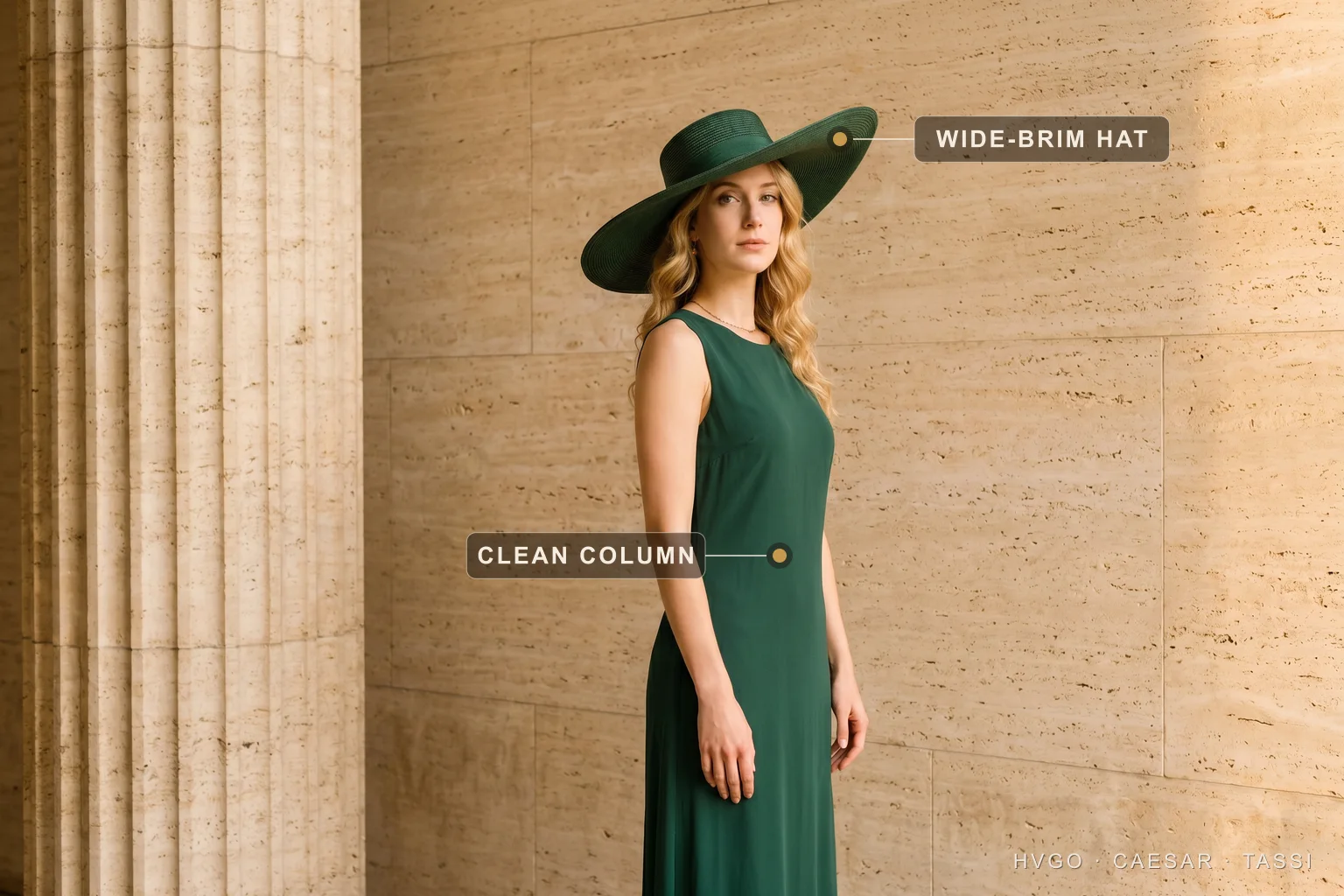
- Wide-brim hat
- Clean column
The races, decoded
A hat or formal headpiece is required in the enclosures; choose a block heel for the grass.
Shop occasion dresses#What are the enforced dress rules for Royal Ascot and the races, enclosure by enclosure?
Royal Ascot enforces hard minimums only in the Royal Enclosure: 1-inch straps, a knee-length hem, and a hat with a 4-inch base. Outer enclosures relax tier by tier, and stewards actually measure borderline cases at the gate. Knowing your ticket tier matters more than any single measurement, because the same dress passes in one enclosure and fails in another.
#The Royal Enclosure: the strictest rules
The Royal Enclosure sets the tightest specification of the four. Dresses must carry straps at least 1 inch (2.5 cm) wide, a hem at or just above the knee or longer, and formal daywear cut. A hat is mandatory, fascinators are banned outright, strapless and off-the-shoulder dresses are refused, and bare midriffs do not pass.
One allowance surprises first-timers: a full-length jumpsuit is permitted here, provided it meets the same strap and modesty rules a dress would. The edge case that catches people is the spaghetti strap, since a 0.5-inch strap photographs beautifully yet fails the gate by half an inch. Measure the strap, not the look.
#The Queen Anne, Village and Windsor Enclosures
The Queen Anne, Village and Windsor Enclosures loosen the code in steps. Hats or headpieces are encouraged but not always strictly required, and the fascinator that is banned in the Royal Enclosure becomes acceptable here. Smart daywear replaces formal daywear, so a midi without a four-inch brim still works.
Enforcement bites hardest at the Royal Enclosure threshold and softens outward. A guest in the Village Enclosure can wear a small headpiece a Royal Enclosure steward would refuse, yet shorts, denim, and beachwear still fail in every tier.
#What "they actually check at the gate" means
Stewards check sashes and wristbands first, then the outfit against the tier those passes grant. A borderline hem, a strap a touch too thin, or a fascinator worn in the Royal Enclosure can get a guest stopped or handed a pashmina to cover up. The whole check takes under a minute, yet it decides your day.
Picture a real gate scenario: a guest in a sleeveless shift with one-inch straps and a 3.5-inch headpiece, bound for the Royal Enclosure. The straps pass; the headpiece fails the four-inch base rule. Measurements decide the outcome, which is why the what to wear guides hub routes race-day readers here first.
#Which dress length, strap width and neckline pass the Royal Ascot and the races dress code?
A midi dress with 1-inch-plus straps and a covered neckline clears every enclosure rule with room to spare. Length, strap, and neckline are the three dimensions stewards read, so build the dress around all three at once. A hem that grazes the knee photographs as deliberate; a hem two inches above it risks a gate stop in the top tier.
#Hem length: knee, midi or maxi
The minimum hem sits at or just above the knee. A midi, which falls between mid-calf and the ankle, is arguably the ideal race-day length: it clears the rule by a wide margin and signals daytime rather than evening. A maxi passes too, though a heavy floor-length gown can tip into black-tie territory before noon.
Tiered seating is the practical reason a midi wins: you sit, stand, and climb steps for six hours, and a midi moves through all three without riding up. A mini fails the rule outright, while a clinging maxi can pool on gravel. The midi vs maxi vs mini length guide breaks down where each hem breaks.
#Straps, sleeves and necklines
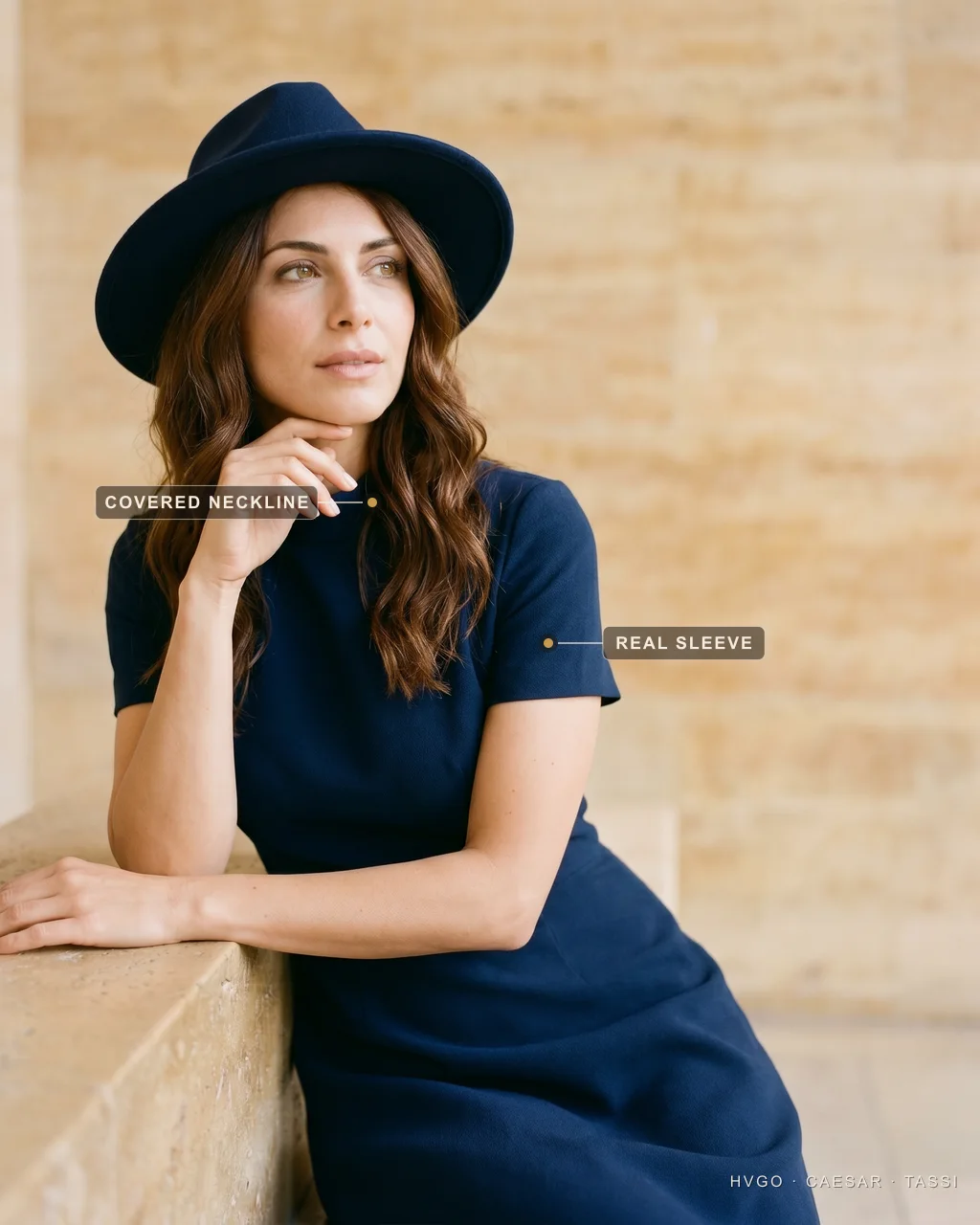
Straps must measure at least 1 inch (2.5 cm) wide in the Royal Enclosure. Spaghetti straps and strapless bodices fail there by definition, so a thin-strapped slip dress, however elegant, belongs in an outer enclosure or under a covering jacket. Sleeves solve the problem cleanly and add daytime polish.
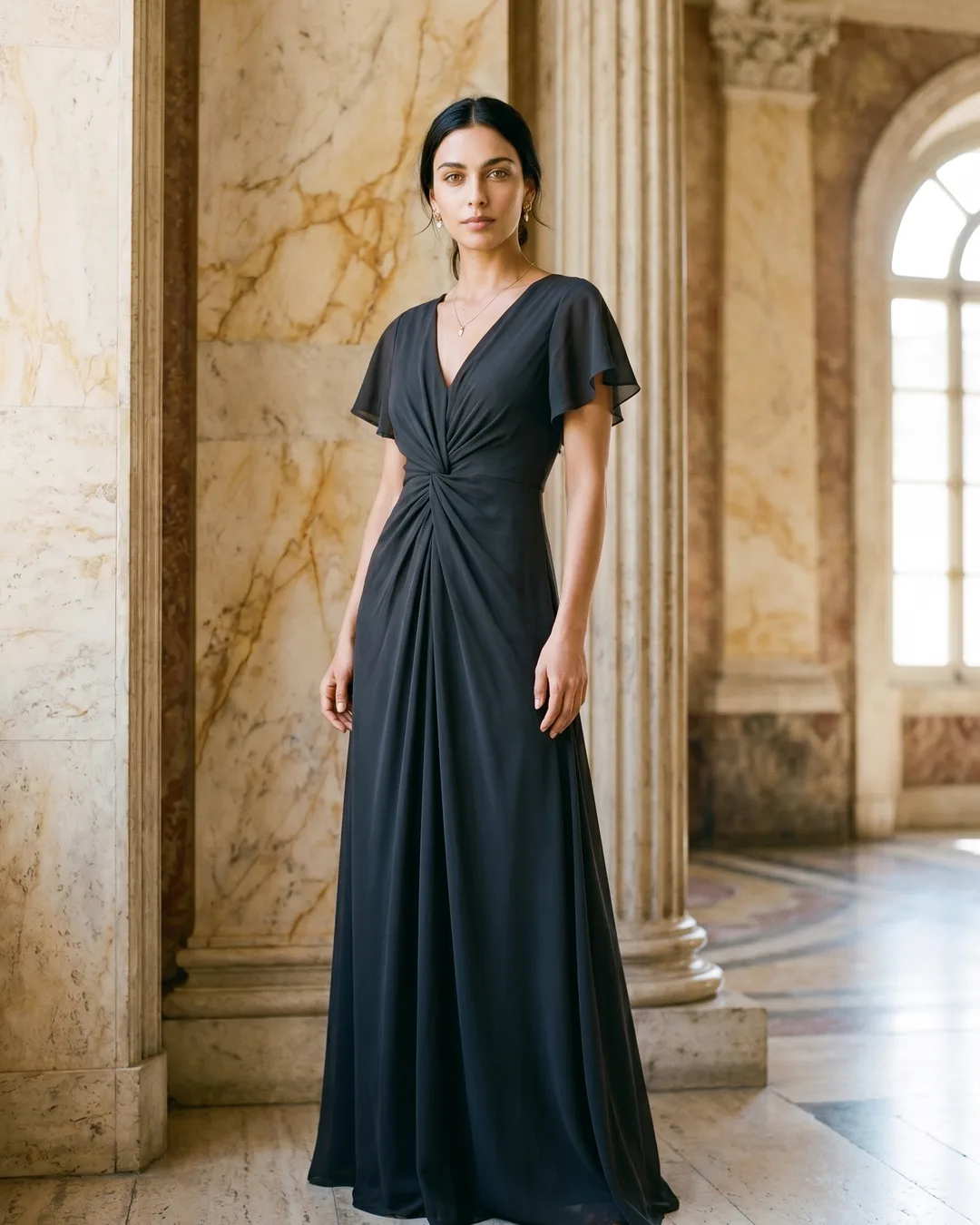
A modest neckline reads more correct than a plunging one at a daytime meeting. Off-the-shoulder cuts are banned in the Royal Enclosure, and bare midriffs are out. The Portia short-sleeve chiffon A-line dress shows the solution: a real sleeve retires the strap question entirely.
- Covered neckline
- Real sleeve
#Fabric, color and pattern for daytime
Daytime fabric should move in summer air. Chiffon and matte crepe drift and breathe, whereas heavy duchess satin can read too evening under a midday sky, since shine suggests night. No specific colors are banned at Royal Ascot, which frees you to wear bold florals or the house's imperial palette.
The palette gives you a counter-case to the all-neutral instinct. Porpora (wine) and Verde Antico (green) photograph richly in bright light, whereas a pale ivory can wash out against the lawn.
#How do you style a hat or headpiece with a dress for Royal Ascot and the races so it reads elegant, not costume?
Balance the hat against the hem: a wide brim wants a clean, long dress, and a small hat lets the dress carry the detail. This is the house rule that turns a compliant outfit into a chic one. A hat and a busy dress compete for the same attention, so match the visual weight of the head to the body and let one focal point win.
#The hat-to-hem balance rule
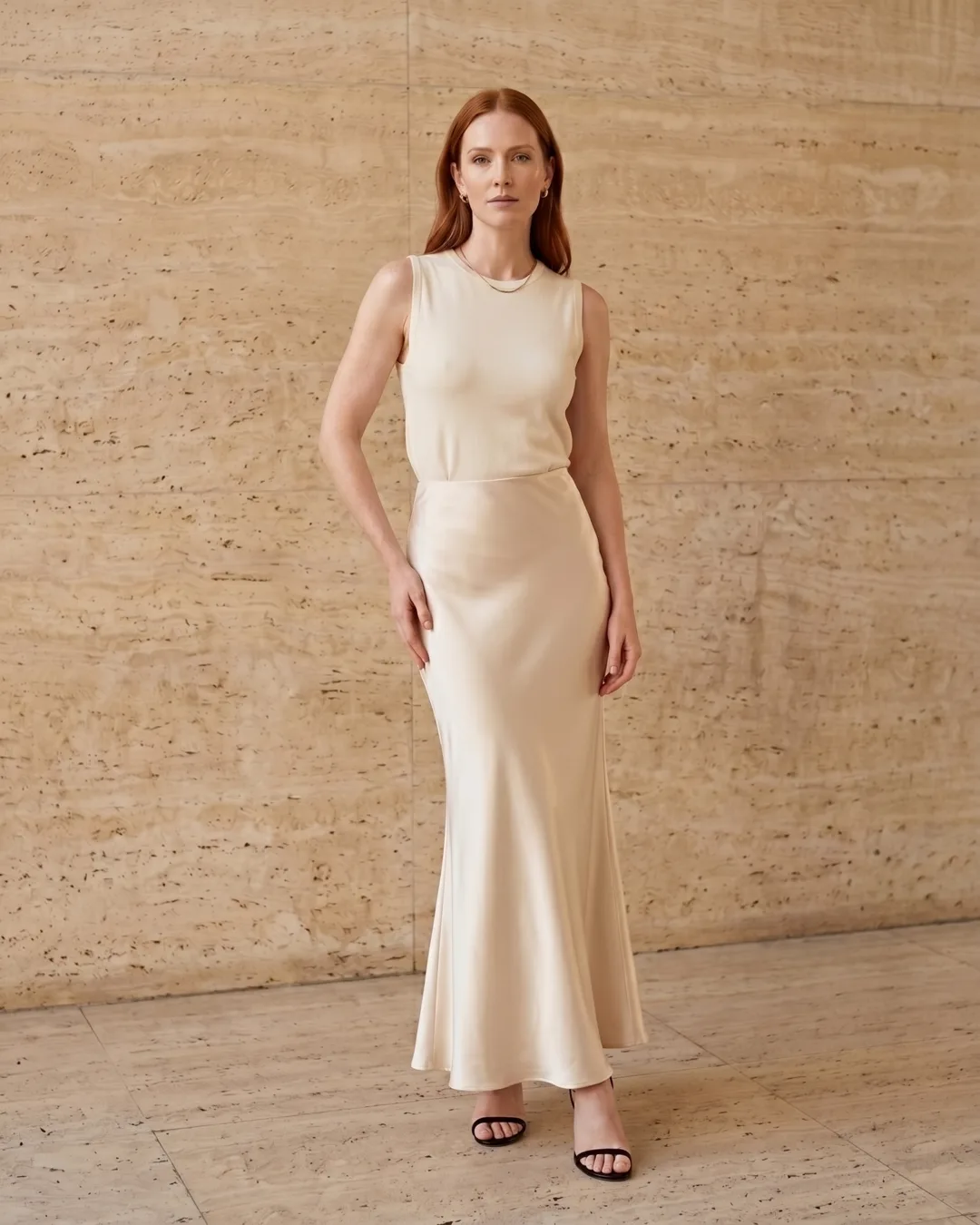
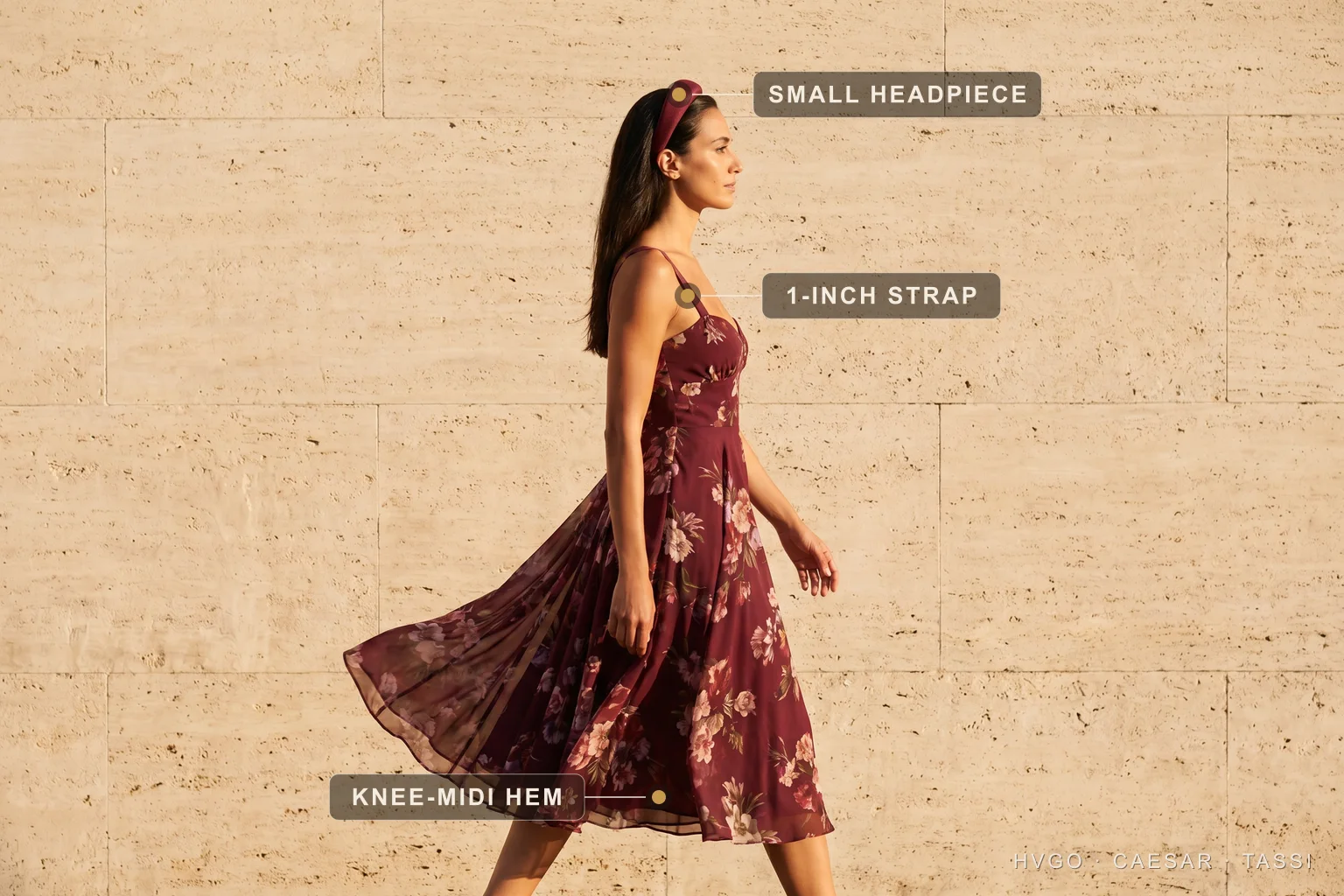
The founder's principle reads simply: the bigger the hat, the cleaner and longer the dress. A wide-brim hat pairs with a column or a fluid maxi in a single color, because a quiet dress lets the brim be the statement. A small headpiece frees the dress to carry a print, a pleat, or a slit.
- Small headpiece
- 1-inch strap
- Knee-midi hem
Scale the rule to your own height. The house publishes each model's height (about 175 cm) so you can judge proportion against your own frame. A petite woman in a 6-inch brim risks looking costumed, whereas a taller woman carries that brim easily, so choose the dress length that lengthens your line under it.
#Hat vs. headpiece, and the fascinator question
The Royal Enclosure demands a hat with a solid base of at least 4 inches (10 cm) in diameter, which rules the fascinator out of the top tier. A milliner-made hat sits and stays better than a ready-made one, since it is blocked to a head size. A headpiece is allowed in the outer enclosures when its base meets the four-inch mark.
Match the hat to the outfit, never the outfit to the hat. The common mistake reverses it: a guest buys a dramatic hat, then forces a dress to obey it. Choose the flattering dress first, then select a hat that answers it.
#Color-matching the hat, dress and accessories
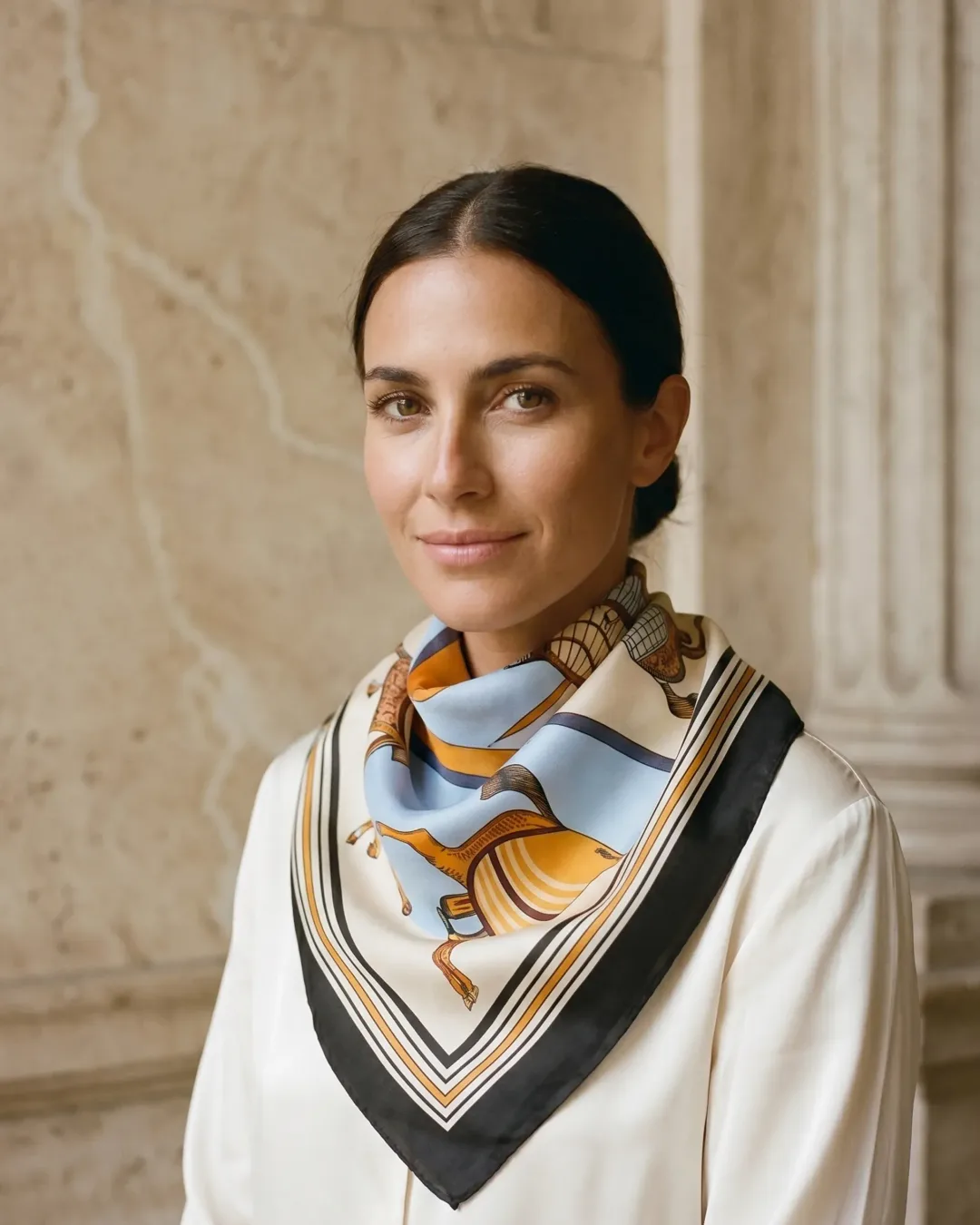
Tie the hat to a color already living in the dress or a scarf, rather than introducing a third. A hat that picks up the green in a floral, echoed again in a silk square scarf at the neck, locks the look together. Gloves, clutch, and shoes then take a quieter supporting shade.
The counter-case is the matched set that goes flat. A hat, bag, and shoes in identical block color read as a uniform rather than an outfit. Pull the hat's color from the dress and let the silk scarves carry the repeat instead.
#What completes a race-day outfit for Royal Ascot and the races: shoes, bag, gloves and weather?
Choose a block heel for grass, a structured clutch for the day, and a chiffon wrap for the English afternoon. Race-day ground is lawn and gravel, not pavement, so the shoe choice decides whether you last the afternoon as much as it finishes the look.
#Shoes for grass, gravel and long days
A block heel distributes weight and stays upright on lawn, whereas a stiletto sinks into turf and tips you forward. Heel guards (small caps that widen the heel tip) help, and a kitten heel or an elegant flat carries you through a six-hour day on your feet. Pick the heel for the surface, not the photograph.
The all-day reality is the edge case people forget. A 4-inch stiletto looks correct in the morning and fails you by the fourth race, whereas a 2-inch block heel keeps you standing comfortably.
#Bag, gloves and the finishing layer
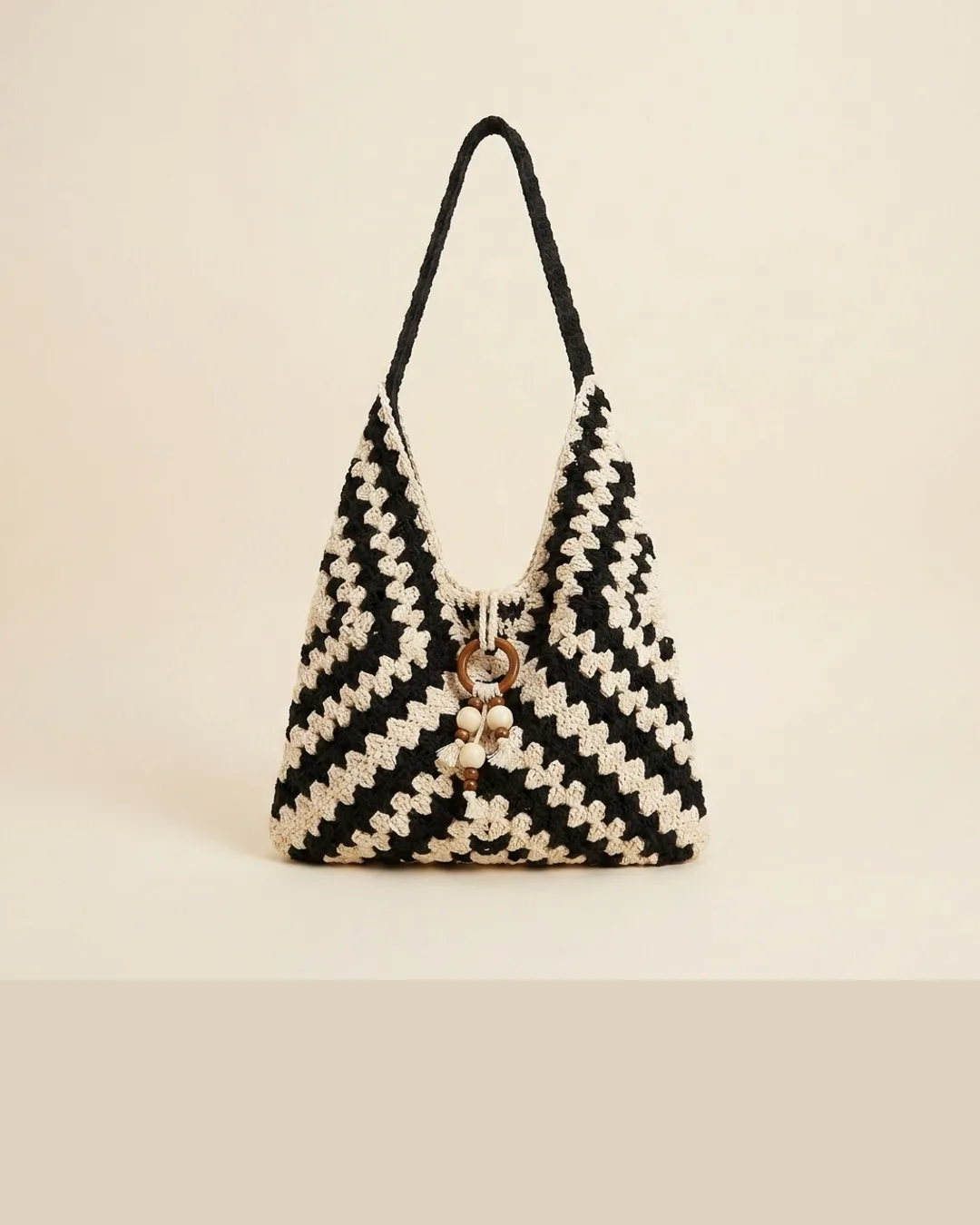
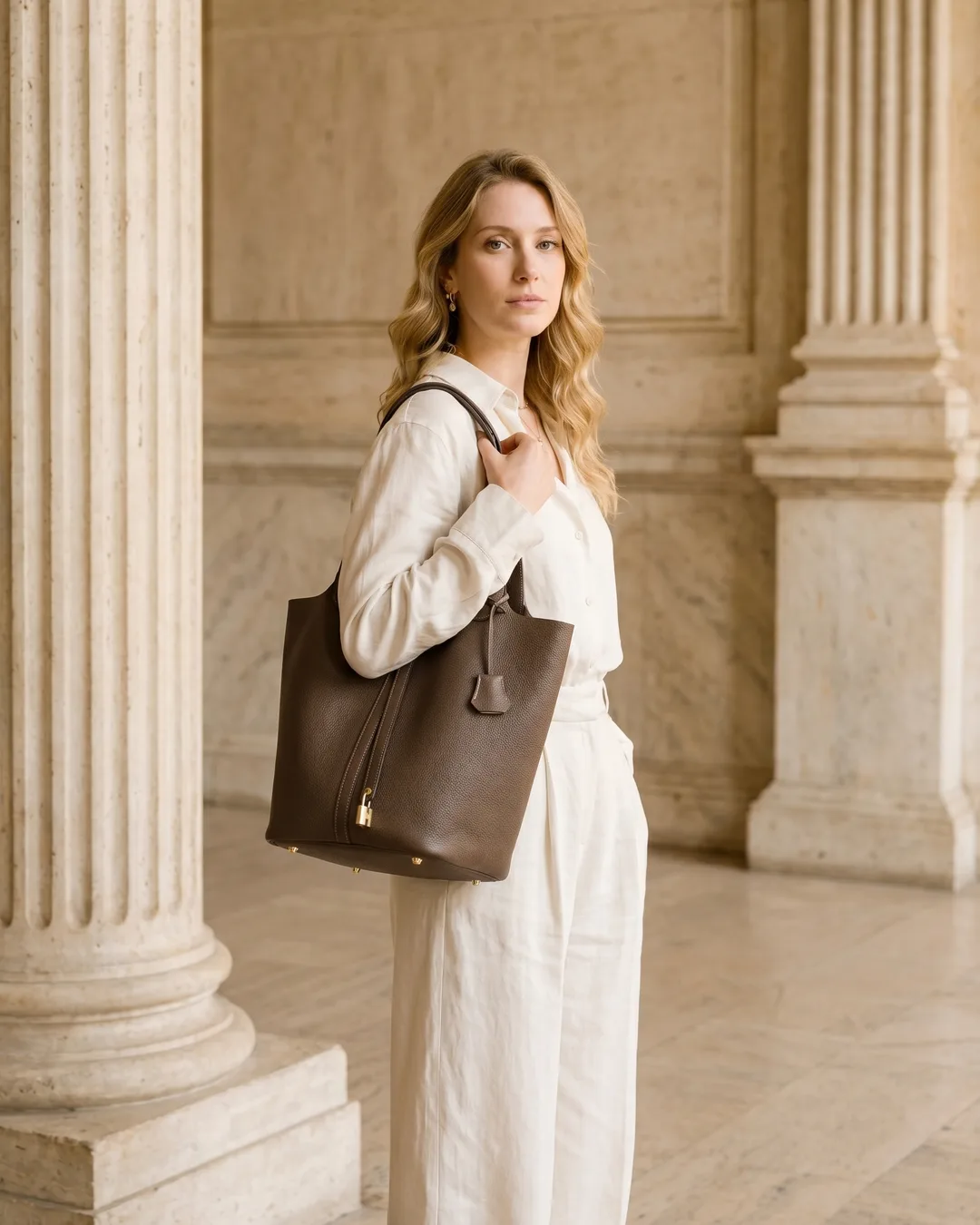
A structured clutch or a small leather bag keeps the silhouette clean and your hands free for a program and a glass. The Quirina leather envelope clutch holds essentials without bulk, and gloves stay optional, reading formal when you want the extra polish. Keep the bag small so it never fights the hat.
English weather changes by the race, so pack a layer. A chiffon wrap or a tailored jacket covers a sleeveless dress for a cool afternoon and answers a sudden breeze. The same layering logic carries over from a summer wedding guest outfit and the broader accessorize a dress principles.
#How does the Royal Ascot and the races dress code compare with the Kentucky Derby?
Royal Ascot enforces exact measurements; the Kentucky Derby leads with hats and tradition but checks far less. Both meetings prize a hat above all else, yet only one will measure it, so the hat travels across the Atlantic while the rulebook does not.
#UK race-day rules vs. US Derby tradition
Royal Ascot's Royal Enclosure publishes enforced numbers: a 1-inch strap, a knee hem, a 4-inch hat base. The Kentucky Derby and the Kentucky Oaks treat the hat as the centerpiece by custom rather than rule, with no measured strap or hem gate. Goodwood and Cheltenham, the UK cousins, sit closer to Ascot in spirit while relaxing the hard minimums.
| Race-day code | Strap rule | Hem rule | Hat rule | Enforcement |
|---|---|---|---|---|
| Ascot Royal Enclosure | 1 in (2.5 cm) minimum | knee or longer | 4 in (10 cm) base, no fascinator | measured at gate |
| Ascot outer enclosures | smart, no hard minimum | smart daywear | hat or headpiece encouraged | light |
| Goodwood / Cheltenham (UK) | smart daywear | smart daywear | hat encouraged | light |
| Kentucky Derby / Oaks (US) | no measured rule | no measured rule | hat is the centerpiece | tradition, not gate |
#One outfit, two race cultures
A midi-and-hat look works at both tracks, which makes it the smart transatlantic choice, and the adjustments are matters of degree, not kind. For an American track, you can lift the color brightness, scale the hat a touch larger and more playful, and shorten the hem toward the knee, since the Derby rewards spectacle over restraint.
The reverse adjustment guards you the other way. A Derby-bright look in lime and gold can overwhelm the Royal Enclosure, where a single statement color sits more correctly. Dial one outfit up for Louisville and down for Ascot.
#How Hugo Caesar Tassi dresses you for Royal Ascot and the races
The house builds knee-plus chiffon midis and clean column maxis cut for the hat-to-hem rule. The range answers both ends of the balance rule: small-hat dresses that carry detail, and big-hat dresses that stay clean. Pick the dress for your enclosure first, then the hat.
#Midi and A-line picks that pass the rules
The small-hat, detail-forward end suits a midi or an A-line. The Livilla floral-print chiffon midi dress clears the hem rule in light daytime chiffon, its print sized for a compact headpiece. The Portia short-sleeve chiffon A-line dress retires the strap question with a real sleeve, so a neat hat finishes it without fighting the bodice.
#Maxi and column picks for a longer, grander silhouette
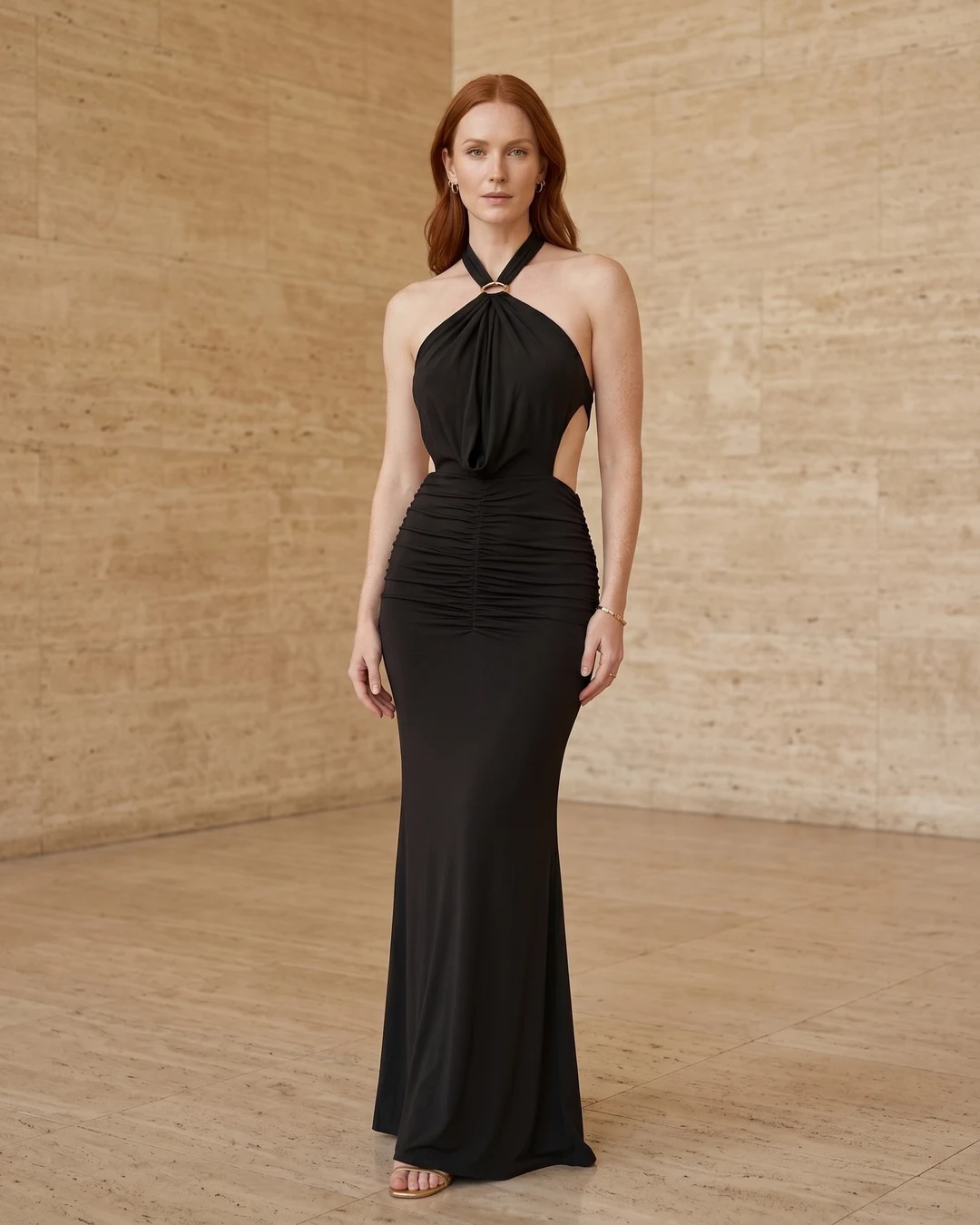
The wide-brim, clean-line end calls for a maxi or a column. The Aemilia A-line chiffon maxi dress and the Julia French-pleated chiffon maxi gown give a wide-brim hat the quiet, long canvas the balance rule wants. Finish either with a Carina glossy silk square scarf to repeat the hat's color, or a Quirina leather envelope clutch. Browse midi dresses for the shorter end of the range.
#Your Royal Ascot and the races outfit, decided: the five-minute gate check
Run five checks before you leave: enclosure, straps, hem, hat base, then balance and shoes. The list turns every rule above into a one-minute confirmation.
#The pre-gate checklist
| Check | The rule to confirm | Pass condition |
|---|---|---|
| Enclosure | which ticket tier you hold | rules matched to Royal vs. outer |
| Straps | 1 in (2.5 cm) minimum in Royal Enclosure | straps measure 1 inch or wider |
| Hem | knee or longer | hem reaches the knee or below |
| Hat base | 4 in (10 cm) in Royal Enclosure | base is 4 inches, no fascinator up top |
| Balance & shoes | hat-to-hem scale, grass-ready heel | big hat with clean dress, block heel on |
Work the list top to bottom and you cannot be turned away on a measurement. The most common failure is the hat: a beautiful headpiece that falls short of the four-inch base in the Royal Enclosure. Confirm that one twice.
#Frequently asked questions
Are fascinators allowed at Royal Ascot?
Fascinators are not allowed in the Royal Enclosure, where a hat with a base of at least 4 inches (10 cm) is required. They are permitted in the Queen Anne, Village and Windsor Enclosures. A proper hat always looks more polished than a fascinator, even where the smaller piece passes.
What is the strap and hem rule for Royal Ascot?
The strap and hem rule in the Royal Enclosure requires straps at least 1 inch (2.5 cm) wide and a hem at or just above the knee or longer. Strapless, off-the-shoulder, and bare-midriff styles are refused. Outer enclosures ask only for smart daywear without the hard minimums.
Can you wear a midi dress to Royal Ascot?
A midi dress is arguably the ideal race-day length for Royal Ascot. It clears the knee-length hem rule comfortably, suits standing and sitting in tiered seating all day, and balances cleanly against a hat. A chiffon or crepe midi keeps the look firmly in daytime territory.
Can a woman wear a jumpsuit or trousers to Royal Ascot?
A full-length jumpsuit is permitted in the Royal Enclosure provided it meets the strap and modesty rules. Tailored trouser suits are also allowed throughout. Shorts, playsuits, and cropped styles are not, since the modesty rule still applies to legs and midriff.
Are any colors banned at Royal Ascot for women?
No colors are banned at Royal Ascot for women. The imperial palette and bold florals are all fair game, so Porpora, Verde Antico, and bright prints all pass. The only constraints fall on cut, strap width, hem length, and the hat, never on color.
What should a woman not wear to Royal Ascot?
A woman should not wear a fascinator in the Royal Enclosure, strapless or off-the-shoulder dresses, or bare midriffs. Hems above the knee, sheer fabrics without lining, and casual pieces like shorts, denim, or beachwear also fail. The house lines every dress with a concealed zip, which solves the sheer-fabric problem at the source.
Know your enclosure? Build a rule-passing race-day look from the Hugo Caesar Tassi occasion dresses collections, then finish it with a silk square scarf to tie your hat and outfit together.
More What to Wear guides
What to Wear to a Christening
What to wear to a christening, by a Roman house — modest, daytime-elegant outfits in church-safe colors that honor the day, never reading bridal.
Dress for a christeningBlack-Tie Attire for Women
A Roman house decodes black-tie attire for women: floor-length or not, the right fabric and jewelry, and how optional, creative and gala differ.
Decode the four black-tie rungsCocktail Attire for Women
A Roman house decodes cocktail attire for women: the exact length (knee to mid-calf, never floor), the right fabric, and how it differs from black tie.
Decode cocktail attireWhat to Wear to an Italian Wedding
A Roman house decodes what to wear to an Italian wedding: the real no-black and no-white rules, church cover-up, and North-vs-South dress code.
Decode the invitata dress codeWhat to Wear to a Summer Wedding
A Roman fashion house on what to wear to a summer wedding: the breathable fabrics, flattering bright-light colors and hems that survive grass and sun.
Dress a summer weddingWhat to Wear to the Opera
How dressed-up the opera really is, house by house: from La Scala's opening night to a relaxed Met evening, plus matinee, box and intermission etiquette.
Calibrate opera dress codes