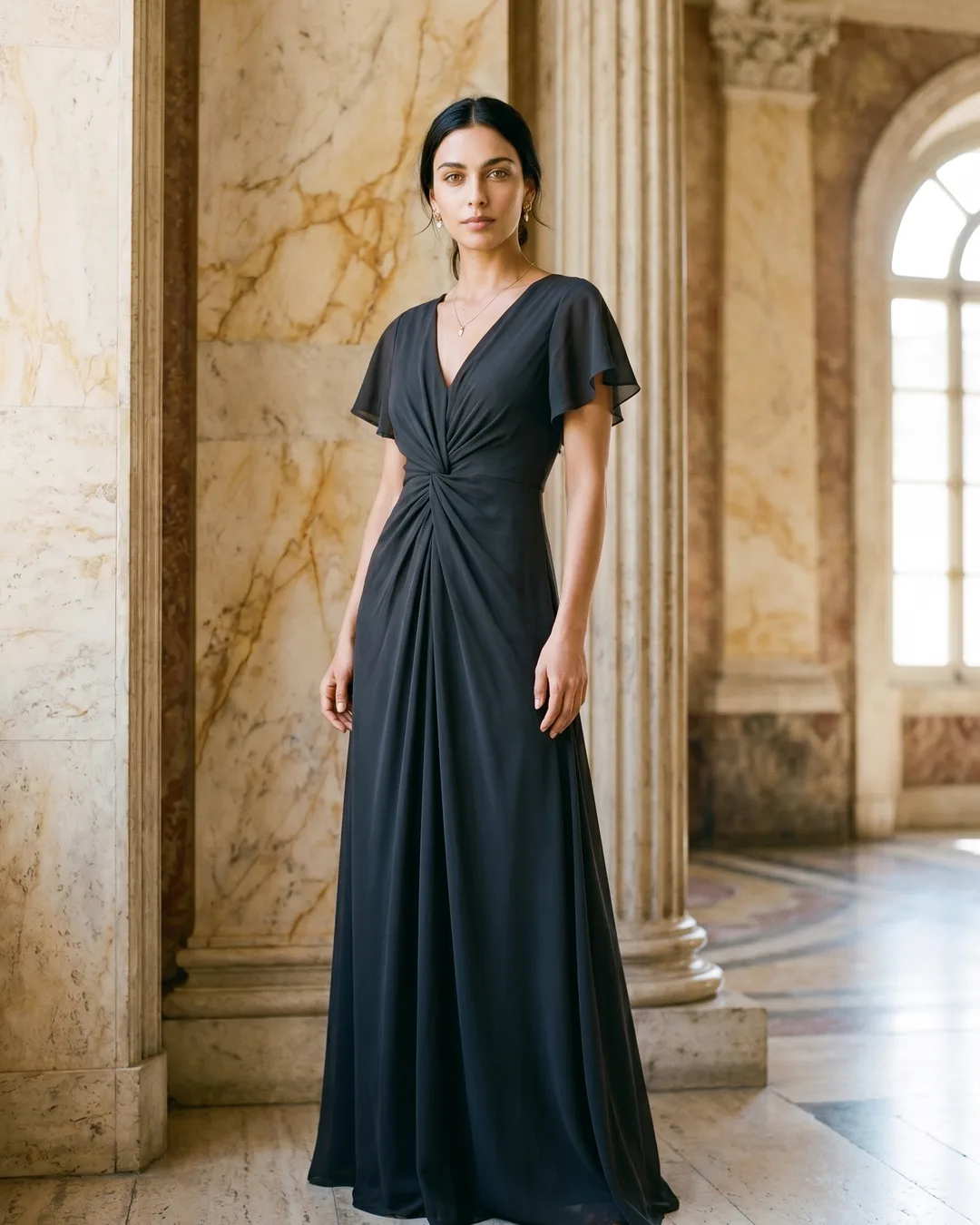
Cocktail Attire for Women: What \"Cocktail\" Really Means
A Roman house decodes cocktail attire for women: the exact length (knee to mid-calf, never floor), the right fabric, and how it differs from black tie.
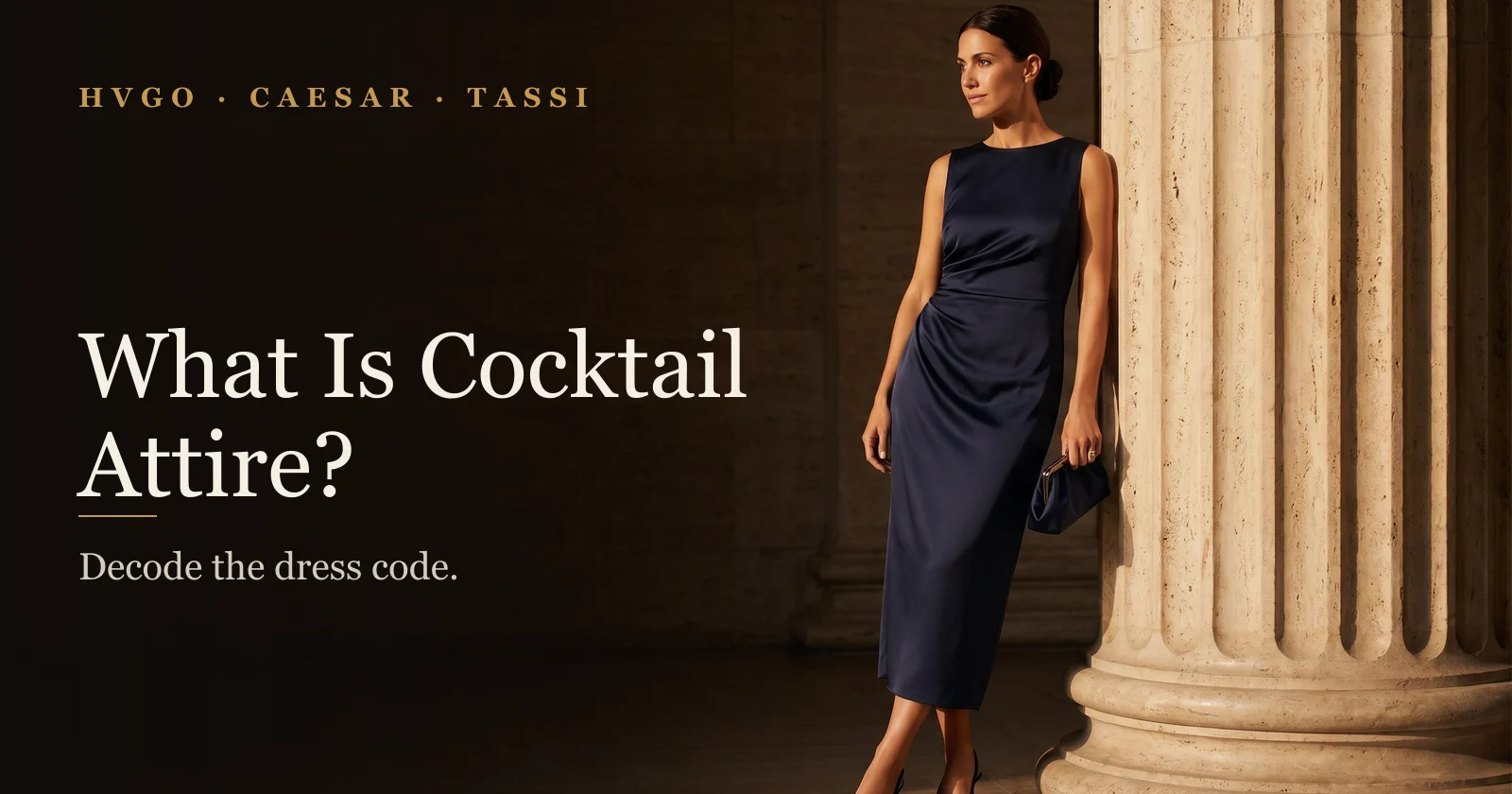
On this page
Cocktail attire for women means a knee-length-to-midi dress in a fabric with real weight, finished with a heel, a small clutch and one fine accessory. It is the code women attend most and second-guess hardest, because the invitation never says how short is too short or whether long is wrong. This is the Hugo Caesar Tassi ruling, set on two measurable axes the listicle SERP skips: hem length and fabric finish.
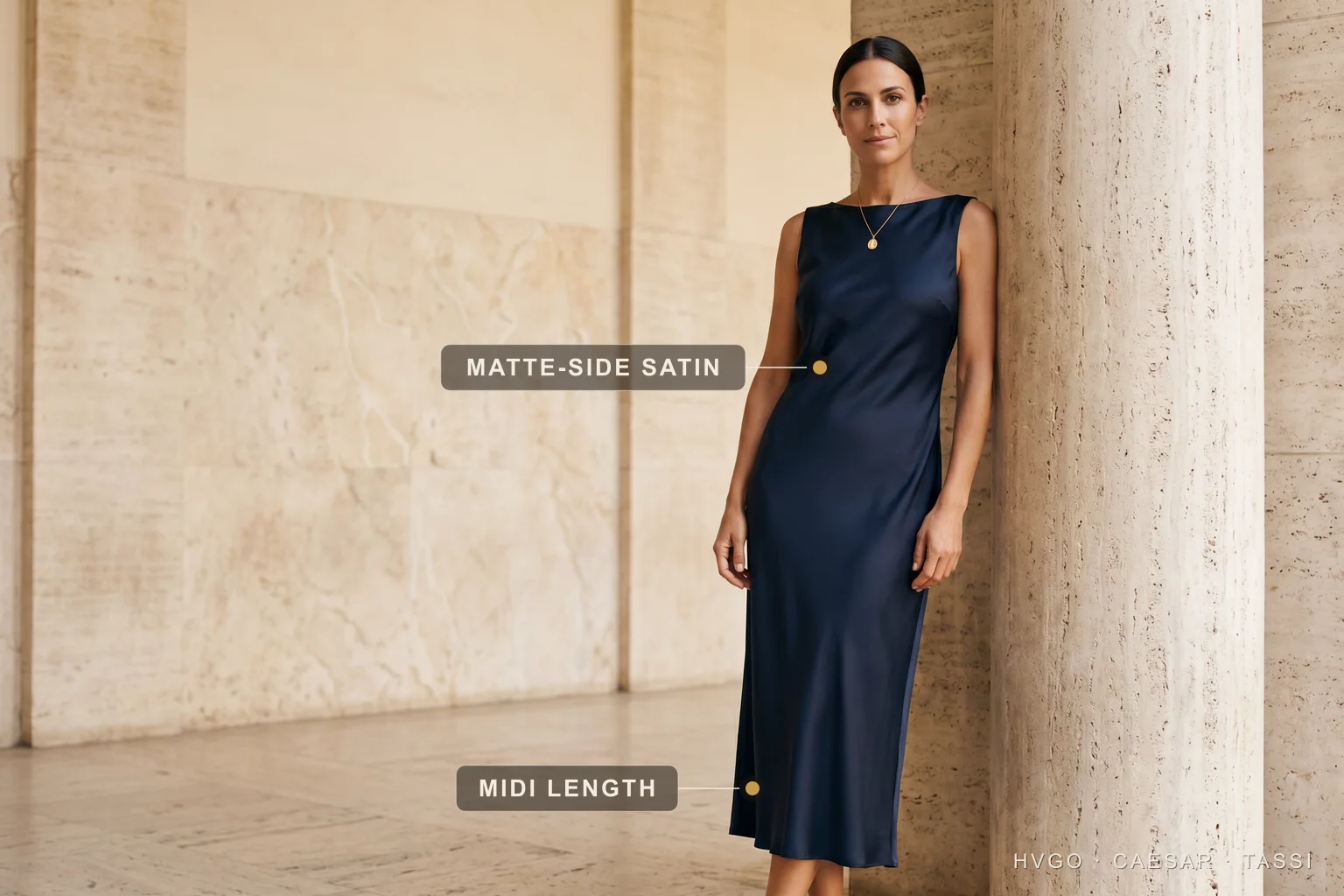
- Matte-side satin
- Midi length
Cocktail & semi-formal, decoded
“Festive” and “creative black tie” are cocktail with permission to add a statement colour — not to go casual.
Shop occasion dresses#What is cocktail attire for women, and where did the dress code come from?
Cocktail asks for a polished dress that stops short of an evening gown, defaulting to a knee-to-midi length in a dressy fabric. It sits in the formality ladder's middle and answers more invitations than any other code women receive. Land the length and the fabric weight, and you land the code regardless of venue.
#The plain definition: dressy, but not a gown
The reliable answer is a refined dress that breaks between the knee and mid-calf, cut in a fabric with body, then closed with a heel, a compact clutch and a single accent. You meet this code at evening weddings labeled "cocktail," rehearsal dinners, work galas and after-six parties, and a matte crepe sheath in Cobalto (navy) satisfies it without explanation. A casual cotton sundress at the same knee length fails, because the fabric reads daytime: length carries cocktail only when a dressy fabric does too.
#Where "cocktail" comes from
The term traces to the mid-century cocktail hour, roughly 6 to 8 p.m., the dressy slot between the workday and a late dinner, so the garment answered a clock rather than a venue. Christian Dior codified it: his robe de cocktail of the late 1940s and 1950s fixed the short-but-formal dress as its own category, distinct from the day dress and the long evening gown alike. The hour has loosened since, yet the code still inherits Dior's proportions: the clock moved, the hemline did not.
#Where cocktail sits on the formality ladder
Cocktail occupies the ladder's center, full-evening codes above it and daytime codes below.
- White tie, black tie and black-tie optional sit above cocktail and want floor-length.
- Semi-formal sits alongside cocktail and overlaps it closely.
- Garden party and dressy casual sit below, leaning daytime and softer.
For the complete ladder across every code, the what to wear hub maps each tier in one place, and the rung directly above gets its own treatment in the black-tie guide.
#How long should a cocktail dress be? The knee-to-mid-calf rule
A cocktail dress should break between just-above-the-knee and a true midi at mid-calf, never at the floor. Hem length is cocktail's defining axis, and it decides the code before color or fabric ever speak.
#The hem boundaries: knee-length to midi, never floor-length
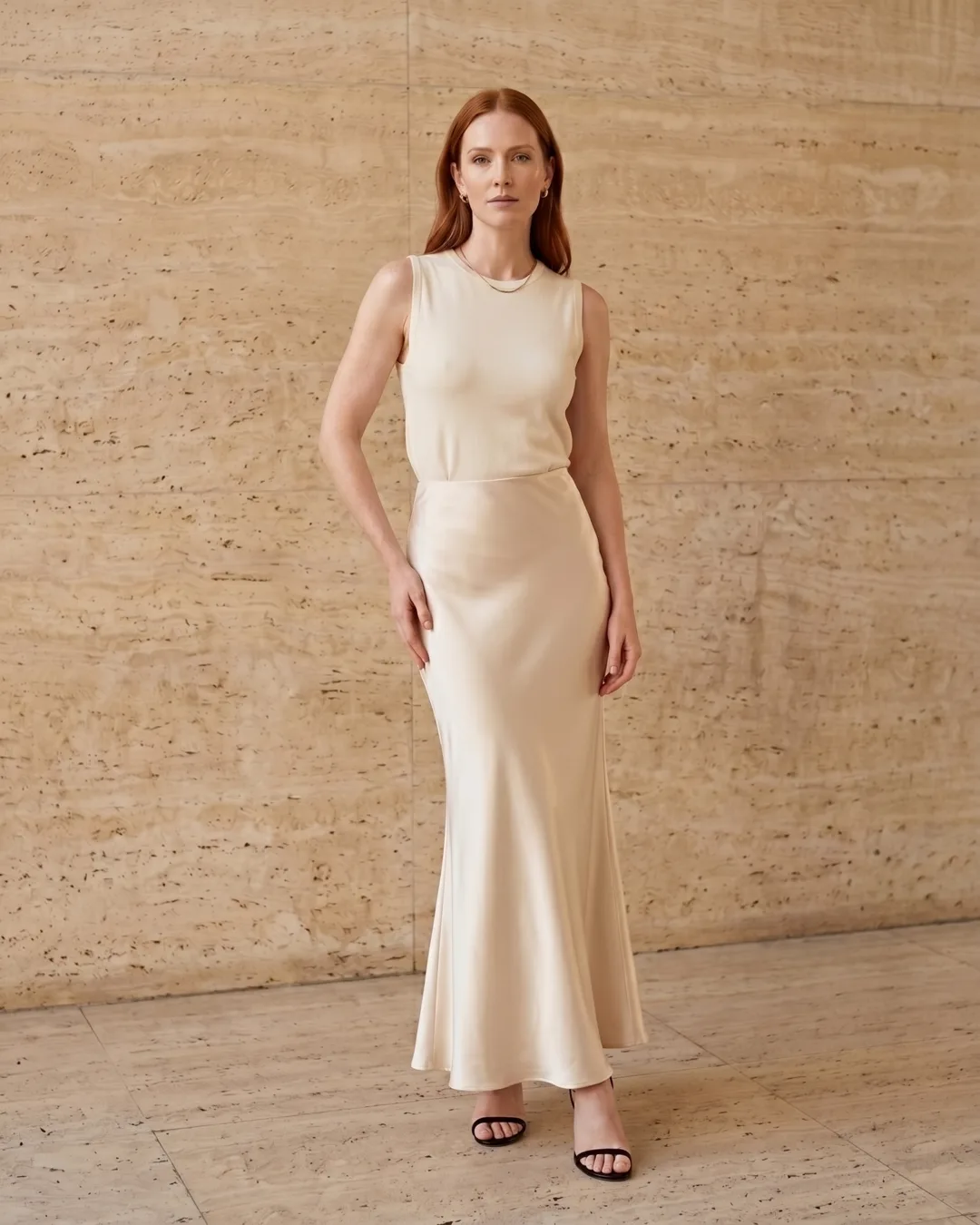
The safe zone runs from just-above-the-knee, through on-the-knee, to a midi that lands at mid-calf. A floor-length gown reads black tie and over-dresses the room; a very short mini reads club or casual rather than refined. This is the founder's knee-and-finish rule: set the hem in the band first, judge the fabric finish second, and the code resolves itself. A midi sheath two inches below the knee in matte crepe reads unmistakably cocktail; dropped to the ankle, it reads black tie.
#Where a midi belongs, and where a mini doesn't
A midi at mid-calf is the most modern and most forgiving cocktail length, flattering across ages and body types because it lengthens the line without exposing much leg. A mini earns its place only when the fabric reads unmistakably dressy and the event skews younger: a bias-slip mini in matte-side satin can pass at an evening party, while a casual jersey mini at the identical hem fails.
For the full hem taxonomy, the dress length guide covers midi against maxi against mini.
#Can you ever wear a long dress to a cocktail event?
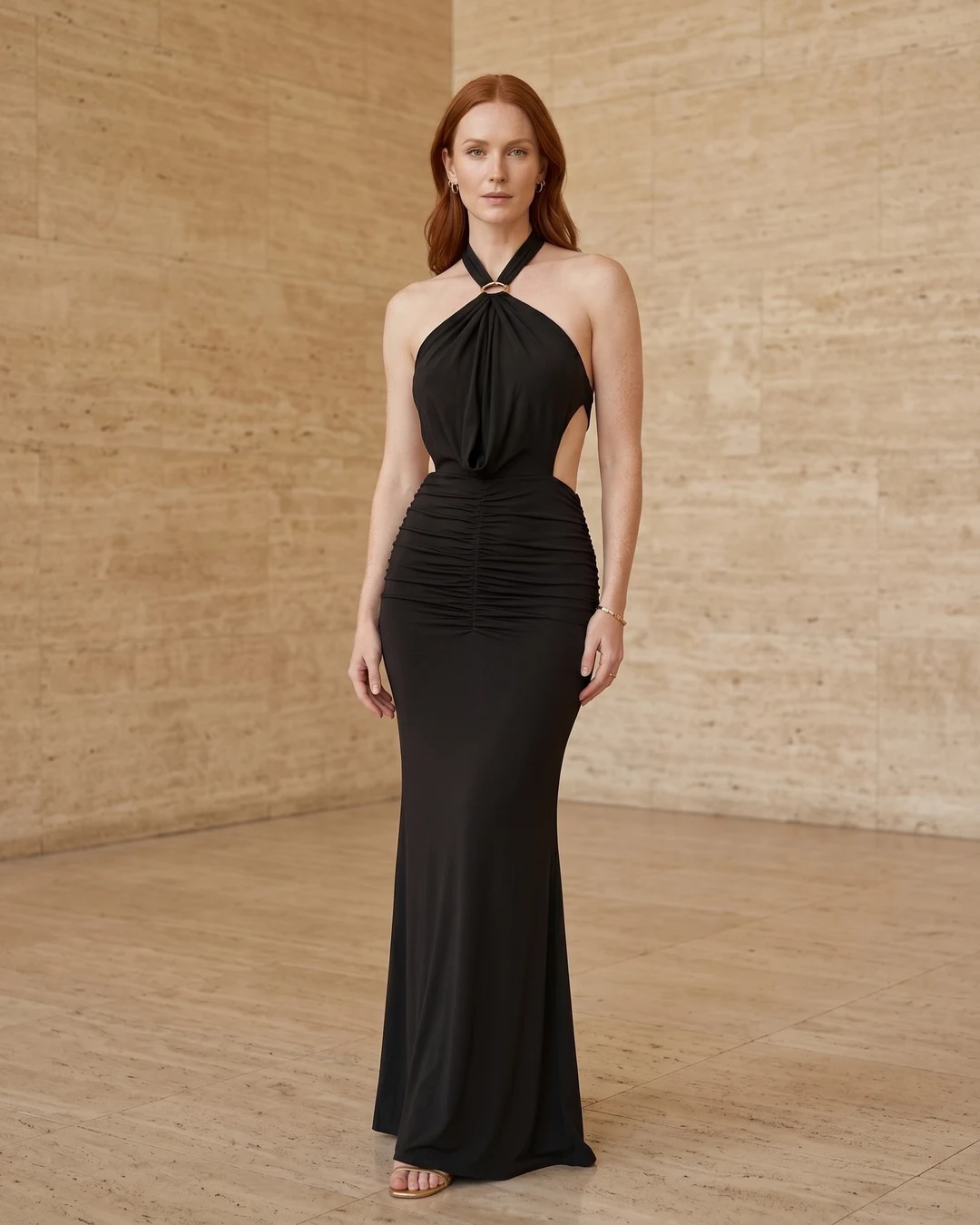
A sleek, matte column maxi can read as elevated rather than over-dressed at an evening cocktail event, provided it stays quiet and fluid; the test is reading, not measurement. A draped modal column in Verde Antico (green) glides past the rule because it reads as a clean line rather than an occasion, unlike a boned satin gown that shouts evening. Go long only if you go quiet.
#Which fabric, finish and silhouette make cocktail attire read correct?
Fabric weight, not sparkle, separates refined cocktail from a party dress. A fabric with body drapes and holds a line; a thin or high-shine one reads cheap under any light. Get the weight right and a single silhouette carries the whole look.
#Fabric weight over sparkle
The house view is plain: matte heavy crepe, satin worn matte-side, silk, fluid chiffon and, in winter, velvet all read cocktail because they carry weight and drape. Thin jersey, cheap high-shine satin, novelty sequins and anything resembling daywear do not. The mechanism is drape: a matte heavy crepe falls in clean vertical folds that read expensive, while a glossy polyester catches every overhead light and reads synthetic. A single restrained sheen is welcome after dark.
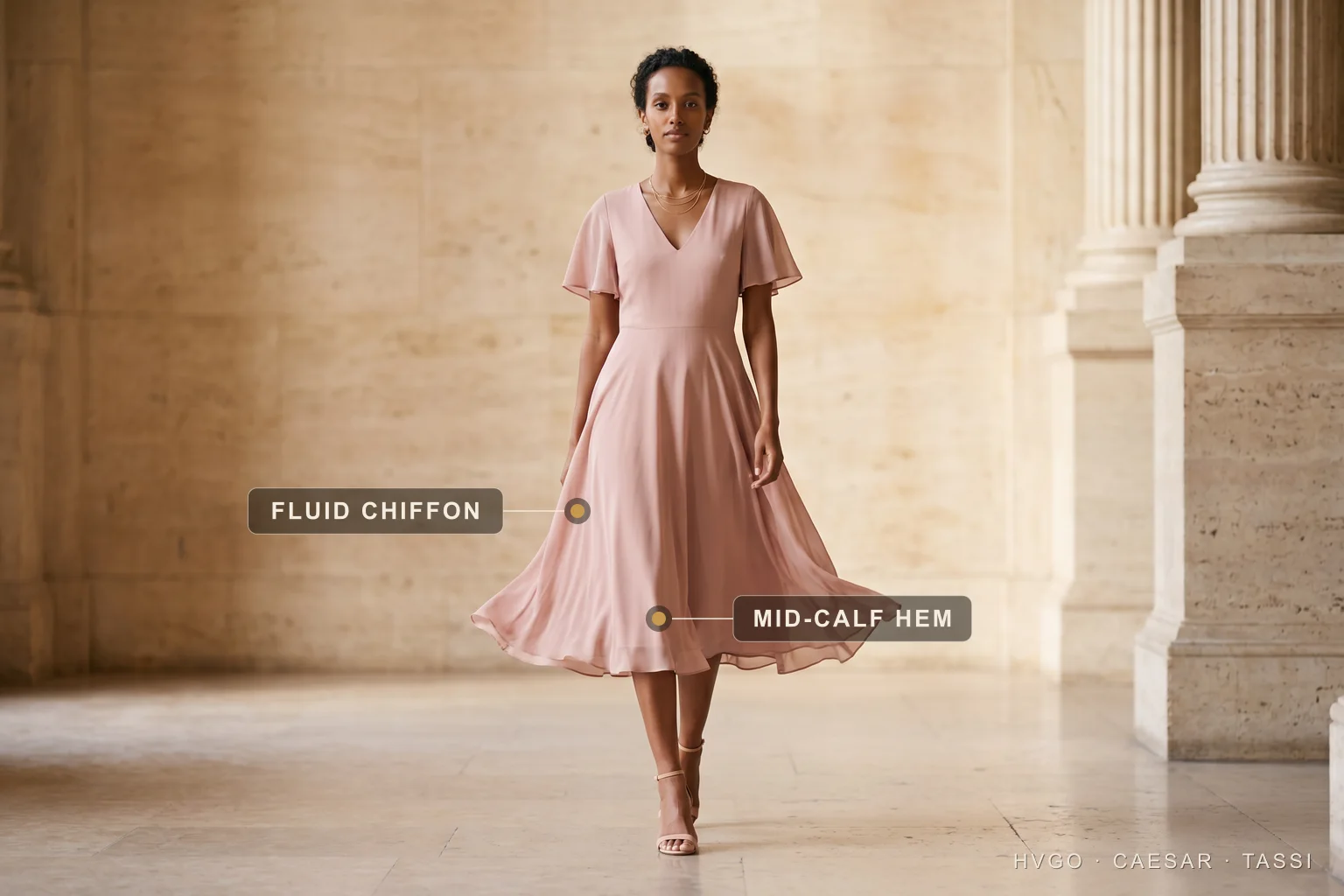
- Fluid chiffon
- Mid-calf hem
#Cocktail silhouettes that earn the room
Six shapes carry cocktail reliably, and a tailored jumpsuit gives a correct alternative for a woman who would rather skip a dress, under one rule: one point of interest, not several.
| Silhouette | Reads best for | One point of interest |
|---|---|---|
| Sheath | Straight and athletic frames | A clean neckline or single cutout |
| Fit-and-flare | A defined or created waist | A nipped waist seam |
| A-line | Most body types, daytime cocktail | A soft shoulder or sleeve |
| Bias slip | Lean and tall frames, evening | The bias drape itself |
| Wrap | A waist you want defined, modest coverage | A deep-but-covered neckline |
| Column midi | Tall frames, quiet-luxury looks | A single open back |
Choose the silhouette that suits your frame, then let one feature speak; a tailored jumpsuit in matte crepe is the unexpected but correct pick when a dress feels wrong for you.
#Colors that read cocktail
The imperial palette splits cleanly by time of day, and a strong single color out-reads any print-plus-sparkle combination because the eye rests rather than works.
- Evening: Porpora (wine), Cobalto (navy), Verde Antico (green), Basalt (black).
- Daytime: Cornelia (rose), Cipria (pink), Travertine (stone), Avorio (ivory).
One caution applies when the cocktail event is a wedding: skip bridal white entirely, a point the house's wedding-guest guidance treats in full.
#Cocktail vs semi-formal, black tie and garden party: where the lines fall
Cocktail divides from its neighbors on three axes: time of day, hem length and fabric weight. Each neighbor shares one trait with cocktail and breaks on another, so naming the break keeps you on the right rung.
| Code | Hem | Fabric weight | Time / setting |
|---|---|---|---|
| Black tie | Floor-length | Heaviest, matte-to-lustrous | Formal evening |
| Cocktail | Knee to mid-calf | Dressy, with body | Early evening, indoor |
| Semi-formal | Knee to midi | Dressy, slightly lighter | Day or evening |
| Garden party | Knee to midi | Breathable, floral | Daytime, outdoor |
#Cocktail vs semi-formal: the closest pair
Cocktail and semi-formal are the closest pair on the ladder, both calling for a knee-to-midi dress in a dressy fabric. The difference is tone: semi-formal leans a touch more conservative and daytime-friendly, and cocktail leans evening, with more permission for a deeper palette and a restrained sheen. A Cornelia (rose) crepe midi reads semi-formal at a daytime luncheon and cocktail at a six o'clock party; when the two blur, a refined midi suits either.
#Cocktail vs black tie: length and weight
This is the cleanest dividing line in the silo. Black tie wants floor-length in the heaviest evening fabric, and cocktail stops at the knee-to-midi and accepts lighter dressy fabrics. The asymmetry matters in one direction: you can wear a refined midi to black-tie optional, but a knee-length is rarely formal enough for true black tie.
#Cocktail vs garden party: indoor evening vs daytime outdoor
Cocktail reads indoor and early-evening with a dressy fabric and a possible sheen, and a garden party reads daytime and outdoor, floral or pastel, breathable and soft. The same hem can read either way; fabric, color and time of day decide, and grass calls for a block heel against an indoor floor's finer one. A floral chiffon midi reads garden party by day and cocktail in Basalt (black) after dark.
#What not to wear to a cocktail event
Five looks miss the cocktail middle, and each fails for a nameable reason rather than taste.
- A floor-length ballgown over-dresses the room and reads black tie.
- Jeans or any denim read casual and break the code outright.
- A casual cotton sundress or beachwear reads daytime, even at the right hem.
- Gym-adjacent or athleisure fabrics read off-duty under any cut.
- Bridal white at a wedding competes with the bride and is ruled out.
The underlying test stays simple: a look that reads daytime-casual or full-evening-gown misses cocktail's center. When a wedding is the event, the wedding dress codes guide settles the white question completely.
#The quiet-luxury case for cocktail attire: why a matte bias drape out-dresses a sequined mini
A single bias drape or one clean cutout in matte crepe out-dresses a fully sequined mini, because richness comes from drape and fit, not sparkle. At a real cocktail event the eye hunts for the woman trying hardest, and embellishment hands it a target; the quiet look wins by giving the eye nothing to catch on.
#The mistake the cocktail SERP encourages
Most cocktail guidance equates the code with sparkle, bodycon and a sequined mini, which is the mistake this page corrects. Sequins read as effort on display, and at cocktail the eye reads abundance as trying, and trying as less expensive. In a room of sequined minis, a Basalt (black) matte crepe sheath reads as the most considered look present, and because even a quiet sheen can tip slightly dressy by day, daytime cocktail leans fully matte.
#One bias drape or one cutout, in matte crepe or satin
The house ruling is one point of interest, the rest calm. A single bias-cut drape, one clean cutout or an open back in matte heavy crepe or matte-side satin out-dresses a sequined mini, because fabric weight, drape and fit do the talking; add a second statement and the look loses its discipline. A Vipsania draped modal column makes the case: one fluid line is the entire statement.
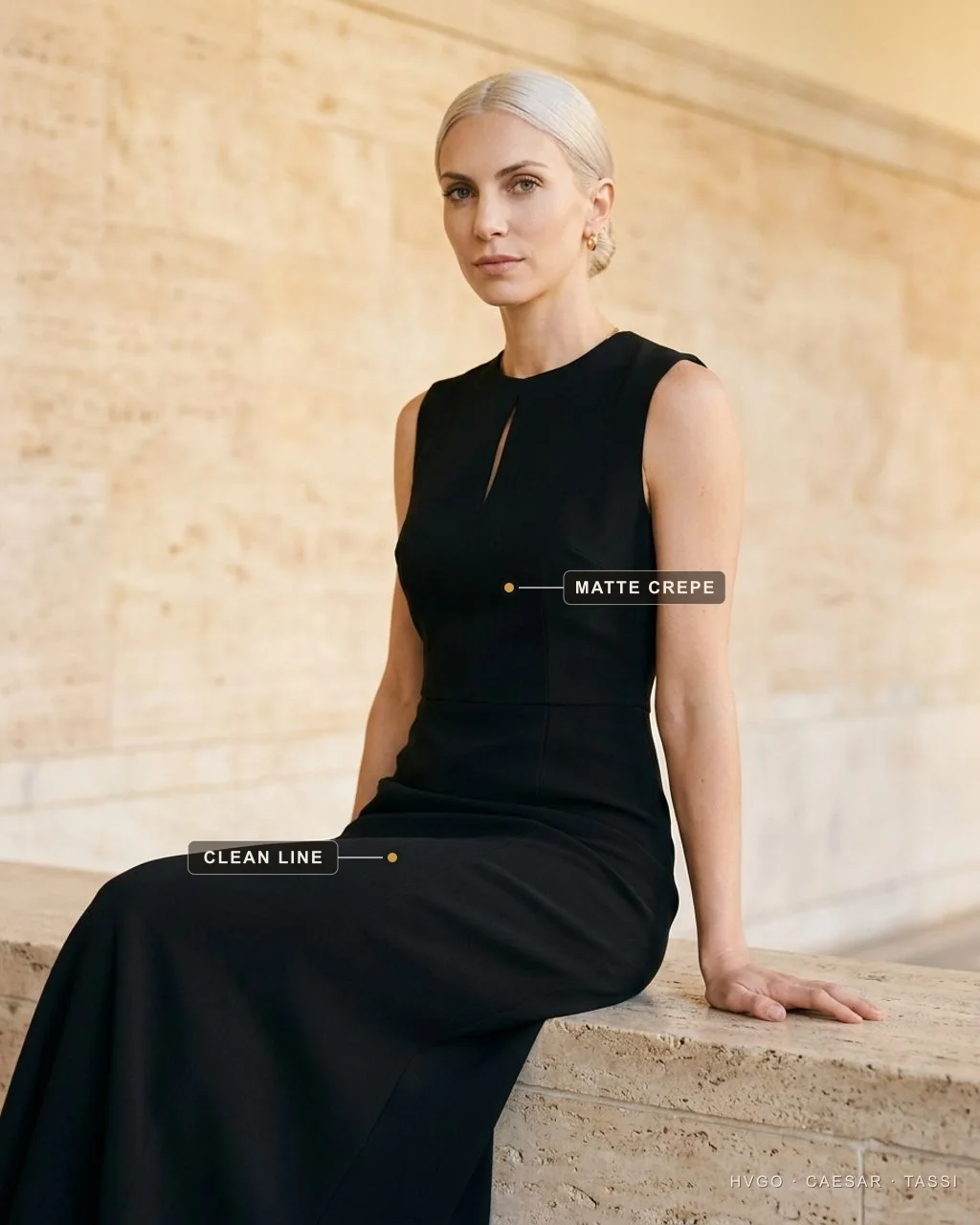
- Matte crepe
- Clean line
On the full four-lever framework, the quiet luxury guide treats occasion dressing in depth; this page owns only the cocktail application.
#How do you adapt cocktail attire to the season, your body and your comfort?
The cocktail code stays fixed while fabric weight and coverage shift with the season, your frame and your comfort. The hem band and the one-statement rule never move; the cloth, the sleeve and the calibration to your own proportions do.
#Summer vs winter cocktail
Warm-weather cocktail favors lighter satin, silk and chiffon, bare or lightly covered shoulders and a softer palette, while cold-season cocktail welcomes velvet, long sleeves, deeper tones and a fine wrap for arrival. A summer chiffon midi in Cipria (pink) and a winter velvet midi in Porpora (wine) match in length and discipline, differing only in cloth.
#Modest and sleeved cocktail options
Cocktail is fully compatible with covered shoulders, a higher neckline, three-quarter or long sleeves and a midi hem, because the code rewards fabric and proportion rather than skin. A sleeved crepe midi or a wrap dress is impeccably correct, never a compromise, and the Portia short-sleeve chiffon A-line is one such option: covered, fluid and unmistakably cocktail. Avoid heavy embellishment added to compensate for coverage, since that breaks the one-statement rule.
#Petite, plus and tall calibration
Three frames calibrate three different ways, all inside the same hem band.
- Petite: choose a just-on-the-knee hem and a clean vertical line so a midi does not shorten the leg.
- Plus: choose structured crepe with a defined waist, in a fit-and-flare or wrap.
- Tall: choose a true midi, which reads beautifully and avoids the too-short risk a knee hem can create.
For fit specifics by frame, the body-shape hub goes deeper; the silhouette table above gives the starting point.
#What accessories finish cocktail attire without overdressing it?
Cocktail finishes with one heel, one small clutch and exactly one fine accessory, then stops. The dress is the subject, so the accents stay quiet enough not to compete; more than one statement, and the look tips from refined to busy.
#The shoe, the clutch and the one accessory
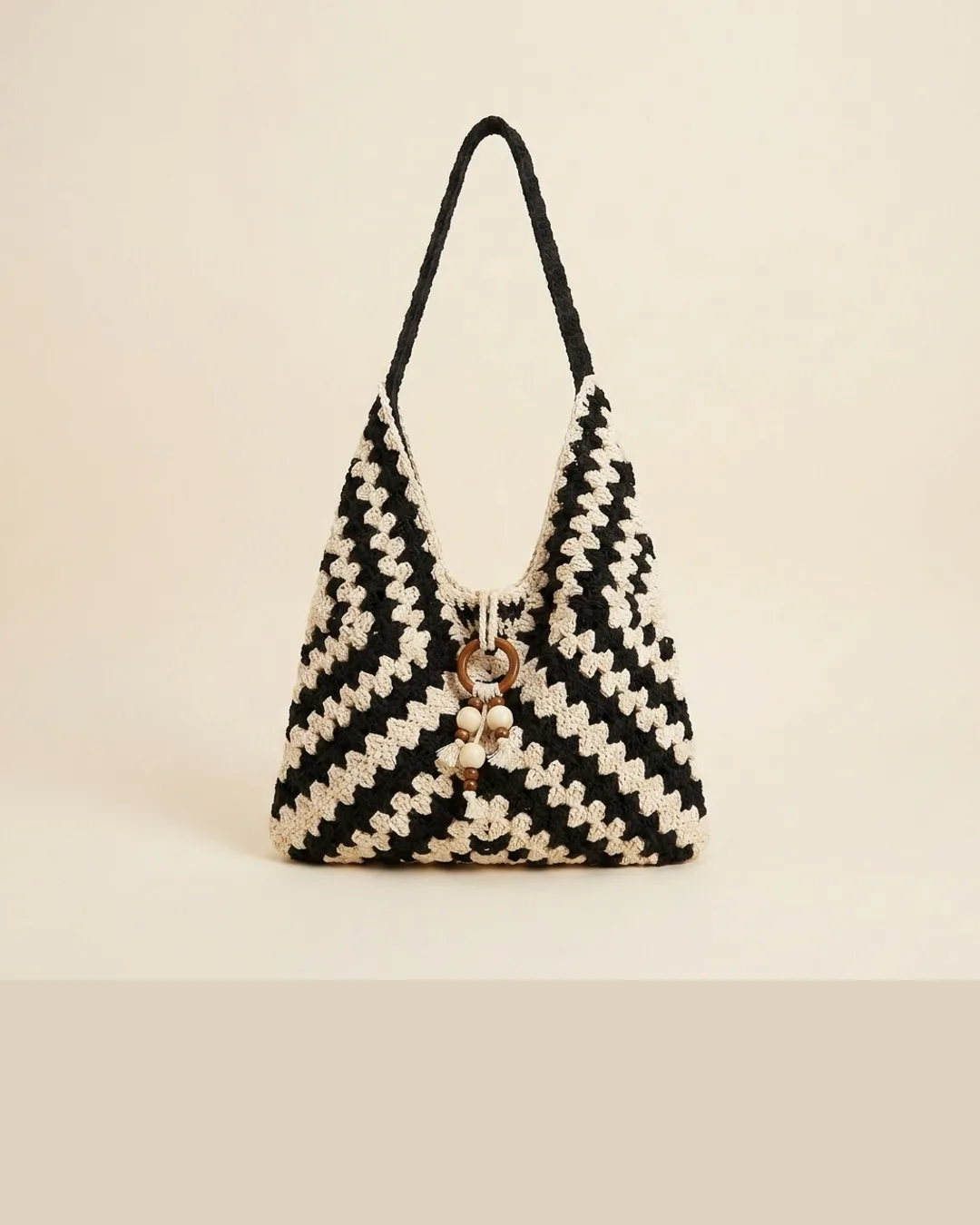
A refined heel or an elegant block heel finishes the foot, with block heels reserved for grass or long standing, and the day bag stays home in favor of a small clutch. Then choose exactly one focal accessory: a fine earring, a single silk scarf or one bracelet, with metallic restraint and no visible logos. A Quirina envelope clutch with one Carina silk square reads finished without crowding, unlike a necklace, bold earrings and a cuff worn at once. For pairing across pieces, the accessorizing guide covers how to finish a dress in full.
#Hosiery, wrap and the rest
The modern ruling on hosiery is permissive: bare legs are accepted at most cocktail events, with sheer black reserved for winter or added formality. A fine wrap or a tailored jacket covers a cool room or the arrival, then comes off indoors. A wrap in Travertine (stone) over a Basalt (black) sheath warms the arrival without adding a statement, unlike a structured coat kept on indoors that reads as outerwear on display.
#How Hugo Caesar Tassi dresses a woman for cocktail attire
Hugo Caesar Tassi cuts cocktail in matte heavy crepe, satin and fluid chiffon, in the imperial palette, to the knee-to-midi length. The house dresses for the early evening the Roman way: one clean line, one point of interest, nothing else.
#The house's cocktail fabrics and lengths
The atelier's cocktail cloth breaks between the knee and mid-calf, and each dress is fully lined with a concealed zip, so the line stays clean and the closure disappears. The philosophy stays restraint-first, summed in the house motto Nata Imperare.
#The dresses cut to the cocktail rule
Three HCT dresses sit squarely inside the cocktail band, each answering a different reading of the code, so matching the dress to your event turns the rule into a garment.
- Livilla (floral-print chiffon midi) reads as the daytime, garden-leaning cocktail midi.
- Portia (short-sleeve chiffon A-line) is the sleeved, covered cocktail option.
- Vipsania (draped modal column) is the quiet bias-drape case, a single clean line as the only statement.
Finish any of the three with a Quirina envelope clutch and one Carina silk square as the single accent. The house's evening gowns step up to floor-length and belong to black tie, not here.
#Your cocktail attire ruling, at a glance
Cocktail means knee-length to mid-calf, never floor-length and rarely a true mini, in a dressy fabric with real weight over sparkle. Add one point of interest, a heel, a small clutch and one fine accessory, then stop. Evening leans darker and a touch more lustrous, daytime softer and fully matte; land the hem and the cloth, and you arrive neither over- nor under-dressed.
#Frequently asked questions
What does cocktail attire mean for a woman?
Cocktail attire for a woman means a dressy but not floor-length look, most reliably a knee-length-to-midi dress in a fabric with real weight. Cut it in matte crepe, satin or fluid chiffon, then finish with a heel, a small clutch and one fine accessory. It sits in the middle of the formality ladder, below black tie and alongside semi-formal.
How long should a cocktail dress be?
A cocktail dress should sit between just-above-the-knee and a true midi at mid-calf. Avoid floor-length, which reads as black tie, and avoid a very short mini unless the fabric is unmistakably dressy and the event skews evening. A midi is the most modern and most forgiving cocktail length.
What is the difference between cocktail and semi-formal attire?
The difference between cocktail and semi-formal attire is tone, since both want a knee-to-midi dress in a dressy fabric. Semi-formal leans slightly more conservative and daytime-friendly, and cocktail leans evening, with more room for a deeper palette and a restrained sheen. When in doubt, a refined midi suits both.
What is the difference between cocktail and black-tie attire?
The difference between cocktail and black-tie attire is length and fabric weight. Black tie expects a floor-length gown in heavy evening fabric, and cocktail stops at the knee or mid-calf in lighter dressy fabrics. A refined midi can pass at black-tie optional, but a knee-length is rarely formal enough for true black tie.
Can you wear a long dress to a cocktail party?
You can wear a long dress to a cocktail party only when it reads quiet and fluid, like a sleek matte column maxi. A structured ballgown or grand satin gown is too formal and over-dresses the room. The safe choice stays at the knee or midi; go long only if you keep it calm, never grand.
Is a sequined mini good cocktail attire?
A sequined mini is rarely the most elegant cocktail attire, though it can work at a younger, evening event. A single bias drape or one clean cutout in matte crepe or satin reads more expensive, because richness at cocktail comes from fabric weight, drape and fit rather than sparkle.
Now that you know cocktail means knee-to-midi in a fabric with real weight, find the dress that answers it in the Hugo Caesar Tassi occasion dresses and midi dresses edits, then finish it with a single fine accessory rather than a sparkle.
More What to Wear guides
What to Wear to a Christening
What to wear to a christening, by a Roman house — modest, daytime-elegant outfits in church-safe colors that honor the day, never reading bridal.
Dress for a christeningBlack-Tie Attire for Women
A Roman house decodes black-tie attire for women: floor-length or not, the right fabric and jewelry, and how optional, creative and gala differ.
Decode the four black-tie rungsWhat to Wear to an Italian Wedding
A Roman house decodes what to wear to an Italian wedding: the real no-black and no-white rules, church cover-up, and North-vs-South dress code.
Decode the invitata dress codeWhat to Wear to Royal Ascot and the Races
The enforced Royal Ascot enclosure rules for strap width, hem and hat size, plus a Roman house rule for balancing a hat against your dress.
Pass the Ascot enclosure rulesWhat to Wear to a Summer Wedding
A Roman fashion house on what to wear to a summer wedding: the breathable fabrics, flattering bright-light colors and hems that survive grass and sun.
Dress a summer weddingWhat to Wear to the Opera
How dressed-up the opera really is, house by house: from La Scala's opening night to a relaxed Met evening, plus matinee, box and intermission etiquette.
Calibrate opera dress codes