What to Wear to a Summer Wedding: A Roman House's Warm-Weather Guest Guide
A Roman fashion house on what to wear to a summer wedding: the breathable fabrics, flattering bright-light colors and hems that survive grass and sun.
On this page
Wear a breathable, fluid dress in chiffon, silk or lightweight crepe, in a flattering daylight color that isn't white, hemmed for the ground underfoot and paired with a heel that won't sink into grass. The fabric decides everything else. Get that one choice right and color, hem and shoes fall into place around it.
This is the Hugo Caesar Tassi atelier's ruling on the warm-weather wedding guest: fabric first, the way a Roman house dresses for the heat.
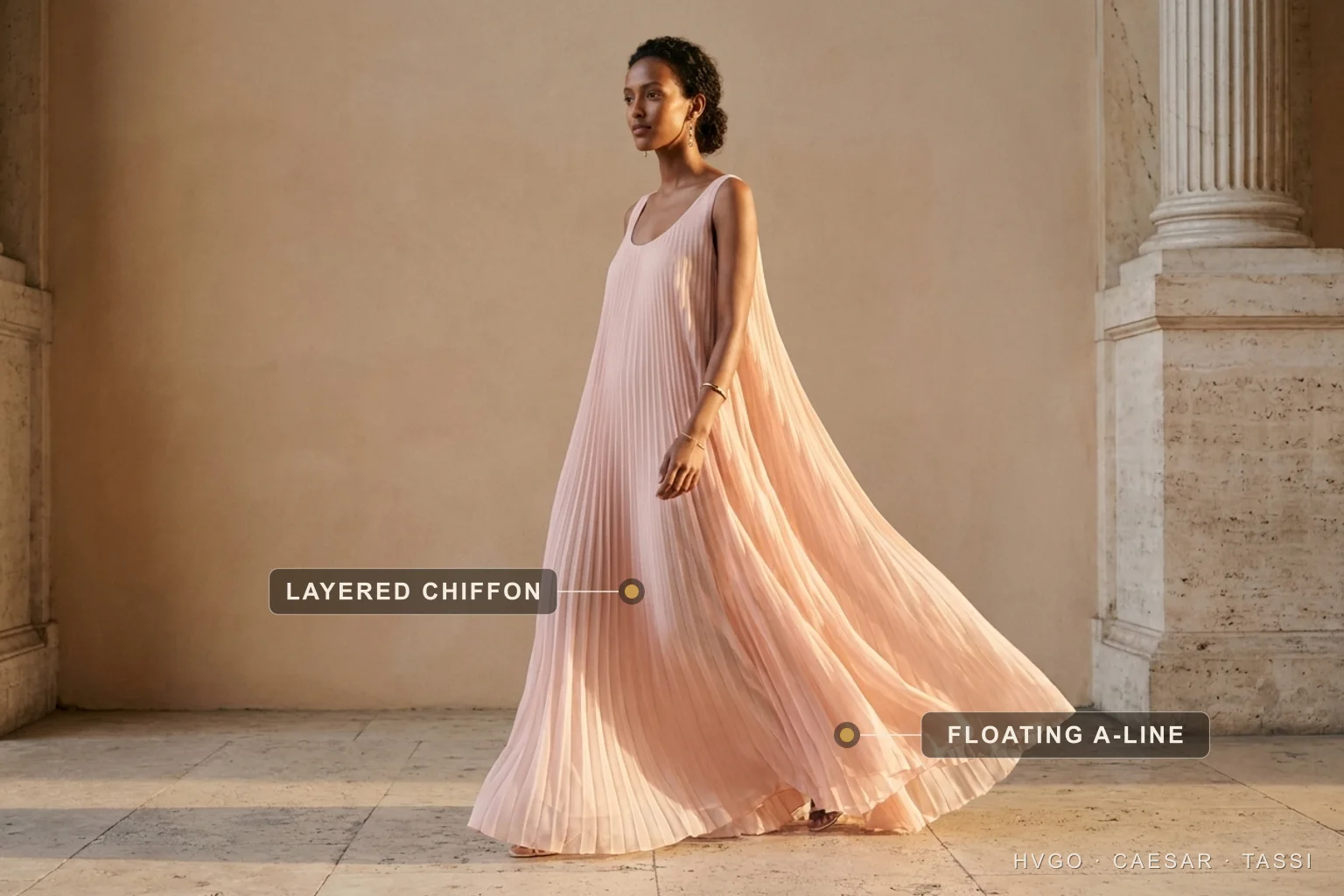
- Layered chiffon
- Floating A-line
A summer wedding, decoded
Breathable fabric, a light shawl for the ceremony, and a block heel or wedge for lawns.
Shop occasion dresses#What should you actually wear to a summer wedding? The short answer
Choose a breathable natural-feel dress in a luminous daylight color, hem it for the ground underfoot, and pick a heel that grips soft earth. That sequence (fabric, then color, then hem, then shoe) is the whole method. Decide in any other order and you fight your own outfit all afternoon.
#Fabric first, then color, hem and shoes
A dress in recycled chiffon weighs under 80 grams per square meter and moves on the smallest breeze, keeping a guest cool through a three-hour ceremony. Color comes second because daylight changes how every shade reads, hem third by the ground you cross, the shoe last to match it.
Take a vineyard ceremony at noon: a fluid chiffon maxi, a warm tone like Cipria pink, a hem that clears the rows, a block heel. The counter-case, an air-conditioned ballroom at 7 p.m., flips three of those four calls, because heavier satin and a stiletto behave perfectly once heat and soft ground no longer apply.
#Read the invitation and the setting before you shop
The invitation states the formality; the venue states the physics. A garden or vineyard means grass and full sun, a beach means sand and wind, a courtyard radiates heat off stone, and a church adds shoulder coverage that an open reception then drops.
A 2 p.m. garden ceremony rewards pale, airy fabric, while a 7 p.m. reception forgives a richer color as the air cools. When the card names a dress code you don't recognize, the formality ladder lives on our what to wear pillar; this guide stays seasonal, not definitional.
#Which fabrics keep a summer wedding guest cool, and which to avoid
Loose-woven natural fibers move air across the skin; dense synthetics seal heat against it. That single mechanism separates a comfortable guest from a flushed one, and it is why the house builds warm-weather dresses from chiffon, silk, crepe and modal rather than heavy satin or thick polyester.
#The breathable winners: chiffon, silk, lightweight crepe and modal
Chiffon is woven from fine, highly twisted yarns that leave microscopic gaps, so air passes through and body heat escapes. Hugo Caesar Tassi knife-pleats or bias-cuts a recycled chiffon for exactly this airflow, layering two or three panels so the dress reads opaque while still venting. Silk conducts heat away from the skin, lightweight crepe holds a clean line without clinging, and modal breathes like cotton but falls like liquid.
A single chiffon panel can backlight to sheer in direct sun, while two or three pleated layers preserve airflow and block the light. The Aemilia A-line chiffon maxi works this way: fluid and cool, yet never transparent on a bright lawn.
#What traps heat: heavy satin, thick polyester and stiff linings
Heavy duchesse satin packs its yarns tight to throw light, and that density blocks air and holds warmth against you. Thick polyester does not wick, so perspiration sits on the skin and the fabric clings. The hidden offender is the lining: a sealed polyester lining turns a breathable shell into a sauna.
A breathable cupro slip fixes it, venting heat while preventing transparency. Reserve the heaviest satin for an air-conditioned evening reception; a bias-cut satin gown like Calpurnia earns its place indoors after sundown, not on a noon lawn.
#The sheerness and sweat checklist before you buy
Run these four checks before you commit, because a daytime dress behaves differently in strong light than under a fitting-room bulb.
- Hold it to a bright window. Backlight reveals transparency a dim mirror hides; if you see through it, demand a built-in or matching slip.
- Choose a perspiration-friendly color. Mid-tones and prints disguise damp; pale solids and gray show every mark.
- Pick a wrinkle-resistant weave. Chiffon and crepe shake out after a car journey; stiff linen creases the moment you sit.
- Confirm the lining breathes. A cupro or viscose slip vents; a bonded polyester lining seals heat in.
For how each fiber wears across a season, the fabric-care notes sit in the house glossary.
#Midi or maxi? The right summer wedding dress length for grass, sand and sun
A fluid maxi suits a garden, vineyard or evening reception; a midi or tea-length is the cooler, more walkable choice for daytime ground. Length is a venue decision, not a fashion one.
#A flowing maxi for a garden, vineyard or evening reception
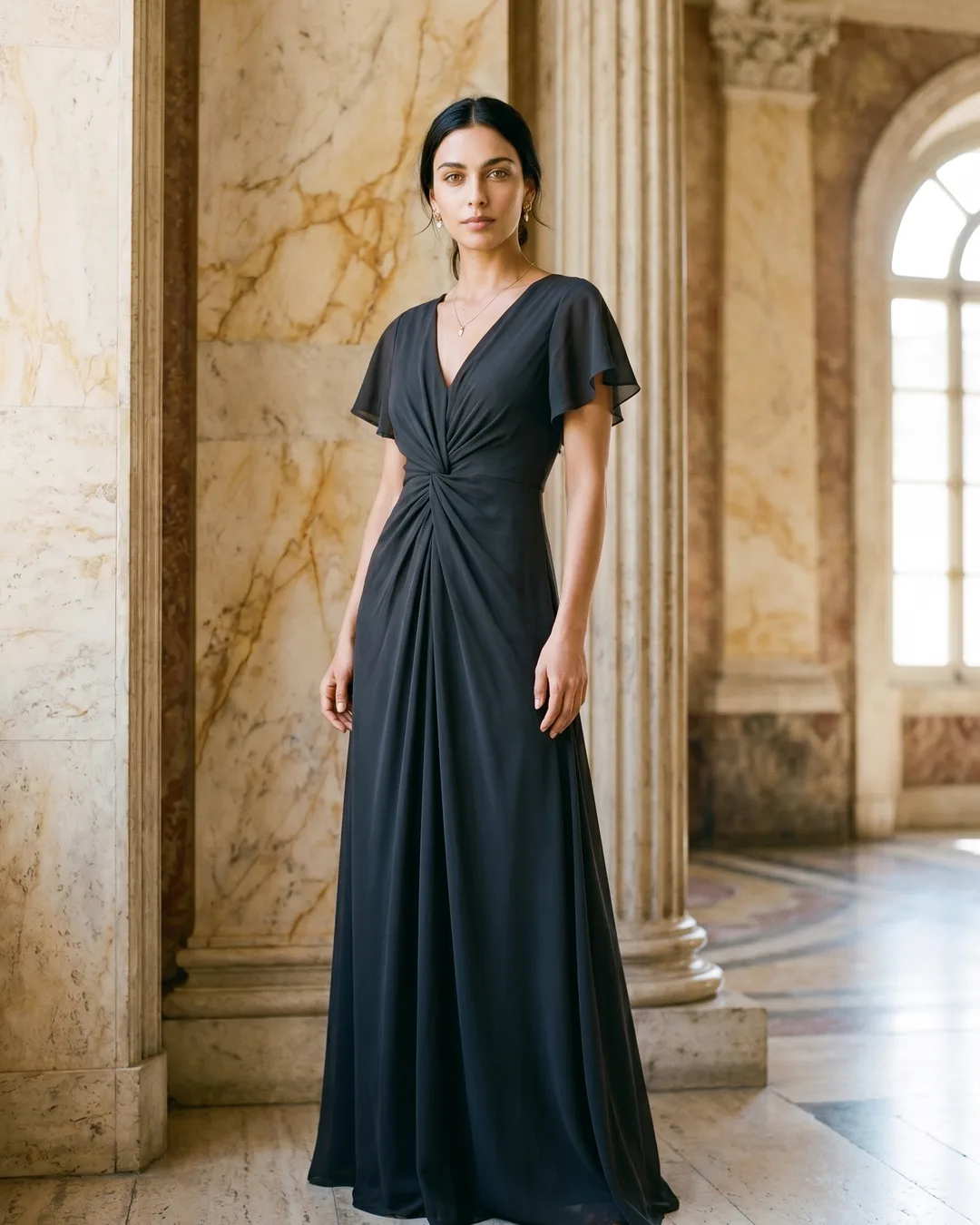
A maxi in chiffon or modal shades the legs through hours of sun and reads formal for evening. Choose a fluid maxi, not a heavy one: an A-line or column cut skims the floor and clears grass without dragging a wet hem. The Julia French-pleated chiffon maxi shows the principle, with vertical pleats that vent air up the leg.
The edge case is wet morning grass: even a fluid maxi picks up dew at the back hem, so an A-line ending a half-inch off the floor beats a true sweeping train outdoors.
#A midi or tea-length for daytime ease and walkable ground
A midi is the most versatile summer length, cool and walkable across lawns and gravel and flattering in daylight that catches the calf. Tea-length, ending mid-shin, carries a retro garden charm and frees the ankles for uneven ground.
The Livilla floral-print chiffon midi is the daytime workhorse here. For the complete breakdown of every hem, the length guide compares midi, maxi and mini in full, so this page stays on the summer-specific calls.
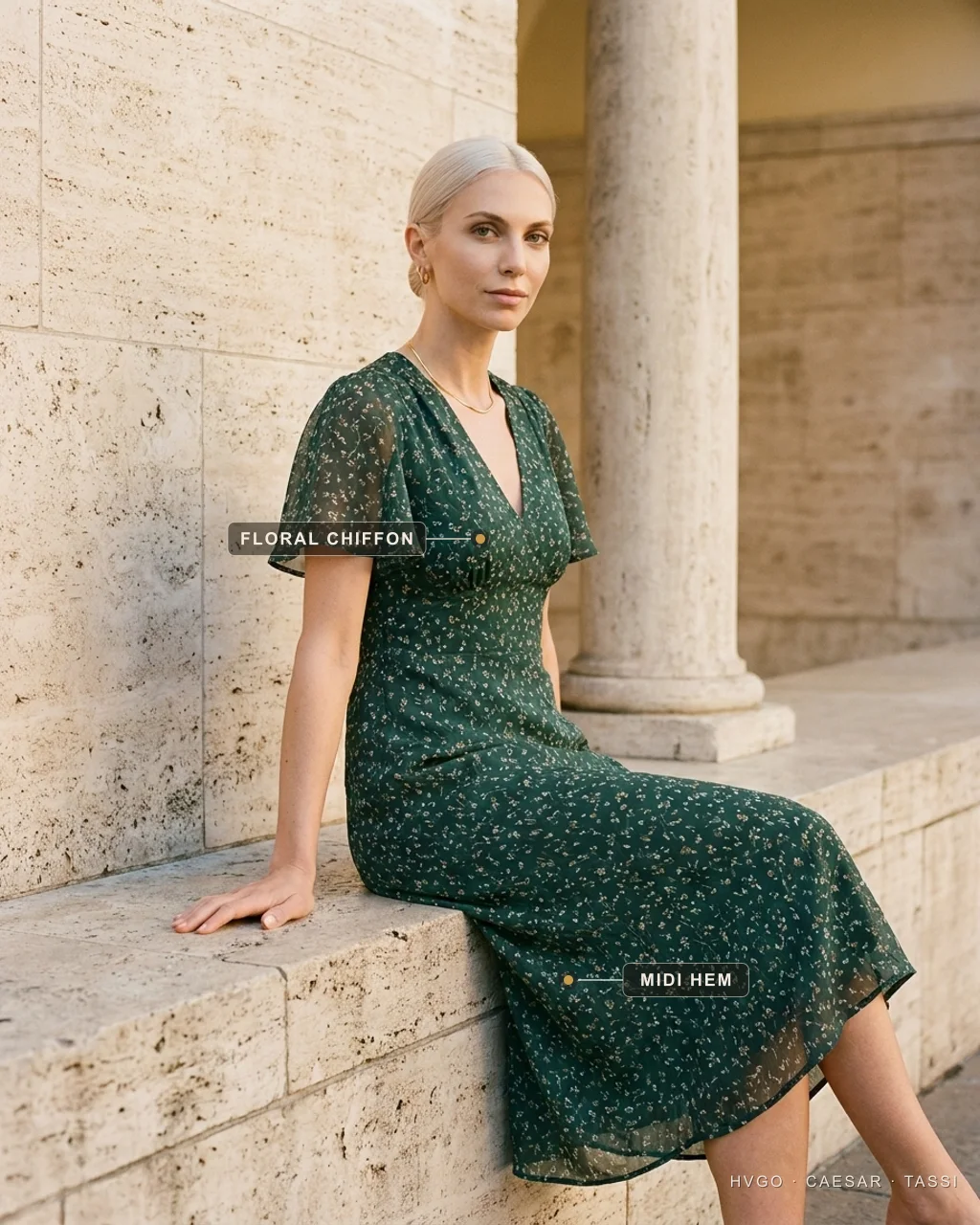
- Floral chiffon
- Midi hem
#Why a true mini rarely suits a summer wedding
A very short hem reads casual against wedding formality and exposes the legs to a full afternoon of sun. It also fails the sitting test, riding up on garden chairs through the vows, so compared to a knee-skimming or midi length the mini gives up both decorum and comfort. The compromise is a floaty A-line that grazes at the knee, the shortest the house recommends for a guest.
#Which colors flatter best in the bright light of a summer wedding
Soft warm tones glow under strong daylight, while jewel and deep tones hold their richness against glare. Bright sun behaves like a giant softbox: it lifts pale shades and slightly cools warm ones, so a color that looks flat indoors can luminesce on a lawn.
#Soft and warm tones that glow in daylight
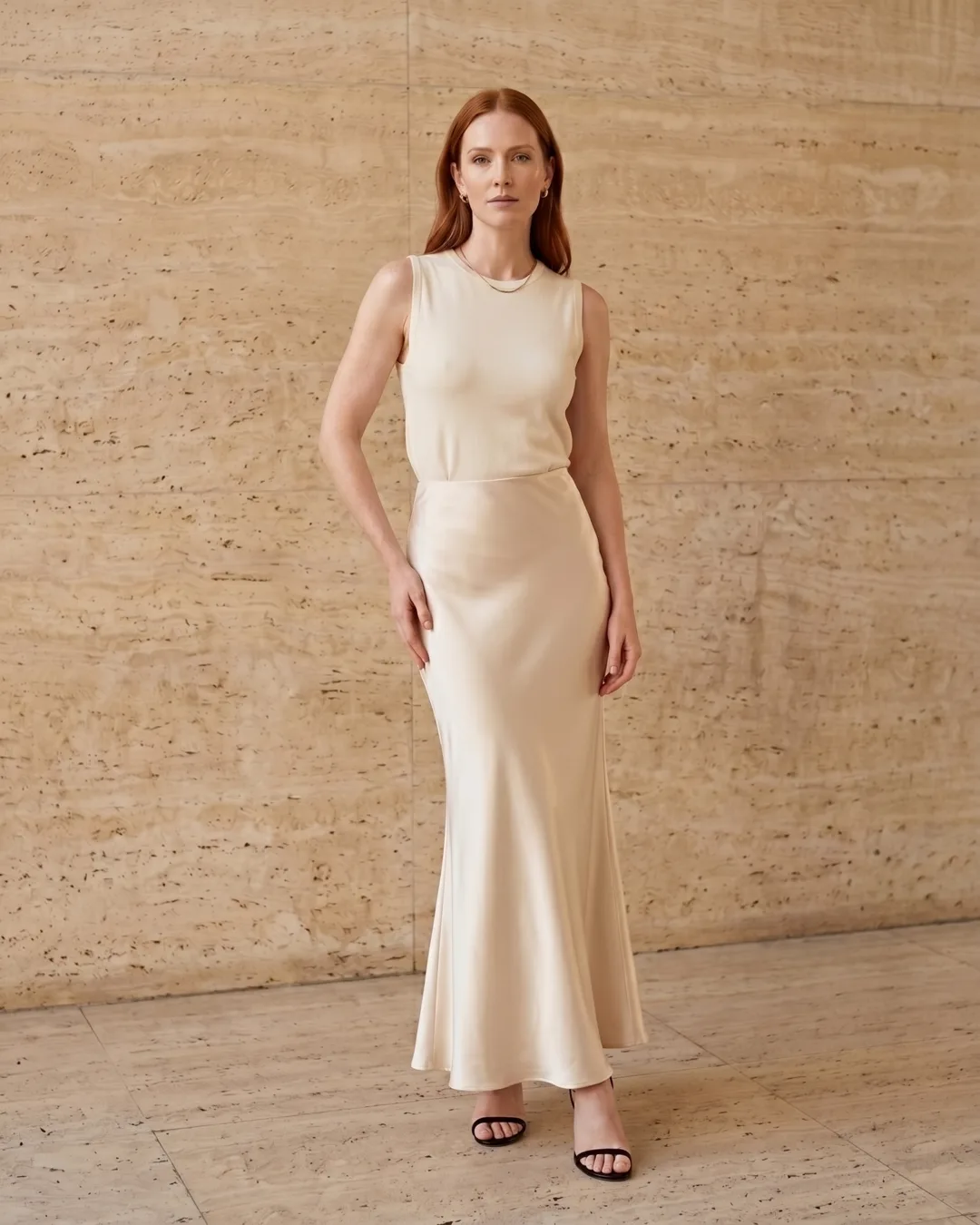
Cipria pink, Cornelia rose and Travertine stone read luminous in full sun, because daylight bounces off their warmth and reflects it onto the face. These pale-but-not-white shades catch highlight without the harsh blow-out pure white produces on camera, and a floral print sits in the same forgiving family.
The first-party calculation the house works from: a warm pale like Cipria gains roughly a half-stop of apparent brightness outdoors, while its undertone shifts cooler under blue midday sky. Indoors under tungsten light the same Cipria reads warmer, which is why a guest should judge her color in daylight, not in the shop.
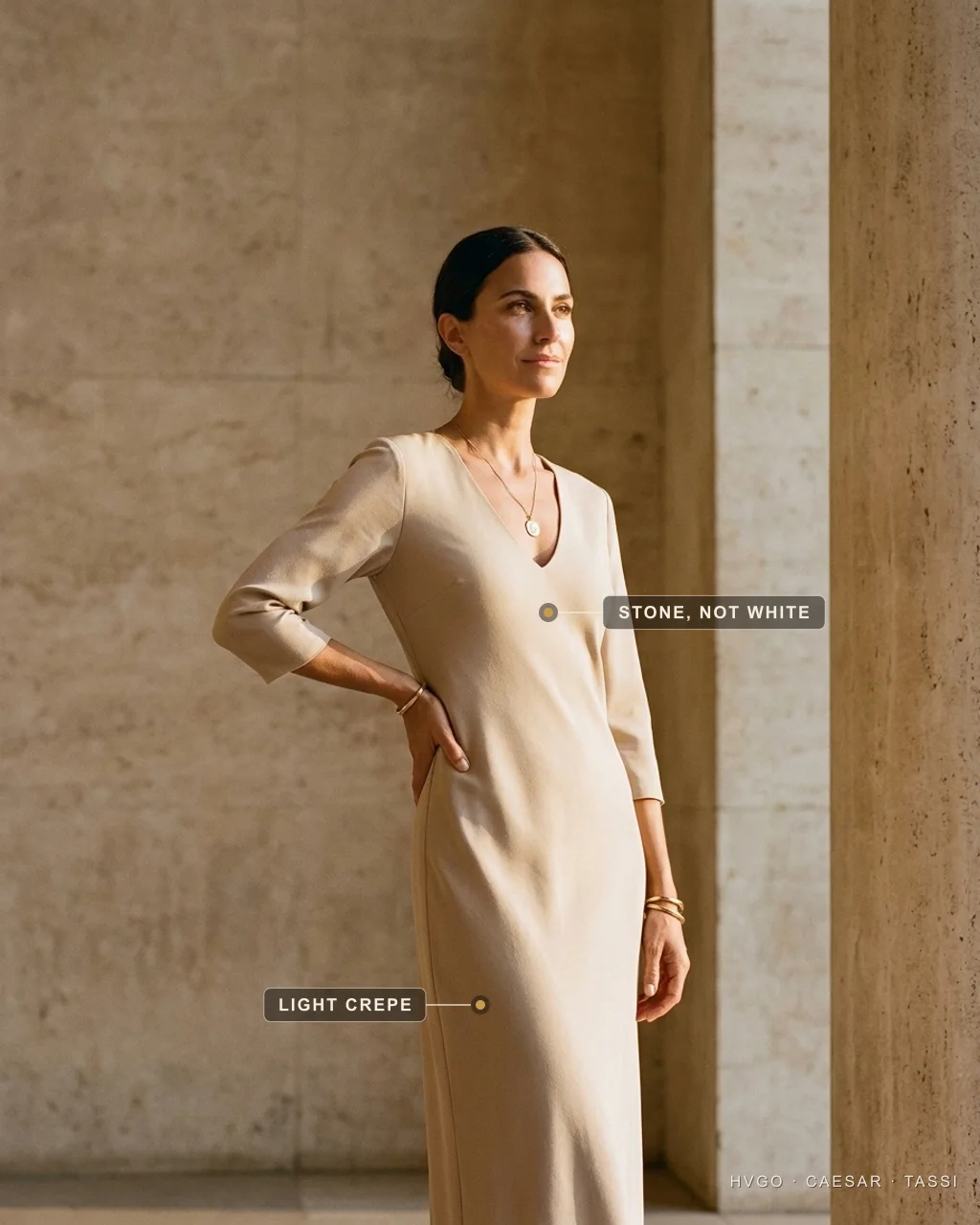
- Stone, not white
- Light crepe
#Jewel and deep tones that hold up against glare
Verde Antico green and Cobalto navy stay rich rather than washing out, because their depth absorbs the excess light a pale shade scatters. Against bright glare they hold as saturated, considered color, whereas a thin pastel can vanish to near-white in a noon photo.
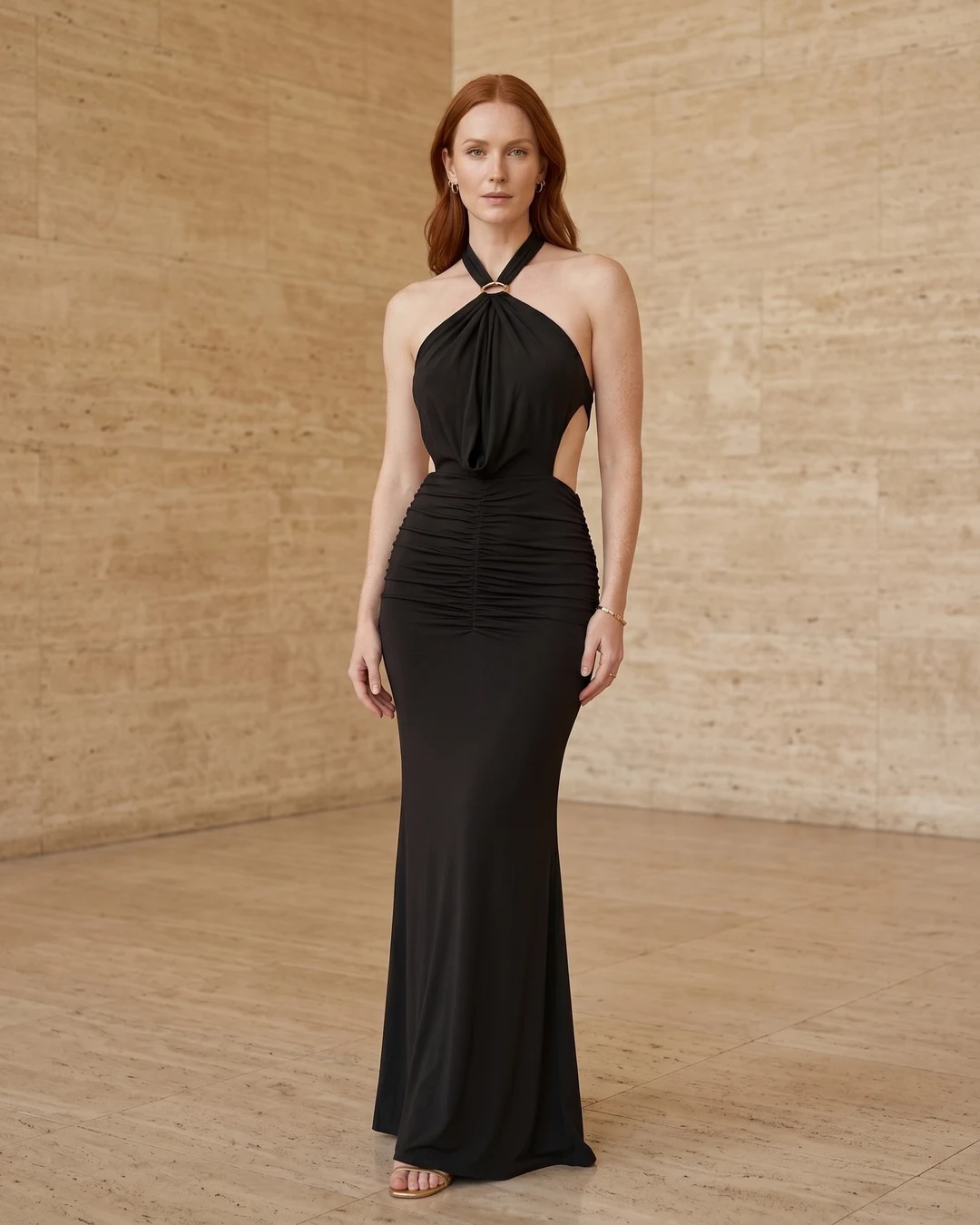
The trade-off is heat: a dark tone absorbs more solar warmth than a pale one. Reserve the deepest jewels for an evening reception or a shaded courtyard, and choose the pale tone for the peak-heat hours.
#The colors a summer guest should think twice about
Near-neon brights distort on camera, where a hot fuchsia or acid yellow flares and shifts hue under direct sun, pulling every group photo toward itself. Very dark, heavy tones absorb heat and can read funereal at a celebration, and the white-adjacent family carries its own caution, covered next.
#What a summer wedding guest should never wear (the white rule and other traps)
Never wear white or anything that photographs as white in bright sun, and never let an outdoor setting expose a sheer dress or a sinking heel. The no-white rule tightens in summer, because strong daylight washes near-whites toward bridal.
#The no-white rule and its summer near-misses
White belongs to the bride, and in harsh summer light the danger zone widens. Ivory, blush, champagne and cream all blow out toward bridal-white on a sunlit camera, so a shade that looks safely pale indoors can read as a second white dress in the album.
Avorio ivory is the one exception, and only when the couple explicitly invites ivory or off-white. Otherwise, lean on pales that carry obvious color: Cipria pink, Cornelia rose, Travertine stone, none of which a camera mistakes for the gown.
#Outdoor-specific mistakes guests make in the heat
These are the recurring outdoor errors, in the order they ruin a day.
| Mistake | Why it fails outdoors | Do instead |
|---|---|---|
| Slim stiletto on grass or sand | Heel point spears soft ground and sinks at every step | Block heel or wedge that spreads weight |
| Unlined sheer dress in open sun | Backlight turns a single chiffon layer transparent | Layered chiffon or a built-in slip |
| Ballroom gown at a casual garden | Overdresses the tier and traps heat in heavy fabric | Match formality to the venue's dress code |
| Stiff linen for a long car journey | Creases on the seat and arrives rumpled | Wrinkle-resistant chiffon or crepe |
| No layer for the evening | Open-air temperature drops after sunset | A packable silk wrap in the clutch |
The cure in the first row, soft ground, sets up the shoe section that follows.
#Shoes, sun protection and accessories for an outdoor summer wedding
Pick a shoe that grips soft ground, add real sun protection, and keep accessories light enough to move in. Outdoor footing decides the shoe before style does.
#Shoes that survive grass, gravel and sand
Soft ground rewards a wide contact patch. A block heel of about 5 to 7 centimeters of base spreads body weight so the shoe stays level on turf, a wedge widens that patch further for stability on gravel, and a refined flat sandal rides on top of sand where any heel digs in. The mechanism is pressure: narrow the contact point and the same body weight punches straight down into soft earth.
Comfort compounds over a long standing ceremony. A pointed stiletto shifts your load forward onto the ball of the foot, which fatigues within twenty minutes, while a level base keeps the arch supported through the whole service.
#Staying cool and sun-safe with elegance
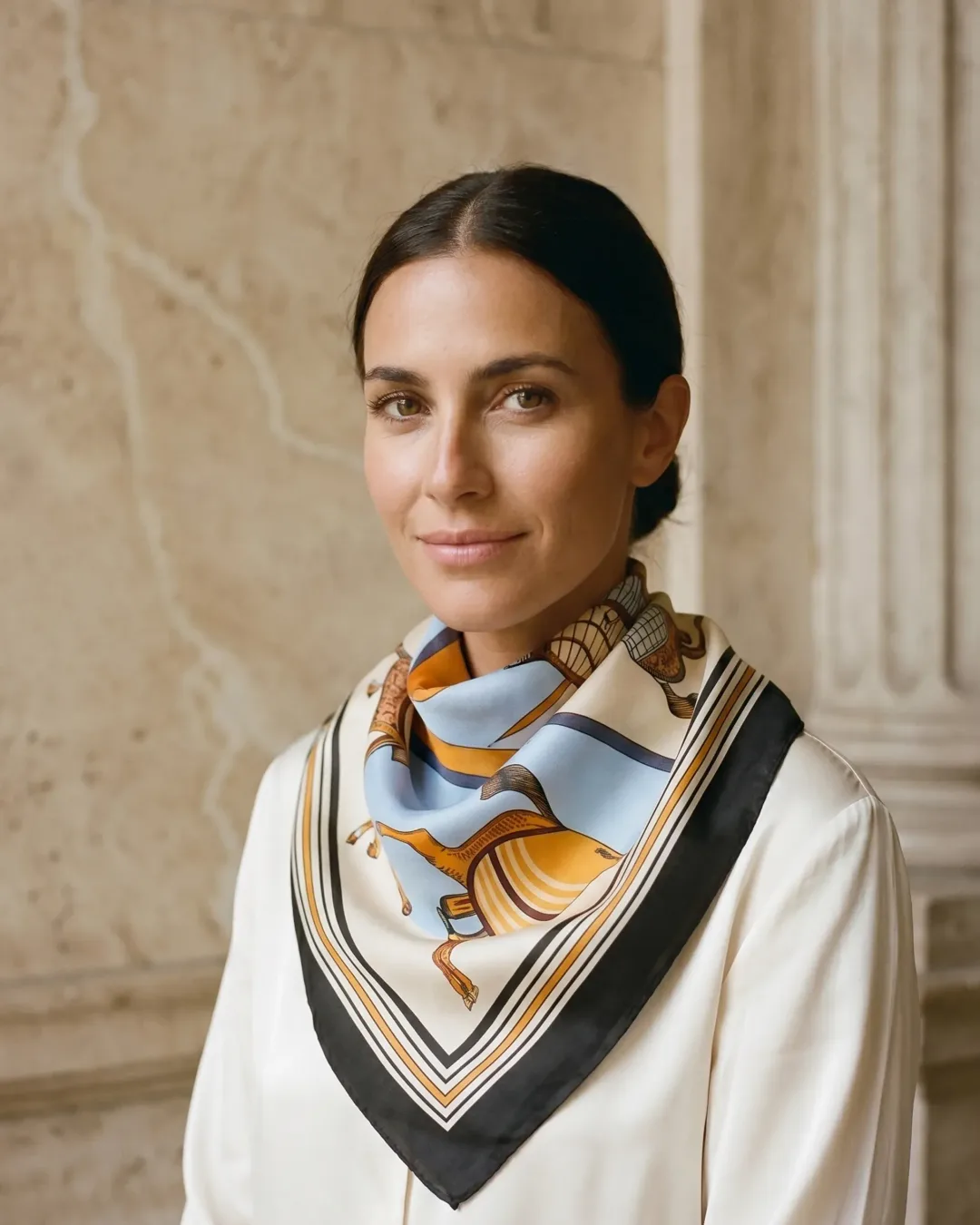
A wide-brim hat shades the face and shoulders through a noon ceremony, while a fascinator covers the formality without the bulk for a dressier tier. A lightweight silk scarf handles two jobs: shoulder coverage for a church and warmth when the evening air cools. SPF is the unspoken accessory, applied before you dress.
The edge case is a strict-shoulders church followed by a hot reception. A silk square solves both, draped over the shoulders for the vows, then knotted at the wrist the moment you step into the sun.
#Bag, jewelry and the finishing edit
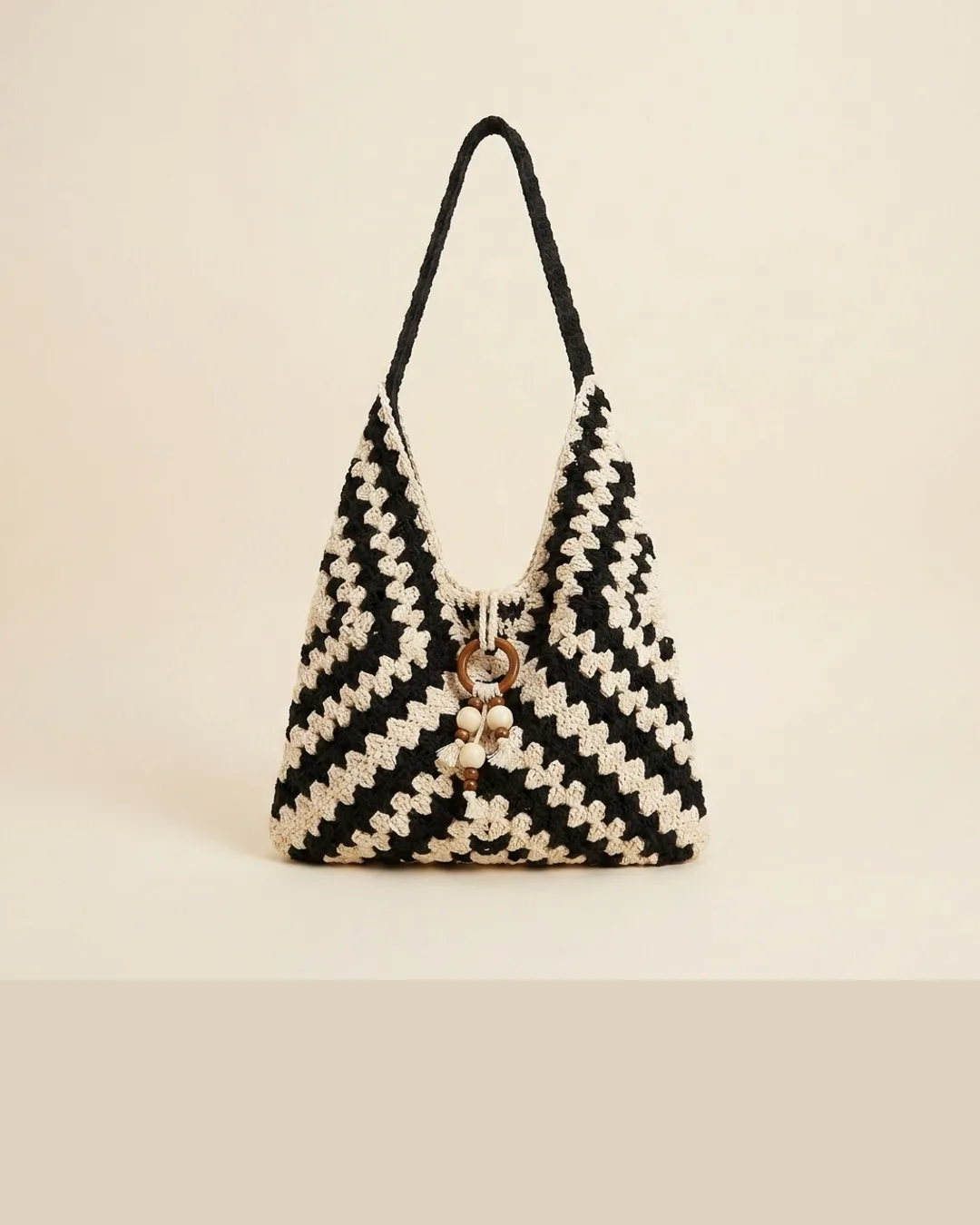
A small clutch or a refined crossbody keeps both hands free for a drink, a hat brim and uneven ground; the Quirina leather envelope clutch or the Capitolina color-block crossbody do exactly this. Daytime jewelry should stay restrained, since strong sun already supplies the sparkle, and one silk square in a print like the Carina doubles as a heat-and-style layer and an evening wrap.
#Dressing the special cases at a summer wedding: ceremony coverage, pregnancy, petite and plus
Breathable fabric solves nearly every special case, because the real challenge is coverage and fit without overheating. Sleeves, bumps, height and curves each have a warm-weather answer that starts with the fiber.
#Church and covered ceremonies in the heat
A covered ceremony asks for shoulders and sometimes knees, which a short chiffon sleeve or a higher neckline supplies without sealing in heat. A removable silk shawl is the most versatile route, giving full coverage for the vows and coming off for the reception. The Portia short-sleeve chiffon A-line is built for this transition, modest enough for a church and cool enough for the courtyard after.
#Pregnant, nursing, petite and plus calibration
A fluid empire or draped line skims a bump and opens for nursing access, and in breathable chiffon or modal it stays cool where a fitted bodice would not. A petite frame reads taller in a column or vertical drape hemmed precisely to height, while a plus figure is served by supportive lightweight crepe and skimming modal that breathe without clinging. These are the high-level summer calls; detailed body-shape fit belongs to its own silo, and the common thread is fabric.
#How Hugo Caesar Tassi dresses a summer wedding guest
The house dresses the warm-weather guest in recycled chiffon, silk and lightweight crepe across the imperial palette, in lines built to move in heat. This is a Roman discipline, not a trend.
#The house's warm-weather fabrics and silhouettes
Hugo Caesar Tassi, the women's occasionwear house founded in Roma in 2004, builds its summer dresses from recycled chiffon, silk and matte lightweight crepe, the fibers that move air rather than trap it. The cuts follow: A-line for airflow, draped modal for liquid movement, French and knife pleats that vent up the leg with each step. The motto Nata Imperare, born to rule, sits beside a Roman wardrobe of stola and palla built in light draped layers for a Mediterranean summer.
#The dresses, matched to the setting
Match the dress to the ground and the hour, and the house range resolves each setting cleanly.
- Aemilia (A-line chiffon maxi) for a garden or vineyard ceremony, fluid and leg-shading in full sun.
- Livilla (floral-print chiffon midi) for a daytime garden party, walkable and forgiving in heat.
- Portia (short-sleeve chiffon A-line) for a covered or church ceremony, modest yet venting.
- Julia (French-pleated chiffon maxi) for an evening reception, with pleats that move as the air cools.
Finish any of the four with a Carina silk square and a Quirina envelope clutch or the Capitolina crossbody. The full warm-weather range sits in the chiffon dresses edit.
#Your summer wedding outfit, decided
Wear a breathable chiffon, silk or light-crepe dress in a flattering daylight color that isn't white, in a midi or fluid maxi cut for the ground, with a block heel and a silk wrap for the evening. That is the whole answer to your invitation, in one line.
For the seasonal opposite, the winter wedding guide flips every fabric and color call, and a Roman venue carries its own customs in the Italian wedding edit.
Decode any unfamiliar formality in the dress codes guide, or browse the season's curated looks in the 2026 wedding edit.
#Frequently asked questions
What is the best fabric for a summer wedding guest dress?
The best fabric for a summer wedding guest dress is a breathable, fluid weave such as chiffon, silk, lightweight crepe or modal. These fibers vent body heat and drape on a breeze, while heavy satin and dense polyester trap warmth and cling when you perspire.
Is a midi or maxi better for a summer wedding?
Both a midi and a maxi work for a summer wedding, with the venue deciding which. A fluid maxi suits a garden, vineyard or evening reception and shades the legs from the sun. A midi or tea-length is the cooler, more walkable choice for a daytime ceremony on grass or gravel.
What colors should you wear to a summer wedding?
Soft warm tones and rich jewel shades are the colors that wear best at a summer wedding, because both behave under strong daylight. Blush pink, rose and stone glow in full sun, while deep green and navy hold their saturation against glare. Skip white, ivory, blush-white, champagne and cream, which photograph as bridal outdoors.
What shoes should I wear to an outdoor or garden wedding?
A block heel, a wedge or a refined flat sandal are the shoes that work for an outdoor or garden wedding. A wider base spreads your weight so you stay level on grass, and a flat sandal suits beach-adjacent ground. A slim stiletto is the one shoe that consistently fails on soft footing.
Can a guest wear a floral dress to a summer wedding?
A guest can wear a floral dress to a summer wedding, and it is a classic, season-appropriate choice. The only condition is that the base color isn't predominantly white, which would read as bridal. A soft floral chiffon midi is one of the most reliable summer garden-wedding looks.
How do I stay cool and presentable through a long, hot ceremony?
You stay cool and presentable through a long, hot ceremony by choosing a breathable lined dress in a perspiration-friendly color. Carry a lightweight silk scarf for shoulder coverage and the cooler evening, add a wide-brim hat or fascinator for sun, and apply SPF before you dress.
Found your fabric? Shop the breathable warm-weather edit in the Hugo Caesar Tassi chiffon and daytime dresses collections, the Aemilia A-line chiffon maxi for a garden and the Livilla floral midi for a daytime ceremony, then finish with a silk square that doubles as your evening wrap.
More What to Wear guides
What to Wear to a Christening
What to wear to a christening, by a Roman house — modest, daytime-elegant outfits in church-safe colors that honor the day, never reading bridal.
Dress for a christeningBlack-Tie Attire for Women
A Roman house decodes black-tie attire for women: floor-length or not, the right fabric and jewelry, and how optional, creative and gala differ.
Decode the four black-tie rungsCocktail Attire for Women
A Roman house decodes cocktail attire for women: the exact length (knee to mid-calf, never floor), the right fabric, and how it differs from black tie.
Decode cocktail attireWhat to Wear to an Italian Wedding
A Roman house decodes what to wear to an Italian wedding: the real no-black and no-white rules, church cover-up, and North-vs-South dress code.
Decode the invitata dress codeWhat to Wear to Royal Ascot and the Races
The enforced Royal Ascot enclosure rules for strap width, hem and hat size, plus a Roman house rule for balancing a hat against your dress.
Pass the Ascot enclosure rulesWhat to Wear to the Opera
How dressed-up the opera really is, house by house: from La Scala's opening night to a relaxed Met evening, plus matinee, box and intermission etiquette.
Calibrate opera dress codes