Black-Tie Attire for Women: A Roman House's Guide to Dressing for the Evening
A Roman house decodes black-tie attire for women: floor-length or not, the right fabric and jewelry, and how optional, creative and gala differ.
On this page
Black-tie attire for women means a long evening dress in a substantial, matte-to-lustrous fabric, finished with a small clutch, an evening heel and one considered piece of fine jewelry. The phrase unsettles guests because it promises certainty the invitation never spells out, and because four distinct rungs hide inside it. What follows is the Hugo Caesar Tassi atelier's ruling on each rung, calibrated by fabric weight and jewelry scale.
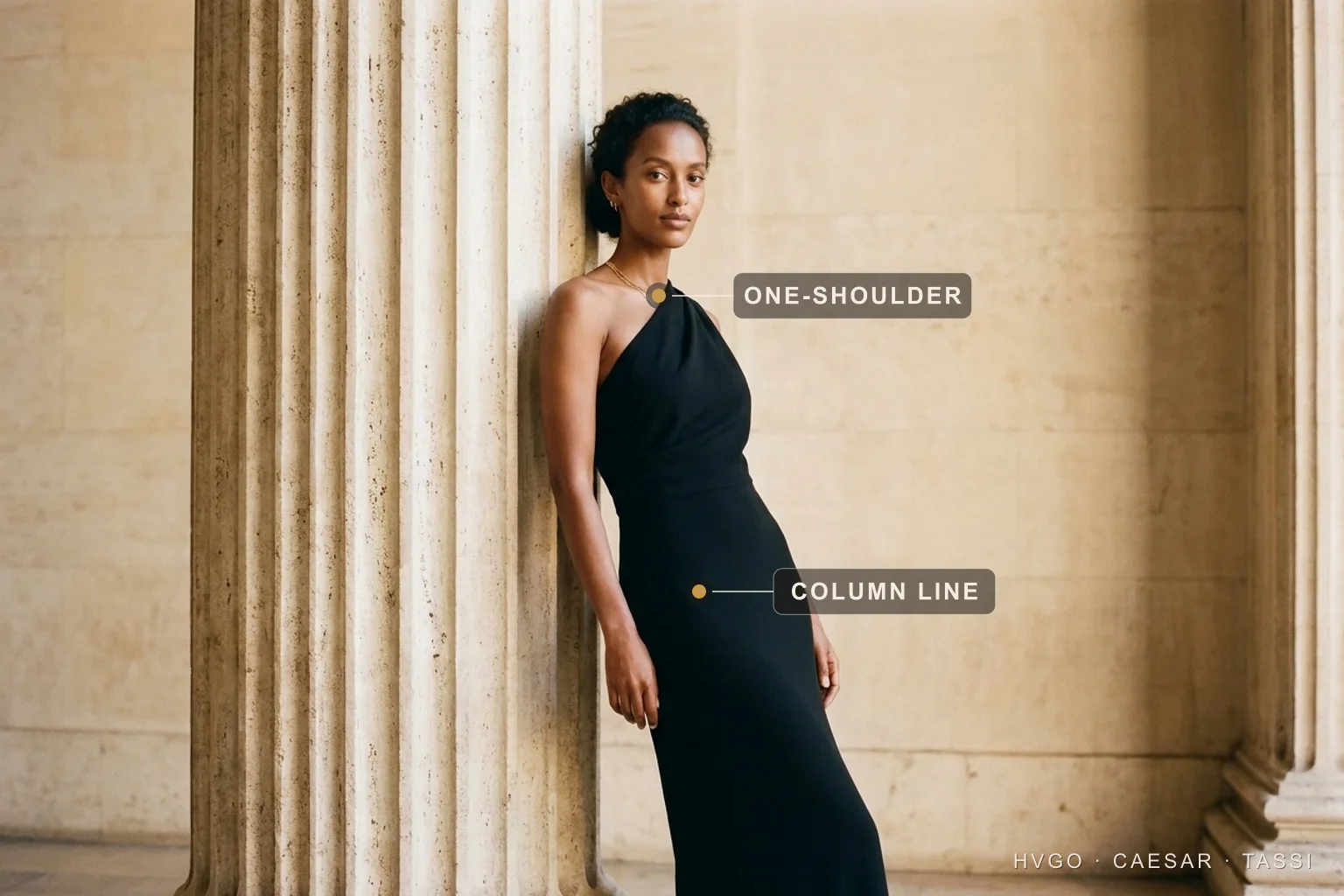
- One-shoulder — the asymmetric neckline strap, the single line the eye follows up
- Column line — an unbroken vertical from waist to floor-skimming hem that reads unmistakably formal
Black tie, decoded
“Black-tie optional” loosens the hem, never the fabric — keep the satin or chiffon.
Shop evening gowns#What is black-tie attire for women, and what does the dress code actually require?
The code asks a woman for a floor-length evening dress in a refined fabric, finished head to toe. It is the most formal invitation most women will ever accept, and it rewards proportion over sparkle. The convention grew up around the men's dinner jacket in the 1880s, but for women it has always meant evening dress rather than a fixed uniform, which is exactly why it leaves so much room for doubt.
#The plain definition: a long, formal evening dress
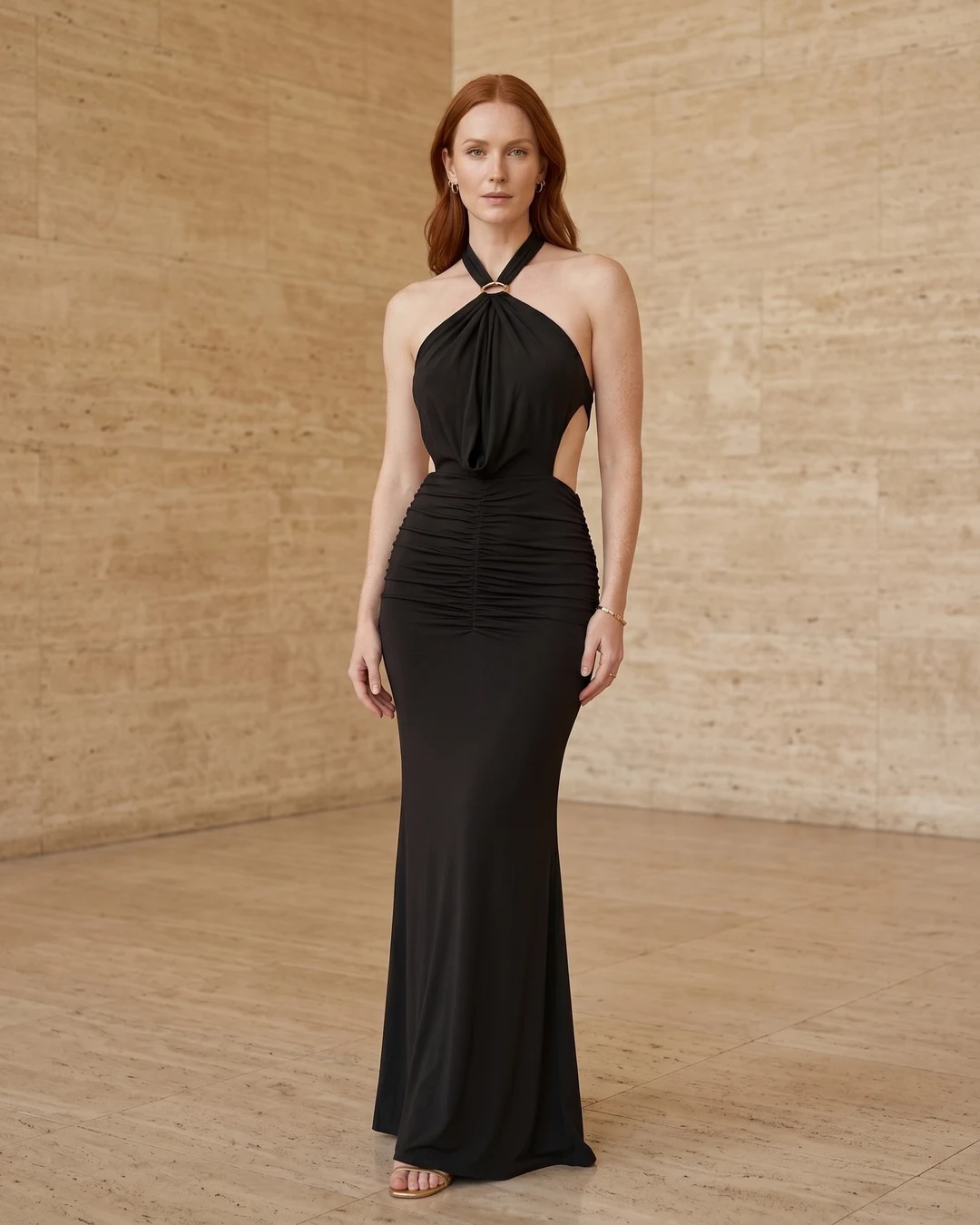
The default answer is a floor-length gown or full-length evening dress in satin, heavy crepe, silk or layered chiffon. White tie sits one rung above; cocktail and semi-formal sit below. A column gown in Basalt (black) or a draped modal dress in Cobalto (navy) both satisfy the brief without further explanation.
One caveat is worth naming. A long dress in thin daytime jersey fails even at floor length, because the cloth reads casual. Length alone does not carry an evening.
#The three things every black-tie outfit must get right
Three measurable variables decide whether a look lands: length, fabric and finish. Get all three and the outfit passes; miss one and it slips a rung. The house judges an evening on proportion and cloth, not on how brightly it sparkles.
- Length runs long, breaking just above the floor in your chosen heel.
- Fabric carries weight and a matte-to-lustrous surface, never a daytime hand.
- Finish stays polished from the clutch to the heel to a single jewelry piece.
- Restraint holds everything to one focal point rather than competing details.
A heavy crepe column with a box clutch and gold drop earrings clears all four. The same gown worn with a slouchy day tote breaks the finish line and instantly reads less formal, whatever the dress cost.
#Where it sits on the formality ladder
This invitation occupies the second-highest rung of evening dressing. White tie above it demands a full-length ballgown and long gloves; cocktail and semi-formal below it accept knee-to-midi hems. Placing your card on that ladder is the first move, and the broader event dressing guides lay out every rung in order. Once you know which tier is yours, the rest is calibration.
#Does black-tie attire require a floor-length gown, or will a long dress do?
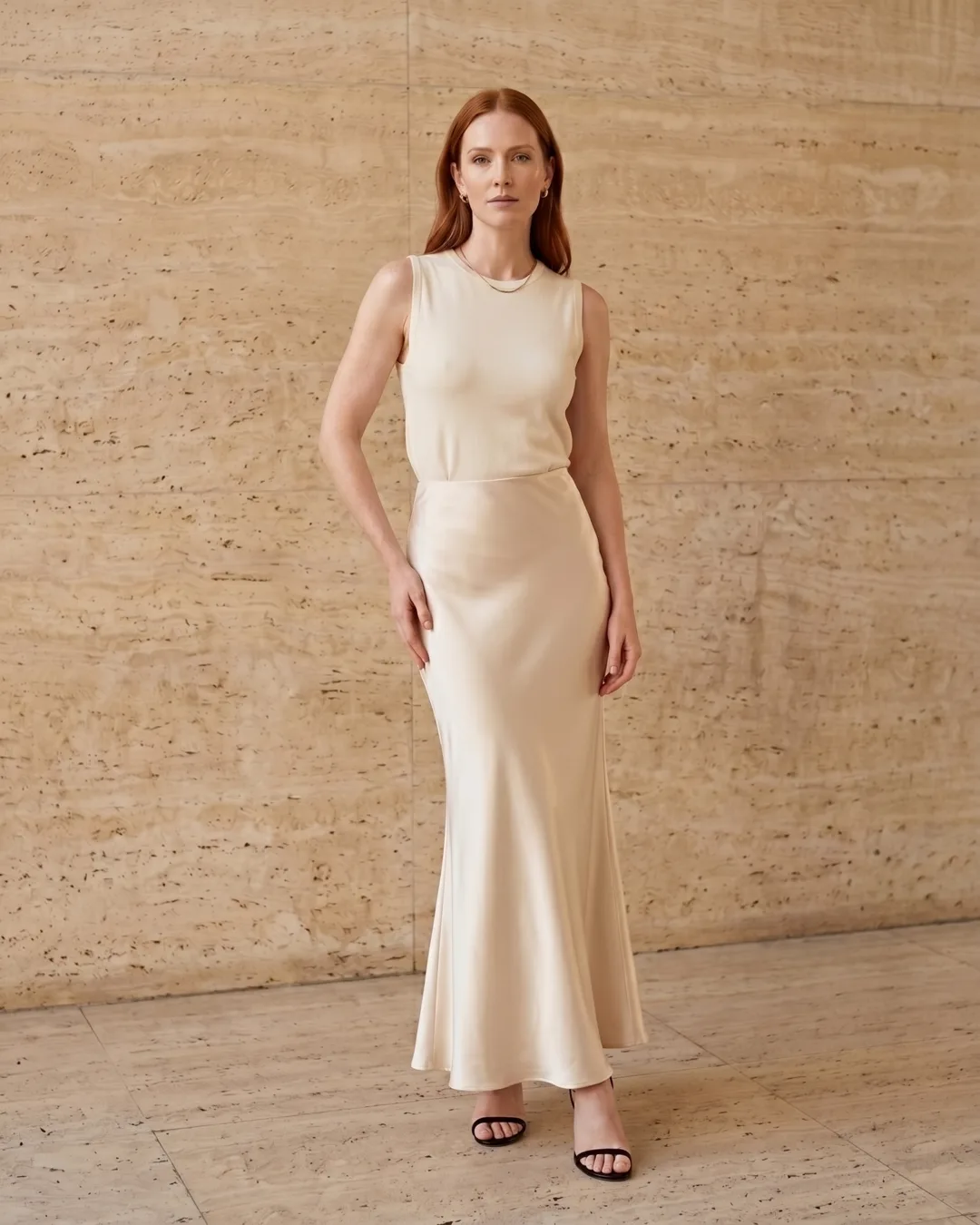
Floor-length is the safe default, but a full-length evening dress in the right cloth reads just as correct as a structured gown. The test is fabric and finish, not the label on the hanger. A fluid satin maxi can satisfy the occasion as completely as a built fishtail gown.
#Floor-length is the safe default, and why
A floor-skimming hem reads unmistakably formal because it removes all ambiguity. Column, A-line, fishtail and draped gowns all qualify, since each carries the vertical evening line. The hem should clear the ground by a hair in your heel, never pooling at your feet or dragging at the back.
Watch the shoe height closely. A hem finished for flat sandals will drag the moment you add a 90-millimeter heel, so set the length to the shoes you will actually wear.
#When a dressy maxi or sophisticated long dress works
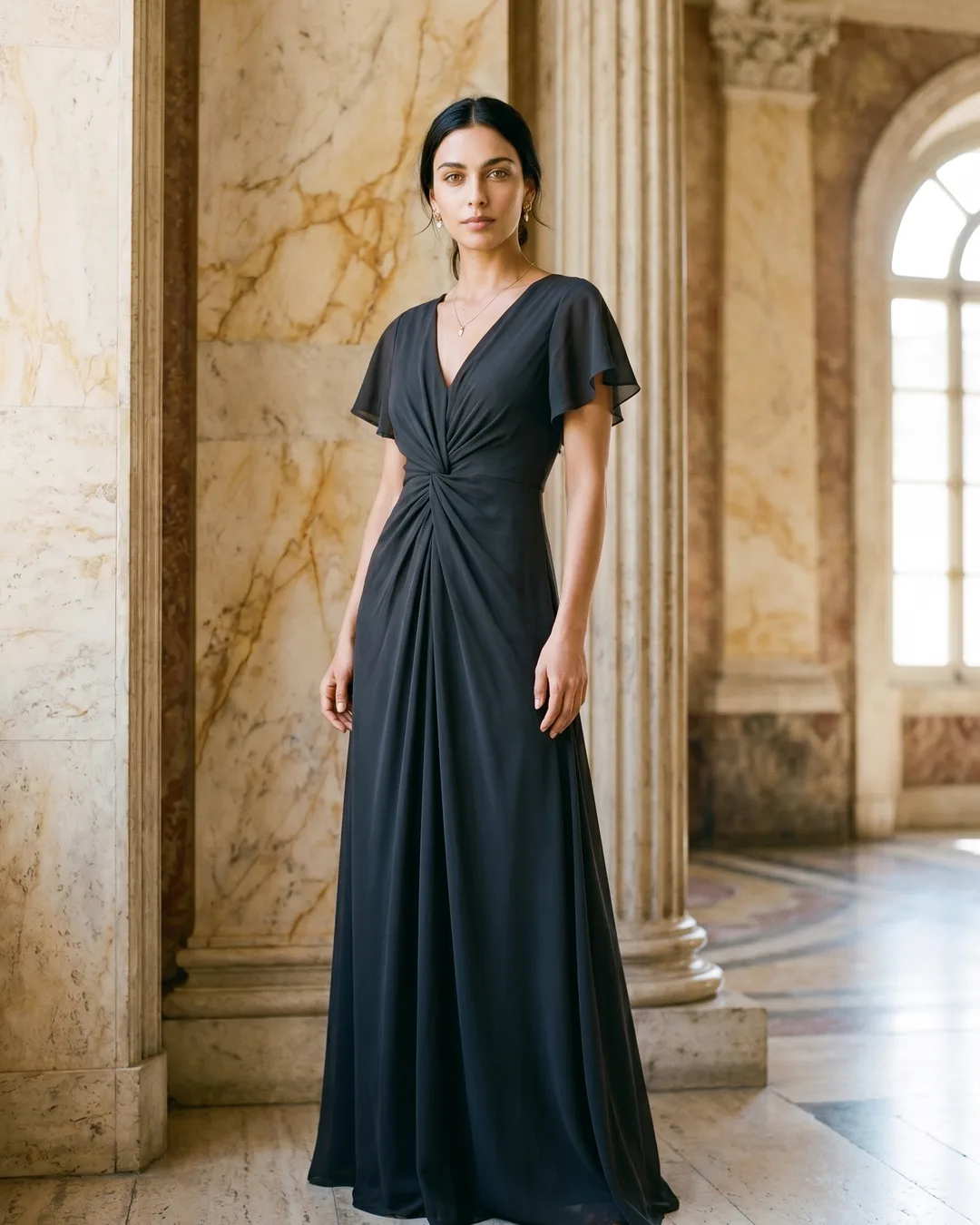
A fluid full-length dress in evening fabric reads as correct as a constructed gown. Satin, heavy crepe and silk chiffon all carry the weight the occasion wants, whether the piece is called a gown or a maxi. The Aemilia A-line chiffon maxi, for instance, presents fully formal because the cloth and the floor-length line do the work.
A maxi in crinkled cotton or linen tells a different story. However long, it photographs as a summer dress and undercuts the room.
#Can you ever wear a cocktail dress here?
A true invitation calls for long, so a cocktail dress is the wrong default. A refined midi or tea-length in evening fabric can pass at the most relaxed end and at black-tie optional, yet a short bodycon or daytime cut will read under-dressed. Should a shorter hem be unavoidable, make it evening-credible with heavy satin, matte crepe or velvet, plus a hard jewelry-and-clutch finish.
Set two midis side by side. A structured Basalt crepe midi with a box clutch holds its own at the optional rung, whereas a jersey wrap midi in a daytime print cannot, even with identical accessories.
#A dressy jumpsuit or evening trousers as an alternative
The occasion does not have to be a dress. A wide-leg evening jumpsuit, fluid palazzo trousers or a tailored tuxedo-style set in a matte evening fabric reads correct, especially at the optional and creative rungs. The criteria stay identical: substantial lustrous-to-matte cloth, a floor-skimming line, and a polished finish. A satin palazzo set in Porpora (wine) photographs every bit as formal as a column gown.
Trousers have one failure mode. A jumpsuit in casual ponte, or a cropped ankle trouser, breaks the floor-skimming line and drops the whole look toward smart-casual.
#Which fabric weight, color and silhouette make an evening look read correct?
Fabric weight is the single variable that separates evening from daytime, ahead of color or cut. A substantial, matte-to-lustrous cloth carries the room; a thin, flat one does not, no matter how dark. Color and silhouette refine a look the fabric has already qualified.
#Fabric weight is the real tell
Weight is what divides evening dressing from ordinary occasion dressing. Matte heavy crepe, duchesse and stretch satin, silk, cool-weather velvet and layered chiffon all bring the heft and drape the moment wants. Thin jersey, cotton, linen and any cloth with a daytime sheen fall short, and the eye registers the difference instantly.
A bias-cut satin gown drapes with real heft; a flat printed viscose maxi, cut to the same length, sags and slumps under evening light.
#Colors that read as evening
Deep, considered color photographs richly after dark, which is why the imperial palette leans toward shadow. Basalt (black), Cobalto (navy), Porpora (wine), Verde Antico (green) and a formally cut Avorio (ivory) all hold up under low light. Black belongs here, never dull, since the whole register is built on restraint. A bright daytime floral is the clearest tell of a mis-read invitation.
Ivory makes one exception to the dark rule. A formal ivory gown in heavy satin presents impeccably, provided the event is not a wedding where it competes with the bride.
#Silhouettes that earn the room
Four evening lines do the heavy lifting, each for a different reason.
| Silhouette | What it does | Best for you if |
|---|---|---|
| Column | Clean unbroken verticality | you want quiet, lengthening formality |
| Fishtail | Occasion drama at the hem | you want a gala-scale statement |
| Draped goddess | Soft movement and ease | you want comfort without losing the line |
| Slit | Movement and a flash of leg | you want dynamism in a long hem |
Match the line to your body and your comfort rather than to a single "right" shape; the house keeps fit notes in its body-shape and silhouette guides. A column flatters a tall frame, whereas a draped goddess line forgives a fuller midsection that a tight fishtail would expose.
#What jewelry, shoes and bag finish the look without overdressing it?
Choose one jewelry focal point, an evening shoe and a small clutch, then stop. Restraint separates expensive from overdone. Scale signals luxury; quantity signals nerves.
#The jewelry scale: one focal point, not three
Pick statement earrings, or a striking necklace, or a single sculptural cuff, never all three together. Fine metals in gold or silver, chosen to suit the gown, outrank costume sparkle every time. Scale rather than quantity is what reads as luxury, so one bold gold cuff against a bare Basalt column says more than a full set.
Over-jeweling is the common error. A heavy necklace, oversized earrings and stacked bangles at once fight each other and flatten the whole effect.
#Evening shoes and the heel question
A refined heel, an elegant flat or an embellished sandal all work, in a tone that lengthens the leg. Comfort matters across a long night of standing, so choose a height you can hold for four hours. Because the shoe barely shows under a floor-length hem, height is about posture and proportion rather than visibility.
Practicality decides this one. A 100-millimeter stiletto that forces you to sit out the night reads worse than a 50-millimeter block heel you can move in.
#The clutch, the wrap and hosiery
A small box or envelope clutch is the only correct evening bag; the day tote stays home. A wrap, fine shawl or opera coat covers arrival and cold rooms without bulking the line, and the accessorize a dress guide details how to layer them. Hosiery is now optional, and bare legs are accepted at most formal events.
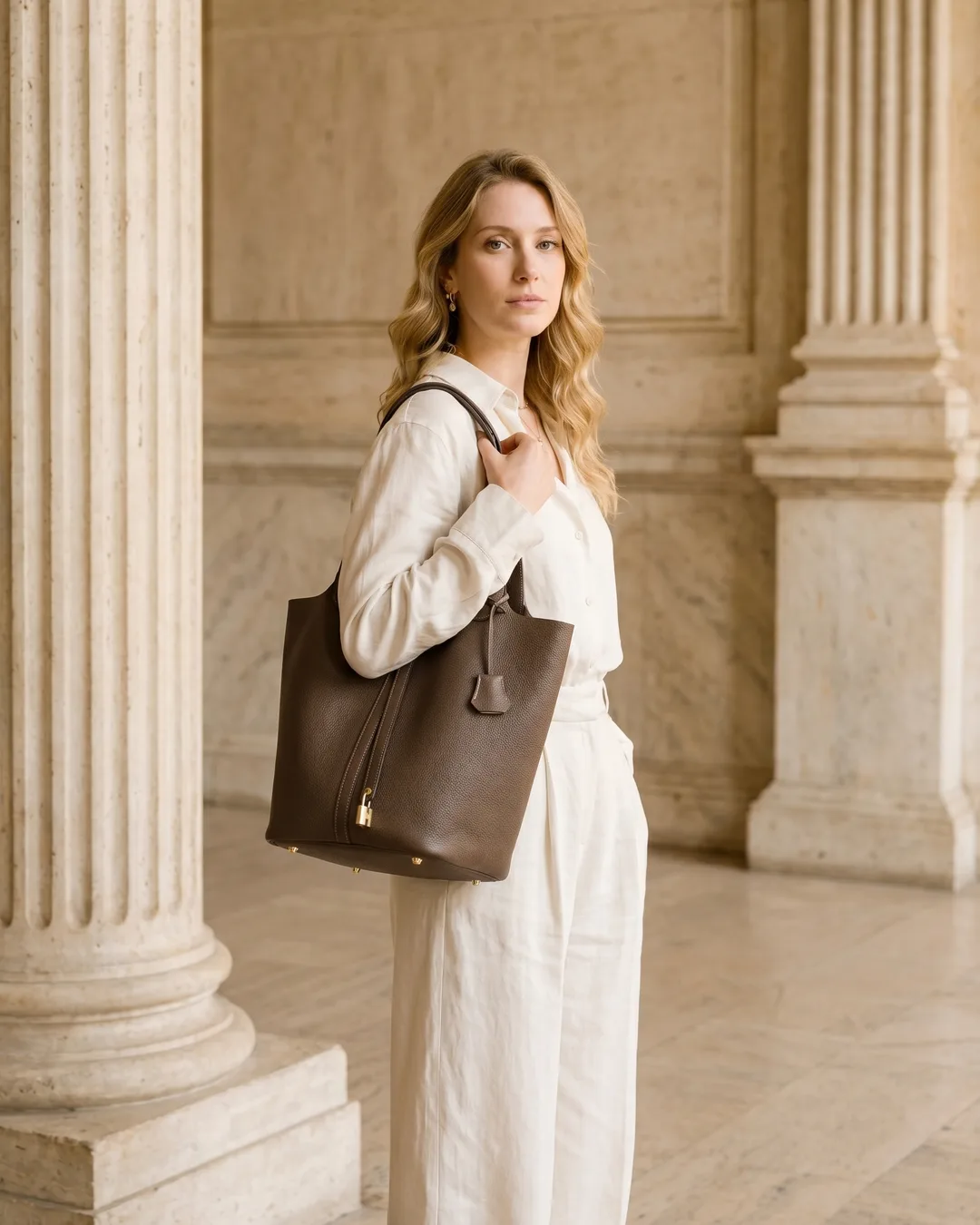
The bag is where many looks fall apart. A structured leather work tote, however fine, breaks the evening finish at once; a Quirina leather envelope clutch holds it.
#How does black-tie attire differ from black-tie optional, creative black tie and gala?
Four rungs hide inside the phrase, separated by two measurable axes: fabric weight and jewelry scale. The strictest rung wants the heaviest cloth and a single bold accent; the other three adjust those two dials. Reading the rung correctly is what stops a woman feeling over- or under-done.
#Black tie optional: the same evening, a little more latitude
Optional means a long gown is welcome but not mandatory. A dressy midi, an elegant dark cocktail dress or refined evening separates are all correct here. Reach for lighter satin or chiffon and softer, discreet drop earrings rather than the heaviest crepe and the boldest cuff. A Flavia strapless satin gown presents beautifully at this rung without overstating the room.
#Creative black tie: formality plus one deliberate flourish
Keep the floor-length, evening-fabric base, then add exactly one expressive element. A strong color, a dramatic sleeve or cape, a metallic finish or a considered print each count as the single flourish. The trap is reading "creative" as "costume"; it asks for personality within the rules, not their abandonment. A Claudia pleated-slit chiffon gown supplies that flourish through movement while the base stays formal.
#Gala: the most dressed-up cousin
A gala is the same code at full volume. Wear floor-length, your most considered fabric, and allow a touch more sheen and drama than a private dinner would invite. Read the invitation for a host theme or color, since galas often set one. A Calpurnia fishtail satin gown delivers exactly the scale a gala rewards, where the same drama would overpower an intimate table.
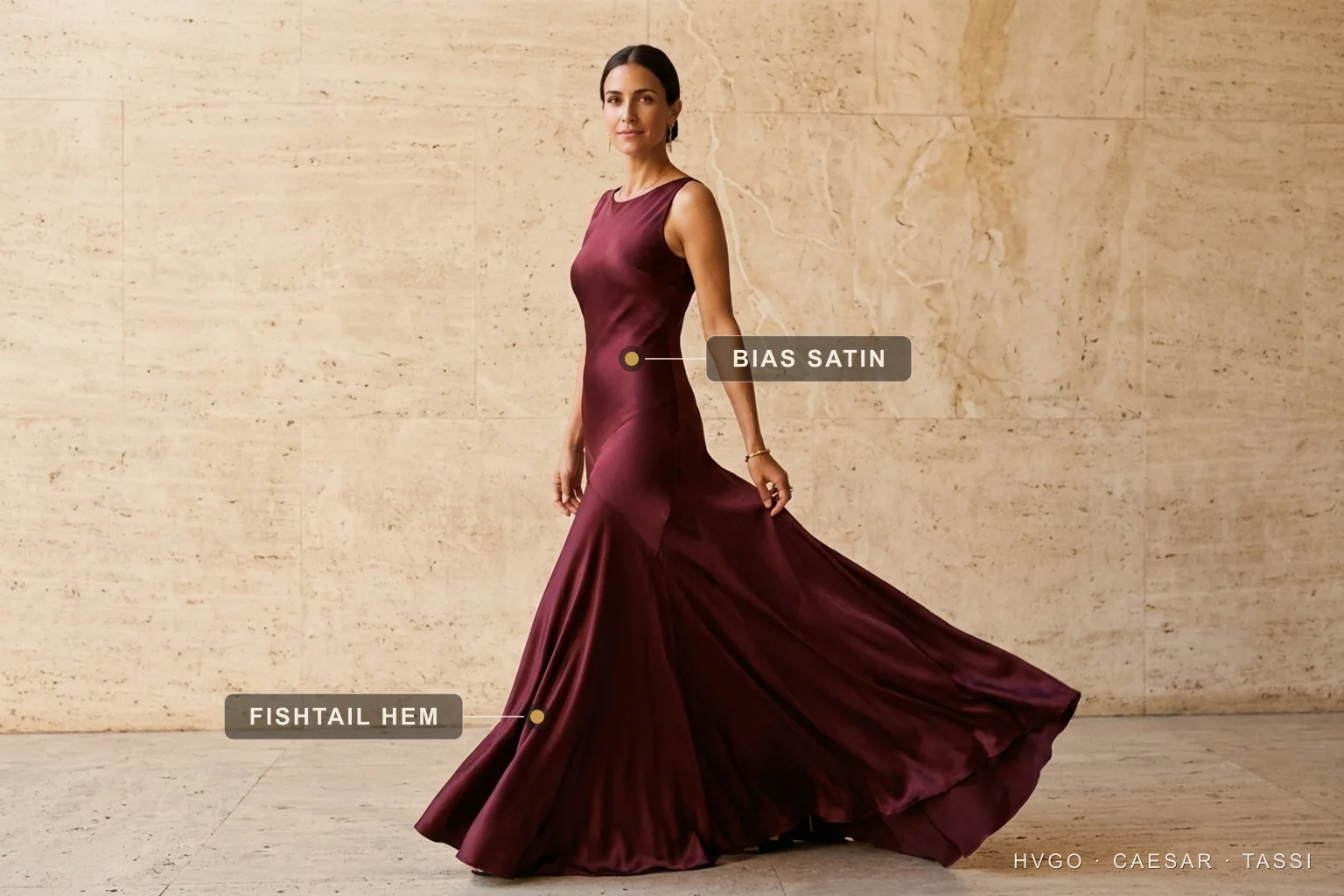
- Bias satin — lustrous cloth cut on the diagonal that traces the hip in one close line
- Fishtail hem — the trumpet flare opening below the knee, the move that brings gala-scale motion
#A quick decision table for the four rungs
This recap maps each rung to its length, fabric weight and jewelry scale so you can place your invitation in seconds.
| Rung | Length | Fabric weight | Jewelry scale |
|---|---|---|---|
| Black tie | Floor-length | Matte heavy crepe, duchesse satin | One sculptural piece, e.g. a gold cuff |
| Black tie optional | Long or dressy midi | Lighter satin or chiffon | Discreet drops |
| Creative black tie | Floor-length base | Evening-weight, plus one flourish | One expressive accent |
| Gala | Floor-length | Your most considered, with sheen | One focal point, scaled up |
#How do you adapt the look to the season, your body and your comfort?
The rung never relaxes; the fabric weight shifts to suit the season, the body and the wearer's comfort. Summer and winter change the cloth, not the formality. Modest coverage and every figure stay fully correct.
#Summer vs winter dressing
Warm-weather nights favor lighter satin, silk and chiffon with bare shoulders and a fine wrap for arrival. Cold-season galas welcome velvet, long sleeves, deeper tones and an opera coat over the gown. The formality holds steady in both; only the weight of the cloth moves to match the temperature.
July rooftops punish the wrong choice. Heavy winter velvet there traps heat and reads off-season, even though the formality itself is correct.
#Modest, covered and sleeved options
This code is fully compatible with covered shoulders, higher necklines and long sleeves. A draped or pleated column gown with sleeves is impeccably formal and loses nothing to a strapless cut. Faith-driven or comfort-driven coverage never reads under-dressed, because the eye measures cloth and proportion, not skin. The Vipsania draped modal column gown answers this with full coverage and a clean line.
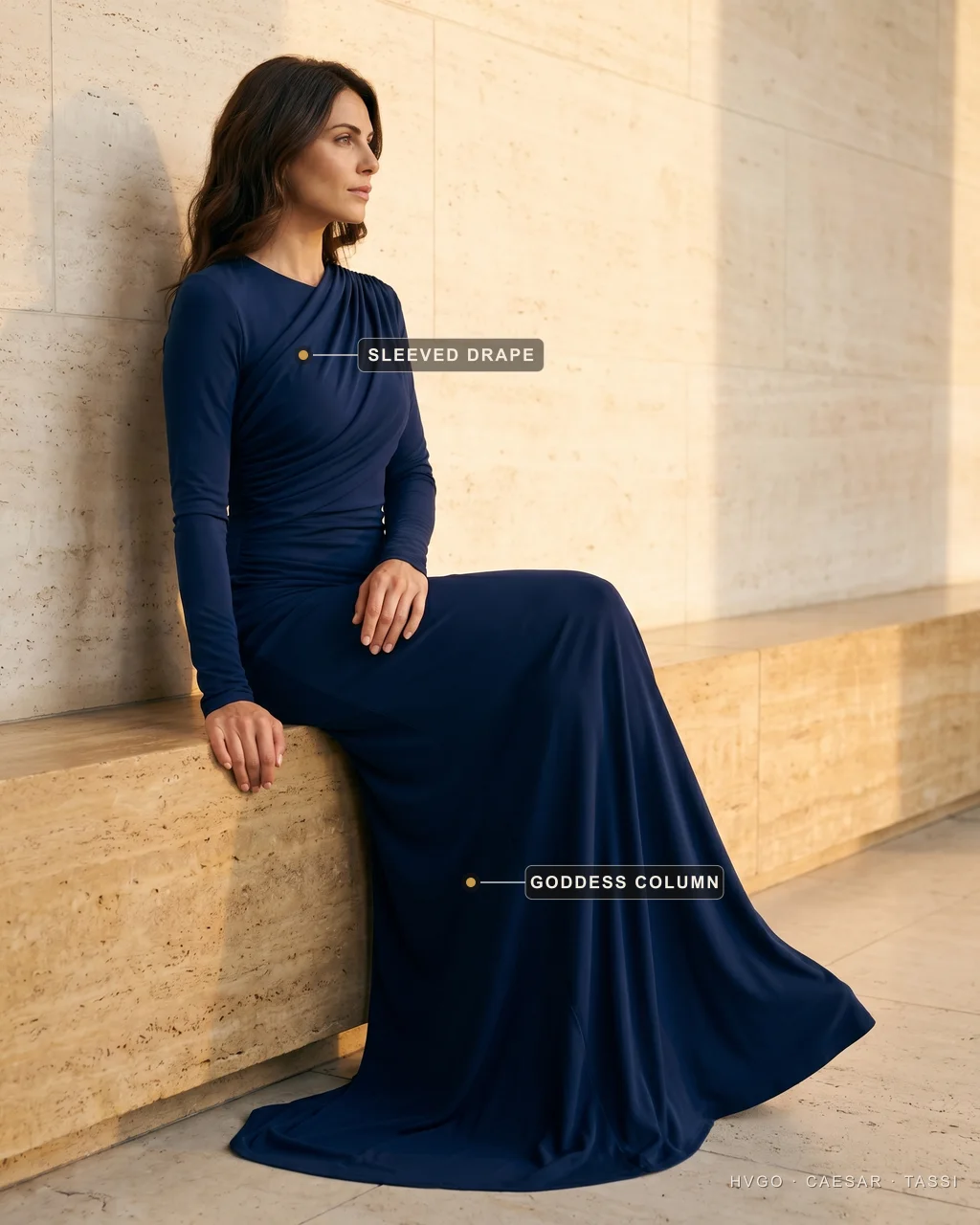
- Sleeved drape — soft Grecian draping gathered into a long sleeve for full, formal coverage
- Goddess column — fluid matte jersey falling in one clean line and pooling at the floor
#Petite, plus and tall calibration
Each frame has a clear move, and the house body-shape hub carries the fit specifics.
- Petite: a column or vertical drape, with the hem finished precisely to your height.
- Plus: structured crepe and satin that skim the body, with a defined waist.
- Tall: embrace true floor-length, the one frame that wears it without alteration.
- Every frame: fit the shoulder seam first, since it sets the line for everything below.
A petite woman in an unhemmed gown drowns in fabric, whereas the same gown finished to height reads custom.
#How Hugo Caesar Tassi dresses a woman for the evening
The house builds evening gowns in matte heavy crepe and lustrous satin, cut to all four rungs. Founded in Roma in 2004 under the motto Nata Imperare, Hugo Caesar Tassi dresses for the night with restraint first. Every gown is fully lined with a concealed zip, so the finish stays clean from the inside out.
#The house's evening fabrics and silhouettes
The atelier works matte heavy crepe and bias-cut satin into column, fishtail, draped and pleated lines built for exactly this register. Recycled chiffon, knife-pleated or bias-cut, carries the lighter end of the range. The imperial palette keeps the colors deep and considered, which is precisely how the house reads an evening: quiet luxury is weight, drape and fit, not sparkle.
#The gowns, matched to the rung
Each gown answers a specific rung. The Vipsania draped modal column gown and the Tullia pleated crepe column suit the strictest tier and quiet galas. The Claudia pleated-slit chiffon gown supplies creative black tie's single flourish. The Calpurnia fishtail satin gown carries full gala drama, while the Flavia strapless satin off-shoulder gown reads right for warm-weather and optional nights. Pair any of them with a Quirina envelope clutch and one fine accent, and the look is complete.
#Your evening ruling, at a glance
The strictest rung wants long, matte or substantial fabric and one jewelry focal point; the other three adjust the cloth weight and the accent. Place your invitation, then dress its rung. The whole question reduces to two dials you now control.
For the one-line version: true black tie is long, heavy fabric, one bold piece. Optional welcomes a long gown but accepts a dressy midi in lighter, softer dressing. Creative keeps the formal base and adds one flourish. Gala turns the volume up with sheen and scale. The occasion dresses range covers the softer rungs, and the quiet-luxury occasion dressing guide carries the restraint principle further. For the opera specifically, the opera dress code guide refines the same evening rules.
#Frequently asked questions
What does black-tie attire mean for a woman?
Black-tie attire for a woman means a formal evening look, most reliably a floor-length gown or full-length evening dress in a substantial, refined fabric. Finish it with a small clutch, an evening heel and one considered piece of fine jewelry. It is the most formal code most women attend, sitting just below white tie.
Do you have to wear a long dress to a black-tie event?
A long dress is the safe default for a black-tie event and reads unmistakably correct, but a dressy maxi or full-length evening dress in evening fabric works just as well. A short cocktail dress only passes at the relaxed end or at the optional rung. It never works if it looks like daytime.
What is the difference between black tie and black tie optional?
The difference between black tie and black tie optional is latitude: the stricter rung expects a long evening gown, while the optional rung also accepts a dressy midi, an elegant dark cocktail dress or refined evening separates. For optional, lean to lighter satin or chiffon. Choose softer, more discreet jewelry over the boldest cuff.
Can you wear a cocktail dress to a black-tie event?
A cocktail dress is not ideal for a true black-tie event, which calls for long. A refined midi or tea-length in evening fabric can pass at the most relaxed events and at the optional rung. A short or casual dress will read under-dressed.
What should a woman wear to a gala?
A woman should treat a gala as the formal code at full volume: a floor-length gown in her most considered evening fabric, with room for a little more sheen or drama than a private dinner. Check the invitation for a theme or color. Keep jewelry to one focal point.
Can you wear a jumpsuit or pants to a black-tie event?
A jumpsuit or pants work for a black-tie event when cut from a matte, substantial evening fabric: a wide-leg jumpsuit, fluid palazzo trousers or a tailored tuxedo-style set all read correct, especially at the optional and creative rungs. Keep the line floor-skimming and the finish polished. So dressed, it is every bit as formal as a gown.
With the four rungs decoded, choose the gown that matches your invitation in the Hugo Caesar Tassi evening dresses collection — column and draped silhouettes for the strictest tier, fishtail and slit gowns for galas and creative black tie — and finish it with a single fine accent.
More What to Wear guides
What to Wear to a Christening
What to wear to a christening, by a Roman house — modest, daytime-elegant outfits in church-safe colors that honor the day, never reading bridal.
Dress for a christeningCocktail Attire for Women
A Roman house decodes cocktail attire for women: the exact length (knee to mid-calf, never floor), the right fabric, and how it differs from black tie.
Decode cocktail attireWhat to Wear to an Italian Wedding
A Roman house decodes what to wear to an Italian wedding: the real no-black and no-white rules, church cover-up, and North-vs-South dress code.
Decode the invitata dress codeWhat to Wear to Royal Ascot and the Races
The enforced Royal Ascot enclosure rules for strap width, hem and hat size, plus a Roman house rule for balancing a hat against your dress.
Pass the Ascot enclosure rulesWhat to Wear to a Summer Wedding
A Roman fashion house on what to wear to a summer wedding: the breathable fabrics, flattering bright-light colors and hems that survive grass and sun.
Dress a summer weddingWhat to Wear to the Opera
How dressed-up the opera really is, house by house: from La Scala's opening night to a relaxed Met evening, plus matinee, box and intermission etiquette.
Calibrate opera dress codes