The Crescent of the Palatine
Named for the Palatine Hill, where Rome first rose, the Palatina answers that founding gesture with a single, certain curve.
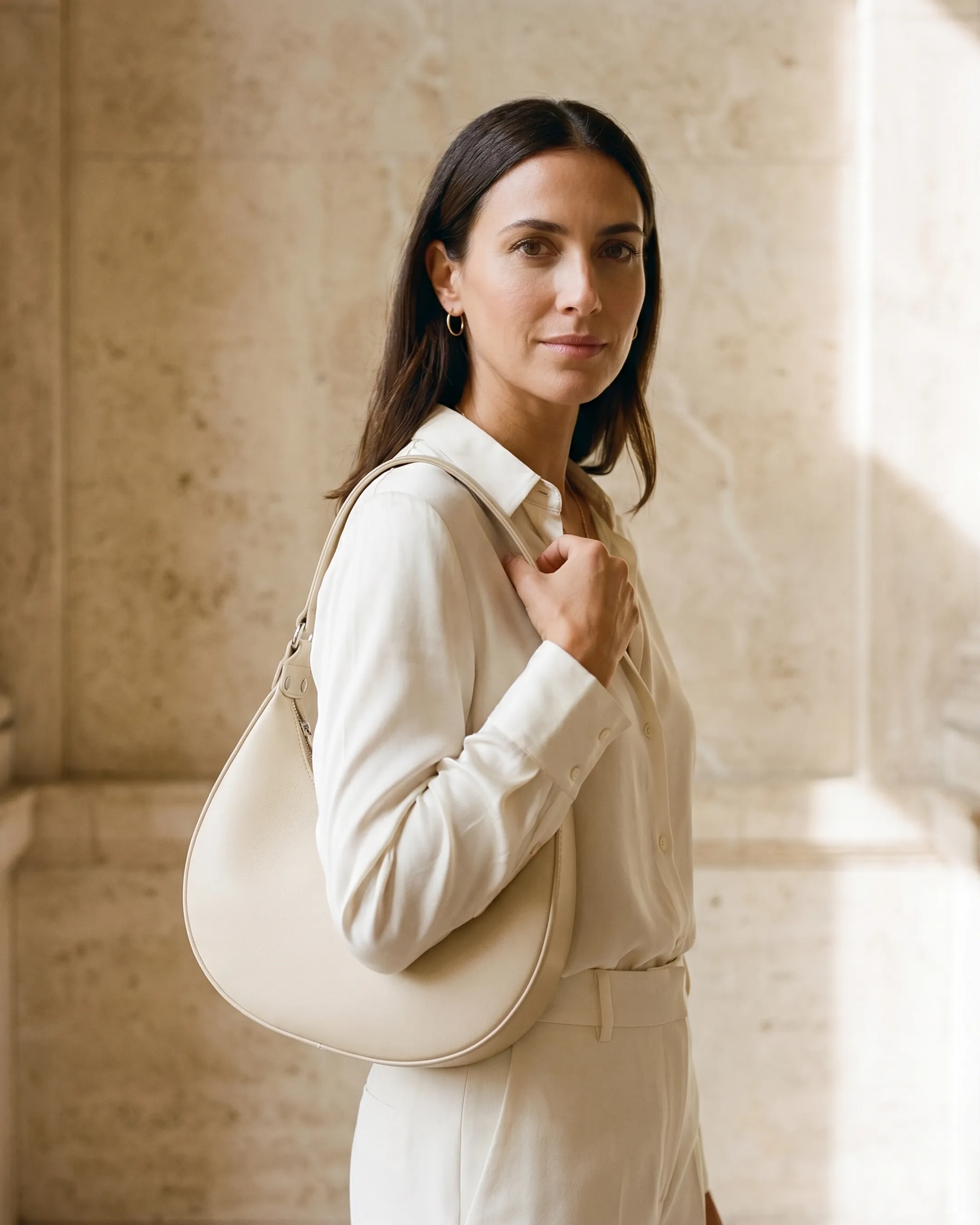
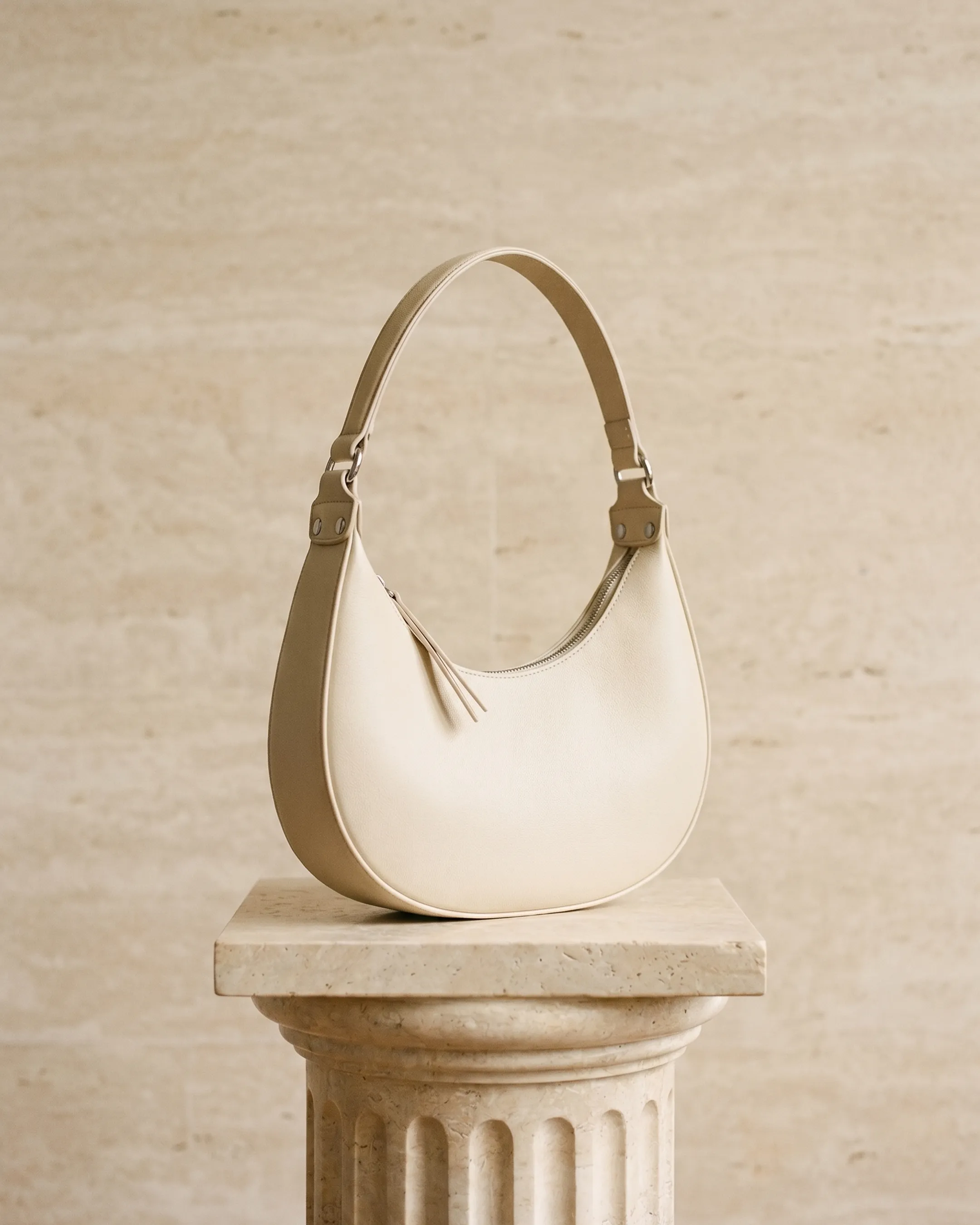
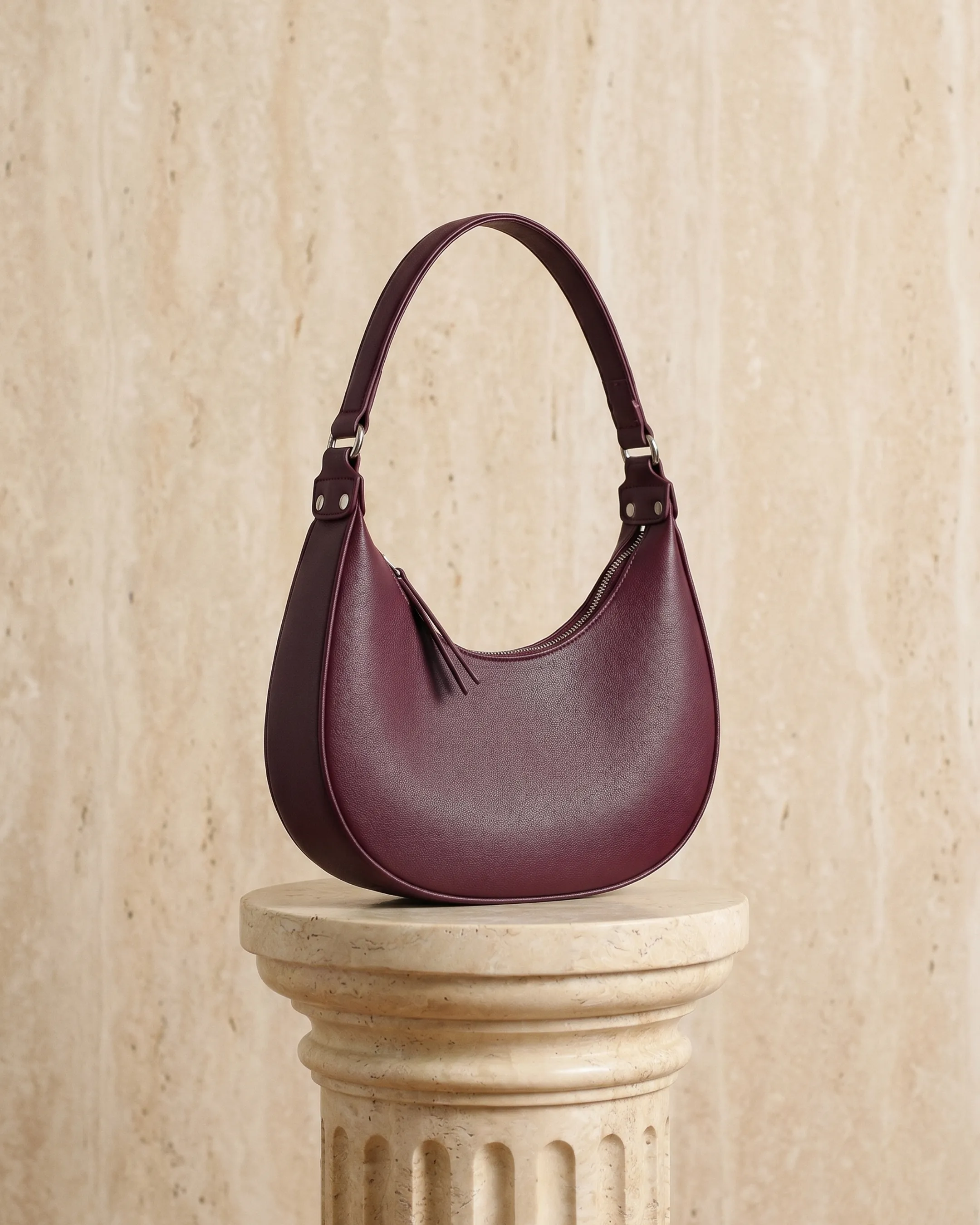
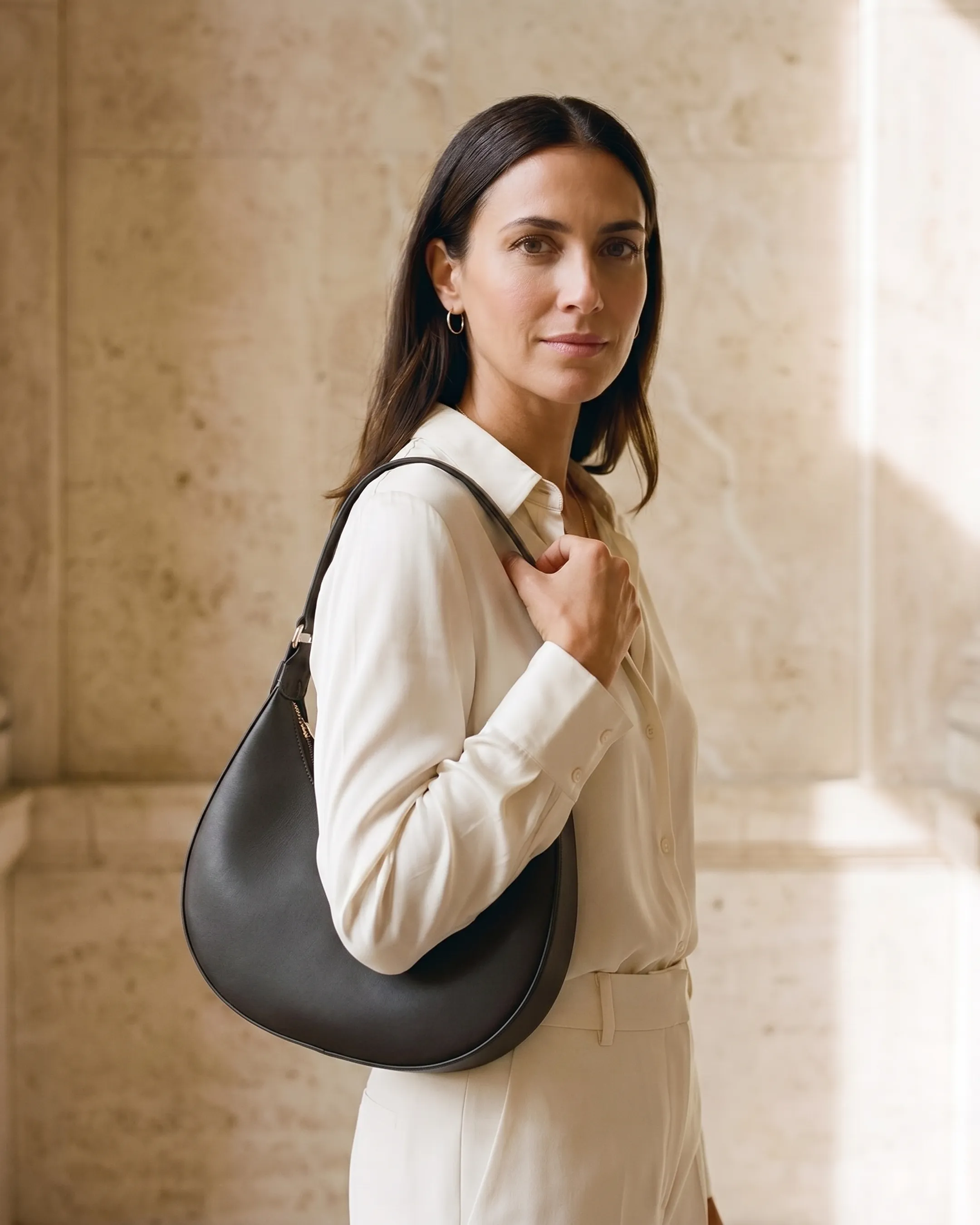
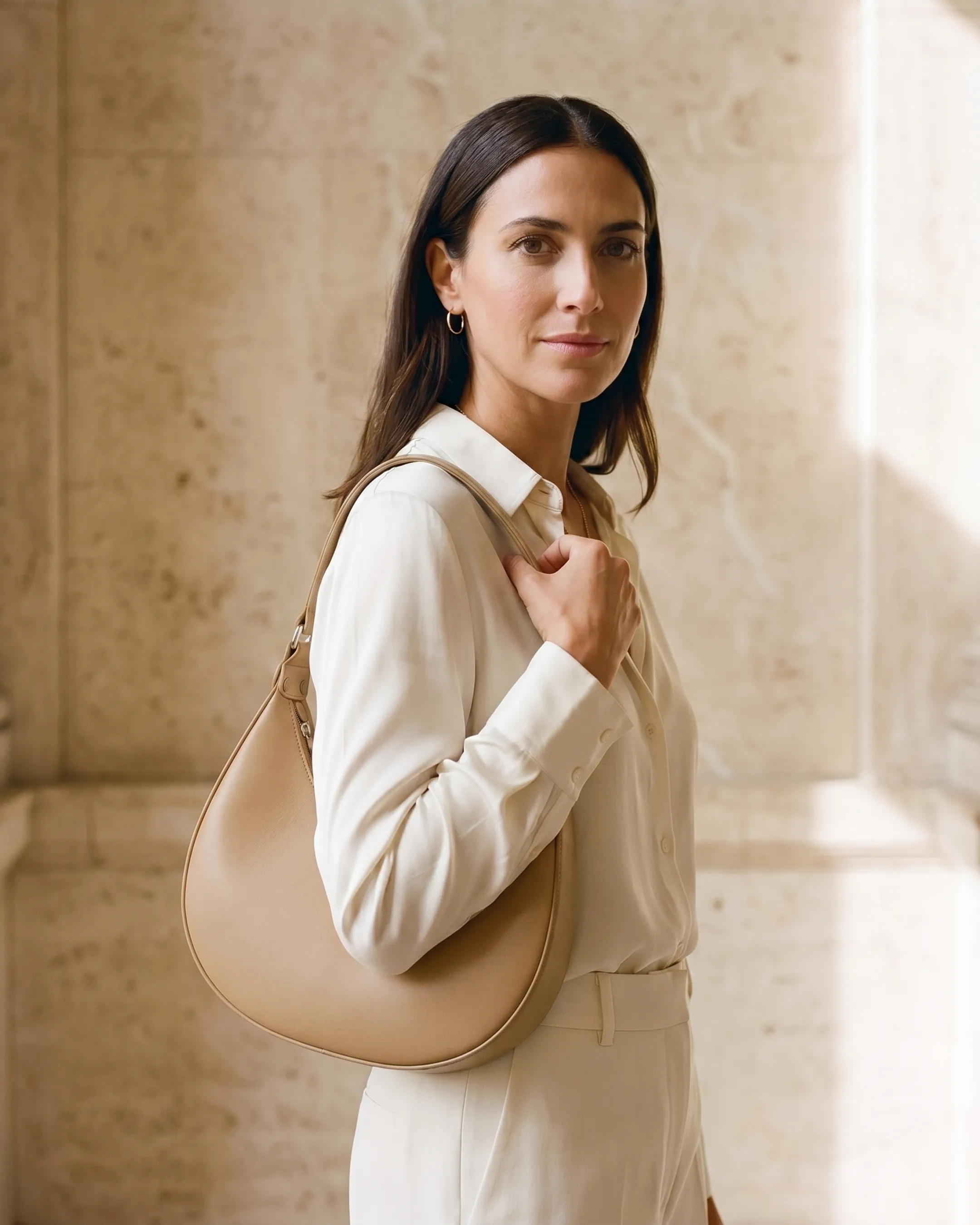
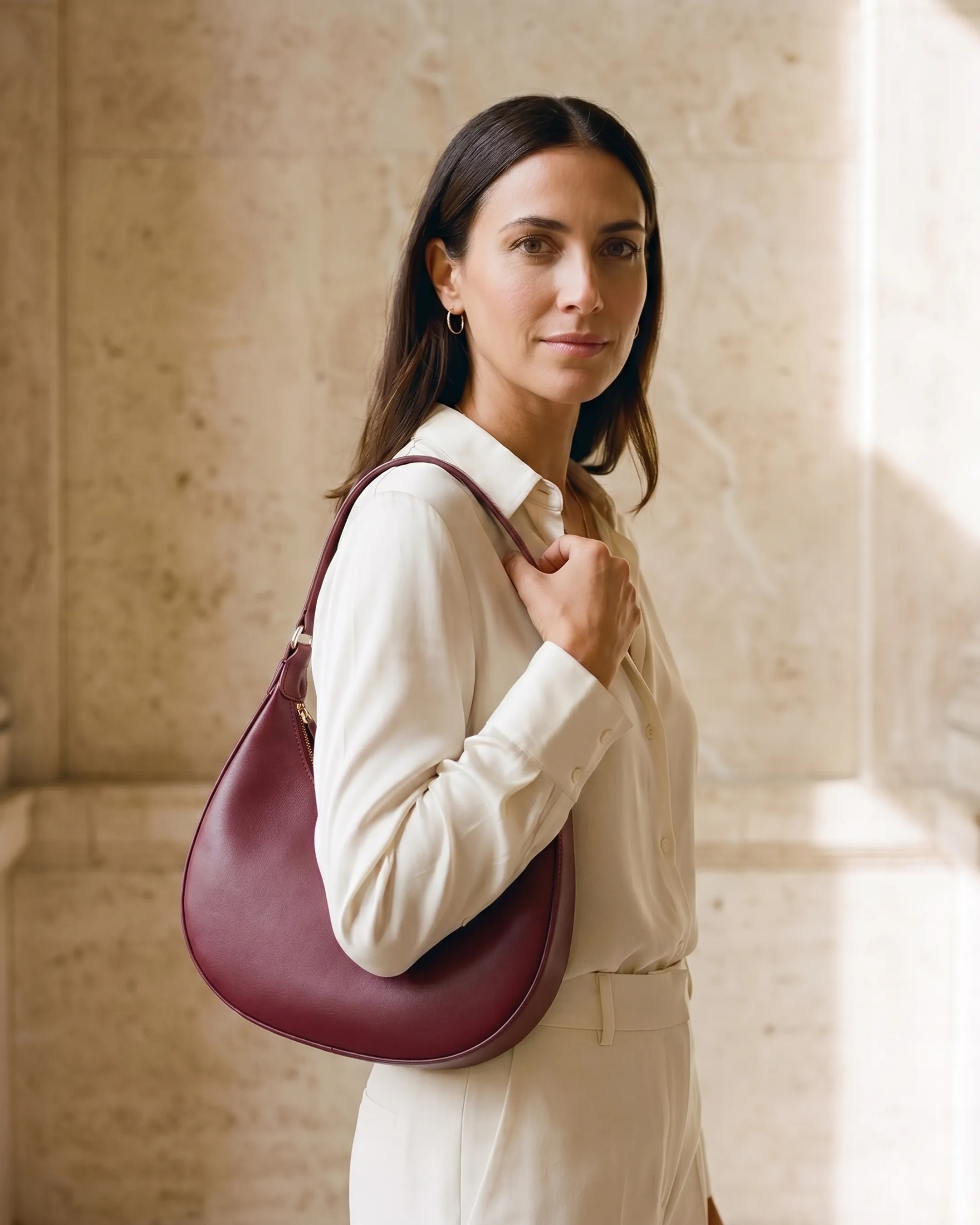
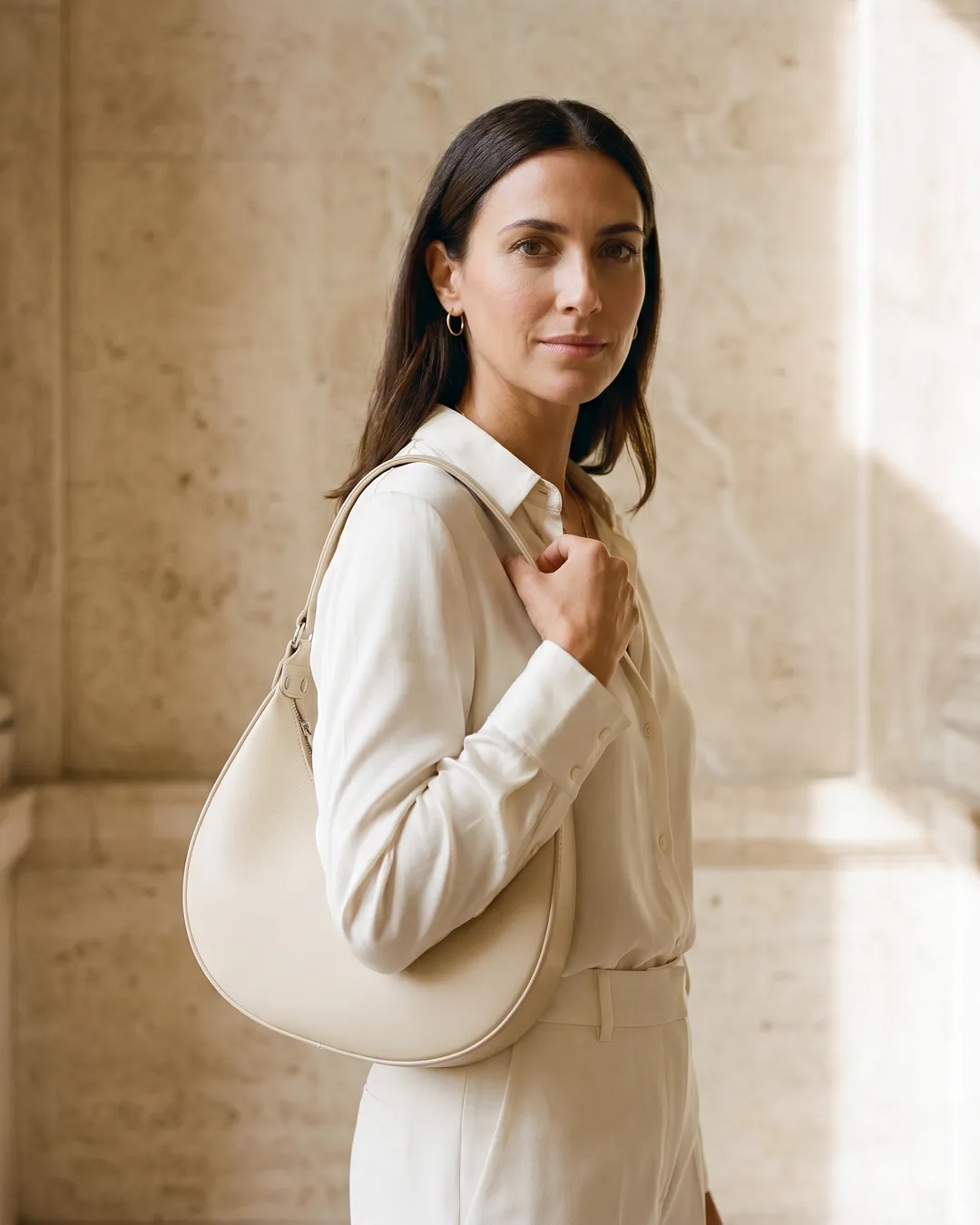
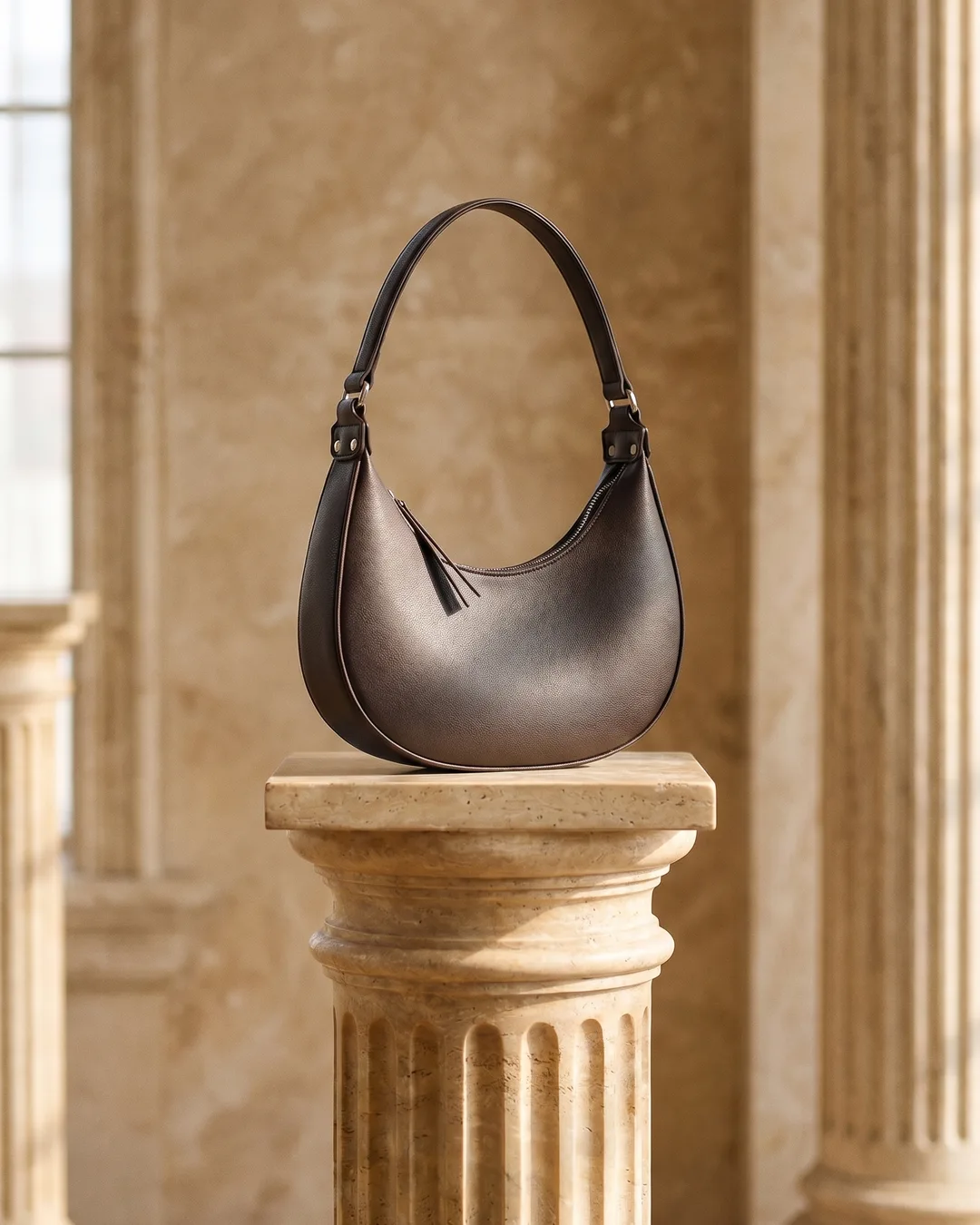
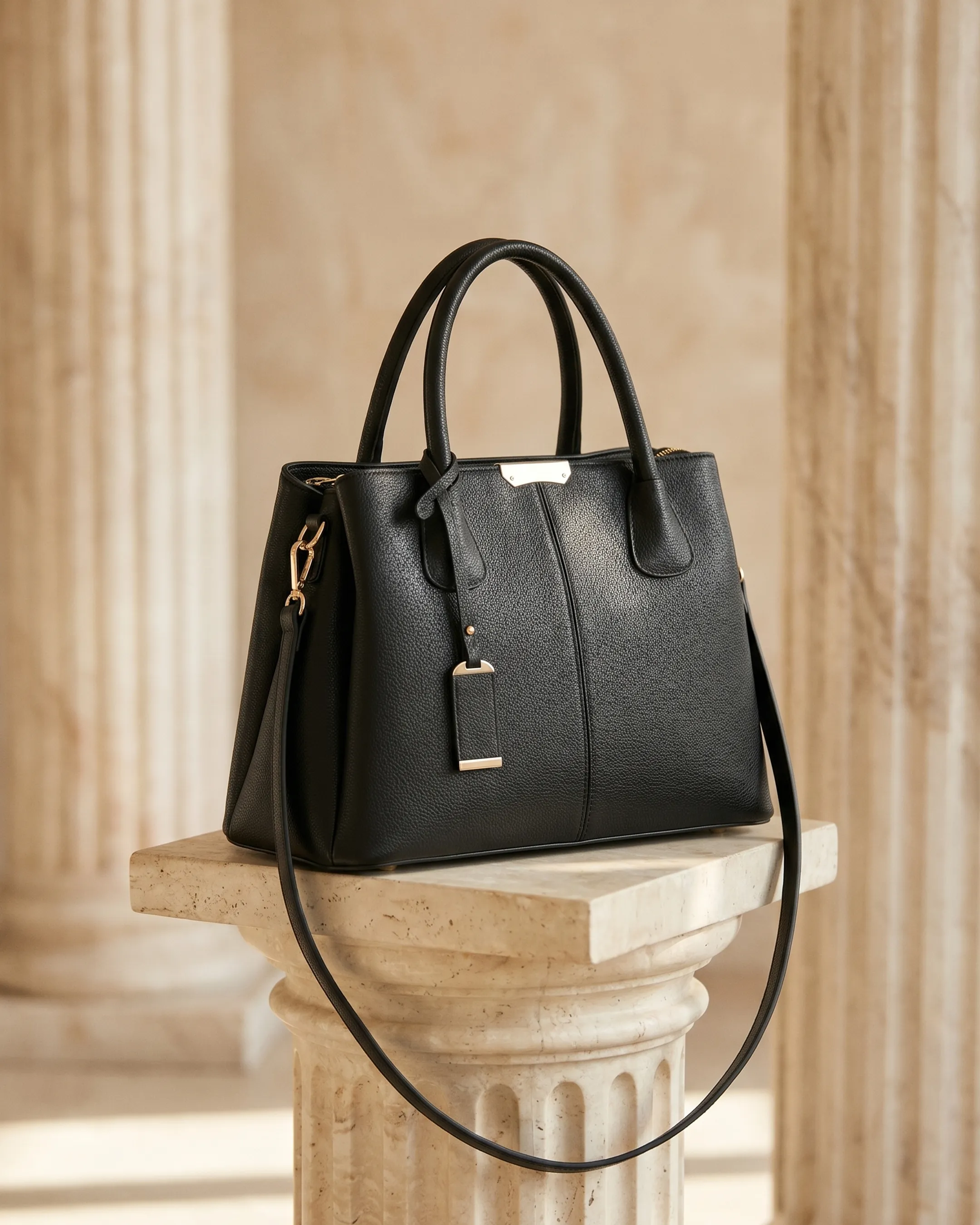
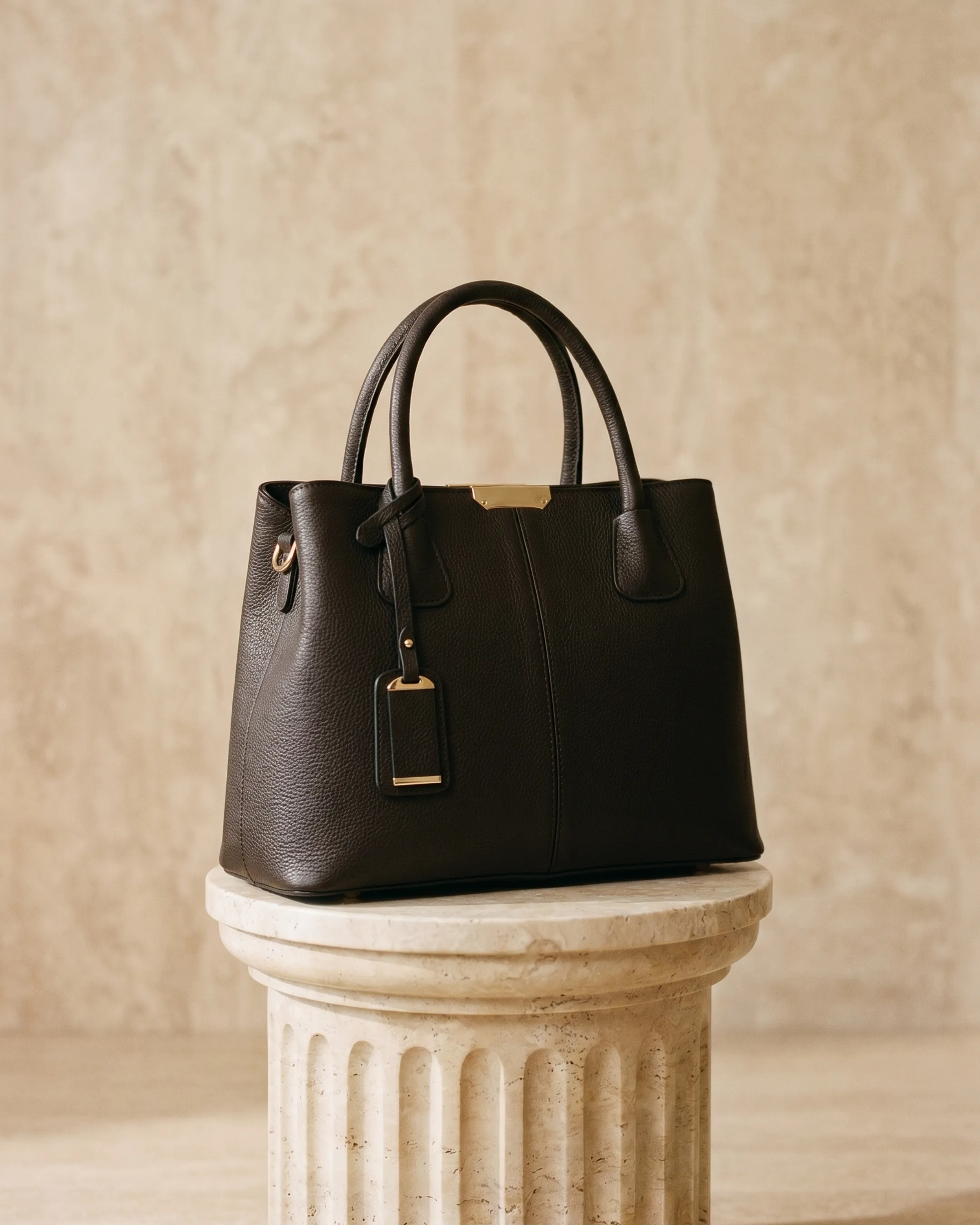
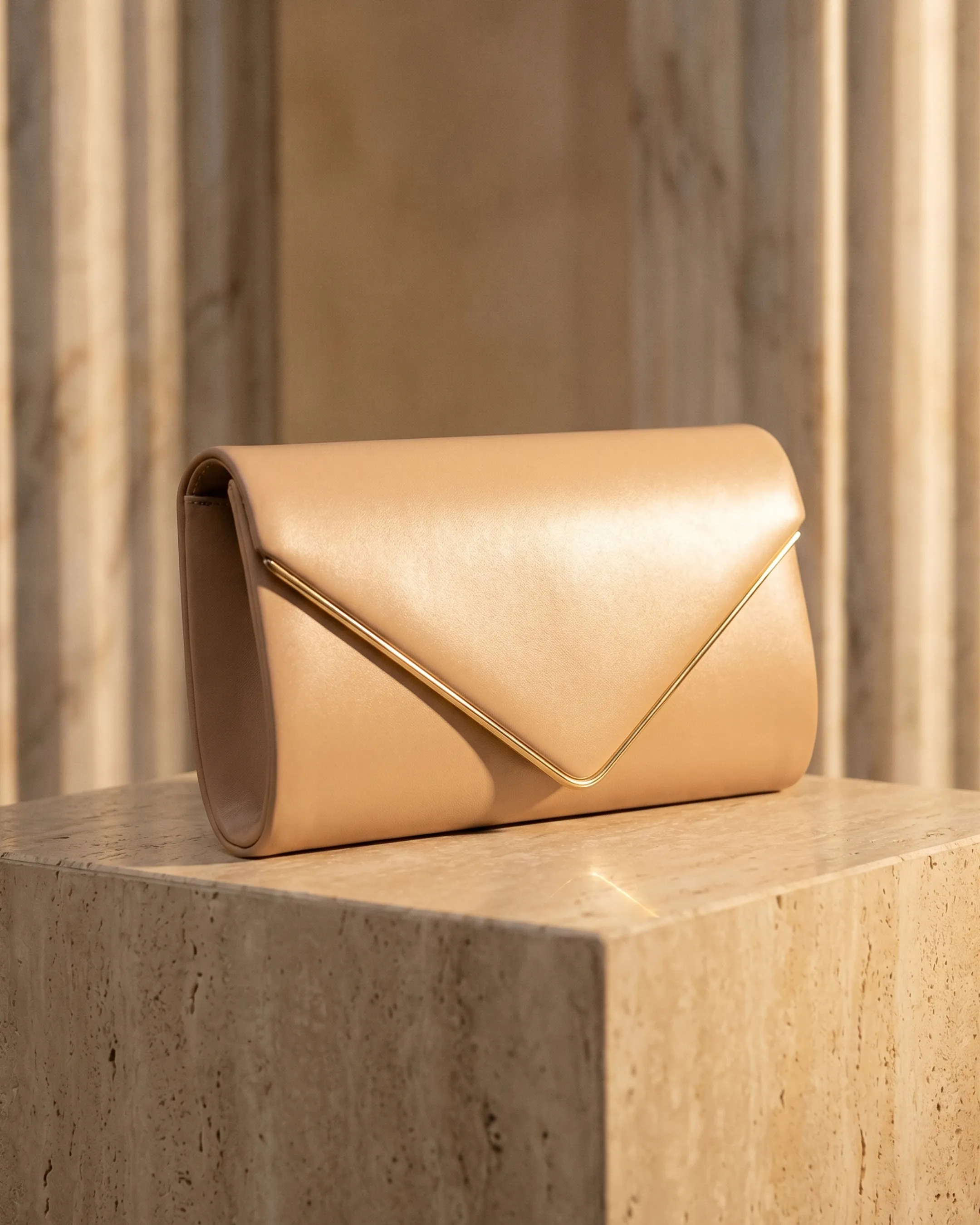
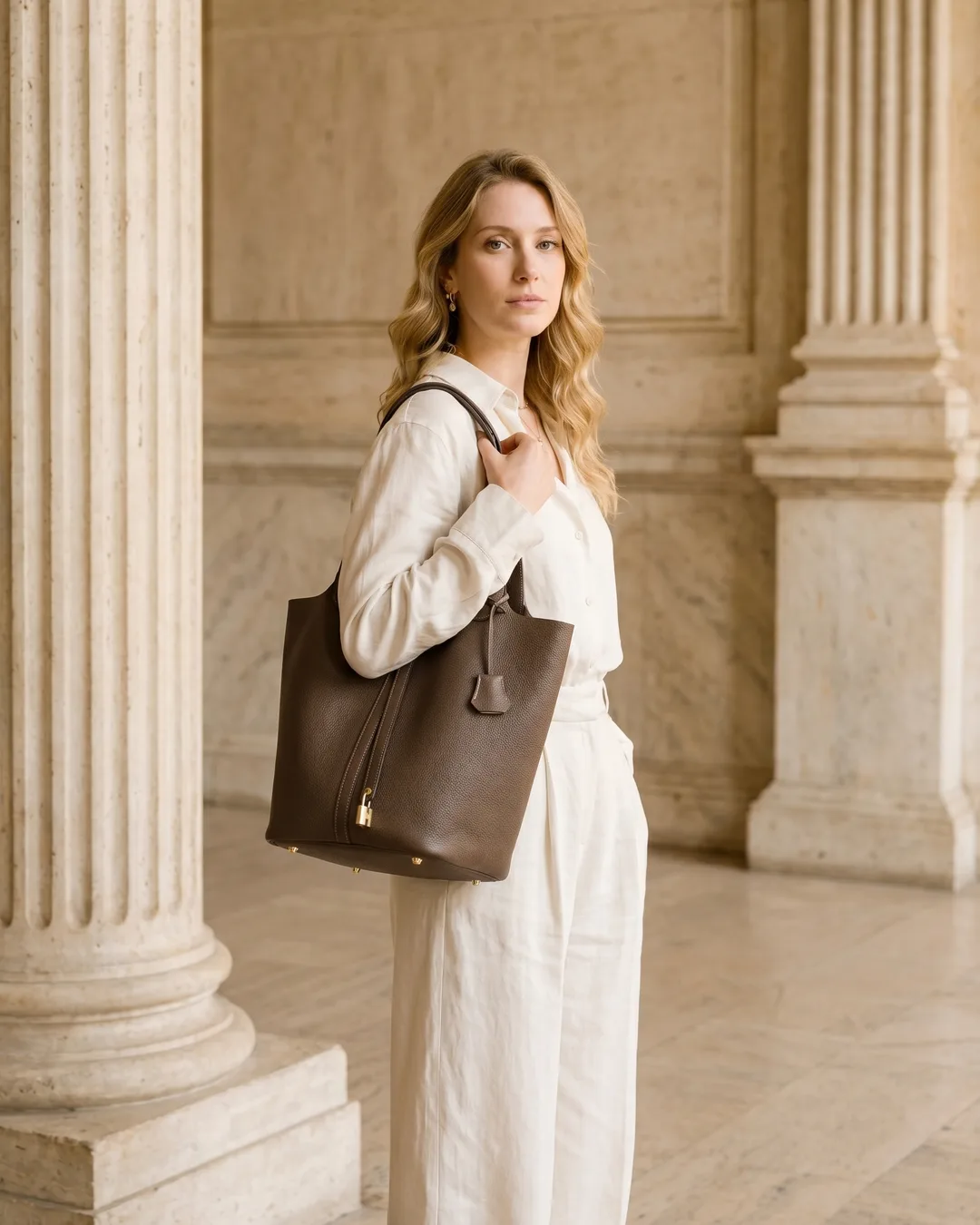
The house drew the Palatina the way a Roman architect drew an arch — one confident line, nothing more. The crescent body is cut from a single panel of smooth full-grain leather, its half-moon silhouette settling into the hollow of the shoulder and tucking neatly under the arm. There is no flap, no logo plate, no ornament; the shape is the statement.
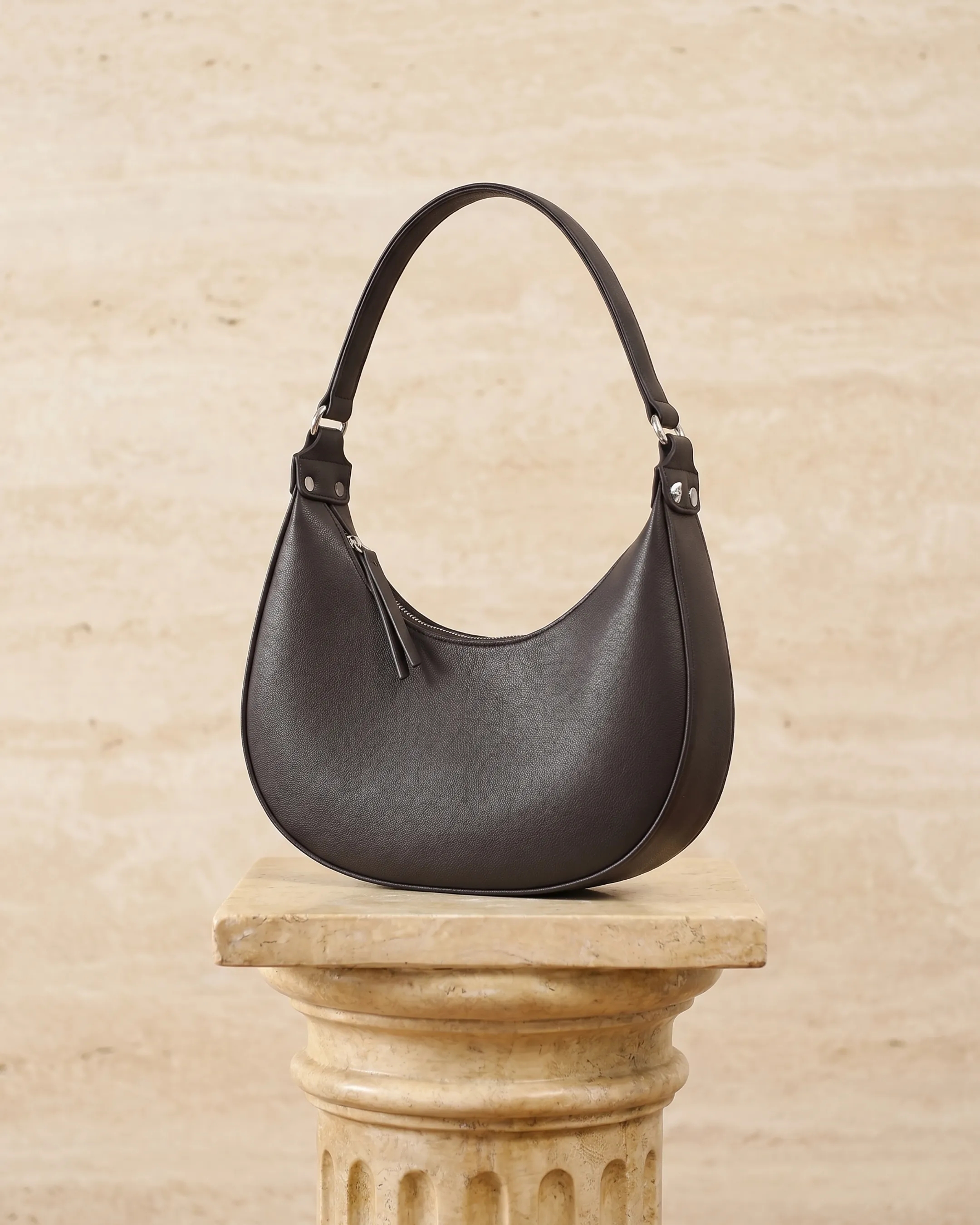
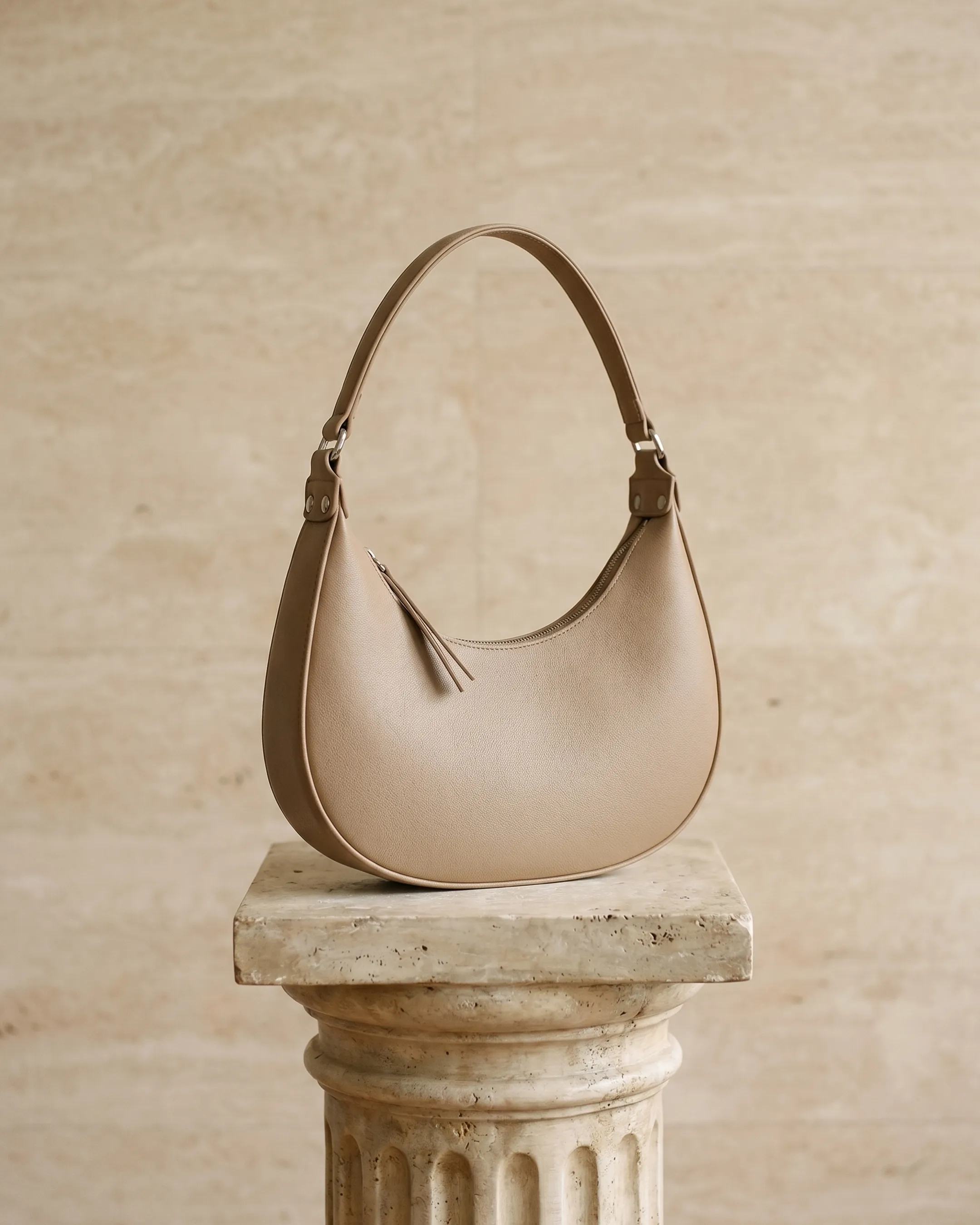
A slim top handle arcs over the crescent and meets the body at two compact buckle adjusters, the only hardware allowed to speak. A curved zip-top closure follows the line of the bag and finishes in a slender leather pull. It is minimalism in the Roman key — restraint that reads as confidence rather than absence.
Leather Meant to Be Lived In
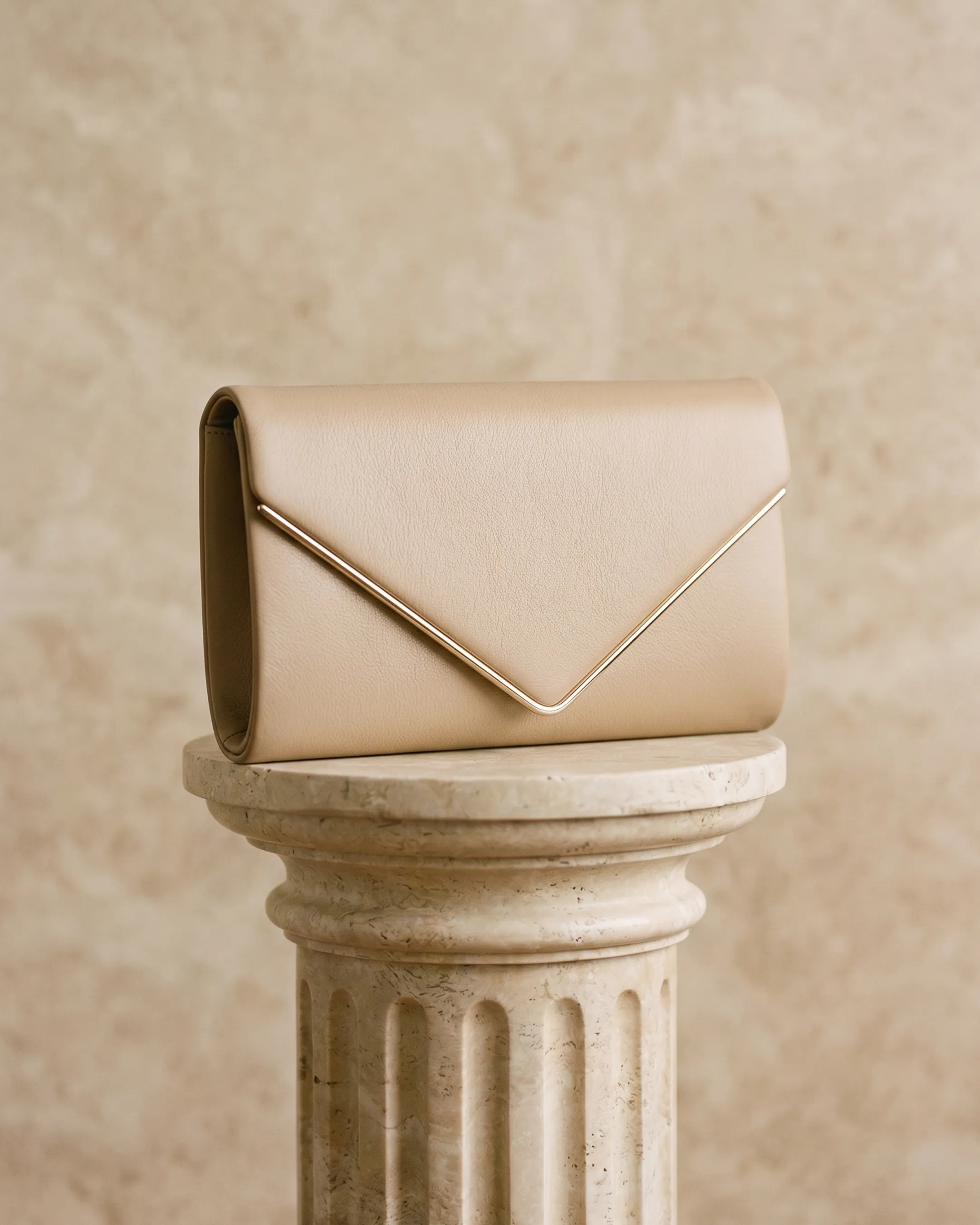
Like travertine that warms under the Mediterranean sun, the Palatina is made to soften, burnish and improve with wear.
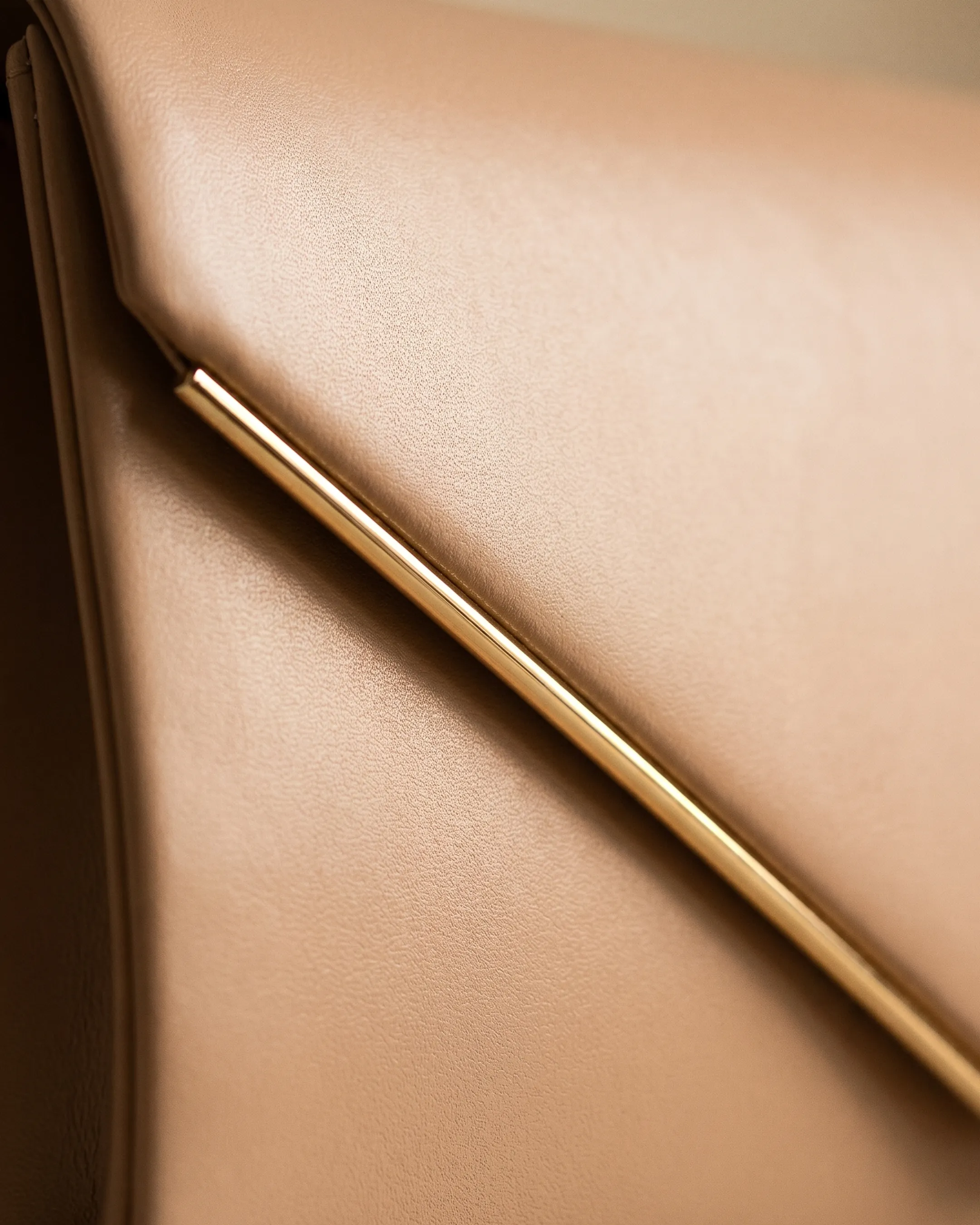
The leather is chosen full-grain so the surface keeps its natural pebble and pulls a gentle patina across the years rather than cracking. The hand is supple from the first day, yet the crescent holds its architecture — structured enough to stand on a pedestal, soft enough to fold against the body in motion.
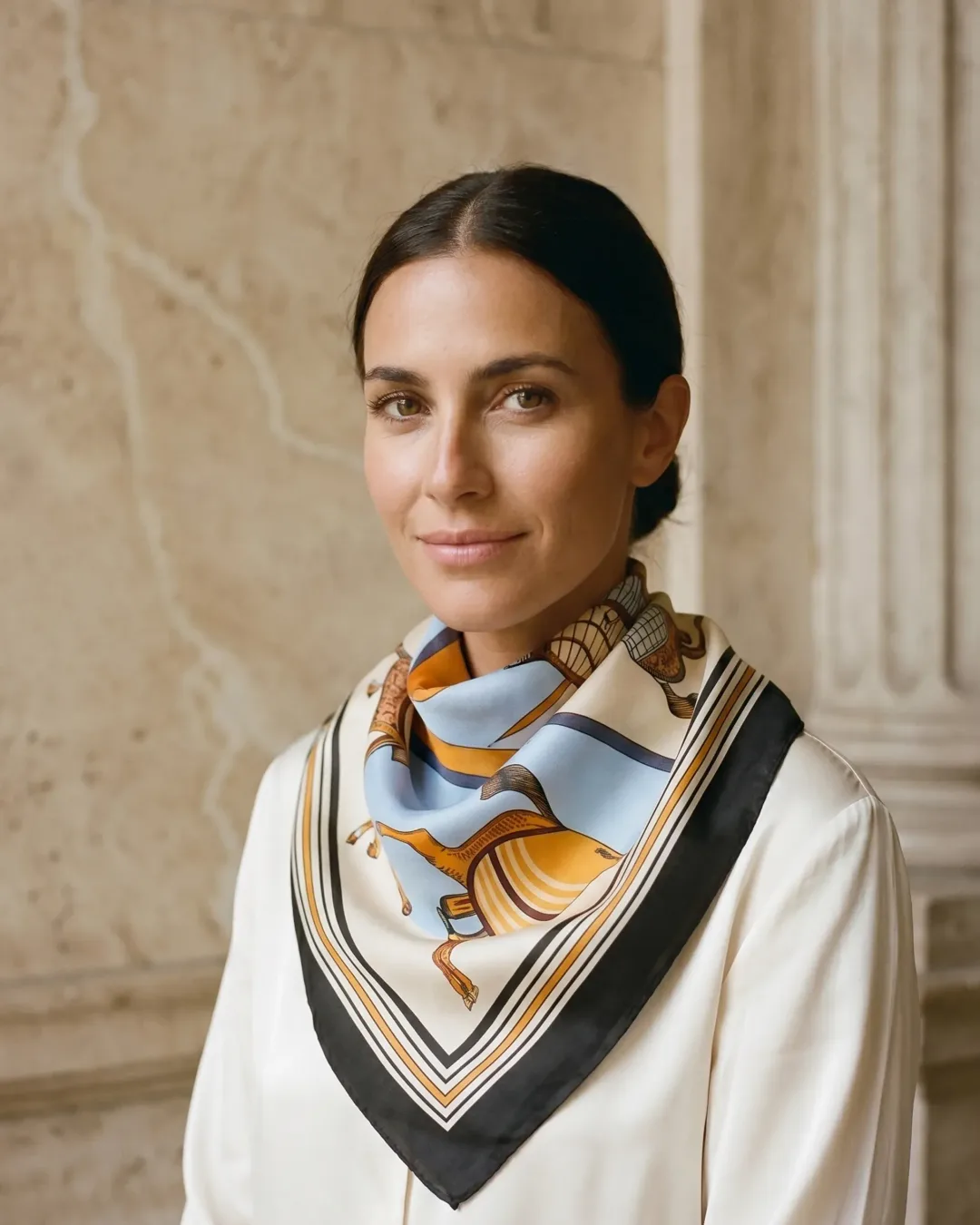
Inside, a smooth cotton-twill lining and a single slip pocket keep the essentials close: a phone, a card holder, a folded silk. Offered in four house tones — ivory Avorio, deep Basalt, sunlit Travertine and the wine-dark Porpora — the Palatina is the quiet bag a wardrobe leans on every day.