Best Dresses for a Rectangle Shape: How to Build a Waist on a Straight Figure
The wraps, belts, peplums and bias cuts that build a waist on a straight figure, ranked by how much curve each adds, plus the HCT gowns our atelier picks.
On this page
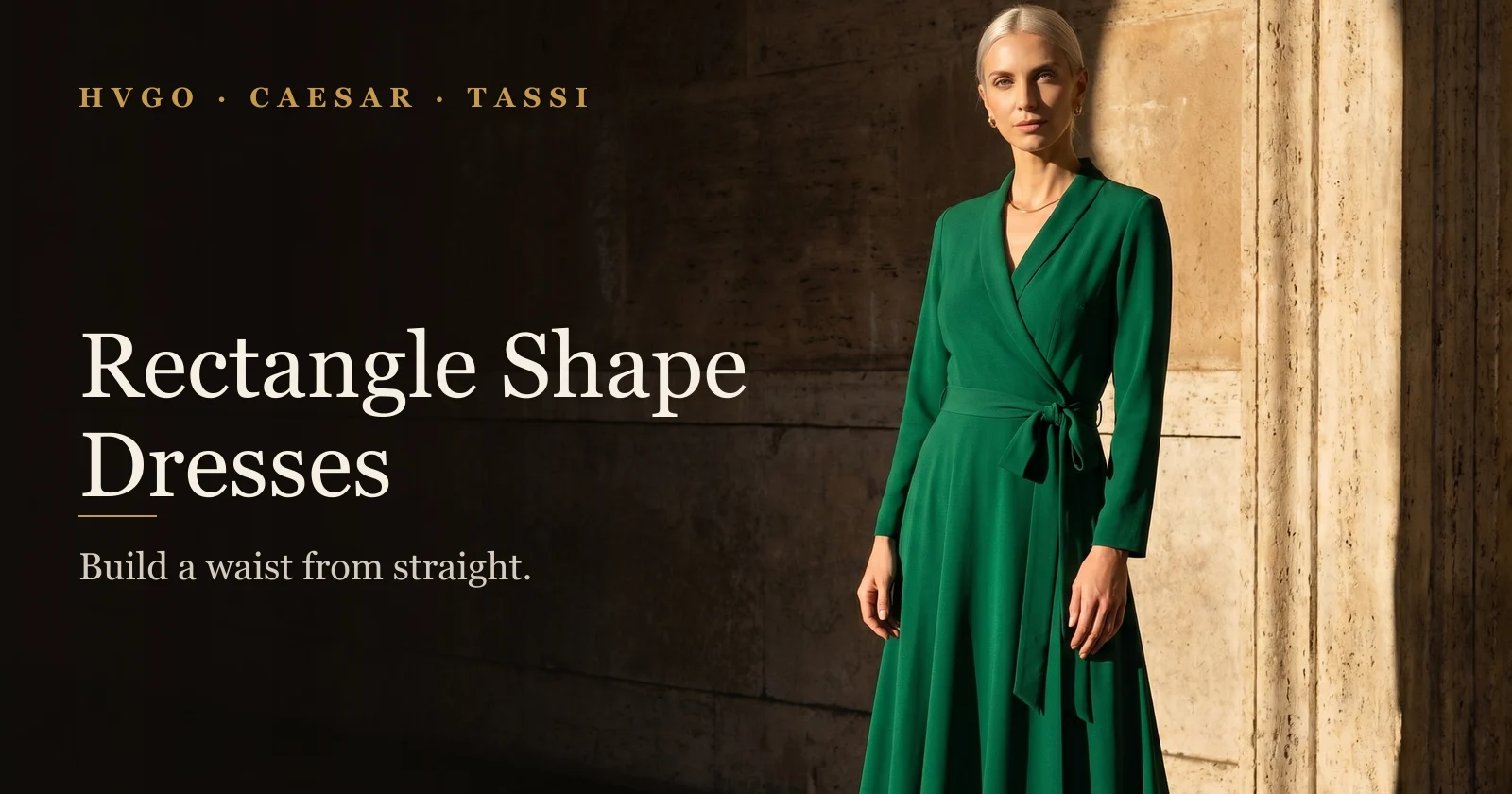
The best dresses for a rectangle body shape build a waist where the frame carries none, using a wrap, a belt, a peplum or a bias cut to carve an indent into a straight line. A rectangle measures close to one width top to bottom, so the dress invents the curve rather than tracing it. This guide ranks every move by how much shape it adds.
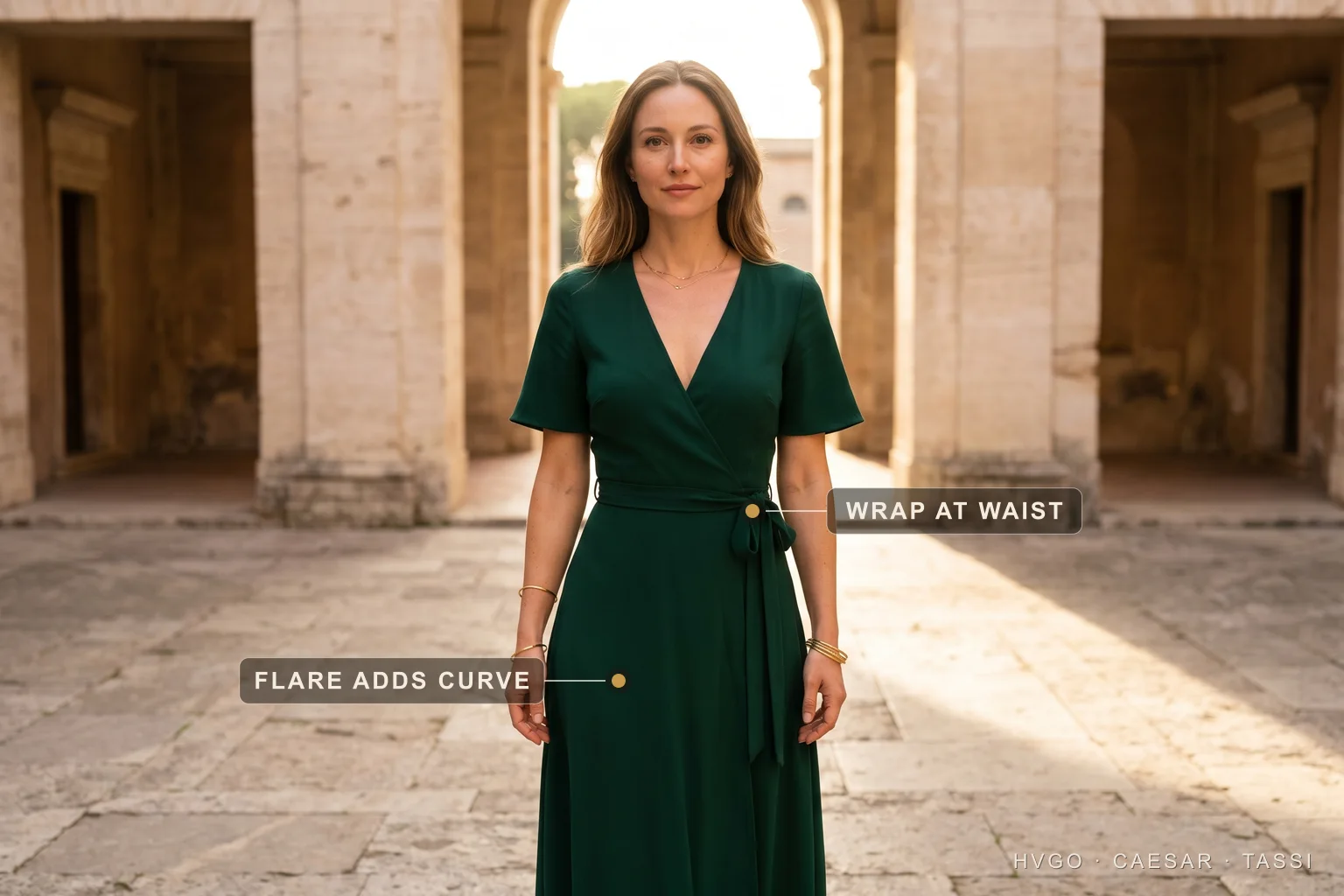
- Wrap ties to create the waist
- Skirt flares to add curve
Your rectangle dress, in three steps
Tell us the moment and what to build first — we’ll name the cuts that carve a waist onto a straight line.
Enter your measurements (optional) to confirm the line.
#What is a rectangle body shape, and what is the dress trying to create?
A rectangle figure runs in a near-straight vertical line, with shoulders, waist and hips that measure within a few centimeters of each other. The waist barely taps in, so the dress carries the whole job of suggesting one. That makes a straight frame the most reshapeable of the body types, not the hardest.
#How a rectangle (straight / column) figure is proportioned
A rectangle shape shows shoulders, waist and hips inside roughly a 5 cm spread, with little indentation at the middle. The torso often runs long, the bust reads small to average, and the limbs stay slim and even. Tailors call it the column or the banana figure for that uninterrupted line.
Compare it to its neighbors and the brief flips. An hourglass already owns the indent, so her dress only traces it. A pear disagrees in width top to bottom and needs the eye lifted. A rectangle agrees in width everywhere, so the dress has to create contrast from nothing. To confirm you read straight, wrap a tape at bust, waist and hip; three numbers within about 5 cm of each other place you here. The body-shape finder walks the measurement through step by step.
#The single goal: build a waist, don't compress
Build a waist by adding contrast above or below it, never by squeezing a frame that has no spare width to give. A rectangle has no soft surplus to cinch flat, so the trick is optical: pull fabric in at the middle and release volume around it.
This page owns one frame the generic results miss. An hourglass traces an existing curve and a pear shape balances two widths that disagree, but a rectangle creates curve from a straight start. So "create curve, not camouflage" is the correct instruction, and the only real error is leaving the line undefined in a shapeless column. A self-tie at the middle does more than any amount of drape left loose.
#The curve-building hierarchy: which details add the most shape on a rectangle shape?
Four moves build a waist on a straight figure, ranked by how much curve each adds: a wrap or belt cinches hardest, a peplum or flare adds strong volume, a bias slip nips softly, a cutout or seam interrupts subtly. Read this as a sequence, not a menu. Start at the top and stop when the dress shows the curve you want.
| Move | Mechanism | Curve added | Best when |
|---|---|---|---|
| Wrap / self-belt | Pulls fabric in at the narrowest point | Most | You want a clear, adjustable waist |
| Peplum / fit-and-flare | Releases hip volume so the middle reads narrower | Strong | You want a manufactured waist-to-hip ratio |
| Bias-cut slip | Follows the torso and lightly draws it in | Soft | You want a quiet, modern column with a hint of shape |
| Cutout / princess seam | Breaks the vertical optically | Subtle | You want the lowest-commitment shaping |
#Most shaping: a wrap or self-belt that cinches the natural waist
A self-tie wrap or removable belt pulls fabric to the narrowest point and carves an instant waist on a straight frame. It is adjustable to the centimeter and forgiving of a long torso, which makes it the single most reliable move for a rectangle.
The Livilla floral-print chiffon midi shows it: add a sash and the float gathers into a defined middle. Sash and obi variations widen the cinch into a band, which reads stronger on a longer torso than a thin tie. The counter-case is a wrap left loose for comfort; untied, it hangs as a tube and the curve vanishes, so the tie has to do its work.
#Strong shaping: peplum, fit-and-flare and a fuller skirt that add hip volume
A peplum or skirt that releases from the waist adds width at the hip, so the cinched middle reads narrower by contrast. The shaping comes from the gap between waist and hip width, not from compression, which is why it suits a frame with no spare to pinch.
The Portia short-sleeve chiffon A-line runs this at midi length, flaring from the waist into a clean triangle. A fit-and-flare bodice does the same with a sharper kick into the skirt. The edge case is a very stiff peplum in heavy fabric, which can stand off the hip like a shelf and add bulk a slim rectangle does not want; keep the flare fluid.
#Soft shaping: a bias-cut slip that nips the waist gently
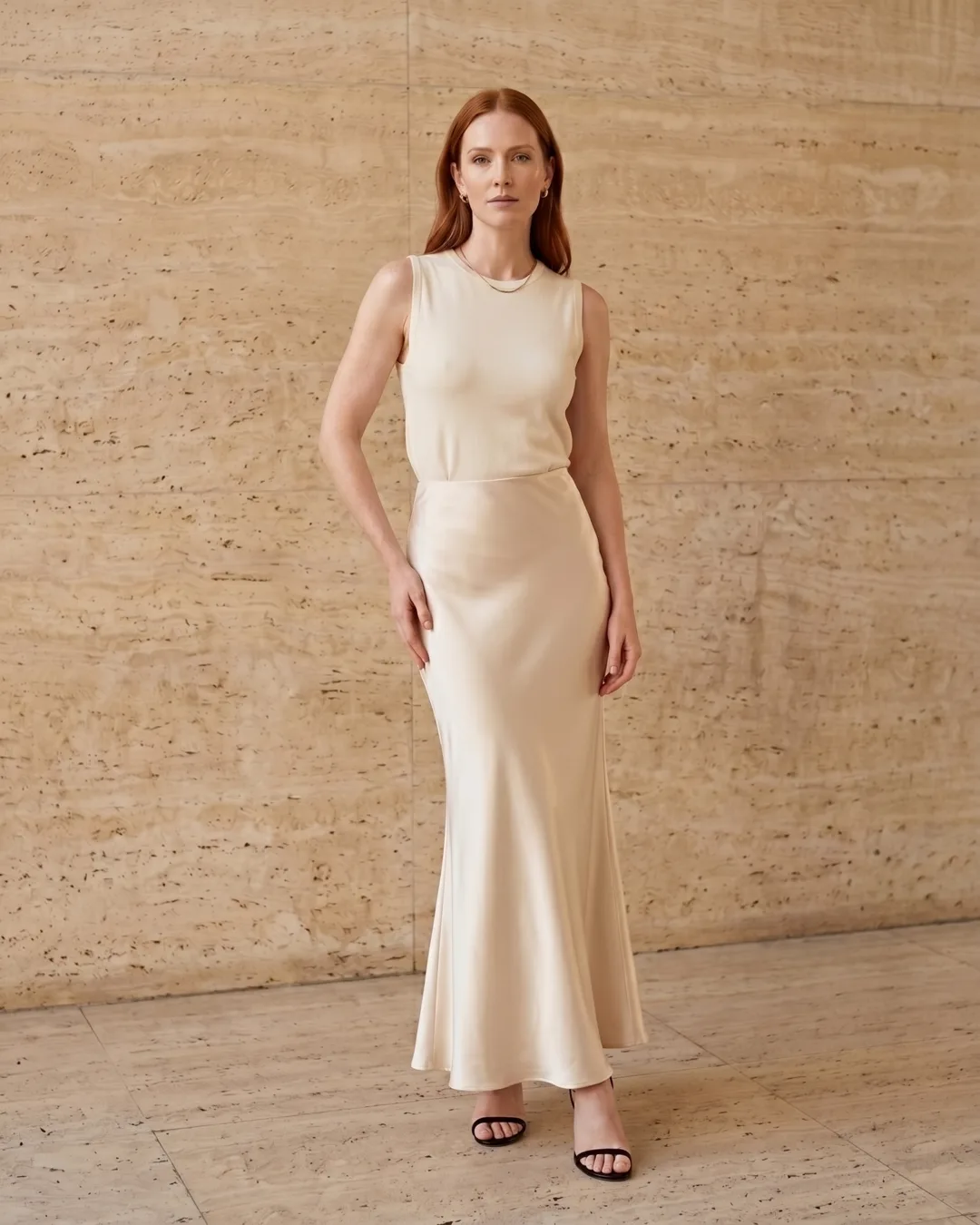
Bias-cut satin follows the torso and lightly draws in at the waist, giving a quieter curve than a hard cinch. The diagonal grain lets the cloth fall into the body and hold a soft line, so the column reads shaped without a belt fighting it.
This flatters a longer-torso rectangle, where the unbroken bias line keeps the height while still suggesting an indent. One caveat applies: on its own a bias slip nips only gently, so when you want a clear waist rather than a hint, add a belt at the middle or choose a ruched-waist version instead.
#Subtle shaping: a cutout, princess seam or ruched panel that interrupts the straight line
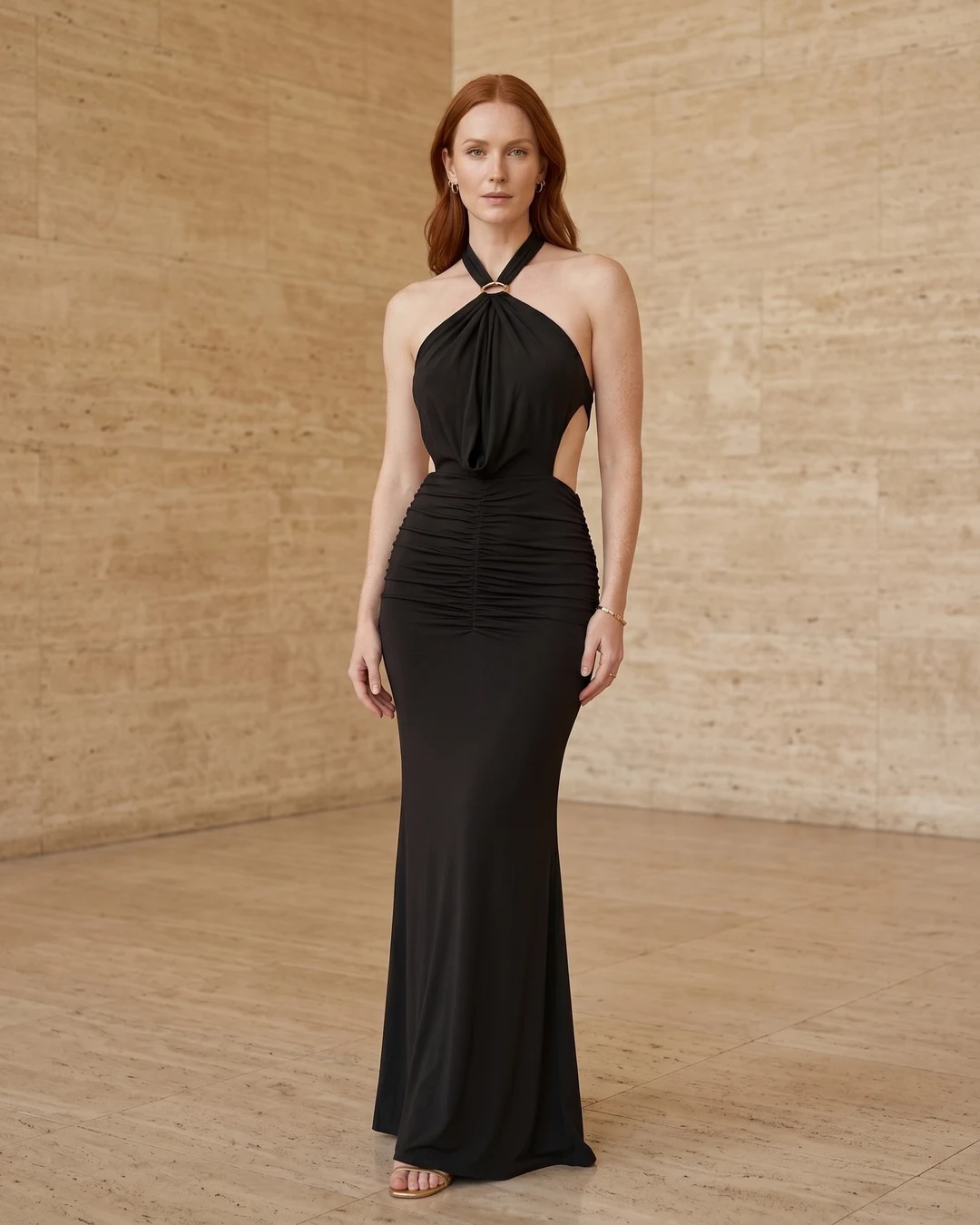
A waist cutout, side ruching or princess seam breaks the vertical and suggests an indent without changing the silhouette's width. It is the lowest-commitment curve, working by optics rather than fabric volume.
A single side cutout at the waist or a shirred panel pulls a shadow line inward, while princess seaming and a contrast color-block panel shade the torso narrower through the middle. The case against relying on it alone: a cutout interrupts the line but adds no real shape, so on a very straight frame pair it with a belt or a flare rather than asking it to carry the whole curve.
#Which dress silhouettes flatter a rectangle shape at an occasion?
The silhouettes that flatter a rectangle all manufacture a waist-to-hip difference the body lacks: wrap, peplum, fit-and-flare, fishtail and a belted bias column. Each applies one tier of the hierarchy above to a full occasion length.
- Wrap, belt or sash — cinches the cloth to your narrowest point.
- Peplum or fit-and-flare — adds hip volume so the middle reads narrower.
- Fluid fabric that moves — bias satin or chiffon pools into a curve.
- Unbelted straight column — hangs as a tube and stays straight.
- Drop-waist or empire — lengthens the line and erases the waist.
- Stiff boxy crepe — bridges bust to hip and squares you off.
#Wrap and belted dresses: the rectangle shape's default
The wrap and self-belted dress is the most dependable occasion cut for a straight figure, because you set the cinch exactly where you want a waist. No fixed seam can match a tie you control every time you put it on.
A midi wrap in soft chiffon suits daytime; a belted gown carries the same logic into evening. This leads the edit because it never fights the frame. The honest limit is a deep wrap neckline that can gape on a fuller bust, so a hidden snap at the cross-point keeps it secure through a long night.
#Peplum and fit-and-flare for a built-in curve
A structured peplum at the waist and a fit-and-flare bodice both manufacture a waist-to-hip ratio by adding width below a fitted middle. The peplum stacks a short ruffle at the hip; the fit-and-flare releases the whole skirt from the waist.
Both give a rectangle the curve an hourglass owns naturally. A fit-and-flare in fluid crepe reads soft and formal at once. Watch peplum stiffness, though: a crisp peplum projects volume the slim rectangle may not want, whereas a soft gathered one drapes the hip without bulk.
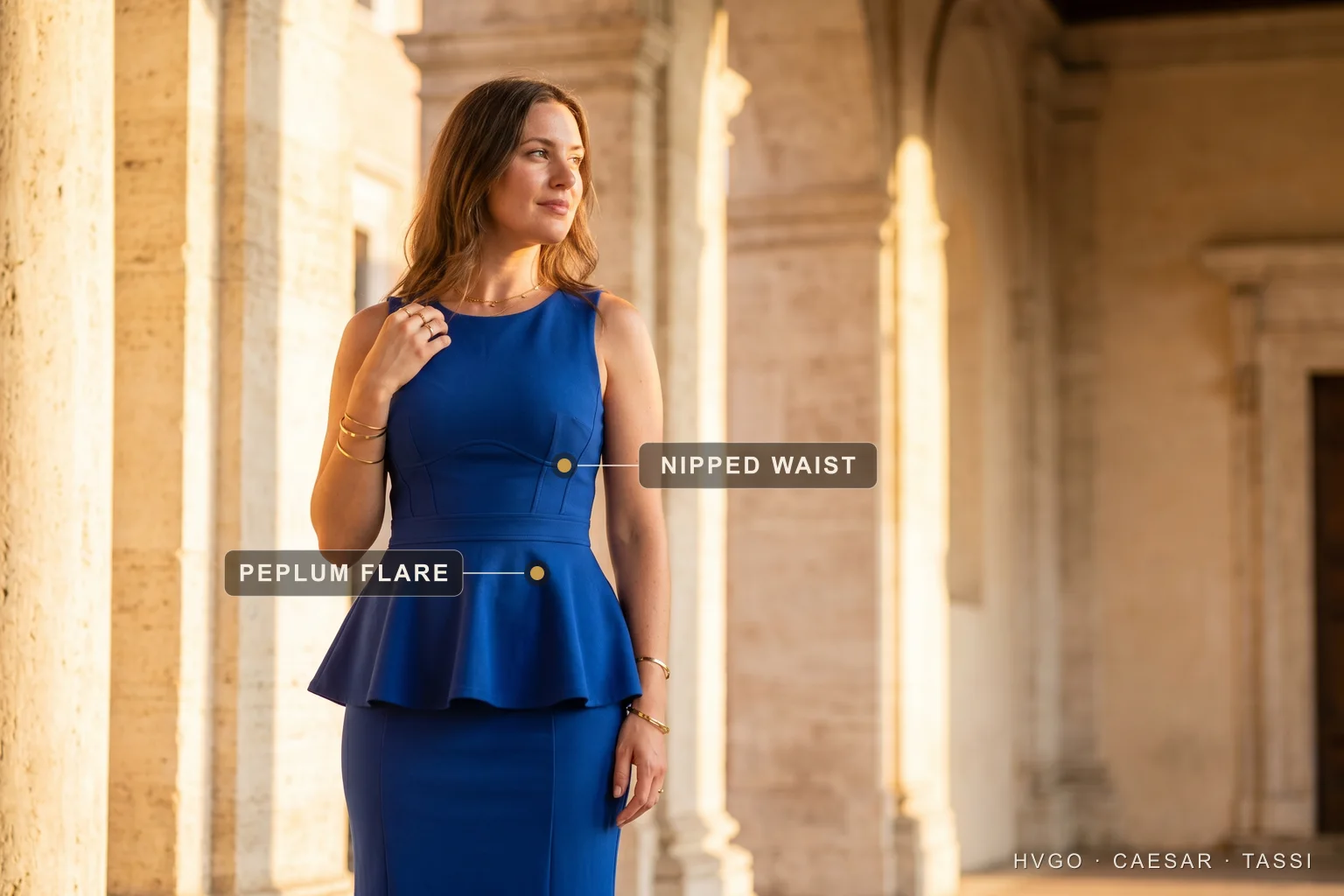
- Defined nipped waist
- Flared skirt builds the hip
#Fishtail and seamed sheath for the illusion of an hourglass
A fishtail gown or princess-seamed sheath sculpts curves onto a straight torso through vertical seaming and a below-knee release. The seams shade the body inward at the waist; the flare opens the line at the calf, so the silhouette reads as an hourglass it was cut to fake.
The Calpurnia fishtail satin evening gown is the house example here: bias satin holds the line through the hip, then the fishtail breaks below the knee to invent a curve. The edge case is movement at a seated dinner, where a tight fishtail limits stride, so check the flare clears a full step before a long evening.
#Bias slip and soft column, belted or ruched
A fluid bias column skims and lightly nips, but it needs a belt or a ruched waist so it does not read as a straight tube. Left plain, a soft column on a rectangle hangs straight and undoes the work.
The Tullia pleated crepe column gown answers this with vertical pleats that add texture and a long, defined line, and it takes a belt readily. Add a sash at the middle or choose the ruched-waist cut, and the column gains the indent it lacks. Browse the belt-ready styles in the satin evening dresses edit to see the bias column shaped both ways.
#Which necklines and bodices add curve to the upper body on a rectangle shape?
Necklines build curve up top to balance the waist you create below, while the waist seam itself must sit at the true waist and never drop. The bust rounds out the upper third; the seam placement decides whether the whole illusion holds.
#Necklines that build the bust and soften the shoulder line
Sweetheart, halter, cowl, ruched-bust, off-the-shoulder and one-shoulder necklines round out a smaller-to-average bust and add an upper curve. Each shapes the shoulder line so the new waist below has a fuller top to read against.
The Flavia strapless satin off-shoulder gown opens the shoulder and rounds the bust, building the upper curve a rectangle often lacks. A cowl adds soft drape over the chest; a ruched bust gathers volume where there is little. The counter-case is a high closed crew neck, which flattens the chest into the straight line you are trying to break.
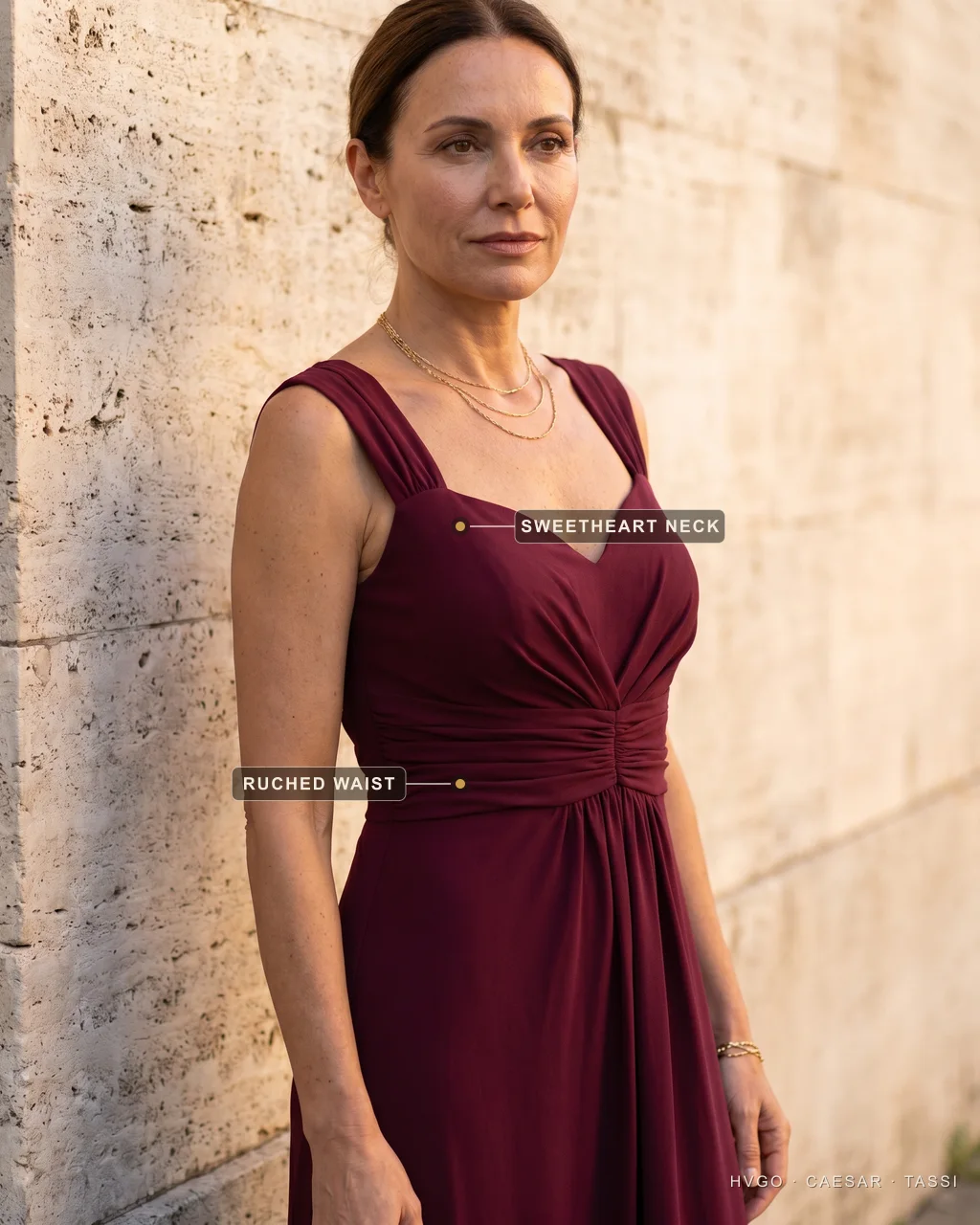
- Sweetheart rounds the bust
- Ruched waist creates the curve
#Waistlines that sit at the true waist, never dropped
Waist seams belong at the true natural waist or a basque dropped-V that points to it, never at an empire or drop-waist line. A seam at the right height marks the indent; a seam at the wrong height erases it.
A natural-waist or basque-V seam draws the eye to the middle and reads as a waist. The distinct avoid for this figure is the empire or drop-waist: each releases fabric from above or below the waist and lengthens the straight line, flattening a rectangle further. Where a pear gains from an empire's free skirt, a rectangle loses the one contrast point she was building.
#Which fabrics add movement and shape to a rectangle shape?
Fabric decides whether a dress falls into a waist or hangs in a straight tube, which matters as much as the silhouette name. Fluid weights pool into a curve; rigid ones hold the column square.
#Fluid weights that fall into a curve
Bias-cut satin, draped modal jersey and soft chiffon move with the body and pool into a waist instead of hanging straight. Drape is the property doing the work, so the cloth falls into the middle and follows a belt or a seam rather than bridging it.
This is the house movement test, applied before any silhouette choice. Hold a length against your waist: if it falls into the curve and drapes around a belt, it will shape you. A stiff length that holds its own flat line will not, however you cut it. The dress silhouettes guide pairs each cut to the weight that suits it.
#Structure used on purpose: boning, princess seams and shirring
A lightly boned bodice, princess seams and shirred waist panels physically sculpt a waist into a straight torso. Curved structure builds shape; flat structure squares it off, so the direction of the seam matters more than the stiffness itself.
Princess seams and gathered panels pull the cloth inward at the waist, carving an indent the fabric holds. The harmful version is a stiff boxy crepe column, whose flat panels bridge straight from bust to hip and read the figure as a box. Helpful structure curves toward the waist; harmful structure stands away from it.
#How does a rectangle shape dress for a wedding, gala or the races?
Hold the rectangle rule across every dress code, shifting only fabric, length and formality: define the waist, then add volume around it. A daytime guest and a black-tie gown solve the same problem at different weights.
#Daytime and semi-formal weddings
A belted midi or fit-and-flare suits a daytime or christening guest, while a self-tie wrap reads right for a garden ceremony. Lighter fabric and a clear waist cinch carry the semi-formal brief.
For this brief the Livilla floral-print chiffon midi belts into a defined waist. Match the formality to the invitation before you choose, and keep to the imperial palette so you sidestep bridal white. The atelier designs occasion dressing to leave white and funereal black to others.
#Black tie, evening and the opera
Black tie calls for a fishtail or belted bias gown, while the opera suits a ruched or seamed column that holds a long line. Length and a continuous tone carry the formality; the waist work carries the shape.
Choose Porpora (wine), Basalt (black), Cobalto (navy) or Vermiglio (red) for the gown, and let a color-blocked panel shade the waist inward. A contrast panel down the princess seams narrows the middle optically, doing quiet shaping work at full evening length.
#How Hugo Caesar Tassi dresses a rectangle shape
The house ranks the shaping a straight figure needs into one repeatable order, then names the gowns cut to follow it. This sequencing is the page's first-party view, where the generic results only ever say "add a belt."
#The house curve-building hierarchy
Hugo Caesar Tassi builds a rectangle waist in four ranked tiers, from a wrap that cinches hardest to a seam that interrupts most subtly. A wrap or self-belt cinches the natural waist for the most shaping; a peplum or full skirt adds hip volume for strong shaping; a bias slip nips it softly; a cutout, princess seam or color-block panel interrupts the straight line for the subtlest curve.
The house cuts occasionwear in Roma since 2004 under the motto Nata Imperare, and grounds the ranking in fabric behavior: bias satin and draped modal fall into a waist, while a stiff boxy crepe column squares the figure off. Run the tiers in order and stop at the curve you want.
#The dresses we steer rectangle-shape clients to
Five HCT gowns run the hierarchy directly, each earning its place on a different tier. One line tells you why each suits a straight figure.
- Calpurnia, a fishtail satin evening gown: seamed and below-knee flared to sculpt an hourglass illusion.
- Tullia, a pleated crepe column gown: vertical pleats add a long, defined line and take a belt readily.
- Flavia, a strapless satin off-shoulder gown: the off-shoulder line builds an upper curve.
- Livilla, a floral-print chiffon midi: fluid print with movement, made for a sash.
- Portia, a short-sleeve chiffon A-line: flares from the waist to suggest a curve.
What the atelier learned fitting the rectangle figure
Across the house’s fitting studio, the straight figure was the most reshapeable, not the hardest: the dress invents the curve it can’t trace. A wrap or belt at the true waist, with volume released around it, read as an hourglass — where a shapeless column only lengthened the line. The findings below are the ranked order the studio now cuts to.
| Cut | What the studio observed | Verdict |
|---|---|---|
| Wrap / self-belt | Pulls the cloth to the narrowest point; the most shaping, fully adjustable. | Best |
| Peplum / fit-and-flare | Adds hip volume so the cinched middle reads narrower. | Best |
| Seamed fishtail | Vertical seams and a below-knee flare sculpt an hourglass illusion. | Best for evening |
| Bias slip, belted | Follows the torso and nips softly; needs a belt or ruched waist. | Best |
| Shapeless shift / unbelted column | Hangs straight and leaves the line undefined. | Skip |
| Drop-waist / empire | Lengthens the vertical and erases the one contrast point. | Skip |
The rule the study produced: build a waist, don’t compress — cinch the middle and release volume around it.
#Your rectangle-shape occasion-dress checklist
Run one sequence before you buy: define the waist, add hip volume, choose a fluid fabric, build the bust, hold the seam at the true waist, avoid the shapeless column. It turns the whole guide into a fitting-room test you can apply in a minute.
#The quick recap
| Do | Don't |
|---|---|
| Define the waist with a wrap, belt or sash first | Leave a soft column unbelted to hang straight |
| Add hip volume with a peplum or fit-and-flare | Pick a stiff peplum that stands off as a shelf |
| Choose a bias, modal or chiffon that moves | Wear a boxy crepe column that squares you off |
| Build the bust with a sweetheart, halter or off-shoulder neckline | Close the chest in a high crew that flattens the line |
| Keep the seam at the true or basque waist | Drop the seam to an empire or hip line |
| Add a cutout or princess seam for a subtle break | Rely on a cutout alone to carry the whole curve |
#Where to go next
Confirm your shape first, then read across before you shop. If your bust and hip already balance over a clear waist, the hourglass figure guide fits you instead. For the full proportion logic across every figure, start at the dressing for your figure pillar, then bring this checklist to the midi and occasion edits.
#Frequently asked questions
What is the best dress style for a rectangle body shape?
The best dress style for a rectangle body shape is a wrap or belted dress that cinches the natural waist, or a peplum, fit-and-flare or fishtail that adds volume at the hip. Each builds a waist-to-hip curve onto a straight, even frame, which a shapeless column never does.
How do you create curves with a dress on a straight figure?
You create curves on a straight figure by defining the waist first, then adding width below it. Cinch with a self-belt, sash or wrap, release a peplum or flared skirt at the hip, choose a bias or fluid fabric that moves, and round out the bust with a sweetheart or off-the-shoulder neckline.
Do wrap dresses suit a rectangle shape?
Wrap dresses suit a rectangle shape better than any other cut, because the self-tie pulls fabric to the narrowest point and carves an instant waist. It is adjustable to the centimeter, so it builds the indent a straight figure lacks. Add a snap at the cross-point if the neckline gapes.
What dresses should a rectangle shape avoid?
The dresses a rectangle shape should avoid are shapeless shifts, straight unbelted columns and drop-waist or empire styles. Each lengthens the vertical line and flattens the figure rather than breaking it. Choose a defined natural waist instead.
What is the best wedding guest dress for a rectangle body?
The best wedding guest dress for a rectangle body is a belted midi or fit-and-flare in fluid chiffon for daytime, and a seamed fishtail or belted bias gown for evening. Each one is shaped to suggest a waist and add curve at the hip, so match the fabric and length to the stated dress code.
Can a rectangle shape wear a fitted column or sheath dress?
A rectangle shape can wear a fitted column or sheath when it is bias-cut or princess-seamed and worn with a belt or ruched waist. The cut then nips in rather than hanging straight. Avoid a stiff boxy crepe column, which squares the figure off.
Build your waist in the occasion dresses edit, or start with the belt-ready satin gowns and the fluid midi dresses shaped to suggest a curve.
More Body Shape guides
Best Dresses for an Apple Shape
The apple-shape dresses that skim a fuller middle with cut, not shapewear: empire seams, bias drape and fluid crepe from the Roman atelier of HCT.
See the apple-shape editElegant Dresses for Women Over 50
Occasion dresses that flatter over 50 — a three-quarter sleeve, soft V neck and crepe that skims. The age-positive guide to weddings and evenings.
Dressing well over 50Best Dresses for an Hourglass Figure
The silhouettes, fabrics and necklines that trace an hourglass figure instead of hiding it, plus the atelier fluid-weight rule and HCT gowns to shop.
See the hourglass editHow to Find Your Body Shape
Take three measurements and learn your body shape for sure with the atelier ratio method and exact thresholds, not vague compare-to-fruit guesswork.
Find your body shapeHow to Dress an Inverted Triangle Body Shape
Open the neckline into a soft V to narrow broad shoulders, then add a skirt-width of pleated-chiffon volume at the hip until your shape reads balanced.
Style the inverted triangleBest Occasion Dresses for a Pear Shape
The shapes, necklines and fabrics that balance a pear shape: A-line chiffon that skims the hip and a neckline that lifts the eye one body-third up.
See the pear-shape edit