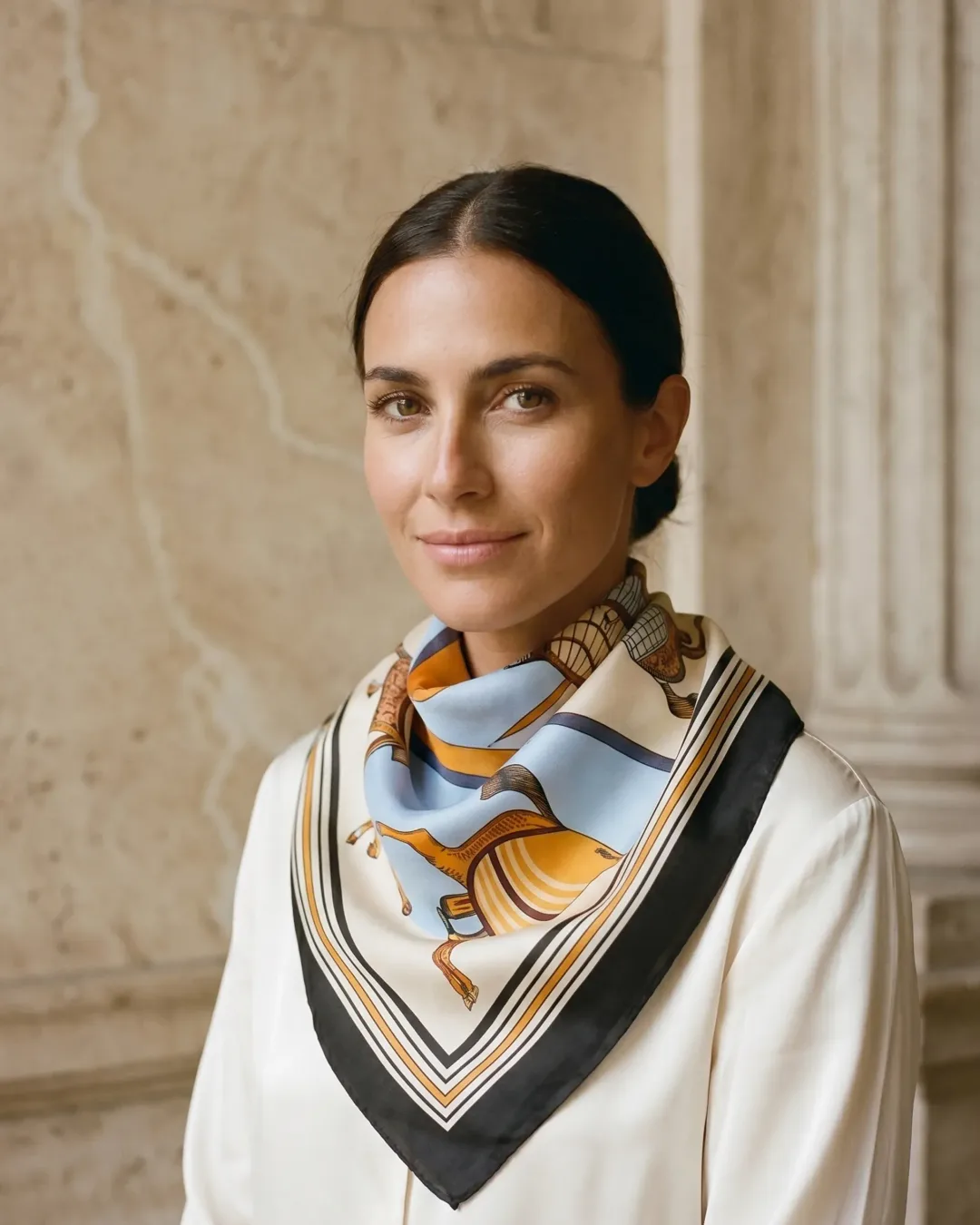
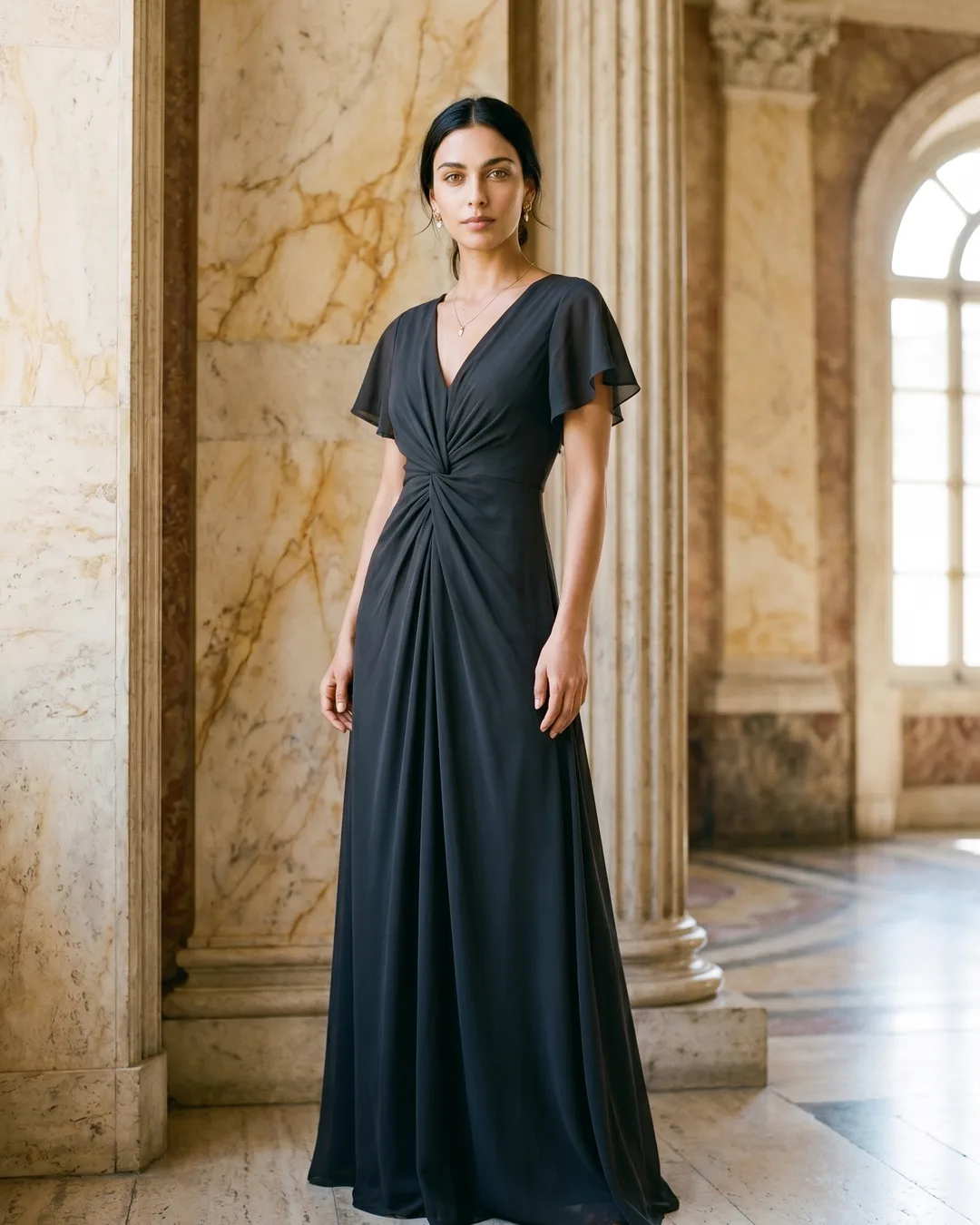
Quiet Luxury Occasion Dressing: How to Look Expensively Restrained at a Wedding, Gala or Black Tie
How to look expensively restrained at a wedding, gala or black tie: a Roman house's quiet luxury occasion matrix mapping each event to one matte gown.
On this page
A quiet luxury wedding guest dress signals money through restraint, not embellishment: a deep restrained color, a matte fabric with real weight and a full lining, one clean silhouette, and a single quiet accessory. It reads expensive because nothing about it is trying. This guide is the Hugo Caesar Tassi occasion matrix, mapping each formal event to one gown.
Hugo Caesar Tassi (a women's occasionwear house, founded in Roma in 2004) builds on the motto Nata Imperare (born to rule). We make the gowns, so we can draw the line a daywear listicle cannot. The most expensive woman at any occasion is the one whose dress is doing the least.
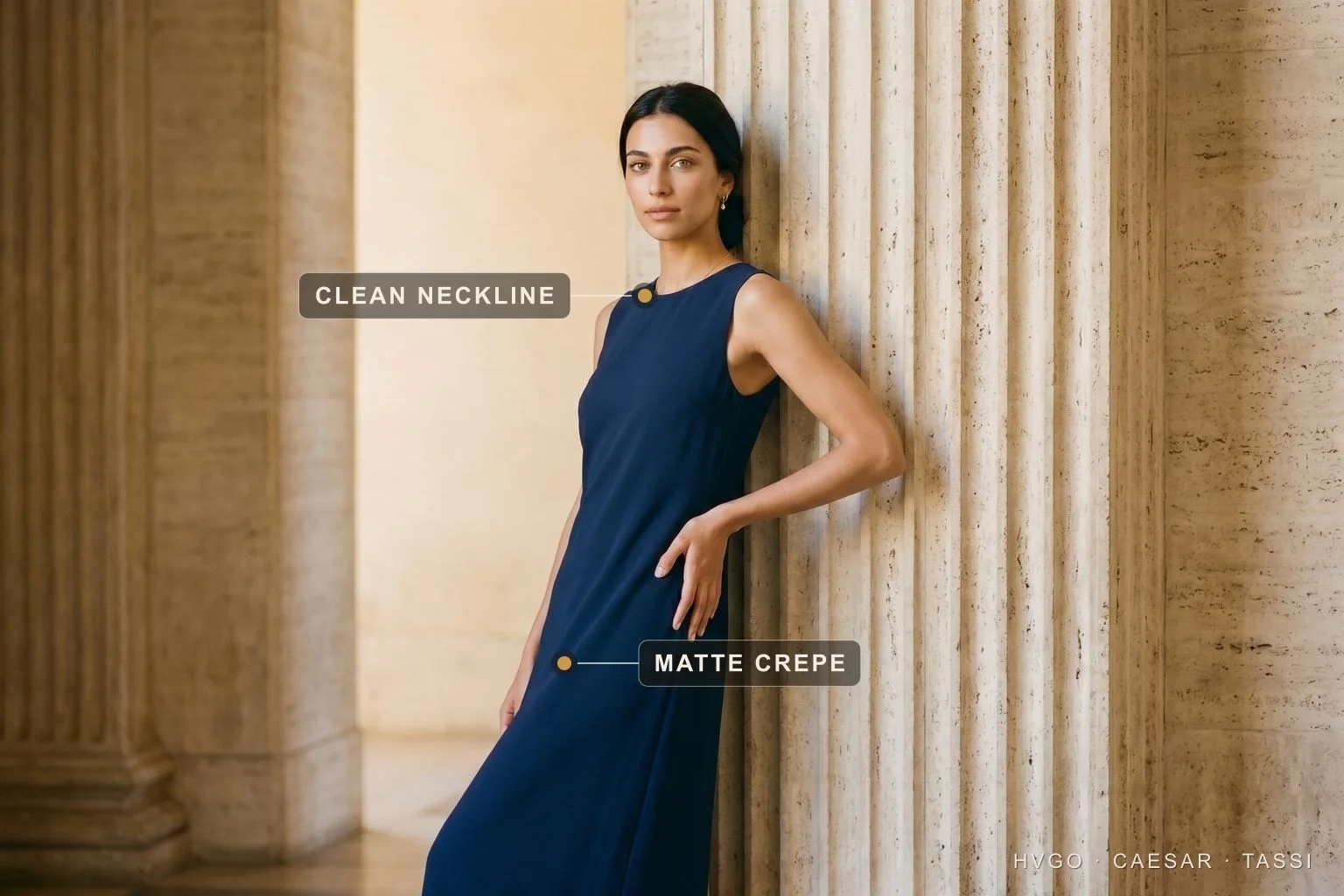
- Clean neckline — a plain high crew neck with no embellishment, the unbroken line that signals restraint over flash
- Matte crepe — a heavy matte cloth with real weight and drape, the tell money cannot fake and a sheen the daylight would make garish
#What quiet luxury occasion dressing means for a woman at a formal event
Quiet luxury occasion dressing applies daywear restraint to a floor-length gown: a woman still dresses up, but signals money through fabric and fit rather than flash. The idea you already know from a camel coat survives an evening event, with one change.
#From the camel-coat cliché to a black-tie gown
Every guide online pins quiet luxury to a blazer, a cashmere knit, and a loafer. That advice collapses the moment a black-tie invitation arrives, because an event demands that you dress up, and a daytime knit cannot. This page is the occasion translation. We assume you already grasp the daywear definition from quiet luxury explained, so we spend the page on the gown instead.
What carries over from daywear: no logos, no head-to-toe matching, fabric over sparkle. What changes: restraint stops being about whether you signal occasion and becomes about how. A weekday quiet-luxury look can be plain; an evening one cannot.
Consider Aemilia, our A-line chiffon maxi. In recycled knife-pleated chiffon, it reads dressed-up at a daytime wedding while staying matte and logo-free. The edge case: a woman who wears her daytime work uniform to a 7 p.m. gala will read underdressed, because the same restraint without the formality of a gown signals that she did not engage with the occasion.
#Why the quietest gown reads as the most expensive
At an event, the eye hunts for the woman trying hardest, and a quiet gown wins by giving it nothing to catch on. Depth of color replaces brightness; weight and drape replace sparkle; one focal point replaces five.
The cocktail SERP assumes occasion means more: more shine, more embellishment, more skin. That logic reverses at the top of the market. A crystal-covered bodice announces a purchase; a heavy matte crepe column in Porpora (wine) announces nothing, which is exactly why it reads as inherited rather than bought. Money that has nothing to prove withholds the proof.
The counter-case worth naming: some argue restraint reads as timidity, and that an event rewards the boldest woman in the room. It does reward boldness, but boldness of cut, not of decoration. A bare back or a fishtail hem is bold; a sequin is loud. The two are not the same signal.
#The four levers of quiet luxury occasion dressing: color, fabric, silhouette and one accessory
Every quiet-luxury occasion look is set by exactly four decisions: a restrained color, a matte weighty fabric, a clean single-line silhouette, and one accessory. Name them, and the whole guide becomes a checklist rather than a feeling.
#The house framework in one place
Competitors never name the levers, so the advice stays vague. Here is the spine of the page stated up front, and the rest of the guide takes each lever one at a time, then maps them per occasion.
- Color. One restrained, deep tone from a tight palette, never white at a wedding and never neon.
- Fabric. A matte, substantial cloth with a full bagged lining, with a sheen earned only after dark.
- Silhouette. A single unbroken vertical line, with one point of interest and no more.
- Accessory. Exactly one focal piece, with metallic restraint and zero visible logos.
These four are the first-party framework. A look that clears all four reads quietly expensive; a look that fails one starts to slip toward flashy or plain.
#How the four levers protect you from both mistakes
The same four decisions block the flashy mistake and the underdressed one at once. Restrained color, matte fabric and one accessory strip out the sparkle that reads as effort. A substantial fabric, a full-length line and a precise fit supply the richness that embellishment usually fakes.
That is the quiet-but-never-plain balance the SERP misses entirely. A guide that only warns against flash leaves you underdressed; a guide that only pushes glamour leaves you loud. The lever system holds both fears at once, which is why a woman in a perfectly fitted matte column never reads as either trying too hard or not enough.
The quiet-luxury occasion check
Clear all five and the gown reads quietly expensive; miss one and it tips flashy or plain.
- Choose one deep restrained tone — Porpora, Cobalto, Verde Antico — or a quiet neutral like Avorio or Travertine
- Pick a matte, weighty cloth with a full lining: crepe, chiffon or modal jersey
- Keep one clean vertical line with a single point of interest — a slit, an open back, or a fishtail
- Wear exactly one focal accessory: a fine earring, a Carina silk scarf, or a Quirina envelope clutch
- Set the shoulder seam on the bone and the hem to the heel — fit reads as money
- Wear white or ivory to a wedding, or neon and sequins-as-colour anywhere
- Trust thin, unlined or stiff bonded scuba, or cheap high-shine satin in daylight
- Stack interest — a slit and a cutout and a beaded strap all at once
- Add a contrast pop bag or visible logos that fracture the tonal line
- Lean on embellishment to fix a thin fabric or a loose, ill-fitting gown
#Which colors read quietly expensive at a wedding, gala or black tie?
Deep saturated tones and quiet neutrals from a tight palette read as money, while neon, hot brights and sequins-as-color read as effort. Color is lever one, and it does the most work before anyone sees the fabric.
#Deep and restrained over bright and sparkling
Our imperial palette gives the occasion range. The deep tones carry an evening: Porpora (wine), Cobalto (navy), Verde Antico (green), and Basalt (black) for anything other than a wedding. The quiet neutrals carry a daytime event: Avorio (ivory), Travertine (stone), Cuoio (tan), and Cornelia (rose). Tonal single-color dressing, where shoe, clutch and gown share one hue, reads most expensive of all, because it removes every contrast the eye could snag on.
A neon or a sequins-as-color dress fails differently from a fitted wine column: the first announces a budget spent on attention, the second spends nothing visible. For the full reasoning behind each hue, the old money color palette lays out the palette logic in depth. The edge case: a deep jewel tone can still read loud if the fabric is high-shine, so color and fabric must agree.
#Wedding-guest color etiquette, quietly handled
Wedding-guest color rules fold cleanly into the quiet-luxury palette: no white, no ivory, and no all-black the couple would read as funereal. Restraint and etiquette point at the same dress.
White, cream and ivory compete with the bride and are off the table for a guest. All-black can read as mourning at a traditional wedding, though it passes easily at an evening city ceremony. A deep wine, a soft Cornelia rose, or a Cobalto navy threads the needle: dressed, restrained, and never louder than the wedding party. If the invitation wording leaves you unsure, the wedding guest dress codes guide settles the etiquette.
#Which fabrics and finishes signal quiet luxury occasion dressing (and which betray it)?
Matte, weight and a full lining are the tells money cannot fake, while cheap high-shine satin and stiff bonded scuba betray a budget under event lighting. Fabric is lever two, and it is where the cloth either earns the room or loses it.
#Matte, weight and a full lining: the tells money can't fake
Three fabrics carry quiet luxury at an occasion: a heavy matte crepe that holds its line, a dry floaty silk chiffon, and a washed modal jersey that drapes a clean column. Each of ours is fully lined with a concealed zip and finished seams, so the inside reads as considered as the outside. Real fabric weight is the tell, because weight is the one quality a photograph cannot fake and a low price cannot buy.
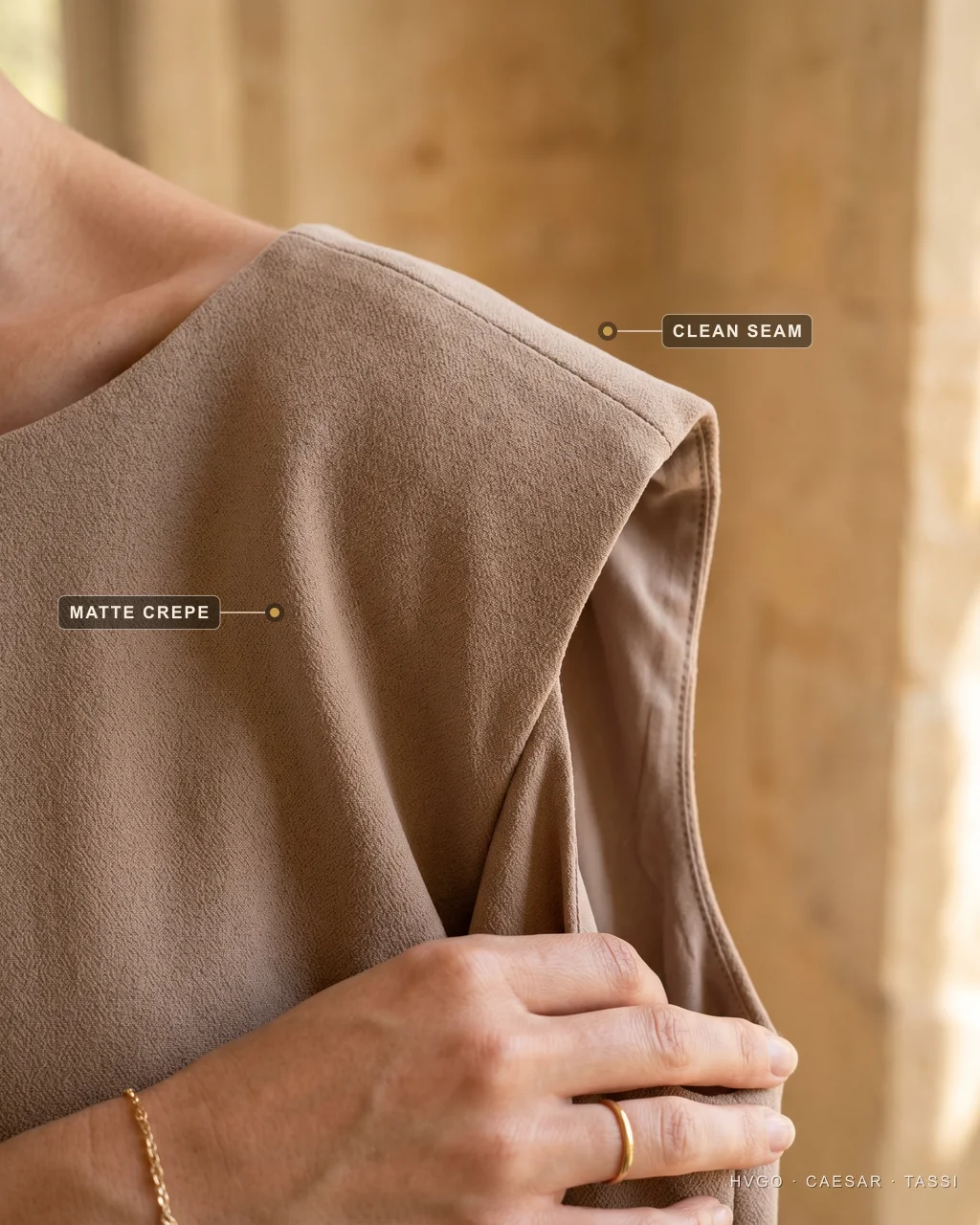
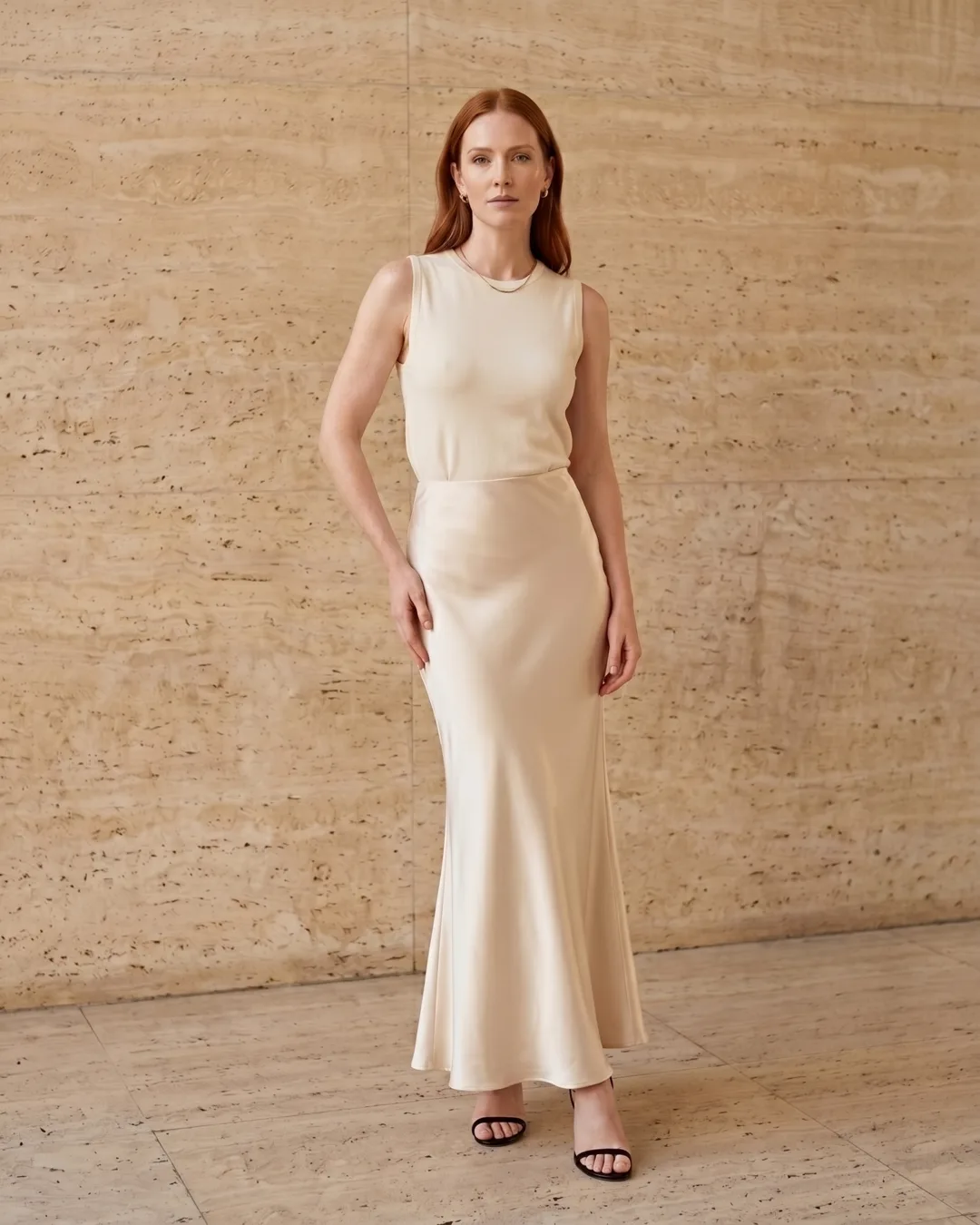
- Clean seam — a finished shoulder seam sitting exactly on the bone, the tailoring that reads as made-to-measure rather than bought
- Matte crepe — a substantial, light-absorbing weave with no sheen and no logo, the quality a low price cannot buy
High-shine cheap satin catches event lighting and flares into a hot spot that reads inexpensive across a room. Stiff bonded scuba holds a shape but kills all drape, so it looks molded rather than tailored. The chiffon, satin and crepe explainer covers how each cloth behaves. The counter-case: a thin unlined crepe undoes the whole effect, which is why lining matters more than the fiber name.
#When a sheen is earned: satin and candlelight
A controlled liquid satin is correct after dark, where a subtle luster reads as occasion rather than flash. The rule is matte by daylight, an earned sheen by candlelight.
A daytime wedding, the races, or a christening calls for matte: chiffon, crepe, modal. A black-tie dinner, a gala, or the opera permits a satin worn for its luster, because evening lighting rewards a sheen the sun would make garish. Our Calpurnia fishtail satin gown is built for exactly that earned moment. The difference between luxurious sheen and cheap shine is the surface: a fine satin glows softly and evenly, whereas a cheap one glares in bright patches and creases into white lines.
#Which silhouettes carry quiet luxury occasion dressing at an event?
One clean, unbroken line carries the look: the column, the bias slip, the soft A-line and the draped Grecian gown all flatter without gripping. Silhouette is lever three.
#One clean, unbroken line
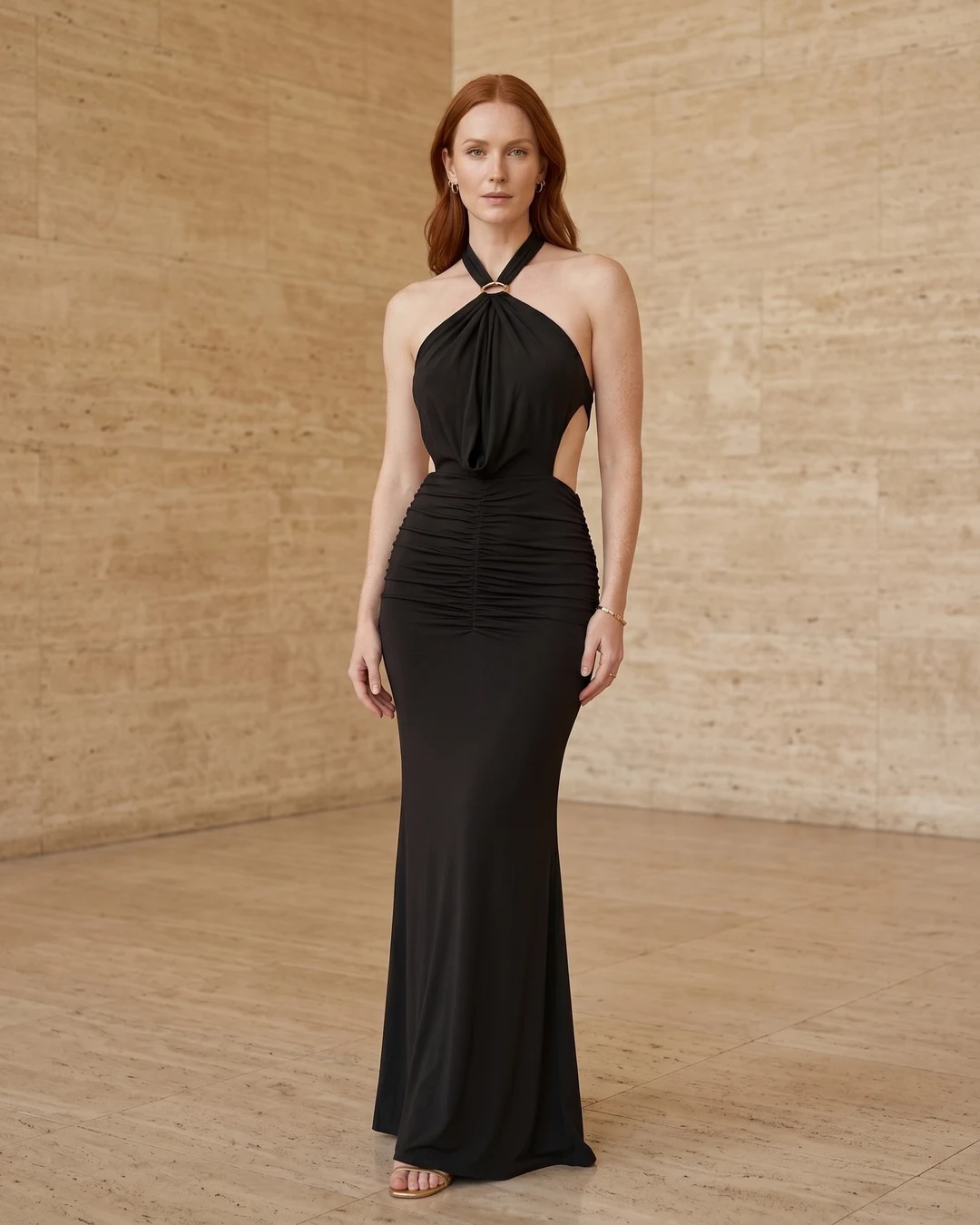
The quiet-luxury silhouettes share a single uninterrupted vertical line. A column gown, which is the Roman column made wearable, drapes straight in modal or crepe. A bias slip falls on the diagonal grain so it skims rather than clings. A soft A-line releases from the waist, and a draped Grecian gathers at one shoulder. Each flatters by length and drape, not by compression.
A fussy, over-detailed, or body-con shape fights the quiet effect, because every dart, ruffle and tight seam gives the eye another thing to read. The contrast is direct: a clean column lets the woman be the subject, whereas a gripping body-con dress makes the dress the subject. The house elegance doctrine sets the hem to the knee or the floor and never the unflattering middle, so the vertical line stays unbroken from shoulder to heel.
#One point of interest, never several
A single slit, an open back, a sculpted neckline or a fishtail hem is the one element allowed to be interesting while everything else stays calm. One focal point only is the house rule.
Our Claudia pleated-slit maxi shows it cleanly: a single thigh slit is the only interest, and the rest of the column stays quiet. For black tie, a fishtail or a liquid column reads correct; for a daytime wedding, the chiffon A-line does. The failure is stacking interest. A dress with a slit and a cutout and a beaded strap tips straight into trying-too-hard, because three statements compete and none wins. Pick the one line the eye should follow, then silence the rest.
#How much should a woman accessorize a quiet luxury occasion look?
Exactly one focal accessory carries the look: one fine earring, or one silk wrap, or one structured clutch, with metallic restraint and no visible logo. Accessory is lever four.
#The one-accessory rule
Choose one piece to do the talking. A fine gold or pearl earring, a single silk scarf, or one structured clutch each works alone; together they crowd. The quietest jewelry, small and fine and real-looking, outranks anything large and sparkling at an event, because scale reads as effort while restraint reads as confidence. For the broader logic, how to accessorize a dress covers the gold-or-silver decision in full.
The edge case: a winter ceremony in a cold church may need both a wrap and an earring, which is fine, because a wrap is functional rather than decorative. The rule governs decorative pieces, not warmth.
#The bag, the wrap and the shoe, kept quiet
The bag, wrap and shoe stay in palette neutrals so the gown remains the subject, with no head-to-toe matching and no contrast pop. Support the dress; never compete with it.
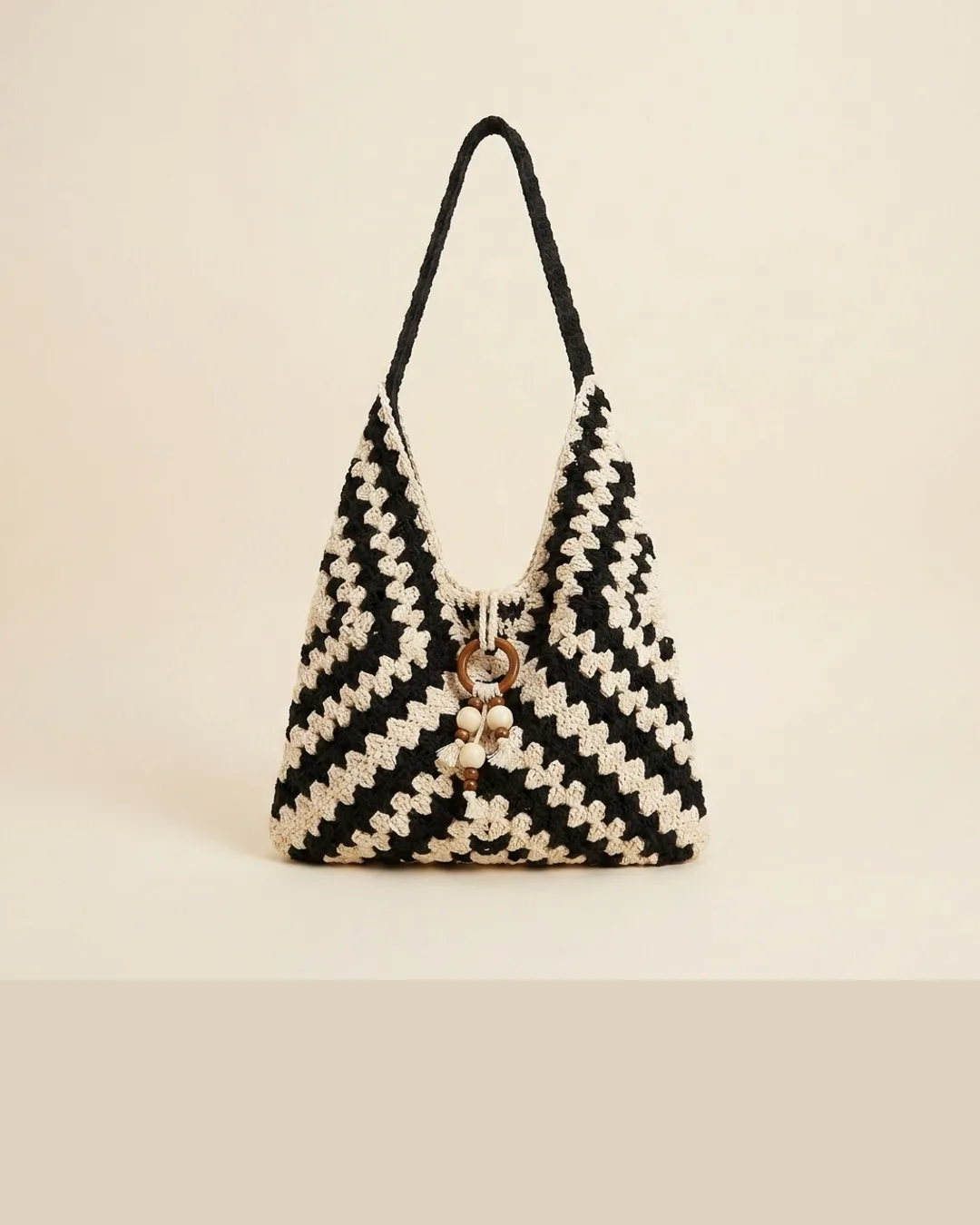
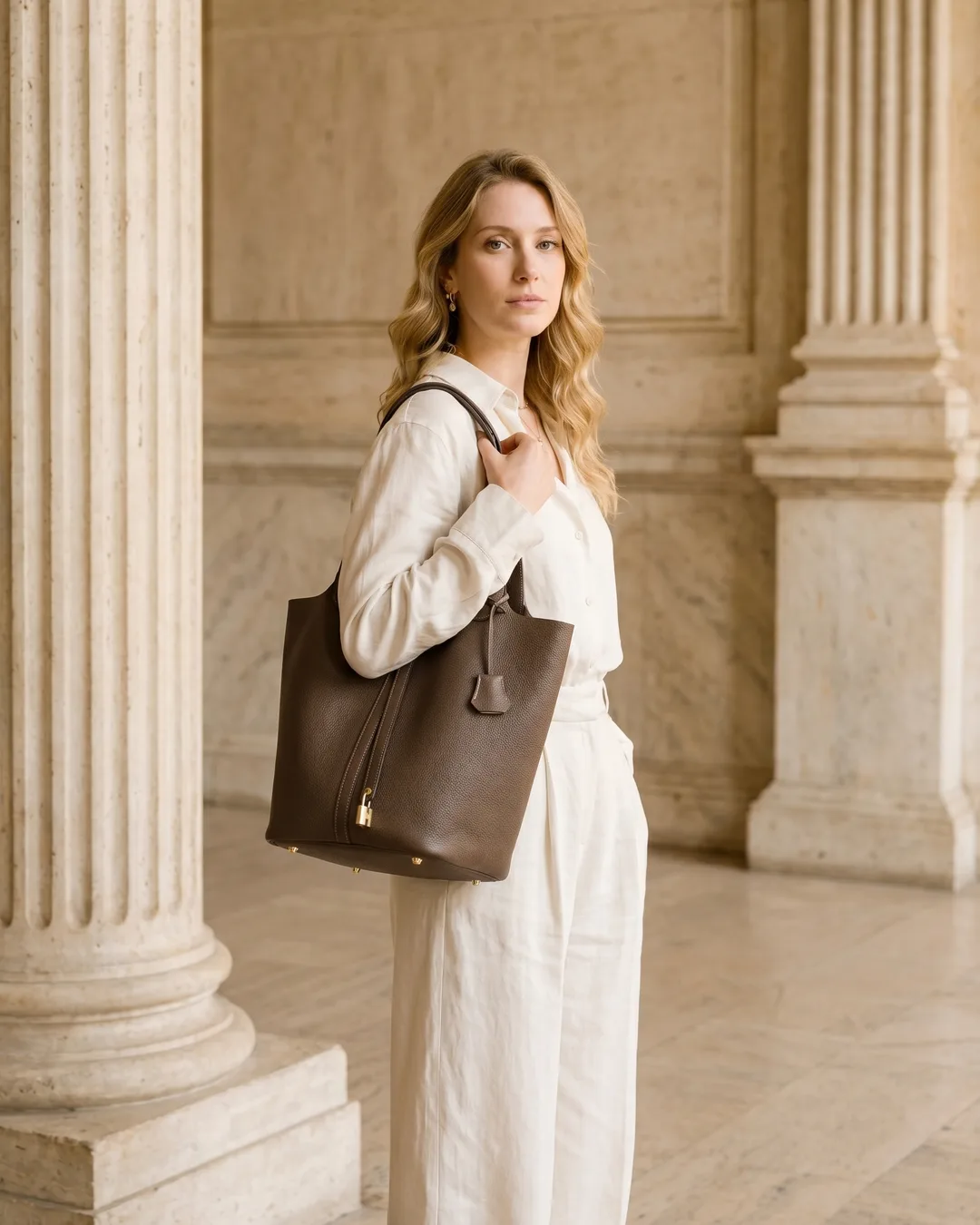
A small structured clutch or envelope in a palette neutral, a fine silk or cashmere wrap for a cool ceremony, and a plain elegant heel in a tonal color keep the look unified. Our Carina silk square scarf works as the single quiet accent, and the Quirina leather envelope clutch reads as the one structured piece. A contrast "pop" bag, by comparison, fractures the line and announces a styling decision, which is the opposite of quiet.
#How do you stay quiet without looking underdressed at the occasion?
Richness comes from fabric and fit, not embellishment: a substantial matte crepe, a full lining, a hem to the heel and a correct shoulder seam supply everything a sequin fakes. This answers the most-feared failure head-on.
#Richness comes from fabric and fit, not embellishment
A quiet gown reads "plain" only when the fabric is thin or the fit is off. Fix both and the plainness disappears. A heavy matte crepe holds its line, a full bagged lining gives the dress body, a hem that breaks at the heel lengthens the frame, and a shoulder seam sitting exactly on the bone makes the whole gown look made-to-measure. Tailoring is the cheapest luxury there is, because a small alteration costs little and reads as money.
The example: two women in the same Tullia pleated crepe column will read differently if one has the shoulder taken in a centimeter and the hem set to her heel. The fitted one reads expensive; the loose one reads borrowed. Nothing else changed.
#Quiet luxury versus cocktail flash
Cocktail flash announces effort through cutouts, body-con shine, neon and crystal, whereas quiet luxury withholds it, which is why it reads as inherited rather than bought. The contrast is the whole point.
Crystal embellishment and logo hardware shout the price; a matte column says nothing and lets the woman speak. Coverage often reads richer at a formal event, because a little more covered signals confidence rather than a bid for attention. A bare cutout dress competes for the eye, while a covered Grecian column simply holds the room. The richest signal at an occasion is the one that looks effortless, and effort is exactly what embellishment cannot hide.
#The Hugo Caesar Tassi quiet luxury occasion matrix
Each occasion maps to one gown and one accessory, so a woman can act on it directly. The matrix is the page's signature deliverable, and the table below does the work the prose will not repeat.
#Each occasion mapped to one gown and one accessory
| Occasion | Gown | Color | Finish | One accessory |
|---|---|---|---|---|
| Daytime wedding guest | Soft chiffon A-line or midi | Deep neutral or rose | Matte | One silk scarf |
| Evening / black-tie wedding guest | Matte pleated or draped column | Wine or navy | Matte | Fine earrings |
| Cocktail / semi-formal | Bias slip or sheath | Palette neutral | Matte | One clutch |
| Black tie | Liquid satin fishtail or pleated column | Deep tone | Earned sheen | A single fine jewel |
| Gala / charity ball | Floor-length draped column | Deep tone | One earned-sheen detail | A silk wrap |
| Opera / awards / milestone dinner | Covered full-length column | Deep tone | Matte | The quietest possible accessory |
Read your event down the left, then read across. The pattern holds in every row: one gown, one color, one finish rule, one accessory. The edge case is a multi-part celebration, such as a wedding weekend, where a daytime row covers the ceremony and an evening row covers the reception, never the same dress for both.
#The HCT dresses cut to the rule
Five house gowns show the rule in finished cloth, one line each. These are worked examples, not a catalog.
- Aemilia (A-line chiffon maxi): the daytime-wedding chiffon A-line, matte and floaty.
- Tullia (pleated crepe column): the matte pleated column for black tie.
- Claudia (pleated-slit chiffon maxi): one clean line with a single slit as the only interest.
- Calpurnia (fishtail satin gown): the earned liquid sheen, correct for a gala after dark.
- Flavia (strapless satin off-shoulder): a controlled satin column where the cut is the only statement.
The founder's quiet-luxury event rule states it plainly: one statement color, one focal point, matte before shine, and a fit set at the shoulder first. That rule is Nata Imperare worn out loud without a word spoken, which is the whole posture of the house.
#Your quiet luxury occasion dressing checklist
Five decisions, in order, take any woman from invitation to outfit. Run the list and the gown picks itself.
#The quick recap
- One restrained, deep color, never white at a wedding, never neon, never sequins-as-color.
- A matte, weighty fabric with a full lining, a sheen earned only after dark.
- One clean, unbroken silhouette with a single point of interest.
- Exactly one quiet accessory, no logos, in a palette neutral.
- Fit and a hem to the heel over any embellishment, every time.
Five clean decisions land you at quietly expensive. Miss even one and the look tips, and the matrix above shows which way it tips, toward flashy or toward plain.
#Where to go next
Match your event to the matrix, confirm the dress code if the wording is unclear, then shop the edit your occasion calls for. The path runs from etiquette to gown in three steps.
Read black-tie attire for women if the invitation says black tie and you want the full code, and return to the style guides pillar if you want the daywear quiet-luxury foundation. For the budget version of the same restraint, how to look expensive carries it through. Then the matrix points you at the gown.
#Frequently asked questions
What is a quiet luxury wedding guest dress for a woman?
A quiet luxury wedding guest dress is a gown that signals money through restraint, not embellishment. It pairs a deep restrained color, never white or ivory, with a matte fabric of real weight and a full lining, one clean silhouette, and a single quiet accessory. It reads expensive precisely because nothing about it is trying to.
How do you look expensive at a wedding without looking flashy?
You look expensive at a wedding by choosing depth and weight over brightness and shine. Pick a deep saturated or quiet-neutral color rather than a bright or sparkly one, a matte substantial fabric over cheap high-shine satin, a single clean silhouette, and exactly one fine accessory with no visible logo. Then perfect the fit and hem, because that is the richness people actually read.
Can quiet luxury occasion dressing work for black tie, or is it too plain?
Quiet luxury occasion dressing works beautifully at black tie and is never too plain. The restraint shifts to a liquid satin or matte column in a deep tone, where a subtle earned sheen is correct after dark, and the single point of interest becomes the cut, a slit, or an open back rather than crystals. A quiet gown in a substantial fabric reads more expensive than an embellished one.
What colors are quiet luxury for an occasion dress?
Quiet luxury occasion colors are deep saturated tones and quiet neutrals from a restrained palette. Wine, navy and forest green carry an evening, while ivory, stone, soft rose and black (black for non-weddings) carry a daytime event. Tonal single-color dressing reads most expensive of all, whereas neon, hot brights and sequins-as-color read as effort.
How do I avoid looking underdressed in a quiet luxury outfit?
You avoid looking underdressed by letting the fabric and fit do the work. A heavy matte crepe or silk with a full lining, a hem to the heel and a shoulder seam in the right place supply all the richness an embellished dress fakes, so the look reads refined rather than plain. Quiet luxury fails only when the cloth is thin or the dress does not fit.
Is quiet luxury the same as old money or stealth wealth for an event?
Quiet luxury, stealth wealth and old money overlap closely for an event. Stealth wealth is essentially a synonym, and the old money aesthetic is the inherited-taste version. At an occasion all three point to the same gown: no logos, a restrained color, a substantial matte fabric and one quiet accessory, so the woman reads as someone who has always dressed this way.
Match your event to the matrix and dress the rule into a gown you will keep. Start in the occasion dresses edit, step up to the evening gowns for black tie and galas, and add your one quiet accessory from the silk scarves collection.
More Style & Old Money guides
The Quiet-Luxury Capsule Wardrobe
Build a quiet-luxury capsule wardrobe the Roman way: the cost-per-wear math, the keep-for-a-decade rule, and a small imperial-palette set that recombines.
Build a buy-fewer-better capsuleGold or Silver Jewelry With a Dress? The Two-Step Rule That Settles It
A Roman atelier's two-step rule for gold or silver jewelry: read your skin undertone, then let the dress color break the tie. Color-by-color chart.
Choose gold or silverHow to Accessorize a Dress
A Roman atelier's method to accessorize a dress: choose one focal point, then let the rest recede. Neckline focal-point map, bag, scarf and shoe rules.
Master the one-focal-point ruleHow to Dress Elegantly
Five repeatable house rules from a Roman atelier to dress elegantly on any budget: one statement color, the right hem, shoulder-first fit, matte by day.
Learn the five elegance rulesHow to Look Expensive on a Budget
Look expensive on a budget: a Roman fabric house names five physical tells (drape, lining, seams, shoulder, color) no designer price can fake.
Learn the five expensive tellsHow to Wear Burgundy for Women
How to wear burgundy for women by skin tone, season and occasion: wine vs. oxblood vs. Tyrian red, what colors pair, and the gold rule.
Match your wine-red shade