What to Wear to the Opera: An Italian Guide to an Evening of Ritual
How dressed-up the opera really is, house by house: from La Scala's opening night to a relaxed Met evening, plus matinee, box and intermission etiquette.
On this page
What you wear to the opera depends on three things: the house, the kind of night, and the hour the curtain rises. A normal evening calls for elevated cocktail to formal dress; a gala or opening night calls for a floor-length gown. Written from Rome, where Hugo Caesar Tassi has dressed women since 2004, this is the house-by-house calibration the affiliate roundups skip.
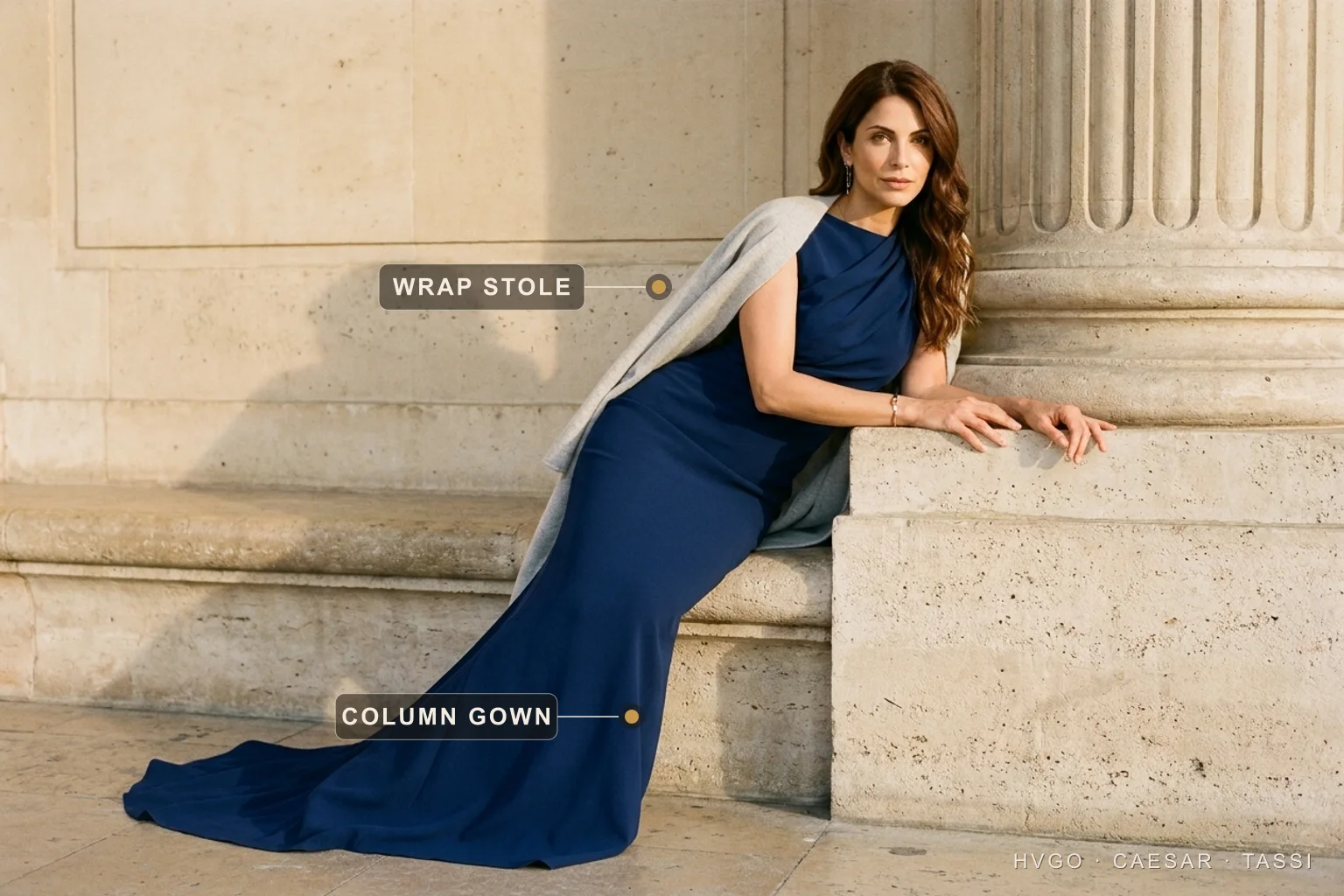
- Wrap stole
- Column gown
The opera, decoded
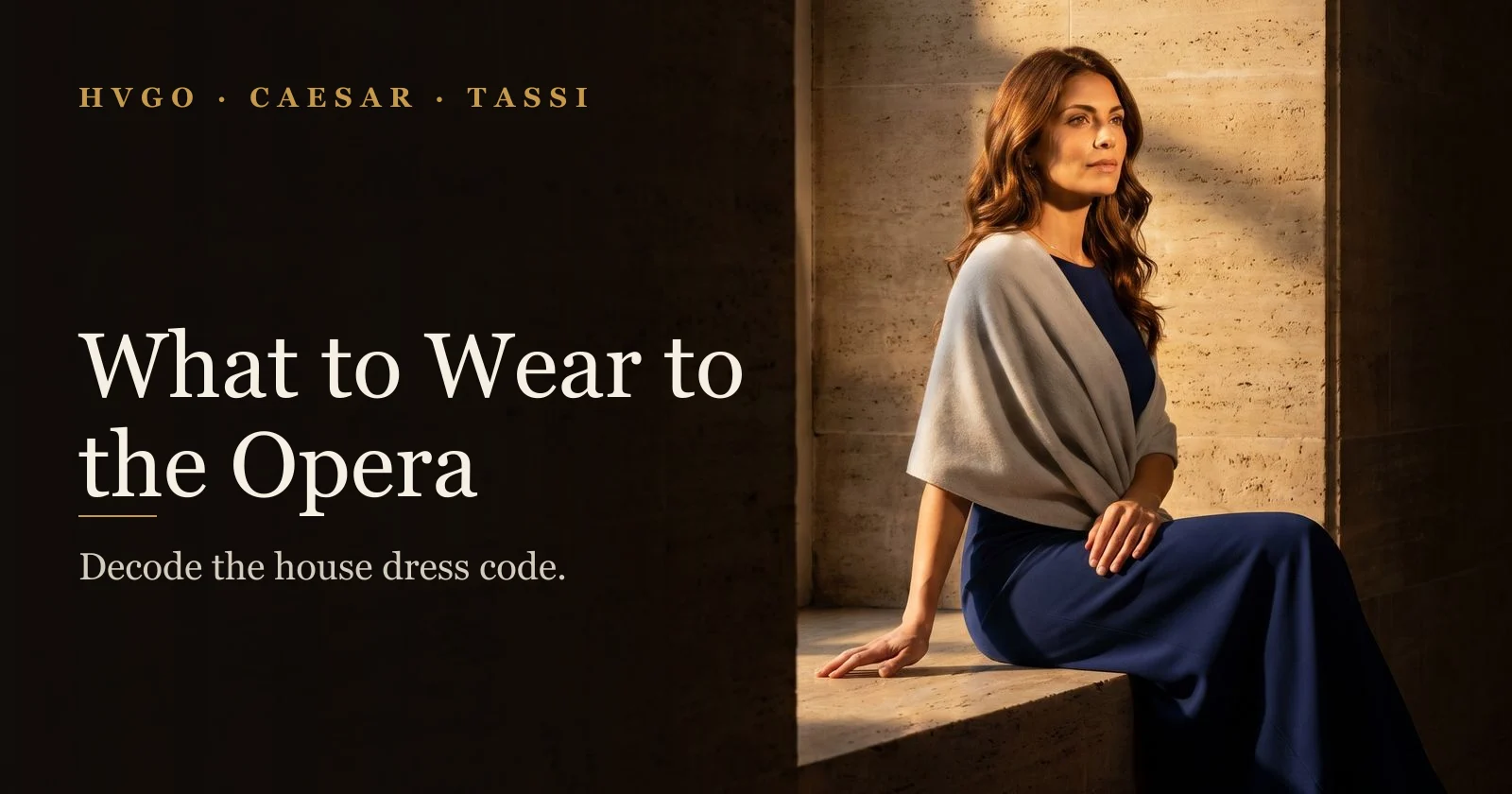
Evening formality with a wrap or stole for the auditorium chill.
Shop evening gowns#How dressed up do you really need to be for the opera?
Opera formality is a range, not a single rule, and a woman almost never regrets dressing slightly up. A Tuesday subscription crowd looks nothing like a December-premiere crowd.
#The myth that "nobody dresses up at the opera anymore"
The "nobody dresses up" line is true for some houses on ordinary nights and flatly wrong for others. A regular evening at Covent Garden runs smart-casual in the upper tiers, yet a prima in Milan fills with floor-length gowns. Every silhouette below is scoped to a woman dressing herself.
#The three things that set the dress code
Three calibrators set your opera dress code, in order: the house and its culture, the kind of performance, and the time of day. Culture outranks any printed rule, a gala sits a tier above a subscription evening, and the hour governs fabric: so a gala maps to black tie, a regular evening to elevated cocktail, a matinee to daytime dress.
#The safe default when you can't find out
With no time to research, wear a floor-length or refined midi dress in a deep imperial tone with a wrap, correct at virtually every house on a normal night. A navy bias-cut midi in matte crepe with a fine-wool stole passes at the stalls in Rome, the orchestra at the Met and a box at Covent Garden. Only a confirmed gala asks more, and then you step up to a full gown such as the Vipsania column.
#What not to wear to the opera
Skip jeans, sneakers, athleisure, beachwear and anything too revealing, and avoid anything on your head or hands that disrupts the people seated near you. The principle is "underdressed reads as a slight," not a checklist enforced at the door.
- A tall updo, an oversized hat or a fascinator blocks the sightline of the row behind you.
- Loud, rattling jewelry carries in a silent house; quiet metal and a single stone serve better.
- Stiff, crushable taffeta looks sharp standing and ruined after a three-hour act in a chair.
- Heavy perfume becomes overwhelming in a closed, warm hall where no one can move away.
A tourist evening at a relaxed house will not turn away smart trousers; the four items above matter only because they touch the people seated near you.
#Does the opera dress code differ between Rome, Milan, London and New York?
Yes, and the gap is wide: Italian houses still treat the opera as an occasion, while London and New York run relaxed on an ordinary night.
#Teatro dell'Opera di Roma and La Scala: the Italian standard
At the Teatro dell'Opera di Roma and Teatro alla Scala (La Scala, Milan), a normal evening calls for a polished cocktail-to-formal look, and a premiere brings the gowns out fully. The peak is the Prima della Scala, La Scala's opening night on December 7, the feast of Sant'Ambrogio (Milan's patron saint): floor-length, jewel-toned, the city's social calendar in one hall. An ordinary Roman Tuesday asks far less, where elevated cocktail clears it; save our guide to black-tie attire for women for a prima alone.
#The Royal Opera House and the Met: glamour, relaxed
London's Royal Opera House (Covent Garden) and New York's Metropolitan Opera publish no dress code and run from gowns in the boxes to smart-casual in the upper tiers. Most ordinary-night attendees land at smart-to-cocktail, while the Met's September opening-night gala and a Royal Opera House gala swing genuinely black tie.
#Vienna, Paris, Sydney and Glyndebourne at a glance
The other famous houses split between dressed-up and relaxed, with Glyndebourne the true black-tie exception. Treat house culture, not a universal rule, as the deciding factor.
| Opera house | Ordinary-night norm for women | The dress-up exception |
|---|---|---|
| Vienna State Opera | Elevated; notably dressed-up city culture | The Vienna Opera Ball is full ball gown |
| Palais Garnier (Opéra de Paris) | Elegant, leaning formal | Premieres push to floor-length |
| Sydney Opera House | Smart but more relaxed | Galas and openings lift it to cocktail-plus |
| Glyndebourne | Black tie and a long dress are the genuine norm | None; the festival itself is the formal case |
Read the table by city culture rather than by venue size: the Vienna and Paris houses lean formal because their cities do, while a woman who arrives at Glyndebourne in cocktail length, not the expected long dress, becomes the underdressed one.
#What should you wear to an evening performance versus an opera matinee?
An evening performance earns satin's sheen and a floor-length line; a matinee steps both down a half-rung for daylight.
#The evening performance: an earned sheen after dark
For a standard night out, choose a floor-length or refined midi gown in a deep imperial color with a clean column or draped silhouette. Satin's controlled luster is earned by an evening curtain, the hour it stops looking like too much, which is why the Calpurnia fishtail satin gown suits this night.
#The matinee: polished, but read for daylight
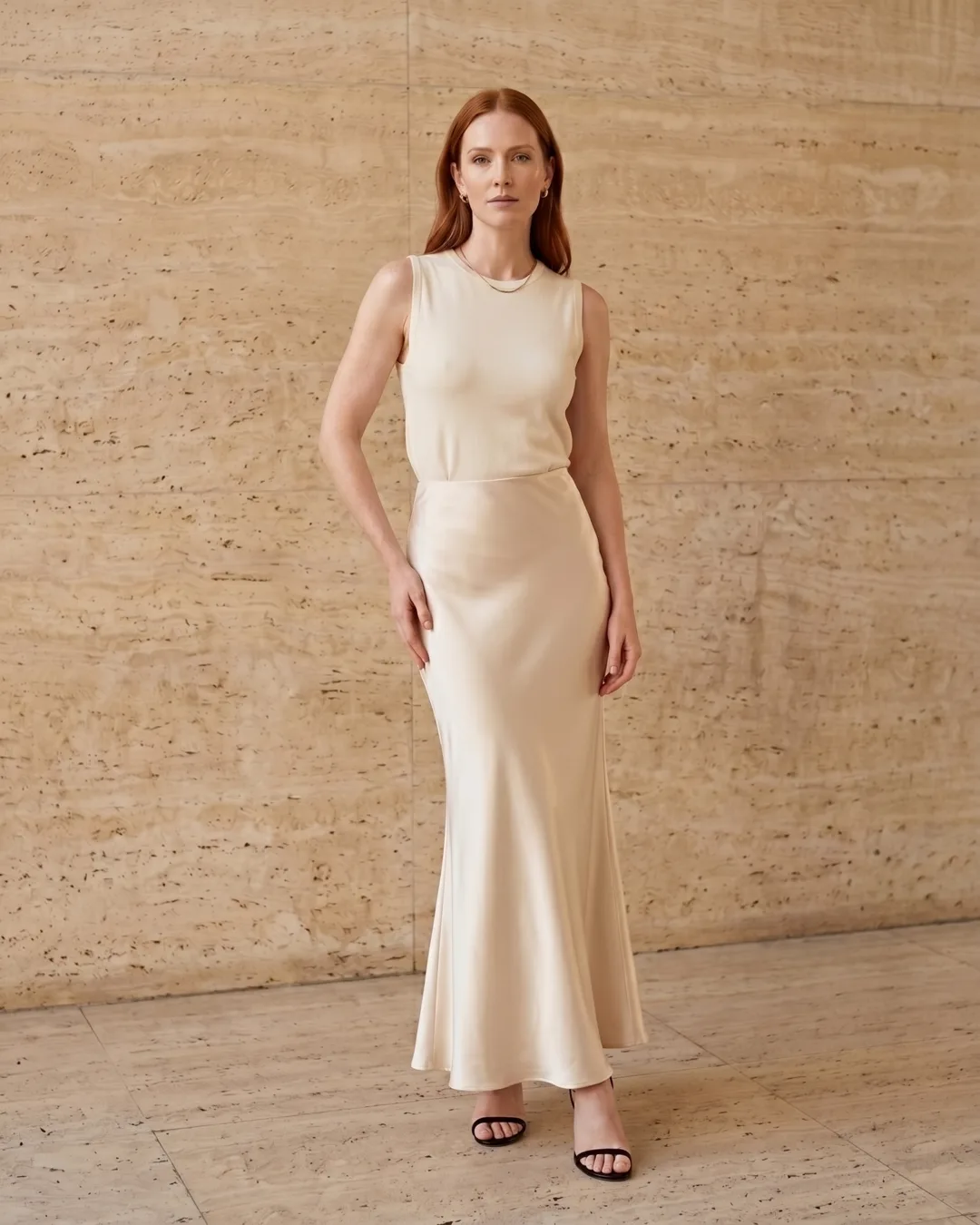
For an opera matinee, drop the sheen and the length by a half-rung: a chiffon or crepe midi in a softer color, matte over high-shine, and a lower heel. Daylight changes the fabric more than the formality.
A knife-pleated chiffon midi in Cipria pink or Avorio ivory looks composed where a glossy satin maxi reads like an evening gown in the afternoon. A matinee gala bends the rule once: keep the midi length, but lift the color toward evening.
#Opening night, a premiere or a gala
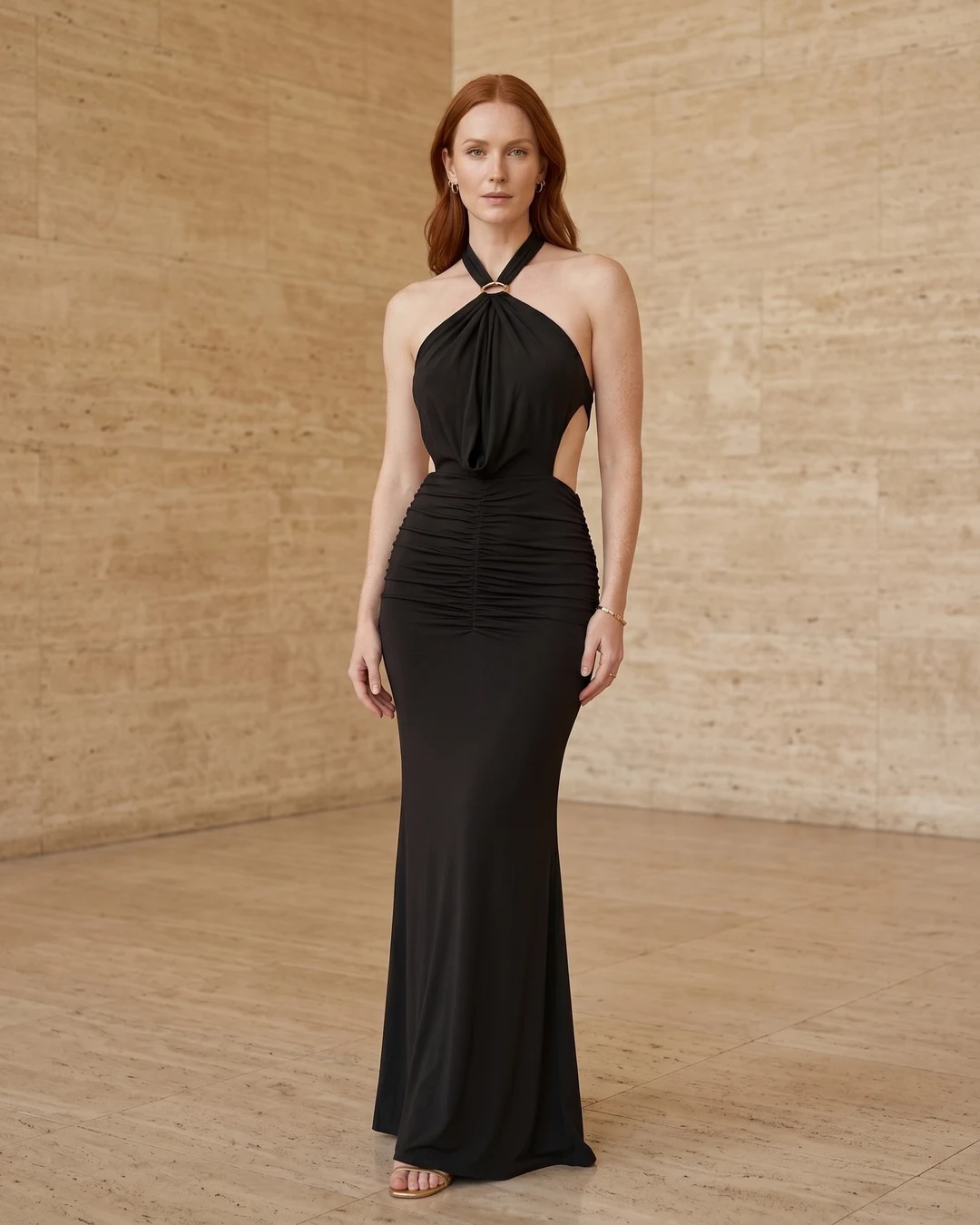
Treat opening night, a premiere or a fundraising gala as black tie: a floor-length gown, an earned satin or a fluid chiffon, one fine jewel and a wrap. This is the one night where elevated cocktail genuinely falls short. A prima such as La Scala's December 7 opening sits here, and so does the Flavia strapless satin off-shoulder gown.
#Which dress, fabric and color is right for a night at the opera?
Choose a silhouette that looks composed seated, a fabric that suits the hour, and a deep saturated color that reads under house lighting. The opera asks one thing the dinner table never does: your dress must survive three hours folded into a chair.
#Silhouettes that sit and stand beautifully for three hours
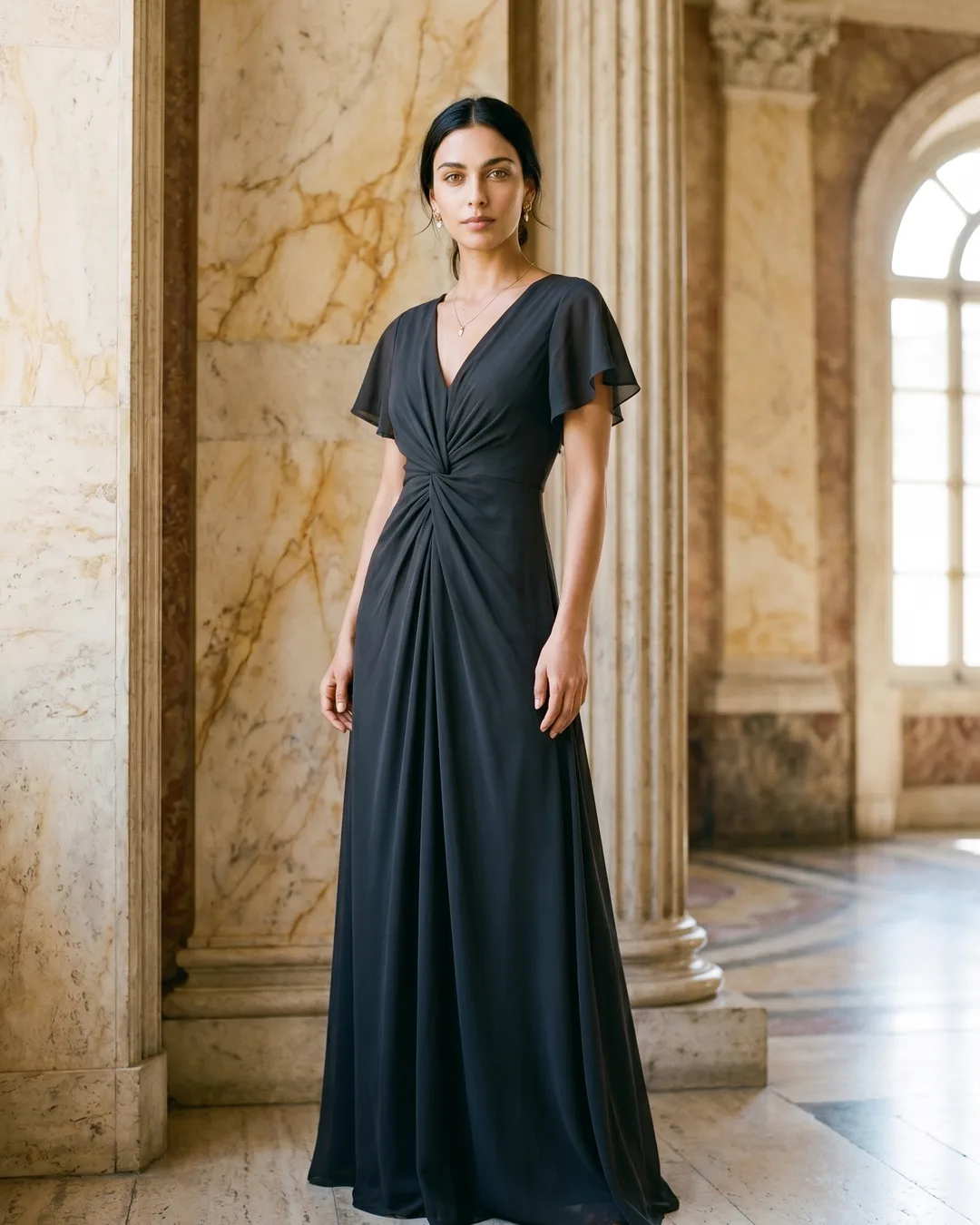
The column, the bias slip, the soft A-line, the draped Grecian and the fishtail are the opera-correct shapes because each looks composed seated and rises gracefully for the curtain call.
- The column and draped Grecian fall straight and uncrushed across a long act.
- The bias slip and soft A-line give at the hip, so you sit without the fabric straining.
- The fishtail reads dramatic standing and gathers neatly when you fold into a velvet seat.
- A boned, structured-to-stand silhouette photographs sharply yet creases the moment you sit, the one shape to skip.
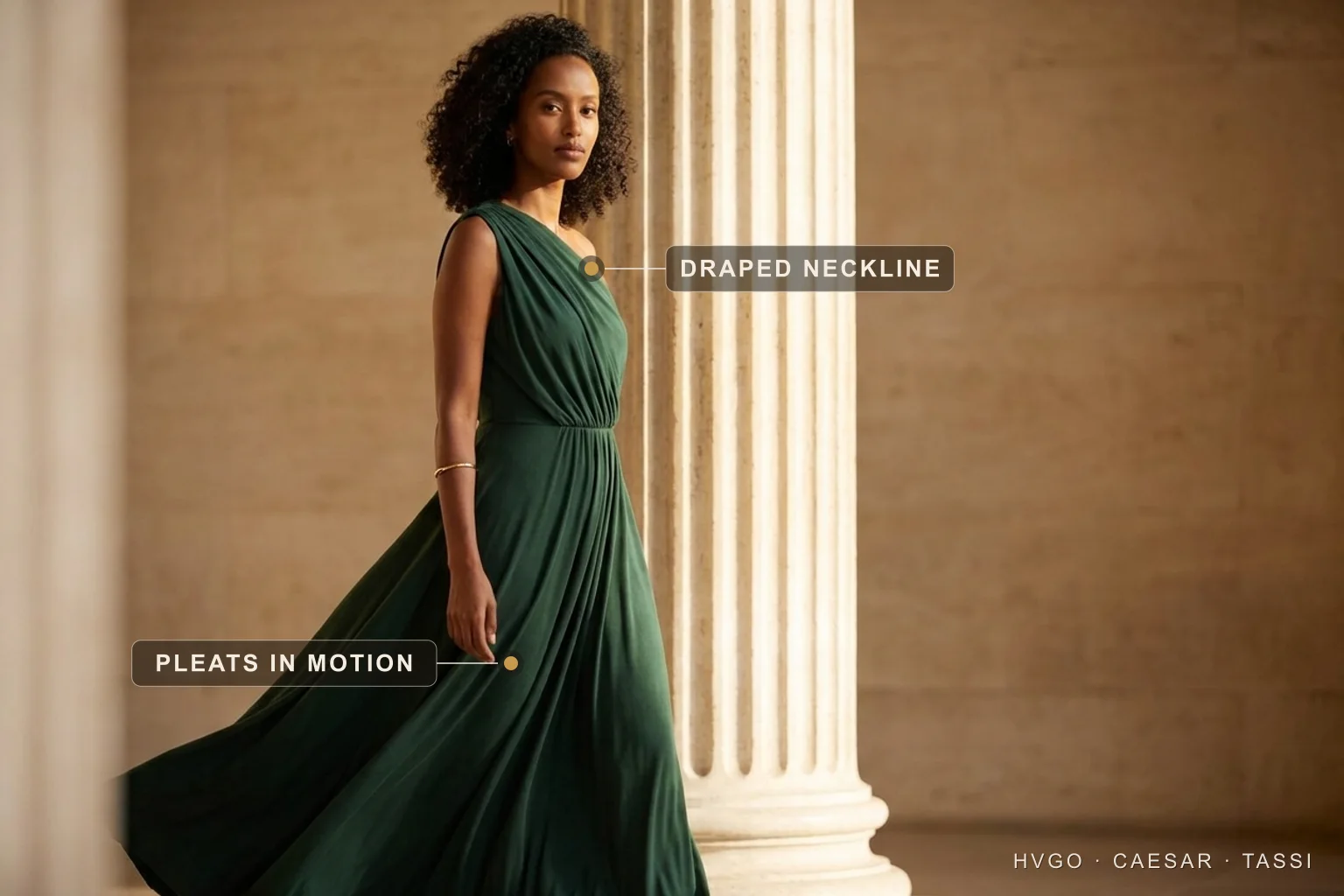
- Draped neckline
- Pleats in motion
#Evening fabrics and the candlelight rule
Satin's luster is correct after dark and a touch much for a matinee, while chiffon, matte crepe and draped modal work across both. Matte crepe and draped modal build a quietly expensive column without a flicker of gloss; our explainer on chiffon, satin and crepe covers the weights. One fabric ducks the question entirely: a recycled knife-pleated chiffon reads well in either light, the safe choice when you cannot confirm the hour.
#Opera color from the imperial palette
Deep, saturated tones read best under house lighting and against gilt-and-red interiors, so wine, navy, forest green and black lead for evening. Porpora wine, Cobalto navy, Verde Antico green and Basalt black hold their richness where a pale shade washes out, while Avorio ivory and Cornelia rose are the softer matinee answer. Watch the reds against the room: a bright scarlet vanishes into red velvet, whereas a deep wine holds its own.
#What to wear at the opera in a box versus the stalls or the gallery
Your seat shifts the formality: a box is the dressiest place in the house, the stalls sit a notch below, and the gallery is the most relaxed.
#How your seat shifts the formality
A gala box invites a full floor-length gown, yet the same woman in the upper gallery can wear an elevated midi and look correct. The stalls, the orchestra-level seats, sit between the two and reward a polished midi or a simple column.
#The wrap, the clutch and the cold-hall problem
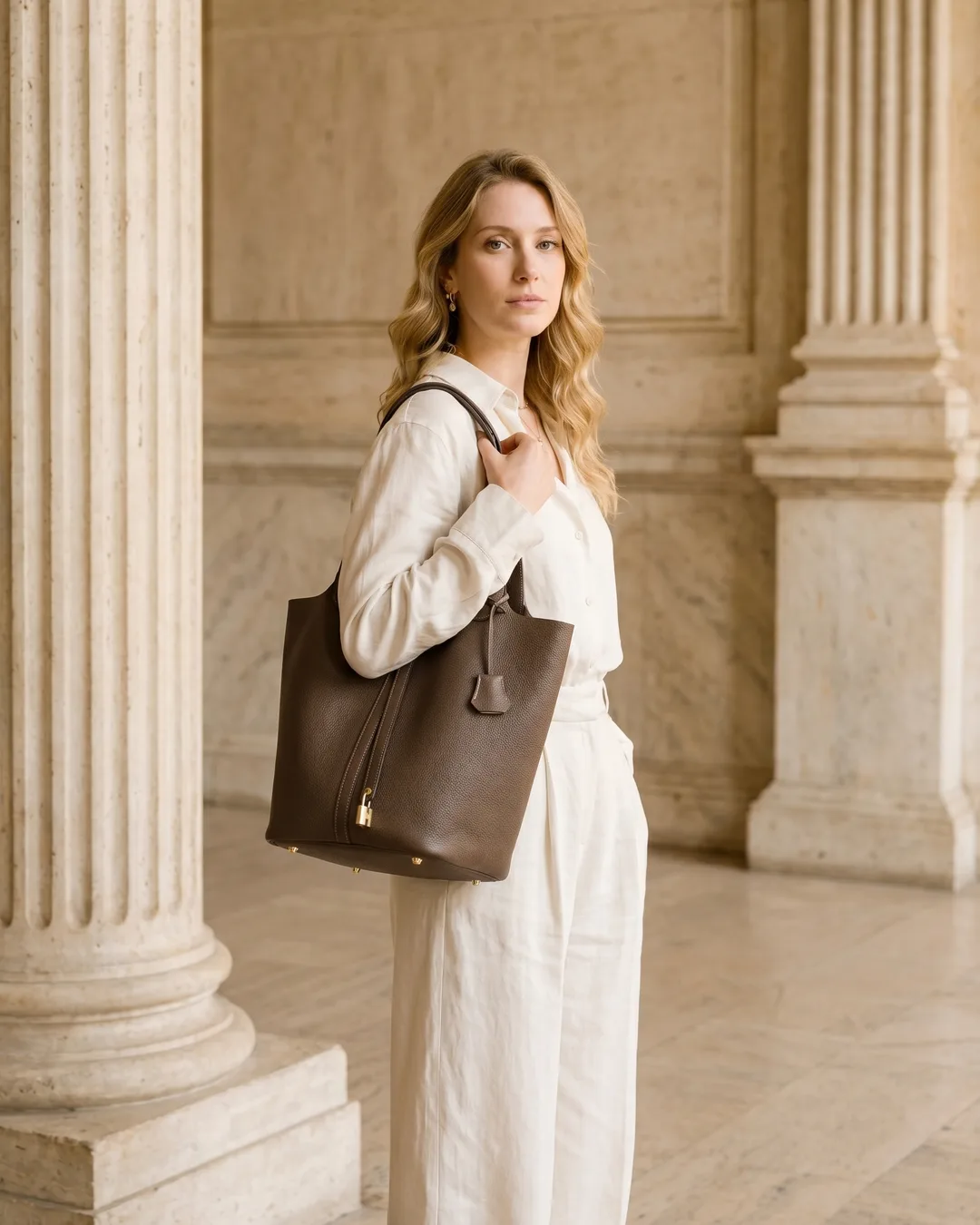
A silk or fine-wool wrap is the single most useful piece you carry, because opera houses run cold and heavily air-conditioned through a long act. Pair it with a small clutch, never a tote, since seats and cloakrooms are tight.
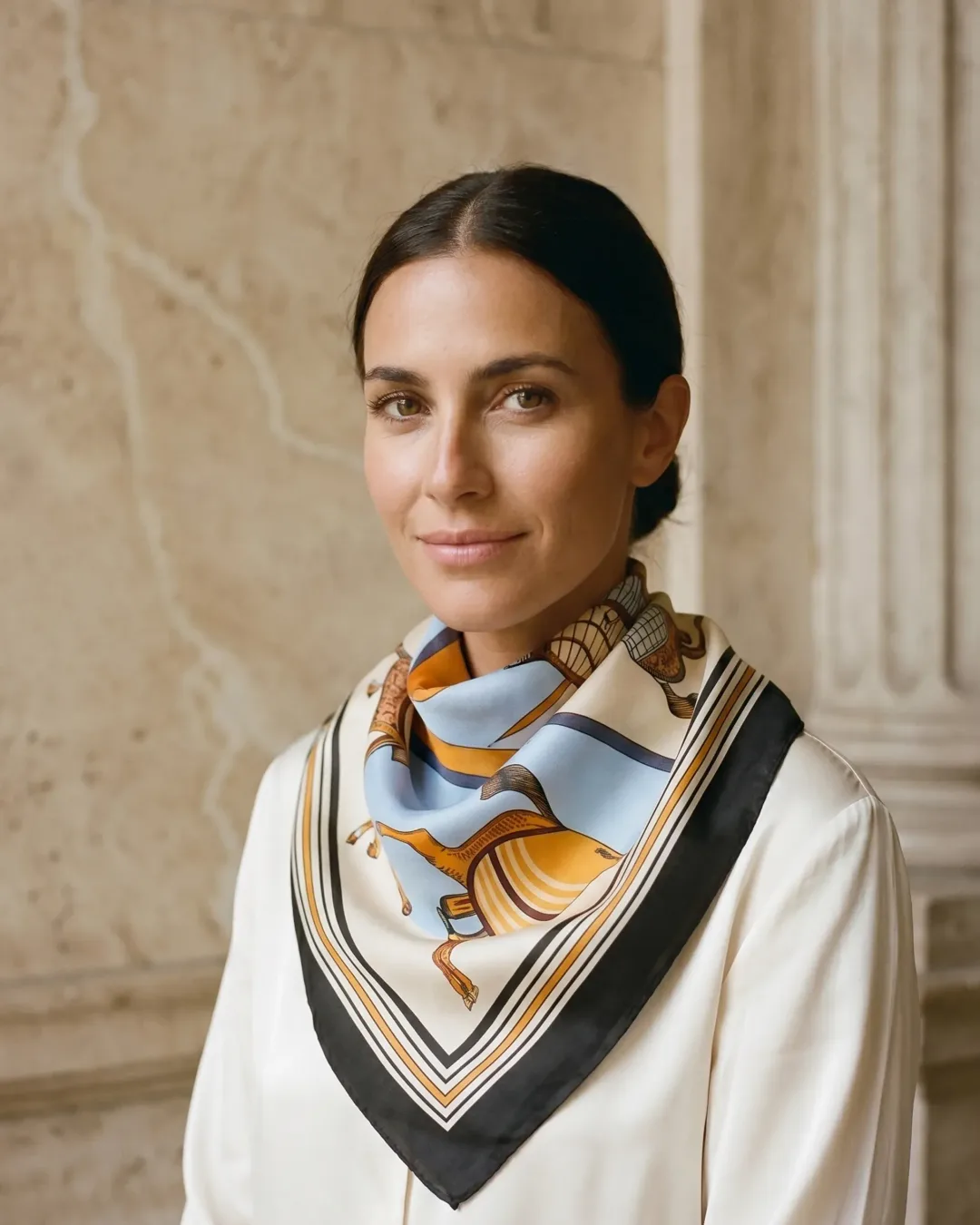
A glossy silk square such as the Carina doubles as a stole, and a slim envelope clutch like the Quirina tucks beside you where a tote cannot; see how to accessorize a dress for the one-wrap-one-bag logic. Summer festivals only soften the rule: you still carry the wrap, just a lighter one.
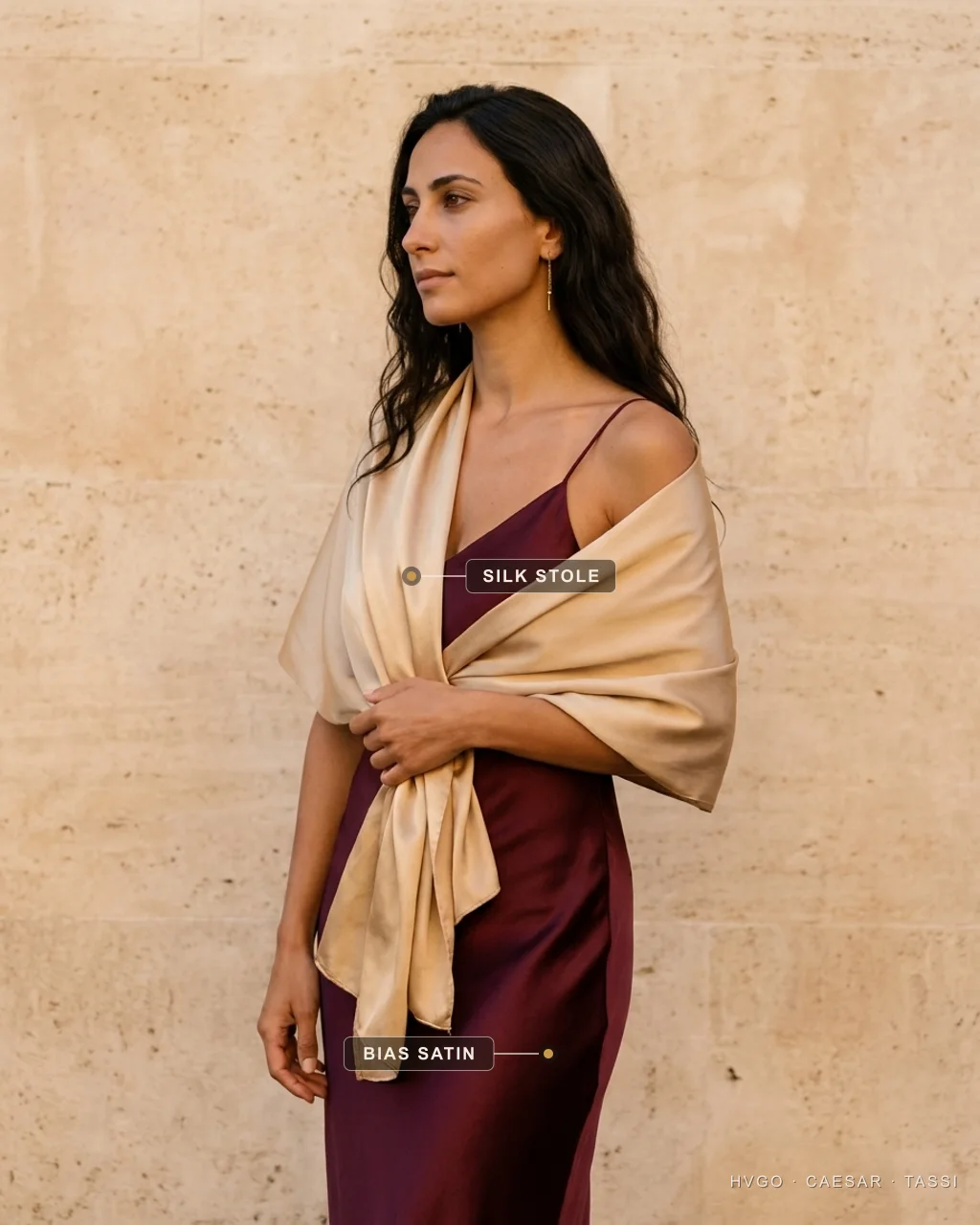
- Silk stole
- Bias satin
#The etiquette of an evening at the opera: arrival, the box and the intermission
Arrive early, dress so you can be seated quickly, and remember the intermission is the moment your outfit is actually seen.
#Arrival and curtain time
Arrive before the curtain, because latecomers are held outside and seated only at a suitable break. Your outfit should let you settle fast, one more reason an uncrushable silhouette beats a stiff one. Check your coat and any large bag at the cloakroom, and carry opera glasses for the upper tiers. A gala with a receiving line flips the order: you are seen standing, head to hem, before you ever sit.
#The intermission promenade and the curtain call
The intermission, the Italian intervallo, is when your evening look is genuinely on display, so dress for the foyer as much as the seat. The promenade to the bar between acts is a small social parade. A few courtesies tie directly to dress: no tall updo or oversized hat blocking the view behind you, quiet jewelry that does not rattle, restrained perfume in a closed hall, and your phone off.
#Seasonal layering for the opera season
Opera seasons run fall through spring, so a winter night needs a real coat plus a warm wrap, while a summer festival needs a long dress with a light layer. A January evening calls for a proper coat and a fine-wool stole that warms the gown without crushing it, the rhythm behind our note on la dolce vita style. Summer stages the opposite trap: an open-air staging turns cold after dark, so the light wrap is non-negotiable.
#How Hugo Caesar Tassi dresses a woman for the opera
The house dresses a woman for the opera by matching one gown to the night's three calibrators, then finishing it with a single jewel and a wrap.
#The house opera wardrobe, calibrated to the night
Each silhouette answers a specific opera setting, from a draped column for a normal evening to an earned satin for a gala.
- Vipsania, a draped modal column gown, is the do-anything choice for a normal evening that could turn smart or formal.
- Tullia, a pleated crepe column gown, sits beautifully in a box where you are seen seated for hours.
- Claudia, a pleated-slit chiffon maxi, gives one clean line for the stalls without a hint of crush.
- Calpurnia, a fishtail satin gown, and Flavia, a strapless satin off-shoulder gown, carry the sheen a gala rewards.
The founder's opera rule states it plainly: one statement color, one focal point, the shoulder seam fit first, matte before shine. That discipline is Nata Imperare, born to rule, worn quietly.
#The one accessory and the wrap
Keep the night to a single fine jewel plus the wrap and the clutch, and let the gown stay the one focal point. The Carina silk square serves as the wrap, and the Quirina envelope clutch holds only what a long evening needs. For a gala box, lift the one jewel to something finer rather than adding a second piece.
#What to wear to the opera, decided
Run the three calibrators in order and length, sheen and color fall out of the answers; still unsure, default to elevated cocktail in a deep imperial tone with a wrap.
#Your three-question shortcut
A gala at La Scala means floor-length, earned satin, deep jewel tone, while a normal evening at the Met means elevated cocktail in a saturated color and a matinee means a midi, soft color, lower heel. The outfit that fails is the guess that ignores the hour: a glossy satin maxi to a matinee, or a sweater to a prima.
#Where to go next
Match your night to a gown, then carry the answer into the house evening wardrobe. A formal piece differs from a relaxed-evening one in fabric weight and sheen, not ornament, the same logic the wedding guest dress codes guide and the royal ascot guide carry into their occasions. For every other invitation, the what-to-wear guides hub holds the full map.
#Frequently asked questions
Is the opera black tie?
The opera is not usually black tie; that level is reserved for galas, premieres, opening nights and dress-up houses like Glyndebourne. A normal evening calls for elevated cocktail to formal, a floor-length or refined midi dress rather than a full ball gown.
Can you wear pants or jeans to the opera?
Jeans read as underdressed at almost every opera house and are best avoided. An elegant wide-leg trouser or a dressy jumpsuit in an evening fabric works for a regular night, though a gown or midi dress is the more natural choice.
What should I wear to an opera matinee?
An opera matinee calls for the evening look stepped down a half-rung for daylight. Choose a chiffon or crepe midi in a softer color, matte fabric over high-shine satin, and a lower heel.
What do you wear to opening night at the opera?
Opening night at the opera is black tie: a floor-length gown in an earned satin or a fluid chiffon, a deep jewel tone, one fine jewel and a wrap. La Scala's December 7 opening ranks among the most formal dress evenings in Europe.
What colors should you wear to the opera?
Deep, saturated jewel tones suit the opera best, reading beautifully under house lighting and against gilt-and-red interiors. Wine, navy, forest green and black lead for evening, while ivory and soft rose suit a matinee.
Do you need to bring a wrap to the opera?
A wrap is the single most useful thing to carry to the opera, since the houses run cold and heavily air-conditioned. A silk or fine-wool stole keeps you comfortable through a long act and doubles as part of the look during the intermission promenade.
Name your night, whether gala, ordinary evening or matinee, then dress it from the house evening wardrobe: open the evening gowns collection for a premiere or a box, the occasion dresses edit for a regular performance or a matinee, and add your wrap from the silk scarves collection.
More What to Wear guides
What to Wear to a Christening
What to wear to a christening, by a Roman house — modest, daytime-elegant outfits in church-safe colors that honor the day, never reading bridal.
Dress for a christeningBlack-Tie Attire for Women
A Roman house decodes black-tie attire for women: floor-length or not, the right fabric and jewelry, and how optional, creative and gala differ.
Decode the four black-tie rungsCocktail Attire for Women
A Roman house decodes cocktail attire for women: the exact length (knee to mid-calf, never floor), the right fabric, and how it differs from black tie.
Decode cocktail attireWhat to Wear to an Italian Wedding
A Roman house decodes what to wear to an Italian wedding: the real no-black and no-white rules, church cover-up, and North-vs-South dress code.
Decode the invitata dress codeWhat to Wear to Royal Ascot and the Races
The enforced Royal Ascot enclosure rules for strap width, hem and hat size, plus a Roman house rule for balancing a hat against your dress.
Pass the Ascot enclosure rulesWhat to Wear to a Summer Wedding
A Roman fashion house on what to wear to a summer wedding: the breathable fabrics, flattering bright-light colors and hems that survive grass and sun.
Dress a summer wedding