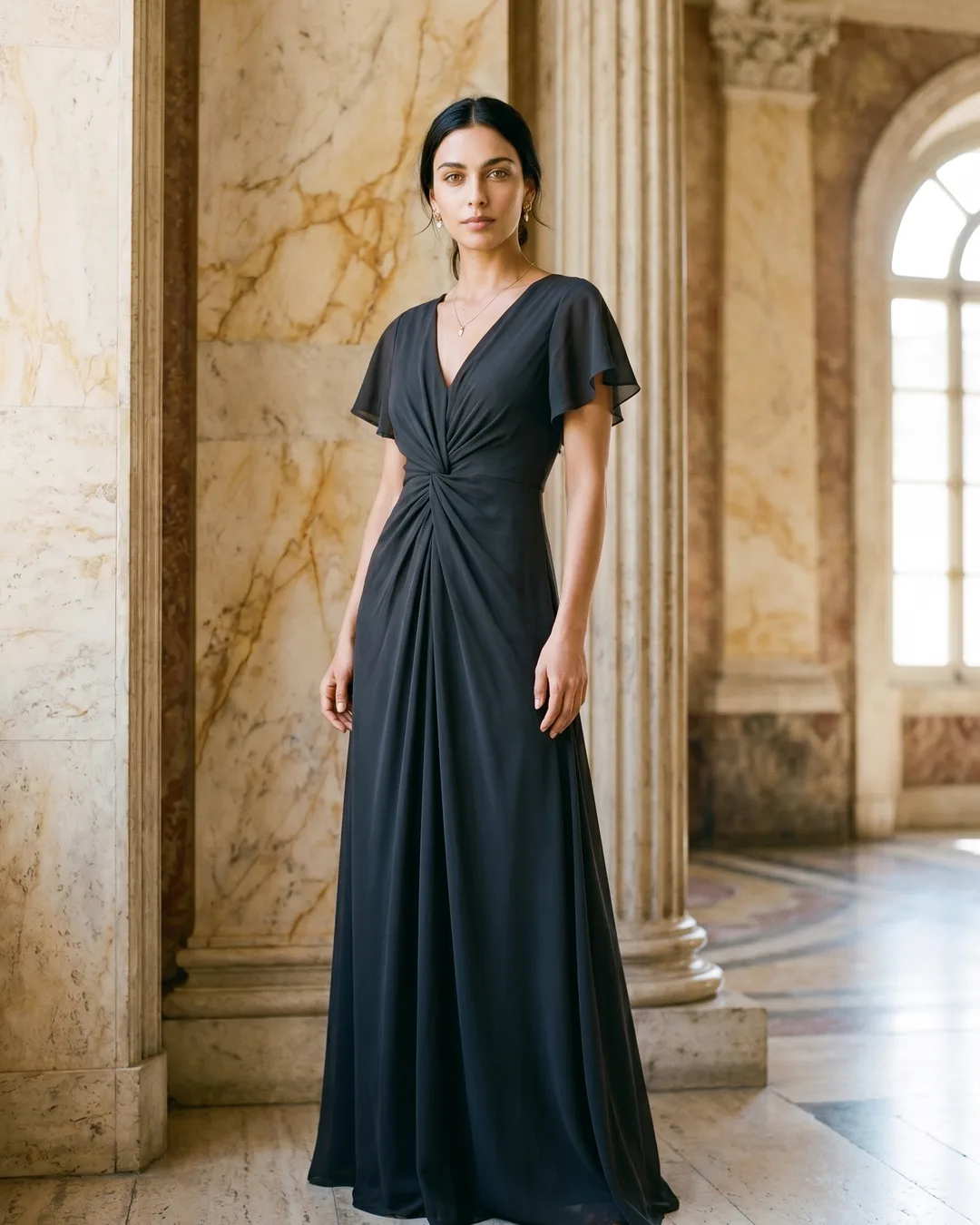
Types of Dresses: An Illustrated Guide to the Styles That Earn a Place in a Formal Wardrobe
Every formal dress type named and shown — slip, column, A-line, sheath, fishtail, one-shoulder and more — each with its fabric and best occasion.
On this page
Fourteen dress types carry a formal wardrobe: the slip, column, sheath, A-line, fit-and-flare, fishtail, strapless, off-shoulder, one-shoulder, cutout, tiered, wrap, ballgown, and empire-waist. This guide names each one, shows it on a real garment, and tells you the fabric it needs and the event it was cut for. Read on to name any dress on sight.
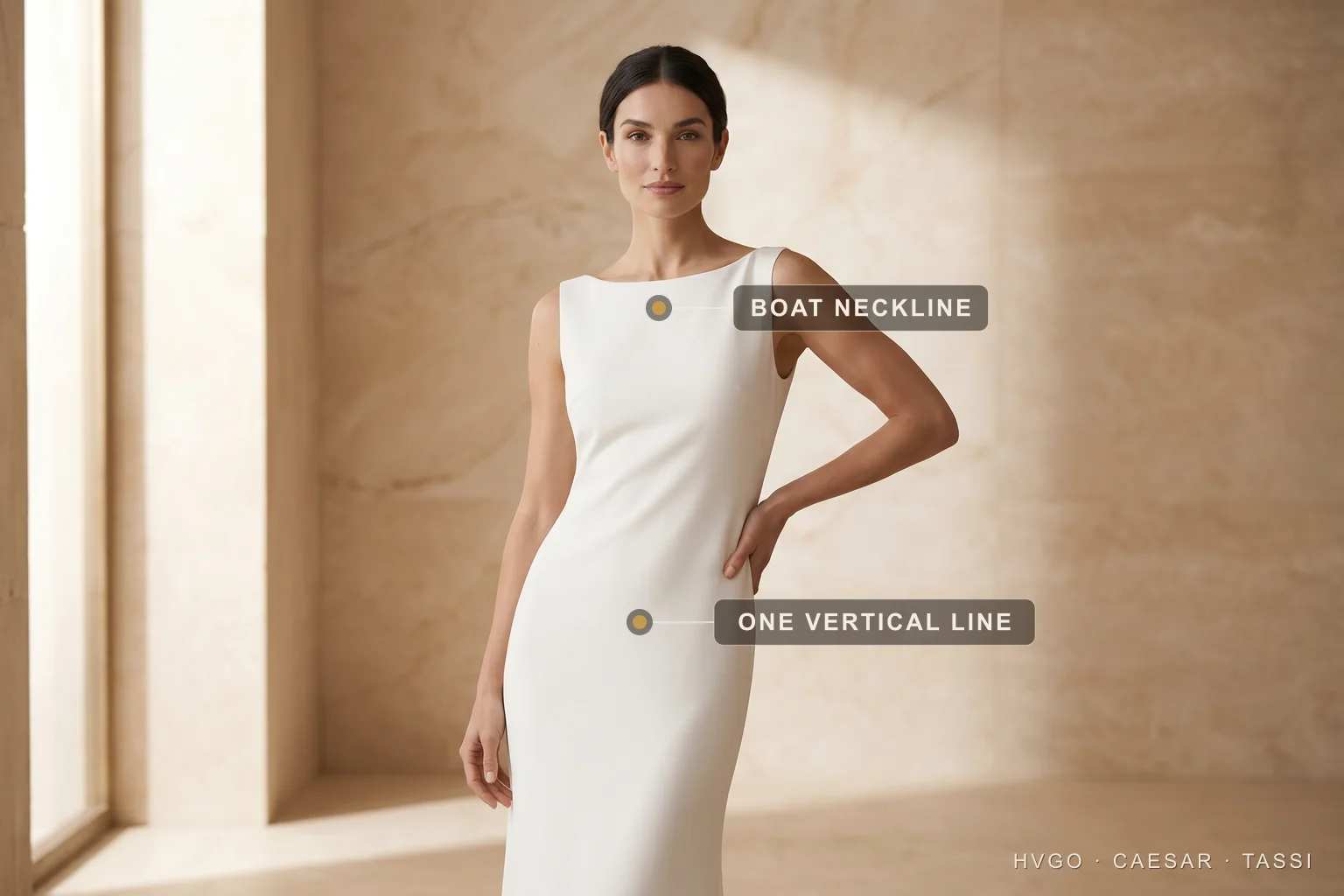
- Boat neckline — a wide, straight neckline that keeps the eye high and the shoulder clean
- One vertical line — an unbroken column from shoulder to hem that lengthens the frame
Name any dress on sight
The core silhouettes in the Hugo Caesar Tassi range.
#What counts as a "type of dress," and what doesn't, for a formal wardrobe
A formal dress type is a named style cut for an occasion with a dress code, not the eighty-entry sewing glossary that buries the column gown next to the pinafore. A grown woman dressing for a wedding, a gala, or the opera needs maybe fourteen. Hugo Caesar Tassi designs only occasionwear, so this page keeps to the styles that answer an invitation.
Take the column gown. It belongs on the list because a black-tie line demands one; the sundress does not, because no dress code asks for it. That single cut, occasion in and casual out, separates a buyer's reference from a glossary.
#Type vs silhouette vs length: why people confuse them
The type is the named style, the silhouette is the line it cuts, and the length is where the hem breaks; people collapse three separate layers into one word. A slip dress is a type, A-line is a silhouette, maxi is a length. One type can arrive in more than one silhouette: a wrap dress reads A-line or sheath depending on the cut.
Keep them straight and you read a dress fast. For the line itself, the dress silhouettes guide maps every shape; for the hem, the midi and maxi length guide covers where each one breaks. This page owns the names and the occasions.
#The eight casual types we're deliberately leaving out
Eight everyday styles get named once and set aside, because none of them answers a formal dress code. These belong to daytime casual wardrobes, yet generic lists rank them beside the evening gown, which is exactly the confusion this page removes:
- Sundress and shirtdress
- Pinafore and smock
- T-shirt dress and skater dress
- Bodycon and prairie dress
Leaving them out is the angle. One counter-case: a fine-gauge knit shift can edge toward semi-formal with the right shoe, which is why the shift earns a mention later while its casual cousins do not.
#The slip and the column: the two types of dresses every formal wardrobe is built on
The slip and the column are the foundation: one fluid and modern, one vertical and formal, and between them they cover most evenings. Build a small occasion wardrobe on these two and you can dress a cocktail party and a black-tie gala from a rail of three pieces.
The slip flatters movement; the column flatters stillness and height. Each depends on its fabric to work.
#The slip dress: bias-cut, fluid, quietly modern
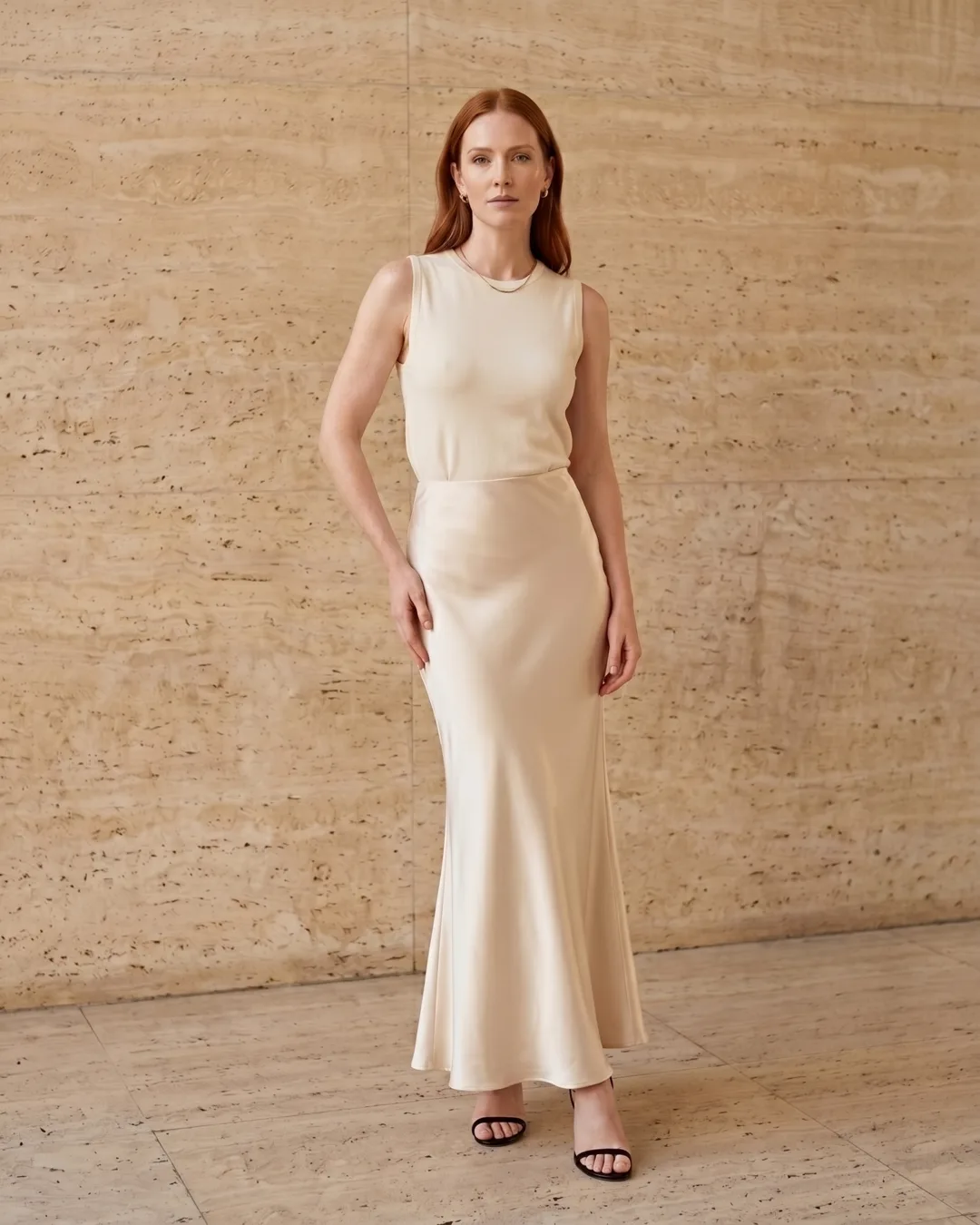
The slip dress is cut on the bias with fine straps and a soft neckline, so it follows the body instead of structuring it. Bias cutting runs the cloth at 45 degrees to the grain, which lets satin or modal jersey pour over the figure and skim rather than cling.
It reads sexy-restrained, which makes it right for a cocktail evening, an intimate dinner, or a chic city wedding. The edge case: bias satin shows every line beneath it, so it rewards a smooth foundation and punishes a stiff one. Choose the slip when you want modern ease over occasion drama.
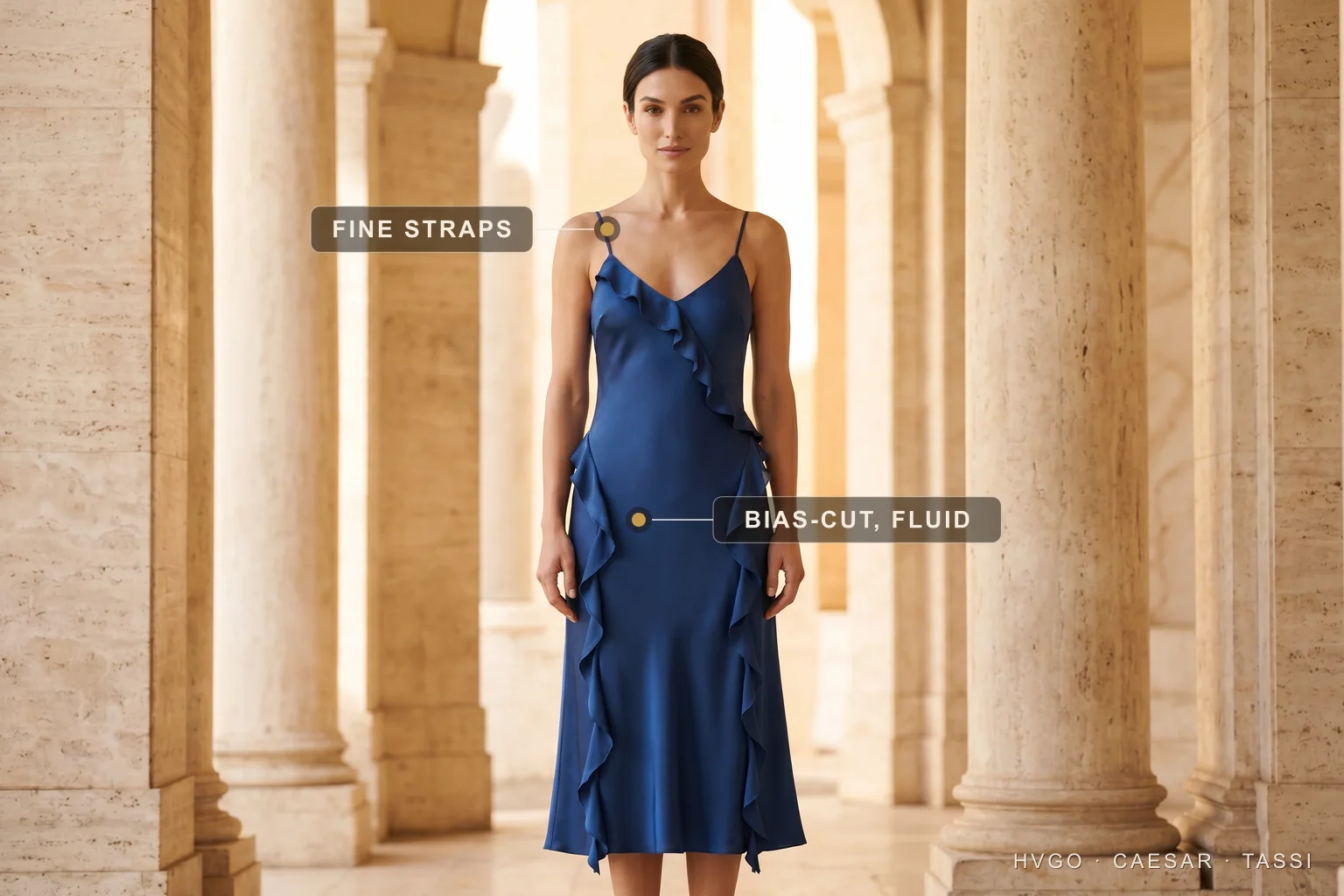
- Fine straps — a soft, body-following neckline, never a structured bodice
- Bias-cut, fluid — cloth run on the diagonal that pours over the figure and skims
#The column dress / column gown: the unbroken vertical line
The column gown holds one narrow, floor-skimming vertical line from shoulder to hem, usually pleated or draped in crepe or modal jersey. The house calls it the Roman column made wearable, a single uninterrupted line that lengthens the frame, and it belongs at black tie and the opera.
The Tullia column gown holds its line in matte pleated crepe, which stands away from the body; the Vipsania does it in washed modal jersey, which drapes close and moves. Pick crepe for structure, modal for fluid drape. The column is the better choice than a slip when the room is formal and the photographs are full-length.
#A-line, sheath and fit-and-flare: the everyday-formal types of dresses
These three handle daytime formal occasions like weddings, the races, christenings, and semi-formal evenings, where floor-length gowns would overdress the room. Each defines the waist differently, which is what sets them apart on the body.
The A-line floats, the sheath tailors, the fit-and-flare nips. Read the formality of the event, then read which line suits your shape. None of the three demands the floor.
#The A-line dress: the most forgiving formal type
The A-line fits through the bust and waist, then widens steadily to the hem in the shape of a capital A, skimming the hips it passes. That geometry flatters nearly every body because it draws the eye to the narrowest point and glides over the widest. In 8mm chiffon it floats for daytime; in a heavier weave it holds structure.
The Portia short-sleeve chiffon A-line and the Aemilia chiffon maxi both show the line in motion, which is why it suits a garden wedding, the races, or a christening. The counter-case: a very stiff fabric kills the float and makes the A read like a tent, so the A-line lives or dies by a fluid weave.
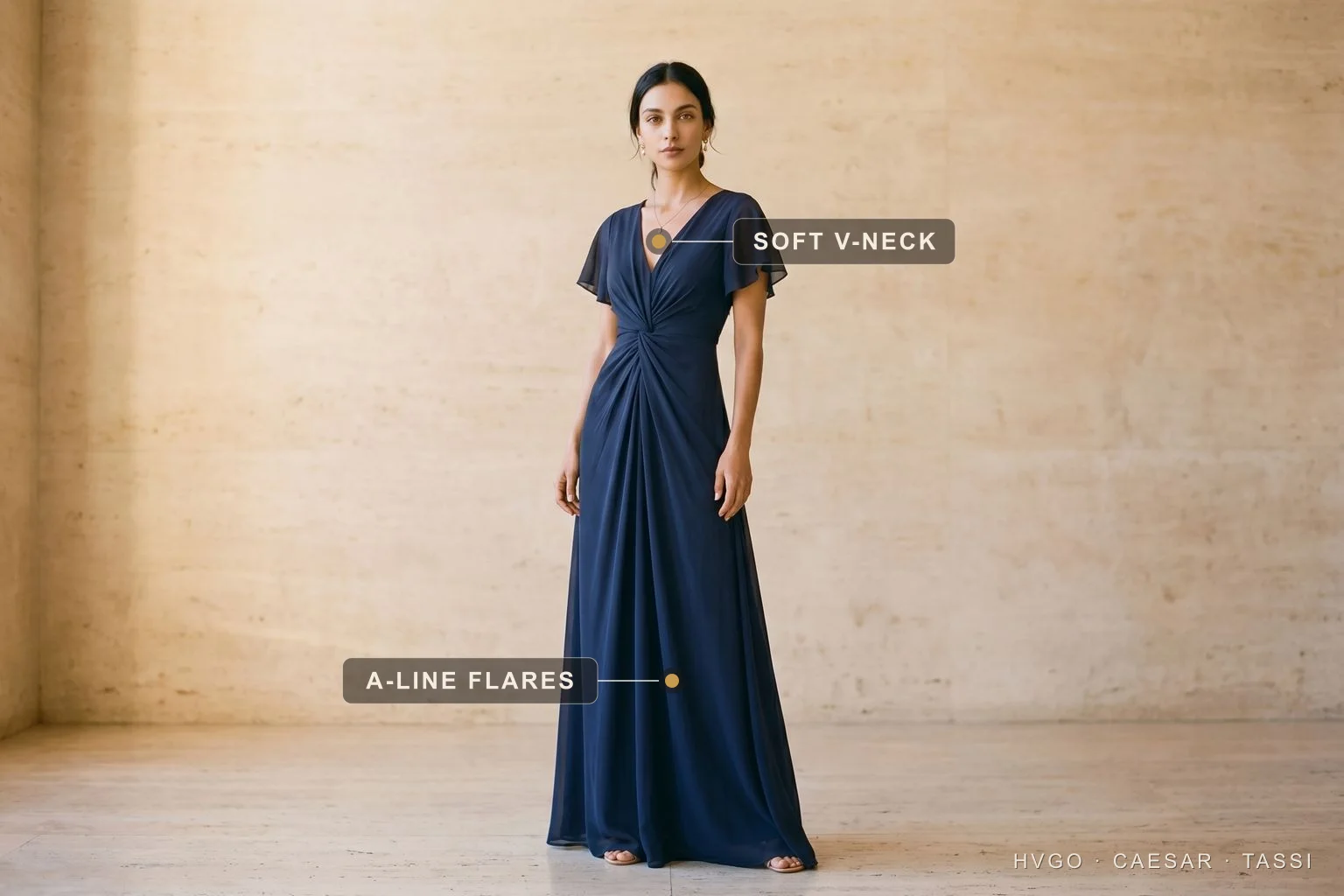
- Soft V-neck — opens the chest and lifts the eye
- A-line flares — the skirt widens steadily and skims the hips it passes
#The sheath dress: the tailored, body-skimming line
The sheath cuts a straight, close line from shoulder to hem in structured crepe, ending between the knee and the midi. It is the most tailored of the formal types, with no flare and no gather, just a clean skim that reads polished. That makes it the standard for mother-of-the-bride dressing and semi-formal daytime events.
Where it falls short: a sheath wants a smooth line, so it suits an hourglass or rectangle far more readily than a fuller hip, which the A-line handles better.
#Fit-and-flare and the shift
Fit-and-flare nips in at the waist and flares from there; the shift drops straight from the shoulders with no waist at all, opposite answers to the same question. Fit-and-flare defines a waist and reads romantic; the shift skims past it and reads clean and modern. On the formality scale, fit-and-flare sits comfortably at semi-formal, while a structured shift edges in only with the right fabric and shoe.
Choose fit-and-flare when you want shape, the shift when you want ease and a frame that prefers the eye kept moving rather than stopped at the middle.
#Evening types of dresses: the fishtail, the strapless, the ballgown and the draped Grecian
Evening types commit to the floor and to drama through fitted bodices, sculptural skirts, satin and crepe, and they belong at black tie and gala. Construction does the work, not embellishment, which is the house reading of quiet luxury: weight, drape, and fit before sparkle.
Each of these four solves a different evening. The fishtail sculpts, the strapless frames, the ballgown commands, the Grecian flows. Match the dress to the room and to the line you want to cut.
#The fishtail / mermaid / trumpet gown
The fishtail, mermaid, and trumpet are near-synonyms separated by one thing: where the skirt stops hugging and starts to flare. The trumpet flares higher, around mid-thigh; the true fishtail and mermaid stay fitted to the knee, then break into the flare. Bias-cut satin is the fabric that makes it.
The Calpurnia fishtail satin gown shows the effect: fitted to the knee, then a satin flare that reads pure black-tie and gala. The edge case: the fishtail traces the hip and thigh closely, so it rewards confidence in that line and asks for smooth underpinnings, unlike the forgiving A-line.
#The strapless and off-shoulder gown
The strapless and the off-shoulder bardot are evening types defined by the shoulder line: one bares it fully, one frames it just below. A fitted satin bust holds a strapless gown up and keeps the line clean; the bardot neckline sits off the shoulders to frame the collarbone. Both read black-tie and gala.
The Flavia strapless satin off-shoulder gown shows how the structured bust does the holding so the wearer does not have to. The counter-case: a strapless line needs a bust it can grip, so it suits a fitted satin far better than a soft jersey, which has nothing to anchor against.
#The ballgown and the empire-waist gown
The ballgown pairs a fitted bodice with a full skirt for the most formal line there is; the empire waist seams under the bust and falls straight, skimming the midsection. The ballgown is white-tie and grand black-tie territory; it commands a room and needs the floor space for the skirt.
Choose the ballgown when the event is the most formal on the calendar and the room can hold the skirt. Choose empire when you want the eye drawn up to the bust and the midsection skimmed rather than defined; it is the kinder line over a fuller middle.
#The draped Grecian gown
The draped Grecian is a soft column built entirely from drape and pleating, with no hard seams to break the flow: the classical line in modern cloth. It descends from the Roman stola and palla, the draped garments of antiquity, which the house treats as direct heritage rather than costume. Washed modal jersey or fine crepe lets the drape fall without stiffness.
It belongs at black tie and at any event that rewards movement over sculpted structure. For the full lineage, the goddess gown heritage guide traces the line from antiquity. The Grecian is the better choice than a fishtail when you want flow rather than a fitted hip.
#The detail-led styles: the one-shoulder, the cutout and the tiered
These three earn type status through a single design move, whether an asymmetric strap, a placed cutout, or a horizontal tier, rather than an overall silhouette. Each shifts the eye deliberately, which is why each stands as its own type at evening level rather than a variation.
A detail-led dress lives and dies by restraint, which is the house rule of one focal point only. One bold move reads considered; three read busy.
#The one-shoulder dress
The one-shoulder runs a single asymmetric strap across one shoulder and leaves the other bare, which makes asymmetry the whole point. It balances a frame by drawing a strong diagonal across the upper body: broad shoulders soften, narrow ones gain a line. It reads modern black-tie.
The asymmetry flatters a broad frame and a narrow frame differently, so try the diagonal both ways before deciding. The counter-case: a heavy embellished single strap can drag the line off-balance, so the one-shoulder works best when the strap stays clean and structural.
#The cutout dress
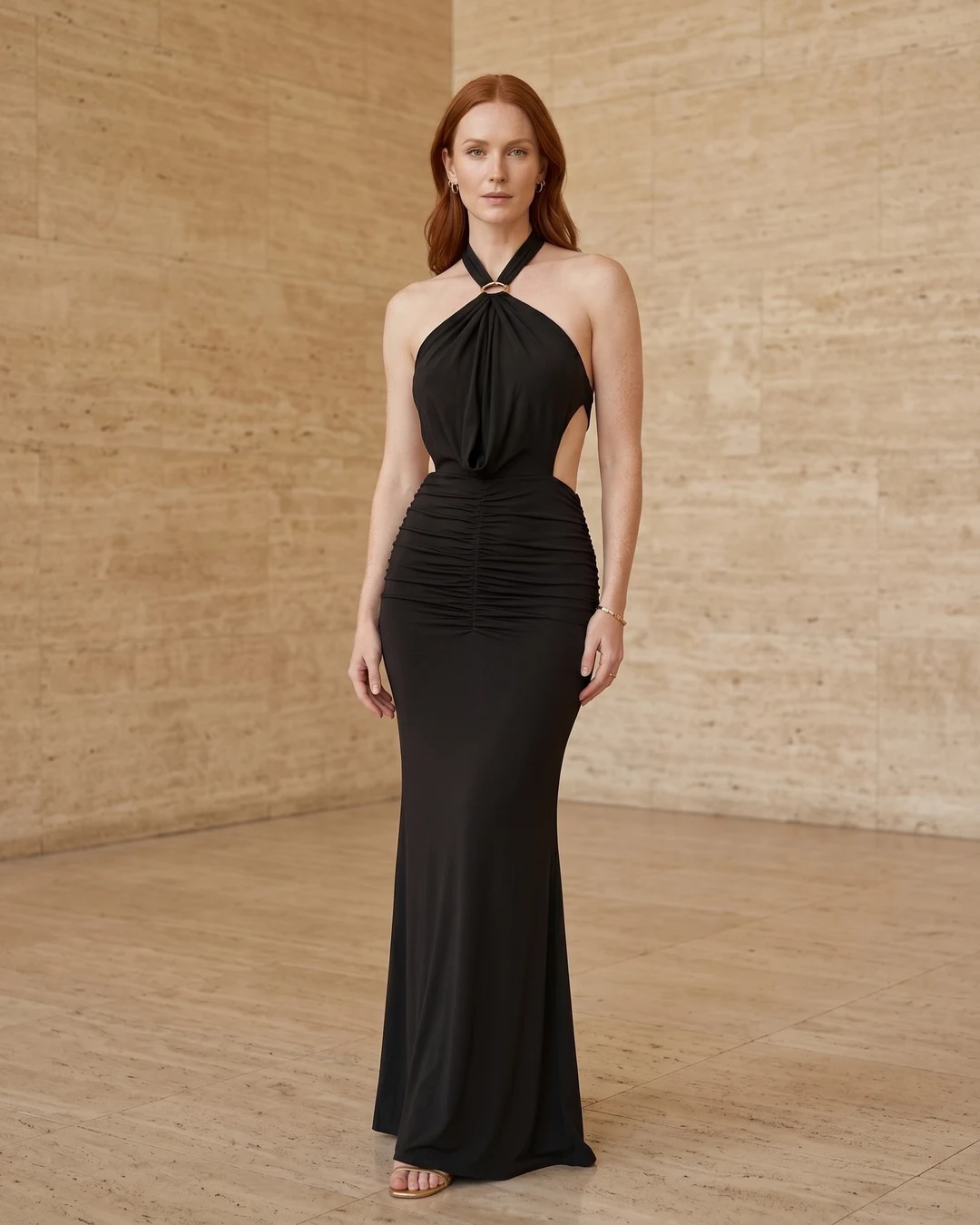
The cutout places a window of bare skin at the waist or the side, and the dress code decides how much reads appropriate. A small waist cutout reads tasteful at cocktail; a wide side cutout reads club, not gala. The difference is placement and proportion: a slim sliver that frames the waist versus an expanse that exposes it.
A semi-formal daytime event asks for a closed line or the smallest window; an evening event allows more. Restraint separates a refined cutout from a club dress, so the house keeps any opening narrow and singular, one window at most.
#The tiered and the wrap dress
The tiered dress stacks horizontal ruffled layers for romantic daytime softness; the wrap crosses and self-ties into a V-neck for near-universal flattery. Tiers want light cloth, chiffon especially, so each layer lifts and falls, and they read best at a garden wedding or the races. The Livilla floral chiffon midi shows the tiered type.
The wrap does a different job: it defines a waist with the tie and adjusts to fit any figure, taking it from day to evening. Choose tiered for daytime romance, the wrap when you want one dress that flatters almost everyone and resizes itself.
#Which type of dress suits each occasion and dress code?
Match the type to the dress code first, then to your shape; the invitation sets the floor length, the fabric, and the formality before personal taste enters. "Black tie" and "cocktail" point to entirely different rails, and dressing the wrong one is the most common occasion mistake.
| Dress code | Right types | Length | Fabric |
|---|---|---|---|
| White tie / black tie | Column, fishtail, strapless, off-shoulder, draped Grecian, ballgown, one-shoulder | Floor | Satin, crepe |
| Cocktail / semi-formal | Slip, sheath, fit-and-flare, A-line | Knee to midi | Crepe, modal jersey |
| Daytime formal | A-line, tiered, wrap | Midi | Chiffon, lighter weaves |
| Mother-of-the-bride | Sheath, A-line, column | Midi to floor | Crepe |
#Black tie and white tie
Black tie and white tie call for floor-length gowns in satin or crepe: the column, fishtail, strapless, off-shoulder, draped Grecian, ballgown, or one-shoulder. White tie is the most formal code and points hardest at the ballgown; black tie opens the full evening range. The house designs out funereal black as a default, so the imperial palette carries the formality instead.
The full code sits in the black-tie attire guide. The edge case is a destination black tie in heat, which rewards crepe over heavy satin for the weight alone.
#Cocktail and semi-formal
Cocktail and semi-formal want knee-to-midi dresses such as the slip, sheath, fit-and-flare, or a midi A-line, never the floor. Reading "cocktail" means polished but not gowned: a hem at the knee or just below, and shine kept restrained. A floor-length gown signals misjudging the room here.
The slip handles the evening end of cocktail, the sheath the daytime end. Where it blurs: "semi-formal" sometimes stretches to a short evening gown after dark, so the time of the event nudges the hem.
#Daytime formal: weddings, the races, christenings
Daytime formal rewards the A-line, tiered, or wrap at midi length in chiffon and lighter weaves, light and moving cloth for events held in daylight. A garden wedding, a christening, or the races all favor float over sculpted structure. At the races, a hat or fascinator is part of the dress code, not an optional extra.
The Royal Ascot dress guide covers the headwear rules in full. The counter-case is an evening reception after a daytime ceremony, which can pull the dress code up, so check whether the invitation splits the day.
#Which type of dress flatters your body shape, at a glance
Each body shape has types that work with its proportions, and the principle is to balance the line, not to hide it. A quick map gets you to the right rail. The full method, including how to measure and read your own frame, lives in the body-shape pillar so this page stays the type reference.
| Body shape | Types that flatter | Why |
|---|---|---|
| Hourglass | Slip, sheath, fishtail | Trace the defined waist |
| Pear | A-line, fit-and-flare | Skim the hip, lift the eye up |
| Apple | Empire, wrap, column | Skim the midsection |
| Rectangle | One-shoulder, cutout, ruched | Create a curve and a focal point |
| Petite | Column, sheath | One unbroken line lengthens |
#A quick type-to-shape cheat sheet
The cheat sheet above pairs each shape to the types that balance it, but it is a starting point, not a verdict, because fit and confidence override the chart. An hourglass suits anything that traces the waist; a petite frame gains the most from an unbroken column or sheath line that adds height. To find your own shape and work the full method, the body shape guide walks through the measurements.
One caveat the chart can't hold: a dress that fits the shoulder seam and makes you stand taller will outflatter a "correct" type that fits poorly. Fit the shoulder first, then consult the shape.
#How Hugo Caesar Tassi reads the dress types: fabric first, occasion always
The house rule is that a type only works when the fabric is right for it; the cloth makes the cut, not the other way around. Get the fiber wrong and the most beautiful line collapses. This is the angle no generic list draws: the named type tied to its actual fabric.
An 8mm chiffon floats an A-line and lifts a tiered hem; bias-cut satin is what sculpts the fishtail; washed modal jersey is what lets a column actually drape instead of hanging flat. The imperial palette of Porpora, Vermiglio, Cobalto, and Avorio then sits as a color layer over any type, type-neutral by design.
#One fabric, the right type: the house rule
Two or three well-chosen types in the right cloth outdress a closet full of trend pieces; that is the buy-fewer-better thesis the house builds on. A column in matte crepe and an A-line in chiffon cover most of a year's invitations between them. Every Hugo Caesar Tassi dress is fully lined with a concealed zip, in sizes S to 3XL, with each model's height published near 175 cm so a reader can judge where a hem will break on her own frame.
The counter-case to chasing types: owning all fourteen serves no one. The point is the right two or three for the events you actually attend, in palette neutrals that repeat.
#Which type to start with
If you own nothing formal, start with a column or an A-line in a palette neutral; between them they answer the widest range of invitations. The column covers your formal evenings; the A-line covers your daytime occasions. Pick a neutral such as Basalt, Travertine, or Avorio so the dress repeats across events without being recognized each time.
Browse the cuts in the occasion dresses collection for daytime-to-evening range, and the evening dresses collection for the black-tie end. Start with one line you can rely on, then add the detail-led types as occasions call for them.
#Frequently asked questions
What are the most common types of formal dresses?
The most common formal dress types are the slip, column, sheath, A-line, fit-and-flare, fishtail, strapless, off-shoulder, one-shoulder, cutout, tiered, wrap, ballgown, and empire-waist. The rest of the "types of dresses" lists are casual styles like the sundress or shirtdress. These fourteen cover cocktail through white tie.
What's the difference between a slip dress and a column dress?
A slip dress is bias-cut and fluid with fine straps and a soft body-following line, while a column dress is a narrow floor-length gown built to hold one unbroken vertical line. The slip reads modern-minimal and suits cocktail; the column reads formal and suits black tie. The column is usually pleated or draped; the slip pours over the body.
Is a "type of dress" the same as a silhouette?
A type of dress is not the same as a silhouette; the type is the named style, the silhouette is the line it cuts, and the length is the hem. A slip, fishtail, or ballgown is a type; A-line, column, or sheath is a silhouette. One type can come in more than one silhouette, which is why each layer keeps its own guide.
What type of dress is best for a wedding guest?
The best wedding-guest dress type depends on the time and code: an A-line, tiered, or wrap at midi in chiffon for daytime, or a column, draped Grecian, or one-shoulder gown for a black-tie evening. Always read the invitation's dress code first. A garden ceremony and an evening reception can call for different dresses on the same day.
What is a fishtail dress also called?
A fishtail dress is also called a mermaid or a trumpet gown, and the difference is where the skirt flares. The trumpet flares higher, around mid-thigh, while the true fishtail or mermaid stays fitted to the knee and then flares. All three are cut in bias satin for black-tie and gala.
What type of dress is most flattering on everyone?
The wrap and the A-line are the closest to universal — the wrap defines a waist and adjusts to fit, and the A-line skims the hips while drawing the eye to the narrowest point. Neither relies on a single body shape to work. The most flattering type for you still depends on your own frame and fit.
Now that you can name the type, see it in the cut and the cloth. Browse the occasion dresses range to match a type to your next event, with the how-to-choose guide and the necklines guide ready to size the choice to your body and the occasion.
More Dress Knowledge guides
Dress Necklines Explained
Every dress neckline named, with the jewelry each one takes, the bust and shoulders it flatters, and the formality it signals. A house guide.
Decode every dress necklineDress Silhouettes Explained
Every dress silhouette explained: A-line, column, sheath, fishtail, empire, plus the fabric that holds each shape and the body it flatters.
Explore every dress silhouetteDress Sleeve Types
Every dress sleeve named and shown — how much arm each covers, the climate it suits and the occasion it signals, from cap and flutter to dolman.
Match a sleeve to the occasionHow to Choose a Dress
A quiet-luxury method for choosing a dress — occasion first, then silhouette, fabric, length, fit, and only then color. Buy one you'll wear for years.
Learn the five-step methodHow to Measure for an Occasion Dress
Take your bust, waist and hip dress measurements at home and match them to the HCT size chart, with US/EU conversion and per-fabric ease, to order once.
Find your size in the occasion dresses editMidi vs Maxi vs Mini
Every dress length in real inches: mini, midi, tea, maxi, measured on a 5'7\" fit model, plus a height rule for where each hits on you.
Find your hem length in real inches