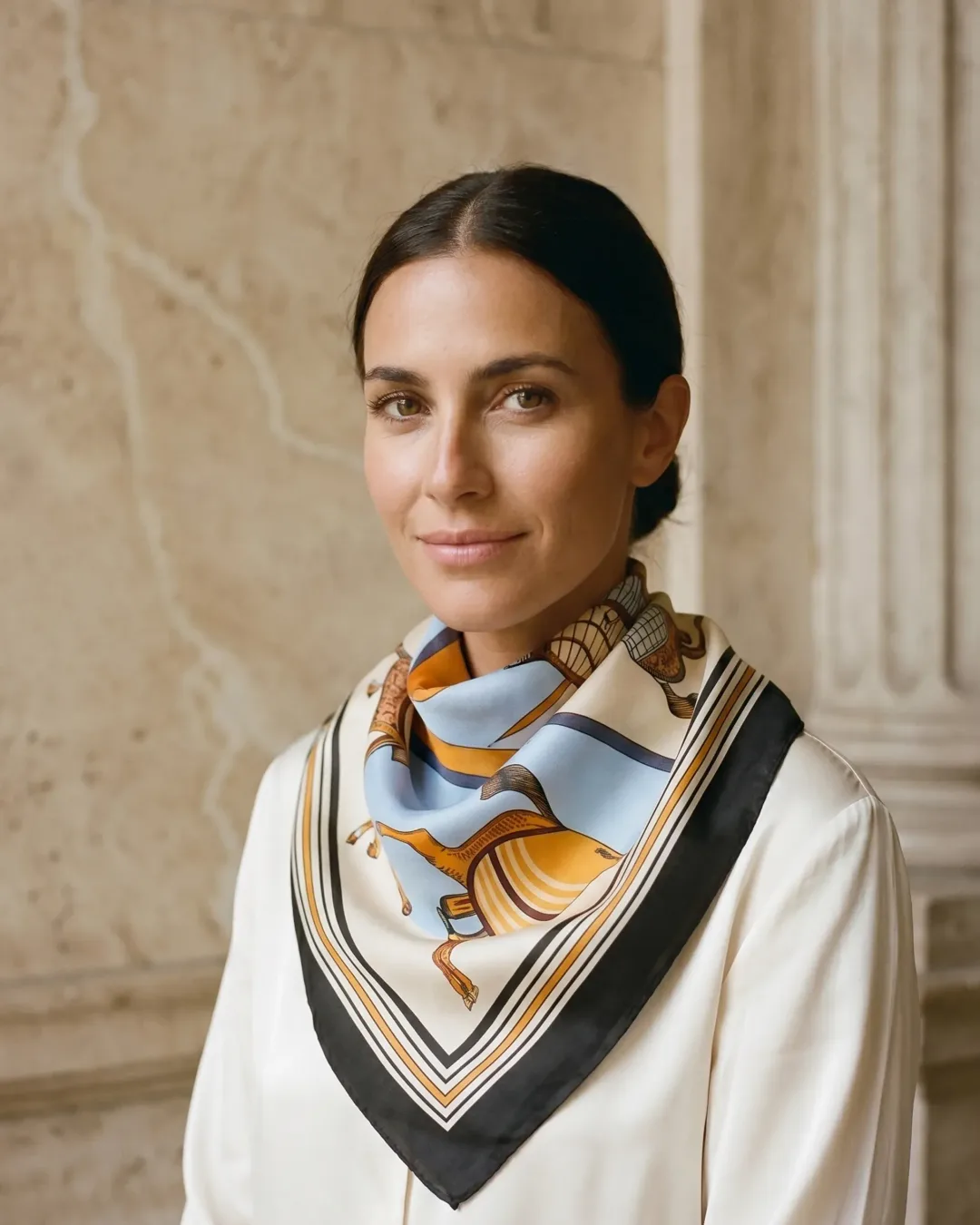
Named for the Roman mosaic
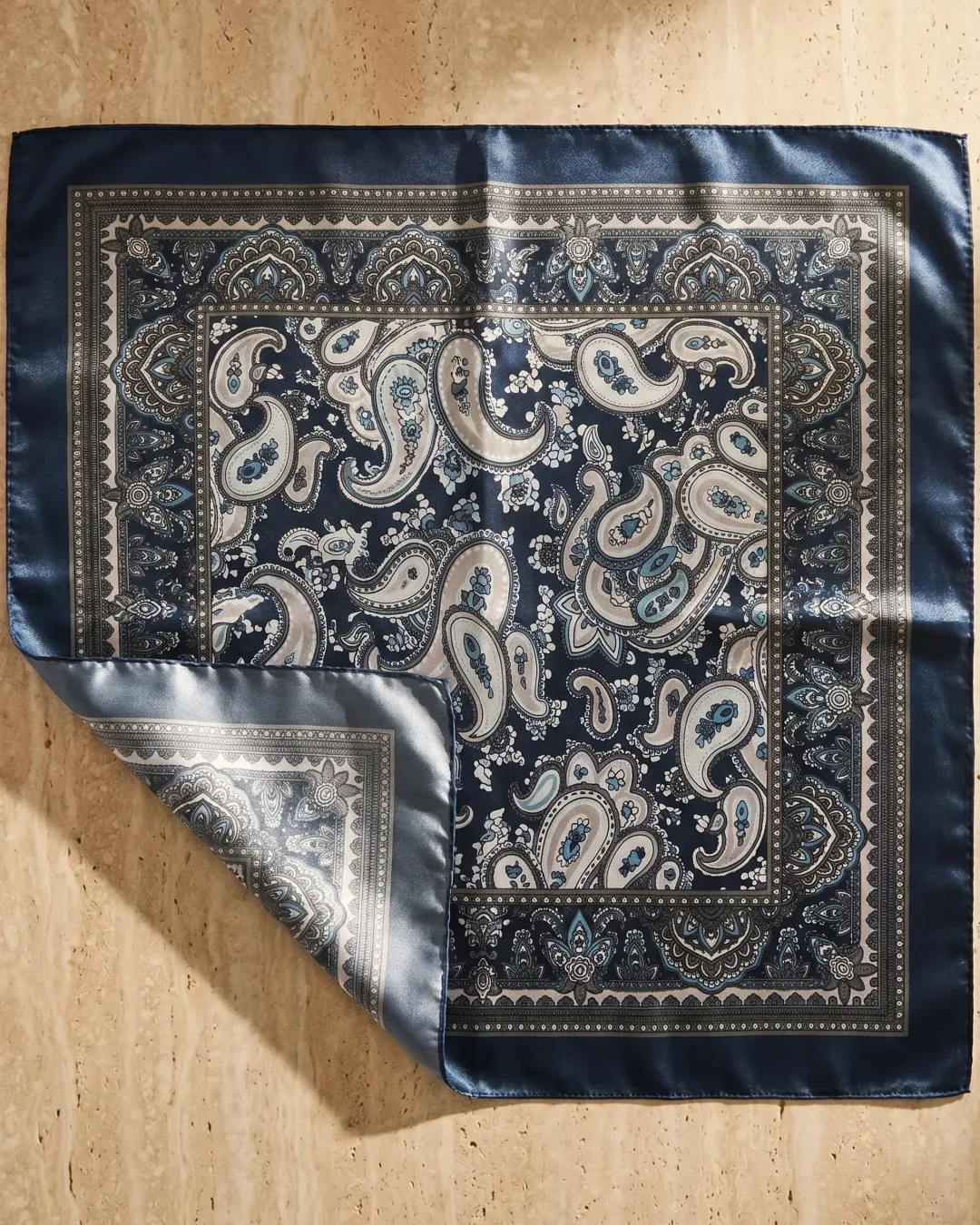
A tessera is a single tile of a Roman mosaic — the small, deliberate piece from which a whole picture is built. The Tessera scarf takes that idea and reads it in paisley: hundreds of fine motifs, each set against the next, composing a single Cobalto field.
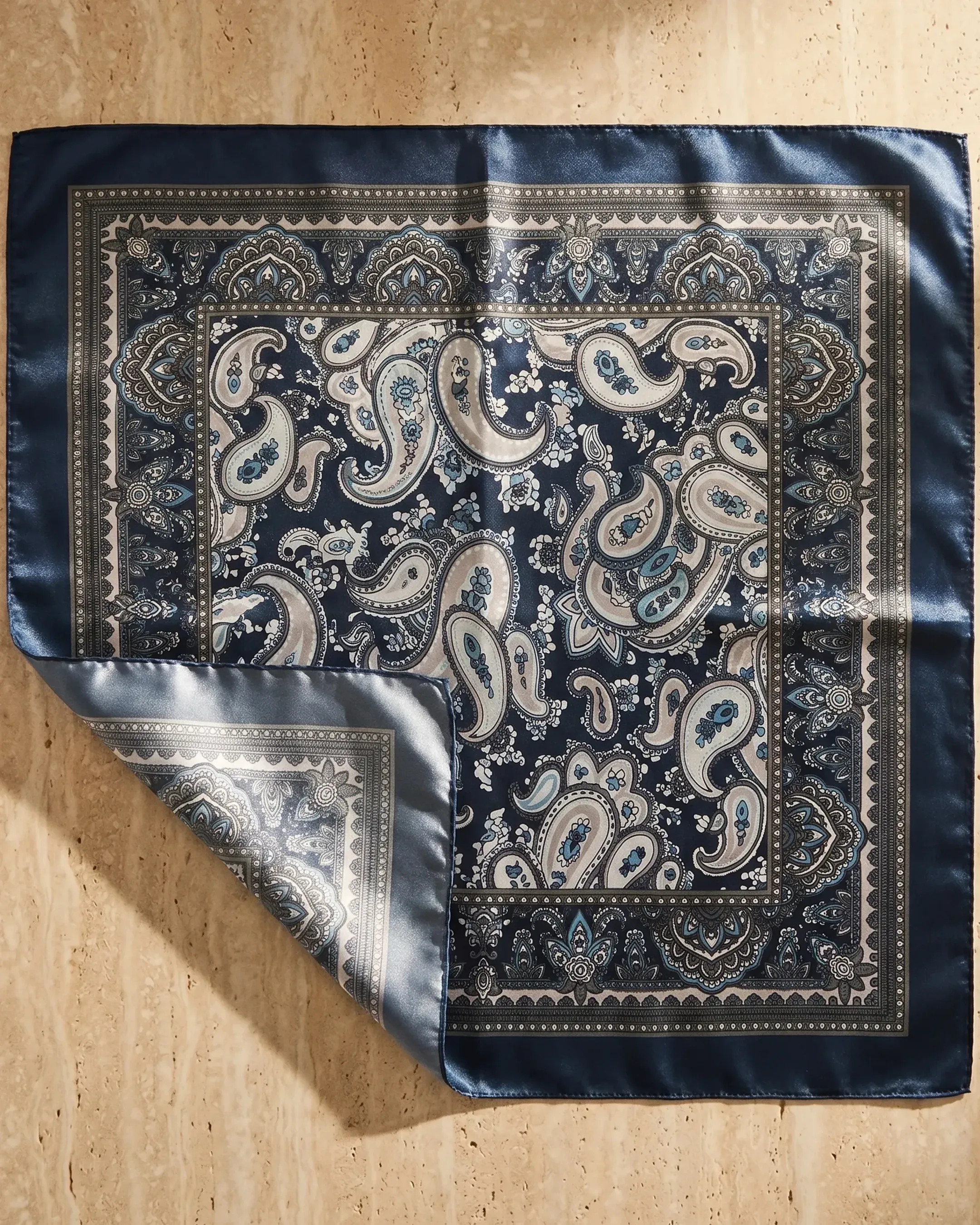
Conceived by Hugo Caesar Tassi for the Iulia edit of accessories, the Tessera is a 90 cm square of silk-look satin printed in deep Cobalto navy and worked with an ornate paisley border, cream and pale-blue boteh blooming across a near-midnight ground.
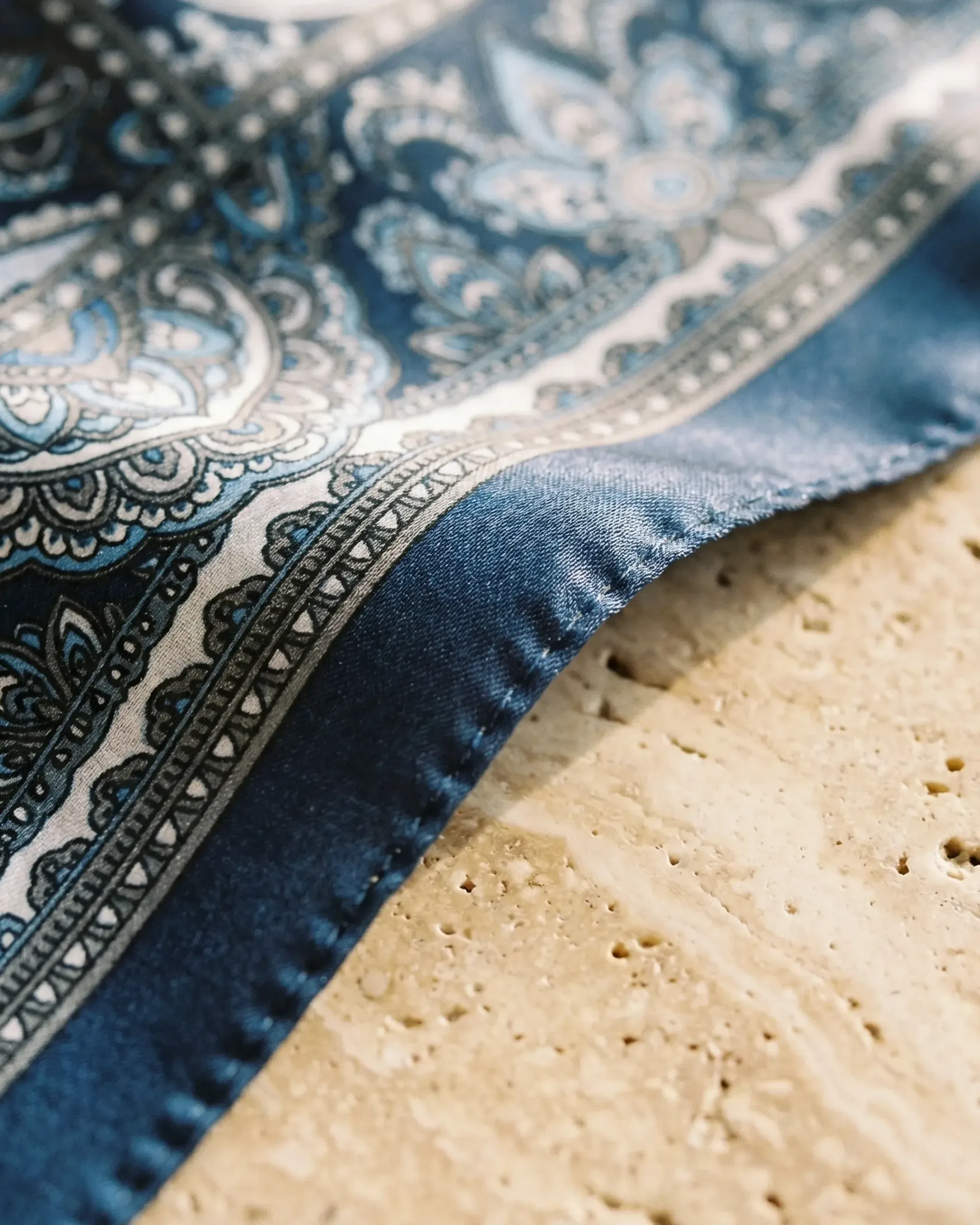
It is a foulard with the bearing of an heirloom: dense in color, fluid in the hand, finished with a fine hand-rolled edge so it falls and knots the way silk should. One square, endless ways to wear it.
Worn at the neck, the wrist, the bag
The square is the most generous scarf there is — large enough to knot at the throat, fold to a band, or tie to the strap of a tote and let the print do the talking.
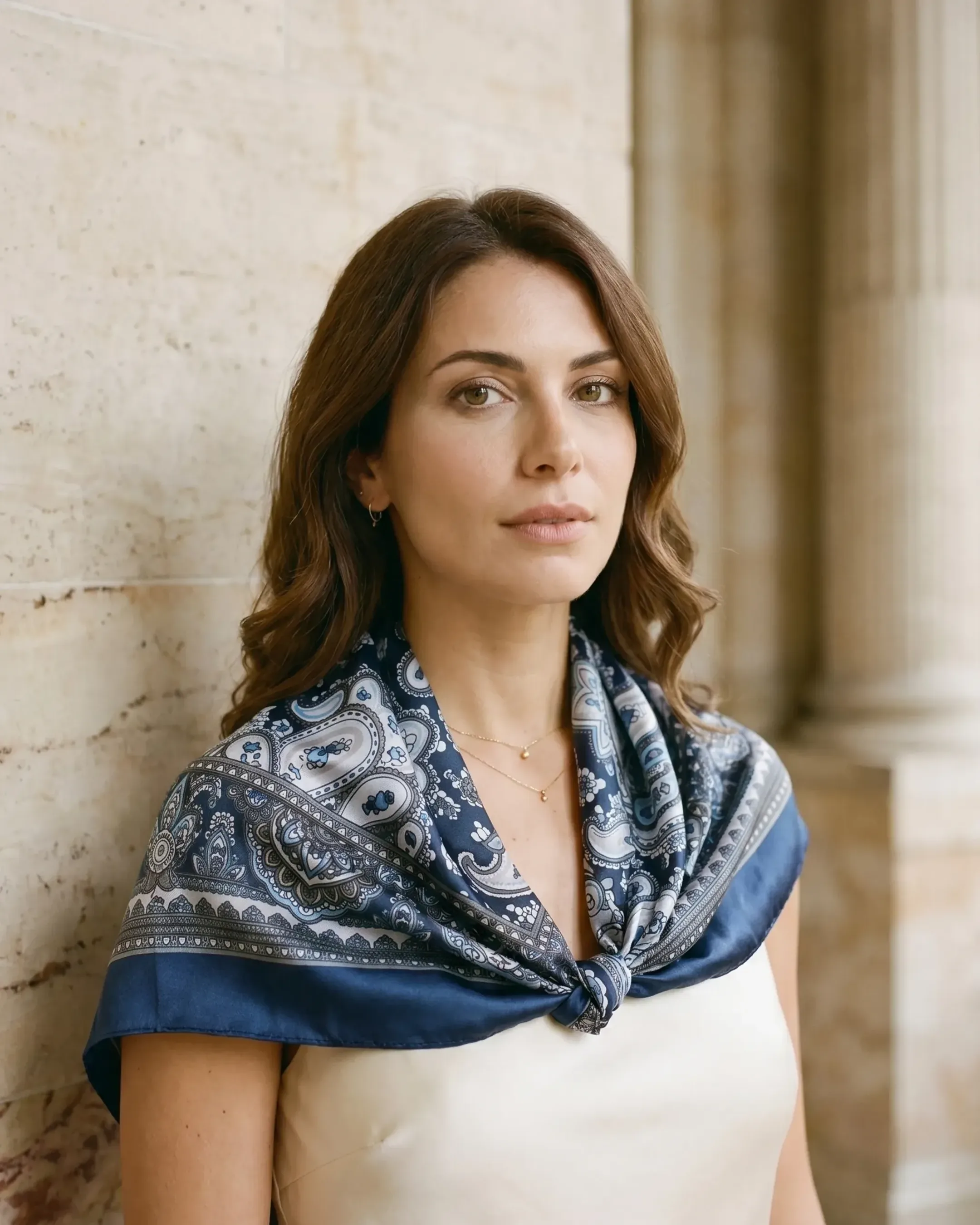
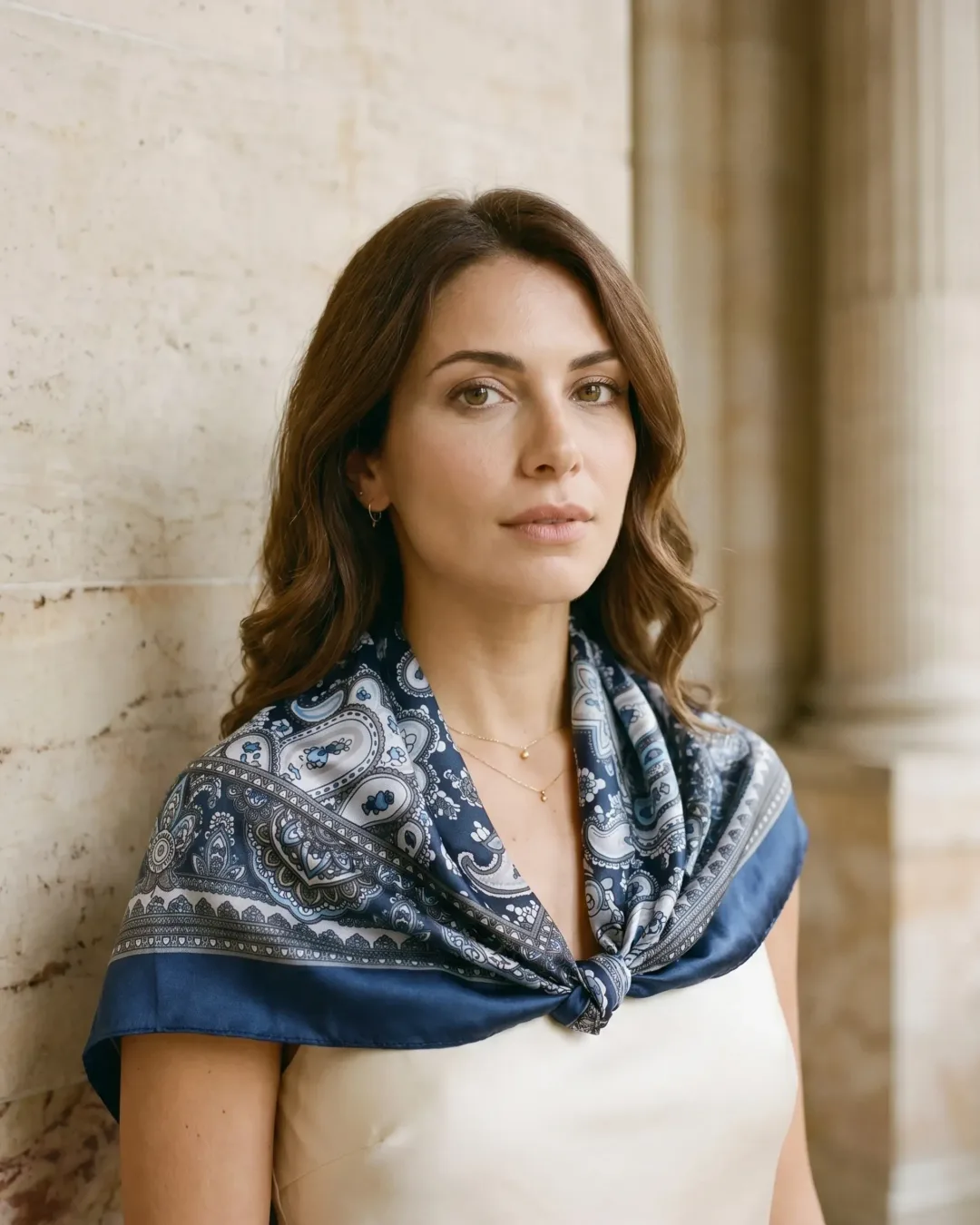
Knot it softly at the collarbone over an ivory slip for the city, wind it through the handle of the Ostia tote for the coast, or loop it at the wrist as a bracelet when the evening turns warm. The satin holds a knot without crushing and slips free without a crease.
Printed on a substantial silk-look satin chosen for its sheen and drape, the Tessera reads as fine silk at a fraction of the keeping — color-fast, hand-washable, and made to be reached for season after season.